Bondage, Child protection, Courage, healing, Justice, Secrets, Sexual abuse, Silence, Stories, Women

Hidden Away

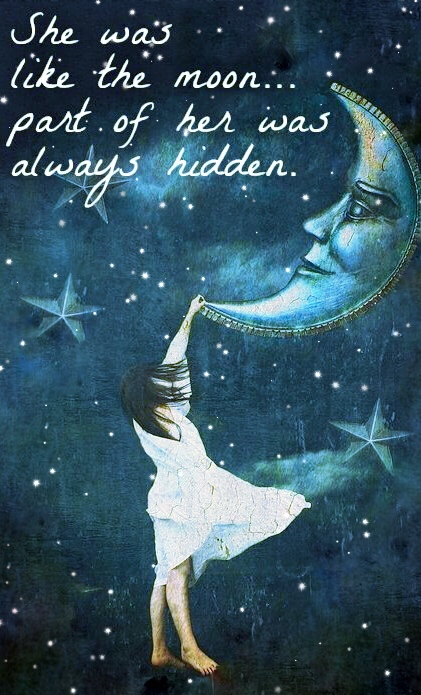
878930EE-0F89-44EE-B45A-4352E1A8387DShe was like the moon—part of her was always hidden away. 

Dia Reeves, Bleeding Violet

Yesterday, I watched a clip from the 2018 ESPY Awards. I could not help but pause to listen to the athletes tell their stories of years of abuse by U.S Olympic Team doctor, Larry Nassar. I wondered how many years of silence they each endured, holding the horrible secret inside where it had the power to do great harm. That’s the thing about sexual abuse — it’s often a big, bad secret. Victims hold the shame in the place where they pack away their secrets, and the rest of the word hopes never to have to hear about it. So the secret is safe, hidden away, at least for a time.

But not this time! The “sister survivors” of the disgraced sports doctor’s abuse accepted the Arthur Ashe Courage Award at the 2018 ESPYS. Dressed in glittering gowns, holding hands in solidarity, more than 140 women gathered onstage to share the award given to athletes whose bravery “transcends sports,” as the audience rose in a standing ovation.

Sarah Klein, a former gymnast who said she was among Nassar’s earliest victims three decades ago, was the first to address the audience. “Speaking up and speaking out is not easy,” she said. “Telling our stories of abuse, over and over and over again, in graphic detail, is not easy. We’re sacrificing privacy, we’re being judged and scrutinized, and it’s grueling and it’s painful, but it is time. We must start caring about children’s safety more than we care about adults’ reputations.”

Tiffany Thomas Lopez, who in the 1990s played softball at Michigan State University where Nassar practiced, had a message for other victims who might still be silent. “I encourage those suffering to hold tight to your faith, and stand tall when speaking your truth,” she said. “I’m here to tell you, you cannot silence the strong forever.”

Olympic gold medal gymnast Aly Raisman was the last to speak. She was unsparing in her criticism of the adults who she said for years failed to protect the victims, instead opting to silence her and others “in favor of money, medals and reputation. But we persisted, and finally, someone listened and believed us.”

In January, more than 150 women and girls gave victim impact statements at one of Nassar’s three trials. In a Lansing, Michigan courtroom, they spoke of abuse under the guise of medical treatment, which for some began when they were elementary school age. Following their testimony, Circuit Court Judge Rosemarie Aquilina sentenced Nassar to up to 175 years behind bars.

When the years of silence ended and the women released their secrets, justice followed, relief followed, inner peace followed. Therein lies a lesson for us all. How many times have women kept silent to protect others? How many times did we guard a secret because revealing it might hurt other people? Did we realize that by hiding away the secret, we were harming ourselves? The words written by Dia Reeves is true of us:

She was like the moon—part of her was always hidden away. 

And so it is with women. There are always parts of us that are hidden away, often for many years. There are parts of our stories that we hold in our souls, secrets we would rather not speak. It seems important, though, for each of us to develop the wisdom of knowing what we should hold in silence and what we should speak. As for the big, bad secrets — well, saying them out loud breaks their power. The chains of our silence fall to the ground, broken! 

And finally, we have freed ourselves! 

Brokenness, Courage, Despair, Faith, grief, healing, Hope, Kintsugi, Rabbi Yitzchak Luria, Repairing broken things, Tikkun Olam, Wholeness

Whole Again

23A0B57C-5487-4E6C-B48B-C45552916C23So many people have been broken. I join them in their brokenness, for I, too, have been broken. Not just once, but again and again. So I know how it feels to look down in the dust at my feet and see the shards of a broken spirit. I know the emotional response I have when I sit on the ground examining the broken shards, and I know how I despair of the daunting  task of putting the broken pieces back together.

I know the fear of doubting that I will even be able to put them together again. I know the terror of believing that my broken life will forever be broken. I know the suffocating feeling of having been broken beyond repair, without hope, without the faith I will need to repair my own brokenness.

And then, we look at our world, lamenting its groaning in so many ways and in so many places around the globe. Ours is a world that seems broken into pieces. I often find encouragement in the Jewish concept known as Tikkun Olam, a phrase found in the Mishnah that means to heal or repair the world. While Tikkun Olam is used today to define social action and the pursuit of social justice, the phrase has ancient roots with origins in classical rabbinic literature. It means so much more than examining broken pieces and finding a “glue” that might possibly put them back together.

Rabbi Yitzchak Luria* pondered the world’s brokenness and came to believe that, even before time, something must have gone terribly wrong with the world. As he continued to mull it over in his mind, he proclaimed that the world had shattered. He taught that we are anointed to repair a world which he defined as “all that is eternal,” insisting that “at the very core of reality is G-d’s shattered dream, waiting for us to pick up the pieces.”

Things break. The world breaks. Dreams break. We break. Such is the reality we know. And yes, we can become disconsolate as we take on the task of putting the pieces back together again. But there is a higher truth, a more noble calling than just putting together broken pieces. It is the calling to make things whole again, to make the world whole again, to make your spirit whole again.

In Scripture, we find many stories of persons being made whole. Each one looks like a miracle. Remember the story of the woman who had suffered for twelve years?

A woman, who was very ill for twelve years, came behind Jesus, and touched the hem of his garment: For she said within herself, “If I but touch his garment, I shall be whole.”

Jesus turned about, and when he saw her, he said, “Daughter, be of good comfort; your faith has made you whole.” And the woman was made whole from that hour.

— Matthew 9:20-22

Surely it was a miracle that this woman received. But for us, miracles are rare. We are burdened heavily by the brokenness, usually without the benefit of miracles. So what is it around you that is broken? What broken shards do you have before you? A broken relationship? A broken faith community? A broken dream? Is your city broken? Your nation? Your world? Or it it your own spirit that lies in broken pieces at your feet?

I cannot promise you a miracle. Even so, you must pick up the broken pieces and get started. You may get a little help from the people in your life. Then again, they may offer no help at all. But I do know that you have within yourself all the strength you need to take what is broken, put the pieces back together and find yourself whole again.

She is a beautiful piece of broken pottery, put back together by her own hands. And a critical world judges her cracks while missing the beauty of how she made herself whole again.

— J.M. Foster

The Japanese art of repairing broken pottery is called kintsugi. Repaired with pure gold, the Japanese art embraces the imperfections of the broken object. The flaws are seen as a unique part of the object’s history, which adds to its beauty. The glistening gold cracks are seen as very lovely features of the pottery, and Japanese artists say that the pottery is even stronger at the broken places. 

And so are we!

* https://www.chabad.org/library/article_cdo/aid/3593030/jewish/Fallen-Sparks.htm

Bible, Comfort, Despair, Faith, God's Faithfulness, God's presence, grief, healing, Heartbreak, Hope, Isaiah, Pain, Psalms, Skies, Stars, Suffering

The Hands that Made the Stars

7AA0FE34-BEE8-4CFC-AEF3-1E8D99948530
Comfort in the magnificent Arkansas skies. Photography by Steven Nawojczyk.

As I write on this day, I am aware that many friends are in the throes of darkness and despair. Some are facing devastating medical diagnoses. Some are yearning to have a child and are going through difficult medical procedures. Some are grieving for a family member in trouble. Some are waiting with hope for a cure for a disease that is bringing them to their knees. Others are enduring harsh medical treatments, hoping their lives will be saved. Many of them are at the point of losing all hope.

It hurts me deeply every time I am at a loss for comforting words. A little part of my heart breaks because I know I cannot “do something” to ease the suffering. And so I search for my own comfort as I search for ways to hold my friends in the light. As always, I am led to Scripture, not for easy answers, miraculous cures, or an instant panacea. I peek into the Bible to find words that will lift up hope in the middle of dark days and darker nights.

Often the words I find point me to the skies, as if gazing into an expanse beyond imagination might open my eyes to a radiant and holy hope. In truth, the words of Scripture do point me to hope. 

From the Prophet Isaiah:

Look up into the heavens. Who created all the stars? He brings them out like an army, one after another, calling each by its name. Because of his great power and incomparable strength, not a single one is missing. O Jacob, how can you say the LORD does not see your troubles?

Have you never heard? The LORD is the everlasting God, the Creator of all the earth. He never grows weak or weary. No one can measure the depths of his understanding. He gives power to the weak and strength to the powerless.

— Isaiah 40:26-29

From the Psalmist:

When I look at the night sky and see the work of your fingers — the moon and the stars you have set in place — what are mere mortals that you should think about them, human beings that you should care for them?

— Psalm 8:3-4

And so whoever you are, whatever pain you are carrying, know that the hands that made the stars are holding your heart.

Comfort, healing, Hope, Light, peace, Serenity

Deep Peace

F1E55829-D720-4AA8-95D8-4777BD7A8562Two of my dear family members are carrying a heavy weight in their workplace. I watch them struggle week after week, carrying oppressive burdens. Both love their work and are dedicated to it. Both speak well of their co-workers. Both take on more responsibility than they should. Neither of them see an end to the high level of work they must accomplish. I can sense their need for comfort and healing, for rest and peace.

I have wondered what the solution might be. What is it that could make their existence more tolerable? What is it that could mitigate their stress and ease their chaotic spirits?

I believe that their need is for peace. Not just run-of-mill, ordinary peace. But deep peace that goes down into the very depths of the tumultuous spirit. They need deep peace, even while trapped in the midst of chaos, even when the tasks before them are overwhelming.

Deep peace is what makes life tolerable, even if we find ourselves in the center of chaos. To be sure, in this life, in these days, we will know chaos. Chaos can come with work stress and overachieving. Chaos can come with hurtful relationships, with financial stress, with aging, with illness, with divorce, with abuse, addiction, violence in the home. Chaos is very painfully real. It engulfs us when we experience life trauma of any kind.

We need deep peace.

But acknowledging the need for peace is definitely not the same as being filled with it. How in the world does one find peace when all around things are falling apart? It’s a fair question. It’s a question many of us have asked when yearning for even a brief moment of peace.

So it’s worth asking yourself the question: what is it that swirls around my life and robs my peace? What chaotic frenzy am I facing every day? What turmoil assails my life and wounds my spirit?

I wish I could say that I have a no-fail solution. I wish that I could declare for you the end of turmoil and the advent of deep peace. I wish I could proclaim the definitive answer for you, and for myself. But I cannot. I can say what I always say, knowing that people who desperately need peace might hear just empty words. Still, this is all I have: the promise of Scripture and a heartfelt blessing.

Do not be anxious about anything, but in every situation, by prayer and petition . . . present your requests to God. And the peace of God, which transcends all understanding, will guard your hearts and your minds in Christ Jesus.

— Philippians 4:6-7 (New International Version)

Finding your own path to deep peace may be a challenging path, a journey of winding and confusing roads. But it is a journey out of turmoil, and it is a journey worth taking. It is a journey that leads to serenity and peace. And when you have found deep peace dwelling within your spirit, your soul will rejoice and finally find its rest. With deep peace, you will experience fresh signs of hope, a faith reborn and renewed, and a refreshing shower of grace, grace for the present moment and for the days to come.

With my hope and prayer that you will find deep peace, please accept the words of this Gaelic Blessing, a benediction of peace:

Deep peace of the running wave to you,
Deep peace of the flowing air to you,
Deep peace of the quiet earth to you,
Deep peace of the shining stars to you,
Deep peace of the gentle night to you,
Moon and stars pour their healing light on you,
Deep peace of Christ, of Christ,
Of Christ the light of the world to you,

Deep peace of Christ to you.

— A Gaelic blessing

I invite you to listen to this video* of a choral performance of John Rutter’s beautiful music set to the adapted text of this ancient Gaelic Blessing. It is performed by the Cambridge Singers and the City of London Sinfonia. Conducted by John Rutter.

* This video features stunning photography as well as two painted versions of “The Light of the World” by artist William Holman Hunt. 


Change, Courage, Darkness, Fear, God's presence, healing, Heartbreak, Hope, Life pathways, Pain, Restoration, Uncategorized

Through the Fire

892264FE-E803-4E0E-B598-C7503D77F674Sometimes life hurts.
We suffer. We heal. We move on.
But sometimes life hits back. Harder.
Lethal in its cruelty.
Shattering us into a million glittering shards
of pain and loss and anguish.
And we suffer, too broken to heal,
to become what we once were.
— L.R Knost

How deeply I know that feeling of brokenness. I am personally acquainted — well acquainted — with the lethal cruelty that life can present. To heal the past requires that I pay close attention to the spiritual and emotional places within me in the present, to make sure I am healthy and whole right now. Only then will I find the strength to invite the pain of the past into my psyche so that I can face off against it.

I have learned through the years that it is not a good option to leave past pain where it is, to let it occupy the place within me it has claimed. This writing by L.R Knost is one of the best descriptions I have ever seen on healing from past pain.

Healing is not a straight and narrow road
that leads from darkness to light.
There’s no sudden epiphany to take
us from despair to serenity, no orchestrated
steps to move us from hurting to healed.
Healing is a winding mountain road with steep
climbs and sudden descents, breathtaking views
and breath-stealing drop-offs, dark tunnels
and blinding exposures, dead ends and
endless backtracks, rest stops and break downs,
sheer rock walls and panoramic vistas.
Healing is a journey with no destination,
because healing is the journey of every lifetime.

Indeed, “healing is the journey of every lifetime.” The reality is that the only way to heal from the pain of the past is to walk directly through the center of that pain in the present. Does it feel safer to just let the pain continue to smolder in the dark parts of myself? Of course it feels safer. It feels terrifying, in fact, downright terrifying.

But the dark places in me will never heal spontaneously. I have to conquer the fear and open up to the possibility that God’s Spirit can breathe life back into those embers of pain snd rekindle the fires of unhealed hurts. So as I sit cautiously at the very edge of the fires of past pain, I cannot help but recall the comforting words of the prophet Isaiah.

When you pass through the waters,
I will be with you;
and when you pass through the rivers,
they will not sweep over you.
When you walk through the fire,
you will not be burned;
the flames will not set you ablaze.

— Isaiah 43:2 New International Version (NIV)

And so many times, I have found deep comfort in singing the beloved hymn, How Firm a Foundation.

When through fiery trials thy pathway shall lie,
 My grace, all sufficient, shall be thy supply.
 The flame shall not hurt thee; I only design
 Thy dross to consume and thy gold to refine.*

Text: Attr. to Robert Keen, ca. 1787.
Music: Attr. to J. Ellis, ca. 1889

So the flames aren’t there to burn me. The flames are there to light my way through pain to healing. At times, I have approached those flames with courage and confidence. But at other times, I met the flames with terror.

Courage or terror — it didn’t matter really. I just walked through it just as I was, and as I did, the hurt transformed into hope. I had wounds, for sure, and lasting scars. But the scars tell a story of the battles I won and the battles I lost, and most importantly, the scars tell the story of a human who survived. So, in spite of fiery places of past pain, we learn to live as L.R. Knost says

. . . with the shards of pain and loss and anguish forever embedded in our souls,

and with shaking fingers we piece together the bloody fragments of who we were into a mosaic grotesque in its stark reality,

yet exquisite in its sharp-edged story of the tragic, breathless beauty of a human who survived life.

And we move on, often unaware of the light glittering behind us
showing others the way through the darkness.

This is a resilience we can be thankful for, a perseverance we can cherish, a strength straight from a present and faithful God that will ever — forever — sustain us. Amen.


* Hear the entire hymn, How Firm a Foundation, at this link:
https://m.youtube.com/watch?v=G0S62se1hAE

Belief, Challenge, Change, Christian Witness, Community activism, Dreams, Grace, healing, Hope, Justice, Ministry, Mission, peace

A Broken, Waiting World

B507DED1-C6B2-4332-80BA-4B65623E2196

Do not be dismayed by the brokenness of the world. All things break. And all things can be mended. Not with time, as they say, but with intention. So go. Love intentionally, extravagantly, unconditionally. The broken world waits in darkness for the light that is you. ― L.R. Knost

When I was in seminary so many years ago, I worked part time in the Development Office, that extraordinary place that dreamed up words designed to gain support for the seminary and to tell the world what we were about. The one creative theme I most remember, because we made it our catch phrase and printed it on everything, was “We’re out to change the world!”

Some students left the seminary, degree in hand, and did just that. The rest of us labored mightily and did everything we knew to do to change a world that most assuredly was waiting and broken. What a mission!

I must admit, that short statement from seminary days became my personal quest. In every ministry position, I tried to change the world, much to the dismay of my parishioners. I took on every worthy cause as my own challenge to change the world. I committed myself to justice and set my face toward hope and healing for every person suffering injustice and indignity. It became a life-long quest, a personal commission. And what’s more, I sincerely believed I could do it, at least for the first few years I spent banging my head against various walls.

The song lyrics “to dream the impossible dream” come to mind. For those of you who may be too young to know about the magic of the 1964 Broadway musical, Man of La Mancha, I must give you the lyrics of the song that was the pronunciamento of the primary character, Don Quixote, and that almost instantly became the credo that many people of God embraced in trying to change the world.

To dream the impossible dream …
To fight the unbeatable foe …
To bear with unbearable sorrow …
To run where the brave dare not go …
To right the unrightable wrong …
To love pure and chaste from afar …
To try when your arms are too weary …
To reach the unreachable star …

This is my quest, to follow that star;
No matter how hopeless, no matter how far:
To fight for the right, without question or pause;
To be willing to march into Hell, for a Heavenly cause.

And I know if I’ll only be true, to this glorious quest,
That my heart will lie will lie peaceful and calm,
when I’m laid to my rest.

And the world will be better for this:
That one man, scorned and covered with scars,
Still strove, with his last ounce of courage,
To reach the unreachable star.

— Lyrics by Joe Darion

Today, as I watch military strikes against Syria and know that our country has not welcomed desperate Syrian refugees, I am painfully aware that I did not change the world. I worked in Uganda after the devastation of Idi Amin, but I did not change the world for millions of Ugandan widows and orphans.

I worked with persons who were sick and dying in hospital ministry, and I did not change their hopeless world of suffering. I have written letters, contacted government officials, participated in demonstrations, and signed hundreds of petitions, but I have not changed the world.

It has indeed been an “impossible dream.” And yet, I believe that I lived into my call from God and followed every path God placed before me. I faced off against what I viewed as evil many times and was deeply, demonstrably angry many times. But always, my mission remained in the center of God’s gentle grace and love. How?

I learned along the way — finally — that changing the world God’s way means holding tightly to lovingkindness, compassion, love and gentleness. The Scripture in Galatians 5:22-23 (NIV) says it like this:

. . . the fruit of the Spirit is love, joy, peace, forbearance, kindness, goodness, faithfulness, gentleness and self-control.

“Change the world with gentleness,” God might say to me.

While others stand for bigotry, racism, violence and war, change the world with gentleness. While leaders refuse to welcome refugees who long for a safe haven for their children, change the world with gentleness. While the highest positions in this country are embroiled in collusion, corruption, lies, greed and unkindness, change the world with gentleness.

This is a broken, waiting world that yearns, not for my righteous anger toward the world that is, but rather for my gentle hands of healing for the world that can be.

Change the world with gentleness? How? Why?

Because “Gentleness is not weakness. Just the opposite. Preserving a gentle spirit in a heartless world takes extraordinary courage, determination, and resilience. Do not underestimate the power of gentleness because gentleness is strength wrapped in peace, and therein lies the power to change the world.”

― L.R. Knost

May God lead us all in the paths of righteousness and gentleness. Amen.

Change, Contemplation, Darkness, Daybreak, Death, Despair, Faith, Freedom, healing, life

When Your World Ends

66A9AA3C-258F-40E7-AB87-32000E79567EMy adult son is a master at denial. He can get very upset over a situation, but before you can blink, he has moved on as if it never happened. To be honest, I have often envied that part of his personality. As one who tends to brood over life’s challenges and problems, I would love to just be able to blow things off.

There is no chance of that happening for me. I think that this brooding part of me emerges from the trauma I have experienced over the years. My world has ended many times, or so it seemed. Yet, there has been a positive aspect of my brooding: that I have learned to sit with an issue for a while, dissect what has happened, feel the depth of hurt, and reflect on the depth of the emotional assault I’m experiencing. Blowing off pain just doesn’t work for me. Denial is not my way.

Denial never makes hurt go away. Denial never even diminishes hurt. So be warned. Blowing off pain is a path to internal disaster. As difficult as introspection can be, I am grateful that I am able to deeply feel the feelings I feel, to let the hurt wash over me, and finally to emerge better and stronger. Feeling the depth of my heartaches has served to disempower them and, most importantly, to enable me to harness my inner power to be free.

This, I believe, is the path that takes us beyond despair. This is the path that lets us own our heartbreak and then leave it behind to move into a fresh, new day. I am strengthened by the words of poet Nayyirah Waheed.

feel it.
the thing that you don’t
want to feel.
feel it and be free.

the thing you are most afraid to write, write that.

it is being honest
about
my pain
that
makes me invincible.

i don’t pay attention to the
world ending.
it has ended for me
many times
and began again in the morning.

To sit with your pain, to touch the heart of your hurt . . . that is what makes you free. And that freedom will be for you this miracle . . . when your world ends, and it may end many times, it begins again in the morning.

Thanks be to God.


Change, Children, Courage, grief, Gun control, healing, Hope, Justice, Politics, Violence

A Change Is Gonna Come

963A5A51-3EC5-464E-BAE6-A49BCFECAE4F
Emma González … ‘These young people will not sit in classrooms waiting.’ Photograph: Jonathan Drake/Reuters

Half a century ago, on March 7, 1965, state troopers beat down men and women who were participating in a peaceful march for voting rights in Selma, Alabama. That same day, radio listeners around the country might have heard Sam Cooke singing a song he had written and recorded several months earlier, but which could have been describing the “Bloody Sunday” confrontation on the Edmund Pettus Bridge.

There have been times that I thought I couldn’t last for long
But now I think I’m able to carry on
It’s been a long, a long time coming
But I know a change is gonna come, oh yes it will.

In “A Change Is Gonna Come,” Sam Cooke moves from bigotry and bloodshed to hope and beauty in barely three minutes. If you listen to the record today, you will hear a story that continues to be relevant. (https://m.youtube.com/watch?v=wEBlaMOmKV4)

Sam Cooke’s rough, sweet voice — a voice that is blues-born and church-bred, beat down but up again and marching — still rings.

A changs IS gonna come . . .

That message of hope rings out still in these troubling days through the passion-filled voice of Emma González, a senior at Marjory Stoneman Douglas High School, as she addresses a gun control rally in Fort Lauderdale just days after a gunman entered her school in Parkland and killed 17 people.

A change IS gonna come . . .

We are going to be the kids you read about in textbooks. Not because we’re going to be another statistic about mass shooting in America, but because . . . we are going to be the last mass shooting. We are going to change the law. That’s going to be Marjory Stoneman Douglas in that textbook and it’s going to be due to the tireless effort of the school board, the faculty members, the family members and most of all the students. The students who are dead, the students still in the hospital, the student now suffering PTSD, the students who had panic attacks during the vigil because the helicopters would not leave us alone, hovering over the school for 24 hours a day.

If the President wants to come up to me and tell me to my face that it was a terrible tragedy and how it should never have happened and maintain telling us how nothing is going to be done about it, I’m going to happily ask him how much money he received from the National Rifle Association. You want to know something? It doesn’t matter, because I already know. Thirty million dollars.  — Emma González

A change Is gonna come . . .

Just hours after the mass shooting, other students turned to social media to discuss gun control.

Guns give these disgusting people the ability to kill other human beings. This IS about guns.  — Carly Novell, a 17-year-old senior; editor of the school’s quarterly magazine.

We need to do something. We need to get out there and be politically active. Congress needs to get over their political bias with each other and work toward saving children. We’re children. You guys are the adults.  — David Hogg, 17, a senior; Stoneman Douglas student news director

Wherever you bump into someone, there is the fear that they’re the next shooter, and every bell is a gunshot. I feel like some change is going to come of this.  — Daniela Palacios, 16, a sophomore at another Broward County High School at her first protest.

A change IS gonna come . . .

And it will be our bold and compassionate children who will lead this nation into that change. Like so many Americans, I was disconsolate when watching the TV news of yet another school shooting. But then I started watching the students, and I saw the girl with the buzzcut, Emma González, wiping back her tears, mourning her dead classmates while demanding change.

Like her schoolmates, Emma is in trauma, but she is organizing. She and many of her classmates are directly challenging the donations of the National Rifle Association to Trump and other politicians. There will be school strikes. There will be organized resistance. These young people will not sit in classrooms any more. They refuse to become another tragic statistic. “We are going to be the kids you read about in textbooks,” said a weeping González.

As I remembered this week what happened  at Sandy Hook, at Columbine, at Westside, a school in my own state, I remembered feeling anger and despair. But today, for first time in a long time, I feel hope. I see true leadership as kids are standing up for one another and fighting for their lives.

Let us stand courageously beside these children, our children, and do what we can to create change . . . letters to Congress, phone calls, posts on social media, marches and demonstrations, hand-lettered signs, letters to the editor, VOTING for change. What can you do?

Emma González, Daniela Palácios, David Hogg, Carly Novell . . . and thousands of other children who are crying out, ENOUGH!

They give me hope.

A change is gonna come!

May God ennoble each of us to make it so.


Comfort, God's presence, healing, Heartbreak, Inspiration, life, Mourning, Pain, peace, Restoration, sadness, Serenity, Sorrow

Guard Your Heart

FF412EF2-E311-4F00-9859-65D0582E5935A heart can break so easily. Life is filled with heartbreaking things, and no person is immune to heartbreak. Hurt from one’s children, the loss of a loved one, a marriage rife with anger, abuse by a trusted person, betrayal by a lifelong friend — all of these can leave a heart crushed.

How important it is, though, to find healing for our hearts, to find the healing balm that will ease the pain. We recall the comfort of Scripture that says, “Do not let your hearts be troubled, neither let them be afraid.” We lean on the everlasting arms that always hold us, we rest on the promise that “God heals the brokenhearted and binds up their wounds,” (Psalm 147:3) and we hear again the tender words of the Psalmist.

The Lord is near to the brokenhearted and saves those who are crushed in spirit.

— Psalm 34:18

So we take these promises into our souls, and we give ourselves the time we need to heal our broken hearts. To be sure, the healing depends upon letting enough time pass for restoration to happen. Never do we heal on a swift timetable. The clock must move and the days must pass on our heartbreak. The weeks may well turn into months, even years. Yet we move ahead with confidence in our resiliency and faith in the Great Healer who abides with us for as long as it takes.

The final message is this: Be patient, but persevering, for the healing of your heart must be a life priority. Always guard your heart. Believe in the healing that will surely come. Know that your broken heart will mend as it rests in the hands of the One who heals every broken heart, every time, always.

Why is healing so important? It’s all about “the springs of life.”

Above all else, guard your heart,
For from it flow the springs of life.

— Proverbs 4:23

Bondage, Despair, Faith, Fear, Freedom, healing, peace, Restoration

Despair

192EA03D-9DFB-4D4A-BB22-A481D2086FCDDespair has its way at times. It sneaks into my spirit and dwells there for a while, Although despair is thoroughly unwelcome and unwanted, it has a way of making a home in me at times. It has its way. It does its damage. It enslaves me with a devastating kind of bondage. It forces me into an uneasy and oppressive place.

Despair’s most damaging legacy is fear. These days are, for me at least, days of fear. I watch the current president and listen to his words in horror. He speaks with hostility. He gives welcome to divisiveness, racism, misogyny and disrespect. His words are often divisive, rude and insensitive. He uses his power to build an unsettled nation. I despair for the nation, and I despair for a world filled with violence, war, hunger, poverty, and natural disasters born of climate change.

My faith tells me that there is a remedy for despair, that fear can be conquered, and that peace might be restored in me. The poetry of Wendell Berry is a beautiful reminder.

When despair for the world grows in me
and I wake in the night at the least sound
in fear of what my life and my children’s lives may be,

I go and lie down where the wood drake
rests in his beauty on the water, and the great heron feeds.

I come into the peace of wild things
who do not tax their lives with forethought
of grief.

I come into the presence of still water.
And I feel above me the day-blind stars
waiting with their light.

For a time I rest in the grace of the world, and am free.

— From Wendell Berry’s “The Peace of Wild Things“

When despair casts its damaging spell within me, my faith still holds. They are waiting for me, always, the peace that is a balm for grief and despair, the presence of still waters and the stars sparkling in my night sky. This otherworldly beauty causes me to rest in the arms of faith and to recall the many times of despair in my life that served only to make me stronger and more resilient.

Thanks be to God.

Despair, Dry seasons of life, Faith, Fear, God's Faithfulness, God's presence, healing, Hope, Illness, Life storms, Prayer

Mercies and Blessings

IMG_6014Like many of you, I have experienced dark nights of the soul. I have faced illness, betrayal, disillusionment and loss. I have faced the dark side of life more than a few times. In the midst of those times, I found the courage of faith, the gift of hope, and the promise of Scripture.

If you have known me through the years, you may know that one of the New Testament passages that gives me strength is in the fourth chapter of Second Corinthians. The following words are part of that chapter.

We are troubled on every side, yet not distressed; we are perplexed, but not in despair; Persecuted, but not forsaken; cast down, but not destroyed . . .

Therefore we do not lose heart. Though outwardly we are wasting away, yet inwardly we are being renewed day by day. For our light and momentary troubles are achieving for us an eternal glory that far outweighs them all.

So we fix our eyes not on what is seen, but on what is unseen, since what is seen is temporary, but what is unseen is eternal.

– 2 Corinthians 4:8-9, 16-18 18 (KJV, NIV)

The passage speaks of “wasting away.” When I was so ill for all of 2014, I can honestly say that I believed I was wasting away. It was a frightening emotion, one that I would rather not hold in my memories. But my memories of that time also include mercies and blessings, blessings of gradual healing, blessings of compassionate and competent health care, blessings of being surrounded by a loving faith community, blessings of my husband’s devoted care, blessings of hope and faith in a God whose mercies covered me in so many ways. Clearly, my blessings came through adversity.

Today while listening to Pandora, I heard a song that touched me with its faith-filled lyrics.

. . . What if Your blessings come through raindrops?
What if Your healing comes through tears?
What if a thousand sleepless nights are what it takes to know You’re near?
What if the trials of this life are Your mercies in disguise?

What if my greatest disappointments or the aching of this life is the revealing of a greater thirst this world can’t satisfy?
What if trials of this life — the rain, the storms, the hardest nights — are Your mercies in disguise?

– Written by Liz Story • Copyright © Warner/Chappell Music, Inc, Universal Music Publishing Group

I learned that through serious illness, the fear was greatest at night. The nights were the hardest. But I also learned that what I had read so many times was true — God’s mercies are new every morning.

The steadfast love of the Lord never ceases;
his mercies never come to an end;
they are new every morning; great is your faithfulness.

– Lamentations 3:22-23 (ESV)


Despair, Faith, Fear, healing, Hope, Illness, Pain, Suffering

Suffering

IMG_5915For whatever reason, several people I know are currently going through an exacerbation of fibromyalgia. I am one of those people dealing with debilitating pain right now. Fortunately, the pain cycles usually pass over time. But when the pain is raging, it slaps us in the face with a significant challenge.

The truth is that chronic pain is much more than just physical pain. It is physical and emotional suffering. Quite often, it is also spiritual suffering. In the years I served as a hospital chaplain, I learned so much about what people experience when they are ill. The most important lesson I learned is that there is a very real difference between pain and suffering.

Experiencing chronic pain most often goes far beyond physical pain. Pain is the actual physical /physiological response to an injury or illness. It is rooted in the body. But all too often, it is accompanied by debilitating suffering. Suffering is how the brain perceives pain based on past experience and future expectations and fears. It is rooted in the mind, even in the spirit.

Suffering asks “How long can this pain last? Will I feel this way forever? What have I done to deserve this? Has God forsaken me? Does God care about my suffering? Am I going to die?”

It is true that sometimes our suffering questions are irrational, but pain that has permeated the mind and spirit causes a very deep fear, a feeling of disorder, a sense of terror, and constant questioning. It takes an act of the will to keep suffering at bay, but it can be done. Deepak Chopra speaks of pain and suffering in many of his teachings.

Many people confuse pain with suffering. Pain is not the same as suffering. Left to itself, the body discharges pain spontaneously, letting go of it the moment that the underlying cause is healed.

Suffering is pain that we hold on to. It comes from the mind’s mysterious instinct to believe that pain cannot be escaped or that the person deserves it . . . It takes a force of mind to create suffering, a blend of belief and perception that one thinks one has no control over. But as inescapable as suffering may appear, what brings escape is not attacking the suffering itself but getting at the unreality that makes us cling to pain.

– Deepak Chopra

Is it easier said than done, modifying the beliefs and perceptions that accompany pain? To be sure, it is difficult. But suffering people find a number of ways to accomplish it: yoga, meditation, prayer, and for people of faith, leaning on the strength of their religious practice. In a very real sense, we can create within ourselves the kind of healing that rises above physiological pain.

Perhaps it sounds simplistic, but while in the throes of physical pain, I am often able to find a measure of relief by meditating on the truth of Scripture, not just reading it, but abiding in it, letting its words penetrate my spirit, opening my heart to its comforting truth.

Psalm 42 has been called a Psalm for the fainting soul. The Psalm is the voice of a spiritual believer who is enduring deep depression, who is longing for the renewal of the divine presence, who is struggling with doubts and fears, yet holding on to hope. The Psalm twice repeats this comforting refrain.

Why are you cast down, O my soul? And why are you so disquieted within me? Hope in God, for I again will praise him, my help and my God.

– Psalm 42: 5, 11

In the final analysis, people of faith really do have the ability to endure chronic pain while avoiding suffering. Perhaps we cannot stop physical pain or reverse the source of the pain. Perhaps we do not have the power to heal ourselves from physical pain when physiological realities are at play in our bodies. But our faith assures us again and again that we do have the power to end suffering at its source — suffering of the mind, the heart, the spirit, the soul.

If you are in physical pain, my prayer is that your faith will quiet the questions of your mind, that your inner strength will calm the anxiety of your spirit, that your depth of hope will strengthen your heart, that your soul’s resilience will transcend your suffering. This is the ultimate healing.

May God make it so.

Despair, Faith, God's presence, healing, Loss, peace, Prayer, Restoration

Wounds of the Soul

IMG_5942
Early morning comes to a green valley near Marshall, Arkansas.
Photo by Paul Barrows.

Hurricanes and earthquakes of the soul . . .

The lush vegetation of Puerto Rico has been replaced by broken trees, homes lying in ruins, a painfully barren landscape. “Hurricane Maria destroyed us,” said Edwin Serrano, a construction worker in Old San Juan.

Dominica was devastated. Thousands of trees snapped and were strewn across the landscape, leaving the island completely stripped of vegetation. Dozens of mudslides turned the sparkling blue-green sea to a murky, muddy brown.

At least 286 people were killed in Mexico City by a magnitude 7.1 earthquake. A rescue operation at the city’s Enrique Rébsamen school resulted in the rescue of eleven children, but nineteen children and six adults were killed. Extreme urgency permeated the school as more than 700 rescue workers continued digging after two days without sleep, knowing that survivors would be able to last only about four days.

In a very real sense, nature turned on the survivors, leaving them despairing from disasters that created devastation in many forms. Destroyed cities, of course, physical injuries and homes left in the rubble, yes. But also wounds of the soul that are lasting and life-changing.

People who live through natural disasters live with a kind of violence, violence that is perpetrated randomly by nature. When one depends upon nature’s rhythms to provide sunlight and moonlight, rain and breeze, the predictable tide of breaking waves and calm waters, the suddenness of violent storms and earthquakes assault the psyche. Nature is usually a constant, comforting presence, but a natural disaster leaves those in its wake coping with an environment that resembles a war zone. Living in that kind of environment day in and day out causes behaviors similar to those identified with persons who suffer from PTSD (Post-traumatic stress disorder).

The assault by nature creates a chronic and debilitating state of fight or flight. To cope, survivors develop the ability to numb their feelings and repress intrusive memories. This leaves many of them with enormous anxiety, feeling that the world is no longer a safe place. While many symptoms of PTSD are evident, often the most frightening symptoms are those not readily visible, secret symptoms and reactions such as disorientation, memory lapses and night terrors. These symptoms are buried in the deep crevices of the psyche.

Wounds to the soul and spirit are caused by events that violate one’s most deeply held sense of safety and security, and it is important to address PTSD not as a “disorder,” but as a response, an appropriately normal response to an overwhelmingly abnormal situation.

So when we send positive thoughts, donate, and pray for the restoration of these ruined cities, we must also be intentional in praying for healing of the soul and spirit of every survivor. Long after buildings and homes have been repaired, survivors will live with a deep wound of the soul that can only heal with time, prayer, faith and hope, as wounded people learn to abide with the God who walks with us through every “valley of the shadow of death.” The Scripture can be a comfort in such times, and often the most familiar passages are the ones we lean on.

The Lord is my shepherd; I shall not want.

He maketh me to lie down in green pastures: he leadeth me beside the still waters.

He restoreth my soul: he leadeth me in the paths of righteousness for his name’s sake.

Yea, though I walk through the valley of the shadow of death, I will fear no evil: for thou art with me; thy rod and thy staff they comfort me.

Thou preparest a table before me in the presence of mine enemies: thou anointest my head with oil; my cup runneth over.

Surely goodness and mercy shall follow me all the days of my life: and I will dwell in the house of the Lord for ever.

– Psalm 23

Until that day when tender green shoots once again begin to fill the landscape in those devastated countries, may the wounded people walk through the green pastures of the heart and the still waters of the spirit with the Gentle Shepherd who restores the soul and leads to peace.

Creating, healing, Hope, Justice, Light, peace

A Perfect World?

IMG_5924When you realize how perfect everything is, you will tilt your head back and laugh at the sky.

– Buddha

Perfect is not a word I would use to describe the world. Ominous storms, wildfires, demonstrations of hate, violence, terrorism, threats of deportation, leaders devoid of compassion, homelessness, war, refugees seeking safe haven and shelter . . . This is just a partial description of the world we call our own. So perfect is but a dream. And yet, it is perhaps our calling to expend ourselves creating a more perfect world.

Today, my friend Elaine posted this passage on her wonderful blog, “The Edge.”

Learn where there is wisdom, where there is strength, where there is understanding, so that you may at the same time discern where there is length of days, and life, where there is light for the eyes, and peace.

– Baruch 3:14

The wisdom in these words prompted a time of contemplation for me. I pondered the refreshing possibility of finding “length of days, life, light and peace.” Sounds like getting closer to a perfect world.

In these unsettling days, that is the kind of world we long for, the kind of life we desperately want. And yet we find that at times we are crying out for peace, and there simply is no peace.

Baruch’s words present us with a task, a rather difficult task to be sure, but one that leads to the goodness of life we seek. Baruch’s wisdom calls for us to learn, to increase our ability for discernment. And most importantly, Baruch proclaims our critical need to discover where we might find wisdom, strength and understanding.

My world is filled with incessant voices — politicians, governmental leaders, media personalities, newscasts that include everyone who has an opinion on every possible subject. Certainly, I have the choice to turn off the news and listen to soothing music on Pandora. And I do that frequently.

But the state of the world is so volatile that I am compelled daily to be aware of what is going on. In fact, that is a part of my personal mission — to know what is going on and to respond by making my voice heard advocating for justice and compassion. Which is exactly the reason it is so important to “learn where there is wisdom, where there is strength, where there is understanding.”

So may we all create moments when we can silence the incessant voices and instead enter into quiet times of solitude, contemplation and prayer. That is what we can do for a very imperfect world that seems to be falling apart. In the process, we will more clearly hear the voices that lift hope high before us. In that holy space where hope abides with us, we will find “length of days, and life . . . light for the eyes and peace.”

Tikkun Olam is a lovely jewish concept defined by acts of kindness performed to heal the world, to perfect or repair the world. The phrase is found in the Mishnah and is often used when discussing issues of social justice, insuring compassion and care for persons who are oppressed.

Tikkun Olam! Heal the world! This is our highest calling.

Is it even possible to create a perfect world? Maybe not. But shouldn’t we envision it, work for it, pray for it, ennobled by God to return our world into the perfect creation of God?

May God guide us in making it so.


(Visit my friend Elaine’s blog at https://theedgeishere.wordpress.com/2017/09/08/contemplative2017-wisdom-4/)


healing, Hope, Inspiration, Nature, Restoration

What do you do when you’re tired, very tired?

IMG_5889
Photo by Steven Nawojczyk

For years, Steven Nawojczyk has been one of my heroes. Yesterday I posted on my blog one of his many beautiful photographs taken while enjoying nature with his delightful dog, Feebi. The two of them explore nature every day, taking in the extraordinary beauty of Arkansas. Steve has learned to immerse himself in the life-giving sights and sounds of creation. It is therapy, really, a time of re-creation for a person who spent his life as a public servant, immersing himself far too deeply in human tragedy.

In the early 90s, Steve was the county coroner in Pulaski County, Arkansas. He saw too much, felt too much, cared too much and investigated the deaths of far too many young people. Steve was the “face” of the 1994 documentary that gave Little Rock a years-long reputation as a haven for gangs — HBO’s “Gang War: Bangin’ in Little Rock,” While that star billing turned him into a sought-after public speaker and educator throughout the country, it didn’t make him popular in Little Rock city government.

When HBO came to town, largely because of Steve’s urging, Little Rock was a city with a problem. Gang-related killings had spiked the murder count to a record high of 76 — a higher per capita murder rate than Los Angeles and New York. With the coming of crack and gang skirmishing to determine who would sell it and where, there were areas of where drugs could be purchased openly in the streets. Graffiti threats covered every wall, every bridge. Gang life had even spilled over into the suburbs, with white teens suddenly willing to do violence for their colors.

Steve Nawojczyk did not sit in his office in those days. Instead, he walked city streets, listening to gang members, hearing their life stories, holding before them the possibility of change and hope. But that kind of life commitment made him tired, more than tired.

Today, national media are again interested in the soaring murder rate in Little Rock, surmising that gangs are once again taking their place in the city. And they are calling Steve for interviews and information. This is, in part, Steve’s response to them:

ATTENTION MEDIA BOTH NATIONAL AND LOCAL WHO HAVE BEEN CALLING:

I am not doing any interviews or returning phone calls about the LR night club shoot-out nor the current status of gangs. I’ve been saying the same things about it since the early 90s when I was the county coroner . . .

I will address one question all of the reporters, even the one from CNN, seem to be leaving on my voice mail- “…how does this compare to the gang wars of the early 90s when HBO came to town?”

Here’s my answer- ask the leaders in LIttle Rock this question since almost every single one of them were involved in one way or the other back then.

The current mayor was the prosecutor. The current city manager was in the city manager’s office. The current prosecutor was the chief deputy prosecutor. Many of the city board were around then as were many of the same preachers that are still preaching the same sermons. So, they should have been working to understand this and work to prevent it from recurring for the last 20 plus years. At least you would think . . . No need to reinvent the wheel, dudes.

So, I’m retired and tired, very tired. Thanks for thinking enough of my opinion to call me. But I’m done with it all, I’m tending to other more important personal battles right now. Paz y amor.

Signed:
Steve Nawojczyk

So what does one do when they are tired, very tired? Again, Steve is our example.

Go out into the serene beauty of nature. Take in all that is right and good about God’s creation. Let the sunrise awaken your soul and the ripples of an Arkansas lake sooth your spirit. Let the weariness of the past fade into yesterday; let the present day give you strength; and lift your vision to the bright hope of tomorrow.

IMG_5908
Feebi

Steve and Feebi are restoring their souls in their daily adventures. They are opening themselves up to stunning sunrises and the gentle breezes of soul healing. So if you are tired, very tired, spend some time letting nature give you a fresh, new vision of the world.

And as Steve so often says, “Paz y amor.”

Faith, God's presence, healing, Hope

A Perfect Place to Die

IMG_5744
Japan’s Aokigahara Suicide Forest

I watched a very thoughtful and intriguing movie last week — The Sea of Trees. The film was captivating, telling the story of a despondent professor who despaired of life and searched for a way to end his life. His search led him to Aokigahara, a forest in Japan known also as the Sea of Trees or the Suicide Forest.  Aokigahara Forest has been home to over 500 confirmed suicides since the 1950s. It is called “the perfect place to die” and is the world’s second most popular place for suicide.

One might say that suicide is not the most uplifting subject for a blog. But suicide is a very real and present tragedy in the world. Consider these startling statistics reported by The Jason Foundation. (http://prp.jasonfoundation.com/facts/youth-suicide-statistics/)

▪️Suicide is the second leading cause of death for ages 10-24. (2015 CDC)

▪️Suicide is the second leading cause of death for college-age youth and ages 12-18. (2015 CDC)

▪️More teenagers and young adults die from suicide than from cancer, heart disease, AIDS, birth defects, stroke, pneumonia, influenza, and chronic lung disease, combined.

▪️Each day in our nation, there are an average of over 5,240 attempts by young people grades 7-12.

▪️Each year, 30,000 Americans die by suicide. An additional 500,000 Americans attempt suicide annually. (http://www.mentalhealthamerica.net/suicide)

Some people have found help through suicide prevention programs. Others choose to turn to 24-hour suicide helplines available around the clock to provide crisis intervention. (https://suicidepreventionlifeline.org/) Still others find that it is their faith that raises fresh hope within them and lifts their sight above the darkest of days.

There is a special kind of renewed hope when people who have been on the brink of taking their own lives share their stories of faith, the depth of faith that ultimately gave them the inner strength to live. Samuel Trevor Francis (1835-1925) told such a story of faith. He experienced a spiritual turning point as a teenager, contemplating suicide one night on a bridge over the River Thames. An unexpected renewal of his faith saved his life that night. At age 41, Samuel Trevor Francis recalled the faith that saved him and penned the words of the well-known Christian hymn, “O the Deep Deep, Love of Jesus.”

O the deep, deep love of Jesus, vast, unmeasured, boundless, free!
Rolling as a mighty ocean in its fullness over me!
Underneath me, all around me, is the current of Thy love
Leading onward, leading homeward to Thy glorious rest above!

O the deep, deep love of Jesus, spread His praise from shore to shore!
How He loveth, ever loveth, changeth never, nevermore!
How He watches o’er His loved ones, died to call them all His own;
How for them He intercedeth, watcheth o’er them from the throne!

O the deep, deep love of Jesus, love of every love the best!
‘Tis an ocean vast of blessing, ’tis a haven sweet of rest!
O the deep, deep love of Jesus, ’tis a heaven of heavens to me;
And it lifts me up to glory, for it lifts me up to Thee!

But let’s go back to where we began —  the best place to die.

Many years ago, I looked for that place, a way out of many years of relentless, chronic pain. I traveled alone to Mayo Clinic to receive two weeks of specialized medical care and physical therapy.  Perhaps a city very far from my home would be the best place to die. After an upsetting treatment at the clinic, I managed to make it to my hotel room. I took out all the bottles of prescription medication I had with me. The phone rang, and a friend distracted my focus from the tablets I had poured out in front of me. And through our conversation, with tears falling on my freshly-made bed, I learned something very life-giving about the depth of my faith, and most of all, about the depth of God’s abiding, ever-present love.

And so today I can say with strong assurance that the best place to die — or to live — is in middle of the deep, deep love of Jesus, a love that is for me “vast, unmeasured, boundless, free!” A love that restored hope in the midst of my despair. A love that was enough.

Today, as I silently sing “O the Deep, Deep Love of Jesus,” the words of that beautiful hymn ring real and true. God’s love truly was underneath me and all around me, even on that cold and lonely night in Minnesota.

Thanks be to God.


Covenant, healing, peace, Politics, Relationship, Transformation

Reconciliation: The Heart’s Repentance

IMG_5630

The long and arduous presidential campaign left behind a fractured nation. The political parties displayed unprecedented enmity between Democrats and Republicans. The citizenry followed their lead, and the result was broken relationships among friends and even within families. My own family exchanged sharp and hurtful words during the campaign, words that continue to affect our relationships.

We have made enemies of other nations. Some among us have made enemies based on race, culture, gender, national identity, religious practice, sexual orientation. And we remain divided and hostile, with no apparent desire to reconcile. And yet, we desperately need true reconciliation.

The Biblical concept of reconciliation suggests the presence of spiritual, divine intervention that creates reconciliation in the hearts of those who are estranged. Reconciliation assumes there has been a breakdown in a relationship, but through the heart’s repentance, there is a change from a state of enmity and fragmentation to one of harmony and fellowship.

It is going to require the heart’s repentance to restore a climate of unity, mutual respect, love and peace. Michael Curry, the Presiding Bishop of the Episcopal Church in America, offers these insightful thoughts about reconciliation.

Reconciliation isn’t just singing Kumbaya and everyone being nice. Reconciliation is about the hard work of working through our differences, maybe acknowledging them and not changing them, necessarily. Working through our differences, honestly and with integrity, and sometimes repenting of where our differences or my differences or yours has actually hurt relationship and not helped the human family.

Shall we just leave everything as it is? Shall we allow the distance to continue between us and those we have lost because of our differences? Shall we accept a fractured world and the divisiveness that now assails us? Or shall we instead commit ourselves to the holy work of reconciliation?

Our sacred calling is to restore peace within the human family, creating a world that can nurture our children and grandchildren, striving for genuine reconciliation among those from whom we are estranged, restoring peace and a community of love, transforming fractured and hurting humanity. This is what God implores us to do.

. . . This is from God, who through Christ reconciled us to himself and gave us the ministry of reconciliation; that is, in Christ God was reconciling the world to himself, not counting their trespasses against them, and entrusting to us the message of reconciliation.

2 Corinthians 5:18-19


Courage, Darkness, grief, healing, Light, Mourning, Sorrow

Out of the Darkness

Design

The heart that broke for all the broken-hearted
Is whole and Heaven-centred now, and sings,
Sings in the strength that rises out of weakness,
Sings through the clouds
that veil him from our sight,
Whilst we ourselves become his clouds of witness
And sing the waning darkness into light . . .

– Excerpt from “A Sonnet for Ascension Day” by poet Malcolm Guite

Out of the bombing in Manchester emerge brokenhearted families — mothers, fathers, grandparents, children. We live in a brokenhearted world. We wonder what we might do with our broken hearts. Do we respond with anger, sorrow, disinterest? Do we chalk it up as just another tragedy that is inevitable in a world of terrorism and unbridled violence? How must we respond in a way that honors our faith in the Prince of Peace?

I certainly do not have answers to all the questions we may be asking in the face of this tragedy, but these things I know. We must stand firmly, always, for peace. We must speak boldly when our words might ease violence. We must pray without ceasing for a world without violence, and hope constantly for a world that is gentle and hospitable for every person.

Finally, as poet Malcolm Guite writes, we must raise our voices in the strength that comes after weakness. We must sing on, people of God, for our songs might just help bring the world out of darkness into God’s wondrous light!

. . . You are a chosen people, a royal priesthood, a holy nation, God’s special possession, that you may declare the praises of him who called you out of darkness into his wonderful light.

– 1 Peter 2:9, NIV

Faith, Fear, God's presence, healing, Loss, Mourning, Perseverance

We Can Overcome

Design

Young girls run frantically from the sound of a bomb, screaming, crying, confused, and terribly afraid. An evening of sheer joy listening to the music of Ariana Grande had turned into an evening of terror.

In a British music venue, a suicide bomb killed 22 people, some of them children. Eight-year-old Saffie Rose Roussos lost her life, and 59 other people were wounded, some suffering life-threatening injuries. Many others are still missing.

The response? Muslim men pray for victims of the attack at a mosque in Manchester. Police officers look at flowers and messages left for the victims. A Union Jack flag is lowered at half-mast in honor of the victims. Religious leaders hold a prayer meeting in central Manchester. Ariana Grande spoke about the attack: “broken. from the bottom of my heart, I am so so sorry. I don’t have words.”

Is this a portrait of the world we live in? Must we fear for our children and lament the lives they must live? Do we place our faith in a God we sometimes question when tragedies happen?

One of my favorite Scripture passages is also one of the most poignant laments in the Bible. It is found in the fifth chapter of Lamentations. The words express deep mourning and profound loss, leaving the writer asking God, “Why do you always forget us? Why do you forsake us so long?” The hurting people who had lost everything they cherished cried out . . .

Joy is gone from our hearts;
our dancing has turned to mourning.

– Lamentations 5:15, NIV

Sometimes our dancing really does turn to mourning. All of us are acquainted with loss. Our world is a dangerous place, and tragedies like Manchester remind us of our vulnerability. So how do we live? How do we go on? How do people of God live this kind of dangerous life?

The musical group Hillsong sings “This Is How We Overcome.” The song, which is written by Reuben Morgan, echoes the celebration of the Psalmist in the fifth chapter of Psalms.

You have turned my mourning into dancing
You have turned my sorrow into joy.

The song continues with these words.

Your hand lifted me up. I stand on higher ground.
Your praise rose through my heart and made this valley sing.

They sing of the continual presence of God, even in times of deep mourning, profound loss, and grave danger. That kind of song speaks of our faith, a faith that still holds us and always picks us up when we have fallen. Our faith is our resilience.

We can overcome. Every time. Every time life circumstances assail us and steal our music, we persist. We sing. We dance. We praise a God who is eternally near. So let us persevere, always proclaiming the source of our strength.

The Rev. Michelle L. Torigian prays this prayer.

Let us resiliently resume our dancing.
Let us sing louder. Let us speak out voices with determination.

May it be so. Amen.

(Rev. Torigian’s prayer may be found at https://revgalblogpals.org/2017/05/23/tuesday-prayer-95/.)

God's presence, grief, healing, Hope, Light, Love, Mourning, Transformation

The Balm for Our Heartbreak

IMG_5138

We do not anticipate much to happen on Holy Monday. It is a Monday, after all, not a great time for hope and expectation. It’s more a time for heartbreak. For on this Holy Monday, we need a reminder that God’s love is ever-present with us.

Mary has prepared Jesus’ body for burial, for death, and we know all too well where the road to Jerusalem leads. We know that the hosannas have fallen silent. We know that the high ranking officials are meeting secretly to plan for the death of Jesus. We know that Judas will betray Jesus and Peter will deny him.

We know that what comes next will break our hearts. But broken hearts are not so bad. At least that’s what Glennon Doyle Melton says.

I have learned that when I run from heartbreak, from pain, I bypass transformation — like a caterpillar constantly jumping out of its cocoon right before it was about to become a butterfly.

Pain knocks on everyone’s door. It we are wise we will greet it and say, “Come in, sit down, and don’t leave until you’ve taught me what I need to know.”

She tells us to ask ourselves what breaks our hearts. And then she explains that the heart, like every other muscle, has to be worked, even ripped apart. That’s how it grows stronger. So instead of shrinking back from our heartbreak and finding ways to disconnect from our suffering, perhaps we should run right into the painful middle of it.

Heartbreak in our lives, like heartbreak on Holy Monday, is very real. That’s why the words of the Psalmist sing so loudly in our hearts, bringing us hope and love and light.

Your mercy, O Lord, is in the heavens;
Your faithfulness reaches to the clouds.

Your righteousness is like the great mountains;
Your judgments are a great deep;

How precious is Your lovingkindness, O God!
Therefore the children of men put their trust under the shadow of Your wings.

They are abundantly satisfied with the fullness of Your house,
And You give them drink from the river of Your pleasures.

For with You is the fountain of life;
In Your light we see light.

— Psalm 36: 5-9

God’s love is the balm for our heartbreak — today, tomorrow and forever.