Bible, Comfort, Faith, God, Images of God, Psalm 139, sunrise

God Images

CFF083CF-7A85-489B-95DF-8300A19098CE
How do you see God? What image of God do you see?
How do you find God?
Where do you find God?

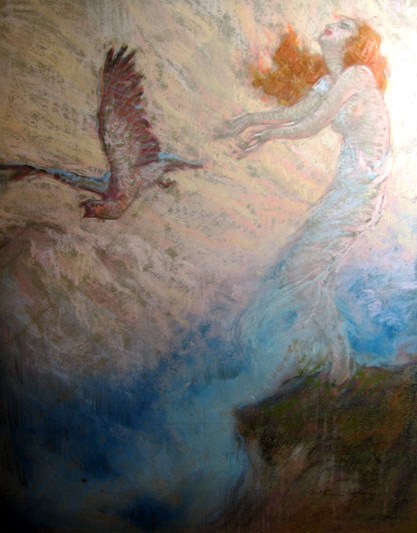
Most of us have at least one image of God. It may be a vague image, but still, we have an image in our minds of a power greater than ourselves. There are as many images of God as there are people.

Some imagine God as a benevolent spirit, others as an omnipotent ruler. Some imagine God as as a father, others as a mother. Some imagine God as a protector, others as a punisher. Some imagine God as spirit, the holiest, gentlest spirit that comes to us in times of silence.

It is the Sacred Scripture that most influences our image of God. In the fragile pages of our Bibles, we find images that sustain us, inspire us and move us. And in those times of angst we all experience from time to time, we find God images that comfort us.

If I had to choose just one Scripture text to help me imagine God, perhaps to take with me through a difficult time, it would be Psalm 139.

Where can I go from Your Spirit?
Or where can I flee from Your presence?

If I ascend into heaven, You are there;
If I make my bed in hell, behold, You are there.

If I take the wings of the morning,
And dwell in the uttermost parts of the sea,
Even there Your hand shall lead me,
And Your right hand shall hold me.

— Psalm 139:7-10 (NKJV)

I cherish the image of God I find in this Psalm, the image of a God who is ever-present. Of all the ways I have envisioned God through the years, this one is most comforting to me.

So I wonder, how is it that you see God?

May your image of God one be one that is strong and true, powerful and gentle, constant and ever-present.

Comfort, Faith, Friendship, Gun violence, healing, Heartbreak, Holy Ground, Love, Neighbors, sadness, Sorrow, Tears, Violence, Weeping, Worship

Holy Ground

470DF6B9-F261-497E-8A59-58EABE4E7898My friend, Buddy Shurden, shared an experience he had while serving his first pastorate near Ethel. Mississippi. He tells of his frequent habit of calling on Early Steed to pray. He wrote that Mr. Early Steed always began his prayer the same way, every time. 

“Lord, we come to you one more time from this low ground of sin, shame and sorrow.”

Buddy Shurden reflects on the term Mr. Early used, “low ground,” and adds, “Oh! If Early could see us now.”

Indeed. Low ground.

We are standing in the wake of waves of violence . . .

Fifteen pipe bombs mailed to two former presidents, a former secretary of state, a news outlet, and others;

Eleven worshippers killed at the Tree of Life Synagogue in Pittsburgh, in Mr. Rogers’ real-life neighborhood;

Maurice Stallard, 69, and Vickie Jones, 67, killed in a Kroger in Jeffersontown, Kentucky.

We are standing on pretty low ground these days. There’s no doubt about that. Yet, even in grief, with memorial vigils going on around the nation, we can still hear the faint voice of Mr. Rogers singing, “Won’t you be my neighbor?”

And that resonates with us as we watch neighbors grieving alongside neighbors, Muslim neighbors reaching out to help their Jewish neighbors at Tree of Life, and the news outlet that was targeted with multiple pipe bombs speaking the names of the victims and telling bits of their life stories.

Maybe it feels like low ground we’re standing on these days. But if we look around, and listen, and watch while genuine love is being shared between grieving brothers and sisters, and friends who are grieving with them, we have to admit that this ground we’re now standing on might just feel more like holy ground.

Comfort, Darkness, Daybreak, Despair, Faith, Fear, God's presence, grief, Hope, Life storms, Loss, Mourning, struggle, sunrise, Tears, Vulnerability

Icons of God’s Presence

5388C091-C6CE-402C-A3DB-77B0DD838A84
Photography by Sister Macrina Wiederkher

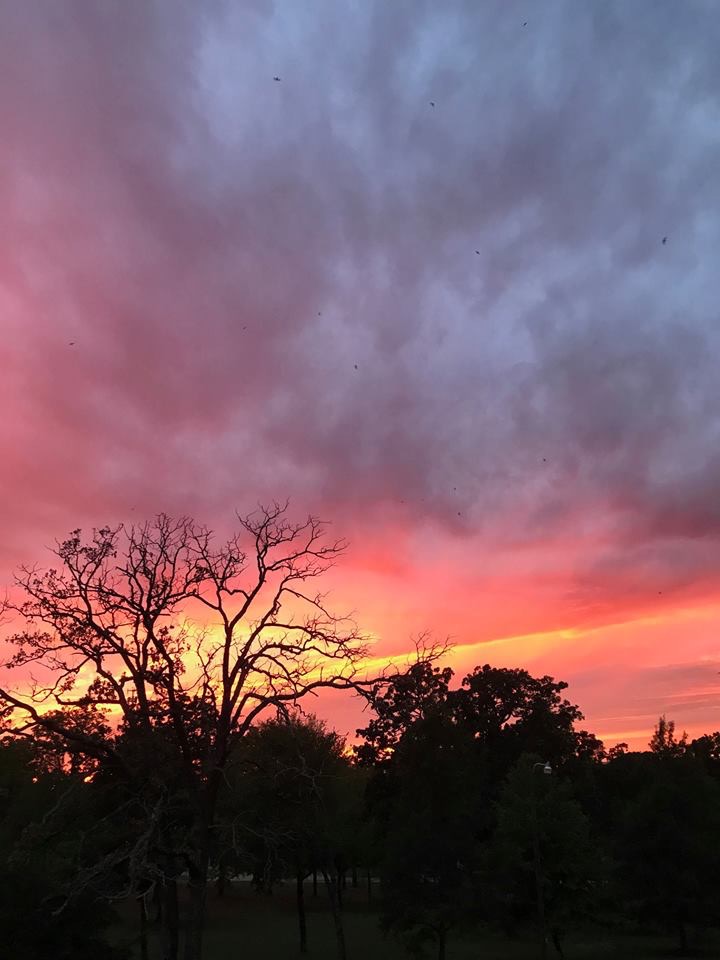
“Sunrises anoint my soul. They are quiet prayers, icons of God’s presence.”

These are words written by my friend, Sister Macrina Wiederkher. Her words resonate with our times as we hold in the light our brothers and sisters in Florida. Their loss is immeasurable, and although we know that loss of home is not as tragic as loss of life, it is a deeply felt emptiness to lose your home and all its contents.

So many are in that heartbreaking place today, and when the night falls on this night, they will not know the safe security of home. We have only a small awareness of their heartache, but God is fully aware of all they have lost. God knows their grief and their fear, their uncertainty of the future. Sometimes all we can count on is that God knows our deepest sorrow and anoints our souls when we need it most. 

Our comfort is this: that after every storm, there is a calm. When ominous, dark clouds of destruction fill the skies, we can know with certainty that the sunrise will come.

B2904AA9-02C4-480E-B061-D174E9810346I believe my friend who tells us that sunrises anoint our souls . . . like icons of God’s presence.

And I believe it for all of the Florida folk who have lost so much.

Aging, Bible, Dreams, Faith, Holy Spirit, Hope, Inspiration, Luke 2: 21-38, Passing years, Prayer, Preaching, Prophetic, Waiting, Wisdom

At Any Age

D543405F-29D8-492C-B48A-4BB0EC12CF72I asked my husband a rather strange question last night. It was about my recent preaching at First Baptist Church of Christ in Macon. This was how I posed the question to him:

“You have listened to me preach a gazillion times in past years when I was young. But now do I just seem like a little old lady in the pulpit?”

Apologies to all little old ladies who might very well preach as prophetically as ever in a similar situation! But back to my question, and my husband’s response.

“No! Not at all,” he said. “If anything, you seemed more confident and powerful than I have ever seen you.”

So much for my feelings of being inadequate just because I am now a retired senior adult who has not preached a sermon in a very long time. The truth is I agreed with my husband. I felt very confident within myself. I believed that I had received a holy and prophetic word from God, and was honored that God (and my pastor) chose me to speak that word. When I stood in the pulpit, I felt the memory and the wisdom of ministries past, all of them, and that recognition of God’s workings within me over the years filled me with assurance.

Still, we are used to prophets being young, like Jeremiah and John the Baptist. Prophets, after all, are given the mission of looking ahead. On the other hand, we think of elders as caretakers of the past. 

Pope Francis spoke about this in 2014 in his homily on the Feast of the Presentation of the Lord. In that homily, he asks us to see the mission of our elders as looking ahead to the future. And looking ahead to the future as persons who possess the wisdom of age. He gives us Simeon and Anna as our role models, naming them “senior citizen prophets.” And what role models they are! Among all the stories in Scripture, I have long been inspired and moved by the stories of Anna and Simeon.

In the story, this older woman and man have just met the new parents, Mary and Joseph, who were bringing their baby Jesus to the Temple. Pope Francis preached it with these words.

“It is a meeting between young people who are full of joy in observing the Law of the Lord, and the elderly who are filled with joy for the action of the Holy Spirit. It is a unique encounter between observance and prophecy, where young people are the observers and the elderly are prophetic!”

This is their story from the second chapter of Luke, verses 21-38:

And when eight days had passed, before His circumcision, His name was then called Jesus, the name given by the angel before He was conceived in the womb.

And when the days for their purification according to the law of Moses were completed, they brought Him up to Jerusalem to present Him to the Lord (as it is written in the Law of the Lord, “Every firstborn male that opens the womb shall be called holy to the Lord”), and to offer a sacrifice according to what was said in the Law of the Lord, “A pair of turtledoves or two young pigeons.”

And there was a man in Jerusalem whose name was Simeon; and this man was righteous and devout, looking for the consolation of Israel; and the Holy Spirit was upon him. And it had been revealed to him by the Holy Spirit that he would not see death before he had seen the Lord’s Christ. And he came in the Spirit into the temple; and when the parents brought in the child Jesus, to carry out for Him the custom of the Law, then he took Him into his arms, and blessed God, and said,

Lord, now lettest thou thy servant depart in peace, according to thy word:
For mine eyes have seen thy salvation,
Which thou hast prepared before the face of all people;
A light to lighten the Gentiles, and the glory of thy people Israel.

And His father and mother were amazed at the things which were being said about Him. And Simeon blessed them and said to Mary His mother, “Behold, this Child is appointed for the fall and rise of many in Israel, and for a sign to be opposed — and a sword will pierce even your own soul — to the end that thoughts from many hearts may be revealed.”

And there was a prophetess, Anna the daughter of Phanuel, of the tribe of Asher. She was advanced in years and had lived with her husband seven years after her marriage, and then as a widow to the age of eighty-four. She never left the temple, serving night and day with fastings and prayers. At that very moment she came up and began giving thanks to God, and continued to speak of Him to all those who were looking for the redemption of Jerusalem.

— Luke 2: 21-38 (KJV, NASB)

Simeon, a righteous and devout man who was looking for the consolation of Israel, was graced by the Holy Spirit. And in that Spirit, he came into the temple, finally holding Jesus in his arms and blessing him. This was the moment Simeon had hoped for over many years. And after prophesying about the child Jesus, he blessed the parents and began Mary’s preparation for the pain she was destined to experience when her son was crucified.

And the Prophetess Anna, now advanced in age, was there “at that very moment” the Scripture says. Anna never left the temple and she served God “night and day with fasting and prayer.” She lifted up her prayers of thanks to God for this child. And on top of that she proclaimed the message of hope that this child had come! Glorious news it was to “all those who were looking for the redemption of Israel.”

The stories of Anna and Simeon give us a portrait of elderly citizens, full of life’s wisdom and the Holy Spirit, who prophetically present to the world Jesus as Messiah!

And their story is full of hope for us, too. Perhaps those of us who are “of a certain age” are truly senior citizen prophets. Perhaps the hope we need to hear is the hope that, at any age, God calls us to prophetic mission. At any age, God will use our voices to speak hope to a world in despair, a world waiting for the consolation that comes only from God’s Spirit.

Aging, Faith, grief, Illness, Joy, Life Journeys, Lightheartedness, Music, Pain, simple joys, Sorrow

Joy

102F7D81-F946-4E11-A42A-07566031DEABAs I often do, I found today, in my lengthy list of unread emails, a plethora of pleas to do something. Save the bees. Save the libraries. Save the children. Save the political candidate . . . and several other things that someone wants to save.  I care deeply about most of those things that need saving, like the libraries and the children and the bees. And I spend a fair amount of time worrying about them and praying for them to be saved.

But for this day, I am laser focused on saving myself, saving myself from the onslaught of various illnesses, from nature’s effects of aging, and mostly, from a life filled with worry where there should be joy.

Memories flood my mind with sweet, little songs from the past: “The joy of the Lord is my strength . . .”  (1)  “I’ve got that joy, joy, joy, joy down in my heart . . .” (2) Simple songs they were for us when as children we learned every word and took the melodies into our hearts to recall in the years to come.

And so today, I recall them, realizing that whatever may come, I have joy in my heart, and most of all, that I am leaning into the truth that the joy of the Lord is my strength. These were good and positive lessons to learn as a child, with simple music as the teacher. So today, I remember the songs, singing them silently as I write. Singing them aloud would most surely disturb the household. So I keep silent.

It can be a dangerous thing to keep silence, for in those silent times, there can be a flood of memories, thoughts, recollections, and the sacred space so essential to the spiritual life. Today’s sacred space brings these words to my heart:

The Lord is my strength and my shield;
in him my heart trusts;
so I am helped, and my heart exults,
and with my song I give thanks to him.

— Psalm 28:7 (RSV)

You are being strengthened with all power according to his glorious might, so that you might patiently endure everything with joy.

— Colossians 1:11(ISV)

Nehemiah said, “Go and enjoy choice food and sweet drinks, and send some to those who have nothing prepared. This day is holy to our Lord. Do not grieve, for the joy of the Lord is your strength.”

— Nehemiah 8:10 (NIV)

On top of my end stage kidney disease, debilitating fibromyalgia, diabetes, and an almost constant barrage of new diagnoses, I have one job really: to find ways of guarding the joy that makes its home in my heart, to patiently endure whatever comes with joy. I must trust that joy really is there in my heart. I must believe that joy is still a part of my faith. I must know that joy has been with me on my journey, every day, at every turn, over every mountain and through every valley.

I must guard my joy lovingly and persistently. And I must guard my heart, joy’s dwelling place. When new illnesses come along, new concerns, new challenges, new problems and new sorrows, perhaps the most important thing I can do is to guard my heart.

Along with the other passages of scripture that have entered my sacred soace today, there is another tiny scripture passage that has moved me over the years. The writer of the book of Proverbs begins chapter four with a list of life instructions, and for twenty-two verses, the writer admonishes the reader to be vigilant, to be careful, to hold on to instruction, to avoid the path of the wicked, etc. And then in verse 23, the writer of the everlasting wisdom of the Proverbs gives us one more tidbit of advice and advises us to pay attention to this one instruction, above all else.

Above all else, guard your heart,
for from it flow the wellsprings of life.

— Proverbs 4:23 

I am never 100% certain about the meaning of scripture passages, but this one feels very clear to me — guard your heart and the wellsprings of your life will flow from it. I think the wellsprings might be joy! Not such a simple message, is it, that we have “joy down in our hearts to stay.”


(1) The Joy of the Lord Is My Strength, written by Alliene Vale, ©️1971, Universal Music.

(2) Joy In My Heart, written by George William Cooke, 1925

Faith, Ministry, Mission, Politics, Trump

Fault Lines and Faith

88629599-A458-49EB-B5B9-A413BEE5FD59
Aerial photo of the San Andreas Fault in the Carrizo Plain,  http://www.geologyin.com.

Last week, we were inundated with media reports about President Donald J. Trump’s performance in his private meeting with Russian President Vladimir Putin. From the outset, voices cried out in protest that the President of the United States would even consider a meeting with the Russian dictator. Now we are working through what the U.S. president said or did not say during the meeting. In a sense, we are standing on the fault lines of our nation.

There is no shortage of criticism on the opinion that President Trump took sides. In fact, he took Vladimir Putin’s word over the findings of several American intelligence agencies that Russia interfered with the 2016 election. Alina Polyakova, an expert on Russia at the Brookings Institution in Washington, D.C., said this in a conference call with reporters.“It was telling that the U.S. president did not mention Ukraine or Crimea once. The U.S. president also didn’t mention U.S. sanctions and basically let the Russian president set the agenda on Syria and other items as well.”

Condemnation of this meeting was swift, sweeping and widespread. The Chicago Tribune reported a plethora of reactions: “Bizarre. Shameful. Disgraceful. And that’s just from the Republicans.” Disgraceful, embarrassing, incompetent, disturbing, unpatriotic . . . There are so many negative descriptors in the narrative about this meeting. People of faith stand on the fault line wondering if and how we should respond. 

Now, the shock has somewhat abated. People, Democrat and Republican, are making their way back to the comfort of normalcy. To be sure, some Democrats are wringing their hands a bit more than they did before the Trump/Putin meeting, but at the end of the day, everyone will settle down on top of whatever fault line is nearest to them. I cannot help but think of the words of Edwin Muir from his poem, The Transfiguration, “But the world rolled back into its place, and we are here. And all that radiant kingdom lies forlorn, As if it had never stirred.”

So after all the upheaval caused by the Helsinki meet-up, and after all the amped-up rhetoric of condemnation of the American president’s performance, it seems as if “the world rolled back into its place,” as if nothing has stirred. And yet, some people of faith feel an unease on this fault line, a vague sense that all is not as it should be, and wondering what all of this has to do with us. Most of us are do-ers, so inaction is difficult even when no clear action is before us. For good or ill, we are here in “the living of these days,” and there are indeed some clear actions we must take.

One set of effectual actions, as suggested by my friend, Ken Sehested, is to be prepared, to listen to media reports from a variety of sources, but to remember that we draw our bearings from “a larger horizon.” Ken writes this in a meditation entitled “We Must Be Prepared: A Brief Meditation for the Living of these Days.”

We must be prepared. Things are likely to get worse before they get better. We must listen to the news, from a variety of sources. But we must not draw our bearings from that news. Ours is a larger horizon.

It seems to me that all of our responses — whether being fully informed, shaping our opinions and convictions, advocating with members of Congress, or praying for our nation and our leaders — must emerge from that place called “a larger horizon.” 

And about the living of these days? These are the days we have, the good of them and the not so good. Certainly, we can feel hopeless when we hear disturbing headlines about any number of fault line issues. The narrative from the U.S. President clashes with the best direction from his own staff. The story of the private Helsinki meeting changes from hour to hour. Lawmakers are calling for recordings of the meeting. There is a palpable lack of trust within the Trump administration. 

In these days, we do feel threatened by fault lines, feeling them shifting underneath our feet. But along with the fault lines, we also have a living faith that guides us to create positive change, compels us to continue standing up for the marginalized people among us, strengthens us to labor for the good of our communities and our nation, and ennobles us to speak out for truth and justice.

Comfort, Contemplation, Division, Faith, grief, healing, Hope, Justice, life, Serenity

Sitting Open-Handed Before God

71184739-B4D2-4F2F-897E-1EAD2C2A56EAWhat is it like to sit open-handed before God? To abide with a compassionate God who knows the grief we are carrying? To sit in the glowing presence of a God who, not only knows the deep angst of our nation, but who can also transform it?

Yes, many of us are grieving the current state of our nation. We see our nation’s pain, just as we see the pain of the world. Yet, we who are Christ-followers live with great advantage in this pain-filled world. Yes, we grieve the divisions in our nation and lament at the ways we seem to have lost our compass of compassion, mercy and justice. We feed those who already have abundant sources of food. We provide health care to those who can afford their own. We hold open the voting entrances for those who can get there with the proper credentials. But for the people who hunger, the families that are homeless, the elderly, the children incarcerated at our borders, the prisoners, the helpless, the marginalized . . .  well, for them, we offer prayers, if we think of them at all.

So what is our great advantage? It is that our faith can carry us into spiritual realms where hope is large and dreams are possible. It is that we enjoy access to spiritual community with an accessible God. It is the spiritual luxury of quiet contemplation that opens our hearts to the whispers of God. And yes, I did say whispers of God, for it is almost always a quiet voice that beckons us into a world of turmoil. It is a quiet God-Voice that rekindles our compassionate hearts, speaks to us through the noise of discord in our nation, and shows us the good path we must follow.

We need not despair or cry out in anger or disgust. We need not attack those who seem to be wrecking our country. We need not hate those with whom we disagree. We have the great advantage of only this life task: to be silent before God, to sit in God’s presence open-handed, to pray, to listen, to seek, and then to go.

Sister of Social Service Simone Campbell, famously known as “the nun on the bus,” offers us a glimpse into one of the ways we can live as people of faith in a fractured nation. 

Finding a way to not vilify or divide into “them” and “us” in today’s federal politics goes against . . . current custom. . . . So my contemplative practice is to attempt to sit open-handed and listen to the “wee small voice” that sometimes whispers ideas and ways forward.

Simone Campbell

Thanks be to God for the quiet whisper that guides us on the path ahead, the God-Voice that ordains us to heal our nation and comfort our world.

Brokenness, Courage, Despair, Faith, grief, healing, Hope, Kintsugi, Rabbi Yitzchak Luria, Repairing broken things, Tikkun Olam, Wholeness

Whole Again

23A0B57C-5487-4E6C-B48B-C45552916C23So many people have been broken. I join them in their brokenness, for I, too, have been broken. Not just once, but again and again. So I know how it feels to look down in the dust at my feet and see the shards of a broken spirit. I know the emotional response I have when I sit on the ground examining the broken shards, and I know how I despair of the daunting  task of putting the broken pieces back together.

I know the fear of doubting that I will even be able to put them together again. I know the terror of believing that my broken life will forever be broken. I know the suffocating feeling of having been broken beyond repair, without hope, without the faith I will need to repair my own brokenness.

And then, we look at our world, lamenting its groaning in so many ways and in so many places around the globe. Ours is a world that seems broken into pieces. I often find encouragement in the Jewish concept known as Tikkun Olam, a phrase found in the Mishnah that means to heal or repair the world. While Tikkun Olam is used today to define social action and the pursuit of social justice, the phrase has ancient roots with origins in classical rabbinic literature. It means so much more than examining broken pieces and finding a “glue” that might possibly put them back together.

Rabbi Yitzchak Luria* pondered the world’s brokenness and came to believe that, even before time, something must have gone terribly wrong with the world. As he continued to mull it over in his mind, he proclaimed that the world had shattered. He taught that we are anointed to repair a world which he defined as “all that is eternal,” insisting that “at the very core of reality is G-d’s shattered dream, waiting for us to pick up the pieces.”

Things break. The world breaks. Dreams break. We break. Such is the reality we know. And yes, we can become disconsolate as we take on the task of putting the pieces back together again. But there is a higher truth, a more noble calling than just putting together broken pieces. It is the calling to make things whole again, to make the world whole again, to make your spirit whole again.

In Scripture, we find many stories of persons being made whole. Each one looks like a miracle. Remember the story of the woman who had suffered for twelve years?

A woman, who was very ill for twelve years, came behind Jesus, and touched the hem of his garment: For she said within herself, “If I but touch his garment, I shall be whole.”

Jesus turned about, and when he saw her, he said, “Daughter, be of good comfort; your faith has made you whole.” And the woman was made whole from that hour.

— Matthew 9:20-22

Surely it was a miracle that this woman received. But for us, miracles are rare. We are burdened heavily by the brokenness, usually without the benefit of miracles. So what is it around you that is broken? What broken shards do you have before you? A broken relationship? A broken faith community? A broken dream? Is your city broken? Your nation? Your world? Or it it your own spirit that lies in broken pieces at your feet?

I cannot promise you a miracle. Even so, you must pick up the broken pieces and get started. You may get a little help from the people in your life. Then again, they may offer no help at all. But I do know that you have within yourself all the strength you need to take what is broken, put the pieces back together and find yourself whole again.

She is a beautiful piece of broken pottery, put back together by her own hands. And a critical world judges her cracks while missing the beauty of how she made herself whole again.

— J.M. Foster

The Japanese art of repairing broken pottery is called kintsugi. Repaired with pure gold, the Japanese art embraces the imperfections of the broken object. The flaws are seen as a unique part of the object’s history, which adds to its beauty. The glistening gold cracks are seen as very lovely features of the pottery, and Japanese artists say that the pottery is even stronger at the broken places. 

And so are we!

* https://www.chabad.org/library/article_cdo/aid/3593030/jewish/Fallen-Sparks.htm

Belief, Faith, God's presence, Grace, Images of God

God Images

B33BBCE1-46BB-404E-8429-32535C46106FHow do you see God? What images of God do you see? How do you find God? Where do you find God?

Most of us have at least one image of God. It may be a vague image, but still, we have an image in our minds of a higher power. There are as many images of God as there are people. People have images of a “god” they may or may not know as a part of their spiritual journey. Some imagine God as a benevolent spirit, others as an omnipotent ruler. Some imagine God as as a father, others as a mother. Some imagine God as a protector, others as a punisher.

I remember a sermon I heard many years ago proclaimed by a passionate, animated African American preacher. “Tell me brother,” he preached with a lyrical chant. “Tell me brother, how do you find God? Tell me sister, how do you find God?”

And he repeated the questions again and again, building into a spirited crescendo, after which he said, “You find God when you get little enough that God can get big in you!”

And all the congregation responded with exuberant “Amens” and “Hallelujahs.”

I would surmise that the image of God held by that congregation, at least in that moment, was the image of an all-powerful, mighty Spirit just waiting to hear their praises and then responding with little miracles of answered prayer.

God images fill the world: there is the Creator God, the gentle shepherd, the God of vengeance, the God Most High, and from sacred music, the Mighty God, Wonderful Counselor, Everlasting Father, Prince of Peace.*

But we must acknowledge a significant exception. Some people simply say that they do not believe in God at all, any God. No images. No spiritual need for God. Nothing. They call themselves atheists.

I have known people who profess to be atheists. By no means am I an authority on this, but in my years as a hospital chaplain, I have never known a dying patient — whether believer or atheist — fail to cry out to God. In my years as a trauma specialist, pastor and pastoral counselor, I have never known an atheist who is in the depths of trouble fail to cry out to God.

I do not say that every person who does not believe in God always reaches for God in times of trouble. I am simply saying that in my experience, people in the midst of pain, grief, fear or other kinds of chaos search for a God who, by the way, is always there.

I recently read an intriguing quote by Marcus J. Borg:

When somebody says to me, “I don’t believe in God,” my first response is, “Tell me about the God you don’t believe in.”

― Marcus J. Borg, Jesus: Uncovering the Life, Teachings, and Relevance of a Religious Revolutionary

What a wonderful response, to affirm a person’s choice of unbelief while opening the door for meaningful conversation. That response is so much more respectful than a response that 1) forces a person to listen to a treatise on the existence of God; and 2) insists that the person must immediately become a believer by following a series of simple steps.

In the last analysis, a person does not find God on our timetable or through our methods. A person will find God in his or her own way and, on the spiritual journey, will see very personal images of God. They will discover the timeless grace offered to us all: a presence of God that is is constant and never-ending.

Where can I go from Your Spirit?
Or where can I flee from Your presence?

If I ascend into heaven, You are there;
If I make my bed in hell, behold, You are there.

If I take the wings of the morning,
And dwell in the uttermost parts of the sea,

Even there Your hand shall lead me,
And Your right hand shall hold me.

— Psalm 139:7-10 (NKJV)

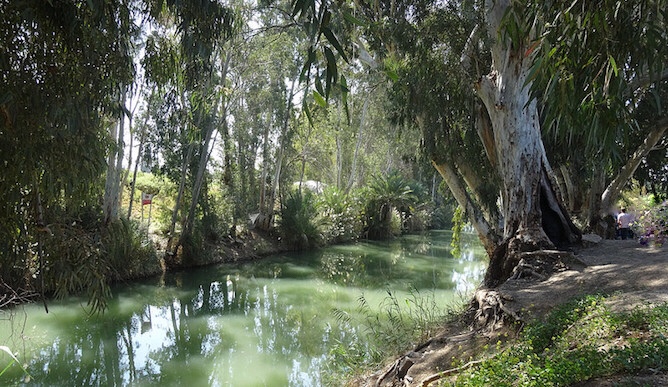
As for me, I hold on to the image of a constant and ever-present God. Of all the images I have of God, the God I find “on the wings of the morning” most comforts me. I see God in many ways and in many places . . .  in Scripture, in nature, in my spirit. How do you see God?

For all who have eyes to see, let them see . . . images of a God strong and true, powerful and gentle, loving and accepting. God images are most assuredly there for us, for those of us who believe in God and for those who do not.


* “Hallelujah Chorus” from Handel’s Messiah


Aging, Change, Comfort, Faith, Fear, God's Faithfulness, God's presence, Hope, Joy, Life Journeys, Life pathways, peace, Psalms

Around the Bend

8354B3D7-3728-454F-B1E7-FAB7901C5EB8
Photo by Steven Nawojczyk

I wonder sometimes what I might find around the bend. “Around the bend” is an apt metaphor for the twists and turns of life’s pathway. No matter how long I have traveled my journey, no matter how much life wisdom I have gained, I never, ever know what what’s around the bend.

The pathway before me can frighten, even while I strain to see as far as I can into what lies ahead. The bend is sharp most times, and the angle hides my view. As I age, fear on the journey looms large, for I am completely aware of the dangers I might encounter around the first bend, and the next, and all the bends that are ahead of me. And yet, I am constantly graced with flashes of hope and faith whispering that what is ahead of me could be even better than what I have left behind.

The beautiful photo above by Steven Nawojczyk is a gift of calm waters bending in a gentle flow at the foot of a mountain, lightened by the golden rays of the sun. The image makes me believe that whatever is around the bend is lovely, peaceful, comforting, safe. And that is exactly what God would want me to believe, and woukd want us all to believe. I cannot help but think of the Psalmist’s affirmation that God “leads me beside still waters.”

In so many comfort-filled passages, the Psalmist offers sure and certain comfort. Hear the Psalmist’s words . . .

Keep me safe, my God, for in you I take refuge.

Lord, you alone are my portion and my cup; you make my lot secure.

The boundary lines have fallen for me in pleasant places;
Surely I have a delightful inheritance.

I keep my eyes always on the Lord. With him at my right hand, I will not be shaken.
   Therefore my heart is glad and my tongue rejoices; my body also will rest secure . . .

You make known to me the path of life;
you will fill me with joy in your presence,
with eternal pleasures at your right hand.

— Psalm 16:1, 5-6, 8-9, 11 (NIV)

And hear the words of the Prophet Isaiah . . .

Even to your old age and gray hairs, I am he, I am he who will sustain you. 
I have made you and I will carry you; I will sustain you and I will rescue you.  

— Isaiah 46:4 (NIV)

And so “around the bend” is not so frightening after all. In God — “who makes known the path of life” —  there is comfort, safety, protection, constancy, and even joy. Thanks be to God.

Crossing the Jordan, Death, Faith, Gardner Taylor, Preaching

“Feeling the Spray of Jordan”


AA96E303-3AB1-4552-9DCD-8BF2977C7A64
Crossing the Jordan River. Photo by Siiri Bigalke/ICSD.

As a hospital chaplain, I kept vigil at the bedside of many persons who were preparing themselves to die. For me, being present with a person who is approaching death is, without equal, the most sacred and holy privilege of a minister’s life. Yet, I found it difficult at times to keep myself emotionally and spiritually healthy. During my darkest times, one phrase of the beloved hymn, “Softly and Tenderly” washed over me: “Shadows are gathering, deathbeds are coming.” With those words, the hymn text gives us a striking image of death.

Each of us has images of death. Every person has uniquely personal ideas about death. Some meet death with fear. Others who come near to death, whether their own or someone else’s, feel anger. Some have a sense of doom, while others are filled with a comforting calm. Always through the years, I heard the phrase, “crossing the Jordan,” most definitely a preacher’s expression meant to celebrate a life well-lived while standing at the end of life, the edge of the Jordan.

Rev. Gardner Taylor was one of those preachers who proclaimed death as a celebration of life and a joyous passing into eternity. An American preacher noted for his eloquence, Taylor was known as “the dean of American preaching.” Today my professor/preacher brother, who is always sending me something to read or listen to, sent me a stunning piece of Gardner Taylor’s preaching. The sermon was from the 1976 Lyman Beecher Lectures.

Gardner Taylor shared about one of his beloved deacons who was on his deathbed. The deacon expressed the wish that he could hear Taylor preach one more time. Reflecting on that experience, Taylor inspired those attending the lecture with the following message of eternal Christian hope. As my brother wrote, “It may be the most poetically beautiful thirty seconds of preaching I have ever encountered.”

Indeed, it is . . . so full of abiding Christian hope. This is what he preached:

Now, no preacher has of himself or herself anything of real significance to say to anyone who is within the view of the swelling of Jordan. But there is a Gospel, and you are privileged to be summoned to declare it. It can stand people on their feet for the living of their days. And, also – what a privilege almost too precious to be mentioned – it may be that the gospel which you preach will then steady some poor pilgrims as they come to where the bridgeless river is and some of them, feeling the spray of Jordan misting in the face, might thank God, as they cross the river, that he made you a preacher.

As for me, I do expect to feel “the spray of Jordan,” and as I cross the river for the last time, I will most humbly thank God that he made me a preacher.

That is the secret of greeting death for us all, I think, being able to stand — with a steady heart and a calm spirit — and give thanks to God for what he made you. You might very well feel “the spray of Jordan” as a mist on your face.

Thanks be to God.

Bible, Comfort, Despair, Faith, God's Faithfulness, God's presence, grief, healing, Heartbreak, Hope, Isaiah, Pain, Psalms, Skies, Stars, Suffering

The Hands that Made the Stars

7AA0FE34-BEE8-4CFC-AEF3-1E8D99948530
Comfort in the magnificent Arkansas skies. Photography by Steven Nawojczyk.

As I write on this day, I am aware that many friends are in the throes of darkness and despair. Some are facing devastating medical diagnoses. Some are yearning to have a child and are going through difficult medical procedures. Some are grieving for a family member in trouble. Some are waiting with hope for a cure for a disease that is bringing them to their knees. Others are enduring harsh medical treatments, hoping their lives will be saved. Many of them are at the point of losing all hope.

It hurts me deeply every time I am at a loss for comforting words. A little part of my heart breaks because I know I cannot “do something” to ease the suffering. And so I search for my own comfort as I search for ways to hold my friends in the light. As always, I am led to Scripture, not for easy answers, miraculous cures, or an instant panacea. I peek into the Bible to find words that will lift up hope in the middle of dark days and darker nights.

Often the words I find point me to the skies, as if gazing into an expanse beyond imagination might open my eyes to a radiant and holy hope. In truth, the words of Scripture do point me to hope. 

From the Prophet Isaiah:

Look up into the heavens. Who created all the stars? He brings them out like an army, one after another, calling each by its name. Because of his great power and incomparable strength, not a single one is missing. O Jacob, how can you say the LORD does not see your troubles?

Have you never heard? The LORD is the everlasting God, the Creator of all the earth. He never grows weak or weary. No one can measure the depths of his understanding. He gives power to the weak and strength to the powerless.

— Isaiah 40:26-29

From the Psalmist:

When I look at the night sky and see the work of your fingers — the moon and the stars you have set in place — what are mere mortals that you should think about them, human beings that you should care for them?

— Psalm 8:3-4

And so whoever you are, whatever pain you are carrying, know that the hands that made the stars are holding your heart.

Comfort, Faith, God's presence, Inspiration, Nature

My Lord Is Near Me All the Time

635D7269-16B0-4C30-8A96-05536FDFF587Magnificent power! On a ride through the Georgia countryside, I witnessed nature’s beauty in a thunderstorm. The sky lit up from one end of the horizon to the other and then enormous streaks of lightning flashed in astounding display. It took my breath away, not because of its danger, but because of its brilliance. I struggle to find words to describe it.

Here’s how to scientifically explain it. Within a thundercloud way up in the sky, many small bits of ice (frozen raindrops) bump into each other as they move around in the air. All of those collisions create an electric charge. After a while, the whole cloud fills up with electrical charges.

And so it was tonight. I do not always find spiritual significance in acts of nature, but this night I was overwhelmed with the idea of the absolute power of God’s creation. At the same time, I considered my close relationship with Jesus.

God, whose ultimate power can be beyond our human comprehension, visited us through his Son who walked among us on this earth. All of it dawned on me in the midst of a powerful, resplendent thunderstorm that reminded me of the eternal truth of a beautiful hymn, “My Lord Is Near Me All The Time.” *

In the lightning flash across the sky
His mighty pow’r I see,
And I know if He can reign on high,
His light can shine on me.

I’ve seen it in the lightning, heard it in the thunder,
And felt it in the rain;
My Lord is near me all the time, My Lord is near me all the time.

When the thunder shakes the mighty hills
And trembles ev’ry tree,
Then I know a God so great and strong
Can surely harbor me.

I’ve seen it in the lightning, heard it in the thunder,
And felt it in the rain;
My Lord is near me all the time, My Lord is near me all the time.

When refreshing showers cool the earth
And sweep across the sea,
Then His rainbow shines within my heart,
His nearness comforts me.

I’ve seen it in the lightning, heard it in the thunder,
And felt it in the rain;
My Lord is near me all the time, My Lord is near me all the time.

As a child my overprotective grandmother made sure that lightening would frighten me. It worked because of her very frightened demeanor at the first sign of a storm. I remember how she gathered my brothers and me close beside her on the sofa, wrapping her gentle arms around us. At every clap of thunder, she screamed.

But as an adult, I actually love thunderstorms. When thunder roars, I hear it as a reminder of God’s strength. When lightning flashes across the sky, I see it as a marvel of God’s power. When I feel showers of rain, I feel God’s presence in the provision of life-giving water. In all of it, I am grateful for the nearness of a relationship with Christ. It is abiding truth: my Lord really is near me all the time.

Amen.

To listen to the hymn, “My Lord Is Near Me All the Time” click on the video below:

 
* Georgia hymn writer, Barbara Fowler Gaultney (1935-1974), turned to writing hymns as a source of hope and an expression of her faith. In tenuous health throughout her life, Gaultney was educated in the Atlanta public schools and attended the University of Georgia. While a member of the First Baptist Church of Forest Park near the Atlanta airport, she penned both the words and music to “My Lord Is Near Me All the Time.” Her minister of music, Julian Wilson, assisted her in submitting it for publication. Her hymn was first published in the Baptist church music periodical, The Church Musician, April 1960. It then appeared in the 1975 Baptist Hymnal and has become a favorite of many congregations.  (Harry Eskew, https://gabaptistworshipmusic.org/my-lord-is-near-me-all-the-time/)


Please feel free to contact me by completing the following form.

← Back

Thank you for your response. ✨

Faith, God's Faithfulness, Heartbreak, Hope, Prayer, Unanswered Prayer

Unanswered Prayer

EE073AB1-5433-429E-90B2-4400B2C20C2BUnanswered prayer leaves me disconsolate. At times,  I have offered pleas to a God that seemed absent. On difficult days, I lifted up my longings to a God who was often silent. There were times when I languished in God’s silences and lamented as one who has no hope. Sometimes I cried out as one whose faith is spent.

There you have it: my candid and disturbingly honest confession about unanswered prayer. I could offer excuses for it. Or I could try to minimize the reality that this is a serious lapse of my faith. I could try to explain how, through the years, I have known trauma and trouble, as I hope for your sympathy. Or I could rest comfortably in your commiseration with me, together admitting that God is indeed absent, silent and uncaring.

But to believe those things about God would harm my faith and yours.

Good news: I am not alone in my feeling of abandonment. Remember David, who in his darkest hour, felt that God was absent:

How long, Lord? Will you forget me forever?
How long will you hide your face from me?  (Psalm 13:1)

And hear also these words from the Psalmist that bring to light a sense of abandonment by God:

My God, my God, why have you forsaken me?
Why are you so far from helping me, from the words of my groaning?
O my God, I cry by day, but you do not answer;
and by night, but find no rest.
   (Psalm 22:1-2)

So back to unanswered prayer.

To buy in to a “silent God” theology would be to deny that God has, in fact, sustained me on every step of my faith journey. When God seemed most absent, God’s presence in time became most clear. When I felt that God had abandoned me, I soon felt embraced by God’s strong, grace-filled hands. When I cried out, “My God, why have you forsaken me?” I found God very near, saying to me: “I will never leave you or forsake you.”  (Isaiah 41:10; Hebrews 13:5)

Most of all, I discovered that unanswered prayer, in the throes of deep angst, creates a stronger faith and a more abiding hope. I love the hymn, “Spirit of God, Descend Upon My Heart” especially this stanza:

Teach me to feel that thou art always nigh;
Teach me the struggles of the soul to bear.
To check the rising doubt, the rebel sigh,
Teach me the patience of unanswered prayer.*

Amen.

*Hymn Text: George Croley, 1854, public domain)

Please take a few minutes to hear this beautiful hymn In the video below:


Bitterness, Comfort, Despair, Faith, God's Faithfulness, grief, Holy Spirit, Hope

“Therefore, I have hope . . .”

2E96D7A1-A558-4147-B7E0-F61BFB145AF7
The quiet beauty of Arkansas. Photo by Steven Nawojczyk.

This I call to mind, and therefore I have hope.

I have been without hope at times, disconsolate, forsaken, wondering why my faith seemed to fail me. My struggle overcame my hope even as I listened desperately to hear the Spirit of hope. I heard nothing. Day after day, in the long dark night of my soul’s anguish, I heard nothing.

That’s the thing about hope. She doesn’t shout our her presence. She doesn’t get your attention in a loud, thunderous manner. Hope, it seems to me, is the quiet whisper of the Holy Spirit that goes beyond your conscious mind deep into the depths of your soul. That is the only kind of hope that works, the only kind of hope that can comfort us in times of affliction. The Scripture offers a promise in the book of Romans: “By the Holy Spirit you may abound in hope.” 

The prophet Jeremiah speaks in the book of Lamentations with words filled with devastating pain. Certainly Jeremiah was a man of abiding and genuine faith. Yet, he suffered. Although it may not be our understanding, Jeremiah understood his times of anguish to be at the hand of the God he served. In hearing Jeremiah’s words of lament, we hear his loss of hope. Listen to this prophet’s heart.

I am one who has seen affliction under the rod of God’s wrath; he has driven and brought me into darkness without any light;

against me alone he turns his hand again and again, all day long.

though I call and cry for help, he shuts out my prayer;

He has blocked my ways with hewn stones, he has made my paths crooked. He has filled me with bitterness . . . My soul is bereft of peace;

I have forgotten what happiness is; so I say, “Gone is my glory, and all that I had hoped for from the Lord.”

The thought of my affliction and my homelessness is wormwood and gall! My soul continually thinks of it and is bowed down within me.

But this I call to mind, and therefore I have hope:

The steadfast love of the Lord never ceases,  his mercies never come to an end; they are new every morning; great is your faithfulness.

“The Lord is my portion,” says my soul, “therefore I will hope in him.”

— Lamentations 3: 1-3; 8-10; 17-24 (New Revised Standard Version)

To reassure the prophet, God did not shout out a proclamation of new hope. There were no loud, boisterous declarations. Instead, the prophet calls to mind the mercies of God. And as he calls God’s faithfulness to mind, his soul speaks of hope.

If you are a long-time Baptist, you may have sung an old hymn that speaks of the quiet presence of hope. The hymn, Whispering Hope,* promises a gentle hope that comforts us in a whisper. Here is a portion of that hymn.

Soft as the voice of an angel breathing a lesson unheard,

Hope with a gentle persuasion whispers her comforting word:

Wait till the darkness is over, Wait till the tempest is done,

Hope for the sunshine tomorrow, after the shower is gone.

Whispering hope, oh, how welcome thy voice, making my heart in its sorrow rejoice.

— Septimus Winner, 1868

Hope with a gentle persuasion whispers her comforting word . . . To me, that sounds like the whisper of the Holy Spirit who, in our times of despair, in the times when we feel that we have lost all hope, brings her comfort, her assurance, her peace to us again and again.

May you hear the Spirit’s whisper when you need it most.

And may the God of hope fill you with all joy and peace in believing, so that by the power of the Holy Spirit you may abound in hope. (Romans 15:13)

Amen.


* If you would like to listen to a lovely arrangement of “Whispering Hope” sung by Hayley Westenra, or if you have not heard this hymn in a while, please visit this link: https://m.youtube.com/watch?v=zj3N9LE9FPs


Challenge, Courage, Faith, Hope, Life pathways, Perseverance

Moving a Mountain with a Teaspoon

1FFB2D29-8A6E-4363-9AF5-B3744373776B
Quote by Napoleon Bonaparte

Moving a mountain with a teaspoon!

Ever feel like that’s exactly what you’re trying to do? I know the feeling personally, and I have also witnessed others in the middle of this kind of daunting task.

Making ends meet in a single parent family . . . moving a mountain with a teaspoon.

Caring for an aging loved one who needs constant attention . . . moving a mountain with a teaspoon.

Fighting a debilitating and relentless illness . . . moving a mountain with a teaspoon.

None of us are immune to life situations that get the best of us, sometimes bringing us to our knees in desperation. And sometimes, these life challenges move us to the precipice of almost giving in and giving up. There is simply not enough strength and fortitude to go on, and we find that we are sitting in the dust where we collapsed, contemplating if it’s even worth it to try to get back up.

With inner resilience and a tiny bit of hope, we do get up. We move farther along our path, part of us dreading the next collapse, and the other part of us filled with certainty that we will survive. Moving a mountain with a teaspoon is most certainly a part of life, every person’s life.

And yet, from somewhere in our past, there is this faint whisper of hope. We may not remember where the whisper comes from, and it may be ever-so-quiet. But still we hear it . . .  echoing from ages past, coming from somewhere in our lives at some devastating moment, maybe even becoming a sigh from the deepest place in the soul.

Truly I tell you, if you say to this mountain, ‘Be taken up and thrown into the sea,’ and if you do not doubt in your heart, but believe that what you say will come to pass, it will be done for you.

— Mark 11:23 NRSV

What a promise to remember when we feel as if we are moving a mountain with a teaspoon! It is a God-sent word of assurance, a message of hope that encourages us to pick ourselves up and move forward, to try one more time.

Thanks be to God.

Change, Contemplation, Darkness, Daybreak, Death, Despair, Faith, Freedom, healing, life

When Your World Ends

66A9AA3C-258F-40E7-AB87-32000E79567EMy adult son is a master at denial. He can get very upset over a situation, but before you can blink, he has moved on as if it never happened. To be honest, I have often envied that part of his personality. As one who tends to brood over life’s challenges and problems, I would love to just be able to blow things off.

There is no chance of that happening for me. I think that this brooding part of me emerges from the trauma I have experienced over the years. My world has ended many times, or so it seemed. Yet, there has been a positive aspect of my brooding: that I have learned to sit with an issue for a while, dissect what has happened, feel the depth of hurt, and reflect on the depth of the emotional assault I’m experiencing. Blowing off pain just doesn’t work for me. Denial is not my way.

Denial never makes hurt go away. Denial never even diminishes hurt. So be warned. Blowing off pain is a path to internal disaster. As difficult as introspection can be, I am grateful that I am able to deeply feel the feelings I feel, to let the hurt wash over me, and finally to emerge better and stronger. Feeling the depth of my heartaches has served to disempower them and, most importantly, to enable me to harness my inner power to be free.

This, I believe, is the path that takes us beyond despair. This is the path that lets us own our heartbreak and then leave it behind to move into a fresh, new day. I am strengthened by the words of poet Nayyirah Waheed.

feel it.
the thing that you don’t
want to feel.
feel it and be free.

the thing you are most afraid to write, write that.

it is being honest
about
my pain
that
makes me invincible.

i don’t pay attention to the
world ending.
it has ended for me
many times
and began again in the morning.

To sit with your pain, to touch the heart of your hurt . . . that is what makes you free. And that freedom will be for you this miracle . . . when your world ends, and it may end many times, it begins again in the morning.

Thanks be to God.


Aging, Change, Christ's Passion, Faith, God's Faithfulness, Hope, Illness, Lent, Life pathways, Loss, Palm Sunday, Perseverance, Retirement

How Do You Live When You Know What’s Coming?

ABD2C8E4-5AA9-49EC-B771-A85BCDFBBD90How do you live when you know what’s coming? Jesus might have asked himself that question when the crowds were shouting “Hosanna!” and making a big deal of the fact that he was riding into town on a donkey. The Gospel of Mark tells the story well.

Many people spread their cloaks on the road, and others spread leafy branches that they had cut in the fields.

Then those who went ahead and those who followed were shouting, “Hosanna! Blessed is the one who comes in the name of the Lord! Blessed is the coming kingdom of our ancestor David! Hosanna in the highest heaven!”

Then he entered Jerusalem and went into the temple; and when he had looked around at everything, as it was already late, he went out to Bethany with the twelve.

— Mark 11:8-11 New International Version

So how do you live when you know what’s coming? Jesus went to the temple as was his custom and then set off to Bethany with his disciples. He knew what was coming, yet he did nothing very earth shattering. He sent his disciples into the city to prepare for for the Passover meal they would share. They ate the meal together, Jesus told then they would all desert him, and each one declared that they would never do such a thing.

They did. But life went on as life does. The Gospel then continues the sorrow-filled story as Jesus goes on with his disciples to a place called Gethsemane.

. . . And Jesus said to his disciples, “Sit here while I pray.”

He took with him Peter and James and John, and began to be distressed and agitated.
And said to them, “I am deeply grieved, even to death; remain here, and keep awake.”

And going a little farther, he threw himself on the ground and prayed that, if it were possible, the hour might pass from him. He said, “Abba, Father, for you all things are possible; remove this cup from me; yet, not what I want, but what you want.”

He came and found them sleeping; and he said to Peter, “Simon, are you asleep? Could you not keep awake one hour? Keep awake and pray that you may not come into the time of trial; the spirit indeed is willing, but the flesh is weak.”

And again he went away and prayed, saying the same words. And once more he came and found them sleeping, for their eyes were very heavy; and they did not know what to say to him.

He came a third time and said to them, “Are you still sleeping and taking your rest? Enough! The hour has come; the Son of Man is betrayed into the hands of sinners.

Get up, let us be going. See, my betrayer is at hand.”

Immediately, while he was still speaking, Judas, one of the twelve, arrived; and with him there was a crowd with swords and clubs, from the chief priests, the scribes, and the elders. Now the betrayer had given them a sign, saying, “The one I will kiss is the man; arrest him and lead him away under guard.”

So when he came, he went up to him at once and said, “Rabbi!” and kissed him.

Then they laid hands on him and arrested him.

— Mark 14:33-46 New Internation Versioned

So now life is earth shattering for Jesus. How do you live when you know what’s coming?

Right now in deep Lent, this is a question we probably should ask. I don’t know about you, but as for me, I know what’s coming, at least some of what’s coming. There’s aging and illness, separation from children and grandchildren, the inevitable loss of loved ones, waning energy and more loss of independence. It happens to persons of a certain age. What’s coming for me includes things that are not so positive.So how do I live when I know what’s coming?

The preacher in me wants to offer a religious platitude that minimizes the troubling reality and lifts up abiding hope. The preacher in me wants to proclaim with a great deal of passion that all will be well. The preacher in me wants to declare that whatever happens to me, God will be glorified.

How do I live when I know what’s coming?

Right smack dab through the middle of it! Living strong in the face of fear. Holding tightly to hope. Summoning my inner courage. Standing steady through the winds of change, depending on the inner resilience that has always sustained me. That’s how I live in the days I have left in this world.

But, by the way, there really is a religious word that upholds and sustains me. The preacher in me is still alive and well, so I can proclaim with great certainty the comforting truth I find in my favorite passage of scripture

You have searched me, O God,
and you know me. You know whenI sit down and when I rise;

You perceive my thoughts from afar. You discern my going out and my lying down; you are familiar with all my ways . .

You hem me in behind and before, you protect me, and you lay your hand upon me.

Such knowledge is too wonderful, too lofty for me to comprehend.

Where can I go from your Spirit?
Where can I flee from your presence?

If I go up to the heavens, you are there;
if I make my bed in the depths, you are there.

If I take the wings of the morning and dwell in the uttermost parts of the sea, even there shall your hand guide me and your right hand will hold me fast.

— Psalm 139:1-10 New International Version (paraphrased)

With that sacred promise and with the strength that has grown in me over many years, I really do know how to live when I know what’s coming. Thanks be to God.
Child protection, Faith, Family, Foundation, Rootedness, Roots, Sexual abuse, Trees

Rootedness

FEB12BA8-9746-4E12-84C7-A6CDCCEC2347
Photo by Jeremy Bishop

I spend a good deal of energy trying to understand myself. I wonder about the places my emotions go, how I got to where I am spiritually, where my deepest convictions came from. Self-assessment is a lifelong process. Saleem Haddad expresses the process with great insight when he writes this in his book, Guapa.

 . . . Digging through my roots to understand the way my branches grew.
(https://www.goodreads.com/author/show/14107015.Saleem_Haddad)

These days, I have been digging through my own rootedness, and as I have contemplated my roots, I recalled the deep childhood influence of the two people who literally nurtured my sense of rootedness — my Aunt Koula and Yiayia, my grandmother. It is clear to me that I was rooted in the devotion of these two strong women.

From my dear Aunt Koula, I received the kind of lavish love that is most surely a part of a Greek aunt’s DNA. And from my attentive (sometimes intrusive) Greek grandmother, fierce protection. One can thrive on lavish love and fierce protection, and I did thrive.

But my teen years brought change. I was no longer near my aunt, my grandmother, or even my mother. Instead, I lived with a harsh and abusive father, a broken man held together with alcohol and the sexual abuse of his only daughter. So I was a troubled teenager, adrift for a season and feeling that I had lost my rootedness.

But inside me was a persistent resilience. In the midst of abuse, I sent my roots even deeper into the nurturing soil, a soil that still held the nutrients placed there by my aunt and my grandmother. I managed to keep myself rooted. Through the pain of abuse, I became stronger as my roots pushed deeper into the earth beneath me. I found the Divine Source that made sure I would be rooted and grounded in love.

I was always a religious child with meaningful ties to my Greek Orthodox faith. But as an eighteen year old, I discovered an even stronger foundation of faith. I found God in a new way, reborn by a fresh faith in Christ.

My roots held me firm. I was stronger than ever before. And at times during those difficult years. I would fall into God’s arms of grace as I repeated the prayer that, through the years, would inspire me more than any prayer in scripture.

. . . I bow my knees before the Father, from whom every family in heaven and on earth takes its name. I pray that, according to the riches of his glory, he may grant that you may be strengthened in your inner being with power through his Spirit, and that Christ may dwell in your hearts through faith, as you are being rooted and grounded in love. I pray that you may have the power to comprehend, with all the saints, what is the breadth and length and height and depth, and to know the love of Christ that surpasses knowledge, so that you may be filled with all the fullness of God.

— Ephesians 3:14-19 New Revised Standard Version (NRSV)

To all around me, I appeared strong and vibrant during those years of chronic and constant abuse. Like a tree that displays the splendor of its verdant leaves in the sunlight, I displayed my own “leaves,” in spite of the destructive and pain-filled environment that was my life.

Budding. Growing. Greening. Branching out.

Outwardly, I seemed healthy and strong, but the real strength was below the ground, roots and taproots pushing deeper into the soil. What happens there is unseen — below the ground. But that which happens below the ground, unseen, literally fashions the glory of what is seen, above the ground, branches reaching high into the sky toward the heavens, pointing to the God of the ages.

It is miracle, really, a grace gift from the God who longs to plant us firmly and deeply into a holy foundation. And so we can withstand the storms and the winds when they threaten, even gale force winds that move us, but cannot destroy us.

I call it rootedness.


Darkness, Faith, Hope, Illness, Light

The Light Behind Me

F4719FE4-AC10-4EF9-903D-023E96825023
Photo by Łukasz Łada

At the risk of being too dramatic, I must say that on some days, my path seems dark. Whether caused by chronic pain, illness, or other challenges, I sometimes walk through patches of darkness — often immense patches of darkness that seem to go on forever. Dark thoughts about an uncertain future can flood my mind.

Much wiser persons than I have made sense about the veil of darkness that often covers our lives. Francis Bacon left us with these words:

In order for the light to shine so brightly, the darkness must be present.

— Francis Bacon (1561-1626)

It is the dramatic contrast between darkness and light that leaves us perplexed. We can feel the promise of light on one day, and on the next, darkness prevails. So often, it is the darkness that wins the day, having its way with us. But then there is this thing we call faith.

Faith, we recall, is something that Jesus tried to explain over and over again to his disciples. They couldn’t quite get it. And like those twelve, we don’t quite get it either, that “faith” is at once simple and complex, available yet impossibly unattainable. At best, faith can be elusive.

But getting back to me on this dark day, here is a brief personal anecdote. I have my dialysis treatments for seven and a half hours every night. My dialysis machine has a screen that lights up in our dark bedroom. I have to read the screen at times during the night, and that troublesome screen shines in my eyes so intensely that I cannot see anything else in front of me.

That mundane daily experience teaches me that the most effective light in a dark place is not the light in my eyes that blinds me, rather it is the light behind me.

The light behind me stirs the depths of my soul, because I know that God’s light truly is behind me as I travel this journey. To know that the Light will guide my way is to again find my faith, in spite of illness, in spite of pain and suffering, in spite of uncertainty.

We uncover the holy mystery and the divine promise in the living words of Scripture.

The people living in darkness
have seen a great light;
on those living in the land of the shadow of death
a light has dawned.

— Matthew 4:16 New International Version (NIV)

I do not know how it all happens, that this Scripture comes to life within me and gives me life. I do not understand a God that can find me in every dark place. I do not comprehend the miracle that shines light behind me in the middle of my darkest days. I do not understand how a light can dawn “in the land of the shadow of death.”

But I do know that my fickle faith transforms at times into something solid and steadfast, comforting and constant.

Light behind me, I think.

Thanks be to God.