
I watched the news last night before bed. Not such a good idea! Halfway into the broadcast, I felt a pervasive sense of despair and became very nauseous. I’m feeling it again as I’m writing this. It was the very real and very current events that were so upsetting: hurricanes bringing destruction in Louisiana; California wildfires threatening yet again; protests after the tragic and unwarranted shooting of Jacob Blake; 17-year old Kyle Rittenhouse, who took to the streets of Kenosha, Wisconsin during protests, using a military-style rifle to kill two people; a president who is intent on meeting street protests with military violence; a president who gathers a crowd of supporters, not socially distanced and most not wearing masks; and the coronavirus hovering over it all to make situations even more devastating than they already are.
I turned off my bedside lamp and, in the darkness, pondered the news I had just seen. I could not sleep with the sorry, worry, desperation and helplessness I felt. There was not one thing I could do to change my world. My world seemed out of my control, engulfed in all of the events of our time. I wondered . . . how will we live with natural disasters, protests in the streets, killing, violence, military style weapons, police out of control, political rancor, a deadly pandemic and a seeming disregard for human life? How will I live with it? What can I do to change it?
In these times, we see before our eyes people getting very sick, people dying alone in nursing homes and hospitals because of COVID restrictions, people isolated and lonely for months, people divided by political polarization, people being killed by police, people protesting for racial justice, people pushing back hard, enshrined in their white supremacy, people losing their homes, people fighting out-of-control wildfires, people losing their jobs, people tired from working with so many hospital patients, people afraid to go back to school, people feeling angry and frustrated, people feeling complete despair. Most of all, people are hoping beyond hope for better days ahead.
My mind thought of nothing of any consequence I could personally do to reverse all of this destruction and despair. My heart memory, though, remembered some things God instructed us to do long ago. God addressed instruction to, “my people who are called by my name.”
“I am called by God’s name,” I thought. “I know exactly what to do!” Of course, I could honor God by standing up for justice — engaging in political activism, contacting government officials to demand change or participating in peaceful protests. I could honor God’s creation by doing more to care for the earth. I could honor God by loving my neighbor and caring for those who have suffered loss.
People of faith have God’s marching orders that dispatch those called by God’s name to practice all manner of good works. And this we must do. But the critical admonition from God that my heart recalled last night is found in Second Chronicles 7:14. If you are called by God’s name, you will likely know these words well.
If my people who are called by my name humble themselves, pray, seek my face, and turn from their wicked ways, then I will hear from heaven, and will forgive their sin and heal their land. (NRSV)
But wait, Second Chronicles 7:14 doesn’t apply to us. It was for Israel. Our Biblical interpretations must have a solid contextual underpinning. Right?
Of course, many Scriptures taken out of context have done great damage. The context of Second Chronicles is that when God brings judgment on God’s own people, Israel, as a result of their sins, that God would also heal their land. And God would re-establish their blessings when they would pray and “turn from their wicked ways.”
We may look around at all the destruction around us and say, “My sin did not cause any of this.” I don’t have military weapons. I didn’t shoot anyone. I don’t set wildfires, I always wear my mask in public. I certainly cannot stop the ominous storm surge of a hurricane.
True enough! Most of us didn’t sin by doing any of these things. Yet, we should remember two things: 1) While we did not commit those particular sins, we do not fully know the harm inflicted by other sins we may have committed; and 2) We cannot begin to know the transformative power of our sincere, repentant, intercessory prayer.
Instead of entertaining such deep and helpless despair, instead of feeling physically nauseous with worry, I think I will follow the admonition of the Chronicler who gave me God’s call to pray. Of course, the admonition in its historical context truly was for Israel, but if we intend to use the Holy Scripture to guide our lives, we cannot ignore a passage that begins with “If my people.”
Perhaps my prayers and yours will bring transformation, in our spirits and in our world.
May God make it so. Amen.

 Here is where I must focus. My heart must long for an end to injustice. So must yours, because God’s heart grieves over the mayhem in our streets and the violence that has its way when a white police officer murders a black man or woman, even a black child.
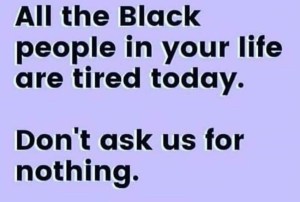 I hear my dear friends cry out for justice. I hear them using words to make sense of it all, and I hear their voices fall silent. Silent, with just these words, “I’m tired.” A dear friend posted the words on the left this morning. I want to see her face to face. I want to be together. I want to comfort her, hoping beyond hope that it is not too late for comfort.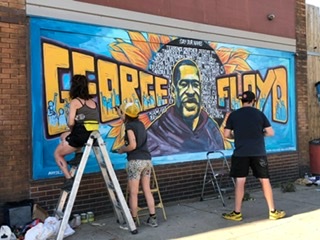
 “How we celebrate the day when the Holy Spirit breathed upon those gathered together, with gifts of wind and fire!
 In the end, there is a tiny bit of joy in George Floyd’s tragic story. It is a joy much deeper than reality’s sorrow. The artists completed their mural, and in the very center near the bottom, they had painted words that express the greatest truth of all.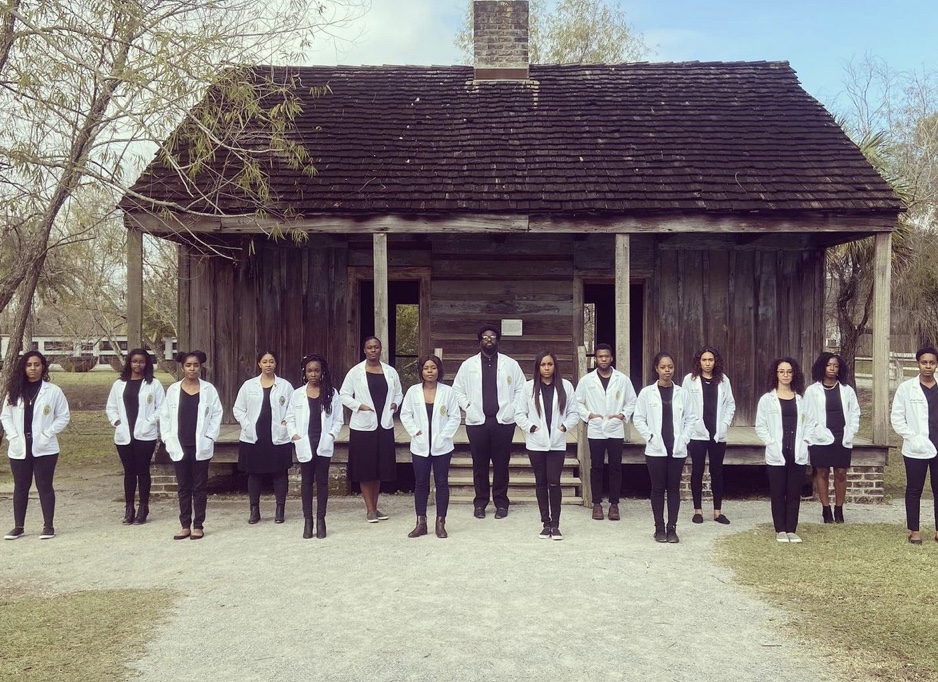
 The Whitney Plantation has restored buildings designed to encourage guests to enter the world of a Louisiana sugar plantation and to remember those who built and worked this property. Through an hour-and-a-half guided walking tour, a guide shows guests through slave cabins, a freedmen’s church, a detached kitchen and outbuildings, a 1790s owner’s house and memorials built to honor the enslaved.


 Take a trip with me into the Bible Belt for a visit to the town of Luverne, Alabama, population 2,700. In the First Baptist Church on Main Street, we can hear a sermon on one of the Ten Commandments, one sermon in a ten part series. The people in the pews are good people, “salt of the earth” Christians who seek to live exemplary and moral Christian lives.
 What is it like to sit open-handed before God? To abide with a compassionate God who knows the grief we are carrying? To sit in the glowing presence of a God who, not only knows the deep angst of our nation, but who can also transform it?
 God of the Sparrow 🌱 By Kathy Manis Findley