A woman of sacred worth, Becoming, Beginning again, Bravery, Calling, Change, Children, Committment, Courage, Creating, Dreams, Freedom, God’s beloved daughter, I am enough!, Inner peace, life, Living in the soul, Miracles, Repair the world, Rev. Kathy Manis Findley, Self-understanding, Spirit wind, Tears, Tikkun Olam, Valued by God

Living an Unapologetic Life

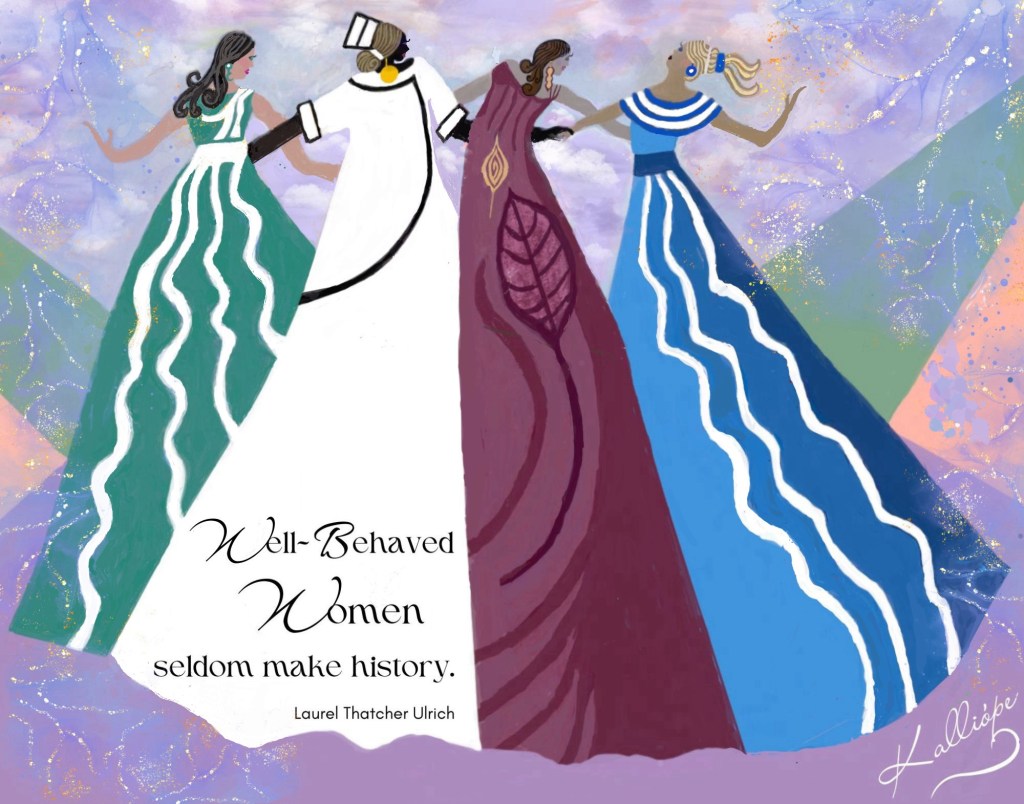
Art: “Well-behaved Women” by Kathy Manis Findley


Rev. Kathy Manis Findley
July 27, 2024

You have probably had that kind of dream at a few junctures on your journey. I know I had many dreams along the way. Sometimes they scared me to death. I dreamed of peace, equality, freedom, changing the world, and many other huge and noble dreams. I dreamed some silly dreams, too! I soon got the hint: changing the world is a formidable task. I followed all the rules, but being a rule-keeper does not make a person effective in dreaming and imagining. Women who follow the rules (someone else made up) could correctly be called well-behaved. They might even be called good girls because they don’t cause much of a flurry. They typically don’t make history and they certainly don’t change the world.

A woman with less-than-good behavior looks like someone at peace with herself, someone who radiates hope, someone with the courage and determination to do justice. I have admired and emulated so many examples of women who did make history, women who were not well-behaved at all. Here are only a few: Rosa Parks, Harriet Tubman, Lucretia Coffin Mott, Sojourner Truth, Susan B. Anthony, Nancy Sehested, Elizabeth Cody Stanton, Prathia Hall, Julian of Norwich, Malala Yousafzai, Mother Theresa of Calcutta, Ann Hasseltine Judson, Lucy Stone, and so many others!

About 24 years ago, a chaplain colleague recommended a book to me: Goodbye Good Girl: Letting Go of the Rules and Taking Back Your Self by Eileen M. Clegg. I think my chaplain friend was suggesting that I should get out of my comfort zone and take some risks, that I should courageously follow God’s call on my life. I knew that the members and churches of my denomination would “throw a fit,” like we say in the south! After all, I was an ordained minister serving as a hospital chaplain, which placed risky challenges before me every day.

So I read the book immediately and set out to become a bad girl, a girl who fully intended to change the world and to make history for it! So far, I have not made history. I have not managed to put my name in lights. I have not started any big public movements. But I have done some things that matter! I have learned how to create sacred space; I have learned the depth of liberation theology; I have found enough grace to endure the consequences of being a “bad girl” and then a woman with questionable behavior; I have held off anyone who tried to tell me who I am; and I have called up the courage to fight for justice. Colleagues, friends, family, co-workers reacted to the change in me, since they never expected me to dissent, or disagree, or refuse to behave.

Suddenly I let go of my “good girl” image and basically said “goodbye” to my restrictive behaviors. I took back my life, put aside all the rules, and followed my soul. I watched for the winds of the Spirit to lead me, and I moved forward to all the places that needed some attention. I was able to help change unjust systems, unjust policies, and unjust processes by not being so well-behaved.

Still, I sometimes think I have reached an uneasy place when it comes to letting go of my “good girl” persona. I’m really not a “good girl” and I don’t think I ever have been. My parents had to endure the sassy exclamations of my toddler years, like “Nobody’s the boss of me!” Creating shock from those who knew me, I mostly remained a “bad girl” from that day to this. I set aside the rules that were designed to keep people down and I took back my life. Today—in my mid-seventies—I continue to spew out uncommon proclamations that are quite annoying to those who are determined to hold on to their power and resist change.

Truly, it was sometimes hard being a change-maker and a rule-keeper! Always a people pleaser. Always the ultimate perfectionist. I discovered along the way that sometimes rule-keeping, people pleasing, and keeping every little thing “perfect” can harm your inner core. In fact, it’s less risky when you follow the leaders, make sure everyone is pleased, and doing everything with glowing perfection. Stepping out of line is always a bit dangerous.

When you become exactly who you are, resolute and unmovable about the things that matter to you, you will raise a few eyebrows, and sometimes people will get angry with you . You see, those people expected something else from you. Each of us becomes “me”— the “real me”— at our own peril. In a sense, we have to fight for the right to be ourselves in the world.

It is true that the people around me reacted strongly when I took back my life and became fully invested in my destiny. They thought that I had become radical, maybe even unhinged. I did not respond appropriately to their demands. To unreasonable demands, this is essentially how I might have responded, sometimes out loud, sometimes under my breath . . .

I will do it. / It’s my right! / It’s my choice! / It’s my prerogative! / It’s my decision! / I’m doing it anyway. / You can’t stop me! / Just watch!

All the while, I felt uncomfortable because of so much disdain from others, who began sending me a new message, You are not enough! I Imagine that many of you have heard someone say to you, You are not enough. At least, we may imagine someone saying those hurtful words. Unfortunately, we believe it because we don’t know ourselves, meaning we don’t know our bright and dark places, we have not yet realized our sacred worth, and we have not yet searched our souls.

For you see, you and I are afraid because it is perilous for the soul when we don’t search diligently for our soul’s passions and dreams. You and I sometimes accept what others say about us and tuck it away in our deepest places. When those words sneak all the way down into the soul, we tend to give up. We start from the moment we make ourselves nonchalant about it all, that moment when we shield our hearts from hurt. One of the saddest phrases we use is “I don’t care.” When we no longer care, we begin, one by one, eliminating the people around us, never realizing that they are hurting, too. And maybe the reason they send the message, You are not enough, is because they believe that they are not enough either.

I can honestly say that I have often heard voices—known voices, unknown voices, and the weak little voice in my head—telling me, You are not enough! I have learned that once I have embodied that negative message, it rolls around in my psyche for a long time, maybe forever. It becomes a state of being that goes deeper than skin. It penetrates in deeper places, and takes its toll on my emotional and physical well-being. I recall many such times, none more painful than the wagging tongues around my ordination . . . You know the scenario, “She can’t be a minister because she is a woman! Anyway, she’s not good enough! Other voices are often hazardous, dangerously breaking down our sense of self-worth. They may be yelling, speaking in a normal tone, whispering, or imagined in our heads. In response, we must prepare ourselves to hear the voice above all voices, saying, “You are my beloved daughter with whom I am well pleased.”

For a long time, I embodied the traits of the good girl, but to embody good girl traits is not really a once-and-done action. Embodied lasts a while! Embody does not have a shallow or surface meaning. It is deeper. I like the word embody. It seems to suggest that we can live a soulful life. In the very middle of the Greek word for “embody” we find the word σώμα, which means body. However, the Greek word for body cannot be translated in a way that reveals the depth of its meaning. The definition of σώμα is deeper than we realize. It is not skin-deep, it is deeper, approaching a definition more like soul.

I do like the word embody and the word soul. In some ways, to embody means to live in your soul. The word embody may whisper to you that in your body’s center, you will find the path to reach your soul. A person who lives in the soul is a person that does not live a shallow life, devoid of the emotion that makes us alive. The soul will help you, if you can just start by daring to touch it.

So what are the things we can actually do to take back our lives and live soulfully? What path do we follow to transform ourselves and change the world? My initial response to that is, “I don’t know.” Not very comforting, I know, but mostly true. We cannot forge the path for any other person. We cannot know what’s best for them. So not knowing anyones path, nor their dreams, I can give you a list of things others are finding the leads to their transformation. Here they are, not at all an exhaustive list, and certainly not a perfect guide for you:

  • Carve out some time for quiet, restful, meditation.
  • If you are a person of faith, get in touch with God or whatever person you worship.
  • Listen.
  • Listen some more—to your heart and your soul.
  • See if you find there a sacred direction especially for you.
  • Do you feel you are getting any closer to discovering your authentic self?
  • Can you begin to believe you will be transformed?
  • Can you take a step or two, in faith, into a holy place of transformation?
  • Pray, making your needs known to the source of your faith.
  • Read! Read the stories of others who found life transformation.
  • Find community, even one other person, who understands your journey.
  • Start all over again, leaning into the wisdom you found on your previous journey.
  • Take as long as it takes, until you realize that suddenly, you are becoming emboldened and scrappy!

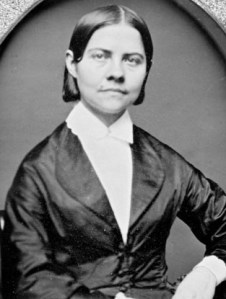
You may not know her name, but Lucy Stone was steadfast in her belief in self-authentication and in her ability to change the world. Lucy Stone was called “emboldened” and “scrappy” because of her tireless work for the abolitionist and women’s rights movements through the 19th century. A bona fide pioneer of her time, Lucy Stone stands as a historical titan. Her book “Unapologetic Life” describes a model of a revolutionary living. As for me, I would count it an honor to be described as emboldened and scrappy.

Life is more fun when you’re emboldened and scrappy. Not that we want to reduce the life experience to just scrappinesses. Life is so much more, like authenticity and the willingness to be a change-agent. Life is about having enough courage to persevere! Life for me is about my soul and all the ways it has been transformed over many years. All along my journey, I knew that my soul was a problem! At every age, there was a part of me that wouldn’t follow the easiest path. I longed to be empowered to make societal change. I chased down injustice and worked to dismantle it. I spent most of my career working with victims of domestic violence, child abuse, and human trafficking. This was not the easiest and most pleasant vocation, but the work had made its way into my soul. To do it, I had to live in the light of self-awareness and soul-awareness. I had to constantly listen to the sighs of my soul, and move only after I had heard them clearly. If I had just one nugget of advice for you, it would be to touch your soul and ride on the wings of the Spirit.

Sisters, don’t forget that when you touch your soul, you might just not be a “good girl” anymore. Or a good boy, for that matter. As for me, I am not a “good girl” living at the whims of other people! And I am definitely not a well-behaved woman! So I fully expect to make history! Because making history means leaving a legacy, creating a world brimming with peace, and embodying your best self!


Activism, Beloved Community, Bewilderment, Change, Community, Community activism, Confusion, Contemplation, Covenant, Creating, Division, Exhaustion, God's presence, Hate, Hope, Injustice, Liminal time, Uncategorized

This Liminal Time

FDAFE7CF-FBCA-47E5-A560-EFA6C17EEC75


liminal

in American English
(ˈlɪmɪnəl ; ˈlaɪmɪnəl )

ADJECTIVE

1.  Relating to a transitional or initial stage of a process.

2.  At a boundary or transitional point between two conditions, stages in a process, ways of life, etc.

“Liminal” used in a sentence: We are in a transitional and liminal time: this makes everything unsettled and awkward, and most of us feel tremendous unrest and a sense of urgency.


I choose to mark this particular time in history as a liminal time that demands my courage to stand — to stand in solidarity with every person who is demanding an end to racial injustice. I cannot choose my partners in this struggle. Instead, I have to accept those that appear in my life, bringing with them a determined will to stand for justice.

I must understand that liminal time does not last forever. Liminal time is a place of transition, a liminal stage between justice and oppression, between life and death. So my choices and yours in this liminal time might very well affect what’s going on in the streets of American cities, in police precincts in every community and rural hamlet, in the halls of Congress and in the White House, in our hearts and in the hearts of those we could see as our “enemies.“

CB60C28A-A33B-4386-9B35-C3DC950FC905Here is where I must focus. My heart must long for an end to injustice. So must yours, because God’s heart grieves over the mayhem in our streets and the violence that has its way when a white police officer murders a black man or woman, even a black child.


You and I must yearn for an end to racial injustice — any kind of injustice and oppression — because God’s heart yearns to see us living in holy unity as brothers and sisters.

These days have dramatically shown us our liminal time, and it is NOW.

I have a strong sense that this liminal time has brought the widespread unrest we are witnessing, and that unrest emerges directly from a deep desire for change and transformation. It must be now!

Those of us who remember, know that the Civil Rights Movement came to its boiling point when every marcher, every protester, every non-violent activist and every violent one knew when their liminal time had come. Some people, of course, did not like that time at all, but even those who resisted that movement towards justice knew in their hearts that it was the liminal time, the time of NOW.

The fight was fought by people who spoke and marched, prayed and worshipped, who resisted and stood their ground, who preached and sang their freedom songs. Ah, how those songs of the civil rights movement helped motivate people of all ages and races, from Student Nonviolent Coordinating Committee (SNCC) activists and Freedom Riders to the thousands who marched on Washington, Selma, and Montgomery!

Yet not one person — Civil Rights leader or non-violent protester — could achieve civil rights alone. It required persons living in the poorest neighborhoods and their affluent neighbors across town. It took white folk and black folk, protestors and preachers, eloquent advocates and those who fought silently, lawyers and congresspeople and attorneys general and presidents. It required a community in solidarity. In fact, during the Civil Rights Movement, the creation of community was the quintessential coming-of-age story for Black people. 

Of that historically significant time, Father Richard Rohr writes this:

It was the particular time in history when nonviolent initiatives seeded with contemplative worship practices became acts of public theology and activism. You see, activism and contemplation are not functional opposites. Rather, contemplation is the heart’s reflective activity that is always seeking the spiritual balance between individual piety and communal justice-seeking.

Who could have predicted that America’s apartheid would fall as decisively as the walls of Jericho, when the people marched around the bastions of power carrying little more than their faith and resolve? How audacious it was to take just the remnants of a chattel community, the vague memories of mother Africa, and a desperate need to be free, and translate those wisps into a liberating vision of community. The idea of a beloved community emerged from the deeply contemplative activities of a besieged people — the people of the Civil Rights movement.
— Fr. Richard Rohr

One would think that such a movement that was so powerful, so eloquent and so determined would see its dream become reality, and that such a stunning reality would last forever. So that every person, from that time to this, would live as beneficiaries of beloved community. But here we are in another liminal space of racial indignity, cities in chaos and families mourning the death of their loved ones in Minnesota, in Georgia, in Kentucky and beyond. We did not really believe we would be in this time and space, a time that would demand a civil rights movement of its own.

The in-between liminal spaces of Scripture are pregnant with God’s transformational possibilities:

Noah and his family rebuilding the world after the flood; Abraham holding the knife above Isaac; Jacob’s struggle with the angel; Joseph in the pit; Moses and the Israelites at the edge of the Reed Sea; Israel in the wilderness; Joshua crossing the Jordan; Jesus suffering on the tree; the women at His tomb; the disciples waiting in Jerusalem.

Scripture indeed is fraught with liminal moments – moments of imminent expectation, infused with both hope and doubt — that lead to transformation and change. So change involves tension, and those of us who are longing for a paradigm shift that insists on justice, know that tension all too well.

Betwixt and Between — neither here nor there. It would be safe to say that this liminal time is mostly uncomfortable and confusing. Liminal time is the time between what was and what will be. And not one of us can predict what will be, either in this struggle against injustice or in the uncertain waxing and waning of the deadly coronavirus. The convergence of virus and death and sickness and distancing with racial injustice, violence and protest is almost too much uncertainty for us to navigate.

In the end, I want to believe that this liminal time and every liminal space is the dwelling place of God, the place where God meets us and says, “I will never leave you or forsake you . . . And remember, the Spirit of the Lord is upon you and has anointed you to announce Good News to the poor, to proclaim freedom for the imprisoned and renewed sight for the blind, to release those who have been oppressed. [my paraphrase]

Even in our current time of disconcerting fluid borders, God is with us in this liminal time. God is inseparably bound with us in this moment, and it is in this liminal space where heaven and earth, life and death, joy and sorrow, ecstasy and despair, sleeping and waking, justice and injustice, commingle.

So here’s my challenge to myself and to all of us. What if we choose to experience this liminal time, this uncomfortable now, as a time for insisting upon full solidarity with all of our brothers and sisters? What if we choose to make this particular time — with all of its pandemic and death, chaos and destruction, fire and protest, upheaval and violence as if no lives matter — a liminal time for construction and deconstruction, choice and transformation? What if you and I choose to hold hands and march on in solidarity and community until we reach the mountaintop where injustice is no more?

I want to. Do you?


Celebration, Change, Comfort, Creating, Dancing, Growing up, Joy, life, Memories, Muse, Soul

My Soul’s Muse

13FC4C26-1160-4312-AED4-47DCD8DD80A9
The Muse Terpsichore, the Muse of Dance in Greek Mythology; Rare Ancient Greek art pottery plate. https://www.worthpoint.com/worthopedia/muse-goddess-terpsichore-greek-1868160296

I never dance anymore, and that’s a real shame. It’s about losing a part of my soul, really. Letting persnickety circumstances overshadow what my soul loves and desires, maybe even needs. Persnickety circumstances like . . . My back hurts. I’m too old now. I can’t remember how to do it anymore. There’s no room in my living room. It’s just no fun dancing when I’m dancing by myself. But those thoughts describe now! In the past? Well, as you might expect, my past was very different! I lived to dance whether the music was Rock ‘n Roll, Soul, Greek Folk Dancing or Motown. Especially Motown!

If my friends from the past described me, they would most certainly declare that I was a dancing fiend. I think that would be a fairly accurate description. As a young child, I cut my teeth on what I would describe as Big Fat Greek Dances. There was simply no place to be that was as much fun as those Greek dances that could last well past midnight. Did I fall asleep in a chair in a corner as the music filled the hall? Not a chance! When I heard music, I had to dance! Greek dances in big halls or hotel ballrooms included a lot of Greek dancing, which is probably more fun than any dancing known to humankind. But when the band played American music, I waited in my chair, smiling, and waiting for a boy (or a man) to ask me to dance. The men usually came through — favorite uncles, my Godfather, my Godbrother, family friends. It is no exaggeration to say that I traveled far and wide with my Aunt Koula and Uncle John to go to Greek dances — Montgomery, Atlanta, Mobile and, of course, at home in Birmingham.

So that’s my dance-filled childhood. My teenage years were another story altogether! I continued to dance at Greek weddings and other ballroom dances with my friends Suzanne, Frank, Demetra, Xane, Greg, Terry, Sammy and Gussie, to name only a few that come to mind.

96975CE0-82A4-4CCA-BCD3-2010E385F224
Here’s Proof: I’m posing with my best friend, Suzanne . . . as Ancient Greek Goddesses 

But my best friend, Suzanne, and I were all about Motown! With Motown, there was no holding back, and we didn’t hold back. We scandalized every Motown venue we could find with our slick and sultry dance moves.

On one day, we might be depicting beautiful and stately Ancient Greek Goddesses, golden laurels in our hair. On another day, you might find us at The Hangout in Panama City dancing to the sounds of Motown.

And that’s how I earned the reputation of being a “dancing fiend.”

 
Now that I think back on those years, I don’t accept the title “Dancing Fiend!” Especially now that I am remembering the ABBA song . . .

Friday night and the lights are low, looking out for a place to go
Where they play the right music, getting in the swing
You come to look for a king.

Anybody could be that guy
Night is young and the music’s high
With a bit of rock music, everything is fine.

You’re in the mood for a dance, and when you get the chance . . .

You are the dancing queen, young and sweet, only seventeen.
Dancing queen, feel the beat from the tambourine.

You can dance! You can jive!
Having the time of your life
See that girl, watch that scene
Dig in the dancing queen!

With that ABBA inspiration, I declare myself, not a dancing fiend, but (Wait for it!) “The Dancing Queen!”

But that was then and this is now. I don’t dance anymore, and that is beginning to trouble me. What troubles me isn’t really about the dancing. It’s that something that was a part of my soul has withered away. That can happen to all of us when, at some point in time, we stop hearing our soul’s music. When a certain life circumstance, a crossroads maybe, cuts us off from our muse,* we lose a part of ourselves. We awaken one morning with the stark realization that something that was important to us is lost. So I ask you, as I ask myself, what important thing have you? What does your soul long for, something that you have lost that was once so healing, so comforting, so fulfilling, so much fun?

These are the pressing questions I am asking myself: What has my soul lost? When did I lose it and how did I lose it? For some it might be singing, dancing, teaching, painting, writing, walking, reading. We could list dozens, maybe hundreds, of things that once nourished our souls and we sometimes deeply regret those soul losses.

Sometimes we seem doomed to feel nostalgic despair or disappointment. OR . . . might we find a way to unearth whatever we have lost? Could we reclaim our ability to once again do what we love, in spite of any limitation that the passing years have brought us? It is indeed a question worth pondering.

So you see, this post isn’t just about dancing. It’s about embracing whatever your soul has lost and allowing your muse to spark within you the creative spirit that nourishes the soul. So go ahead and take a chance. Dance! Sing! Teach! Preach! Garden! Read! Paint! Throw yourself again into whatever your soul loves and needs. I predict you will find comfort, peace, joy and a new refreshing of your soul.

As for me . . . If we ever break out of our social distancing mode and you drop by my house, you might just catch a glimpse of me dancing in the living room!

Motown, of course!


SPECIAL BONUS: I want to leave you with a “social distancing video” that will lift you up and inspire your soul. It isn’t Motown music at all, but its music will probably inspire you to celebrate the gift of ballet. Take a few minutes to enjoy it and to celebrate the enormous talent it brings to us from all over the world.

 
* The Muses were the nine Greek goddesses who presided over the arts, including music and dance. An artist or poet about to begin work would call on his particular Muse to inspire him, and a poem itself might begin with such a call; thus, Homer’s Odyssey begins, “Sing to me of the man, Muse” (that is, of Odysseus). Today a muse may be one’s special creative spirit, but some artists and writers have also chosen living human beings to serve as their muses.


Activism, Art, Community activism, Creating, Creativity, Injustice, Inspiration, Justice, Walls

Gift of Inspiration

F6006A95-1C6E-46B1-8C44-FE428C74D81C

Sometimes I am inspired by the strangest things. This time the inspiration centers around Mexican-born, American-educated artist Enrique Chiu. While the Trump administration remains intent on separating us from our Mexican neighbors with a border wall, Enrique Chiu is leading a cadre of bi-national volunteer artists to paint a mile-long mural on the border fence. The reason? To celebrate unity and peace. Their intent is to turn the fence from a dividing wall into a work of art that spreads a message of hope to families that cross the border.

Enrique Chiu calls the project, “The Mural of Brotherhood” (and “Sisterhood” emphasis mine), and enlisted more than 2,600 volunteers to paint uplifting messages on the Mexico-facing side of the U.S.-owned fence. The goal is to create an artistic riposte to Trump’s nationalist and anti-immigrant politics.

30233B1A-840D-46C0-8705-990FF3424D4DChui has a very personal motivation for the project. When he was eight, he crossed that border with his mother and lived in Los Angeles for a year without legal status. He grew into a renowned artist and envisioned this project, which he dedicated “to all those people who are looking for a better life. Who take enormous risks. Or those have been deported and are separated from their families.”
That inspires me. Creative gifts used to make a statement; Volunteer work offered to encourage; Personal conviction making a statement about unity, peace and justice . . . through an in-your-face act of resistance to divisive, oppressive policy. 

Godspeed, Enrique. May God bless the gift of inspiration you share.


F9FA5D3C-53F0-4043-8A72-F9E2D63F7349

On another note, please pray for me as I look toward my kidney transplant currently scheduled for November 12th at Mayo Clinic in Jacksonville, Florida. I am so grateful that you are walking with me on this journey that often felt so frightening. Your thoughts and prayers mean so much. If you would like to rea the story of my illness, please visit the Georgia Transplant Foundation’s website at this link:

://client.gatransplant.org/goto/KathyMFindley

“Go Fund Me” page is set up for contributions to help with the enormous costs related to the transplant, including medications, housing costs for the month we have to stay near the transplant center, and other unforeseeable costs for my care following the transplant. If you can, please be a part of my transplant journey by making a contribution at this link

https://bit.ly/33KXZOj


Contemplation, Creating, Iconography, Images of God, Prayer, Restoration, Sacred Art, Silence, Spiritual Discipline, Worship

Seeing the Light: A Spiritual Discipline

DF9BF7FC-6583-4F1A-A78F-3F5CD0D37117I seldom talk much about the spiritual disciplines that have given me strength. A private retreat — just me and God — in a beautifully isolated hermitage was one of the most powerful spiritual experiences of my life. While there, I also practiced another of my spiritual disciplines — iconography.
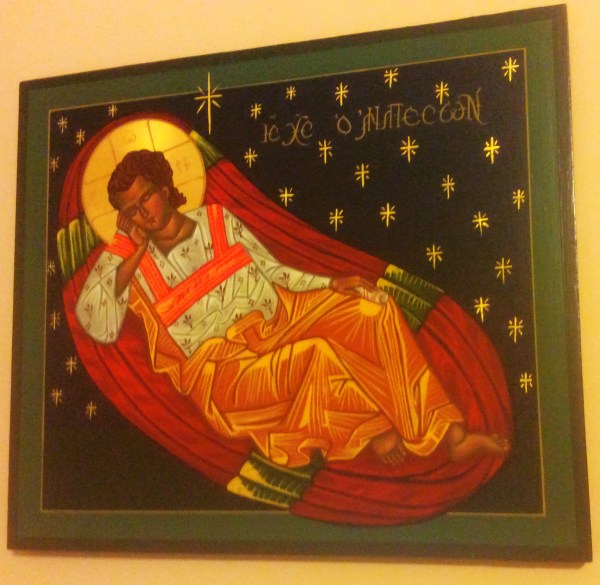
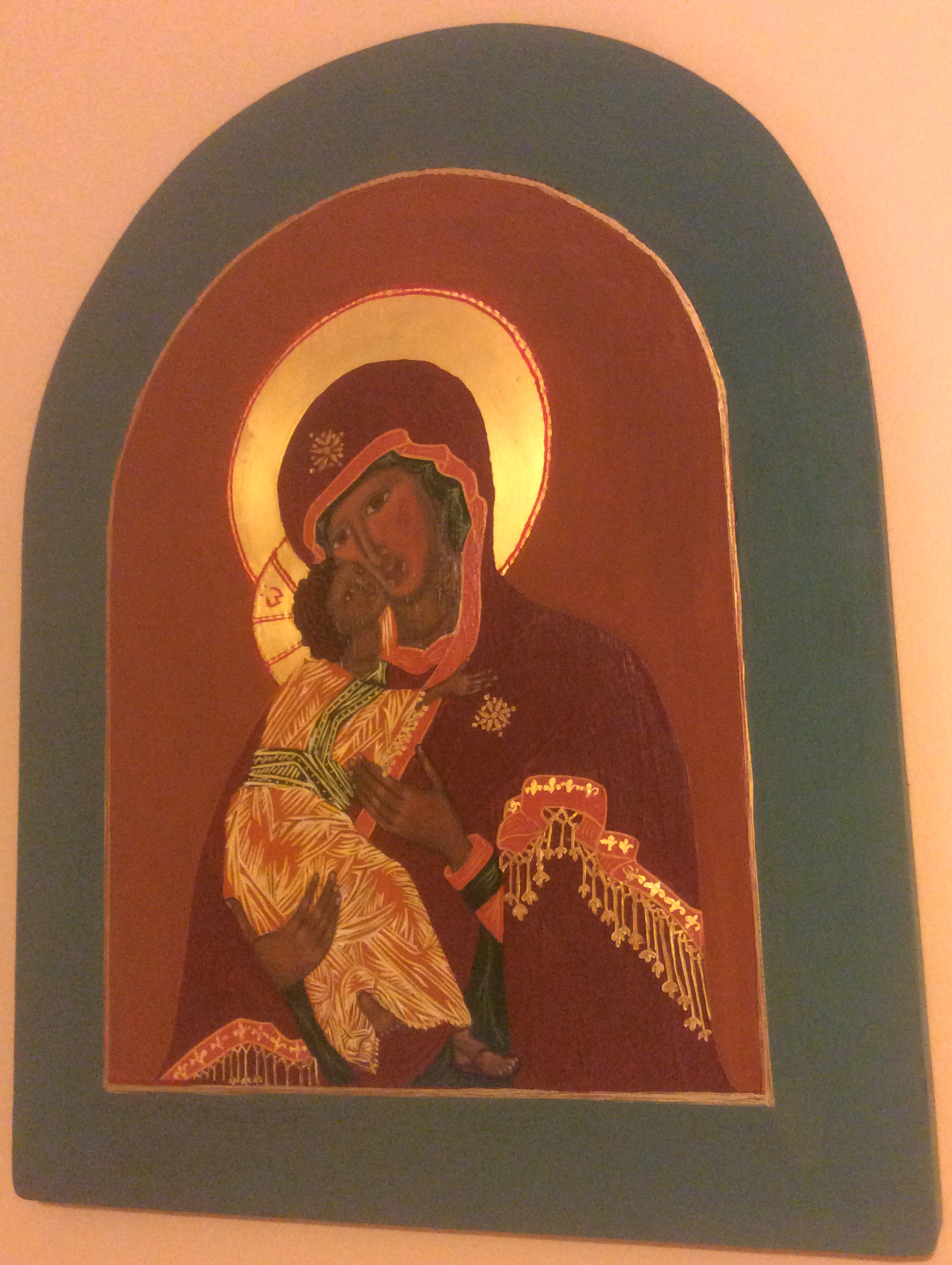
Iconography is not merely a visual art, it is Christian sacred art, and has been an integral part of the worship and mystical life of Christians since apostolic times. Referred to in the Eastern Christian tradition as “windows into heaven,” icons have inspired and uplifted millions of the faithful, and have at times been the instruments for demonstrating God’s miraculous intercession in the life of humankind.

29074C09-C2E4-49B3-ACA8-FAED6A6069B8In describing the purpose of icons, the early Christians used the Greek work anagogic, literally meaning “leading one upward.” Photios Kontoglou, a renowned modern iconographer, expressed this perfectly: “Icons raise the soul and mind of the believer who sees the icon to the realm of the spirit, of the incorruptible, of the kingdom of God, as far as this can be achieved with material means.” 

So to appreciate iconography fully, we must approach it as a liturgical art form whose function is essentially spiritual. Since the creation of an icon is itself a sacred activity, the iconographer must be a person of prayer, not merely a technician. If the iconographer’s work is to inspire and illumine others, then it is essential that she leads a life of prayer and fasting that she may be inspired and illumined by the Holy Spirit, that her iconography becomes itself an expression of her spiritual life. Kontoglou writes: “The iconographers painted as they prayed.”

355CF8CB-A1B6-4D08-B5DD-DF59A9618C9AMy love of iconography resulted from the prompting of my dear Aunt Eirene. She was an artist extraordinaire and a gifted iconographer. She studied and practiced to hone her skills and each year, she went to an intensive iconography workshop at a beautiful retreat center. One year, she persuaded me (forced is a more accurate term) to go with her. Of course, I was extremely reticent to try this new art form.
At first, I called on my artistic skills and was doing a barely decent job. But then a lovely nun who sat next to me said words that literally imprinted on my heart. She said, “Your rendering of the Holy Child is beautiful. Look into his eyes. When you see the Light coming from them, you will fall in love with your icon.”

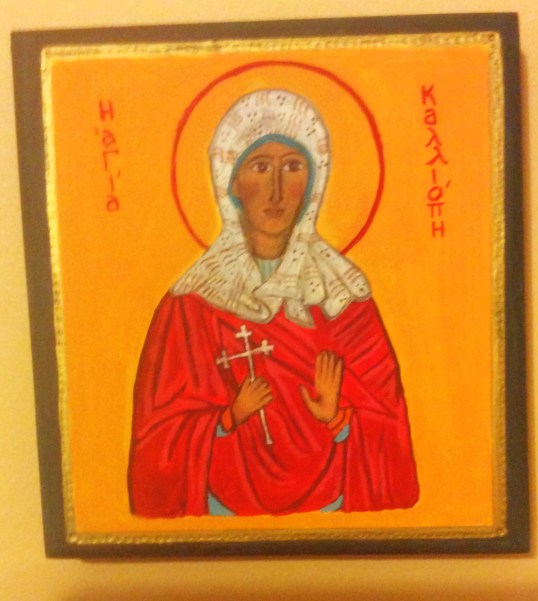
286998AD-4ACD-4E54-BBD6-EDCC0B0D4ED0She was so wise. I began to think more about the Christ Child’s eyes than my own art, and within a day, my iconography transformed from a painting to a prayer. It was worship, meditation and reverence. It touched my soul as I added color to the board, layer upon layer. It was an incredible experience to see the Light. I share with you here some of icons I created, as I remember the experience I had with each of them that opened my soul to the Light.


Contemplation, Creating, Creativity, Faith, peace, Self Awareness, Self care, Serenity, Silence, Spiritual growth, Transformation

Transformation, Pursuits and Productions

BCE50E1D-C995-4353-A940-14AABC73495E
A Recolor page that brought me fond memories of my beloved Uganda

My mind needs rest and renewal. My soul needs trasformation. My heart needs peace and serenity.

The problem is that not many activities relax me. Being the wretched Type A personality that I am, I turn every pursuit into a production. A dear friend has a saying that she uses when a task morphs into more than it should have been. “That was a production!” she would say, and we all knew what she meant — a project got way out of hand!

Such is my life. Compulsive. Driven. Perfectionist. All words that have often been used to describe me. I have to work on it diligently, this need for serenity and the renewal of my mind. Reading Scripture leads to writing a sermon, an opinion piece, or a blog post. Praying leads to a plethora of things I feel I must do. Swinging in the sunshine leads to working in flower beds that need tending.

My first waking thought is always about what project I will do or what meal I will cook. That decision influences my day. When I have decided what I will do, I’m off. I’m all in to get it done.

My greatest need is to find my way to peacefulness and serenity, to experience a renewal of my mind, to learn to be quiet and still so that in the stillness, I might find God in new ways. And I might even find myself in new ways and learn some things about the depth of my “self” snd the longings of my soul.

It is my soul, of course, that craves the serenity. I work on it often — deep breathing, brief praying at many times during the day, singing hymns (to myself) as I fall asleep at night. All of it helps. None of it makes a permanent difference.

Interestingly, I have found a pursuit that does not lead to a production. It is a computer app called Recolor, which is simply for coloring on devices like the IPad. Each day, Recolor adds two or more pages for coloring with your finger or a stylus. I have found nothing that relaxes me more than getting lost on a coloring page. As of today, I have colored 1,062 pages and have received 66 thousand “likes.”

One might observe that this pursuit is not at all a spiritual practice, not a contemplative activity, and is pretty much a waste of time. The thing is, it really is a spiritual practice for me because I am learning how to waste time. I needed to find a way to immerse myself into a creative activity that did not consume me. I needed an activity that would clear and renew my mind. As the Scripture urges, I need to be transformed by the renewal of my mind.

Do not be conformed to this world but be transformed by the renewal of your mind, that you may prove what is the will of God, what is good and acceptable and perfect.

— Romans 12:2 Revised Standard Version (RSV)

So I will continue coloring to clear my mind and slow me down. And I will keep working on the renewal of my very busy mind. Who knows? Someday I might find myself transformed.


Creating, healing, Hope, Justice, Light, peace

A Perfect World?

IMG_5924When you realize how perfect everything is, you will tilt your head back and laugh at the sky.
– Buddha

Perfect is not a word I would use to describe the world. Ominous storms, wildfires, demonstrations of hate, violence, terrorism, threats of deportation, leaders devoid of compassion, homelessness, war, refugees seeking safe haven and shelter . . . This is just a partial description of the world we call our own. So perfect is but a dream. And yet, it is perhaps our calling to expend ourselves creating a more perfect world.

Today, my friend Elaine posted this passage on her wonderful blog, “The Edge.”

Learn where there is wisdom, where there is strength, where there is understanding, so that you may at the same time discern where there is length of days, and life, where there is light for the eyes, and peace.

– Baruch 3:14

The wisdom in these words prompted a time of contemplation for me. I pondered the refreshing possibility of finding “length of days, life, light and peace.” Sounds like getting closer to a perfect world.

In these unsettling days, that is the kind of world we long for, the kind of life we desperately want. And yet we find that at times we are crying out for peace, and there simply is no peace.

Baruch’s words present us with a task, a rather difficult task to be sure, but one that leads to the goodness of life we seek. Baruch’s wisdom calls for us to learn, to increase our ability for discernment. And most importantly, Baruch proclaims our critical need to discover where we might find wisdom, strength and understanding.

My world is filled with incessant voices — politicians, governmental leaders, media personalities, newscasts that include everyone who has an opinion on every possible subject. Certainly, I have the choice to turn off the news and listen to soothing music on Pandora. And I do that frequently.

But the state of the world is so volatile that I am compelled daily to be aware of what is going on. In fact, that is a part of my personal mission — to know what is going on and to respond by making my voice heard advocating for justice and compassion. Which is exactly the reason it is so important to “learn where there is wisdom, where there is strength, where there is understanding.”

So may we all create moments when we can silence the incessant voices and instead enter into quiet times of solitude, contemplation and prayer. That is what we can do for a very imperfect world that seems to be falling apart. In the process, we will more clearly hear the voices that lift hope high before us. In that holy space where hope abides with us, we will find “length of days, and life . . . light for the eyes and peace.”

Tikkun Olam is a lovely jewish concept defined by acts of kindness performed to heal the world, to perfect or repair the world. The phrase is found in the Mishnah and is often used when discussing issues of social justice, insuring compassion and care for persons who are oppressed.

Tikkun Olam! Heal the world! This is our highest calling.

Is it even possible to create a perfect world? Maybe not. But shouldn’t we envision it, work for it, pray for it, ennobled by God to return our world into the perfect creation of God?

May God guide us in making it so.


(Visit my friend Elaine’s blog at https://theedgeishere.wordpress.com/2017/09/08/contemplative2017-wisdom-4/)


Creating, Dreams, Hope, Transformation

An Opening in the Ordinary

IMG_4879

Often I complain to my husband about every day being ordinary. For us, very few events break up the time, making each day seem pretty much like yesterday, tomorrow too. It is a sad state of affairs to have stopped expecting anything extraordinary.

But there is a remedy for me when all seems mundane. I get out my watercolor paints and lose myself in creativity for a few hours. It works. . . not creating any masterpiece to be sure, but letting my dreams loose so that they flow out from paint brush to paper. The colors, one blending into another and another, is my passage out of reality and into the possibility of transformation.

It is definitely, as Bishop Stephen Charleston writes, “an opening in the ordinary.”

Here’s how he expresses it.

An opening has occurred in the ordinary, a passage between the reality we have always accepted and the possibility of transformation . . . This is the day, the everyday, the extraordinary day, when we step over doubt to trust, over resignation to hope, over now to forever.

So in the midst of my ordinary days, I can still hope for an opening in the ordinary, for the possibility of transformation. I can find extraordinary moments smack dab in the middle of an ordinary day.  I give thanks to God for the grace of transformation.

Creating

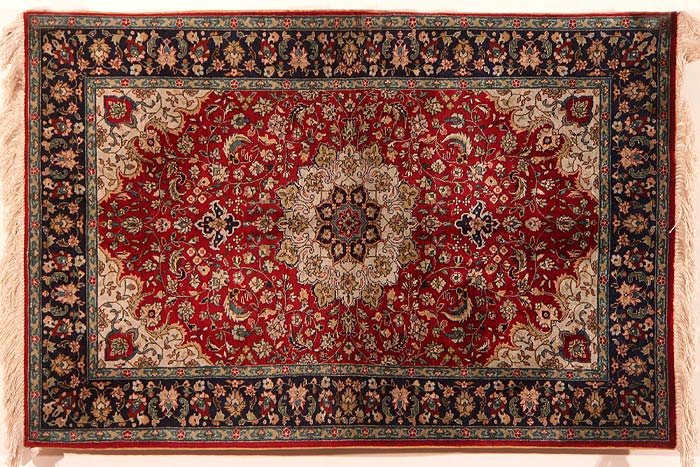
Oriental Rug

image

Oriental rugs are woven by hand. Usually, there will be a group of people weaving a single rug together under the directions of an artist who issues instructions to the rest. The artist determines the choice of colors and the nature of the pattern.

Often one of the weavers inserts the wrong color thread. The artist may have called for blue and instead black was used. If you examine an oriental rug carefully, you may be able to detect such irregularities. What is significant about them is that they were not removed. The skillful artist just proceeded to weave them into the pattern.

Here is wise counsel for our lives. We would like the patterns of our lives to be woven exclusively of brightly-colored threads, woven without flaw into the pattern. But every now and then, a dark thread steals into the fabric. If we are true artists of life, we can weave even a dark, out-of-place thread into the pattern and make it contribute its share to the beauty of the world.

– Rabbi Sidney Greenberg

This is wonderful piece of wisdom attributed to Rabbi Sidney Greenberg. I can say assuredly that dark threads have have made their way into the pattern of my life. The off-colored threads were always noticeable and out of place, threatening to spoil the beautiful weaving. But the truth is that the dark threads worked themselves in with scarcely any notice of a flaw. The beauty was still there, even with dark threads all over the place, woven into the lovely pattern that was my life.

Creating, Faith, Inspiration, Spirituality or Religion?

The Soul of Music

image

Music is the stuff of the soul, a universal language that speaks to the depths of our being. I have long been a devotee of the choral composer John Rutter. I have marveled at his art and his giftedness. I recently read an article about his faith. Here is what he said.

You certainly have to have a sense of faith. That is not usually difficult for a musician, as musicians move easily in the realm of the mysterious and the transcendent. I don’t think it matters whether you are a signed-up believer of one particular faith.

I learned also that his faith is not of a specific tradition. It is more about spirituality than religion. He describes himself as a reverent believer at the time he is working on a sacred piece. He adds,

When I take a sacred text I believe every syllable of it while I am setting it to music because I think it’s part of an artist’s job to enter into states of being which are not necessarily his or her own. As long as I’m writing or conducting I am a firm believer and when I have finished I go back to being what I am the rest of the time, which is Agnostic.

Regardless of our religious tradition, God places a kind of brilliance within us. John Rutter, no matter his faith, has inspired the world of sacred music for decades. Music emerges from the soul, and John Rutter has created music of the soul.

I invite you to listen to his brilliant arrangement of the hymn, “For the Beauty of the Earth” at https://m.youtube.com/watch?v=PaMkj4_H8WM.

Creating, Joy, Memories, simple joys

Broken Crayons

image

I remember the sheer excitement of getting a brand new box of crayons. It was nice to get a box of eight crayons. At least they were new and I didn’t have to search through an old, ragged box of broken crayon pieces. When I got a new box of twenty-four, I knew it was a special day. But getting the jumbo box — sixty-four crayons and a crayon sharpener — left me ecstatic.

Getting that jumbo box never got old. I never lost my sense of excitement when I opened the box. Those crayons started my love of color and the sheer joy of putting colors on paper.

Those new-box days were rare. More often than not I searched through bits and pieces of crayons that had long since lost their points. They would still color, but coloring was not such a joy when all the crayons were broken.

Still, coloring with broken crayons was a reality of life. I made the best of it and even managed to create a few masterpieces. Once in a while, I would come up with a new way to use them, like melting the pieces between wax paper sheets and making “stained glass.”

Now that I’m grown, I realize that life is filled with broken crayons. I use them anyway and do the best I can with the pieces. The important thing is not to give up on your broken pieces. Use them. Create with them. Try to enjoy them. Marvel at your own colorful masterpieces. Don’t despair over broken crayons. Broken crayons still color!

Creating, Inspiration, Spiritual growth

Lessons

image

I don’t throw too much of my art into the trash can, but my painting on the day before yesterday was an abysmal creative failure. I love the serenity of Louisiana bayous, but I cannot paint them. I’ve tried before and it simply does not come out serenely, nowhere near it.

It makes me wonder how one might capture serenity on paper or canvas. It takes creative giftedness to be sure. I’ve seen it captured before by great artists. Which begs the question, why would I continue to paint knowing beyond any doubt that I am not one of those gifted artists?

I think the answer is that, though I cannot create works of genius, I can definitely engage in reflection and expression. Art is one of the ways I relax, refresh, and even worship. Trying too hard to create a worthy piece of art just spoils the experience.

There are some lessons here about not turning self-expression into the creation of a product.

1. Don’t worry about the final art. Instead relish in the creation of art.

2. Know that anytime a brush strokes paper, you are expressing a part of yourself.

3. Let your art come from within, a soulful gift you give yourself.

There are probably many other lessons, but this is a good start. The same lesson probably holds true for any creative endeavor, teaching us once again that the important thing is the journey, not the destination.

And all this emerged from a painting disaster destined for the trash. That’s a lesson in itself!

Courage, Creating, Dreams, peace, Risk

Dreamers and Misfits

image

In my younger years, I was a dreamer of dreams, big dreams, impossible dreams, dreams that I had to fight for. Without a fight, the dreams would not have become reality. I was brave and fearless. I would stand my ground in front of any person trying to thwart my dream. I would face off against any obstacle.

Where did all that bravery go? When did I stop taking risks? When did I give up on dreams? When did I lose my strong resolve to help create a better world?

Aging had a role, as did illness. Yet, I cannot help but believe that somewhere beneath this exterior reality, the old dreamer and misfit still lives. I cannot help but believe that I still care about justice and hope, hope for a better future. I am convicted and inspired by the words of Bishop Steven Charleston:

It may seem odd, in this age of doubt and disillusionment, that some of us still believe in a hopeful future, a time of justice, and the power of love to overcome every evil. It may seem odd, in this epoch of technology and consumerism, that we still believe in God, in a conscious and living presence that cares for us and helps us to care for one another. It may seem odd, but there is a perfectly reasonable explanation: we believe these things because we are odd. We are the odd ones out, the misfits and dreamers, the mystics and advocates. We do not follow the party line, but step over it, together, every chance we get. – Steven Charleston

The Bible calls us pilgrims and strangers, a royal priesthood, a peculiar people. Yes, misfits as Steven Charleston says, misfits that go against the grain of the status quo. Misfits that still dream in spite of those who want to maintain the world as it is.

But you are a chosen generation, a royal priesthood, an holy nation, a peculiar people; that you should show forth the praises of him who hath called you out of darkness into his marvelous light: Which in time past were not a people, but are now the people of God: which had not obtained mercy, but now have obtained mercy.

Dearly beloved, I beseech you as strangers and pilgrims, abstain from fleshly lusts, which war against the soul.

So I want to spend my remaining years stepping over the line, taking risks in the name of love, living out of a compassionate heart, challenging the world’s evil ways, dreaming of justice, being a maker of peace, and not counting the cost. I hope you will do the same, sisters and brothers. This world needs all the misfits who still care and all the dreamers who won’t give up.

Creating, Inspiration, Self care, Spiritual growth

I Am Creating Me

image

As a fledgling artist, the metaphors in this quote by Bishop Steven Charleston resonate with my experience.

You and I are artists of time. We bend and shape, color and texture, make and form what is to come by what we do now. Now is our tool, our brush, our chisel, with which we work diligently to create something new. We use all of the materials we have at hand, our experience, our memories, our dreams, and seek to put all of those into a finished piece both recognizable and beautiful. Our work never stops. We are born to this art. It is our vocation, our passion. Time is our medium, life our creation, reality our gallery, tomorrow our masterpiece.

What a lovely way to say that we are the creators of our lives, that our experiences, our memories and our dreams fill our canvasses with untold beauty. We are each unique, artists in our own right. We work incessantly, through wake time and sleep time, through every season, to create this art. Indeed, it is our masterpiece.

The reality is that I am in the holy process of creating me, and no one else gets to add to the masterpiece.

We create our darkest tones in difficult times. Brighter days call for the most vibrant and bright colors. Melancholy blues . . . joy-filled yellows . . . greens that hint of growth and change. Our palettes are endless as we swirl and mix the colors of our lives.

So we must never let another person disparage what we are creating. We must take our inspiration, not from other individuals, but from our own souls and from our Creator. This gives a whole new meaning to the declaration we should imprint on our hearts, “I am beautiful!”