2021, Christ’s Resurrection, Easter, Loneliness, Praise, Resurrection, Resurrection People, sadness, Singing

A Quiet Alleluia

A Quiet Alleluia

I find the “Alleluia “ in me to be a quiet one today. So unlike other Easters in my memory. So different. So quiet. There are no loud and boisterous proclamations of  “He Is Risen!” I am singing no anthems that declare the Resurrection with great ardor and joy. There is no larger than life cross draped in white, no Easter lilies, no Easter Chrismon tree that often adorns my house on Easter.

On the secular side, there is not a bunny in sight at my house and no basket of brightly colored Easter Eggs. There is no Easter bread that is our tradition. No ham, no lamb, no standing rib roast with all the trimmings.

There is an Easter wreath on my door, adorned with a white cross and Easter lilies, a very understated design. The wreath is subdued, not colorful. Easter hymns are playing, though, courtesy of Pandora, but I chose a selection of quiet, reflective, traditional hymns. Somehow “Were You There?”, The Old, Rugged Cross” and “Fairest Lord Jesus” seem right this year.

My “Alleluia” today is quiet, almost a whisper. It arises from somewhere in me that cannot seem to  create a louder word of praise, cannot count on my diaphragm to produce a brighter “Alleluia” in joyous song. This kind of Easter feels sad to me, although somehow it seems okay, fitting even, on this Easter. Family is far away. Family that is near might as well be a million miles away, because Covid and my weak immune system still holds me captive in my house.

So like the soft “Alleluia” in the image, I am soft and quiet on this Day of Christ’s Resurrection. I have lost friends in the past year, friends who died too soon. I have witnessed loneliness, sorrow, grieving and morning. I have mourned myself. I have feared the rejection of my kidney. I have worried about my health. I have missed my church and my friends. I have longed desperately to see my son and my grandchildren. When all is said and done and when reality is all one has to hold on to, the Gospel Good News remains! We are Resurrection People! Because Jesus lives, I really can face tomorrow, and the next tomorrow, and all the tomorrows that come after that.

Today, I am where I am, in this quiet place. But just to remind me of the Resurrection Good News, my Pandora selection of quiet hymns is now playing “The Hallelujah Chorus” — right now as I write. I was not ready for it. I have sung it hundreds of times, but I cannot sing it now. I cannot lift up my voice and project it into a place of worship. But here is the Gospel Easter truth they are singing: “He shall reign forever, forever and ever, King of kings and Lord of lords. Hallelujah! Hallelujah! Hallelujah! Hallelujah! Hal  le  lu  jah!”

Today I can sing only a whisper of praise — a quiet “Alleluia” — only a weak breath. But the Resurrection Good News is that my whispered praise is heard throughout the vast expanse of heaven. Perhaps the heavenly host is singing “Alleluia” with me. I’m not too sure that is happening, but I do know this: God accepts my breathless whisper. It is heard clearly by God the Father, God the Mother, God the Son and by the Spirit that holds the breath of us all. Amen!


“A Quiet Alleluia” by B. J. Meyer

Although the song is performed on the piano,
it does have lyrics:

And I pray;
I knew then there were reasons
for everything I had to endure
‘Cause they opened the door
To my mind.

I used to think that I was weak,
Feelin’ the pressure of fighting the heartaches;
Was wounded but I could not speak.

When I exhale, it’s a quiet allelujah

Christ’s Passion, Enough, God’s sacrifice, Good Friday, Hope, I am enough!, Lent, Lenten reflection, Pádraig Ó Tuama

Enough

Mama, 2020
By Artist/Iconographer, Kelly Latimore
See more of Kelly’s icon artwork here: https://kellylatimoreicons.com/gallery/

For me, there is never enough mourning and grieving for Good Friday — never enough remembering, never enough weeping. There is never enough time to reflect on Jesus in the tomb after being betrayed, arrested, tortured, mocked, crowned with a braid of thorns that pierced his flesh and nailed to a rough-hewn cross. What could possibly be enough for me on this day that we spend remembering a tragic murder of an innocent Christ? How do I embrace the comforting presence of ENOUGH?

As a part of my contemplation today, I read an essay on observing the days of Lent written by Pádraig Ó Tuama. These words begin the essay entitled, A Is for Alleluia:

We make space to contemplate what it is that we will celebrate in 40 days’ time. We make space to recognise our faults. We pray a little more. We allow our emptier stomachs to remind us of the pithiness of our observations in comparison with real hunger. We give more money. We confess. We reconcile. We listen to emptiness for a while. We do not say Alleluia.

He’s right, of course, in writing that we do not utter a single Alleluia during Lent’s forty days. Still, I thought, not saying Alleluia is just not enough. What else must we do or not do? So many words came to mind, interestingly, the words I remembered were songs. 

What language shall I borrow to thank thee dearest friend? So I’ll cling to the old, rugged cross… Just to think of the cross moves me now; It should have been me, it should have been me, instead I am free, I am free… Were you there when they crucified my Lord?

Yes, I was there when Jesus was crucified. I was there looking up at his anguished face, every year. Every year on Good Friday, I was there, looking for a glimmer of hope in the darkness. But it seemed not enough, not at all enough. I heard from a friend last night who told me something about her life. When she wrote all the words and all of her thoughts, it all boiled down to this: “I am not enough.” And I thought, in response, “I am not enough either! Never enough!”

What a common belief for all of us. In whatever circumstances, relationships, friendships and any other area of our lives, why do we believe that we are not enough? I won’t go into the reasons here, for they are legion But what I must say is that, if Christ endured the terrible days we remember on this Good Friday for any reason at all, it was so that each of us would know beyond any doubt: “I am enough!

Again, the words of Pádraig Ó Tuama teach me and comfort me, when he writes about the meaning he finds in the darkness of Good Friday.

We attend the Stations of the Cross on Good Friday, reminding ourselves of the emptying of God by God. We remember the descent of our tortured and abandoned brother into Hell. We allow emptiness to create hope.

How poignant are his words, “emptying of God by God” and “the descent of our tortured and abandoned brother into Hell.” The act of God was a selfless, redeeming act. The willingness to die by our “tortured and abandoned brother” was a selfless, redeeming and loving act. For all that Christ endured was for you and for me, so that we might accept our sacred worth as daughters and sons, beloved children who always believe they are enough.

Christ’s sacrifice — made so that we would believe we are enough. The walk to Golgotha bearing the weight of the heavy cross, bearing the weight of the world — he carried the weight so that we would believe we are enough. His cries from the cross, “It is finished. My God, why have you forsaken me?”  — he spoke so that we would believe we are enough.

When I think of the cross, I am moved, moved in my deepest place. I am deeply grateful for the sacrifice Jesus made for me. I remember the words of a song we sang in the 70s from the youth musical, “Natural High” . . . 

Just to think of the cross moves me now;
the nails in his hands, his bleeding brow;
to think of the cross moves me now;
It should have been me, it should have been me!
Instead I am free! I am free! I am free!
— Kurt Kaiser and Ralph Carmichael —

Thanks be to God, that giving God’s Son was sending us a critical, loving and life-giving message: 
           
                   “You, my beloved children, are always enough!”

I want to leave you with the song, “When I Think of the Cross,” recalling the words as well as my memory allows.

Long, long ago in a faraway place;
Rough, rugged timbers were raised to the sky.
There stood a man suspended in space,
And though he was blameless, they left him to die.

Just to think of the cross moves me now;
The nails in his hands, his bleeding brow;
To think of the cross moves me now;
It should have been me. It should have been me;
Instead I am free, I am free. I am free!

He put an end to my guilt and despair;
Turned bitter hating to sweet peace and love.
Even the men who put him up there,
Were offered forgiveness and life from above.

Just to think of the cross moves me now;
It should have been me. It should have been me.
Instead I am free, I am free, I am free! I am free!

Christ in us, Committment, Cross, Following Christ, Palm Sunday, Rev. Kathy Manis Findley, Sunday of the Palm and Passion, The Church-Christ’s Bidy, The Incarnation of Christ, The Old Rugged Cross

Palm Branches & Kaleidoscope Crosses

kaleidoscope cross)
The Kaleidoscope Cross

I collect crosses. All over my house, you will find crosses on the wall. Big crosses, medium sized crosses, tiny crosses and even jewelry crosses! Some are beautiful like my San Damiano cross with an icon of Christ printed on it. Some are ornate. Some are made of wood and others are cast in stone. Some are made of iron and some are simple, lovely crosses made from a palm frond. So today I found the image of the cross you see above. I call it the kaleidoscope cross. The cross is a bit over the top with the palms surrounding its tie dyed, kaleidoscope-ness. Still, it is surrounded by all those palm fronds, so it seems suitable for the day we call Palm Sunday.

People named it Palm Sunday because of all the waving, swaying palm branches in Jerusalem on the day Jesus went there trying to ride in on a donkey. And they named it that because of all the shouts of “Hosanna.” Maybe they even had some kaleidoscope crosses around on Hosanna day, or at least a kaleidoscope of cloaks on the ground. For Jesus and his followers, though, it was just a day to go to Jerusalem, but to go there in an unforgettable way. To be sure, it was a day of palm fronds waving furiously, shouts of Hosanna, cheering and a kaleidoscope of colorful cloaks on the pathway. If only that had been the only reality of that day! But it wasn’t and it isn’t.

In fact, I take exception to Palm Sunday. I take exception to our palm-waving celebration and our kaleidoscope cross, unless we also include the passion story of Christ. For those of us who observe Holy Week, there is no problem. We will relive the story of Christ’s passion all the way to the cross. But if you celebrate only Palm Sunday and Easter Sunday; you will miss the most important part — the passion of Christ. So let’s look at the story.

There is no doubt it was a strange parade. They sang and shouted “Hosanna” at the top of their lungs. Peter might have reached out and grabbed a little kid in the crowd. Then maybe Andrew reached up to break off a branch from a palm tree to give it to the kid. Maybe he placed it in the kid’s hand and watched the child join with the crowd, cheering and waving like mad at their king on a donkey.

There’s something about a people so beaten down with sorrow and fear of Rome. They had little left to lose. Maybe this is what made them join the band of Jesus followers, welcome them and wave branches. Maybe having little left to lose moved them to join the cheering and the singing, the dancing and the shouting. Some stripped off their colorful cloaks and laid them on the path. Jesus was there in the middle of it all, of course, calm and steady, solid and resolute.

I imagine that, if the disciples could tell us the story of that day, it would sound something like this:

Things got a little out of hand. 

But that never seemed to bother Jesus. He got tired sometimes. He needed rest and alone time sometimes, but he didn’t try to control us. He let us be however we were. That day we were happy, and he didn’t bother to explain or tell us anything to make us unhappy.

As for the Pharisees, well, it was one of the things they hated the most about him, the way he refused to control us. He didn’t seem to need to control anyone and, therefore, refused to let anyone control him. He didn’t tell us much either, and that bothered us too, if we’re honest. We couldn’t figure out how he might overthrow the Romans without taking for himself some measure of the power and control they exerted over us. But it bothered us less when we were with him, because when we were with him, we felt like we could believe anything and we really thought things would change when we got to Jerusalem — change in a big way.

To the Pharisees, it was blasphemy — all of it. The way we sang and danced in the street, the image of Jesus on the donkey like some kind of street guy playing king. It was all offensive to the Pharisees. But mostly it smacked of disorder and freedom, two things they feared and fought tooth and nail. 

“Rabbi, tell them to stop, make them stop!” they shouted. 

Jesus turned from watching the dancing children, the singing men and women. We watched him meet the Pharisees’ eyes. Peter’s hand involuntarily clutched the hilt of his sword. Jesus held the donkey still while all around him the crowd rose and swelled. There was amusement in his eyes and he smiled a sad smile. 

“If I tell them to stop,” he said, “the stones you walk on will rise up singing and dancing. You cannot stop joy, my friends, cannot stop praise that flows like a river. Heaven and earth are being un-damned. We will sing and dance while we can.”

If we ever needed permission, we had it. We cheered and sang all the louder, “Hosanna! Hosanna! All glory, laud and honor to Thee, Redeemer, King!”

IMG_4333

It felt like a fresh new day! Like everything we waited for was so close we could almost taste it. It was glorious.

It’s harder now, to talk about everything else that happened. When we reached the inner edge of Jerusalem, Jesus burst into tears and the words he spoke terrified and confused us. Confusion and fear followed us everywhere that week. It hunted us, hounded us. 

For a long time, when we remembered, we felt regret, embarrassment, deep sadness. We now see how little we really understood. But Jesus loved it. In some ways, it seems as if he carried our praise with him through the darkness he would endure. He must have focused on the memory of our singing when the crowds cried out for his death. 

When we look back on it all — all of it — it is so clear that Jesus’ first desire wasn’t to change us. It was to be with us. And his being with us, changed us, slowly into something closer to who he was, what he was. 

We like to remember it like this: Jesus carried us with him — our joy, our love — to the cross. And we carry him with us — his joy, his love — through every week ahead, singing and dancing or weeping in sorrow. We carry him, he carries us.

If only you and I had been there — then maybe we would understand the week that began on Palm Sunday as being more than a “Hosanna moment.” Perhaps we could get beyond palm branches and kaleidoscope crosses, because the cross of Christ wasn’t colorful at all. His cross was a rough, rugged, splintery, stark symbol of crucifixion and of death.

If only we had been there . . . we might have dropped our palm branches to the ground, running after him as fast as our legs could carry us. We might have followed him all the way up the hill, to the cross, the rugged one.

We might have followed him that day.  We could have followed him that day and followed him all the way to the inevitable conclusion of his life. We might have refused to escape his suffering that day and in the days ahead. And we can refuse to escape his suffering in this day. We can follow him in this day, learning about and committing to all the ways we might follow him.

It’s easier now really, because Christ lives. Christ lives in us. “The Church is His body,” writes Joseph B. Clower, Jr., one of the theologians I studied in seminary, who beautifully explained the true meaning of Christ Incarnate. This is the last paragraph in his book, The Church in the Thought of Jesus.

The Church is His Body. He clothes Himself in her humanity. She is His continuing incarnation. It is not fiction, therefore, to say that the Church can share in the suffering of Christ. If the Church will give His Spirit free course in her life, she cannot escape suffering. If the indwelling Christ is not confined, then the Church’s eyes flow with His tears, her heart is moved with His compassion, her hands are coarsened with His labor, her feet are wearied with His walking among [all people] men.

I must ask myself: Is my heart moved with Christ’s compassion? Are my hands coarsened with his labor? Do my feet get weary walking among the people who suffer all around me?

I guess what all of this means is that palm branches snd kaleidoscope crosses cannot even begin to symbolize Christ’s walk past the palms and on to the old rugged cross. Isn’t it a walk we must walk with him? Isn’t it a path of suffering we must take into our souls as Christ’s incarnation on the earth?

The choice is between a kaleidoscope cross and an old rugged one. It’s a choice we have to make every day.

The Old Rugged Cross
Performed by Sandi Patty


Covenant, Jeremiah 31, Joy, Lent, Lenten reflection, Psalm 51, Psalms, Repentance, Restoration, Sin

The Days Are Coming

THE LECTIONARY TEXTS FOR
THE FIFTH SUNDAY IN LENT

A Reflection on Scripture

The Word of God for the People of God

JEREMIAH 31:31-34 (NIV)
31 “The days are coming,” declares the Lord,
“when I will make a new covenant
with the people of Israel
    and with the people of Judah.

32 It will not be like the covenant
    I made with their ancestors
when I took them by the hand
    to lead them out of Egypt,
because they broke my covenant,
    though I was a husband to them,”
declares the Lord.

33 “This is the covenant I will make with the people of Israel
    after that time,” declares the Lord.
“I will put my law in their minds
    and write it on their hearts.
I will be their God,
    and they will be my people.

34 No longer will they teach their neighbor,
    or say to one another, ‘Know the Lord,’
because they will all know me,
    from the least of them to the greatest,”
declares the Lord.
“For I will forgive their wickedness
    and will remember their sins no more.”

PSALM 51:1-12 (NIV)
Have mercy on me, O God,
    according to your unfailing love;
according to your great compassion
    blot out my transgressions.
Wash away all my iniquity
    and cleanse me from my sin.

For I know my transgressions,
    and my sin is always before me.
Against you, you only, have I sinned
    and done what is evil in your sight;
so you are right in your verdict
    and justified when you judge.

Surely I was sinful at birth,
    sinful from the time my mother conceived me.
Yet you desired faithfulness even in the womb;
    you taught me wisdom in that secret place.

Cleanse me with hyssop, and I will be clean;
    wash me, and I will be whiter than snow.
Let me hear joy and gladness;
    let the bones you have crushed rejoice.
Hide your face from my sins
    and blot out all my iniquity.

10 Create in me a pure heart, O God,
    and renew a steadfast spirit within me.
11 Do not cast me from your presence
    or take your Holy Spirit from me.
12 Restore to me the joy of your salvation
    and grant me a willing spirit, to sustain me.

We are the faithful daughters and sons of God who wait. We are God’s people who wait for the promised days that are coming. For in those days the Prophet Jeremiah tells us that God will invite us into a covenant relationship. Like the people of Israel, we believe we are in covenant with God already. But this Lenten scripture speaks of a new covenant, a deeper covenant, a covenant not like the previous one. This covenant will be different, a new covenant.

As for me, well I desperately need a new covenant, because for this covenant, God will write God’s law upon my heart, where I need it most, when I need it most. For me, the season of need is right now — in the middle of a pandemic of isolation, in the midst of isolation due to acute kidney rejection, in the isolation caused by immunosuppressant medications, in the throes of worry and confusion. For me, these days promised need to come now — these days that affirm that we are God’s people and that, indeed, God is our God. God will remember our sin no more.

But we remember do our sin. Indeed, our sin is ever before us. As our teachers and preachers and parents used to say, we sin by both commission and omission. I know immediately, in my soul, when I have willfully committed a sin. That kind of sin is clear to me, and I quickly cry out to God, “Create in me a clean heart and renew a right spirit within me.” But sins of omission get me every time. What have I left undone that endangers my spirit? What have I left undone that harms another person? What have I done to sin against God?

These twelve verses of Psalm 51 are arguably the most heartfelt and poignant words of prayer and confession in the whole of scripture. The Psalmist’s words fully reveal his heart, open his spirit to God and speak fully and clearly of sin and of his deep longing to put his sin away. The Psalmist does not want his sin to be ever before him. Instead, he beseeches God . . . 

Cleanse me with hyssop, and I will be clean;
wash me, and I will be whiter than snow.

I have no words to illuminate today’s scripture, no words of reflection that would enhance the message of this beautiful Psalm. I have no thoughts to add to its essence. But from the depths of my disconsolate soul, I pray, “Create in me a clean heart, O God, and renew a right spirit within me.”  Amen.

Create in Me a Clean Heart, O God, arr. Victor Johnson
Sanctuary Choir, First United Methodist, Downtown, Houston Texas
Dr. Terry Morris, Director of Traditional Music
John Gearhart, Organist
Jonathon Saint-Thomas, Pianist

Dark night of the soul, Darkness, Light, Moon, Psalm 91, Spiritual and emotional darkness

Why Not Be the Moon?

4E62D503-EC17-4828-90D7-6132272787E5

Darkest hours come to everyone. Some people know dark hours often, while others seem to experience dark hours every once in a while. Life teaches us that every one of us will know a dark hour or two during our journey on earth. For the earth turns as it will, we are not perfect, our physical bodies are not perfect, our seats of emotions and spirituality are not perfect. And what’s more, the people who touch our lives are not perfect. Imperfect people, things and circumstances sometimes create dark hours.

I have experienced many dark hours, so I know that I can survive them and even find a glimmer of light to guide me through them. Of that, I am confident, because I have in my life the presence of a healer and light-giver. The grace-giving God, who sometimes bathes me in the exhilaration of sunshine, knows about my dark hours — every one of them, every time. So I do not fear the shadowed darkness if the night. I have it on good authority that the Holy One is near me.

Whoever dwells in the shelter of the Most High
    will rest in the shadow of the Almighty.
I will say of the Lord, “He is my refugeand my fortress,
    my God, in whom I trust.”

Surely he will save you
    from the fowler’s snare
    and from the deadly pestilence.

He will cover you with his feathers,
    
and under his wings you will find refuge;
    his faithfulness will be your shield and rampart.

You will not fear the terror of night,
    nor the arrow that flies by day,
nor the pestilence that stalks in the darkness . . .  —Psalm 91(NIV)

Under God’s wings, under the Spirit’s wings, I have found refuge time after time. The light glowed upon my dark times and the small light was enough. My faith assures me that even the tiniest beam of light will be enough, always. So I have survived my darkest hours.

Still, there is in me a fatal flaw: that it is not enough for me to survive the dark; I must be the light for someone else. For that, I want to bring the lightest rays of sunshine to dispel every hint of darkness. I want to be “the sun that brightens up someone’s life.” The sun? Maybe I should instead try to be “the moon that shines on someone’s darkest hour.” Maybe that’s enough. Maybe it is best, even, because that person needs the dark hour to fully live.

Why not be the moon?

Home, Lent, Lenten reflection, Searching for God, Weariness

Tenderly Calling

6D460670-8DF4-48C0-8106-5E0A88B9E554

I find I am very still during this Lenten season, as if my heart wants to wait and my soul wants to become fully open to something holier than my normal days. Like many people, I am conditioned to productivity. Sometimes I believe I’m fixated on work — mundane work, hard work, busywork, creative work. Any kind of work that produces something tangible.

All the while, I wonder why I am not more devoted to soul work, for that is the kind of work that transforms me and creates a tender space in me. Soul work is much harder than “regular” work, because it requires a Lenten kind of spirituality. For me, soul work calls me to find silent spaces, to breathe slowly and deeply, to reflect, to contemplate, to pray, to hear music, to listen to the sighs of my soul and to find within myself that gentle, tender place that longs for the brush of Spirit wings.

Soul work brings me to holy places and sacred moments. During Lent, I usually hear the call for penitence and forgiveness. I hear God’s voice calling out to me, “ . . .return to me with all your heart.” (Joel 2:12)  Over many Lenten seasons, I have heard, again and again, a similar call.

You will seek me and find me
when you search for me with all your heart
.
Lamentations 3:22-23

It sounds hard — these calls to seek, search, find, return — and I’m not too sure I can do “hard” right now. Standing here, in the center of this Lent, I just want to say, “Not this time, God. I’m tired.” Instead of working on returning to God, this Lent I am working through serious health concerns that include being infused with massive steroid medications meant to further weaken my immune system. It seems that my body’s autoimmune response is trying to reject the kidney I received on November 12, 2019.

My brother is still recovering from an extremely dangerous case of Covid-19 that was literally life-threatening. Like so many others, I am continuing to struggle through the pandemic and all the losses it has brought. The truth is that all of it together has depleted my energy.

At this point, as I think of returning to God with all my heart, I respond with, “I can’t. I’m too exhausted to find the way back, God. The search for you is just too complicated.” Then all of a sudden in the long, dark hours before dawn on my third night without sleep, I remember that “The steadfast love of the Lord never ceases; his mercies never come to an end; they are new every morning . . . ” (Lamentations 3:22-23)

Sometimes, any of us can become deep-down weary. Life can be hard. Circumstances might be changing around us, or we might find ourselves facing debilitating challenges we never saw coming. Perhaps we’re walking through a difficult illness or a dark season, and no matter how much we’ve prayed, the difficulty seems to linger on for far too long. Like in these days. Right now in fact, God reminds us of the tender mercy that still brings peace to our hearts in seasons like this one. Mercies that never end, new every morning — a message written for God’s people when times were very difficult. Like our times, now!

God’s tender mercies really do hold us close as we face long days and hard nights. So just maybe we would do well during this Lenten season to remember, not God’s call to us to return, but rather the tenderness of Jesus as he waits for our weary souls and calls us to come home.

Thanks be to God.

FOR YOUR MOMENTS OF LENTEN REFLECTION: Sit quietly and let your soul rest for a few moments. Breathe slowly and deeply, releasing from within you what you need to let go of. Breathe in the tenderness that heals your soul and breathe out your exhaustion.

Imagine that Jesus is watching for you, waiting for you. Imagine that you do not have to do anything, but that Jesus is tenderly calling out to you, “Come home, my beloved child. I’ve been waiting. If you have become too weary on this journey, just come home.”

For so many years, I listened and sang this beautiful hymn without really understanding much about its message: “Ye who are weary, come home.” I think I get it now.

“Softly and Tenderly”
Lyrics and Music: Will Lamartine Thompson (1847-1909)
Arranged by Bill Pursell
Conducted by Buryl Red
Concertmaster:  Sheldon Kurland
Background vocal:  Cynthia Clawson

Here I am, Lord., Rule of Life, Spiritual Discipline, Spiritual growth, Spirituality, St. Benedict, St. Clare of Assisi, St. Francis

Rule of Life


Today is the eleventh day of Lent and Lent always orders me to order my life — again. Isn’t that what we do, put order back into our lives over and over again?

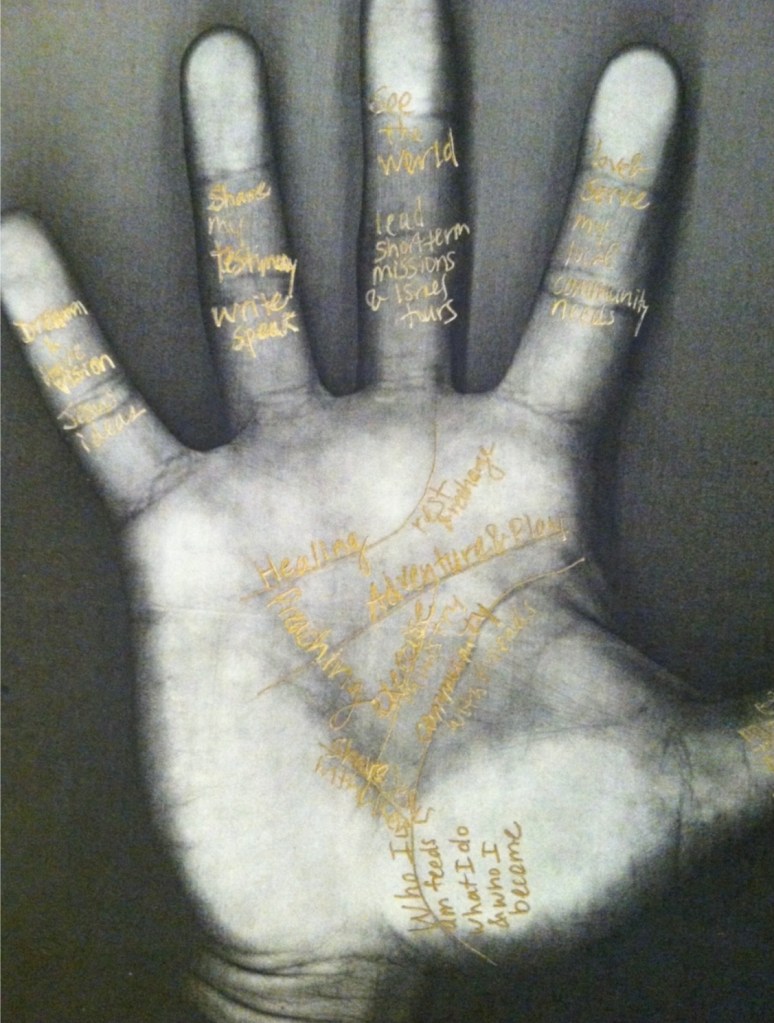
02D6C44D-9692-4DA6-86C3-0A256C32DB27That’s what I do, because I have learned the wisdom of ducks. Even ducklings sometimes step out of the line behind a Mama duck who bids them to walk a straight line, single file!

1BF24480-E6DE-4F28-90ED-192BAAA2105A
Or even to swim in an ordered line! Something ducks are very good at!
For me, achieving a well-ordered life is a constant struggle, yet something I need and want. What do I mean by “ordered life?” I envision for myself a life that longs to move toward physical, emotional and spiritual well-being. Especially spiritual well-being.

Perhaps I will turn to ducks for an inspiration to order my life or, even more compelling, perhaps I will turn to one of the streams of spirituality that comes from very deep in the Christian tradition — the wisdom of Benedictine Monasticism.

Now, stay with me! I’m not going out on a shaky spiritual limb.

Saint Benedict wrote his rule of life in the 6th century and thus left us with its simple and stable legacy of “Ora et Labora”: “Prayer and Work.” Today’s monasteries and convents still function under a Rule of Life, the best-known of which is that of Saint Benedict. A spiritual rule of life offers a fundamental rhythm for the balancing and ordering of life. Several years ago while seeking a deeper spiritual life, I entered into the novitiate of the Order of Ecumenical Franciscans. In the process to full profession into the Order, I was asked to write a personal rule of life.

Rule of life? I had no idea where to start. Nor did I really know what a rule of life looked like! I found this definition from a very helpful website, “Sacred Ordinary Days.”

A rule of life is a commitment to live your life in a particular way. It is meant to be crafted with prayer and discernment, in partnership with God, as you consider the way God made you and the values God has inscribed upon your heart. Once written, it serves as a tool that can help you make decisions for your life and determine how best to order your days. A rule is different than the goals, intentions, or resolutions we tend to set for ourselves. Those methods are task-based and measurable, and they’re often focused on what we do. A rule of life, on the other hand, helps you become. It is comprised of several simple statements that guide the posture of your life and the living of your days. It is not lived perfectly but can be lived faithfully while fostering within you an integrated and embodied life of faith.

So, attentive to the lives of Saints Francis and Clare of Assisi, I began discovering and creating my rule of life. What I learned in that experience is that crafting a rule of life is a spiritual discipline, whether I am writing, drawing, designing or graphing it. If you know me, you know that mine was handwritten because, for me, writing becomes the sigh of my soul. Once I began writing, I sensed a pull drawing me inward. The writing called me to open up my spirit to God in a deeper way and, from that place, to write down the ways I desired and intended to follow Christ and order my Christian life. In a nutshell, that’s what I discovered about a rule of life.

Sister Joan D. Chittister, O.S.B., an American Benedictine nun, theologian, author and speaker,  explains the idea of a rule of life more clearly in her writing about Saint Benedict’s Rule. She describes how the Rule of Benedict provides an opportunity for transformation for everyone who chooses to follow its wisdom.

All in all, the Rule of Benedict is designed for ordinary people who live ordinary lives. It was not written for priests or mystics or hermits or ascetics; it was written by a layman for laymen. It was written to provide a model of spiritual development for the average person who intends to live life beyond the superficial or the uncaring.

Benedict was quite precise about it all. Time was to be spent in prayer, in sacred reading, in work, and in community participation. In other words, it was to be spent on listening to the Word, on study, on making life better for others, and on community building. It was public as well as private; it was private as well as public. It was balanced. No one thing consumed the monastic’s life. No one thing got exaggerated out of all proportion to the other dimensions of life. No one thing absorbed the human spirit to the exclusion of every other. Life was made up of many facets and only together did they form a whole. 

A rule of life is rooted in Scripture, pointing always to Christ; and, in the words of Saint Benedict, it is “simply a handbook to make the very radical demands of the gospel a practical reality in daily life.”

Lent is upon us. I don’t know about you, but I need to get my ducks in a row and, more importantly, I need to revisit the rule of life I wrote decades ago. I have a notion that, while my life has changed over the years, my rule of life hasn’t. But my need for genuine repentance is this: I don’t even remember my rule of life. What did I write? In what ways did I live it out? How many years or months or weeks did I live by it? Why is my rule of life now lost in a pile of old papers? I contritely confess that I remember (sort of) only this small part of it:

I will live my life and speak truth in the manner of love, for God is love
and, in Christ, I live and move and have my being.

I vaguely remember those words, but I intend look through my archived treasures and scraps of paper to find my rule of life and to revisit it. Maybe I will even begin living it again. From now on, I want to remember to remember it, so that its expressions will become like the air I breathe. And I will remember what Saint Benedict wrote 1,500 years ago, “Your way of acting should be different from the world’s way. The love of Christ must come before all else.”  

As for me, the one thing I do remember so strongly about the act of writing my rule of life is that I was on a spiritual retreat in Albuquerque, New Mexico, a sacred place that made me imagine the lives of the desert mothers and fathers, the monastics who sparked spirituality for centuries. I also remember that, as I was writing, I would continually relive my ordination and its deep meaning for me. I continued to think and write on the day I had to finish, while the prayer of my heart and the longing of my soul continually whispered the same words sung at my ordination many years before:

Here I am, Lord. It is I, Lord. I have heard you calling in the night.
I will go, Lord, if you lead me. I will hold your people in my heart.

“Here I Am, Lord”
Daniel L. Schutte (b.1947)
Arranged by Ovid Young (1940-2014)

More Information on crafting your rule of life:

I found this website to be very helpful for people who want to craft a rule of life. Remember that your rule of life is for you, your way of enhancing your life and increasing your devotion to God. So every person’s rule will look different. 

All Shall Be Well, Ash Wednesday, Contemplation, Joel 2:12-13, Lent, Return to me with all your heart, Sacred Space

ALL SHALL BE WELL . . . A VIDEO BLOG ON SPIRITUALITY – EPISODE NUMBER 3

“ALL SHALL BE WELL” is a video blog that will help us enhance our personal spirituality and lead us into sacred pauses that will nourish our souls.

Welcome to “All Shall Be Well,” where we will explore together our spiritual center, create a moment of sacred pause and join together in contemplation and silence. In this episode, I want to focus our thoughts on spirituality and Lent. Today, Ash Wednesday, is the first day of Lent. God speaks to us through the Prophet Joel in chapter 2, saying,

Even now,” declares the Lord,
    “return to me with all your heart,
    with fasting and weeping and mourning.”

13 Rend your heart
    and not your garments.

Finding sacred space as Ash Wednesday leads us into Lent

Belonging, Beloved Community, Matthew 17, Rejection, Transfiguration of the Lord

Beloved Community

Outside is gloomy and raining today. Although I love rain — drizzly rain, soft rain, even driving earth altering rain — I can do without the gloomy part. Still, when there is gloominess around me, it invites me into contemplative moments. Those reflective kind of moments when transfiguration happens. And so today, the rainy drizzle leads my reflection to two places — to the story of the Transfiguration of Jesus and to the story of Yonah, who sings “Stranger to the Rain” in the theatrical production of “Children of Eden.”

This, in fact, is the Sunday of the Transfiguration of the Lord. In remembering the story that is told by all four Gospel writers and referred to by Apostles Peter and Paul, I always recall the response of three of Jesus’s disciples — Peter, James and John. On that high mountain with Jesus, they experienced a high moment when Jesus was transfigured. I always wonder what their soul emotions might have been when they witnessed Jesus glowing with a dazzling, holy light. Might they have felt fear, awe, exhilaration? Could they have felt that in that light, something holy rose up in them?

However they might have felt inside, they must have felt some sort of draw, something beckoning them to stay there on the holy mountain. They wanted to stay in the radiance of these moments with Jesus and with the Prophets Elijah and Elisha. They may have just wanted to be together in that beloved community.

From Chapter 17 of Matthew’s Gospel . . .

17 After six days Jesus took with him Peter, James and John the brother of James, and led them up a high mountain by themselves.There he was transfigured before them. His face shone like the sun, and his clothes became as white as the light. Just then there appeared before them Moses and Elijah, talking with Jesus.

Peter said to Jesus, “Lord, it is good for us to be here. If you wish, I will put up three shelters—one for you, one for Moses and one for Elijah.”

While he was still speaking, a bright cloud covered them, and a voice from the cloud said, “This is my Son, whom I love; with him I am well pleased. Listen to him!”

When the disciples heard this, they fell facedown to the ground, terrified. But Jesus came and touched them. “Get up,” he said. “Don’t be afraid.” When they looked up, they saw no one except Jesus.

As they were coming down the mountain, Jesus instructed them, “Don’t tell anyone what you have seen, until the Son of Man has been raised from the dead.”

Whatever the reason — being together in community, taking in the bright radiance, or being immersed in the miracle — the disciples wanted to stay on the mountain and to be in that holy moment together. Isn’t what all of us want? Don’t we all long for holy moments? Don’t we all want to be a part of beloved community?

Throughout this pandemic’s long season of isolation, many people are experiencing the loss of community, the loss of being together with the people they care about. I have heard stories of this kind of loss from countless people, and usually they are also mourning being away from their places of worship. They mourn for the loss of being together and for the loss of their holy places. Like the disciples, it seems that being together and being in holy places is what they need.

I have thought about those needs, the attraction of them, the longing for them. My conclusion is that these are places where people are accepted, unconditionally. We want to be with people who do not ostracize us, in worship places that never name us unworthy or turn us away. Being ostracized always hurts no matter the reason. But people are ostracized every day — for their race, their religion, their gender identity. People are ostracized every day for simply being who they are, because “who they are” does not fit in to someone’s world of acceptable people. People ostracizing other people has been a shameful reality through the ages.

I have been ostracized many times in my life, for many reasons. The idea of being ostracized brings to mind one of my favorite musicals, “Children of Eden.” Act 2 begins with the story of Noah and his sons preparing the ark before the great flood. It seems God is about to ostracize all the earth’s people except Noah, his family and their gathering of animals. But Noah’s story has another arc, the story of his youngest son, Japheth and his future bride, Yonah.

Because of the imminent flood, Japheth is on a deadline to find a partner to bring on the arc. Japheth doesn’t want his father to choose for him, because he is already in love with someone. He announces he will bring his future bride to dinner. Noah and the family eagerly prepare to meet Yonah, but Yonah is not the kind of woman they expected.

Japheth tries to bring his true love Yonah, the servant girl, to the table, but Noah stops him. Yonah bears the mark of Cain and this causes a furor. Yonah is not one of them. She is of another race. Japheth is furious that his family rejected her and storms off just as animals start appearing on their way to the ark.

After every person and animal is onboard the ark, Noah sees Yonah standing alone and apologizes that he can not take her with him. Left alone, the “black girl bearing the mark of Cain” feels the devastating pain of rejection. Filled with emotion and overcome with sadness, Yonah sings “Stranger To The Rain,” singing of her pain of being ostracized, how she is accustomed to being rejected, but she also sings of her resilience to bear it. “I’ve learned not to tremble when I hear the thunder roar. I don’t curse what I can’t change . . . I won’t say I’ve never felt the pain, but I am not a stranger to the rain.”

I find priceless wisdom in the words Yonah sings.

Shed no tears for me
There’ll be rain enough today
I’m wishing you godspeed
As I wave you on your way
This won’t be the first time
I’ve stayed behind to face
The bitter consequences
Of an ancient fall from grace
I’m a daughter of the race of Cain
I am not a stranger to the rain
 
Orphan in the storm
That’s a role I’ve played before
I’ve learned not to tremble
When I hear the thunder roar
I don’t curse what I can’t change
I just play the hand I’m dealt
When they lighten up the rations
I tighten up my belt
I won’t say I’ve never felt the pain
But I am not a stranger to the rain
 
And for the boy who’s given me the sweetest love I’ve known
I wish for him another love so he won’t be alone
Because I am bound to walk among the wounded and the slain
And when the storm comes crashing on the plain
I will dance before the lightning to music sacred and profane
 
Oh, shed no tears for me
Light no candle for my sake
This journey I’ll be making
Is one we all must make
Shoulder to the wind
I’ll turn my face into the spray
And when the heavens open
Let the drops fall where they may
If they finally wash away the stain
From a daughter of the race of Cain
I am not a stranger to the rain
 
Let it rain

She describes herself as an “orphan in the storm.” And the truth is that, at times, I have described myself as an orphan. It is a feeling of being alone, being put out and rejected, being told you do not belong, being ostracized. I hate that feeling, but I love the feeling of being “one” with my community and “one” with God — Beloved Community.

Here is an audio of “Stranger to the Rain.” I wonder if you can imagine Yonah standing alone, Noah looking at her with guilt. She looks at Japheth who stands far away, sometimes turning away from her, for looking at her is too painful.

Amanda Gorman, God's presence, Hope, Spirit wind, Spiritual and emotional darkness

Just Hope

I just read a powerful quote by poet extraordinaire, Amanda Gorman, in an interview published in Time Magazine. In the article, Michelle Obama interviews Amanda Gorman.

Optimism shouldn’t be seen as opposed to pessimism, but in conversation with it. Your optimism will never be as powerful as it is in that exact moment when you want to give it up. The way we can all be hopeful is to not negate the feelings of fear or doubt, but to ask: What led to this darkness? And what can lead us out of the shadows?

More than anything else, her words are about hope, just hope. We throw the word “hope” around quite often, hoping for this thing and then that thing. But that’s just hope, not necessarily real hope. Real hope is a hope that looks beyond the present moment, hope that is the glow from your soul, hope that is an abiding thing that is hidden in your soul.

The last thing I want to do today is give you all the definitions of hope I can find on the internet. In fact, if you wanted to, you could find hundreds of good quotes about hope on the internet, maybe even thousands. Like these:

Quotes and definitions may be popular, even relevant at times, but what I have desperately needed in my darkest moments was not a new definition of hope or even a lovely quote written on a picture of clouds. What I needed in my personal dark nights of terror was the kind of hope that had the gentle power to heal the deepest recesses of soul and to lift my spirit to the brilliant light that is never fully gone.

Just hope? Oh, no! Not just hope, but the abiding, living hope we know as the constant presence of God and the wings of Spirit breath. For this hope, thanks be to God.

As a gift to you on this day, I offer a video of Amanda Gorman presenting her hope-filled poem, “The Hill We Climb.” I know I previously sent a video of her presenting her poem at the Inauguration, but this video is worth watching. Find it HERE.

“The Prayer”, Dark night of the soul, Darkness, Fear, God's presence, God’s creation, Light, Spiritual and emotional darkness, Stars

In Darkness, God Will Whisper to the Soul.

70BAC2EE-82BA-45B0-85FF-C2E2451246D5

Throughout my life there were times, many of them, when the only thing I could do was pray. In spite of knowing that praying was the very best thing that I could do, my soul held a kind of dark, helpless, hopeless sadness. My brother’s serious illness has taken me into that “dark night.” Thinking of him in the hospital’s ICU fighting the ravages of the coronavirus brought me to darkness, especially at night while trying to fall asleep. Lying in bed, I experienced panic attacks. Being unable to visit him brought even more darkness to my spirit. The fear of losing him triggered every past trauma I have suffered throughout my life.

The dark night! The unknown! Yes, I fear it. I dread it. And it is here with me now.

The writing of Spanish mystic St. John of the Cross (1542–1591) gave me a kind of marker that helped me measure my current experience of “the dark night.” He described his darkness as a place of  “unknowing.”

Yet when I saw myself there
Without knowing where I was
I understood great things;
I shall not say what I felt
For I remained in unknowing
Transcending all knowledge.

— St John of the Cross

I suspect that every person has sometimes been in places I can only describe as the “dark night of the soul.” It is a place most people experience as abandonment by God. It is a place where I have found myself many times. And yes, I fear it. I dread it. Perhaps you fear it, too.

Many people believe that the dark night of the soul comes to them because of something they have done, some sin they have committed that results in God’s absence. Yet, we find the experience of darkness in the life stories of those we think of as having been faithful followers of God. People such as Mother Teresa, C. S. Lewis, Henri Nouwen and Martin Luther. Each of these suffered particularly intense episodes of the “dark night of the soul.” 

8FD220B1-A030-4D2B-94E1-C8CE9F2B0CC3

In his secret journal, Henri Nouwen wrote   about a dark season in 1988 in which he could not feel God’s love. He had brought millions of others into a more tender and intimate experience with God, but he writes that he was in a “dark night of the soul.”

C.S. Lewis’s dark night came after the death of his wife Joy, the love of his life who died four years after their marriage. Lewis explained that he experienced the emotional pain of Absence — not just the absence of his wife, but the immense Absence of God, his “dark night of the soul.”

Mother Teresa’s darkness came at the very founding of her Missionaries of Charity and lasted to the end of her life, with little respite. Martin Luther’s dark night plagued him as a young monk, and then in several other forms as a Reformer.

The dark night! The unknown! Yes, I fear it. I dread it.

It is for me a time when prayer is my only response. At least, what I understand of prayer. At times I have found myself turning to music to quiet my soul in my darkest night. One song that I turn to almost every time in the darkness is “The Prayer” written by Carole Bayer Sager, David Foster, Tony Renis and Alberto Testa. “The Prayer” is a song of safety and inspiration.

Carole Bayer Sager speaks about how the song’s theme of safety is so important to her:

I think it embodies everything I looked for my whole life. “Lead us to the place, guide us with your grace, to a place where we’ll be safe.” I didn’t find that safety until my mid-40s.

I wonder if the words and thoughts in “The Prayer” might comfort you on this day, reading its words and listening to the video I’ve embedded below.

I pray you’ll be our eyes
And watch us where we go
And help us to be wise
In times when we don’t know

Let this be our prayer
When we lose our way
Lead us to a place
Guide us with your grace
To a place where we’ll be safe.

I pray we’ll find your light
And hold it in our hearts
When stars go out each night
Remind us where you are.

Let this be our prayer
When shadows fill our day
Lead us to a place
Guide us with your grace
To a place where we’ll be safe.

A world where pain and
sorrow will be ended
And every heart that’s
broken will be mended
And we’ll remember we
are all God’s children

Reaching out to touch you
Reaching to the sky.

We ask that life be kind
And watch us from above
We hope each soul will find
Another soul to love.

Let this be our prayer
Just like every child
Needs to find a place
Guide us with your grace.
Give us faith so we’ll be safe.

The dark night!  The unknown!  Yes, we fear it. We dread it. Praying ourselves through it may seem impossible.

Yet, might we look at darkness and the unknown in another way by reflecting on the creation story in Genesis? When I consider God’s creation of day, and night, it seems that God’s astounding creation of day and night reside in a continuum where neither are bad. They just are! When I consider our gift of “In the beginning,”I cannot help but look on in awe and wonder as God and Spirit create light out of darkness.

In the beginning God created the heaven and the earth.
Now the earth was formless and empty, darkness was over the surface of the deep, and the Spirit of God was hovering over the waters.

And God said, “Let there be light,” and there was light.

God saw that the light was good, and he separated the light from the darkness. God called the light “day,” and the darkness he called “night.” 

God made two great lights—the greater light to govern the day and the lesser light to govern the night. He also made the stars. God set them in the vault of the sky to give light on the earth, to govern the day and the night, and to separate light from darkness. And God saw that it was good. And there was evening, and there was morning—the fourth day.    — Genesis 1:1-3, 16-19

God saw that it was good. In that, I have confidence. I see the brightness of the day, and the night, night that God has filled with a glowing moon and glistening stars — light in darkness. Perhaps this thought, this truth of Scripture, will help us to not fear the darkness of night, for without it, we would can never enjoy its light. And as for the dark night of the soul, the unknown that we so fear, perhaps we can embrace it as a place to linger and to wait for the Spirit to guide us into the realization of God’s presence, even as we are experiencing God’s absence.

One of my favorite writers, Mirabai Starr, knows about the way of unknowing personally and intimately. She describes what happens between the soul and God in the “dark night:”

The soul in the dark night cannot, by definition, understand what is happening to her. . . . she does not realize that the darkness is a blessing. She feels miserable and unworthy, convinced that God has abandoned her, afraid she may herself be turning against him. In her despair, the soul does not recognize that God is teaching her in a secret way now.

At the same time that the soul in the night becomes paralyzed . . .  a sense of abundance starts to grow inside the emptied soul. . . . God will whisper to the soul in the depth of darkness and guide it through the wilderness of the Unknown.

Barbara Brown Taylor intentionally moved herself into an experience of forced darkness, a place where her intention was to stay there for a long period of time. In that darkness, she said this: “St. John of the Cross says that the dark night is God’s best gift to you, intended for your liberation.”

The dark night!  The unknown!  Yes, I still fear it. I will probably always dread it. But after being in dark spaces so many times, I think I can stay there now, knowing in my heart of hearts that my soul’s dark night really is God’s best gift to me, intended for my liberation.

The dark night!  The unknown!  Yes, I still fear it.

I may fear the darkness, but I love the stars.0F63D52B-65D9-49F5-AA31-A5A12364D676

Though my soul may set in darkness,
it will rise in perfect light;

I have loved the stars too fondly
to be fearful of the night.

― Sarah Williams, Twilight Hours: A Legacy Of Verse

In my soul’s darkest nights, I learned that the light of the stars is always there, even in the times when I cannot see them. I also learned something profound about prayer — something so profound, so holy and intimate — that I am at a loss to describe it. I learned that a part of prayer in the dark is the miracle that Spirit holds me close and God whispers to my soul.

I know that the stars still comfort me in the dark, that in the darkest of my soul’s nights, I can still pray. For that, I give thanks to God.

Activism, Beloved Community, Black History Month, Change, Civil Rights Movement, Community activism, Freedom, Injustice, Justice, Montgomery Bus Boycott, Persistence, Racism, Rosa Parks, Segregation, Social justice, Transformation, Transforming Injustice

A Birthday Celebration for Rosa Parks

84A0FA99-AA4F-4D53-9F45-ECD2A3F04B4E
Celebrate with me the birthday of Rosa Parks! 

Born in Tuskegee, Alabama on February 4, 1913, she continues to be remembered in the hearts of the American people. What a “herstory” she lived! And how could I even begin to tell her story here? What we think we know about Rosa Parks, in fact, is more like a fairy tale than an accurate picture of the person she was and the powerful transformation she brought in the quest for racial justice.

Rosa Parks was not one to dwell on one event — one bus ride, one boycott, one street named after her — she instead set her “eyes on the prize” for the long haul. She was one persistent woman. She was a mentor to the young people who would ultimately see the prize of equal justice under the law. Rosa Parks was not just a woman to be remembered by holding down one seat on one bus on one day. Instead, she set her sights on the transformation of injustice and never stopped moving towards justice for all.

I cannot tell her story adequately, but I can point to some of her milestones . . .

In August of 1955, black teenager Emmett Till, visiting relatives in Mississippi, was brutally murdered after allegedly flirting with a white woman. Till’s two murderers had just been acquitted. Rosa Parks was deeply disturbed and angered by the verdict. Just four days after hearing the verdict, she took her famous stand on the Montgomery bus ride that cemented her place as a civil rights icon. She later said this when the driver ordered her to move, “I thought of Emmett Till and I just couldn’t go back.”

Rosa Parks sat in the black section, but when the white section filled up, the bus driver demanded that the four black passengers nearest the white section give up their seats. The other three black passengers reluctantly moved, but she did not. She recounted the scene: “When he saw me still sitting, he asked if I was going to stand up, and I said, ‘No, I’m not.’ And he said, ‘Well, if you don’t stand up, I’m going to have to call the police and have you arrested.’ I said, ‘You may do that.’”

Many people have imagined Rosa Parks on that bus as an old woman tired after a long day of work. Yet, in her autobiography, My Story, Parks writes, “People always say that I didn’t give up my seat because I was tired, but that isn’t true. I was not tired physically, or no more tired than I usually was at the end of a working day. I was not old, although some people have an image of me as being old then. I was forty-two. No, the only tired I was, was tired of giving in.” 

Rosa Parks endured significant hardships in her life, both during and after the boycott. She was unjustly fired from her department store job. She received an almost constant stream of death threats, so many that she eventually left Montgomery to seek work elsewhere, ultimately moving to Detroit. There she served as secretary and receptionist for Representative John Conyers, befriended Malcolm X, and became active in the Black Power movement.

In 1995, she published her memoir, Quiet Strength, focusing on her Christian faith.  She insisted that her abilities to love her enemies and stand up for her convictions were gifts from God: 

God has always given me the strength to say what is right. I had the strength of God, and my ancestors.

Rosa Parks died in 2005 at the age of 92 and she became the 31st person, the first woman, the second African American, and the second private citizen to lie in honor in the Capitol Rotunda in Washington, D.C.

  • More than 50,000 people came through to pay their respects. 
  • Her birthday is celebrated as Rosa Parks Day in California and Missouri.
  • Ohio and Oregon celebrate the day on December 1, the anniversary of her arrest.

One last milestone of her remarkable story . . .

In 1994, the Ku Klux Klan applied to sponsor a section of Interstate 55 near St. Louis, Missouri, which would mean the Klan’s name would appear on roadside signs announcing the sponsorship. In 2001, the US Supreme Court ruled that the state of Missouri cannot discriminate against the Ku Klux Klan when it comes to groups that want to participate in the adopt-a-highway program. Of course, while the name of the Klan is aesthetically disgusting to many people, this decision was a victory for free speech and equal protection under the law, right?

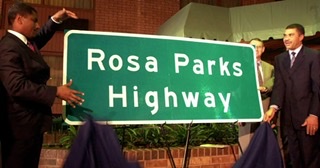
54FF516B-B94C-4ADC-AF10-4BE8CF2BF64BIn the end, the Missouri Department of Transportation got sweet revenge! Sure, they couldn’t  remove the KKK’s adopt-the-highway sign, but few would dispute the state’s ability to name the highway itself. So the KKK is now cleaning up their adopted stretch of the highway named by the Missouri legislature and christened as “Rosa Parks Highway.”

Rosa Parks did not crave the spotlight. Nor did she care all that much about highways and byways bearing her name. She probably did want to be known as a person who persisted in the struggle for racial justice. She told us that in these words:

I would like to be known as a person who is concerned about freedom and equality and justice and prosperity for all people.

You are remembered as such a person, Mrs, Rosa Parks! Happy birthday in heaven. You are our inspiration. You are one of our sheros, our wonder woman!

All Shall Be Well, Contemplation, coronavirus, Darkness, Sacred Pauses, Sacred Space

ALL SHALL BE WELL . . . A VIDEO BLOG ON SPIRITUALITY – EPISODE NUMBER 2

“ALL SHALL BE WELL” is a video blog that will help us enhance our personal spirituality and lead us into sacred pauses that will nourish our souls.

Welcome to “All Shall Be Well,” where we will together explore our spiritual center, create a moment of sacred pause and join together in contemplation and silence. Tonight my thoughts will focus on the dark times of our lives, the spiritual and emotional darkness that sometimes engulfs us and the ways we can dwell in our darkness to learn the secrets the darkness teaches us. We will listen in sacred space to hear the sigh of our souls.

Finding sacred spaces while hopelessly trapped in darkness

Religious Liberty, Soul Freedom

What Is Religious Liberty, Anyway?

I have been thinking about religious liberty these days. For many different reasons.

Religious liberty. What does that even mean? I Googled “religious liberty” just to see what definitions I might find. Being a long-time Baptist minister, I decided to consult our own Baptist Joint Committee on Religious Liberty. Here’s their definition:

“Religious liberty” is the freedom to believe and exercise or act upon religious conscience without unnecessary interference by the government.

Baptist Joint Committee on Religious Liberty, https://bjconline.org/religiousliberty/


There you have it. Succinct. Simple. A very good “brass tacks” definition. The definition gets right to the heart of the matter. Still, I ask myself what religious liberty means for me.

My grandmother’s Greek village, Aperi, on the island of Karpathos, which is part of the Dodecanese Islands (literally “twelve islands”). These are a group of 15 larger, plus 150 smaller Greek islands in the southeastern Aegean Sea and Eastern Mediterranean, off the coast of Turkey’s Anatolia, of which 26 are inhabited.

My grandmother came to Ellis Island with my two-year old mother in tow, fleeing from the oppressive regime of Benito Mussolini. She left her tiny Greek village, Aperi, and arrived in New York Harbor where Lady Liberty stands, ever shining freedom’s light. My grandmother was “free” in America. She now had a “path to citizenship” and the freedom to exercise her Greek Orthodox faith. Her story is part of the story of my religious liberty, at the heart of it.

So I have asked myself this: When I ponder the working definition of religious liberty, do I also acknowledge the heart of its meaning in my life? I’m not so sure I do, because I take my soul freedom for granted as something I have always had. Religious freedom is, of course, a pillar of American life, written into the U.S. Constitution in the first 16 words of the First Amendment: “Congress shall make no law respecting an establishment of religion, or prohibiting the free exercise thereof.”

As clear as those words are, it’s not always obvious how to apply them in our society. Again, the Baptist Joint Committee on Religious Liberty boils it down by stating the specific points below as precise areas that call for advocacy for religious freedom.

The targeting of religious minorities.
The rise of Christian nationalism.
The politicization of houses of worship.

So getting to the heart of it . . . getting to my heart is a story I experienced many years ago, 1979 to be exact. It was the year my husband and I arrived in East Africa as young, very green, missionaries. The brutal Ugandan dictator President Idi Amin had just been deposed and was exiled somewhere in another country. He was no longer in Uganda, but the destruction he left behind was. His genocide, his destruction of the country’s infrastructure, his looting of homes and businesses, his dismantling of schools and burning of textbooks, his murderous reign of terror, his banning and burning of Christian churches — all so visible in faces of the Ugandan people.

I could barely force myself to look because everywhere I did look, I saw the remains of pure evil. And yet, the lush green of banana trees, the snow-capped mountains, the verdant rainforests, the hillside tea plantations, the majestic waterfalls were all there, unblemished signs of God’s creation. And those beautiful people, widows and orphans, living with deep loss and yet standing and and surviving and repairing. Their faces may have been drawn and downcast with mourning, but their sparkling eyes still reflected hope.

In our first days in Ugandan, we visited a nearby Anglican church for Sunday worship. As long as I have memory, I will remember the spontaneous, heart-felt prayers of that congregation. One woman stood spontaneously to pray. She prefaced her prayer with this passage of Scripture from her memory. The text from Lamentations so accurately described their lives.

Remember, Lord, what has befallen us; look, and see our disgrace!

Our inheritance has been turned over to strangers,

our homes to aliens.

We have become orphans, fatherless;
our mothers are like widows.

We must pay for the water we drink;
the wood we get must be bought.

With a yoke on our necks we are hard driven;
we are weary, we are given no rest.

Lamentations 5:1-5 (NRSV)

Then she prayed. She wept. I wept. Everyone in the congregation wept. The prayer time ended; the worship went on with scripture, prayer music and homily. At the end, as if to defy their mournful reality, they stood to their feet to sing. And sing they did, in jubilant praise. “O Lord our God, you have turned our mourning into dancing,” they shouted, as they sang louder snd stronger. Their mourning turned to dancing. Up and back, through the church aisles, all over the sanctuary, they moved and swayed, dancing with joy. And they sang:

Dance then, wherever you may be. I am the Lord of the dance, said He;

And I’ll lead you, all wherever you may be;

I am the Lord of the Dance, said He.

“Lord of the Dance;” Hymn text by Sydney Carter, 1963.

Yes, I know I am all over the map today in my attempt to explain soul freedom, religious liberty, freedom of religion, or whatever one might call it. But Uganda is the place — among those worshipping people — where I learned the heart-meaning of religious liberty.

The Ugandan people gave me the gift of truly understanding soul freedom. As the days moved on after that worship service, the people became our friends, close friends. And on a day I will not forget, a widow who had lost most of her family as well as her tiny mud hut with a roof of banana leaves said this to me. “They burned our churches, but we still worshipped. They decimated our religion, but we worshipped still. They murdered our priest, but we continued to speak to God the words he would have said. Oh yes, we were afraid in our secret “church,” but we worshipped, and whispered our prayers, and sang our praises to our God, ever so softly.”

That’s where I learned that taking my religious liberty for granted would not be my way, not ever again. In my lifetime, I have never had to worship in secret. I have never had to silence myself from speaking the truth of my faith. I have never been in a hidden “church” fearing that a government official would raid my sacred space and kill me.

Ah, those bright-eyed Ugandan people who persevered and persisted, who never lost hope, who never ceased their worship — their prayers, their singing, their dancing — in praise to a God who was present with them through every evil day. They were my teachers about the real and true meaning of soul freedom.

And by the way, Uganda’s underground churches flourished during the evil reign of the ruthless dictator, Idi Amin. God’s Church in Uganda grew, and grew strong, even as the flames of burning churches filled the countryside. Perhaps the courage of the people rose from the flames. Perhaps the smoke that rose from those fires became holy smoke, enveloping the people and rising with their prayers to God, just as the smoke of burning incense symbolizes the prayer of the faithful rising to heaven.

For soul freedom, O God, we give you thanks. Amen.

All Shall Be Well, Amanda Gorman, Inaugural Poem, Inauguration 2021, President Joe Biden, Vice President Kamala Harris

America! January 20, 2021

The day of Inauguration has come. Long awaited! Hope renewed! Refreshing winds of newness blow across us! We saw a unity of different people and heard a diversity of voices — Lady Gaga, Garth Brooks, Jennifer Lopez, Fr. Leo O’Donovan, Rev. Silvester Beaman, Amanda Gorman. The poem recited by Amanda Gorman is what I share with you today.

Mr. President, Dr. Biden, Madam Vice President, Mr. Emhoff, Americans and the world, 

The Hill We Climb

When day comes we ask ourselves
Where can we find light in this never-ending shade?
The loss we carry a sea we must wade. 

We’ve braved the belly of the beast.
We’ve learned that quiet isn’t always peace.
In the norms and notions of what just is isn’t always justice. 

And yet, the dawn is ours before we knew it. Somehow we do it. Somehow we’ve weathered and witnessed a nation that isn’t broken, but simply unfinished. 

We, the successors of a country and a time where a skinny black girl descended from slaves and raised by a single mother can dream of becoming president

only to find herself reciting for one.

And yes, we are far from polished, far from pristine, 
but that doesn’t mean we are striving to form a union that is perfect.
We are striving to forge our union with purpose.
To compose a country committed to all cultures, colors, characters, and conditions of man.

And so we lift our gazes not to what stands between us, but what stands before
We close the divide because we know to put our future first,
we must first put our differences aside.

We lay down our arms so we can reach out our arms to one another.
We seek harm to none and harmony for all.
Let the globe, if nothing else, say this is true.
That even as we grieved, we grew.
That even as we hurt, we hoped.
That even as we tired,
we tried that will forever be tied together victorious.
Not because we will never again know defeat,
but because we will never again sow division.

Scripture tells us to envision that everyone shall sit under their own vine and fig tree
and no one shall make them afraid.
then victory won’t lie in the blade,
but in all the bridges we’ve made.

That is the promise to glade, the hill we climb if only we dare.
It’s because being American is more than a pride we inherit.
It’s the past we step into and how we repair it.

We’ve seen a forest that would shatter our nation rather than share it.
Would destroy our country if it meant delaying democracy.
This effort very nearly succeeded.
But while democracy can be periodically delayed,
it can never be permanently defeated.

In this truth,
in this faith we trust for while we have our eyes on the future,
history has its eyes on us.

This is the era of just redemption.
We feared it at its inception.
We did not feel prepared to be the heirs of such a terrifying hour,
but within it, we found the power to author a new chapter,
to offer hope and laughter to ourselves so while once we asked,
how could we possibly prevail over catastrophe?

Now we assert, how could catastrophe possibly prevail over us?
We will not march back to what was,
but move to what shall be a country that is bruised but whole,
benevolent, but bold, fierce, and free.

We will not be turned around or interrupted by intimidation because
we know our inaction and inertia
will be the inheritance of the next generation.
Our blunders become their burdens.
But one thing is certain,
if we merge mercy with might and might with right,
then love becomes our legacy and change our children’s birthright.

So let us leave behind a country better than one we were left with.
Every breath from my bronze-pounded chest
we will raise this wounded world into a wondrous one.
We will rise from the gold-limbed hills of the West.
We will rise from the wind-swept Northeast where our forefathers first realized revolution.
We will rise from the Lake Rim cities of the Midwestern states.
We will rise from the sun-baked South.
We will rebuild, reconcile and recover in every known nook of our nation,
In every corner called our country
our people diverse and beautiful will emerge battered and beautiful.

When day comes, we step out of the shade aflame and unafraid.
The new dawn blooms as we free it.
For there is always light. If only we’re brave enough to see it.
If only we’re brave enough to be it.

Amanda Gorman (born March 7, 1998) is an American poet and activist from Los Angeles, California. Gorman’s work focuses on issues of oppression, feminism, race, and marginalization, as well as the African diaspora.nGorman published the poetry book, The One for Whom Food Is Not Enough. In 2017, Gorman became the United States of America’s first National Youth Poet Laureate. She became the youngest poet to read at a presidential inauguration, reciting her poem “The Hill We Climb” at the inauguration of Joe Biden on January 20, 2021.

Beloved Community, Community, Love, Martin Luther King, Jr., peace, Stars

THE RADIANT STARS OF LOVE

The year was 1963. I was 14 years old. So it could not have been that I was unaware of what was going on in my city, but more likely that I was sheltered from it. I’m referring to two events: the day Dr. Martin Luther King, Jr. was arrested and incarcerated in the Birmingham jail; and in that same year — Sunday, September 13 — the 16th Street Baptist Church was bombed, taking the lives of four little girls as they left their Sunday School class to go into the sanctuary.

It was a white supremacist terrorist bombing, just before 11 o’clock, when instead of rising to begin prayers, the congregation was knocked to the ground. As the bomb exploded under the steps of the church, the congregants sought safety under the pews and shielded each other from falling debris.

Five months earlier, on April 12, 1963, Dr. Martin Luther King, Jr. was arrested with SCLC activists Ralph Abernathy, Fred Shuttlesworth, and other marchers, while thousands of African Americans dressed for Good Friday wondered what in the world the future might hold.

As a child, I would proudly sing a song I learned in school, “Birmingham’s My Home. In the days of 1963, I was not so proud that Birmingham, Alabama was my home. Today, I feel deep shame to admit that even at age 14, I had no idea what was happening or why it was happening. To be sure, I was not yet “woke” in any sense of the word.

While incarcerated, Dr. King wrote a letter. Some of his most eloquent, scorching, but hopeful words were penned during his time in the Birmingham Jail. These words he wrote from there are quite striking to me:

“. . . in some not too distant tomorrow the radiant stars of love and brotherhood will shine over our great nation with all their scintillating beauty.”

How is it that we have not yet seen the “radiant stars of love and brotherhood” [and sisterhood] “shining over our great nation with all their scintillating beauty?” Why does the struggle for racial justice still play out in the streets of this nation’s cities as the oppressed still cry out against the injustice that continues to hold them in chains?

I will not attempt to answer those unanswerable questions. I will point out the mountains that still stand ominously before us. We cannot move those mountains, it seems, as they loom over us — immense, towering, formidable, oppressive. The rocks, crags and peaks of them looking like peaceful protests by persons crying out for freedom in June, white supremacists violently storming the United States Capitol just 12 days ago, and the terrifying Coronavirus that still threatens after so many months.

How will we see the radiant stars of beloved community, of hope, of peace when we cannot move those mountains? Words cannot move mountains, but words can give us the strength and courage to try. And so I leave you with Dr. King’s words as we honor him on this day:

“Out of the mountain of despair, the stone of hope.”*

I wish for you radiant stars of love, the sunlight of hope that is new every morning, and the glistening wings of peace to guide your way.


*Dr. King delivered this line during his “I Have a Dream” speech in Washington, D.C. on August 28, 1963. It now appears is one of the most prominently featured quotes on the Martin Luther King, Jr. Memorial in Washington.

coronavirus, Hope, Julian of Norwich, Lament, Love, Martin Luther King, Jr., peace, Sacred Space

ALL SHALL BE WELL . . . A VIDEO BLOG ON SPIRITUALITY – EPISODE NUMBER 1

All Shall Be Well” is a video blog on spirituality.

Welcome to “ALL SHALL BE WELL,” my video blog designed to help us examine our spiritual center, to create sacred pauses, to join together in contemplation and silence.

All Shall Be Well, Julian of Norwich, Sacred Pauses, Sacred Space, Spirituality, Video Blog

ALL SHALL BE WELL . . . VIDEO BLOG

ALL SHALL BE WELL” is a video blog to help enhance our personal spirituality and lead us together into sacred pauses that will nourish our souls.

I am pleased to offer something new in hopes of communicating with you in new ways. “All Shall Be Well” is a video blog on spirituality — mine and yours. We will explore together ways to deepen our communion with God as we lean more into contemplative prayer, meditation, silence, centering prayer, listening for God, prayer of the hours and other ways of inviting the whispers of God to grace us.

I invite you to hear each video message, and I ask you to accept each message only if it feels good in your heart. Your spirit knows what you need. Listen to your spirit.

Please feel free to send your comments to let me know what kind of spiritual disciplines are most helpful and meaningful to you. Share a bit about your own spiritual journey and some of the ways you care for your soul and draw closer to God.

The following video message is an introduction to this video blog and offers a blessing for you as you move into a new year. I pray that 2021 will lead you into holy places and sacred pauses that enhance your spirituality. Though I do not personally know each person who follows my blog, I hold you in my heart, and as I prepare to send each blog post, I pray for each person who will watch or read it.

May God’s blessings be upon you and may the God of Hope walk beside you and fill you with all joy and peace that you may abound in confident hope by the power of the Spirit. Amen.

anxiety, Calm, Comfort, Emotions, Fear, Feelings, God's Faithfulness, God’s promises, Grace, grief, Hate, healing, Hope, Pain, Pandemic of 2020, peace, Prayer, Preaching, Present moment, Resilience, Sacred Space, Spirit, Violence

What Do You Say to a Broken World?

I once preached a sermon entitled, “What Do You Say to a Broken World?” In this week, after our nation’s Capitol was breached and defiled, I have wondered if ministers who will stand before congregations in two days are asking themselves a similar question: “What will I say on this day to a broken world?”

A friend of mine is preaching this week. I am praying that she will have an extra measure of wisdom, because standing before a congregation while the nation is in chaos is not a responsibility to be taken lightly. My first feeling as I thought about preaching for this Sunday was relief that I was no longer a pastor with such a heavy responsibility, that I did not have to summon the wisdom to speak to a people with heavy hearts who need to hear of healing grace and hope. But my most intense feeling was envy, not hostile envy, but heart envy about my deep desire to speak Gospel Good News to people who need to hear good news. Still I envied my friend and wished that, this Sunday, I could stand before a congregation with wisdom, open my spirit and invite God to speak through me. It is a heavy responsibility and a sacred calling.

Dr. Greg Carey, Professor of New Testament at Lancaster Theological Seminary, wrote an essay this week entitled “Preaching When It’s Broken.” In the essay he says this:

God bless you, preachers who will address congregations this Sunday . . . Here in the United States, things are broken, most people know they’re broken, and we all need healing and truth.

For many of us, the invasion of the Capitol and the response to it by people we know, love and admire, brings this brokenness to the foreground. Since that terrible, violent day, I have heard dozens of interviews that expressed anger, frustration, contempt, indignation and all manner of raw emotion. I have also heard wise leaders express their resoluteness to lead this nation into healing, unity and hope.

Indeed, the questions about this Sunday’s preaching call us to attention: How do our pastors, our priests, our rabbis, our imams, our bhikkhus and bhikkhunis stand before their congregations offering comfort when our nation is so broken, so angry, so mournful in the face of violent acts? What will they proclaim? What will they preach? What will they pray? What will they sing?

Minneapolis Pastor and Poet, Rev. Meta Herrick Carlson, has given us a grace-gift with this poem entitled, “A Blessing for Grieving Terrorism.”

A Blessing for Grieving Terrorism

There is sickness
with symptoms as old as humankind,
a rush of power born by inciting fear in others,
a wave of victoryin causing enemies pain.

There is a push to solve the mystery,
to isolate the suspect and
explain the evil simply
to a safe distance from the anomaly.

There is a temptation
to skip the part that feels
near the suffering
that shares the sadness,
that names our shared humanity.

There is a courage
in rejecting the numbing need for data
in favor of finding the helpers,
loving the neighbor,
resisting terror through random acts of connection.

There is a sickness
with symptoms as old as humankind,
but so is the remedy.

From Rev. Meta Herrick Carlson’s book “Ordinary Blessings: Prayers, Poems, and Meditations for Everyday Life.” Used with permission.

So much truth in her words, so much wisdom “for the living of these days.” In her words, I feel all over again the desire of my heart, the impossible dream of standing in a pulpit this Sunday, speaking to a congregation that needs strength in the midst of adversity. I will not stand behind a pulpit this week, but I will pray for those who will stand in that sacred space. I will pray for them, the proclaimers, and I will pray for their hearers across this nation. I will lean on this beautiful prayer written by Reverend Valerie Bridgeman:

May God Strengthen You for Adversity

A blessing for today: 

May God strengthen you for adversity
and companion you in joy.

May God give you the courage of your conviction
and the wisdom to know when to speak and act.

May you know peace.
May you be gifted with deep,true friendship and love. 

May every God-breathed thing
you put your hand to prosper and succeed.

May you have laughter to fortify you
against the disappointments.
May you be brave. 

© Valerie Bridgeman, December 18, 2013

When all is said and done, more important than what the “proclaimer in the pulpit” says is what the hearers hear. For in this time — when violence, riots, terrorism, pandemic and all manner of chaos is so much a part of life — those who listen need to hear a clear message of a God who dwells among us, a Christ who leads us, a Spirit who comforts us under the shadow of her wings. For hearts in these days are heavy, souls are wounded, spirits seek hope. And all the people want to believe that they do not walk alone through their present angst.

I pray that you know that you are not alone, that God’s grace-filled presence is with you and that “in God you live and move and have your being. As some of your poets have said, ‘We are God’s children.’” (Acts 17:28)

I pray that your heart will heal and be filled anew with hope. I pray that the wounds of your soul and spirit will heal and be filled anew with the peace of God. I pray that, when you listen in faith, you will hear the voice of God whispering in your ear, “You do not walk alone.”

I invite you to spend a few moments of meditation hearing the message of this music:

May you see God’s light on the path ahead
when the road you walk is dark.

May you always hear
even in your hour of sorrow
the gentle singing of the lark.

When times are hard

May you always remember when the shadows fall–
You do not walk alone.

Bethlehem’s Star, Christ’s Birth, Conflict, Confusion, Darkness, Epiphany, Hope, Light, Magi, Meditation, Night sky, Repair the world, Sacred Pauses, Singing, Spirit, Stars, Tears, Transcendence

A TRANSCENDENT MOMENT IN THE SHADOW OF CHAOS

Although churches all over the world celebrated Epiphany last Sunday, today is the actual day of Epiphany. So I invite you to pause for a few moments today and celebrate Epiphany with me. Epiphany, also known as Theophany in the east, is a Christian feast day that celebrates the revelation of God incarnate that came to us in the form of the infant Christ.

In Western Christianity, Epiphany commemorates the visit of the Magi to the Christ Child, and thus Jesus’ physical manifestation to the Gentiles. Epiphany always includes the story of the star that appeared in the dark sky to guide the Magi to the infant Christ. Epiphany also reminds us to “see” and to open our hearts to the coming of God to us in the form of an infant.

So having decided to sit quietly and contemplate the light of Epiphany, I am suddenly disturbed by terrible sounds coming from the television in the next room. What sort of chaos can so forcefully disrupt my sacred pause on this day? Crowds are storming the United States Capitol, breaching the doors, pushing past the Capitol police, violent confrontations, breaking windows, persons shot, members of Congress made to shelter of place in the building, protesters engaged in an armed standoff in front of the House of Representatives’ chamber. In this very moment — on the day of Epiphany — this is what I am hearing. I feel sad, frightened, disappointed, ashamed  — tears come and I ask why the light of Epiphany seems so dim.

Why this darkness? Why this danger? Why, on the day of Epiphany?

Then I suddenly have my own personal Epiphany and it is this: God is present. In some way, by some miracle, in the mystical wind of Spirit, God is present. With me! With our nation! With the melee! With the confused crowds that have gathered!

“Celebrate through this!” the Spirit is saying to me. “Celebrate the Epiphany — keep listening for God’s voice, pray, praise, worship, sing — because the Magi followed the star in the darkness and found the Prince of Peace!”

As I celebrate Epiphany today, I am surprised by my personal epiphany — a sudden, striking realization that indeed, “The people who walked in darkness have seen a great light; those who lived in a land of deep darkness— on them light has shined.” (Isaiah 9:2)

God of light and of darkness,

My epiphany came today when I realized anew that your divine power is working in my life. When I still know that your divine power is working, even in anarchy, even in the intentions of the violent, chaotic crowds that now gather. I know, God, that your divine power brings light in the midst of darkness, as it always has. I know that your divine power brings sudden, transcendent moments, even in the shadow of chaos.

I have encountered you, God, in these troubling moments. I weep and I grieve. Yet you, God, have given me a transcendent moment of awe that will forever change how I experience this violent world that has always been violent. And so, God, I am lifting my eyes to the dark sky and I am seeing the gleaming Epiphany star in the darkness. I pray to you, God, and I worship you. My heart is filled with gratitude for your constant presence. I praise you and I sing, because singing in the darkness is the way I always get to the light. 

Grant us your peace, God. Send your Spirit of peace to hover over us in this moment of violence in our nation’s Capitol. Send your Spirit of peace for this day of darkness, for the strife of disunity, for the hate and chaos. Send us your Spirit of peace to remain with us forever. 

Help us, God, to keep our eyes on Epiphany’s star. Help us to never choose violence and hate. Help us to persist in faith. Help us to proclaim abiding hope as we lift our voices. As we sing! Amen.

And now, friends, I invite you to lift your voice with the Aeolians of Oakwood University, as they sing of the kind of hope we need, their interpretation of “Lift Every Voice and Sing” arranged by Roland M. Carter. 

Songwriters: R.M. Carter / J.R. Johnson / J.W. Johnson. Lyrics are below.

Lift every voice and sing
Till earth and heaven ring
Ring with the harmonies of Liberty;
Let our rejoicing rise,
High as the list’ning skies, let it resound loud as the rolling sea

Sing a song full of faith that the dark past has taught us,
Sing a song full of the hope that the present has brought us;
Facing the rising sun of our new day begun,
Let us march on till victory is won.

Stony the road we trod,
Bitter the chast’ning rod,
Felt in the day that hope unborn had died;
Yet with a steady beat,
Have not our weary feet,
Come to the place on which our fathers sighed?

We have come over a way that with tears has been watered,
We have come, treading our path through the blood of the slaughtered,
Out from the gloomy past, till now we stand at last
Where the white gleam of our star is cast.

God of our weary years,
God of our silent tears,
Thou who has brought us thus far on the way;
Thou who has by thy might,
Led us into the light,
Keep us forever in the path, we pray

Lest our feet stray from the places, our God, where we met thee,
Least our hearts, drunk with the wine of the world, we forget thee,
Shadowed beneath the hand,
May we forever stand,
True to our God, True to our native land.