Advent, Love

A Contemplative Advent ~ Love

We end Advent with Love—that heart emotion that makes its way into our souls and remains there. Love isn’t always easy. Love may well require putting away your self-interest, your tendency to be self-absorbed and your compulsion to hold grudges.

There are much better things to hold than grudges. Like the constant Love you hold for your children and grandchildren. Like the lasting Love of a life partner. Like the deep love you hold for your family. Like the soul-Love you experience when you remember a baby laying in a manger in Bethlehem.

When you remember that baby, with a brilliant star shining over him and angels singing overhead, that is when you know genuine Love. That is the Love of “God With Us.” That is the Love that dwells in us for eternity. That is the Love that helps us Love one another as God has Loved us.

God loves you simply because God has chosen to do so. God loves you when you don’t feel lovely. God loves you when no one else loves you. Others may abandon you, divorce you, and ignore you, but God will love you always. No matter what!
— Max Lucado

Don’t let anyone or anything take that Love from you like the grinch stole Christmas! Don’t let your quarrels and your anger steal that Love from you. Don’t let petty misunderstandings crush the Love that is in you, because that Love became flesh and came to live among us and in us.


Glory to God in the highest,
and on earth peace,
good will toward all people!

Advent, Love

A Contemplative Advent ~ Love

I’m a little short on words this year for Advent’s Sunday of Love.
Love is fragile, you know. Love can turn on a dime.
Or at least love can turn on the turn of a phrase
A difficult conversation
Or a harsh word.

Then you lose it—love, that is
If only for a time
But you look around for it
And love is gone
Replaced with heartbreak
Uncertainty
Bitterness
Broken hearts
Angry words.

Can’t get it back, either
At least not right away.

Left then with Advent Hope
You hope for a kinder moment
To make its way into your heart.

Left with Advent Peace
You look for other things
That might fill your heart
With calm
With serenity.

Left with Advent Joy
You can only mourn its passing.

But Advent Love
Well, you just hold your heart tightly
so that it doesn’t shatter completely
Before Love comes down at Christmas.

Emmanuel!
God with us!

anxiety, Friends, Friendship, Worry

Not to Worry!

Do not be anxious about anything, but in every situation, by prayer and petition, with thanksgiving, present your requests to God.

Philippians 4:6 NIV

Don’t be anxious about anything? Not so easy.

Everyone struggles with anxiety at times — religious people and not-so-religious people, the wealthy people who have everything and the poor people who will always be with us. After all, Jesus said, “The poor you will always have with you” (Matthew 26:11). We don’t understand exactly what Jesus meant, but the disciples did. They would have been very familiar with the verse from Deuteronomy, and therefore would have had in mind the rest of the verse that Jesus was quoting.

There will always be poor people in the land. Therefore I command you to be openhanded toward your fellow Israelites who are poor and needy in your land.

Deuteronomy 15:11

To be sure, people who are poor become anxious at times. So do those people who have everything. Any of us can be anxious. There is plenty of “stuff” inside of us to cause us to be anxious and, all around us, there is just as much to be anxious about. I don’t know about you, but I am pretty obedient to the words in Philippians. When I am anxious, I most definitely present my requests “by prayer and petition” to God.

Trouble is, sometimes I think that God doesn’t hear me. I feel worried beyond my normal worry level. My anxiety rages on uncontrollably, and there is no sign of relief, no glimpse of hope, no word from God. In those times, I ask myself, “What exactly do I expect God to do?” One of my dearest spiritual teachers, Bishop Steven Charleston, would answer my question by saying, “Open your mind and heart to the living presence of love that surrounds you.”

I had to sit with that answer for quite a while, breathing into it, searching for the silence I needed to take it in. It was definitely not a clear answer for me at first. But the more I let my heart receive it, the more I began to know how to open my mind and heart to the living presence of love the Bishop described. And then I read all that he had written. These are his words about being anxious.

“Whatever comes into your life, do not be anxious. There will be someone standing beside you. You will not be alone or forgotten. A great and compassionate love will hold you up, even through the longest night. A wisdom, as ancient as the stones of the earth, will whisper in your ear to help you in your choices, to comfort you in your losses, to show you the path forward. You will not be left unknowing and uncertain, but filled with a deep sense of hope. Whatever comes into your life, whether sunlight or shadow, open your mind and heart to the living presence of love that surrounds you. Listen to the urgings of your own common sense and the call of what you know to be sacred. Your life will be secure, come what may, for faith will be your home and kinship, your blessed band of believers.”

As Bishop Charleston suggested, when I listen to my common sense and the voice of what I know to be sacred, the love of God and the love of my friends gently lift me from the depths Every time! I cannot give you any wiser words about being anxious than Bishop Charleston just did from the very depth of his spiritual wisdom. I will simply pray that you will know the grace of the “great and compassionate love” he speaks of — to hold you up, to give you hope, to fill you with peace.

By the way, “not to worry, there is a Love that will not let you go. Thanks be to God. Amen.


Beloved Community, Community, Love, Martin Luther King, Jr., peace, Stars

THE RADIANT STARS OF LOVE

The year was 1963. I was 14 years old. So it could not have been that I was unaware of what was going on in my city, but more likely that I was sheltered from it. I’m referring to two events: the day Dr. Martin Luther King, Jr. was arrested and incarcerated in the Birmingham jail; and in that same year — Sunday, September 13 — the 16th Street Baptist Church was bombed, taking the lives of four little girls as they left their Sunday School class to go into the sanctuary.

It was a white supremacist terrorist bombing, just before 11 o’clock, when instead of rising to begin prayers, the congregation was knocked to the ground. As the bomb exploded under the steps of the church, the congregants sought safety under the pews and shielded each other from falling debris.

Five months earlier, on April 12, 1963, Dr. Martin Luther King, Jr. was arrested with SCLC activists Ralph Abernathy, Fred Shuttlesworth, and other marchers, while thousands of African Americans dressed for Good Friday wondered what in the world the future might hold.

As a child, I would proudly sing a song I learned in school, “Birmingham’s My Home. In the days of 1963, I was not so proud that Birmingham, Alabama was my home. Today, I feel deep shame to admit that even at age 14, I had no idea what was happening or why it was happening. To be sure, I was not yet “woke” in any sense of the word.

While incarcerated, Dr. King wrote a letter. Some of his most eloquent, scorching, but hopeful words were penned during his time in the Birmingham Jail. These words he wrote from there are quite striking to me:

“. . . in some not too distant tomorrow the radiant stars of love and brotherhood will shine over our great nation with all their scintillating beauty.”

How is it that we have not yet seen the “radiant stars of love and brotherhood” [and sisterhood] “shining over our great nation with all their scintillating beauty?” Why does the struggle for racial justice still play out in the streets of this nation’s cities as the oppressed still cry out against the injustice that continues to hold them in chains?

I will not attempt to answer those unanswerable questions. I will point out the mountains that still stand ominously before us. We cannot move those mountains, it seems, as they loom over us — immense, towering, formidable, oppressive. The rocks, crags and peaks of them looking like peaceful protests by persons crying out for freedom in June, white supremacists violently storming the United States Capitol just 12 days ago, and the terrifying Coronavirus that still threatens after so many months.

How will we see the radiant stars of beloved community, of hope, of peace when we cannot move those mountains? Words cannot move mountains, but words can give us the strength and courage to try. And so I leave you with Dr. King’s words as we honor him on this day:

“Out of the mountain of despair, the stone of hope.”*

I wish for you radiant stars of love, the sunlight of hope that is new every morning, and the glistening wings of peace to guide your way.


*Dr. King delivered this line during his “I Have a Dream” speech in Washington, D.C. on August 28, 1963. It now appears is one of the most prominently featured quotes on the Martin Luther King, Jr. Memorial in Washington.

coronavirus, Hope, Julian of Norwich, Lament, Love, Martin Luther King, Jr., peace, Sacred Space

ALL SHALL BE WELL . . . A VIDEO BLOG ON SPIRITUALITY – EPISODE NUMBER 1

All Shall Be Well” is a video blog on spirituality.

Welcome to “ALL SHALL BE WELL,” my video blog designed to help us examine our spiritual center, to create sacred pauses, to join together in contemplation and silence.

Adventures, Family, Grandmothers, Home, Immigration, Inspiration, Love, Memories, Resilience, Stories, Tribute, Voting, Women, Yiayia, Yiayiá

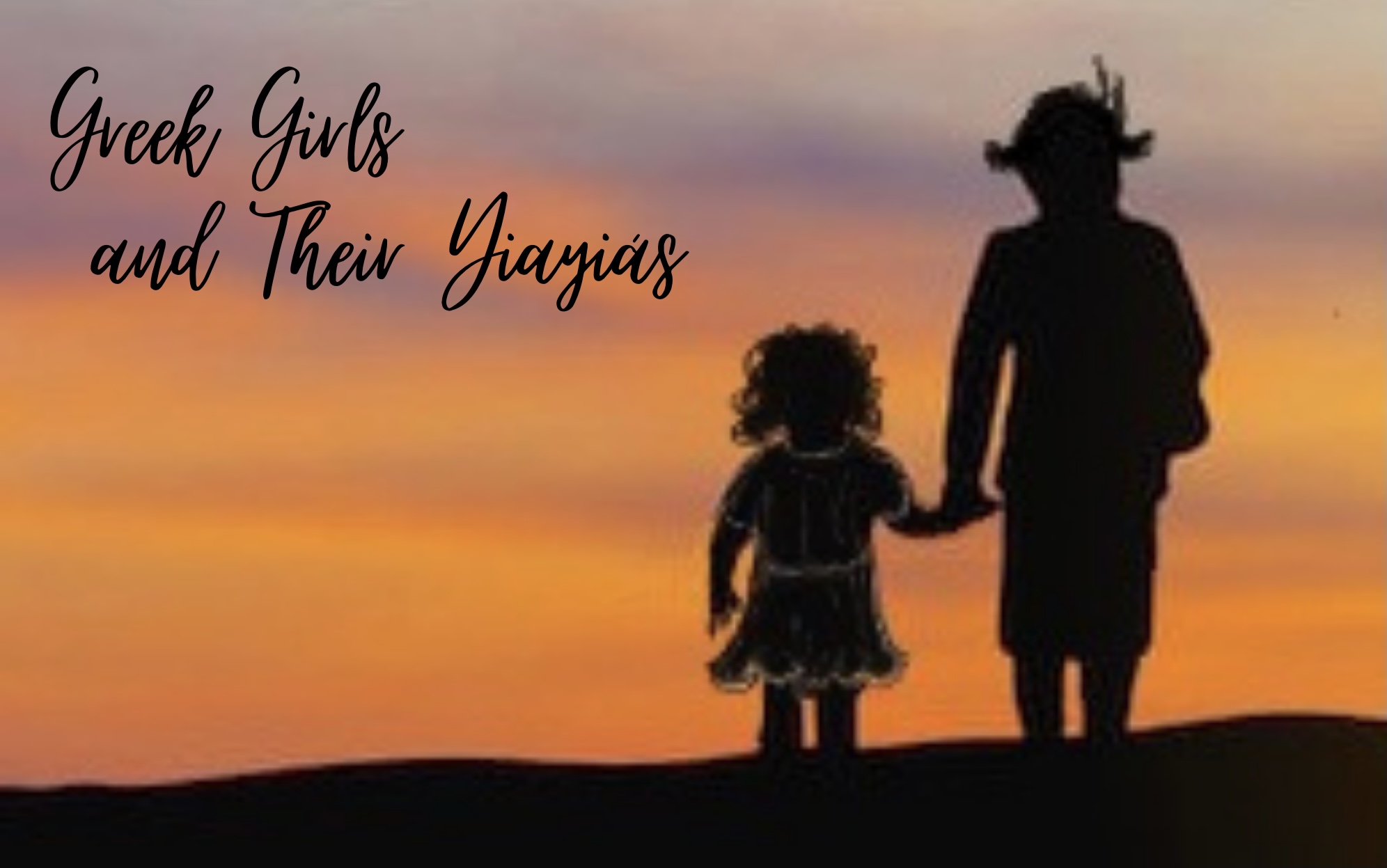
GREEK GIRLS and THEIR YIAYIÁS

BDCED6EE-E650-4ADE-A941-B87FA4AD86D3
For Suzanne who graced me with a delightful story about her Yiayiá

This story really has two titles: “Greek Girls and their Yiayiás” or “How to Love America by Two Greek Women who Emigrated to America.” Either title fits the nostalgic stories told by two granddaughters, me and my life-long friend Suzanne. I hope you find in our tales a touch of wisdom for your life, a reminder of the spirit of love, and a portrait of sacrifice and resilience.

It was a gift of grace to be a young Greek girl and have your Yiayiá (grandmother) close by, although at times being trapped in an endless, one-sided conversation could be annoying. In my teenage years there were “from her lips to God’s ears” conversations that were aimed directly at me — endless rules for good Greek girls, how to behave in church and wearing the proper church attire, old Greek sayings that sort of made sense to me, very long stories about the “old country” (which was a small Greek island), diatribes about how other families’ allowed their Greek daughters to be “loose,” and best of all, reciting to me stanza after stanza of stunningly poignant Greek poetry.

The problem was that I had to memorize those poems and dutifully stand before our house guests reciting them — for every visitor, even the ones who didn’t care at all about Greek poems. I think Yiayiá probably made me recite Greek poetry to some visitors who knew no Greek at all and had no idea what I was saying! The poems, though, remain a lovely part of my memories of her. To this very day — with a seventy year old memory — I can recite them word for word, especially my favorite one about the Greek revolutionaries who fought for nine years (1821-1830) against the Ottoman Empire for independence. Every time I recited it, my Yiayiá’s eyes filled with tears. Today, I cannot recite it without tears.

There was always a political side of my Yiayiá, although those around her ignored it. I cherish the fact that I saw parts her that others never saw, and one significant part of her was her keen interest in all things political. She always entered the voting booth with knowledge about candidates and issues that she had learned from devouring The Birmingham News every day. It’s safe to say that my Yiayiá was an “old country” style political junkie.

After she immigrated from Karpathos with a two year old (my mother) and a baby boy, she resolved to make America her home. Adjusting wasn’t easy for her, and many times at night, I would hear her weeping. Hearing her long, intricate stories of her homeland, it seemed obvious that she missed her home. Leaving one’s homeland can be a sacrifice. It was for my Yiayiá.

She was so young when she left her island and boarded a ship for a very long ocean voyage, only to end up in a land that must have seemed so different and unfamiliar to her. Ellis Island processing was grueling, especially for one who did not know a word of English. Just a glance at early portraits of Yiayiá would tell anyone of the grief and loss she experienced during her early days in America. Still, she moved forward in her new life because of her grit and her resilience, and maybe because she was among the early “dreamers” who made their home in the land of Lady Liberty bringing just a suitcase and a dream.

What uncommon resilience and perseverance Yiayiá had! She taught herself to read and speak English. Every morning without fail, she sat at the kitchen table near the radiator to read the newspaper while she drank her coffee. She knew the local and national news, the weather forecast and the latest scoop about every politician. She enjoyed election seasons and, with her own specialized vetting process, she chose the candidates she would vote for.

Voting day for her was a big deal. During election seasons, I always have Yiayiá memories that inspire me. So on election day, she would put on her finest dress, make-up, jewelry and always a hat — maybe even a hat with an exotic-looking black veil that I admired and coveted for myself. Then she would dress me in a frilly dress accessorized with my gold cross, white socks trimmed with lace and black patent leather shoes. With a quick brush of my black curls, we were off to the polls, walking down the hill from our house hand in hand.

She always took me into the polling booth with her. When she pulled the red privacy drape around us. I was just tall enough for the bottom of it to brush my face, but my head was inside that private place. When Yiayiá finished voting, she looked down at me and gave me a stern and irrevocable political mandate: “Kalliope, remember you are a Democrat! Never vote for a Republican!” I never have!

I could always see in my Yiayiá a deep love for her adopted country. She was a true and loyal American, to her bones. And she cared deeply about what this country stood for in the world. When I see the way immigrants are treated in these troubled days, I always think of my Yiayiá — what she would think about our America, what forcefully spoken diatribe she might offer to this day’s politicians, how she would grieve over the state of our nation. I had no doubt at all — my Yiayiá loved America!

I was talking this week with my dearest childhood friend, Suzanne. It was common for us to talk about our Yiayiás as we often do when we visit. I told my “excursion to the polls” story and Suzanne told a delightful story about the time when she and her Yiayiá took an extended trip to Greece. One caveat: the story is much more delightful in Greek. Anyway, they stayed in Greece long enough that they began to miss America. When they landed at the airport in Birmingham, Alabama, they walked down the airplane’s stairs onto the concrete. As soon as their feet hit the ground, Yiayiá said in Greek, “My America! I love you so much that I will kiss the ground (in Greek — “soil”).” Suzanne adamantly replied, “No, Yiayiá! You will not kiss the ground!”

I just must add this translation for my Greek friends:

Η Αμερική μου! Σε αγαπώ τόσο πολύ. Θα το φιλήσω το χώμα. 

Όχι Γιαγιά, δεν θα φιλήσεις το χώμα.

Suzanne’s sweet Yiayiá dropped to her knees and kissed the ground! 

There’s something about that enchanting story that has “love” written all over it. Suzanne’s Yiayiá loved America. My Yiayiá loved America. Probably more than their granddaughters ever did! To honor their memory, Suzanne and I vote, every time there’s an election. In fact, we both have already voted in this important 2020 election.

Suzanne’s beautiful Yiayiá said, “My America! I love you so much that I will kiss the soil!”

May it be so for us, even in these politically troublesome days. 

anxiety, “God’s Will”, Comfort, Faith, Fear, God’s promises, Isolation, Loneliness, Pain, Pandemic of 2020, peace, Quarantine, Questions, Social distancing, Suffering, Troubles, Unfaith

Peace, Pandemic and Love

A9B89FA8-D79C-4999-B5DE-9695C420F354
What a time in the story of our lives! In my lifetime, I have never been personally affected by a pandemic. I have lived a little over seventy years without having this troubling and potentially deadly experience. My prayer is that once the pandemic of year 2020 has run its course, we will not have to live through another one for at least seventy years.

In the past few days, I have heard from students lamenting the loss of their senior year. I have commiserated with friends who feared for their elderly parents, especially those in nursing homes. I listened recently to a discussion about how we could possibly keep incarcerated persons safe from this virus. I have listened to friends and family express deeply held fears about how the virus might affect them and their families. I have heard almost daily from my adult son (an unprecedented number of calls in such a short time) who is worried about his parents and about his wife and their new baby to be born in early April. I have heard from friends my age who are quarantined at home fearing for their health. I have communicated with post transplant patients like me expressing their most intense fear because of their suppressed immune systems. As a recent transplant recipient myself, I completely understand their angst of being on immunosuppressant medications. Like them, I know I have no immune system right now.

There is no doubt that all over the world people are frightened. People of faith, however, know that faith is stronger than fear, God is stronger than despair and love is stronger than death. Of course, even though we might have great faith, we must admit that we don’t know what God will do or how God can protect us. That is not unfaith; it is the reality of our humanity. Oh, we can take the easy way out and proclaim words like, “God is in control” or “everything happens for a reason.” But doesn’t the past suffering and pain of your life convince you that those words are not your reality?

One of my former seminary professors taught and preached often about the experience of Jesus’ suffering in the Garden of Gethsemane. Dr. Frank Tupper’s answer to the question about how a loving God could allow Christ’s suffering went something like this: “because before the foundation of the world God had chosen the way of self-limitation.”

Dr. Tupper also said some things that some people might consider blasphemy: 

I do not believe that God is in control of everything that happens in our world. Indeed, I would argue that God controls very, very little of what happens in our world. God chose not to be a ‘do anything, anytime, anywhere’ kind of God. In every specific historical context with its possibilities and limitations, God always does the most God can do.

In my mind, and through the crucible of my life, I believe that God wanted authentic and honest relationships with humankind that affirm both divine love and human freedom. God built that kind of relationship with me when, through every life storm, every time of despair, every disappointment, every fear, every loss — and through my life-threatening illness — God did not change any circumstance of my suffering, but God promised me a love that would not let me go, ever.

In these days, God is not stopping the dreaded Coronavirus pandemic. God is not stilling our current storm. God is not taking away our very real fear. God is not telling us, “Go on out to that social gathering, I am in control.” Instead God has promised us peace through the words of Jesus recorded in John 16:33:

These things I have spoken to you, that in Me you may have peace. In the world you will have tribulation; but take courage, I have overcome the world.

I pray that you will find peace in these troubling days and that your faith will be even a little stronger than your fear. I pray that you will not experience economic hardship and that you will have all you need. I pray that illness will spare you and those you love. I pray that your children will thrive even though their schools are closed. I pray that you will find ways to worship God even if the doors of your church are shuttered. Most of all, I pray that you will feel God’s love as a love that will never let you go.

The words of one of my favorite hymns express these thoughts so well:

O Love that wilt not let me go,
I rest my weary soul in thee;
I give thee back the life I owe,
that in thine ocean depths its flow
may richer, fuller be.

O Light that follow’st all my way,
I yield my flick’ring torch to thee;
my heart restores its borrowed ray,
that in thy sunshine’s blaze its day
may brighter, fairer be.

O Joy that seekest me through pain,
I cannot close my heart to thee;
I trace the rainbow thro’ the rain,
and feel the promise is not vain
that morn shall tearless be.

O Cross that liftest up my head,
I dare not ask to fly from thee;
I lay in dust life’s glory dead,
and from the ground there blossoms red,
life that shall endless be.

— Author: George Matheson, 1842-1906

Perhaps you would like to spend a few moments of quiet meditation listening to this beautiful hymn arrangement.

Advent, Angels, Bethlehem’s Star, Christ’s Birth, Comfort, Despair, Emotions, Fear, God’s Gift of Stars, Grace, grief, healing, Hope, Loss, Love, Mourning, New Normal, Questions, Resilience, struggle, Tears

“Listening for the Rustle of Angels’ Wings”

D621BE3F-47CD-4621-8417-E85BDA660590

The Fourth Sunday of Advent
The Advent Sunday of Love
Transplant Day Forty-One
December 22, 2019


TO LISTEN, TO LOOK

Is it all sewn up — my life?
Is it at this point so predictable,
so orderly,
so neat,
so arranged,
so right,
that I don’t have time or space
for listening for the rustle of angels’ wings
or running to stables to see a baby?
Could this be what he meant when he said
Listen, those who have ears to hear . . .
Look, those who have eyes to see?
Oh God, give me the humbleness of those shepherds
who saw in the cold December darkness
the Coming of Light,
the Advent of Love!

— Ann Weems

I ask myself those Ann Weems questions often:

Is it all sewn up — my life? Is it so predictable, so orderly, so neat, so arranged, so right,
that I don’t have time or space for listening for the rustle of angels’ wings or running to stables to see a baby?

These are among the most important questions I might sit with for a while, pondering my answers. On this Advent Sunday when we light the Candle of Love, I suddenly realize that Advent is ending, bringing Christmas so abruptly, or so it seems. Am I ready, I wonder? Am I ready for the birth of the Child, “Love’s Pure Light?”486917B0-E862-4C44-895D-D08210690B48

Have I prepared a place in my heart for the “pure unbounded love” we sing about in the beloved hymn, “Love Divine, All Loves Excelling?” Was my life so preoccupied that I missed the gentle darkness of the Season of Advent and am now feeling pushed — shoved —into Christmas?

Love in a manger is too holy a gift to take for granted. Love in a manger offers us a gift that we must be prepared to receive, and Advent is our season of preparation. As the season ends, I cannot help but ask myself if I spent these days preparing myself, heart and soul. Did I pray enough? Did I spend enough contemplative time? Did I love my neighbor and care for the persons around me who had so many life needs? Did I create sacred, meditative moments in anticipation, preparing for Emmanuel to come into my life anew?

I’m afraid I must answer, “no.” Yes, I did reflect on Advent now and then as I wrote for my blog, but I definitely did not spend enough time in meditation, preparing myself to receive the Christ Child. I was completely preoccupied with creating my life’s new normal after my kidney transplant. New routines and schedules overwhelmed my mind. I spent virtually all my time adjusting to this new normal. Self-absorbed does not adequately describe me during this Advent.

I haven’t felt much holiness hovering around me. I didn’t have time or space “for listening for the rustle of angels’ wings.” Yet, the transplant itself was a season somewhat like Advent . . . filled with expectation, preparation, anticipation. With Bethlehem’s star shining through the darkest night, and hope — always hope.

And so it was for people waiting for kidneys to renew their lives. Advent offered us a look at journey, a journey that ended in celebration. Celebration came full circle yesterday when I learned that my transplant was a part of a chain of living donors and kidney recipients. The chain included 16 people — donors and recipients — which means eight people got new kidneys. Perhaps that felt to me something like “the rustle of angels’ wings.”

And then it dawned on me that the Christ Child was not born into a world where everything always worked perfectly, where everything was orderly and neat and planned out. The Christ Child was not born into a world where everything was sacred. He was not born into a perfect family, and the people around his manger were not always holy.

Maybe that’s part of what Advent gives us:

the grace to be genuinely who we are — on our holy days and on days we feel not-so-holy. Maybe Advent beckons us to ready ourselves and to prepare our hearts with humbleness so that we can see “in the cold December darkness . . .

the Coming of Light, the Advent of Love!”


Advent, Angels, Belief, Bethlehem’s Star, Call, Christ’s Birth, Discernment, Here I am, Lord., Hope, Joy, Kneeling Places, Love, Memories, peace, Reflection, Stars

“In Search of Our Kneeling Places”

DBD1A3AF-D9E4-40CB-A77F-D8CFB3E0E6FB

The Tenth Day of Advent.
December 11, 2019

IN SEARCH OF OUR KNEELING PLACES

In each heart lies a Bethlehem,
an inn where we must ultimately answer
whether there is room or not.
When we are Bethlehem-bound
we experience our own advent in his.
When we are Bethlehem-bound
we can no longer look the other way
conveniently not seeing stars
not hearing angel voices.
We can no longer excuse ourselves by busily
tending our sheep or our kingdoms.

This Advent let’s go to Bethlehem
and see this thing the the Lord has made known to us.
In the midst of shopping sprees
let’s ponder in our hearts the Gift of Gifts.
Through the tinsel
let’s look for the gold of the Christmas Star.
In the excitement and confusion, in the merry chaos,
let’s listen for the brush of angels’ wings.
This Advent, let’s go to Bethlehem
and find our kneeling places.

— Ann Weems

The words of Ann Weems this morning seem to call us to Bethlehem. Perhaps the call intends for us to remember more clearly the birth of the Christ Child, the incarnation of God. Perhaps this call wants us to focus more fully on what this Child’s birth really means for us. Perhaps the call wants us to find our kneeling places, those places that enable us to open ourselves to God’s presence in us, God’s call to us.

When, in your own kneeling place, have you responded to a call from God? Was it a call that would change your life? Was it a call that you could only answer by saying, “Here am I. Send me.”

Among all the meanings of Advent is a call to watch, to wait, to worship, to be full of expectation, to rejoice in the birth of the Christ Child and to offer our lives to God. Advent is a call to find our kneeling places.

So I am thinking today about the many ways God has called me through the years. Some of those calls became divine appointments for me. Some were hard calls, risky and frightening. Some were calls that I answered with an immediate “Yes!” There were calls that summoned me to find my kneeling places. One specific call is the one that emerged from my most impassioned, fervent kneeling place. It was the call that asked, “Whom shall I send? And who will go for us?”

To respond “yes” to that call required extended time spent at my kneeling place. To respond “yes” to that call would alter the course of my life. Looking back, I can see that saying “yes” to that call call brought me life’s deepest sorrows and matchless joys. That call from God was to be transformative for me, transcending whatever I had imagined. I vividly remember that call, and from my kneeling place, I answered, “Here I am, Lord.”

“Here I am,Lord!” Those words from my heart would bring a plethora of emotions in the months that followed — through times of testing, disparagement, condemnation, criticism, disappointment, struggle, and eventually, peace. Thinking back to my ordination service brings a host of special memories: my friends and family gathered for the holy service; the church family that laid hands of blessing on me; my husband and my best friend singing words I remember to this day.

Here I am, Lord.
Is it I Lord?
I have heard You calling in the night.
I will go Lord if You lead me.
I will hold Your people in my heart.

I, the Lord of sea and sky,
I have heard my people cry,
All who dwell in dark and sin
My hand will save.

I have made the stars of night.
I will make their darkness bright.
Who will bear my light to them?
Whom shall I send?

I, the lord of wind and flame,
I will tend the poor and lame,
I will set a feast for them,
My hand will save.
Finest bread I will provide
Till their hearts be satisfied.
I will give my life to them,
Whom shall I send?

— Songwriters: Anna Laura Page / Daniel L. Schutte; Based on Isaiah 6:8 and 1 Samuel 3

If you like, take a few minutes to view the video of this song, reflecting on the words and their meaning for you.


And so it was, from my kneeling place, I answered God’s call: “Here I am, Lord!”

The season of Advent calls us in a voice just as compelling to find our kneeling places . . .
to focus on Advent’s promises of hope, peace, joy and love,
to wait in anticipation for the birth of our Savior,
to lift our eyes and sing with the angels, “Hallelujah!”

Amen.

Change, Christianity, Knowing, Love, Relationship, Transformation

A Deep Unknowing

7FCC4253-B8C4-4A52-8798-8BADAEFA0519
Arkansas’ White River. Photo by Darla Young.
“The fog was rising from the White River at Bull Shoals. I decided to walk a nearby trail. The sun was showing it’s appearance thru the foggy forest of lightly autumn painted leaves. I looked to the left and this was my sight.. I’ll just leave it at that..  It was beautiful!!” 
— Darla Young

When the fog descends in a forest, the path ahead looks very unknown. Even if you know the forest path well, suddenly it’s unknowable. The stunning photo by Darla Young reminds me of a phrase I heard last week: “a deep unknowing.” I’m not sure what a derp unknowing is yet, but it seems to me to describe an inner state of being that actually frees you from indecision. With a deep unknowing, you move from your inner core into the “right” places. But let’s get away from deep unknowing for a minute.

A good friend gave me a wonderful birthday gift — a journal with a lovely decorative cover that says, “She believed she was loved, so it made her brave.” Knowing that you’re loved may well be the most important thing you’ll ever know. The kind of love we need knows no boundaries and loves us exactly as we are, unconditionally. That kind of love is not easy to find. There are no guarantees that we will enjoy the emotional benefits of unconditional love. But we can be watchful for it, patiently seeking it and knowing how and when to reject love that is not genuine.

An important way of living into love is to be contemplative enough to know who we are, to embrace our true self. No masks. No disguises. No attempts to please another person and, as a result, realize that we’re not being true to ourselves. Richard Rohr recently wrote about what he calls, “the True Self in God.” 

You are not your gender, your nationality, your ethnicity, your skin color, or your social class. These are not qualities of the True Self in God. Why, oh why, do Christians allow temporary costumes, or what Thomas Merton called the “false self,” to pass for the substantial self, which is always “hidden with Christ in God”

So when we embrace our true selves that are “hidden with Christ in God” we find that we live and breathe in a different way. We find ourselves suddenly loving ourselves, and loving others as we love ourselves. What a novel idea! It’s a timeless idea that is as ancient as the Christ who taught us about love long ago. It is a state of being that places us squarely in God’s law of love. In some ways, we are transformed as something deep inside gives itself over to pure love, for self and others. Cynthia Bourgeault explains the law of love that compels us through “a deep unknowing.” This is how she says it:

As a Christian, when confronted by a tension between a religious certainty which leads me to violate the law of love and a deep unknowing that still moves in the direction of “loving my neighbor as myself,” I am bound to choose the latter course.  — Cynthia Bourgeault

I am pondering the idea of “a deep unknowing that still moves in the direction of ‘loving my neighbor as myself.’” I think it must require engaging in frequent contemplation and spiritual discipline to discover within myself a deep unknowing that prompts me to follow Christ’s example . . . as opposed to a decision of my will that eventually wins out to achieve the same result.

Perhaps the spiritual discipline I undertake can identify all of the indecision, confusion, stubbornness, refusal of love toward others, and cover it with that deep unknowing that still leads me in the direction of eventually knowing my true self within the perfect will of God.

May God make it so.

F9FA5D3C-53F0-4043-8A72-F9E2D63F7349

On another note, please pray for me as I look toward my kidney transplant on November 15th. I am grateful that you are walking with me on this journey that often felt so frightening. Your thoughts and prayers mean so much. If you would like to read the story of my illness, please visit the Georgia Transplant Foundation’s website at this link:

http://client.gatransplant.org/goto/KathyMFindley

“Go Fund Me” page is set up for contribution to help with the enormous costs related to the transplant, including medications, housing costs for the month we have to stay near the transplant center, and other unforeseeable costs for my care following the transplant. If you can, please be a part of my transplant journey by making a contribution at this link:

https://bit.ly/33KXZOj


Comfort, Friends, Friendship, Hope, Love, Mayo Clinic, Mothering, Prayer, Women

Surrounded by Love

266D9A02-403A-44DF-A1CF-54CE9D1C3462
“Surrounded by Love” —  A watercolor by Kathy Manis Findley

On May 17th, I received some devastating news from Piedmont Transplant Center in Atlanta where I had been four years on the transplant list for a kidney. They abruptly placed me on the inactive list, which meant they would no longer be working to match a kidney for me. I was devastated. My friend told me recently that she feared I would give up on the process, but instead she watched me gather up my courage and move forward.

There’s a reason for that, something that empowered me to find another route on the journey that would eventually lead to a transplant. The reason? I call it surrounded by love and all that goes with that kind of love. I found it, I think, at a meeting of Baptist women ministers held at my house on May 17th. After the news from Piedmont, the last thing I felt like doing was hosting a gathering. But they came, a group of women I didn’t really know so well. One of them was a close and trusted friend. The others were friends I needed to know better.

As we enjoyed one another’s company, I avoided talking about my disheartening news, but eventually someone asked about my progress toward a transplant. I could have responded by sobbing uncontrollably. I could have simply said that the process toward a transplant is ongoing. Instead I took a deep breath and gave them the details.

Now you must know that each one of them is a trained and gifted minister, so they knew what to say and how to say it. But the end of the conversation caught me completely off guard. Everyone stood and they created a huddle with me in the middle. It was a hugging huddle — one big, comforting hug. Those moments were comforting, empowering, encouraging, full of grace. My friends mothered me and then they prayed for me, each one.

In those moments I was surrounded by love that has grown deeper with the passing days. From that huddle I was graced with the will to go on, and I did. On November 15, if all goes well, I am scheduled for a transplant at Jacksonville’s Mayo Clinic.

All because I was surrounded by love, a love that I know will not let me go.

Hate, healing, Holy Spirit, Hope, Love, Prayer, Racism, Spirit wind, Wisdom

Come Now, Spirit of Power!


CE768FCC-723B-4F8F-B86A-D871B338B1E7

Come now Spirit of power.
Come now quickly and seize this moment.
Come Spirit from all four sacred directions,
from every color and culture,
come and use this sorrowful moment for good.

Very often, the prayers of Bishop Steven Charleston become a part of my meditation time. His prayers have a way of calming my heart, comforting my spirit and inspiring me to greater works. His words are expressive and full of energy. He paints pictures of things as they are and things as they should be.

In response to the tragedies in El Paso and Dayton, Bishop Charleston speaks of the deep divisions in our nation and the old wounds that have been opened. Indeed. He is right. But then he calls us to better things, to a time for love that has the power to heal.

So let us pray this prayer today, in this moment, as we long for healing.

Come now Spirit of power, come now quickly and seize this moment. The conscience of our nation teeters on the edge of change. Old wounds between us have opened. Deep divisions have been revealed. We are stunned by the cost of our own behavior. 

Now is the time. Now is an historic opportunity for love. 

Pull prejudice from us like a poison. 

Draw out the fear that breeds our racism. 

Open our eyes to behold our common humanity. 

Silence the justifications and the denials before they begin and keep our eyes fixed firmly on the prize, not on the politics. 

Come Spirit from all four sacred directions, from every color and culture, come and use this sorrowful moment for good. Heal our racism now.

May God make it so.  Amen.


Art: “Four Sacred Directions” by Drea Jensen, 2002

Hate, Love, Martin Luther King, Jr., peace, Politics

Only Love Can Drive Out Hate

010B6CB7-43B5-47B7-B92B-C87DF5750866It was almost shameful that President Trump on January 12th signed a proclamation honoring Dr. Martin Luther King, Jr. In all honesty, I cringe at his signing of this proclamation. I cringe because the president honors Dr. King while dishonoring Dr. King’s legacy.

I can imagine that Dr. King’s words echoed through the Oval Office during the signing, in a whisper heard only by persons of love and good will.

If we are to have peace on earth, our loyalties must become ecumenical rather than sectional. Our loyalties must transcend our race, our tribe, our class, and our nation; and this means we must develop a world perspective.”

We’ve learned to fly the air like birds, we’ve learned to swim the seas like fish, and yet we haven’t learned to walk the Earth as brothers and sisters…”

― Martin Luther King, Jr.

I cringe because I heard the words that the president said about “shithole countries.”

Why do we want all these people from Africa here? They’re shithole countries … We should have more people from Norway.

– Donald J. Trump

In his remarks, Mr. Trump, who has vowed to clamp down on illegal immigration, also questioned the need for Haitians in the United States.

Instantly, many Democrats and some Republican lawmakers called out the president. Republican United States Representative Mia Love, a daughter of Haitian immigrants, said the comments were “unkind, divisive, elitist, and fly in the face of our nation’s values,” and she called forTrump to apologize to the American people and to the countries he denigrated.

Another Republican Representative, Ileana Ros-Lehtinen, who was born in Cuba and whose south Florida district includes many Haitian immigrants, said: “Language like that shouldn’t be heard in locker rooms and it shouldn’t be heard in the White House.”

Democratic Senator Richard Blumenthal said the president’s comment “smacks of blatant racism, the most odious and insidious racism masquerading poorly as immigration policy.”

A wave of international outrage also grew against the president’s vulgar language as the president of Ghana, President Nana Akufo-Addo, said that he would “not accept such insults, even from a leader of a friendly country, no matter how powerful.”

The Ghanian president tweeted an unflinching defense of the African continent — and of Haiti and El Salvador, countries that Trump also mentioned in the Thursday meeting with a group of senators at the White House.

In addition to Ghana, the government of Botswana said Trump’s language is “reprehensible and racist,” and said it has summoned the U.S. ambassador to clarify what he meant.

Senegal’s president, Macky Sall, said in a statement that it was “shocking” and that “Africa and the black race merit the respect and consideration of all.” His West African nation has long been praised by the United States as an example of a stable democracy.

The African Union, which is made up of 55 member states, also spoke against Trump’s remarks.”Given the historical reality of how many Africans arrived in the United States as slaves, this statement flies in the face of all accepted behavior and practice,” said spokeswoman Ebba Kalondo.

Paul Altidor, Haiti’s ambassador to the U.S., called Trump’s comments “regrettable” and based on “clichés and stereotypes rather than actual fact.” He also noted the insensitivity of its timing, coming the same week as the eighth anniversary of Haiti’s 2010 earthquake, which killed more than 200,000 people.

El Salvador’s government on Friday sent a formal letter of protest to the United States over the “harsh terms detrimental to the dignity of El Salvador and other countries.”

A spokesperson representing the United Nations High Commissioner for Human Rights condemned President Trump’s “shocking and shameful” comment, saying: “I’m sorry, but there’s no other word one can use but racist.”

On January 13th, The Washington Post published an article by Karen Tumulty that calls out President Trump’s misunderstanding of this nation’s immigration history.

There is far more to the latest controversy surrounding President Trump than the vulgar and implicitly racist language he used to draw a distinction between desirable and undesirable immigrants. Trump’s choice of words also revealed a deeper and more substantive truth about how the president views — and misunderstands — America’s unique relationship with its immigrants.

Trump’s words, with their racial connotations, also suggest he wants to return to what has come to be regarded as one of the more shameful and xenophobic periods of immigration policy.

In 1924, a set of laws was passed that set quotas limiting the number of people admitted to this country based on where they came from, with a goal of preserving the United States’ ethnic homogeneity.

“The premise of national origin quotas was that some countries produce good immigrants, others produce bad immigrants,” said NPR correspondent Tom Gjelten, author of the 2015 book “A Nation of Nations: A Great American Immigration Story.”

“There were actually ‘scientific’ studies purporting to categorize countries according to the quality and characteristics of their people, and the quotas were devised in part on the basis of the testimony of ‘expert’ opinion,” Gjelten said.

There are so many voices of reason, voices that cry out for dignity, respect, unity and love, speaking out against the president of the United States. So it is with sadness and shame that I celebrate the day of remembrance for Dr. King. On his day in 2018, I hear more intensely all that he taught us about so many things, and I hear what he shared with us most profoundly — the power of love.

Returning hate for hate multiplies hate, adding deeper darkness to a night already devoid of stars. Darkness cannot drive out darkness; only light can do that. Hate cannot drive out hate; only love can do that.

Hate multiplies hate, violence multiplies violence, and toughness multiplies toughness in a descending spiral of destruction. So when Jesus says “Love your enemies,” he is setting forth a profound and ultimately inescapable admonition.

― Martin Luther King, Jr., from Strength to Love

This week, I heard a provocative statement: that hate speech is not about who Donald Trump is. Rather, it is about who we are. The statement opened up some questions for me:

How do I respond? What does it mean for me to stand with those who are marginalized?

Is it not my responsibility to stand up to persons in seats of power when they promote hate, racism, xenophobia, exclusion and hostility?”

Will I set my face towards love and my heart towards the world as it is seen through the eyes of Jesus? Is it not up to me to be a part of creating — in our nation and in our world — a “beloved community?”

For “hate cannot drive out hate. Only love can do that.” Was
Justice, LGBTQ, Love, Uncategorized

Aren’t you tired of being mean?

IMG_5860August 27, 2017, marked an action of sacred change among the congregation of the First Baptist Church of Christ in Macon, Georgia. I was proud of the church I have recently become a part of, not only because of our adoption of a policy that ensures the full acceptance of LGBTQ parsons, but also because of the thoughtful and intentional process that resulted in the decision for inclusion, acceptance, unity, justice and love.

The church leadership spent a great deal of time and energy in a discerning process that led to this recommendation:

“The Church Council and Board of Deacons of the First Baptist Church of Christ support the full inclusion in the life of the church of all people, regardless of sexual orientation or gender identity. In light of this statement, the Church Council and Board of Deacons recommend thar full inclusion encompasses same-sex marriage in our church facilities.”

The leadership then planned a series of congregational meetings so that every member felt respected and heard. I was present at two of three community meetings that included review of Scripture, open dialogue, listening to one another, respecting diverse views, eating together, singing and praying. Following those meetings, the motion was brought to the church in business conference. The motion passed with 73% of the congregation voting to approve. An amazing phenomenon for a Georgia Baptist church!

I could not help but think that this result was much more than a single vote. It was inclusion and acceptance. It was a proclamation of justice and unity among people of faith. It was a community of God’s people seeking to live out Christ’s commandment to love one another.

This week I read about the creation of a newly penned doctrinal statement in which a coalition of conservative evangelical leaders laid out their beliefs on human sexuality, including opposition to same-sex marriage and fluid gender identity.

The signers of the Nashville Statement say that it is their response to an “increasingly post-Christian, Western culture that thinks it can change God’s design for humans.” Since it was released Tuesday morning, the Nashville Statement has received praise for its clarity. It has also been denounced as very hurtful and harmful to LGBTQ people.

I read the Preamble and pondered each of the fourteen Articles of the statement. With sadness, I looked through the list of hundreds of signers, finding the names of leaders from all of our original Southern Baptist seminaries. I remembered the loss of our seminaries and the painful times that our beloved seminary professors endured. Most of all, I cringed at the statement’s language. I thought about my many LGBTQ friends and recalled their Christian faith. And I was very troubled, frightened by the many ways that hate can flourish in our world.

I then read an article in response to the Nashville Statement by my long time friend, Nancy Hastings Sehested, published in the latest edition of prayer and politiks.org. I can come up with no words that are as fully Christian as Nancy’s thoughts in this insightful article. I print it here in its entirety.

Tired of Being Mean: A Response to the “Nashville Statement”

It was the last night of Vacation Bible School at the Sweet Fellowship Baptist Church. All week our five year olds rehearsed the story of Pharaoh and Moses to dramatize for their parents. All four boys wanted to be mean ‘ole Pharaoh.

With the church pews filled with family, the performance commenced. Our wee Pharaoh sat on his throne holding his plastic sword. Then little Moses walked up to him with his shepherd’s crook and said, “Pharaoh, stop hurting my people. Let my people go.”

Our Pharaoh wielded his sword in the air and said, “Never, never, never!”

Moses walked away and then returned with the same words. “Pharaoh, stop hurting my people. Let my people go!”

Pharaoh said nothing. I thought he’d forgotten his lines. I scooted toward him and whispered, “Say ‘Never, Never, Never’.”

Nothing.

Then our little Pharaoh jumped down from his throne, threw down his sword and said, “I’m tired of being mean. I don’t want to be mean anymore!”

Imagine meanness in the world ending due to fatigue.

It seems that we are simply not tired enough. But surely we are close to exhaustion sorting out who needs our meanness now. Just flipping through the Bible to find which people to hate is draining. These days it’s hard to find a Midianite to kill. Stoning incorrigible teenagers to death in the town square could leave few maturing into adulthood. Abominating people who are “sowers of discord” or have “haughty eyes” could unleash a bloodbath in our churches.

Aren’t we worn out yet from using the Bible as a bully stick for meanness?

The “Nashville Statement” is a clear indication that some religious Pharaohs are not tired of wielding their sword of hatred. But the rest of us are tired of one more abusive word against gay, lesbian and transgendered people in the name of religion. Who’s next? Women ministers? Oh, wait. That’s a mean streak that started decades ago.

Signers of the statement, here is a word to you: Don’t you have something better to do? Feed the hungry? Visit the prisoners? Shelter the homeless from the hurricane? Give the thirsty some clean drinking water? Stop mad men from starting a nuclear war? If you are afraid of the world changing too fast or becoming too complex for you, then say, “I’m afraid.” Then be assured that God is with you in this changing world. But don’t use your own selective Bible verses to hurt beloved people of God. We’re tired of your meanness. God is too.


– Rev. Nancy Hastings Sehested

Co-Pastor, Circle of Mercy Congregation, Asheville, North Carolina

August 31, 2017


My final words for this day’s blog post are simple:

Amen.

Thank you, Nancy.

May God bless the extravagant love shown by Macon’s First Baptist Church of Christ.

And may we all grow tired of being mean!

Family, Love, reconciliation, Restoration

Pete and Peter

Enlight123
Impulsive, spunky, fiery, colorful Pete. RIP.

My youngest brother, Pete, was taken from us too early. Cancer ravaged his body, but could never damage his indomitable, spunky spirit. Pete was spirited, colorful and full of life, fiery in one moment, gentle in the next. He was funny. He was fiercely loyal. And he loved lavishly.

I could easily compare Pete to his namesake, the disciple Peter. You know the one, the disciple who kept putting his foot in his mouth, who tried to walk on a lake and began to sink because of a faith too small. He was the disciple who betrayed Jesus three times and in the end, in the very last verse of the 22nd Chapter of the Gospel of Luke, verse 62 ends the pain-filled story with these words: “And he went out and wept bitterly.”

You see, in spite of his mistakes, his denials, his impulsive behavior, Disciple Peter loved Jesus deeply. And my baby brother was a bit like this flawed disciple. Pete was often impulsive, volatile, frequently unreasonable, quick-tempered. Yet, he was full of love that opens its arms to protect with extravagant caring.

So for the 29th of June, St. Peter’s Day, I remember the impulsive disciple who, for all his mistakes, learned how to hold on to his better self, to recover from wrong turns in his life, and to make peace with his wavering self. Jesus called this seemingly undisciplined man “the rock.” I suspect Jesus chose that name because he saw that Peter knew how to live again, standing strong against his own demons and ultimately learning that any betrayal, every betrayal, can miraculously be restored by love.

My brother Pete’s life, also filled of rough roads and wrong turns, taught him the same lesson: that love restored him to himself, to his estranged family, to the sister that had been lost to him for years. Love did that. And love is what keeps Pete close, even in death.

Poet Malcolm Guite has written a beautiful piece entitled “A Sonnet for Petertide.”

Impulsive master of misunderstanding
You comfort me with all your big mistakes;

Jumping the ship before you make the landing,

Placing the bet before you know the stakes.

I love the way you step out without knowing,

The way you sometimes speak before you think,

The way your broken faith is always growing,

The way he holds you even when you sink.

Born to a world that always tried to shame you,

Your shaky ego vulnerable to shame,

I love the way that Jesus chose to name you,
Before you knew how to deserve that name.

And in the end your Saviour let you prove
That each denial is undone by love.

Thank you for your life, Disciple Peter. You give us hope that we can overcome our imperfect actions, make it through dusty roads covered with the boulders of our mistakes, and find love at the end.

And as for my baby brother, Pete, I will always remember your ornery ways, your explosive temper, your intense loyalty and your lavish love.

Happy Name Day, sweet little brother. I miss you.

Covenant, healing, peace, Politics, Relationship, Transformation

Reconciliation: The Heart’s Repentance

IMG_5630

The long and arduous presidential campaign left behind a fractured nation. The political parties displayed unprecedented enmity between Democrats and Republicans. The citizenry followed their lead, and the result was broken relationships among friends and even within families. My own family exchanged sharp and hurtful words during the campaign, words that continue to affect our relationships.

We have made enemies of other nations. Some among us have made enemies based on race, culture, gender, national identity, religious practice, sexual orientation. And we remain divided and hostile, with no apparent desire to reconcile. And yet, we desperately need true reconciliation.

The Biblical concept of reconciliation suggests the presence of spiritual, divine intervention that creates reconciliation in the hearts of those who are estranged. Reconciliation assumes there has been a breakdown in a relationship, but through the heart’s repentance, there is a change from a state of enmity and fragmentation to one of harmony and fellowship.

It is going to require the heart’s repentance to restore a climate of unity, mutual respect, love and peace. Michael Curry, the Presiding Bishop of the Episcopal Church in America, offers these insightful thoughts about reconciliation.

Reconciliation isn’t just singing Kumbaya and everyone being nice. Reconciliation is about the hard work of working through our differences, maybe acknowledging them and not changing them, necessarily. Working through our differences, honestly and with integrity, and sometimes repenting of where our differences or my differences or yours has actually hurt relationship and not helped the human family.

Shall we just leave everything as it is? Shall we allow the distance to continue between us and those we have lost because of our differences? Shall we accept a fractured world and the divisiveness that now assails us? Or shall we instead commit ourselves to the holy work of reconciliation?

Our sacred calling is to restore peace within the human family, creating a world that can nurture our children and grandchildren, striving for genuine reconciliation among those from whom we are estranged, restoring peace and a community of love, transforming fractured and hurting humanity. This is what God implores us to do.

. . . This is from God, who through Christ reconciled us to himself and gave us the ministry of reconciliation; that is, in Christ God was reconciling the world to himself, not counting their trespasses against them, and entrusting to us the message of reconciliation.

2 Corinthians 5:18-19


Faith, Family, Inspiration, Love

My Weight in Their Hands

image

I worshipped at my home church yesterday. What a blessing it was to be with the people that prayed and nursed me through the most serious days of my illness! In many ways, they played a role in my eventual return to health. And it is such a blessing to know that they will also pray me through my eventual kidney transplant.

They are what Christ’s Community is all about. New Millennium Church became a true faith community for me during my darkest days. They prayed. They brought meals. They stayed in close touch. They believed in my healing. They were as Toni Morrison describes in this passage:

“They encouraged you to put some of your weight in their hands and soon as you felt how light and lovely it was, they studied your scars and tribulations…”
― Toni Morrison, Beloved

And so, with my weight in their hands, I began to get myself back, physically, emotionally and spiritually. They were, for me, the reality of miracle. Today, I am healthy enough to be considered a candidate for a kidney transplant. Through that process, I know that New Millennium will pray.

“I give thanks to God upon every remembrance of you.” – Philippians 1:1

Home, Hope, Love

Home of My Heart

image

I’m on the road today! And I’m celebrating going back home to Little Rock to see friends, church family, and my child and grandchildren. I haven’t seen them in over a year. I have not seen my youngest grandson at all. He turns one today, so if all goes well on the journey, I’ll see him on his birthday.

Home is now far away for me, ten hours by car. My new home is nice enough, and we have made a “sort-of” home here. But Little Rock is the home of my heart, a place that was difficult to leave behind.

I can not help but think of Naomi’s story of leaving home in the first chapter of the book of Ruth.

In the days when the judges ruled there was a famine in the land, and a man of Bethlehem in Judah went to sojourn in the country of Moab, he and his wife and his two sons. The name of the man was Elimelech and the name of his wife Naomi, and the names of his two sons were Mahlon and Chilion. They were Ephrathites from Bethlehem in Judah. They went into the country of Moab and remained there. But Elimelech, the husband of Naomi, died, and she was left with her two sons. These took Moabite wives; the name of the one was Orpah and the name of the other Ruth. They lived there about ten years, and both Mahlon and Chilion died, so that the woman was left without her two sons and her husband.

It must have been traumatic to leave home for her, and when her husband and sons died, she must have languished terribly. The story goes on to tell us that Naomi survived and built a new home.

That’s what we do. We build home wherever we go. We put our heart into every new place, and eventually the heart makes it home. I will do that in Macon. I have already made some progress. I have a dear and loving family here, and we so enjoy one another. But for today, I am celebrating going back home! To the place of my heart! To the people of my heart!

Faith, God's Faithfulness, Inspiration, Love

Love Has the Last Word

image

My last blog post spoke of being unable to escape adversity. And it is true that we will not get through this life without adversity, no matter how hard we try. The path we walk is steep and winding, leading us forward through all sorts of dangers, toils and snares. The road can be frightening. It can be challenging.

We navigate in a world that is sometimes filled with terror and hate. But the best news for us comes from Bishop Steven Charleston.

The final word to our lives will not be terror or hate. Even if they seem overwhelming now, they will not define us or control us. Other forces are at work, deep forces that move silently among us, drawing us closer against the storm. Whenever human beings face disaster together, whatever that peril may be, our ancient instinct for compassion rises up to unite us in common cause. We do not shatter beneath the blows. We only grow stronger. No, fear and hate will never have the last word. Love will.

There is no better news than that!

I love the hymn Amazing Love. How Can it Be. The words of the fourth stanza give me new and fresh hope.

Long my imprisoned spirit lay
Fast bound in sin and nature’s night;
Thine eye diffused a quickening ray,
I woke, the dungeon flamed with light;
My chains fell off, my heart was free,
I rose, went forth, and followed Thee.

Amazing love, how can it be that Thou, my God, should die for me?

Love has the last word.

Life storms, Love

Love Like that Makes the Planet Breathe

image

An old Beatles song reminds us of something very important in life:

All you need is love.
All you need is love, love.
Love is all you need.

Indeed, it is a great message, and one that is so appropriate in a world that often seems to be filled with hate. I wish I had never heard the voices of the presidential candidates speaking of hatred toward Muslims, Mexicans, persons who are immigrants, and basically, anyone who does not fit into their social boxes.

Why so much hate when all we need is love? The wise words of Bishop Steven Charleston move me to a better place. I hope they will uplift you as well.

Love all that you can today, as far as you can, as widely and wildly as you can, without boundaries or borders, giving out your love for all that you see in beauty and nature around you,

loving unrestrained the simple life that lives forever around you,

the flowers in a field,

the sparrows darting by,

the sky and the wind as surely as if they were your own,

loving every passing person, not stopping to count the reasons, but loving as if your loving made the whole planet breathe.

Love all that you can today, for in such love is the secret beginning of what will never end.