What is it like to sit open-handed before God? To abide with a compassionate God who knows the grief we are carrying? To sit in the glowing presence of a God who, not only knows the deep angst of our nation, but who can also transform it?
Yes, many of us are grieving the current state of our nation. We see our nation’s pain, just as we see the pain of the world. Yet, we who are Christ-followers live with great advantage in this pain-filled world. Yes, we grieve the divisions in our nation and lament at the ways we seem to have lost our compass of compassion, mercy and justice. We feed those who already have abundant sources of food. We provide health care to those who can afford their own. We hold open the voting entrances for those who can get there with the proper credentials. But for the people who hunger, the families that are homeless, the elderly, the children incarcerated at our borders, the prisoners, the helpless, the marginalized . . .well, for them, we offer prayers, if we think of them at all.
So what is our great advantage? It is that our faith can carry us into spiritual realms where hope is large and dreams are possible. It is that we enjoy access to spiritual community with an accessible God. It is the spiritual luxury of quiet contemplation that opens our hearts to the whispers of God. And yes, I did say whispers of God, for it is almost always a quiet voice that beckons us into a world of turmoil. It is a quiet God-Voice that rekindles our compassionate hearts, speaks to us through the noise of discord in our nation, and shows us the good path we must follow.
We need not despair or cry out in anger or disgust. We need not attack those who seem to be wrecking our country. We need not hate those with whom we disagree. We have the great advantage of only this life task: to be silent before God, to sit in God’s presence open-handed, to pray, to listen, to seek, and then to go.
Sister of Social Service Simone Campbell, famously known as “the nun on the bus,” offers us a glimpse into one of the ways we can live as people of faith in a fractured nation.
Finding a way to not vilify or divide into “them” and “us” in today’s federal politics goes against . . . current custom. . . . So my contemplative practice is to attempt to sit open-handed and listen to the “wee small voice” that sometimes whispers ideas and ways forward.
Yesterday, I watched a clip from the 2018 ESPY Awards. I could not help but pause to listen to the athletes tell their stories of years of abuse by U.S Olympic Team doctor, Larry Nassar. I wondered how many years of silence they each endured, holding the horrible secret inside where it had the power to do great harm. That’s the thing about sexual abuse — it’s often a big, bad secret. Victims hold the shame in the place where they pack away their secrets, and the rest of the word hopes never to have to hear about it. So the secret is safe, hidden away, at least for a time.
But not this time! The “sister survivors” of the disgraced sports doctor’s abuse accepted the Arthur Ashe Courage Award at the 2018 ESPYS. Dressed in glittering gowns, holding hands in solidarity, more than 140 women gathered onstage to share the award given to athletes whose bravery “transcends sports,” as the audience rose in a standing ovation.
Sarah Klein, a former gymnast who said she was among Nassar’s earliest victims three decades ago, was the first to address the audience. “Speaking up and speaking out is not easy,” she said. “Telling our stories of abuse, over and over and over again, in graphic detail, is not easy. We’re sacrificing privacy, we’re being judged and scrutinized, and it’s grueling and it’s painful, but it is time. We must start caring about children’s safety more than we care about adults’ reputations.”
Tiffany Thomas Lopez, who in the 1990s played softball at Michigan State University where Nassar practiced, had a message for other victims who might still be silent. “I encourage those suffering to hold tight to your faith, and stand tall when speaking your truth,” she said. “I’m here to tell you, you cannot silence the strong forever.”
Olympic gold medal gymnast Aly Raisman was the last to speak. She was unsparing in her criticism of the adults who she said for years failed to protect the victims, instead opting to silence her and others “in favor of money, medals and reputation. But we persisted, and finally, someone listened and believed us.”
In January, more than 150 women and girls gave victim impact statements at one of Nassar’s three trials. In a Lansing, Michigan courtroom, they spoke of abuse under the guise of medical treatment, which for some began when they were elementary school age. Following their testimony, Circuit Court Judge Rosemarie Aquilina sentenced Nassar to up to 175 years behind bars.
When the years of silence ended and the women released their secrets, justice followed, relief followed, inner peace followed. Therein lies a lesson for us all. How many times have women kept silent to protect others? How many times did we guard a secret because revealing it might hurt other people? Did we realize that by hiding away the secret, we were harming ourselves? The words written by Dia Reeves is true of us:
She was like the moon—part of her was always hidden away.
And so it is with women. There are always parts of us that are hidden away, often for many years. There are parts of our stories that we hold in our souls, secrets we would rather not speak. It seems important, though, for each of us to develop the wisdom of knowing what we should hold in silence and what we should speak. As for the big, bad secrets — well, saying them out loud breaks their power. The chains of our silence fall to the ground, broken!
June 16, 2012 . . . My three-year-old granddaughter standing among the bronze sculptures of The Little Rock Nine.
Her parents had told her the poignant story of The Little Rock Nine, but at age three she had no idea of the many ways their lives would impact hers. Because they crossed an invisible, but very real, line that divided black children from white children, they opened the door to educational equality in a racially divided state. Because their parents were brave enough to let their children breach the three stately doors of Little Rock Central High School, their world changed in unimaginable ways. And with that change, my granddaughter inherited the highly cherished right to equal education and all the opportunities that would follow. Because of that change, my granddaughter would grow up inspired.
In case you do not know about The Little Rock Nine, here is some background.
On September 3, 1957, nine African American students — The Little Rock Nine — arrived to enter Little Rock Central High School only to be turned away by the Arkansas National Guard. Governor Orval Faubus had called out the Arkansas National Guard the night before to, as he put it, “maintain and restore order…” The soldiers barred the African American students from entering.
On September 24, 1957, President Dwight D. Eisenhower ordered units of the U.S. Army’s 101st Airborne Division — the “Screaming Eagles”— into Little Rock and federalized the Arkansas National Guard. In a televised speech delivered to the nation, President Eisenhower stated, “Mob rule cannot be allowed to override the decisions of the courts.”
On September 25, 1957, under federal troop escort, The Little Rock Nine made it inside for their first full day of school. The 101st Airborne left in October and the federalized Arkansas National Guard troops remained throughout the year.
They were nine solemn figures, nine teenagers just trying to do what every child up to age 18 had been mandated to do: go to school. Nine figures who entered the annals of American history the day they passed through the front door of Little Rock Central High School.
These nine African American students — Melba Pattillo, Elizabeth Eckford, Ernest Green, Gloria Ray, Carlotta Walls, Terrence Roberts, Jefferson Thomas, Minnijean Brown and Thelma Mothershed — are now immortalized in a striking memorial located on the grounds of the Arkansas State Capitol in Little Rock. The life-size bronze statues, entitled “Testament,” were designed and sculpted by Little Rock artist John Deering, assisted by his wife Kathy, also an artist. A comment from each of The Nine is found on individual bronze plaques identifying each student. Across the street sits the State Department of Education, just a few hundred yards from “Testament.” This Arkansas State Agency has been embroiled in this same desegregation lawsuit for over 50 years.
Nine young students walked bravely, defiantly, yet filled with fear, in an act against prejudice and ignorance. These nine are heroes of every grueling story of segregation and racism in American history, every story we have heard and the millions of stories we will never hear.
So I am deeply moved by these photos of my granddaughter because there is deep meaning in each one. She seems to be looking up at the sculpture of Melba Pattillo (Beals) with what seems like admiration and awe. Dr. Beals grew up surrounded by family members who knew the importance of education. Her mother, Lois, was one of the first African Americans to graduate from the University of Arkansas in 1954. While attending all-black Horace Mann High School, Melba knew that her educational opportunities were not equal to her white counterparts at Central High. And so she became a part of the effort to integrate Central.
And my granddaughter stands in front of Little Rock Central High, a school she may choose to attend someday, a school she will be able to attend because The Little Rock Nine took a dangerous risk to make it possible.
Finally, my granddaughter stands playfully on the steps of the Arkansas State Capitol. I know that it is possible that she may one day proudly walk through its golden doors as a state senator or representative. That is possible because nine Little Rock students were brave enough to be a part of changing history.
At three years old, my granddaughter probably was not very inspired by Central High School, the Little Rock Nine Memorial, or the Arkansas Capitol. But her parents took her there to see and to learn so that she would grow up inspired. When she is older she will remember what she saw and what she learned from that seemingly insignificant sightseeing trip, and she will realize that it wasn’t insignificant at all. It may just be what motivates and inspires her to follow her dreams, because now she knows that all of her dreams are possible. It’s all about growing up inspired. It’s what we want for every child.
Dr. Melba Pattillo Beals, Minniejean Brown Trickey, Elizabeth Eckford, Dr. Carlotta Walls LaNier, Mrs. Thelma Mothershed Wair, Dr. Ernest Green, Gloria Ray Karlmark, Dr. Jefferson Thomas, Dr. Terrence J. Roberts, you made sure that every child can grow up inspired. when you were just young teenagers. When you walked through the doors of segregated Little Rock Central High School, you did so much more . . . for every student who came after you and for my granddaughter
Patriotism can be defined differently by different people. A plethora of actions and ceremonies cause a lump in the throat. For me, many ceremonies, sights and sounds can create a catch in my voice and a visceral emotional response.
Singing “America the Beautiful” (1)
Watching the U.S. Navy Blue Angels paint the sky
Singing the song written by Irving Berlin in 1918, “God bless America, land that I love . . .” (2)
Hearing the stunningly beautiful words of Emma Lazarus, “Give me your tired, your poor . . .” (3)
Singing the hymn known as the African American National Anthem:
Lift every voice and sing,
‘Till earth and heaven ring,
Ring with the harmonies of liberty . . .
Stormy the road we trod,
Bitter the chastening rod,
Felt in the days when hope unborn had died . . .
Out from the gloomy past,
‘Till now we stand at last
Where the bright gleam of our bright star is cast . . . (4)
And finally, watching the flag billowing in the breeze while the melody of the National Anthem floods a football stadium . . .
While National Football Leagueplayers stand tall and sing as they gaze at the American flag;
While other players place their hands over their hearts in an act of honor;
While still others kneel because they long for America to be better.
The National Anthem should not be the focus of controversy. The American flag should not be a catalyst for divisiveness. Both are symbols of freedom and liberty that inspire deeply personal acts of patriotism. National symbols should never cause us to ostracize any individual whose patriotism looks different than our own.
CNN’s Van Jones spoke definitively about what we know as the National Anthem controversy:
People who look like me have put blood in the ground, and put martyrs in the dirt for this country, to have it be liberty and justice for all… It is beyond insulting to have people lecture us about patriotism. (5)
–Van Jones on the NFL National Anthem controversy
Approaching the commemoration of Independence Day reminds me to look more intently to see the acts of patriotism all around me. It prompts me to ask myself what “liberty and justice for all” looks like in these troublesome days. It moves me be a more committed advocate for freedom in all its forms.
As a Baptist for fifty years, I have been thoroughly immersed in the Biblical concept of soul freedom, an all-encompassing freedom that is, by the way, not just for Baptists. James Dunn provides one of the best descriptions of soul freedom
Soul freedom, all freedom and responsibility are God’s gifts to humanity. God created and endowed people to be free moral agents. Soul freedom and responsibility are not invented by government, or devised by social contract. All dignity and respect afforded persons comes from God as revealed in Scripture. (6)
For me, a part of soul freedom allows me the right of expression — to worship as I wish, to honor my country as I wish, to exercise my freedom to be the person I was destined to be. I cherish the gift of such extravagant liberty and know full well that it is a tenuous and fragile freedom. That fragility is one cause for the unfortunate and unnecessary controversy surrounding the National Football League and the National Anthem.
My heritage compels me to advocate for the right of every person to express his or her patriotism as they choose. As a child of immigrant parents, I will forever honor the American flag and revere the National Anthem. I may do it as I sing. I may do it through my tears. I may stand proudly and face the waving American flag. I may kneel in solidarity. I may cry as I remember my grandmother’s frightening journey to this country with my infant mother. I may pay tribute in various ways, but I will do it in my own way. As should we all.
So let us move forward in freedom. Let us stand fast in the liberty (7) that has made us free. Let us persist in our resolve to demand justice for all humankind. And as we do, let us go forth boldly with freedom-words on our lips:
Oh, freedom! Oh, freedom! Oh, freedom over me! (8)
Sweet land of liberty . . . (9)
Give me your tired, your poor, your huddled masses yearning to be free . . .
Sweet justice, climb the mountain though your hands may be weary . . . (10)
Lift every voice and sing ‘till earth and heaven ring, ring with the harmonies of liberty . . .
God bless America!
Amen.
(1) Lyrics by Katharine Lee Bates; music by Samuel A.Ward
(2) Irving Berlin, 1918
(3) Emma Lazarus, From the poem, “The New Colossus “ 1883; inscribed on a bronze plaque placed inside the pedestal of the Statue of Liberty in 1903
(4) James W. Johnson, 1871-1938; J. Rosamond Johnson, 1873-1954
(6) Jamie’s M. Dunn, Soul Freedom: Universal Human Right in Soul Freedom: Baptist Battle Cry, James M. Dunn and Grady C. Cothen, Smyth and Helwys Publishing, 2000.
(7) Galatians 5:1
(8) Traditional spiritual, arr. by Valeria A. Foster
Because of the recent opening of The National Memorial for Peace and Justice in Montgomery, Alabama, I have been contemplating the terror of lynching in our history. The Montgomery site is the nation’s first memorial dedicated to the legacy of enslaved black people, people terrorized by lynching, African Americans humiliated by racial segregation and Jim Crow, and people of color burdened with police violence.
“Set on a six-acre site, the memorial uses sculpture, art, and design to contextualize racial terror. The site includes a memorial square with 800 six-foot monuments to symbolize thousands of racial terror lynching victims in the United States and the counties and states where this terrorism took place.” (eji.org)
But racial injustice is not merely art used to contextualize racism and violence. We also have the cold, hard facts. For instance, The Tuskegee Institute reports that 4,743 people were lynched between 1882 and 1968, including 3,446 African Americans and 1,297 whites, mostly white individuals who tried to help their African American neighbors.
Who were the prophets among us who proclaimed in those days a Christian Gospel of justice?
The NAACP reports that today African Americans are incarcerated at more than 5 times the rate of white people.
Who are the prophets among us in these days? Who is calling for justice, for liberation and freedom for those who are oppressed?
Across a range of human rights issues in 2017, the United States moved backward on human rights issues. The current U.S. president has targeted refugees and immigrants, calling them criminals and security threats. He has emboldened racism by promoting white nationalism. He consistently champions anti-Muslim ideas. His administration has embraced policies that will roll back access to reproductive health care for women and has created health insurance changes that would leave many Americans without access to affordable health care. He has undermined police accountability for abuse. He has expressed disdain for independent media and for federal courts that have blocked some of his actions.
The individuals most likely to suffer abuse in our nation include members of racial and ethnic minorities, immigrants, children, the poor, prisoners and other vulnerable groups, who endure renewed attacks on their rights. Issues of injustice include gender equity, poverty, the right to health care, immigration and the rights of non-citizens, sexual orientation and gender identity, criminal and juvenile justice, harsh criminal sentencing and mass incarceration,.
Where is justice today? Who will call each injustice by name? Where is the prophetic voice among us that will proclaim liberation?
While in seminary, I immersed myself in the study of liberation theologies. Not surprisingly, my research led me to the writings of black liberation theologian, The Rev. Dr. James H. Cone. I became what some might call a follower of Dr. Cone. I saw him as a Christ-like superhero. Much of my research and writing in those days delved into the history of liberation theology, so Dr. Cone’s books covered my desk for months.
On Saturday, I learned of his death and experienced both sadness and gladness. Glad, because of his enormous contribution to Christian theology’s imperative response to injustice. And sad, because his voice of justice is now silent. By his death, we lost a prophet, a persevering voice that championed racial justice. We lost a voice that gave the world an interpretation of the Christian Gospel that paid attention to the voices of the oppressed.
YES! “A prophet was among us.”
These words from Judge Wendell Griffen honored the prophet, Rev. Dr. James H. Cone, and named him as the central figure in the development of black liberation theology in the 1960s and ’70s.
The prophet and scholar was raised in a small Arkansas town, giving him a clear view of the harsh reality of racial injustice. Dr. Cone rose up from his simple roots to become the foremost voice of his day on black liberation theology.
Google it.
“Black liberation theology”
The first image you will see is that of James H. Cone. And then you will see image after image of him as well as a list of the plethora of books he has written and a list of the places around the world where he taught and preached.
What is my point?
First of all, I want to add my voice to those who are honoring this prophet of justice. But more importantly, I want to own and name the present reality: that there has never been a time in history that needs the message of liberation more than this day. To be sure, the horrific lynchings of African Americans in this country took place many years ago, between 1882 and 1968.
And this is a new day, is it not?
It is a new day, a new day that has moved our society to the national shame of mass incarceration of African Americans. Consider this research:
By the age of 14, approximately 25 percent of African American children have experienced a parent — in most cases a father — being imprisoned for some period of time.
On any given school day, approximately 10 percent of African American schoolchildren have a parent who is in jail or prison, more than four times the share in 1980.
The comparable share for white children is 4 percent; an African American child is six times as likely as a white child to have or have had an incarcerated parent.
In 2014, African Americans constituted 2.3 million, or 34%, of the total 6.8 million correctional population.
The imprisonment rate for African American women is twice that of white women.
Nationwide, African American children represent 32% of children who are arrested, 42% of children who are detained, and 52% of children whose cases are judicially waived to criminal court.
TMI . . . Too much information, right? Perhaps it is too much information, but the amount of information here barely scratches the surface of the many ways injustice has gripped our nation in these days. We can turn our backs, stop up our ears, and blind our eyes to it, but that will not change the fact that people are being oppressed, injustice is doing its horrific work, and liberation seems a distant, unreachable dream.
The people of God must bethe people of God and accept the mantle placed by God on our shoulders — being a prophetic voice in a land where injustice has its way.
The spirit of the Lord God is upon me,
because the Lord has anointed me;
he has sent me to bring good news to the oppressed,
to bind up the brokenhearted,
to proclaim liberty to the captives,
and release to the prisoners;
to proclaim the year of the Lord’s favor,
and the day of vengeance of our God;
to comfort all who mourn;
to provide for those who mourn in Zion—
to give them a garland instead of ashes,
the oil of gladness instead of mourning,
the mantle of praise instead of a faint spirit. (Isaiah 61:1-3 NRSV)
But let justice roll down like waters,
and righteousness like an ever-flowing stream. (Amos 6:24 NRSV)
The memorial is inspired by the Holocaust Memorial in Berlin and the Apartheid Museum in Johannesburg. Photography: Audra Melton for The New York Times
Nothing casts as long and shameful a shadow on our history than does lynching. Lynching is a part of America’s history that we want to ignore. As a people, we cringe at the thought of it, yet do not often allow ourselves to think of it. We do not own lynching. It happened in another time in history, with decades separating us from its shame. We secretly hope that if we do not talk about it, we can move forward without acknowleding the depth of its impact. And above all, we cannot admit that such violence is still possible in this day.
The National Memorial for Peace and Justice is a living reminder for us. The Memorial, which opened today on a six-acre site overlooking the Alabama State Capitol, is dedicated to the victims of American white supremacy. It demands a reckoning with one of the nation’s least recognized atrocities: the lynching of thousands of black people in a decades-long campaign of racist terror.
At the center of the Memorial is a grim cloister, a walkway with 800 weathered steel columns, all hanging from a roof. Etched on each column is the name of an American county and the people who were lynched there, most listed by name, many simply as “unknown.” The columns meet you first at eye level, like the headstones that lynching victims were rarely given. But as you walk, the floor steadily descends; by the end, the columns are all dangling above, leaving you in the position of the callous spectators in old photographs of public lynchings.
Bryan Stevenson and a small group of lawyers spent years immersing themselves in archives and county libraries to document thousands of lynchings. Photography: Audra Melton for The New York Times
The magnitude of the killing is harrowing, all the more so when paired with the circumstances of individual lynchings, some described in brief summaries along the walk:
Parks Banks, lynched in Mississippi in 1922 for carrying a photograph of a white woman;
Caleb Gadly, hanged in Kentucky in 1894 for “walking behind the wife of his white employer”;
Mary Turner, who after denouncing her husband’s lynching by a rampaging white mob, was hung upside down, burned and then sliced open so that her unborn child fell to the ground.
A 2017 sculpture by Titus Kaphar, “Doubt,” sat amid accounts of slaves and former slaves at the museum. Photography: Audra Melton for The New York Times
A grassy hill rises in the middle of the memorial. From there you can see the Montgomery skyline through the thicket of hanging columns, the river where the enslaved were sold, and the State Capitol building that once housed the Confederacy. It is a striking view.
The striking exhibits and sculptures in this Memorial exist to remind us, to challenge us, to create in us a determination to always fight injustice.
Jars Hundreds of jars of soil from the sites of documented lynchings, collected by families of victims or community volunteers, are on display at the museum. Photography: Audra Melton for The New York Times
May we more deeply understand our tragically unjust and violent history. May we vow to make peace and demand justice. May we never forget what happened in this nation so that it will never happen again. It is very real that our history of lynching innocent people casts a long and dark shadow upon our existence. May we intentionally work for justice so that we will no longer live in that shadow.
This blog post is words, just words. But our words are not enough. Our declarations are empty and meaningless if we do not also immerse ourselves in the hard and grueling work that makes for justice. God does not care about our words and promises. God does not accept our carefully planned events — filled with flags and crowds and songs — held in American cities and counties and town squares to commemorate our history. God demands pure and genuine righteousness that vows to do whatever it takes to create justice in our nation and in the world.
May God lead us in making it so. May God help us to step out of lynching’s long shadow and walk in the light of justice and righteousness.
Take away from me the noise of your songs;
I will not listen to the melody of your harps.
But let justice roll down like waters,
and righteousness like an ever-flowing stream.
Do not be dismayed by the brokenness of the world. All things break. And all things can be mended. Not with time, as they say, but with intention. So go. Love intentionally, extravagantly, unconditionally. The broken world waits in darkness for the light that is you. ― L.R. Knost
When I was in seminary so many years ago, I worked part time in the Development Office, that extraordinary place that dreamed up words designed to gain support for the seminary and to tell the world what we were about. The one creative theme I most remember, because we made it our catch phrase and printed it on everything, was “We’re out to change the world!”
Some students left the seminary, degree in hand, and did just that. The rest of us labored mightily and did everything we knew to do to change a world that most assuredly was waiting and broken. What a mission!
I must admit, that short statement from seminary days became my personal quest. In every ministry position, I tried to change the world, much to the dismay of my parishioners. I took on every worthy cause as my own challenge to change the world. I committed myself to justice and set my face toward hope and healing for every person suffering injustice and indignity. It became a life-long quest, a personal commission. And what’s more, I sincerely believed I could do it, at least for the first few years I spent banging my head against various walls.
The song lyrics “to dream the impossible dream” come to mind. For those of you who may be too young to know about the magic of the 1964 Broadway musical, Man of La Mancha, I must give you the lyrics of the song that was the pronunciamento of the primary character, Don Quixote, and that almost instantly became the credo that many people of God embraced in trying to change the world.
To dream the impossible dream …
To fight the unbeatable foe …
To bear with unbearable sorrow …
To run where the brave dare not go …
To right the unrightable wrong …
To love pure and chaste from afar …
To try when your arms are too weary …
To reach the unreachable star …
This is my quest, to follow that star;
No matter how hopeless, no matter how far:
To fight for the right, without question or pause;
To be willing to march into Hell, for a Heavenly cause.
And I know if I’ll only be true, to this glorious quest,
That my heart will lie will lie peaceful and calm,
when I’m laid to my rest.
And the world will be better for this:
That one man, scorned and covered with scars,
Still strove, with his last ounce of courage,
To reach the unreachable star.
— Lyrics by Joe Darion
Today, as I watch military strikes against Syria and know that our country has not welcomed desperate Syrian refugees, I am painfully aware that I did not change the world. I worked in Uganda after the devastation of Idi Amin, but I did not change the world for millions of Ugandan widows and orphans.
I worked with persons who were sick and dying in hospital ministry, and I did not change their hopeless world of suffering. I have written letters, contacted government officials, participated in demonstrations, and signed hundreds of petitions, but I have not changed the world.
It has indeed been an “impossible dream.” And yet, I believe that I lived into my call from God and followed every path God placed before me. I faced off against what I viewed as evil many times and was deeply, demonstrably angry many times. But always, my mission remained in the center of God’s gentle grace and love. How?
I learned along the way — finally — that changing the world God’s way means holding tightly to lovingkindness, compassion, love and gentleness. The Scripture in Galatians 5:22-23 (NIV) says it like this:
. . . the fruit of the Spirit is love, joy, peace, forbearance, kindness, goodness, faithfulness, gentleness and self-control.
“Change the world with gentleness,” God might say to me.
While others stand for bigotry, racism, violence and war, change the world with gentleness. While leaders refuse to welcome refugees who long for a safe haven for their children, change the world with gentleness. While the highest positions in this country are embroiled in collusion, corruption, lies, greed and unkindness, change the world with gentleness.
This is a broken, waiting world that yearns, not for my righteous anger toward the world that is, but rather for my gentle hands of healing for the world that can be.
Change the world with gentleness? How? Why?
Because “Gentleness is not weakness. Just the opposite. Preserving a gentle spirit in a heartless world takes extraordinary courage, determination, and resilience. Do not underestimate the power of gentleness because gentleness is strength wrapped in peace, and therein lies the power to change the world.”
― L.R. Knost
May God lead us all in the paths of righteousness and gentleness. Amen.
Let us pray with our legs, let us march in unison to the rhythm of justice, because I say enough is enough.”
— A Parkland shooting survivor.
Dear students,
Yesterday you sat in classrooms all over this country. Today you are marching all over this country, all over the world. Teachers, parents and other supportive adults are marching with you. We older folk marvel at your commitment and your resolve. We are proud of you. We cheer you on and pray that your efforts will bring positive change.
You are marching to demand that your lives and safety become a priority and that we end gun violence and mass shootings in our schools. You are relentless and persistent in your quest to end gun violence. You are standing tall, lifting your voices to proclaim “Enough is enough!”
Every day, 96 Americans are killed with guns. Since the massacre at Sandy Hook Elementary School where 20 children between six and seven years old were killed by a gunman, 7,000 children age 17 and under have been killed by guns.
Today, thousands of you have gathered to call violence by its true name. You are calling out the adults. You are confronting the NRA. You are challenging all who put their own self interest above the safety of our children,You are marching today for those who died and those who live. You are marching for the children who will be in classrooms in years to come, little ones who still have the joy of innocence. You are marching for their lives. You are marching for them. You are marching for all of us, and we thank you. Our hearts are with you,
For each of you, I offer this prayer.
God who holds ouryoung in your arms of grace,
Make of us a people who hold our children in the highest esteem, who give them respect and encouragement, who take their fears seriously, who commit ourselves to their safety and protection.
Protect them, God, as they march for their lives today.
Help them to know that their resilience and persistence might just change the world.
Make every city where they march a welcoming place, filled with people that open their hearts to the message our children speak.
Assure our children of the love that surrounds them and of the support that enfolds them. Assure them of our love and respect for them.
Continue to embolden them to demand change.
Infuse them with the courage to stand and the strength to speak truth to power.
Grant them an extra measure of perseverance.
Guide their steps. Ennoble their conviction.
Calm their fears and soothe their anxious hearts.
And may their reward be a world free of violence, communities infused with peace, classrooms that surround them with understanding, acceptance, protection and learning.
For your deep love for our children, O God, we give you thanks.
For your compassion toward our young who have been so deeply harmed, we give you thanks.
For your comforting presence with friends and families who have lost people they love, we give you thanks.
For your tears mingled with our own as we mourn the loss of innocence our children have experienced, we give you thanks.
For your abiding protection and mercy in our violent and frightening world, O God, we give you thanks. Amen.
*****
Fast Facts
Organizers of March for Our Lives expect millions of people to participate in today’s marches.
Acting out of their profound grief, students from across the country are fearless, empowered and motivated to speak out today as part of the March for Our Lives movement that was born out of the Valentine’s Day shooting in Parkland, Florida that killed 17 students and staff members.
President Barak Obama and First Lady Michelle Obama sent a handwritten letter to the students of Parkland’s Marjory Stoneman Douglas High School commending them for their “resilience, resolve and solidarity in helping awaken the conscience of a nation.”
Today, there are marches in over 800 sites across the country where students are still “calling BS.”
Marches are also taking place all over the world.
Florida students have planned a voter registration effort as a part of the march in Washington, DC.
Emma González … ‘These young people will not sit in classrooms waiting.’ Photograph: Jonathan Drake/Reuters
Half a century ago, on March 7, 1965, state troopers beat down men and women who were participating in a peaceful march for voting rights in Selma, Alabama. That same day, radio listeners around the country might have heard Sam Cooke singing a song he had written and recorded several months earlier, but which could have been describing the “Bloody Sunday” confrontation on the Edmund Pettus Bridge.
There have been times that I thought I couldn’t last for long
But now I think I’m able to carry on
It’s been a long, a long time coming
But I know a change is gonna come, oh yes it will.
In “A Change Is Gonna Come,” Sam Cooke moves from bigotry and bloodshed to hope and beauty in barely three minutes. If you listen to the record today, you will hear a story that continues to be relevant. (https://m.youtube.com/watch?v=wEBlaMOmKV4)
Sam Cooke’s rough, sweet voice — a voice that is blues-born and church-bred, beat down but up again and marching — still rings.
A changs IS gonna come . . .
That message of hope rings out still in these troubling days through the passion-filled voice of Emma González, a senior at Marjory Stoneman Douglas High School, as she addresses a gun control rally in Fort Lauderdale just days after a gunman entered her school in Parkland and killed 17 people.
A change IS gonna come . . .
We are going to be the kids you read about in textbooks. Not because we’re going to be another statistic about mass shooting in America, but because . . . we are going to be the last mass shooting. We are going to change the law. That’s going to be Marjory Stoneman Douglas in that textbook and it’s going to be due to the tireless effort of the school board, the faculty members, the family members and most of all the students. The students who are dead, the students still in the hospital, the student now suffering PTSD, the students who had panic attacks during the vigil because the helicopters would not leave us alone, hovering over the school for 24 hours a day.
If the President wants to come up to me and tell me to my face that it was a terrible tragedy and how it should never have happened and maintain telling us how nothing is going to be done about it, I’m going to happily ask him how much money he received from the National Rifle Association. You want to know something? It doesn’t matter, because I already know. Thirty million dollars. — Emma González
A change Is gonna come . . .
Just hours after the mass shooting, other students turned to social media to discuss gun control.
Guns give these disgusting people the ability to kill other human beings. This IS about guns. — Carly Novell, a 17-year-old senior; editor of the school’s quarterly magazine.
We need to do something. We need to get out there and be politically active. Congress needs to get over their political bias with each other and work toward saving children. We’re children. You guys are the adults. — David Hogg, 17, a senior; Stoneman Douglas student news director
Wherever you bump into someone, there is the fear that they’re the next shooter, and every bell is a gunshot. I feel like some change is going to come of this. — Daniela Palacios, 16, a sophomore at another Broward County High School at her first protest.
A change IS gonna come . . .
And it will be our bold and compassionate children who will lead this nation into that change. Like so many Americans, I was disconsolate when watching the TV news of yet another school shooting. But then I started watching the students, and I saw the girl with the buzzcut, Emma González, wiping back her tears, mourning her dead classmates while demanding change.
Like her schoolmates, Emma is in trauma, but she is organizing. She and many of her classmates are directly challenging the donations of the National Rifle Association to Trump and other politicians. There will be school strikes. There will be organized resistance. These young people will not sit in classrooms any more. They refuse to become another tragic statistic. “We are going to be the kids you read about in textbooks,” said a weeping González.
As I remembered this week what happened at Sandy Hook, at Columbine, at Westside, a school in my own state, I remembered feeling anger and despair. But today, for first time in a long time, I feel hope. I see true leadership as kids are standing up for one another and fighting for their lives.
Let us stand courageously beside these children, our children, and do what we can to create change . . . letters to Congress, phone calls, posts on social media, marches and demonstrations, hand-lettered signs, letters to the editor, VOTING for change. What can you do?
Emma González, Daniela Palácios, David Hogg, Carly Novell . . . and thousands of other children who are crying out, ENOUGH!
I invite you to read “Out of Africa: White supremacy and the Church’s silence,” a provocative opinion piece by our guest blogger, Dr. Bill J. Leonard. Many thanks to Dr. Leonard for prompting us to more fully commemorate the day honoring Dr. Martin Luther King, Jr. If you are willing to challenge yourself, these words will shed the light you need to do so.
Out of Africa: White supremacy and the Church’s silence
Dr. Bill J. Leonard
OPINION | BILL LEONARD | JANUARY 15, 2018
“Give me your tired, your poor, your huddled [Caucasian?] masses, yearning to breathe free.”
Three days before the 2018 Martin Luther King Jr. memorial observances, and in the 50th year after Dr. King’s assassination, the plague of racism in America continued, even as white supremacy, long lingering just below the surface, reasserted itself with a vengeance.
On Jan. 12, the president of the United States, at a White House meeting on immigration, allegedly asked why “all these people from shithole countries,” specifically Haiti and Africa, should be admitted to the U.S. He was also said to have wondered aloud why the U.S. could not secure more immigrants from countries like Norway (83 percent Caucasian). Confirmation of his remarks vary from those in attendance. Some confirm the alleged statements; others deny them. Somebody’s lying.
The mere report of the comments was immediately celebrated across the country’s white supremacist network, much as when Trump affirmed “good people on both sides” in last year’s violent neo-Nazi-led demonstrations in Charlottesville, Va. White nationalist Richard Spencer chastised Trump’s defenders for suggesting the statements were related to law or economics, since they were actually “all about race.” Spencer was, of course, delighted. The Neo-Nazi blog, the Daily Stormer, hailed the President’s words as “encouraging and refreshing” since they indicated that “Trump is more or less on the same page as us” regarding “race and immigration.” In America, 2018, white supremacy is now apparently “refreshing.”
Dallas Baptist pastor Robert Jeffress defended the president, noting that “apart from the vocabulary attributed to him,” Trump’s comments were “right on target” with his presidential responsibility “to place the interests of our nation above the needs of other countries.” That’s unlike Christians’ “biblical responsibility” to “place the needs of others” above themselves. (Racism’s OK; it’s vulgar language that’s the problem.)
Amid debates over the veracity of witnesses to the White House event, the fact remains that the dogmas of white supremacy lie at the center of America’s long night of racism, in politics, social structures, and racial stereotypes. At this moment in history, how can American Christians, themselves deeply divided over scripture, doctrine, sexuality, abortion, and other culture war accoutrements, foster a common compulsion to speak out against white supremacist fiction before it gains an even stronger implicit or explicit influence?
Even if President Trump did not use vulgar words to highlight his views on immigration, did he in fact wistfully promote a 21st century America where Aryans (remember the history of that word?) are preferred to immigrants of color? Surely it is time to break the silence, not simply because of those shameful remarks, but because they are part of a larger litany of racial dog whistles from Trump’s birther campaign, to attacks on a “Mexican” judge and a Gold Star Muslim family, to the infamous Charlottesville slurs.
We have many reasons to break the silence: First, because white supremacy itself is an inherently evil yet an enduring vision of the nature of humanity, and must be resisted for that fact alone. It has polluted our national psyche long enough!
Second, we break the silence on this matter because we hear again Dr. King’s words from that Birmingham jail: “Shallow understanding from people of good will is more frustrating than absolute misunderstanding from people of ill will. Lukewarm acceptance is much more bewildering than outright rejection.”
Third, we Aryan Christians cannot be silent because it’s our racial ancestors who first planted the banner of racism in our laws, our institutions (churches included), and in our hearts. And some among us still won’t let it go. We need to get “saved” from it.
Fourth, we speak out now because American churches, at least many of them, remained silent for too long. Indeed, Trump’s only a symptom; we scapegoat him at our peril. When his remarks hit the fan, I returned to James Baldwin’s The Fire Next Time, a book that has taught me, shamed me, blessed me, and broken me for decades. Baldwin writes: “It is not too much to say that whoever wishes to become a truly moral human being (and let us not ask whether or not this is possible) must first divorce him[her]self from all the prohibitions, crimes and hypocrisies of the Christian church. If the concept of God has had any validity or any use, it can only be to make us larger, freer, and more loving. If God cannot do this, then it is time we got rid of Him.” (Whatever God is, it damn sure isn’t white supremacy.)
Mercer University professor Robert Nash illustrates Baldwin’s point in a superb essay entitled, “Peculiarly Chosen: Anglo-Saxon Supremacy and Baptist Missions in the South,” documenting that ecclesiastical collusion with the case of James Franklin Love, corresponding secretary of the Foreign Mission Board of the Southern Baptist Convention, 1915-1928. Nash notes that Love “was profoundly influenced by the concept of Anglo-Saxon supremacy … that white races possessed a superior intellect, religion, and civilization.”
Love’s mission strategy focused on evangelization of Europe since white Christians could more readily convert the darker races. He wrote: “Let us not forget that to the white man God gave the instinct and talent to disseminate His ideals among other people and that he did not, to the same degree, give this instinct and talent to the yellow, brown or black race. The white race only has the genius to introduce Christianity into all lands and among all people.” (In 2017, the Southern Baptist Convention went on record condemning white supremacy then and now. It’s about time.)
Finally, we break the silence, confronting white supremacy and its accompanying racism at this moment because we will neither deny nor sully the African heritage of our African-American sisters and brothers, who as W.E.B. Dubois wrote, “would not bleach … [their] Negro soul in a flood of white Americanism,” since they know “that Negro blood has a message for the world.”
On what would have been his 89th birthday, Dr. King retains his prophetic voice for black and white alike, declaring from his jail cell then and now: “We will have to repent in this generation not merely for the hateful words and actions of the bad people but for the appalling silence of the good people. Human progress never rolls in on wheels of inevitability; it comes through the tireless efforts of men [women] willing to be co-workers with God, and without this hard work, time itself becomes an ally of the forces of social stagnation.”
Today, we read again Matthew’s haunting assessment of the Holy Family’s immigration from Herod’s not-so-holy-land:
“Out of Egypt I have called my son.”
Sweet Jesus, Egypt’s in Africa! Amen”
Bill J. Leonard is the James and Marilyn Dunn Professor of Baptist Studies, Professor of Church History, School of Divinity, Wake Forest University.
For weeks now, women have been making heart-rending declarations — “Me too,” they cry, as they reveal their experiences of past sexual abuse. As for me, I say, “me too.” Add my name to the mournful list of women who have endured the pain of sexual trauma.
I was sexually abused literally dozens of times, by many men. The abuse began when I was about four years old and continued throughout my years as a young child. Sexual abuse did not stop through my teenage years. And even as an adult I faced sexual violation. Never, not one time, was it consensual.
Questions always bombard sexual abuse victims:
Who was the man who sexually abused you?
It doesn’t matter. You wouldn’t believe me. You would refuse to believe that I was sexually abused by more than one teacher, by a coach, by a Baptist deacon, by a Baptist missionary, by an employer, by my father and several of his poker playing friends. You wouldn’t believe it because you know them to be “moral, upstanding men” who are a part of your community.
Why didn’t you tell anyone?
I did tell. I told many people about every act of sexual abuse I endured, naming every man who hurt me. But I knew all the while that people simply would not take my accusations seriously.
Didn’t you believe that telling might have brought these men to justice and have prevented them from abusing other children?
No, I did not believe those men who caused me suchbdeep hurt would ever face the consequences of their crimes, because most of the people I did tell simply did not believe me. The men were known and respected and no one wanted to challenge that.
Why did you wait so many years to tell?
There are several aspects to this question. First of all, as I said, I did tell certain people who didn’t believe me. Not being believed serves to silence a victim who just doesn’t want to be labeled a liar, an attention seeker, a trouble maker, or worse, an emotionally unstable person.
Secondly, and most importantly, the passing years never take away the pain for someone who has been sexually violated. Sexual abuse is something you never forget. After 55 years, I still remember the time of day, being called into the teacher’s office next door to the classroom, the way he smelled, everything he said and did, and exactly what I was wearing. He was a person I had looked up to and admired. But on that day, he inflicted a permanent wound of my spirit which would become a scar on my soul. Once again, I mourned the loss of my childhood, of the innocence of a young child.
In these days, newsfeeds are constantly reporting the allegations of victims coming forward to say “me too.” The women have named their abusers — Bill Cosby, Kevin Spacey, Roy Moore, Al Franken, Harvey Weinstein, Donald Trump, George H. W. Bush. Ben Affleck, Roger Ailes, Lockhart Steele, Michael Oreskes, Mark Halperin, John Besh. Roy Price, Chris Savino, and the list goes on to name perpetrators in present time and perpetrators from the past. I do not say this lightly, but I have wondered just how many men might be holding their breath, hoping beyond hope that their victim(s) won’t expose them.
Wounds of my my spirit, scars of my soul
The unspeakable wounds heal in time, but the soul’s scars remain. And every reminder through these many years — a smell, a memory, a color, a song, and the cries of the women who are saying “me too” and telling the stories of their abuse. All of these are triggers that bring back the sharp, stabbing pain of the old wounds from long past. That’s what I have lived with throughout my entire life— multiple assaults, multiple times, multiple men.
We can come forth and tell our stories. We can give voice to our spirit’s wounds, no matter how far in the past they may be. We can speak of our soul’s scars. But the reality is that we will be judged as women who have fabricated a false story of sexual abuse for some sort of personal gain.
How dare we ask why a woman would wait forty years to bring light to this kind of story! For since the day it happened, she lives with vivid memories, feelings of shame, fear of relationships, the disappointment of betrayal by someone she may have admired. There is a catch in her throat when she speaks of it, and there are tears, lots of tears along the way.
Wounds of the spirit, Scars of the soul
The writing of Saint Francis de Sales describes the depth of this kind of pain with this thought:
The soul is aware of the delicate wound . . . as though it were a sharp point in the substance of the spirit, in the heart of the pierced soul . . . This intimate point of the wound . . . seems to make its mark in the middle of the heart of the spirit, there where the soul experiences . . . feels.
– Living Flame of Love 2.1
So is it any wonder that this kind of wound would leave a permanent scar on the soul?
I am deeply saddened, but also gratified, that so many women are speaking out. I hope beyond hope that their courageous stories will give light to a dark, dark sin that has destroyed so many people for so many years. I pray that we will have the moral, ethical, spiritual and political will to crush the societal culture of abuse and violence and in its place create safe spaces free of fear for every person, every child, every young girl, every woman.
At times, I really want to expose every single man that abused me. But I want peace more. I want a serene spirit and a quiet soul. I want to rest in a prayerful place where my heart can call out to a God that desires for us a world of peace, communities of care, homes that are havens of safety. I want to see God ennoble people of faith to wrap their arms around the hurts, pray for God’s light to dispel the darkness, and live out their sacred calling to be agents of a better, more excellent way. May God make it so.
When you realize how perfect everything is, you will tilt your head back and laugh at the sky.
– Buddha
Perfect is not a word I would use to describe the world. Ominous storms, wildfires, demonstrations of hate, violence, terrorism, threats of deportation, leaders devoid of compassion, homelessness, war, refugees seeking safe haven and shelter . . . This is just a partial description of the world we call our own. So perfect is but a dream. And yet, it is perhaps our calling to expend ourselves creating a more perfect world.
Today, my friend Elaine posted this passage on her wonderful blog, “The Edge.”
Learn where there is wisdom, where there is strength, where there is understanding, so that you may at the same time discern where there is length of days, and life, where there is light for the eyes, and peace.
– Baruch 3:14
The wisdom in these words prompted a time of contemplation for me. I pondered the refreshing possibility of finding “length of days, life, light and peace.” Sounds like getting closer to a perfect world.
In these unsettling days, that is the kind of world we long for, the kind of life we desperately want. And yet we find that at times we are crying out for peace, and there simply is no peace.
Baruch’s words present us with a task, a rather difficult task to be sure, but one that leads to the goodness of life we seek. Baruch’s wisdom calls for us to learn, to increase our ability for discernment. And most importantly, Baruch proclaims our critical need to discover where we might find wisdom, strength and understanding.
My world is filled with incessant voices — politicians, governmental leaders, media personalities, newscasts that include everyone who has an opinion on every possible subject. Certainly, I have the choice to turn off the news and listen to soothing music on Pandora. And I do that frequently.
But the state of the world is so volatile that I am compelled daily to be aware of what is going on. In fact, that is a part of my personal mission — to know what is going on and to respond by making my voice heard advocating for justice and compassion. Which is exactly the reason it is so important to “learn where there is wisdom, where there is strength, where there is understanding.”
So may we all create moments when we can silence the incessant voices and instead enter into quiet times of solitude, contemplation and prayer. That is what we can do for a very imperfect world that seems to be falling apart. In the process, we will more clearly hear the voices that lift hope high before us. In that holy space where hope abides with us, we will find “length of days, and life . . . light for the eyes and peace.”
Tikkun Olam is a lovely jewish concept defined by acts of kindness performed to heal the world, to perfect or repair the world. The phrase is found in the Mishnah and is often used when discussing issues of social justice, insuring compassion and care for persons who are oppressed.
Tikkun Olam! Heal the world! This is our highest calling.
Is it even possible to create a perfect world? Maybe not. But shouldn’t we envision it, work for it, pray for it, ennobled by God to return our world into the perfect creation of God?
Pierce Creek Public Boat Landing, Mayflower, Arkansas. Photo by Steven Nawojczyk.
Therefore take the whole armor of God, that you may be able to withstand in the evil day, and having done all, to stand.
– Ephesians 6:13 Revised Standard Version (RSV)
And if you spend yourselves in behalf of the hungry
and satisfy the needs of the oppressed,
then your light will rise in the darkness,
and your night will become like the noonday.
– Isaiah 58:10 New International Version (NIV)
—————————————————————————————-
A friend recently described this time in history as “days of despair.” She talked about “a veil of darkness” that has covered our world. I have thought a great deal about her comments and have spent time pondering the kind of fear people might be feeling. Certainly, the natural disasters we are experiencing are causing feelings of great unease. Floods and fires, mighty winds and life-changing storms have left millions of people despairing. They have experienced loss of life, loss of their homes, loss of belongings, loss of their place in community. Perhaps some of them doubt the promise of a dawning day that brings back hope.
Add to that the far too frequent expressions of hate, xenophobia and racism that exacerbate distress. Clearly, there is enough fear and despair to go around in these unsettling days. After many years of acceptance and belonging, the young people we call DREAMERS suddenly feel the fear of losing all that they have worked for, including the country that has been “home” to them since they were children.
So how do disconsolate people move forward when a sense of despair holds them captive? How do people in the midst of fear and grief believe that a new dawn will break their current darkness? How do they hold on to their faith in the God who cares deeply for them, protects them, holds them close?
Can we join hearts and hands and stand courageously against injustice, standing with those who have been marginalized, believing that we will overcome the “evil day” that threatens us?
One voice throughout history declares with certain, living faith that, whatever we face, we shall overcome. I do not even need to mention his name because we hear his voice clearly during every trial. These are his words:
We shall overcome because Carlisle is right. “No lie can live forever.”
We shall overcome because William Cullen Bryant is right. “Truth crushed to earth will rise again.”
We shall overcome because James Russell Lowell is right. “Truth forever on the scaffold, wrong forever on the throne. Yet that scaffold sways the future and behind them unknown stands God within the shadows keeping watch above his own.”
We shall overcome because the Bible is right. “You shall reap what you sow.”
With this faith we will be able to hew out of the mountain of despair, a stone of hope.
— Dr. Martin Luther King, Jr., 1966
These days of darkness and division will pass. These days of dim uncertainty will pass. We shall overcome despair. As it always has, the breaking dawn will drive out the darkness of night. Hope will again rise within us as we embrace the promise of another glorious daybreak.
August 27, 2017, marked an action of sacred change among the congregation of the First Baptist Church of Christ in Macon, Georgia. I was proud of the church I have recently become a part of, not only because of our adoption of a policy that ensures the full acceptance of LGBTQ parsons, but also because of the thoughtful and intentional process that resulted in the decision for inclusion, acceptance, unity, justice and love.
The church leadership spent a great deal of time and energy in a discerning process that led to this recommendation:
“The Church Council and Board of Deacons of the First Baptist Church of Christ support the full inclusion in the life of the church of all people, regardless of sexual orientation or gender identity. In light of this statement, the Church Council and Board of Deacons recommend thar full inclusion encompasses same-sex marriage in our church facilities.”
The leadership then planned a series of congregational meetings so that every member felt respected and heard. I was present at two of three community meetings that included review of Scripture, open dialogue, listening to one another, respecting diverse views, eating together, singing and praying. Following those meetings, the motion was brought to the church in business conference. The motion passed with 73% of the congregation voting to approve. An amazing phenomenon for a Georgia Baptist church!
I could not help but think that this result was much more than a single vote. It was inclusion and acceptance. It was a proclamation of justice and unity among people of faith. It was a community of God’s people seeking to live out Christ’s commandment to love one another.
This week I read about the creation of a newly penned doctrinal statement in which a coalition of conservative evangelical leaders laid out their beliefs on human sexuality, including opposition to same-sex marriage and fluid gender identity.
The signers of the Nashville Statement say that it is their response to an “increasingly post-Christian, Western culture that thinks it can change God’s design for humans.” Since it was released Tuesday morning, the Nashville Statement has received praise for its clarity. It has also been denounced as very hurtful and harmful to LGBTQ people.
I read the Preamble and pondered each of the fourteen Articles of the statement. With sadness, I looked through the list of hundreds of signers, finding the names of leaders from all of our original Southern Baptist seminaries. I remembered the loss of our seminaries and the painful times that our beloved seminary professors endured. Most of all, I cringed at the statement’s language. I thought about my many LGBTQ friends and recalled their Christian faith. And I was very troubled, frightened by the many ways that hate can flourish in our world.
I then read an article in response to the Nashville Statement by my long time friend, Nancy Hastings Sehested, published in the latest edition of prayer and politiks.org. I can come up with no words that are as fully Christian as Nancy’s thoughts in this insightful article. I print it here in its entirety.
Tired of Being Mean: A Response to the “Nashville Statement”
It was the last night of Vacation Bible School at the Sweet Fellowship Baptist Church. All week our five year olds rehearsed the story of Pharaoh and Moses to dramatize for their parents. All four boys wanted to be mean ‘ole Pharaoh.
With the church pews filled with family, the performance commenced. Our wee Pharaoh sat on his throne holding his plastic sword. Then little Moses walked up to him with his shepherd’s crook and said, “Pharaoh, stop hurting my people. Let my people go.”
Our Pharaoh wielded his sword in the air and said, “Never, never, never!”
Moses walked away and then returned with the same words. “Pharaoh, stop hurting my people. Let my people go!”
Pharaoh said nothing. I thought he’d forgotten his lines. I scooted toward him and whispered, “Say ‘Never, Never, Never’.”
Nothing.
Then our little Pharaoh jumped down from his throne, threw down his sword and said, “I’m tired of being mean. I don’t want to be mean anymore!”
Imagine meanness in the world ending due to fatigue.
It seems that we are simply not tired enough. But surely we are close to exhaustion sorting out who needs our meanness now. Just flipping through the Bible to find which people to hate is draining. These days it’s hard to find a Midianite to kill. Stoning incorrigible teenagers to death in the town square could leave few maturing into adulthood. Abominating people who are “sowers of discord” or have “haughty eyes” could unleash a bloodbath in our churches.
Aren’t we worn out yet from using the Bible as a bully stick for meanness?
The “Nashville Statement” is a clear indication that some religious Pharaohs are not tired of wielding their sword of hatred. But the rest of us are tired of one more abusive word against gay, lesbian and transgendered people in the name of religion. Who’s next? Women ministers? Oh, wait. That’s a mean streak that started decades ago.
Signers of the statement, here is a word to you: Don’t you have something better to do? Feed the hungry? Visit the prisoners? Shelter the homeless from the hurricane? Give the thirsty some clean drinking water? Stop mad men from starting a nuclear war? If you are afraid of the world changing too fast or becoming too complex for you, then say, “I’m afraid.” Then be assured that God is with you in this changing world. But don’t use your own selective Bible verses to hurt beloved people of God. We’re tired of your meanness. God is too.
– Rev. Nancy Hastings Sehested
Co-Pastor, Circle of Mercy Congregation, Asheville, North Carolina
August 31, 2017
My final words for this day’s blog post are simple:
Amen.
Thank you, Nancy.
May God bless the extravagant love shown by Macon’s First Baptist Church of Christ.
A twelve year-old girl, Sadako Sasaki, died of radiation induced leukemia ten years after the atomic bomb had fallen near her home in Hiroshima. Her story has inspired millions around the world, and her memory transformed a simple paper crane into an international symbol of peace and hope.
Sadako’s leukemia progressed rapidly and she was confined to the hospital just one month after her diagnosis. She knew the prognosis wasn’t good. She knew also that she didn’t want to die. Her father told her a Japanese legend that said if you folded one thousand paper cranes you would be granted a wish.
While hospitalized, Sadako began furiously folding cranes. She made a thousand and started on a second thousand. She was only able to fold 644 more cranes before she died on October 25, 1955 — not quite a year after being diagnosed, but her classmates continued folding after her death and created 356 more cranes. They made sure that Sadako was buried surrounded by a thousand cranes. They also collected money to build a statue in her memory, a statue of Sadako holding a golden crane erected in Hiroshima’s Peace Park. A plaque on the statue reads: “This is our cry, this is our prayer, peace in the world.”
Living just beyond the terror of Charlottesville and watching hate-inspired language and actions, people of faith long even more deeply for peace in a hostile world. We saw hate on our television screens. Our children saw it — groups of people beating each other with flagpoles and bats, throwing punches, dousing people in raw sewage, using chemical sprays on each other, chanting hate slogans, driving a vehicle into a crowd of people, leaving one person dead and many others injured. With great vitriol, the demonstrators trumpeted anti-black racism and anti-Semitism, displaying swastikas on banners and shouting slogans like “Jews will not replace us,” and “blood and soil,” a phrase drawn from Nazi ideology.
So our hearts are heavy, our spirits nursing despair. We are desperately searching for ways to immerse our lives in the quest for peace and justice, but there are moments when hope is small. There are times when the skies above us look ominously dark, without even one sparkle to light our way. There are moments when we are filled with fear and doubt, convinced that peace in our world, in our nation, in our communities, even in our hearts, is all but impossible. The words of Russian author Anton Chekhov offer a glimpse of hope.
We shall find peace. We shall hear angels, we shall see the sky sparkling with diamonds.
Can we really hear angels? Do the skies still give light? Shall we make a thoudand paper cranes? Shall we pray more constantly and fervently? Shall we look deeper into our own hearts to find the core of our own peace? Shall we move and speak and act with courage in places where evil reigns?
Perhaps we must do all of that, and more — whatever it takes, however long it takes, whatever the cost. But most importantly, we must not lose heart, holding hope high so that those who see us will see hope, new and fresh and full of faith.
Once in a generation’s life, there is a spectacular lineup of the sun, moon, and earth causing a solar eclipse. Today millions of people will look into the sky to experience it. Everyone who stops to look skyward — regardless of their age, race, nationality, sexual identity — will see the very same moon and sun. When we experience the darkening of the sun today — a stunning darkness in the midst of daylight — perhaps the experience will remind us that, even in the dark, the sun still shines.
The darkness demonstrated in Charlottesville will not prevail. People of good will and kindness will stand together in solidarity to work for peace. People of faith, peacemakers called by God, will not allow the darkness to cover all that is right and just in the world. The music of hope inspires us still . . .
Let there be peace on earth and let it begin with me.
This is our cry, this is our prayer, peace in the world.
How good and pleasant it is when people live together in harmony!
– From Psalm 133
How long, O Lord, will we experience hate speech and evil actions? How long will we see the kind of divisive and violent display we saw in Charlottesville? How long will we refuse to lift the veil to reveal the truth about our nation, about ourselves? How long, O Lord, will we remain silent, complicit? How long will it take us to stand courageously as people of God and proclaim in whatever ways we are able that racism, xenophobia, homophobia and every form of injustice will not prevail in our nation?
The God who made us and nurtured us expects us to act with courage in the face of evil, to speak, to write our leaders, to be present in the quest for justice, to wage peace, to pray for the strength to change our world, and most importantly, to be brave enough to pull back the veil, to truly see the depth of the division in our nation and the racism in our own hearts. This is God’s calling and challenge to us. But most of the time, most of us meet God’s challenges with hesitation and questions.
I am only one person with many limitations. How can I make any difference at all?
I don’t know enough to speak out. How can I influence anything?
I am not strong enough. How can I persist in the midst of such violence?
The lives of our sisters who live on in the Scripture encourage us by their courageous example and summon us to be change-agents that work for the day when God will reign on earth as in heaven.
Deborah, prophet and judge in Israel, calls us to emulate her wisdom, courage and compassionate zeal for justice. (Judges 4:4-14)
The four daughters of Phillip the Evangelist call us to prophesy as they did with boldness and courage. Eusebius refers to them as “great lights” or “mighty luminaries.” These strong women held a unique place in the early church, exercising their prophetic ministry freely and powerfully. Will we become “great lights” in the midst of hatred’s darkness? (Acts 21:9)
Esther calls us to the kind of bravery and courage that led her to risk her life to save the lives of her people. Like her, perhaps we have been called for such a time as this. (Esther 4:14)
The five daughters of Zelophead call us to be fearless. Mahlah, Noah, Hoglah, Milcah and Tirzah stood fearless and firm, and as result reformed the culture of their day. Because they spoke up without fear, they reversed precedent. Their call to us is to speak truth to power. (Numbers 27:1-7)
Certainly, our deepest desire is for “people to live together in harmony.” But until that day comes, we will speak and work and pray for peace and justice.
My friend, Ken Sehested shares a prophetic line from a poem penned by Adrienne Maree Brown: “Things are not getting worse. They are getting uncovered.”
I end with a wise word from another poet, Maya Angelou.
History, despite its wrenching pain, cannot be unlived, but if faced with courage, need not be lived again.
With the example of our Biblical sisters, with God’s unambiguous call, let us move with courage, pulling back the veil, uncovering the truth, working for the day when people will live together in harmony.
Resist! Resist all actions that hinder peace and cause the madness of warring. Women have long dreamed of peace, dreaming of a world without war, hatred, racism, homophobia, xenophobia, and all forms of injustice. Our Jewish brothers and sisters proclaim “Tikkun Olam” calling us to heal the world. Tukkun Olam is a jewish concept defined by acts of kindness performed to perfect or repair the world. The phrase is found in the Mishnah, a body of classical rabbinic teachings and is often used when discussing issues of social policy.
Raise beautiful trouble!
Diane Wilson climbed over the fence at the White House, skinning her stomach on the steel barbs. Two weeks later she got a visit from two guys in black suits, black shoes, and wearing sunglasses, Secret Service agents who wanted to know if she had an authority complex.
Diane is active in the organization, CODEPINK, a women-led grassroots organization working to end U.S. wars and militarism, support peace and human rights initiatives, and redirect tax dollars into healthcare, education, green jobs and other life-affirming programs. (http://www.codepink.org)
Century after century women have yearned for and worked for peace. Through the years, women have walked hand in hand as they reflected on ways to create a just and peaceful world. Maybe it’s just a woman thing! Julia Ward Howe proclaimed these words in 1870.
Arise, then, women of this day! Arise all women who have hearts, whether our baptism be that of water or of tears! . . . We women of one country will be too tender of those of another country to allow our sons to be trained to injure theirs. From the bosom of the devastated earth a voice goes up with our own. It says, “Disarm! Disarm! The sword of murder is not the balance of justice.”
— Julia Ward Howe, 1870, From her Mother’s Day Proclamation for Peace
Art by Ayla Mahler
The dream persists. The peacemakers persevere, longing for a day when all people will “hammer their swords into plowshares and their spears into pruning hooks. Nation will not lift up sword against nation, And never again will they learn war.” (Isaiah 2:4 NASB)
The words of T.E. Lawrence offer stunning hope for better days.
. . . the dreamers of the day are dangerous men and women, for they may act their dream with open eyes, and make it possible.
Sisters (and brothers too), continue to dream of peace with eyes wide open. Raise beautiful trouble! Resist! Persist! The peace of the world is your reward.
Speak your mind. Don’t be afraid. Don’t whisper in the deep.
These words, composed by Ray Phiri, the South African guitarist and anti-apartheid bandleader who played behind Paul Simon on “Graceland,” opened my mind and heart to a stark reality— that hate hovers ominously all around. That hate’s power can dessimate all that is right and just and good in the world. That hate can be conquered only by a courageous people willing to speak truth and love whatever the cost.
Ray Phiri died last week at age 70, but in this seventy years, his controversial ideas made an impact. His song,”Whispers in the Deep” was banned from broadcast on the South African government-controlled radio station, SABC, when it was released in 1986.
Stand up! Wake up!
Call me angry, call me mad.
A soul that whispers in the deep.
I’m inspired.
But I can’t understand hate.
I imagine that is exactly where we find ourselves, unable to understand hate. We see enough of it, to be sure. We hear about it every day. We know about the dry, brittle bones that remain when a person experiences enough hate.
Hate is war. It is hunger and poverty. It is racism and homophobia and xenophobia. It is violence and abuse. It is unbridled anger. It is injustice in many forms, injustice that shatters lives and leaves dust and ashes in its wake.
Standing amidst hate is not unlike standing in a personal hell. Hate, whether around us or within us, has the power to crush the soul. And yet, always present with us is a protective God who can deliver us from hate’s destruction.
For me, it is true that I do not always know that God is nearby. I seldom see God as my personal vanquishing superhero that destroys the power of hate. Rather, the God I know is much more like the God in the story of Elijah. (1 Kings 19:11-13)
As the story goes, Elijah clings to a cave while God unleashes natural forces far beyond anything Elijah has ever seen or heard. But even in the midst of the tempest, Elijah realizes that something is terribly wrong. The text tells us three times that God is nowhere to be found. But the text also insists that God is passing by.
Elijah looked for God in the great whirlwind, in the shattering earthquake, in the blazing fire. But Elijah did not experience God’s presence in any of those mighty and supernatural happenings. Elijah experienced God in the sound of a light whisper. Biblical translators have often called it “the still, small voice.”
The question I ask myself is whether or not I will gather enough strength from God’s tentative presence with me to wake up, to stand up against hate. As in Ray Phiri’s compelling lyric, I do not understand hate. He warns against whispering in the deep, probably a warning against being too quiet in a world that needs to hear confident voices. But it seems to me that even a whisper can be full of power. A persevering whisper can vanquish hate. A persistent whisper can transform the world.
1. the Roman goddess of peace, identified with the Greek Irene
2. sign of peace
The Reverend Jennifer Butler was wearing a white clergy stole with Pax embroidered over a cross and an olive branch. She Was singing as police officers restrained her, arms behind her back, both thumbs held tightly together with plastic straps. Next to be arrested was The Reverend Traci Blackmon, who chanted “justice, mercy” again and again as police restrained her and led her away.
The Charlotte Examiner described the event, The March to Save Medicaid, Save Lives.
Capitol Hill police arrested the president of the North Carolina NAACP on Thursday morning after he led a protest of the Senate’s proposed health care repeal-and-replace bill.
Rev. William J. Barber II, who was protesting in his role as president of Repairers of the Breach, was released from jail by 2 p.m. On that morning, July 13, 2017, Dr. Barber and other faith leaders led a group of about 50 people to Senate Majority Leader Mitch McConnell’s office in the Capitol.
The group gathered a few blocks away at 10 a.m. and walked to the Capitol, chanting and singing along the way. Eleven protesters were arrested.
As I watched the live feed of this moral and courageous expression of civil disobedience, I hoped that the police would not arrest The Reverend Dr. William Butler, who was obviously experiencing pain from his physical disabilities. I hoped that other faith leaders would not be arrested.
The band of justice-seekers, clergy and persons of all faiths, gathered together in a prophetic action to protect the 22 million Americans in danger of losing healthcare because of what the group calls “immoral Congressional legislation.” The Repairers of the Breach Facebook page gives details of the event.
Together, we’ll join in song and march through the halls of power, sending a moral message that we cannot cut Medicaid — a lifeline for so many children, seniors and people with disabilities.
My heart was with them in Washington. My prayers pleaded for hope for a brighter day, for justice for those who are oppressed, for peace for every person. My mind recalled the words of the prophet Isaiah . . .
And if you spend yourselves in behalf of the hungry
and satisfy the needs of the oppressed,
then your light will rise in the darkness,
and your night will become like the noonday.
The Lord will guide you always;
And will satisfy your needs in a sun-scorched land
and will strengthen your frame.
You will be like a watered garden,
like a spring whose waters never fail.
Those from among you will rebuild the ancient ruins;
You will raise up the age-old foundations;
And you will be called the repairer of the breach,
The restorer of the streets in which to dwell.
– Isaiah 58:10-12
I watched them stand bravely as they faced the powers before them, living into the words spoken by Hannibal of Carthage, “We will either find a way or make one.” I listened to their voices echoing through the halls of the building, singing with persisting, persevering hope.
Ain’t gonna let injustice turn me around
Turn me around, turn me around
Ain’t gonna let injustice turn me around
I’m gonna keep on a-walkin’, keep on a-talkin’
Marchin’ up to freedom’s land.
Ain’t gonna let no jail cell turn me around
Turn me around, turn me around
Ain’t gonna let no jail cell turn me around
I’m gonna keep on a-walkin’, keep on a-talkin’
Marchin’ up to freedom’s land.
Ain’t gonna let nobody turn me around
Turn me around, turn me around
Ain’t gonna let nobody turn me around
I’m gonna keep on a-walkin’, keep on a-talkin’
Marchin’ up to freedom’s land.
In December of 2000, the United Nations General Assembly approved a resolution to inaugurate World Refugee Day, to be observed annually on the twentieth of June. Protestant bodies as diverse as the World Evangelical Alliance and the World Council of Churches (which include Orthodox bodies as well) urge member congregations to commemorate World Refugee Sunday each year on the Sunday before or after June 20th. The Roman Catholic Church observes the World Day of Migrants and Refugees in January.
According to 60 Minutes, hundreds of houses of worship in the United States have volunteered to shelter illegal immigrants and their families who face deportation. In fact, since Donald Trump was elected in November, the number of churches in the United States expressing willingness to offer sanctuary has doubled to more than 800, according to the Rev. Noel Anderson, national grassroots coordinator at Church World Service. Illegal immigrants can be arrested in places of worship, but ICE has a long-time policy of avoiding religious spaces, schools and hospitals.
Katy Long of The Guardian news organization tells the story of a Christian couple who own and operate Refugee Coffee, a company that hires newly arrived refugees. Long also writes about Clarkston, a small town in Georgia, that has received over 40,000 refugees over the past 25 years. They come to Clarkston from every corner of the globe. This year there are more Congolese than Syrians. Past waves of refugee resettlement have brought Bhutanese, Eritreans, Ethiopians, Somalis, Sudanese, Liberians, Vietnamese. All have landed in an otherwise unremarkable city in the Deep South, population 13,500.
TIME magazine called Clarkston the most diverse square mile in America with almost 32% of the city being foreign born. Their story is recounted in the best selling book, Outcasts United: An American Town, a Refugee Team, and One Woman’s Quest to Make a Difference.
Good for a Clarkston, Georgia, a shining example to us in our increasingly xenophobic nation! As people of God, we have our mandate: to love and respect those who come to seek refuge among us.
I share with you a litany for worship written by Ken Sehested, “You Shall Also Love the Stranger.”
Gracious One, who jealously guards the lives of those at every edge, we lift our heavy hearts to your Mercy.
We live in a fretful land, anxious over the ebbing away of privilege, fearful that strangers are stealing our birthright.
Aliens breaching our borders.
Refugees threatening our security . . .
“Cursed be anyone who deprives the alien, the orphan, and the widow of justice.”
(Deuteronomy 27:19)
All the people shall say, “Amen!”
“You shall also love the stranger, for you were strangers in the land of Egypt.” (Deuteronomy10:19).
All the people shall say, “Amen!”
“There shall be one law for the native and for the alien who resides among you” (Exodus 12:49). All the people shall say, “Amen!”
“When an alien resides with you in your land, you shall not oppress the alien” (Leviticus 19:33).
All the people shall say, “Amen!”
“Then I will draw near to you for judgment; I will be swift to bear witness against . . . those who thrust aside the alien, and do not fear me, says the LORD of hosts” (Malachi 3:5).
All the people shall say, “Amen!”
[Speaking to those destined for paradise, Jesus explained:] “For I was a stranger and you welcomed me.” (Matthew 25:35)
All the people shall say, “Amen!”
For we, who were formerly illegal aliens and undocumented workers in Creation’s midst, “are no longer strangers and aliens, but you with the saints and also members of the household of God.” (Ephesians 2:19)
 What is it like to sit open-handed before God? To abide with a compassionate God who knows the grief we are carrying? To sit in the glowing presence of a God who, not only knows the deep angst of our nation, but who can also transform it?
 She was like the moon—part of her was always hidden away.
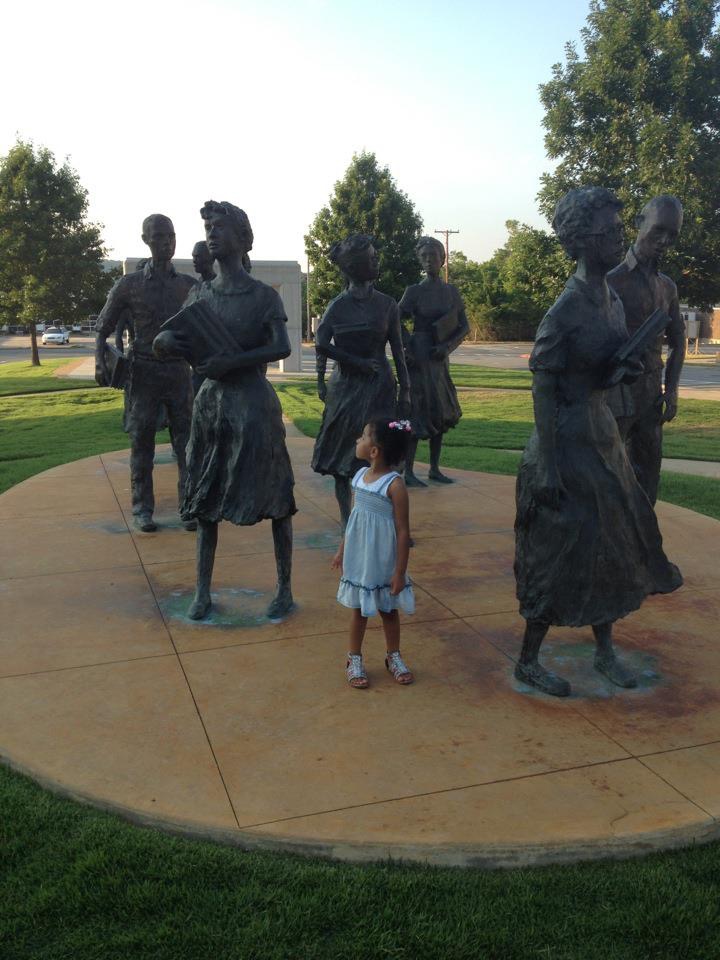 June 16, 2012 . . . My three-year-old granddaughter standing among the bronze sculptures of The Little Rock Nine.
 And my granddaughter stands in front of Little Rock Central High, a school she may choose to attend someday, a school she will be able to attend because The Little Rock Nine took a dangerous risk to make it possible.
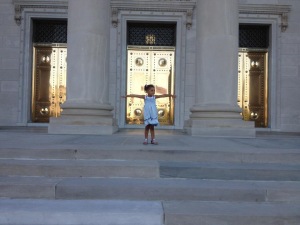 Finally, my granddaughter stands playfully on the steps of the Arkansas State Capitol. I know that it is possible that she may one day proudly walk through its golden doors as a state senator or representative. That is possible because nine Little Rock students were brave enough to be a part of changing history.
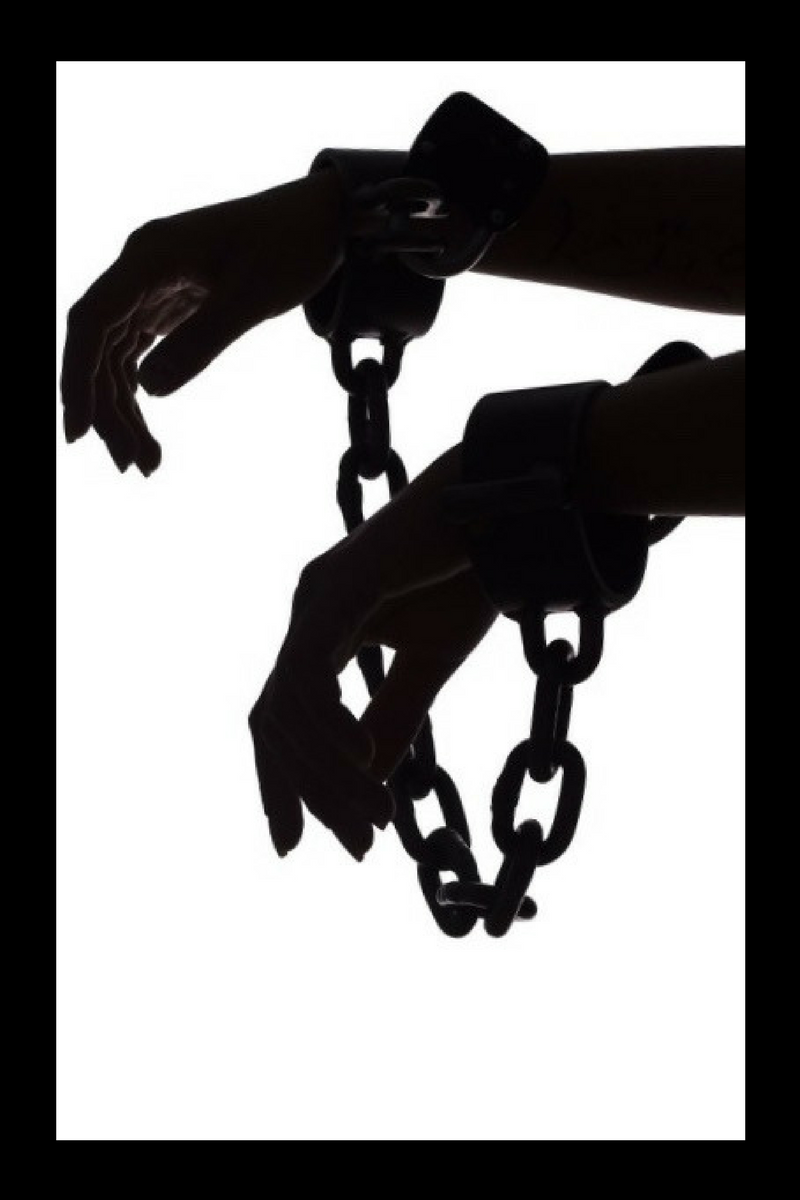 Because of the recent opening of The National Memorial for Peace and Justice in Montgomery, Alabama, I have been contemplating the terror of lynching in our history. The Montgomery site is the nation’s first memorial dedicated to the legacy of enslaved black people, people terrorized by lynching, African Americans humiliated by racial segregation and Jim Crow, and people of color burdened with police violence.
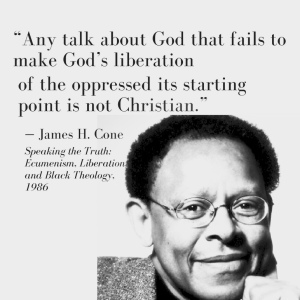 While in seminary, I immersed myself in the study of liberation theologies. Not surprisingly, my research led me to the writings of black liberation theologian, The Rev. Dr. James H. Cone. I became what some might call a follower of Dr. Cone. I saw him as a Christ-like superhero. Much of my research and writing in those days delved into the history of liberation theology, so Dr. Cone’s books covered my desk for months.
 Google it.
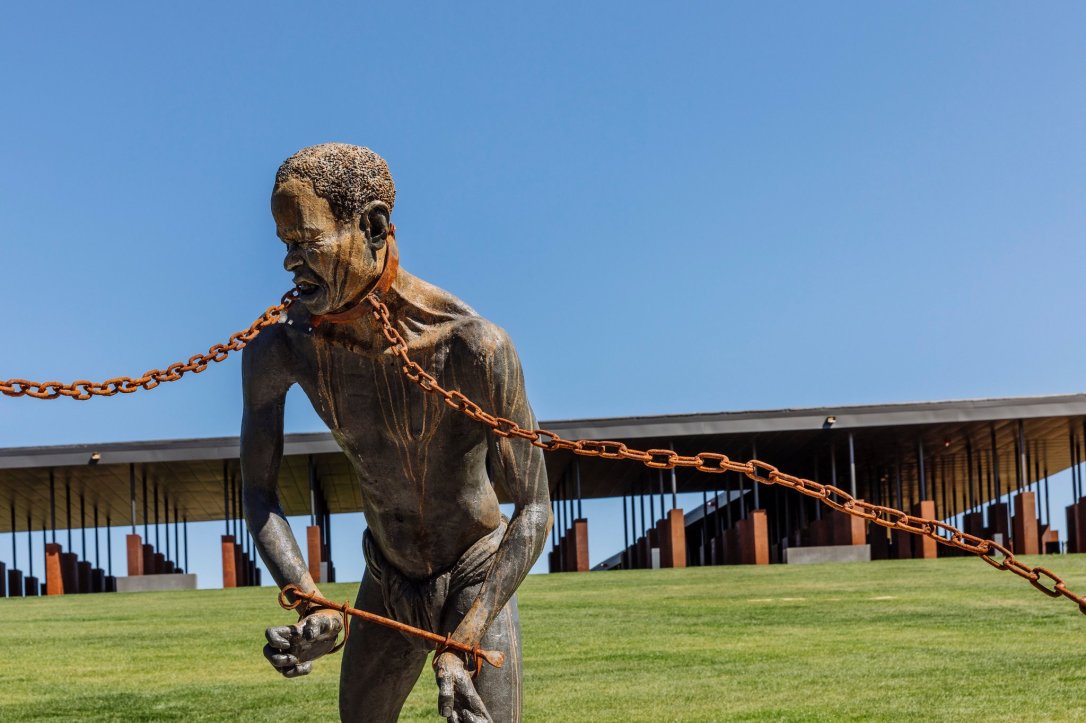




 Let us pray with our legs, let us march in unison to the rhythm of justice, because I say enough is enough.”
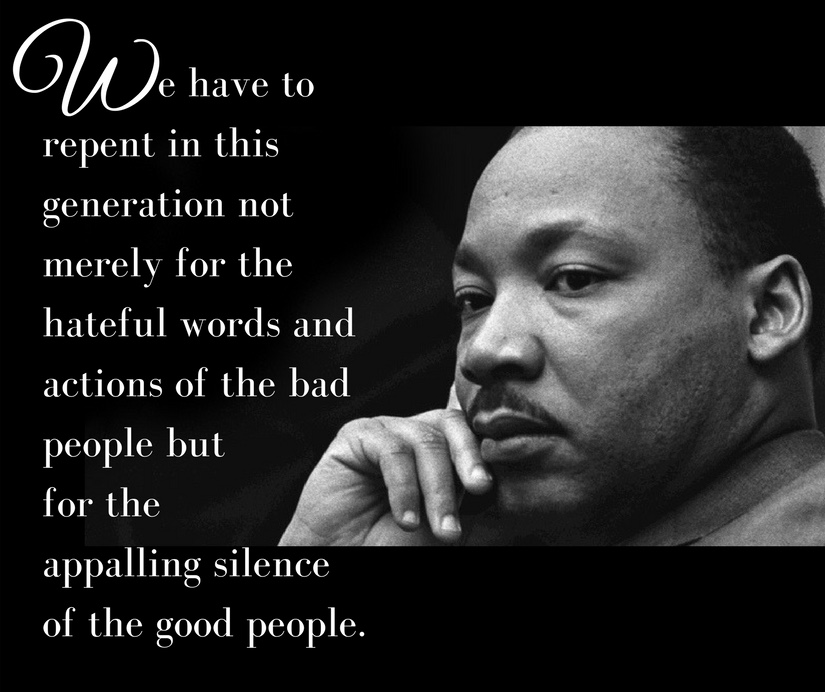 I invite you to read “Out of Africa: White supremacy and the Church’s silence,” a provocative opinion piece by our guest blogger, Dr. Bill J. Leonard. Many thanks to Dr. Leonard for prompting us to more fully commemorate the day honoring Dr. Martin Luther King, Jr. If you are willing to challenge yourself, these words will shed the light you need to do so.
 For weeks now, women have been making heart-rending declarations — “Me too,” they cry, as they reveal their experiences of past sexual abuse. As for me, I say, “me too.” Add my name to the mournful list of women who have endured the pain of sexual trauma.
 When you realize how perfect everything is, you will tilt your head back and laugh at the sky.
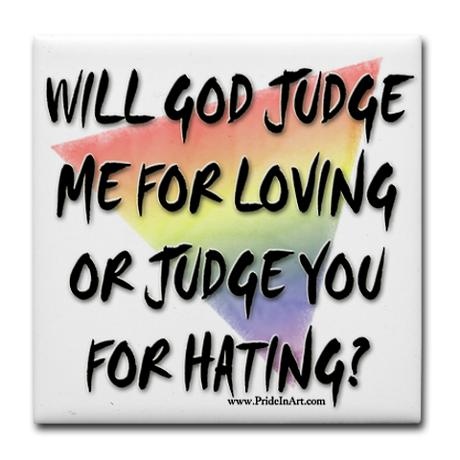 August 27, 2017, marked an action of sacred change among the congregation of the First Baptist Church of Christ in Macon, Georgia. I was proud of the church I have recently become a part of, not only because of our adoption of a policy that ensures the full acceptance of LGBTQ parsons, but also because of the thoughtful and intentional process that resulted in the decision for inclusion, acceptance, unity, justice and love.
 A twelve year-old girl, Sadako Sasaki, died of radiation induced leukemia ten years after the atomic bomb had fallen near her home in Hiroshima. Her story has inspired millions around the world, and her memory transformed a simple paper crane into an international symbol of peace and hope.
 How good and pleasant it is when people live together in harmony!
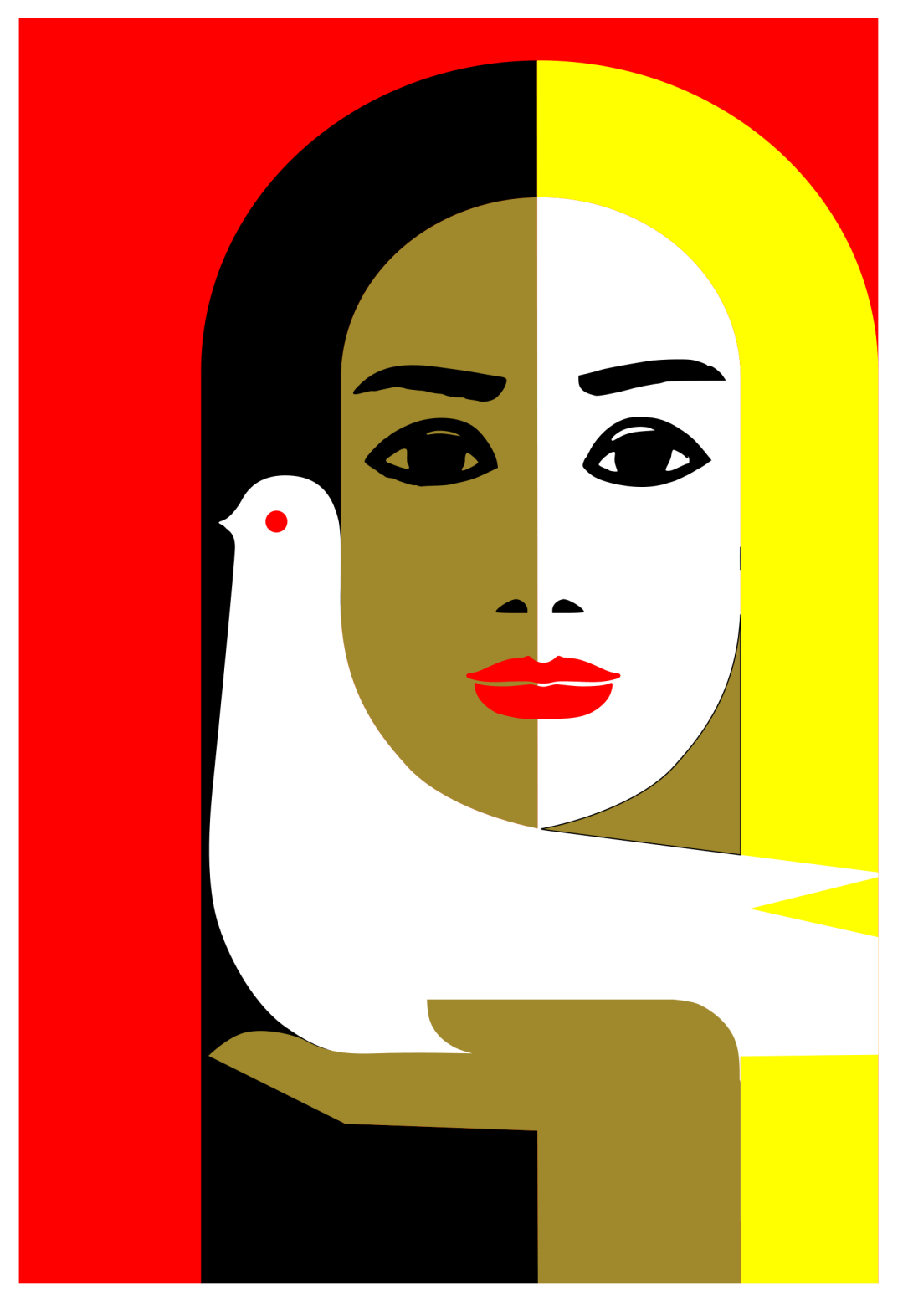 Raise beautiful trouble!
 Speak your mind. Don’t be afraid. Don’t whisper in the deep.
 She Was singing as police officers restrained her, arms behind her back, both thumbs held tightly together with plastic straps. Next to be arrested was The Reverend Traci Blackmon, who chanted “justice, mercy” again and again as police restrained her and led her away.

 God of the Sparrow 🌱 By Kathy Manis Findley