Child protection, Children, Compassion, Conflict, Confusion, Consolation, Darkness, Despair, Determination, Fear, God’s Mercy, grief, Gun violence, Justice

After the Horror

Poem by Rev. Kathy Manis Findley
September 7, 2024

Appalachee High School
Winder, Georgia, USA
September 4, 2024


Activism, Advocate, Challenge, Change, Community activism, Compassion, Covenant, Dreamers, Dreams, God’s Gift of Stars, Good Trouble, Hope, In Memorium, Justice, Racial injustice, reconciliation, Rev. Kathy Manis Findley, Separation, Sheltering children, Social justice, Transcendence, Transforming Injustice, Violence, Wade in the Water, War

Do You Have a Dream?

Activism, Advocate, Asylum, Black Lives Matter, Caged children, Child trafficking, Committment, Community activism, Compassion, Courage, Creativity, Discrimination, Human trafficking, Immigrant detention, Immigration, Injustice, Justice, Let the oppressed go free, Oppression, Racial injustice, Racism, Social justice

“Let The Oppressed Go Free”

Canadian sculptor Timothy Schmalz’s work on a sculpture depicting modern-day trafficking in humans titled “Let the Oppressed Go Free” — a commentary on how slavery, via human trafficking, continues today. Schmalz laments that the modern-day travesty of forced labor, including for sex, is often ignored, not unlike slavery of the past.

Do you wonder sometimes where God is while people are being oppressed? I mean all kinds of oppression — racial injustice, human trafficking, violence and abuse, prison injustice, sexism, cissexism, classism, ableism, heterosexism. The list can go on and on, all the way down to specific stories about specific oppressed individuals. At that level, the down to earth level where we see a living person suffering, is the heartrending place. It’s the place where we find ourselves face to face and up-close with someone pouring out their story. It’s the place where we learn to talk less and listen more. It is for us an experience of holy listening with just one person.

Have you ever been in that kind of space listening to just one person? Have you ever been with a person suffering oppression who is freely sharing a heartbreaking story with you? I know that this kind of face to face encounter can be intimidating, even frightening. It can be beyond frustrating to listen to someone when you’re pretty sure you can’t do much to help.

There are at least two options for those of us who have a deep desire or calling to liberate those who are oppressed. We can offer what we have, even when we do not have a way to fix things. What do we have? Our presence, our emotional and spiritual support, our ability to advocate, housing assistance, financial assistance, employment assistance, safe shelter, understanding, constancy, presence, presence, presence . . .

The other option is to rail against a God who makes pronouncements about caring for oppressed people, yet seemingly does nothing to liberate them. This may not be our best option. Scripture reveals that God has a way of dealing with complaining people, and it is almost never a positive experience for the complainer. Moses comes to mind, and Miriam, and Job.

Poor, pitiful Job had a rough go of it and he wanted God to do some explaining and answer some questions. After all, he was a devout and faithful man, so why would God allow him to suffer so many losses? Right after Job is schooled by his three “friends” on several theological matters, including that he should never question God, God appears to Job out of a whirlwind. It was probably grand entrance, and then God basically says to him, ”I’ll ask the questions, buddy!”

Here’s a snippet of the long exchange between God and Job.

Then the Lord spoke to Job out of the whirlwind.

“Who is this that obscures my plans
    with words without knowledge?
Brace yourself like a man;
    I will question you,
    and you shall answer me.

“Where were you when I laid the earth’s foundation?
    Tell me, if you understand.
Who marked off its dimensions? Surely you know!
    Who stretched a measuring line across it?
On what were its footings set,
    or who laid its cornerstone—
while the morning stars sang together
    and all the angels shouted for joy?

— Job 38:1; 4-7 (NIV)


Job was oppressed. God was aware of it. God seemed unconcerned for too long, but there actually is a redeeming conclusion for Job. As the story goes in the last chapter of Job, God restored Job’s fortunes and gave him twice as much as he had before. All of Job’s brothers and sisters, and everyone else he knew, went to his house for Sunday dinner and they consoled him for all the trouble he had been through. Then each one gave him a piece of silver and a gold ring. It worked out!

Canadian sculptor Timothy Schmalz’s sculpture, ‘Monument of Oppression’ depicts hands emerging desperately from behind bars.

“I can’t think of one single nation of the world that did not practise slavery, including among Indigenous people,” the sculptor says.

(Photo by Handout)


What does Job’s story say to us? What does it teach us about oppression? In my mind, in order to confront oppression and free persons from every yoke on a societal scale, we must first be aware that systemic oppression exists. It is stark reality! It darkens our world! Right now, approximately 40 million people are trapped in slavery in the world. One in four of these is a child. This shame that pervades and plagues the planet does not seem to disturb people very much. Unfortunately, it is in some people’s best interest to maintain the oppressive systems that benefit them, that is fill their pockets with wealth (which is the primary reason for trafficking human beings, for instance).

Systems of oppression are very large, very complex and very powerful. Ending oppression is way too big for us to tackle alone. After sincerely asking the all-powerful God to help us bring down these all-powerful oppressive systems, we can add our hands and feet to the holy project. Contact senators, representatives, governors, mayors. Urge them, persist with them to use their position to help break down injustice. Know what you’re talking about when you contact them by reading about the work the many of anti-oppression organizations that exist. Join in their work. Look for those resources at this link.

“Angels Unawares” by Canadian sculptor Timothy Schmalz portrays the saga of Migrants and Refugees. Among the 140 faces in the sculpture are Africans, Vietnamese, a Cherokee, Jews, Irish immigrants, and Syrians. The Holy Family is also included in the sculpture. St. Joseph can be identified by his toolbox.

Finally, we must open our eyes to the people in our own communities who need our compassion, our concern, our caring presence and our advocacy on their behalf. It takes some creativity, some committment and compassion, a lot of courage and a covenant with our God of justice to change an unjust world. The outcome might just look something like what the prophet Isaiah described:

Is this not the fast that I choose:
To release the bonds of wickedness,
To undo the ropes of the yoke,
And to let the oppressed go free,
And break every yoke?

Is it not to break your bread with the hungry
And bring the homeless poor into the house;
When you see the naked, to cover him . . .

Then your light will break out like the dawn,
And your recovery will spring up quickly;
And your righteousness will go before you;
The glory of the Lord will be your rear guard.

Then you will call, and the Lord will answer;
You will cry for help, and He will say, ‘Here I am. . .’

10 And if you offer yourself to the hungry
And satisfy the need of the afflicted,
Then your light will rise in darkness,
And your gloom will become like midday.

11 And the Lord will continually guide you,
And satisfy your desire in scorched places,
And give strength to your bones;
And you will be like a watered garden,
And like a spring of water whose waters do not fail.

12 Those from among you will rebuild the ancient ruins;
You will raise up the age-old foundations;
And you will be called the repairers of the breach,
The restorer of the streets in which to dwell.

— Isaiah 58 (NASB)


I don’t know about you, but I want to be among the ”repairers of the breach.” I don’t want to live in a situation where I “hope for light, but there is darkness.” (Isaiah 59:9) Instead, let me find myself looking far beyond the world’s darkness, looking to the Creator who demands justice, looking upward to claim the promise, ” . . . satisfy the need of the afflicted, Then your light will rise in darkness, and your gloom will become like midday . . . And your light will break forth like the dawn.”

May it be so for all of us.

A new commandment, Anger, Christian Witness, Christianity, Committment, Community, Compassion, Faith, Gun violence, Hemmed in, Here I am, Lord., Jesus, Jesus Follower, Justice, Life pathways, Magnolia Court Motel

The Car at Magnolia Court

Magnolia Court Motel, Macon Georgia

In my normal outings, I frequently ride with my husband past the Magnolia Court Motel. It’s the one with a gas station in its courtyard where a pool used to be back in the 50s. It’s not a place you would want to stay on your vacation. In fact, I doubt anyone goes there for a vacation. Still, it’s always at capacity, because people live there. It’s not in the safest part of town. Magnolia Court itself is not safe. I know that because TV news frequently reports that homicides happen there.

For the past five years, I have seen a dingy, old, light brown car in front of the last unit of Magnolia Court, closest to the street. The same brown car, day or night, is in its parking space. I don’t think the car ever moves and I have wondered if it needs repairs. I assumed that the owner of the brown car didn’t have a job, because the car never moved. I hoped, though, that the owner of the brown car worked an 11 to 7 shift somewhere. I wouldn’t have known that, because I would never go past Magnolia Court at that time of night. Not in that neighborhood!

For five years, I never once mentioned that car to my husband. For five years, I silently looked at the dingy brown car and wondered who was in the motel room. Who was he or she? I always thought it would be a male, so let’s go with that. Why is he living there? Does he have a job? Is he young or old? Does he need food? Is he ill or disabled? Does he have friends or family? What does his room look like? Is it decent or dirty? How does he feel about his life? Does he know about Jesus and God? Is he okay?

My next thought was, “I would never go up to his door at Magnolia Court, knock on it and ask him if he’s okay or if he needs anything or if he knows about Jesus.” Just as quickly, my thoughts switch from the man (or woman) with the dingy brown car at the Magnolia Court to these hard questions . . . What could I do, as a Christian, to see if this man needed help? How could I help? What would I do? And what do the answers to those questions say about my faith?

I don’t know, of course, but I imagine that in a similar situation, Jesus might have gone straight to the inn and checked on the people. Finding out how they were doing might have led him to heal one, encourage another, give another a basket of food or do all the blessing-kind-of-things Jesus always did.

Last week, we drove by Magnolia Court. The dingy brown car was not parked in its place. I looked around the Court to see if he had changed rooms, but the car was not there. I felt my heart quicken and my mind rushing through scenarios of what might have happened to the man in the end room of Magnolia Court. I was sad. Guilty. After about ten minutes, I managed to move on with my day and not think too much about the man.

Today, we again passed by Magnolia Court, twice! The car was gone. The man was probably gone too. I never saw him. I never checked on him. Why would I? Who would do that sort of thing in the violent, unsafe world we live in?

I don’t want to be trite about things like faith, but honestly, I really did wonder “What would Jesus do?”

“WWJD” might be an old, overused, trendy slogan, but for me this is just being concerned about a man I never saw.


I don’t have any idea what Jesus would do, but I suspect he may have done lots of things, including something similar to what he did with the tables of the money changers. You see, turning over those tables was about doing what is just and right. Jesus might have turned over some tables or lamps or nasty mattresses at Magnolia Court Motel, because it is a place of violence, drugs, and all manner of things that harm people.

I felt my heart quicken and my mind rushing through scenarios of what might have happened to the man in the end room of Magnolia Court. I was sad. Guilty.

Kathy Manis Findley

I have to wonder now, probably will always wonder, what became of the car at Magnolia Court and, more importantly, what became of the man who lived in a room at Magnolia Court Motel. As far as I can tell, he never left his room until the day he left. My thoughts of him over five years of trying to eavesdrop on his life yielded nothing for him. For me, it became an examination of just exactly what kind of faith I have and in what ways am I willing to go out into a world of need where God’s people live in shadows like Magnolia Court. It became a self-examination that prompted me to ask myself, “What do you intend to actually do when you proclaim yourself as a Jesus follower?”

So this is not a morality tale to urge you to examine your faith. It is for me. I am the one who needs to examine my faith, to ask what Jesus would do and then to admit what I will or won’t do. As for the old, dingy, brown car and the man who owns it . . . well, I did do one thing that Jesus would do. I blessed the man I never knew, whispering under my breath as we passed by this morning, “May God go with you and give you peace.”


This is one of my favorite Christian songs. It brings me to tears every time I hear it, especially on the day of my ordination in 1992. As the words were sung that day in a duet by my husband and best friend, my heart sang, “Here I am, Lord.”

Activism, Beloved Community, Black History Month, Change, Civil Rights Movement, Community activism, Freedom, Injustice, Justice, Montgomery Bus Boycott, Persistence, Racism, Rosa Parks, Segregation, Social justice, Transformation, Transforming Injustice

A Birthday Celebration for Rosa Parks

84A0FA99-AA4F-4D53-9F45-ECD2A3F04B4E
Celebrate with me the birthday of Rosa Parks! 

Born in Tuskegee, Alabama on February 4, 1913, she continues to be remembered in the hearts of the American people. What a “herstory” she lived! And how could I even begin to tell her story here? What we think we know about Rosa Parks, in fact, is more like a fairy tale than an accurate picture of the person she was and the powerful transformation she brought in the quest for racial justice.

Rosa Parks was not one to dwell on one event — one bus ride, one boycott, one street named after her — she instead set her “eyes on the prize” for the long haul. She was one persistent woman. She was a mentor to the young people who would ultimately see the prize of equal justice under the law. Rosa Parks was not just a woman to be remembered by holding down one seat on one bus on one day. Instead, she set her sights on the transformation of injustice and never stopped moving towards justice for all.

I cannot tell her story adequately, but I can point to some of her milestones . . .

In August of 1955, black teenager Emmett Till, visiting relatives in Mississippi, was brutally murdered after allegedly flirting with a white woman. Till’s two murderers had just been acquitted. Rosa Parks was deeply disturbed and angered by the verdict. Just four days after hearing the verdict, she took her famous stand on the Montgomery bus ride that cemented her place as a civil rights icon. She later said this when the driver ordered her to move, “I thought of Emmett Till and I just couldn’t go back.”

Rosa Parks sat in the black section, but when the white section filled up, the bus driver demanded that the four black passengers nearest the white section give up their seats. The other three black passengers reluctantly moved, but she did not. She recounted the scene: “When he saw me still sitting, he asked if I was going to stand up, and I said, ‘No, I’m not.’ And he said, ‘Well, if you don’t stand up, I’m going to have to call the police and have you arrested.’ I said, ‘You may do that.’”

Many people have imagined Rosa Parks on that bus as an old woman tired after a long day of work. Yet, in her autobiography, My Story, Parks writes, “People always say that I didn’t give up my seat because I was tired, but that isn’t true. I was not tired physically, or no more tired than I usually was at the end of a working day. I was not old, although some people have an image of me as being old then. I was forty-two. No, the only tired I was, was tired of giving in.” 

Rosa Parks endured significant hardships in her life, both during and after the boycott. She was unjustly fired from her department store job. She received an almost constant stream of death threats, so many that she eventually left Montgomery to seek work elsewhere, ultimately moving to Detroit. There she served as secretary and receptionist for Representative John Conyers, befriended Malcolm X, and became active in the Black Power movement.

In 1995, she published her memoir, Quiet Strength, focusing on her Christian faith.  She insisted that her abilities to love her enemies and stand up for her convictions were gifts from God: 

God has always given me the strength to say what is right. I had the strength of God, and my ancestors.

Rosa Parks died in 2005 at the age of 92 and she became the 31st person, the first woman, the second African American, and the second private citizen to lie in honor in the Capitol Rotunda in Washington, D.C.

  • More than 50,000 people came through to pay their respects. 
  • Her birthday is celebrated as Rosa Parks Day in California and Missouri.
  • Ohio and Oregon celebrate the day on December 1, the anniversary of her arrest.

One last milestone of her remarkable story . . .

In 1994, the Ku Klux Klan applied to sponsor a section of Interstate 55 near St. Louis, Missouri, which would mean the Klan’s name would appear on roadside signs announcing the sponsorship. In 2001, the US Supreme Court ruled that the state of Missouri cannot discriminate against the Ku Klux Klan when it comes to groups that want to participate in the adopt-a-highway program. Of course, while the name of the Klan is aesthetically disgusting to many people, this decision was a victory for free speech and equal protection under the law, right?

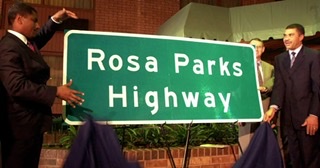
54FF516B-B94C-4ADC-AF10-4BE8CF2BF64BIn the end, the Missouri Department of Transportation got sweet revenge! Sure, they couldn’t  remove the KKK’s adopt-the-highway sign, but few would dispute the state’s ability to name the highway itself. So the KKK is now cleaning up their adopted stretch of the highway named by the Missouri legislature and christened as “Rosa Parks Highway.”

Rosa Parks did not crave the spotlight. Nor did she care all that much about highways and byways bearing her name. She probably did want to be known as a person who persisted in the struggle for racial justice. She told us that in these words:

I would like to be known as a person who is concerned about freedom and equality and justice and prosperity for all people.

You are remembered as such a person, Mrs, Rosa Parks! Happy birthday in heaven. You are our inspiration. You are one of our sheros, our wonder woman!

Advent, Calling, Challenge, Compassion, Confusion, coronavirus, Covenant, Dreamers, Dreams, Isaiah, Justice, Mission, Pandemic of 2020, peace, Repentance, Righteousness, Sin, Sorrow, Spirit

THOSE WHO DREAM

Copyright A Sanctified Artsanctifiedart.org

A passage of Scripture that encourages me every time I read it came up this week in my Advent devotional booklet entitled, “Those Who Dream.” The beauty of reflection I have found in this booklet has definitely awakened dreams in me. As I reflected on Advent Scripture each morning, God never failed to remind me that the world is in chaos in so many ways. In the year we will remember as 2020, people languished and lamented through a seemingly uncontrollable pandemic. Many people prayed, many died, many wept, and some were even able to dream.

The sacred text for this past Thursday was from the eloquent Prophet Isaiah. I have always thought of this Prophet as a realistic dreamer who never failed to paint a true picture of a world both evil and good. Isaiah had a way of proclaiming the deep need for repentance while also calling the people to dream of all that could be better and brighter. The bottom line for this Prophet was sin followed by repentance, what that would look like and what a world of righteousness would look like. Thursday’s prophetic and inspiring word was from Isaiah 61.

The spirit of the Lord God is upon me, because the Lord has anointed me; he has sent me to bring good news to the oppressed, to bind up the brokenhearted, to proclaim liberty to the captives, and release to the prisoners; to proclaim the year of the Lord’s favor, and the day of vengeance of our God; to comfort all who mourn; to provide for those who mourn in Zion — to give them a garland instead of ashes, the oil of gladness instead of mourning, the mantle of praise instead of a faint spirit.

They will be called oaks of righteousness, the planting of the Lord, to display his glory.

They shall build up the ancient ruins; they shall raise up the former devastations; they shall repair the ruined cities, the devastations of many generations.

Isaiah 61:1-4 NRSV


For I the Lord love justice, I hate robbery and wrongdoing; I will faithfully give them their recompense, and I will make an everlasting covenant with them. Their descendants shall be known among the nations, and their offspring among the peoples; all who see them shall acknowledge that they are a people whom the Lord has blessed.

I will greatly rejoice in the Lord, my whole being shall exult in my God, ffor he has clothed me with the garments of salvation, he has covered me with the robe of righteousness as a bridegroom decks himself with a garland, and as a bride adorns herself with her jewels.

For as the earth brings forth its shoots, and as a garden causes what is sown in it to spring up, so the Lord God will cause righteousness and praise to spring up before all the nations.

Isaiah 61:8-11 NRSV


Standing in the midst of a pandemic world with all the grave challenges before us, Advent sends us a message. The last good word in these proclamations from Isaiah tell us that our Lord will cause righteousness to spring up before us, before all nations. When righteousness has her way in us, then — and only then — will we dream again. Our dreams empowered with God’s anointing will bring the advent of righteousness.

After repentance! Only after repentance!

Look closely at Isaiah’s words and you will see anew that God has anointed us to bring good news to oppressed people, to hold in our arms those who are brokenhearted, to comfort the mourning people, to set free people who are bound with chains of their own making and finally, as the Prophet said, “to give them a garland instead of ashes, the oil of gladness instead of mourning, the mantle of praise instead of a faint spirit.

What Isaiah tells us after that is my dream for this Advent 2020: “They shall build up the ancient ruins; they shall raise up the former devastations; they shall repair the ruined cities, the devastations of many generations.”

All around us are the ruins we have left behind from all that we have done to our world, collectively and individually. The politicians make war among themselves, increasing the chasm that divides them. The people put politics before unity and spew hate at one another. The white supremacists barrage our cities with evil. Some of our people protest the racial injustice they have long endured. Hungry people still wait in the cold for a morsel of sustenance. People who have no home shiver in cold porticos, in parks, under bridges. Violence with its many faces is ever with us. The Coronavirus ravages on. The teachers and parents languish in confusion and disappointment. The frontline health professionals fall in literal exhaustion. Our children ask us when life will be normal again.

Every year, I recall the text of one of my favorite Christmas carols, “I Heard the Bells on Christmas Day.” The carol’s text, written by Henry Wadsworth Longfellow on Christmas Day of 1863, is a poem in which he expresses the terror of peace evolving into a world of darkness, hate and war. Two years before writing this poem, Longfellow‘s personal peace was shaken when his wife of 18 years was fatally burned in an accidental fire. Then in 1862, during the American Civil War, Longfellow’s oldest son joined the Union Army and was severely wounded in November of 1863 in the Battle of Mine Run. Longfellow’s words reach deeply into my soul and plant sadness there. Yet, the words are real and true about his world and perhaps, in some ways, his words are real in the world in which we live.

Till, ringing, singing on its way,
The world revolved from night to day
    A voice, a chime,
    A chant sublime
Of peace on earth, good-will to men!

Then from each black, accursed mouth,
The cannon thundered in the South,
    And with the sound
    The carols drowned
Of peace on earth, good-will to men!

It was as if an earthquake rent
The hearth-stones of a continent,
    And made forlorn
    The households born
Of peace on earth, good-will to men!

And in despair I bowed my head ; 
“There is no peace on earth,” I said; 
    “For hate is strong
    And mocks the song
Of peace on earth, good-will to men!”

Then pealed the bells more loud and deep: 
“God is not dead ; nor doth he sleep!
    The Wrong shall fail,
    The Right prevail,
With peace on earth, good-will to men!”

We do not fully understand the ways that Longfellow suffered when he wrote this poem. Yet, we might have an inkling that some of the words describe us, describe our world. In the end, when all is said and done, the carol proclaims that the bells are still ringing loudly and deeply, that God is not dead, nor is God sleeping. Instead God is speaking to us so that we will know, beyond any doubt, that “the Spirit of the Lord is upon us.” And with that anointing, we will fulfill a covenant with God — the mission God has given us to pray and labor and dream God’s dream of repairing the ruined cities, the devastations of past generations, as well as the devastations we are seeing before us in this moment in time.

May God make it so. Amen.

An version of Longfellow’s carol was sung by The Carpenters many years ago. Here is the video:

A blessing for voters, Activism, Beloved Community, Black Lives Matter, Caged children, Calling, Community activism, Gun violence, Hate, Justice, Pandemic of 2020, Racism, Social justice, The Christian Church, Transformation, Vote 2020

May You Vote: A Blessing

068CAD40-2AD8-49FE-BD40-CE24850C9F1E
I received an inspiring blessing today from Auburn Seminary, a video entitled “May You Vote.” My first thought as I watched the video was that all of us and each of us need a blessing as we vote in this important election. For in these restless days, we are engulfed by a lethal pandemic, isolation, quarantine, violence by police, the death of many of our black, brown and indigenous brothers and sisters, protests in city streets and violence against the protesters. It is almost too much to bear.

But as people of faith who long for transformation, our vote is a part of a holy mission from God. So if we are able, we will vote, and we will vote as a part of God’s holy mission, hoping that God’s love and our perseverance will soon lead us to the gracious gift of “beloved community.”

The Senior Fellows of Auburn Seminary, faith leaders from a multifaith movement for justice, have a deeply personal video blessing for us:

May You Vote!

This is note from their president:

The Fellows gathered in their homes across the country to remind us that a government of the people only works when it’s of the people and by the people.We all have a part to play now! May you be inspired by their words and share them with others. So much is on the line with this election, and with your vote, you can help shape the future of this nation.

By mail or in person if you are able—May You Vote!

Rev. Dr. Katharine R. Henderson

President, Auburn

Please listen to their blessing in this video message:

Activism, Advocate, Caged children, Child protection, Children, Compassion, Determination, Dreamers, Heartbreak, Hope, ICE, Immigrant detention, Immigration, Inhumanity, Justice, Liberty, Separation, Tears

Love the Stranger as You Love Yourself

My first mistake for this day — reading an article published in the Huffington Post written by journalist Rowaida Abdelaziz! Here’s the headline.

More than 5,000 people have contracted the coronavirus while in immigration detention centers, including more than 800 in the last week.

On a personal note, I must say that I’m very proud of my church’s ministries, especially our English as a Second Language (ESL) classes. The teachers not only teach English, they also provide community for immigrants who often do not have family nearby, as well as many other acts of care and compassion. I could not help but give God thanks for our ESL teachers this morning when I read this headline from the Huffington Post. I can imagine our ESL teachers shifting into advocacy mode to do something about it. Not that any of them have the power to change the abysmal detention centers our government sponsors, but armies of advocates can and have changed circumstances of oppression throughout history

Back to the news article. Abdeaziz went on to further explain the treatment of immigrants:

Immigrants were given face masks only recently, but most of them are forced to reuse single-use masks without being allowed to wash them or receive new ones. Those held were not given soap or sanitizers and some were even exposed to pesticides and other toxic substances. 

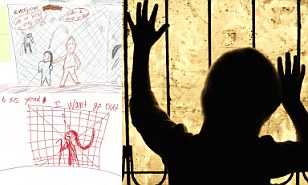
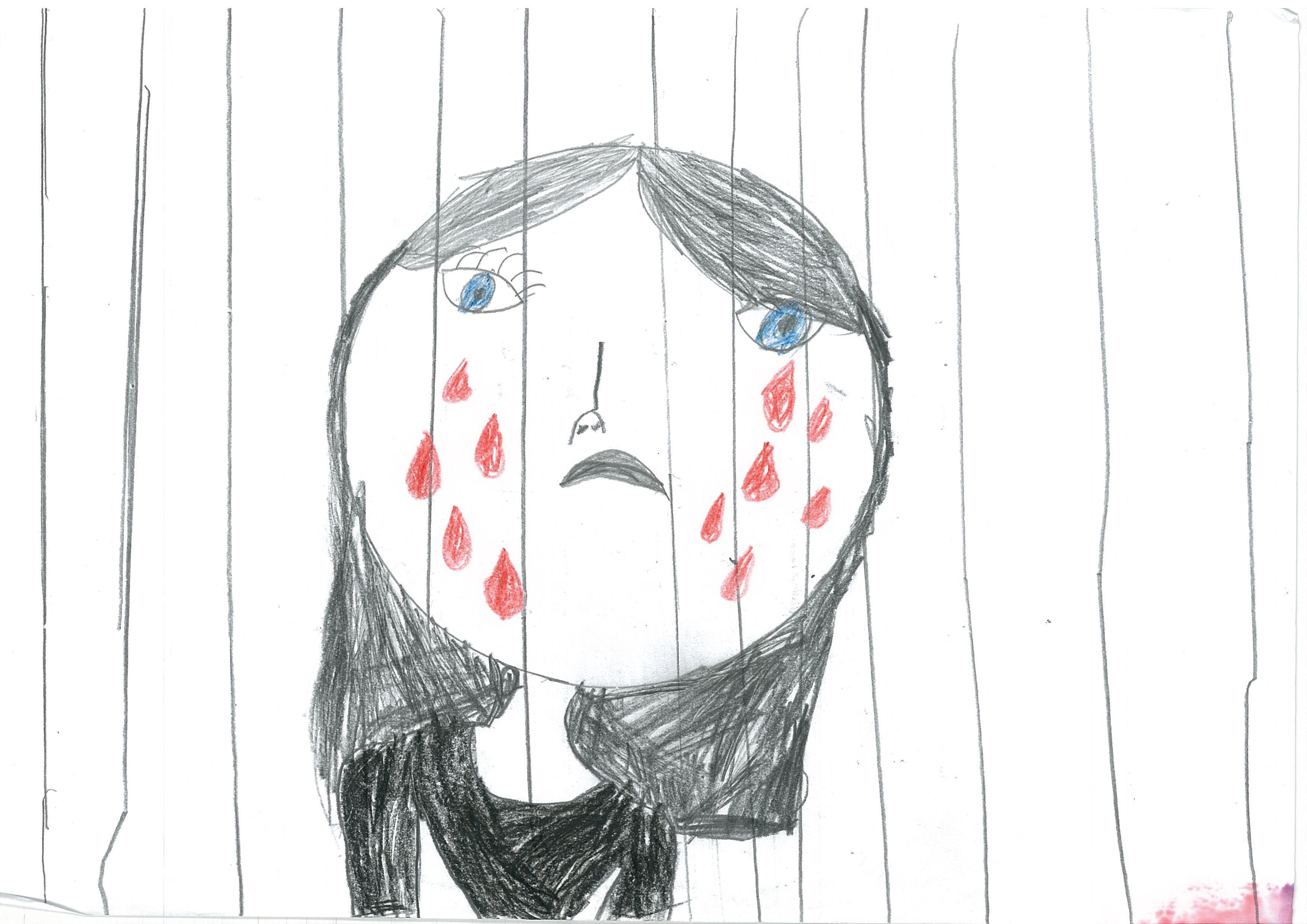
And then we have the horrible reality of “caged children!” It’s a term I do not want to hear because it so deeply troubling to imagine. But children draw and thousands of them have drawn images of caged children. My mind tells me unequivocally, “Don’t look at the drawings!” My heart tells me, “You must look!” My soul tells me, “Spirit will be near as my Comforter when I do look!”

At heart, I have always been an advocate for children, a fierce one. For a very long time advocacy was my career. I cannot abide the ill-treatment of any person, but when I envision thousands of children in custody and in sorely negligent circumstances, it digs at me and pierces my heart like a Holy arrow sent from God. Denise Bell, a researcher at Amnesty International USA said this, “COVID-19 has revealed the fatal flaws and the negligent medical care that ICE has historically provided to people who are detained within its facilities.” Ms. Bell goes on to say, “What’s more disturbing is the carelessness, and I’d even say callousness, with which the government is treating people in its care and custody.”

A969410C-B882-4AF9-A7FA-9C1F6E420740

Despite global lockdown measures, ICE continued to detain, transfer and deport immigrants ― including thousands of children ― all of which has contributed to the spreadof the coronavirus nationally and globally. Foreign governments who accepted deportees said they brought the coronavirus back with them. 
Huffington Post, September 17, 2020


From a CNN article, “Pediatricians share migrant children’s disturbing drawings of their time in US custody.” Slide show above includes drawings shared by those pediatricians and other powerful images. https://www.cnn.com/2019/07/03/health/migrant-drawings-cbp-children/index.html


How can you and I become advocates for these children? To me, it feels like a mandate from a caring, compassionate God. It feels like a mission following the footsteps of Christ who said something quite profound in the eighteenth chapter of Matthew’s Gospel. 

Whoever welcomes one such child in my name welcomes me. If any of you put a stumbling block before one of these little ones who believe in me, it would be better for you if a great millstone were fastened around your neck and you were drowned in the depth of the sea.

Matthew 18: 5-6 (GNT)


And then there’s this:

When a stranger sojourns with you in your land, you shall not do him wrong. You shall treat the stranger who sojourns with you as the native among you, and you shall love him as yourself, for you were strangers in the land of Egypt: I am the Lord your God. (Jeremiah 29:33-34)

Jeremiah 2:33-34 (NRSV)


I need to make sure you understand that I know the drill: I cannot use Holy Scripture to bolster my opinions or take Scripture out of its historical context to prove a point. A learned Professor of Old Testament, James K. Hoffmeier, makes this stringent assertion, “Secularists and liberals, both political and religious, are typically loath to consult the Bible when it comes to matters of public policy. So it is somewhat surprising that in the current debate about the status of illegal immigrants, the Old Testament or Hebrew Bible is regularly cited in defense of the illegal.”

I get that. I am a liberal. I even graduated from seminary. I am not using Scripture to prove my point. Nor do I intend to exegete these texts in an effort to thoroughly understand the translation in historical context. I am just pondering these Scripture passages as inspiration, meditation and perhaps an aid in discerning a call from God to mission. To use the texts in this manner, all I really need to do is read the words and listen for God’s voice. Never in my life, all seventy years of it, has God whispered back to me, “My child, you did not translate that text correctly, nor did you place it in its historical context.”

So where does this leave me? I think it leaves me asking myself, “What will I do? What must I do? Where do I begin in demanding change? How do I call out to my government, imploring them to end this oppressive inhumanity? How do I demand that all of us, including ICE, respect the humanity and the sacred worth of the immigrants in our midst, especially the children?

I hope that you, too, will ask yourself these questions, listen for the voice of God and become a fierce advocate for justice and humanity. If then you sense a call to do something to change the worlds of caged children held in ICE detention centers, visit this website:

https://endchilddetention.org/

Beloved Community, Black Lives Matter, Civil Rights Movement, Courage, Good Trouble, In Memorium, John Lewis, Justice, Nonviolence, Perseverance, Persistence, Politics, Prophetic, Racism, strength, struggle, Tenacity

Remembering John Lewis

89BE8169-640A-4DDD-A2AC-E9680BE67E02
Because I am a citizen of the state of Georgia, I can call him mine — my congressman, my conscience, my inspiration.

John Lewis
A warrior in building the soul of America

Representative John Lewis, a son of sharecroppers and an apostle of nonviolence who was bloodied at Selma and across the Jim Crow South in the historic struggle for racial equality, and who then carried a mantle of moral authority into Congress, died on Friday. He was 80.*

Twice he was beaten to an inch of his life.

I have been in some kind of fight — for freedom, equality, basic human rights — for nearly my entire life.    — John Lewis

On the front lines of the bloody campaign to end Jim Crow laws, with blows to his body and a fractured skull to prove it, Mr. Lewis was a valiant stalwart of the civil rights movement and the last surviving speaker from the 1963 March on Washington — where King delivered his famous “I Have a Dream” speech — but Lewis was almost refused to be allowed to speak by march organizers because of his strident criticism of the Kennedy administration.

Lewis went on to serve 17 terms in the US House of Representatives, where he was considered the north star of conscience in Congress.**

Tributes to the life and legacy of John Lewis came from hundreds of voices.

“Not many of us get to live to see our own legacy play out in such a meaningful, remarkable way. John Lewis did,” former President Obama said in a written tribute. “And thanks to him, we now all have our marching orders — to keep believing in the possibility of remaking this country we love until it lives up to its full promise.”

Joe Biden, and his wife, Jill, issued a statement that began, “We are made in the image of God, and then there is John Lewis. How could someone in flesh and blood be so courageous, so full of hope and love in the face of so much hate, violence, and vengeance?”

Sen. Bernie Sanders of Vermont said: “His courage helped transform this country. He won’t ever be forgotten by those who believe America can change when the people stand together and demand it.”

Sen. Kamala Harris of California said of Lewis, “He carried the baton of progress and justice to the very end. It now falls on us to pick it up and march on.” ***

And so we will, to honor his memory and to persist in the fight against injustice.


John Lewis.

America’s inspiration for getting into “good trouble”

Do not get lost in a sea of despair. Be hopeful, be optimistic. Our struggle is not the struggle of a day, a week, a month, or a year, it is the struggle of a lifetime. Never, ever be afraid to make some noise and get in good trouble, necessary trouble.
— A tweet from June 2018

I appeal to all of you to get into this great revolution that is sweeping this nation.  Get in and stay in the streets of every city, every village and hamlet of this nation until true freedom comes, until the revolution of 1776 is complete.
— At the 1963 March on Washington

Freedom is not a state; it is an act. It is not some enchanted garden perched high on a distant plateau where we can finally sit down and rest. Freedom is the continuous action we all must take, and each generation must do its part to create an even more fair, more just society.
From his 2017 memoir, “Across That Bridge: A Vision for Change and the Future of America”

My dear friends: Your vote is precious, almost sacred. It is the most powerful nonviolent tool we have to create a more perfect union.
— From a 2012 speech in Charlotte, North Carolina

You are a light. You are the light. Never let anyone—any person or any force—dampen, dim or diminish your light. Study the path of others to make your way easier and more abundant.
From his 2017 memoir, “Across That Bridge: A Vision for Change and the Future of America”

We have been too quiet for too long. There comes a time when you have to say something. You have to make a little noise. You have to move your feet. This is the time.
— At a 2016 House sit-in following the Pulse shooting in Orlando

When you see something that is not right, not just, not fair, you have a moral obligation to say something. To do something. Our children and their children will ask us, ‘What did you do? What did you say?’ For some, this vote may be hard. But we have a mission and a mandate to be on the right side of history.
— 2019 remarks in the House on impeachment of President Trump


May his words echo in our hearts and reach the soul of every American. 

May he rest in peace and — from above — inspire us to “do justice, love mercy and walk humbly with our God” as he did.


John Lewis
Servant of God and champion for justice, now called to his heavenly home


With thanks to:
* Katharine Q. Seelye, https://www.nytimes.com/2020/07/17/us/john-lewis-dead.html

** Ken Sehested, http://www.prayerandpolitiks.org/

*** Janet Hook, https://www.latimes.com/politics/story/2020-07-18/tributes-rep-john-lewis-dies-civil-rights


Activism, Ahmaud Arbery, Beloved Community, Celebration, Change, Community activism, Freedom, Hope, Juneteenth, Justice, Liberty, Racism, Rebirth, reconciliation, struggle, Transformation, Uncategorized

Juneteenth 2020 — Oh Freedom!

0B59C2F5-2267-4507-A9EE-44CDC0B315B1
Today may be a Juneteenth like no other.

Juneteenth is a celebration. It’s not solemn, it’s filled with joy and pageantry. It’s not a funeral. But 2020 Juneteenth is uncomfortably juxtaposed with police violence against Black people, protesters in cities all over the nation and funerals — too many funerals.

A Bit of History . . . 

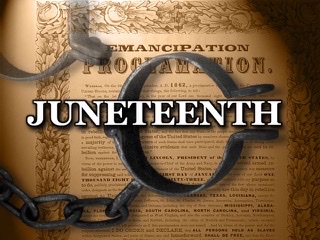
Juneteenth is one of America’s oldest holidays and is observed each year on June 19 to mark the official end of slavery in the United States. The day has long been celebrated by black Americans as a symbol of their long-awaited emancipation. But the story behind the holiday starts 155 years ago today in Galveston, Texas.

On June 19, 1865, Union troops led by General Gordon Granger arrived in Galveston, Texas, to break the news to the last remaining Confederate sympathizers that they had lost the Civil War and that all slaves must be freed. The Union general read aloud to the residents of Galveston:

The people of Texas are informed that in accordance with a Proclamation from the Executive of the United States, all slaves are free. This involves an absolute equality of rights and rights of property between former masters and slaves, and the connection heretofore existing between them becomes that between employer and hired laborer.

The newly freed slaves celebrated emancipation with prayer, feasting, song, and dance, and the following year, the first official Juneteenth celebration was born. But the importance of Juneteenth is that it is rooted in a long history of struggle for freedom and then perhaps the greater struggle to maintain freedom in the face of the enormous repression that was to come.

The Struggle for Freedom Continued

7DC48528-34CF-47FA-9272-ED91E800C437It turned out that being free did not mean being being treated with respect. Yes, it was the true end of the Civil War, but it was also the beginning of Reconstruction, a time that was supposed to be very happy and hopeful. Yet the period of Reconstruction became a miserable time for freed Black people because Reconstruction became part of the redemption of the South. As such, it set out to move African Americans to indentured servitude. While President Abraham Lincoln abolished slavery in his Jan. 1, 1863, Emancipation Proclamation, rebellious Confederate strongholds dotted across the South delayed the widespread implementation.

The South would not hear of the end of slavery, and landowners moved heaven and earth to make sure they had plenty of indentured servants. They were determined to continue the ostentatious lifestyle that they believed was their right and their legacy. They were resolute in their quest to maintain their master/servant status.

Still Today, Elusive Freedom

Juneteenth has been “passed down” through black communities since 1866, but in this year — 2020 — this nation seems to be at the height of a modern-day civil rights movement. My friend says, “2020 is the year of reset!” People throughout this nation of every race and creed hope beyond hope the 2020 will go even beyond “reset” to reconciliation, transformation and rebirth. So that every person is free, respected and cherished as a part of beloved community.

B8EBCA53-AF97-42DD-AA97-BAB122368430The cruel and violent death of George Floyd under the knee of a Minneapolis police officer might mean that this year Juneteenth may not be only about festivals, parades and cookouts. It may well be somewhat of a silent, reflective vigil for George Floyd, Breonna Taylor, Ahmaud Arbery, Rayshard Brooks, Caine Van Pelt, Michael Thomas, Lewis Ruffin, Kamal Flowers, Momodou Lamin Sisay, Ruben Smith, Modesto Reyes . . . and the list could continue.

It is a list of tragedy and horror. It is a list that is a stain that will ever remain on this nation, an indelible mark of shame. It is a list of names we must never forget. So in your commemoration of Juneteenth today, honor those names, pray for their mourning families, and pray that you will confront racial injustice with an unshakeable resolve.

Juneteenth was meant to be a celebration, although many people might not be able to celebrate today. Heartbreak and horror have a tendency to override celebration and joy. Even with hearts broken, I hope we will find in our hearts even a tiny desire to celebrate this day that was, and is, all about freedom.

May the change that comes from the “2020 movement for racial justice” cause us to celebrate, not mourn, every time Juneteenth comes around — today and forevermore. And may each of us and all of us — a people of God’s creation — witness the rebirth of a nation where every person lives under a worldwide canopy of justice, peace, equality, respect and freedom.

May God make it so through us. Amen.


Celebrate, or mourn, today as you spend a few moments watching this moving and poignant video, “Oh Freedom.”

#MeToo, Activism, Bravery, Courage, Faith, healing, Injustice, Justice, March for Our Lives, Perseverance, Persistence, Prathia Hall, Questions, Racism, Social justice, Violence against women and children, Women

The Civil Rights Movement and Womanist Theology


217FA8EB-CEFC-4F9F-896B-D1FCD86FFD34
The civil rights movement and womanist theology? Not much in common between the two, it seems. Maybe, maybe not! The thing is: God’s people are guided by Spirit into an unjust world where people are oppressed, not just through a particular movement, whether it is for civil rights or equity for women. People are oppressed beyond any movement. People are oppressed in everyday life, today, as well as in past struggles for liberation.

God is all about liberation from oppression, now and in the future. The battle for liberation is ongoing and never-ending. And God’s people — you and I — cannot follow Christ in “loving our neighbors as we love ourselves” unless we stand alongside people who are oppressed, unless we pour our lives into building a just society where every person is treated according to the well worn and well loved declaration that “all people are created equal.”

If you believe there is nothing in common between the civil rights movement and womanist theology, then you do not know much about The Rev. Dr. Prathia LauraAnn Hall (1940 – 2002), who was an undersung leader for civil rights, a bulwark of the black church in the United States and an advocate of the womanist vision of equity and equality.

In the recently published book, Freedom Faith: The Womanist Vision of Prathia Hall, Courtney Cox paints the portrait of Prathia Hall as a woman of deep conviction, courage and eloquence who literally embodied the longing for the rights of every person and the womanist vision of equality.

You may not know much about her, but Prathia Hall electrified audiences through her speaking and preaching.

I say to you our daughters and sons, it is in you! Every time you behold the world as it is and dare to dream of what it must become that’s the fire of freedom’s faith. . . Every time you grab hold of the United States of America and like Israel dare to wrestle and declare to it — We will not let you go until you bless us — That is freedom faith’s fire. It is in you — It’s in us.     — Prathia Hall

You may not know much about her, but Prathia Hall was an inspiring leader in the Southwest Georgia Project in Albany, Georgia, in the civil rights struggle in Selma, Alabama, and in the multiorganization Atlanta, Georgia project.

Prathia Hall literally changed the course of the civil rights movement. As a “firebrand” in the Student Nonviolent Coordinating Committee (SNCC), Hall labored tirelessly under the central guiding principle of her life, her activism and her ministry. Her life’s guiding principle was “Freedom Faith, the belief that God wants people to be free and equips and empowers those who work for freedom.”

In Hall’s work in door-to-door voter registration, in church-based educational programs, inspirational mass meetings, and through her scholarship and preaching, Freedom Faith found its ultimate expression in her womanist vision of the liberation of all people. For Hall, freedom was not only about the goals of the civil rights movement, it was about the many layered forms of oppression — racism, classism, sexism, ageism, heterosexism, denominationalism — all formidable obstacles to human rights.

You may not know her name, but Prathia Hall was listed in Ebony Magazine’s 1997 “15 Greatest Black Women Preachers.” It is said of Prathia Hall that her call to ministry was both her glory and her burden. Yet her preaching electrified masses of people bowed low by oppression.

They called us: ‘nigger,’ ‘winch,’ ‘buck,’ ‘slave,’ but out there in the brush arbors, the wilderness, and the woods, the God of our ancestors, the God we had known on the other side of the waters met us and whispered words in our ears, and stirred a song in our souls . . .     — Prathia Hall

You may not know much about Prathia Hall, but she was an indefatigable activist for human rights, a brilliant scholar, an engaging speaker, a compelling preacher, a distinguished theologian. Hall’s theology focused on liberation from all forms of oppression, and she did not shrink from the womanist theology that called out sexism and the duplicity of the Black Church in recognizing the call of women only in narrow and constricted ways. In an absolute articulation of her womanist vision of inclusion, Hall espoused a multidimensional structure of oppression. “Gender-based oppression,” she wrote, “isn’t a trivial inconvenuence. It’s human devastation.” As an insider, choosing to remain in ministry in the Baptist Church, Hall’s courage and conviction never ceased from criticizing a Church that opposed racism, but tolerated sexism.

It absolutely boggles my mind as well as grieves my spirit that brothers, with whom I have stood side by side in the struggle, brothers with whom I have bowed, knelt, prayed, worked, struggled, gone to jail, dodged bullets, and caught bullets, claim to be unable to make the transition from the critique of race-based oppression to the critique of gender and class-based oppression.    — Prathia Hall

You may not know much about Prathia Hall, but her very soul was embroiled in the civil rights drama. In the summer of 1962, four black churches in Georgia’s Lee and Terrell Counties, all associated with the movement, were burned by white supremacists.

Hall and other SNCC workers wept together in the ashes of the Mount Olive Baptist Church. The next day the SNCC received a phone call that Martin Luther King, Jr. intended to visit Albany to attend a prayer vigil over the ashes of Mount Olive Baptist Church in Sasser. According to the New York Times, “As the sun sets across the cotton fields, some fifty Negroes and two whites met at Mount Olive for a prayer vigil. Joining hands, they sang softly, ‘We Shall Overcome.’”

After the song, Prathia Hall led the group in prayer, her voice breaking in grief. According to oral tradition, Hall repeated the phrase “I have a dream,” each time followed by a specific vision of racial justice. After the service, King asked for her permission to use the “I have a dream” phrase, which she granted. From the oral evidence gathered from several witnesses, one can definitely make a case for Prathia Hall as the source of King’s “I Have a Dream” speech.      — Courtney Cox, Freedom Faith: The Womanist Vision of Prathia Hall

You may not know much about Prathia Hall, but in the pages of Freedom Faith: The Womanist Vision of Prathia Hall, author Courtney Cox lays bare the world of this fascinating woman of God. She presents Prathia Hall through various lenses: Christian minister, liberation theologian, civil rights activist and leader, professor and scholar, preacher and speaker, mother, daughter, wife, agitator, womanist theologian.

Until now, you may not have known much about Prathia Hall, but many notables spoke of her abilities:

One in a million . . . A model that needs to be lifted up in every seminary of all races . . . so people can get a glimpse of what someone who has really said yes to ministry and who went to her grave living that ministry daily.     — Jeremiah Wright

The best preacher in the United States, possessing proven ability to exegete, illustrate, celebrate and apply the scriptures healingly to the problems, pains and perplexities of the people who sit ready to hear a word from Yahweh.     — Charles Adams, former president of the Progressive National Baptist Convention

. . . She was known for her commitment, her dedication, her stick-to-it-ness, for hanging in there, for never giving up or giving in.      — Rep. John Lewis

So what about the civil rights movement and womanist equality? Is there any commonality between them? Certainly there is commonality — both are never-ending struggles for justice, because we are a country where various groups of people are still denied their civil rights and woman are still suppressed and oppressed. Both movements — and many other struggles for justice — require our commitment, our resolve, our persistence, our courage, our compassion, our best efforts and our faithfulness to God.

At least for me, Prathia Hall’s life begs several questions:

What is it that I am passionate about, willing to follow God with courage to fulfill that passion?

Is there an injustice I must stand against?

Is there any oppression, any wrong, that I am compelled to confront?

Is there anything I care about deeply enough that I will dig deep into myself to find the courage to defend it?

Fair questions, I think, for those who are trying to follow God into places of need! Compelling questions for those who are trying to follow God in offering compassionate  care to the oppressed and hurting people who need us! Compelling questions for those who are trying to follow God in freeing people who live in various forms of bondage!

These are urgent questions for God followers!

I pray that I am able to sit with those questions and respond to them boldly as an act of my faith. I pray that for you, too.

Finally, do we dare we ask what will be our reward for seeking justice for the oppressed people around us? Probably not, yet this beloved passage of Scripture does speak of both our call from God and what we will receive for our commitment to our call.

. . . Remove the chains of oppression and the yoke of injustice, and let the oppressed go free. Share your food with the hungry and open your homes to the homeless poor. Give clothes to those who have nothing to wear . . .

Then my favor will shine on you like the morning sun, and your wounds will be quickly healed. I will always be with you to save you; my presence will protect you on every side. When you pray, I will answer you. When you call to me, I will respond.

If you put an end to oppression, to every gesture of contempt, and to every evil word; if you give food to the hungry and satisfy those who are in need, then the darkness around you will turn to the brightness of noon. And I will always guide you and satisfy you with good things. I will keep you strong and well. You will be like a garden that has plenty of water, like a spring of water that never goes dry.

— Isaiah 58:6-11 Good News Translation (GNT)

So let us follow God into every place of need, every place of injustice, every place where oppression has raised its evil head. Let us follow God — as an embodiment of Christ’s love and compassion — until that day when “the darkness around us turns to the brightness of noon.”

May God make it so. May God find us faithful. Amen.


I offer you this music to listen to as you spend time in prayer and meditation


Activism, Advocate, Black History Month, Challenge, Change, Courage, Covenant, Injustice, Justice, Racism, reconciliation, Repair the world, Segregation

I NEED YOU to join the fight for change!

24E7C406-2AD0-47CB-A702-2E259A76DCC3
We are well into Black History Month, also called African American History Month.  We celebrate it every year in February. All manner of celebrations and commemorations happen during this month, from school plays, choral concerts, historical dramas to formal tributes and ceremonies in cities, colleges and churches. In the midst of this month, I have been contemplating the idea of white fragility drawing on the books, White Fragility by Robin DeAngelo and Radical Reconciliation: Beyond Political Pietism and Christian Quietism by Alan Boesak and Curtiss Paul De Young. I highly recommend both books to you if you want to advocate for racial justice.

A dear and very wise friend of mine would exhort us to know the history of black people, but more importantly, to enter into serious conversations about equality and unity. She would tell white people to accept the reality that we will never completely understand her history and that we should be sure our conversations include deep listening. She would remind us that the history of injustice to black people has not ended yet and that we must all continue our work for justice and equality. I want to share with you some of the history behind this month.

As a Harvard-trained historian, Carter G. Woodson, like W. E. B. Du Bois before him, believed that truth could not be denied and that reason would prevail over prejudice. His hopes to raise awareness of African American’s contributions to civilization was realized when he and the organization he founded, the Association for the Study of Negro Life and History (ASNLH), conceived and announced Negro History Week in 1925.

The event was first celebrated during a week in February 1926 that encompassed the birthdays of both Abraham Lincoln and Frederick Douglass. The response was overwhelming: Black history clubs sprang up; teachers demanded materials to instruct their pupils; and progressive whites, not simply white scholars and philanthropists, stepped forward to endorse the effort.

The Black Awakening of the 1960s dramatically expanded the consciousness of African Americans about the importance of black history, and the Civil Rights movement focused Americans of all colors on the subject of the contributions of African Americans to our history and culture.

B5AF969F-8A72-44B0-A65B-9EF5BCB8102E

Then the celebration was expanded to a month in 1976, the nation’s bicentennial. President Gerald R. Ford urged Americans to “seize the opportunity to honor the too-often neglected accomplishments of black Americans in every area of endeavor throughout our history.” That year, fifty years after the first celebration, the association held the first African American History Month. By this time, the entire nation had come to recognize the importance of Black history in the drama of the American story

There is so much more I could include, but I will finish with some random thoughts my friend would like for us to know.

— The G.I. Bill of 1944 was denied to a million black veterans of WWII (history.com). These things matter. PUBLIC POLICY throughout American history has deliberately and purposefully limited economic opportunities and advancement of black people.

— It never occurred to me that some white people thought black history month DID NOT involve them.

— During this Black History Month, I ask: Do the white people within our networks remotely get how glorious AND exhausting it is being black in America? Can we talk about why it’s exhausting? Can you handle sitting in an uncomfortable space for awhile? Can you handle it? Can you take it in without deflection, pointing fingers, becoming defensive or proclaiming yourself the victim? Can we REALLY talk?

And finally her heartfelt words about a confrontation that happened in her city, in a neighborhood she knows well, to two people who are her friends.

My soul weeps. My body trembles. Anger and fear take turns occupying the same space. Why? Two people that I hold in high regard experienced the policing of their bodies in a PUBLIC space by white people who feel they get to decide where black people can and cannot be!

As I learned of what occurred I was immediately grateful their positions (elected official and one running for office AND a friend who STEPPED UP) along with their “training “ allowed them to walk away from this experience. Yes this was potentially a life and death event.

43274C05-47A6-49F7-979E-B91258D1809CSo many what if’s ran through my mind. If you are black you will understand what I mean. If you are white, I CHALLENGE you to discuss this LOCAL event with your WHITE friends! I NEED you to discuss it in YOUR churches. I NEED you to discuss with YOUR family.

I NEED YOU to join the fight for change! YOU play a KEY role in ensuring change happens.

I thank my friend for challenging me and encouraging me, not only during Black History Month, but throughout time — every day, every month and for years ahead. To black people, Black History Month begins on January 1st and ends December 31st, and the message of the month for black people has been lifelong. As for those of us who are white, let us not be shackled by “white fragility.” Instead let us move boldly — and with courage — into our communities and confront racism wherever we find it. It is true that racism and white supremacy have been a part of our history always, but we can end this tragic injustice with resolve, unity, faith, courage and the blessing of God who created all people in One image. May God make it so.

Activism, Advocate, Bravery, Call, Courage, Defiance, Faith, healing, Justice, Perseverance, Persistence, Protection, Resilience, Stubbornness, Tenacity, Uncategorized, Vulnerability, Women

Stubbornness, Tenacity, Faith

61C5F6CB-7BD9-42ED-8FC4-A47EECD57FB6
Jesus and the Stubbornly Tenacious Woman from Canaan


Leaving that place, Jesus withdrew to the region of Tyre and Sidon. A Canaanite woman from that vicinity came to him, crying out, “Lord, Son of David, have mercy on me! My daughter is demon-possessed and suffering terribly.”

Jesus did not answer a word. So his disciples came to him and urged him, “Send her away, for she keeps crying out after us.”

He answered, “I was sent only to the lost sheep of Israel.”
The woman came and knelt before him. “Lord, help me!” she said. He replied,

“It is not right to take the children’s bread and toss it to the dogs.”

“Yes it is, Lord,” she said. “Even the dogs eat the crumbs that fall from their master’s table.”

Then Jesus said to her, “Woman, you have great faith! Your request is granted.” And her daughter was healed at that moment.

(Matthew 15:21-28)

I wonder . . . was it her faith or her stubborn tenacity that led to her daughter’s healing? Stubbornness is typically not one of the virtues to which Christians aspire. In fact most of Christendom would rebuke a stubborn woman, in ages past as well as in our day. I know this to be truth! I have been rebuked a time or two, or at least received “strong suggestions” that I should dial back my demeanor. The woman of Canaan, though, returned to Jesus again and again until he healed her suffering daughter.

I can be a bit tenacious, but no one would describe me as stubborn. I typically have a very calm and quiet demeanor, but I remember well one of the few times in my life when I was fierce and stubborn. Our son Jonathan was quite young and very sick with severe vomiting, along with strong spasms that caused him to be unable to breathe. The loud inhalations as he struggled to get a breath were extremely frightening to us, especially to him. Jonathan was a strong boy, an athlete, and very self-sufficient, but these long episodes brought him directly to his Momma. We had been to the hospital emergency room and were now in his pediatrician’s office. This violent gasping for air had been going on for hours, and it should have been obvious to the office staff that Jonathan was in trouble.

Now they would know real trouble!

Jonathan had another violent attack. I jumped up from my chair, went to the desk, and had some strong words to say, in a loud voice, with the passion of a mother desperate to protect her child. I got the familiar line about the doctor running behind.

You know, I don’t care if the doctor is behind! (in my loudest voice) Can you not see and hear that my child is throwing up all over your waiting area and is unable to breathe? Do you realize that he could be infecting every child in here? Take us to an exam room, NOW, and get the doctor away from whatever he’s doing! Because if you don’t, I am headed to the president of Baptist Medical Center who knows me very well because I am a chaplain in this hospital!

Not like me at all! But that is a “Momma response” that almost always erupts when her child is hurting or in trouble. We were in a desperate place and were being ignored. Jonathan was terribly frightened and had been dealing with these spasms for hours. In time (too much time) it was resolved and we were able to get Jonathan settled and resting.

And about the “Canaanite Momma” . . . well, she was definitely stubborn and persistent that day. Clearly, Jesus did not realize who he was dealing with. Maybe he did know! Perhaps Jesus knew precisely what he was doing and chose to use his encounter with the woman from Canaan as a teaching moment for his hearers. Or perhaps he was simply in a stubborn mood and found himself facing someone who could easily match him, stubborn for stubborn!

Either way, the story shows us that when it comes to saving what needs to be saved, being merely nice and calm won’t usually win the day. Sometimes we need to dig in our heels and do some hollering! The text simply portrays the Canaanite woman as a stubborn, persistent mother of a very sick daughter.

Remember, the disciples urged Jesus to send her away. She was obviously making a lot of noise, crying out and disturbing their quietude! On top of that, Jesus was somewhat stubborn himself, saying that he was sent only to the lost sheep of Israel.

But this “Canaanite Momma” went back to Jesus straightaway, knelt down before him, saying, “Lord, help me!”

And we know what Jesus finally did. He praised her faith and healed her daughter. So was it faith or was it stubbornness, persistence? Maybe it was both, that her faith empowered her to stubborn persistence. Clearly, she believed Jesus was able to heal her daughter, so she tried to convince Jesus more than once. The disciples didn’t deter her. Jesus Could not dissuade her with his statement about dogs!

“Woman, you have great faith.”

A wonderful portrayal of what this woman might have said about her encounter with Jesus is a poem written by Jan Richardson entitled “Stubborn Blessing.”

Stubborn Blessing

Don’t tell me no.
i have seen you
feed the thousands,
seen miracles spill from your hands like water, like wine,
seen you with circles and circles of crowds pressed around you
and not one soul turned away.

Don’t start with me.

i am saying
you can close the door
but i will keep knocking.
You can go silent
but i will keep shouting.
You can tighten the circle
but i will trace a bigger one
around you,
around the life of my child
who will tell you
no one surpasses a mother for stubbornness.

i am saying
i know what you
can do with crumbs
and i am claiming mine,
every morsel and scrap
you have up your sleeve.
unclench your hand,
your heart.
let the scraps fall
like manna,
like mercy
for the life
of my child,
the life of
the world.

Don’t you tell me no.

— Jan Richardson
https://paintedprayerbook.com/2014/08/11/stubborn-blessing/

The work of protection is definitely not for the faint of heart. The work of advocacy on behalf of another person may take some stubborn persistence, the kind of stubborn persistence that Jesus seemed to call by another name — “great faith.” When we advocate for people who are suffering, especially people in need of profound physical healing or deep spiritual healing, their greatest need calls us to our greatest resolve, a fierce resolve. Maybe a touch of defiance! It is in those moments that we call on our hearts to give us strength for sacred stubbornness that will heal the broken, comfort the brokenhearted, restore justice to those who are oppressed.

That is faith! “Great faith!”

Advent, Angels, Bethlehem’s Star, Christ’s Birth, Fear, Hope, Justice, Mary’s Song, Singing, Stars, strength, Truth, Wisdom

Mary’s Spirit Song

943A85DA-7DF3-4FB9-AA79-145F5D159A84

The Thirteenth Day of Advent
December 14, 2019

*MARY’S SPIRIT SONG

Mary did you know,
that your ancient words
would still leap off our pages?

Mary did you know,
that your spirit song
would echo through the ages?

Did you know that your holy cry
would be subversive word,
that the tyrants would be trembling
when they know your truth is heard?

Mary did you know,
that your lullaby
would stir your own Child’s passion?

Mary did you know,
that your song inspires
the work of liberation?

Did you know that your Jubilee
is hope within the heart
of all who dream of justice,
who yearn for it to start?

The truth will teach, the drum will sound, healing for the pain;
The poor will rise, the rich will fall. Hope will live again.

Mary did you know,
that we hear your voice
for the healing of the nations?

Mary did you know,
your unsettling cry
can help renew creation?

Do you know, that we need your faith,
the confidence of you,
May the God that you believe in,
be so true.

— Lyrics by Jennifer Henry (inspired by the song “Mary, Did You Know?”)

On the eve of Advent’s third Sunday, the Sunday of joy, we reflect on Mary. On other Advents, we have been inspired by the angel’s visit to Mary, by her willingness to say, “I am the Lord’s servant,” by her confession of faith in God’s divine plan, by her song that we have loved and know as The Magnificat . . .

My soul magnifies the Lord
and my spirit rejoices in God my Savior,
for he has been mindful
of the humble state of his servant.
From now on all generations will call me blessed,
for the Mighty One has done great things for me —
holy is his name.

— Luke 1:46-49 NIV

But on this Advent, I hope to reflect on other truths about Mary and perhaps see another view of her. Perhaps her song was not merely a song of surrender, a willingness to be the handmaiden of God. Perhaps it was not just a song declaring that she would now be called “blessed” for generations.

This Advent, I invite you to ponder the song lyrics of “Mary’s Spirit Song” written by Jennifer Henry. The words reveal another side of Mary. The song leads us to look at all of Mary and discover some of the things she very likely held in her heart.

Perhaps this Advent we will recognize her as one with the courage to proclaim her society’s truth. Perhaps we will notice that she is singing about God scattering the proud, removing rulers from their thrones and lifting up those who are humble. Mary will sing to us of feeding the hungry and sending the rich away empty.

Is this the subversive Mary proclaiming justice, that “the poor will rise, the rich will fall. hope will live again?” The last part of Mary’s song reveals a Mary who is wise beyond her years, who knows the political climate around her, who is compassionate enough to proclaim mercy for those who hunger, who is strong enough to proclaim her Jubilee of justice and liberation, who is brave enough to say that tyrants will tremble.

His mercy extends to those who fear him,
from generation to generation.
He has performed mighty deeds with his arm;
He has scattered those who are proud in their inmost thoughts.
He has brought down rulers from their thrones
but has lifted up the humble.
He has filled the hungry with good things
but has sent the rich away empty.

He has helped his servant Israel,
remembering to be merciful
to Abraham and his descendants forever,
just as he promised our ancestors.

— Luke 1:50-55 NIV

If we dare to understand the whole of Mary, we can more fully emulate her courage that called for justice and liberation. We will remember the words the angel proclaimed to her, “Do not be afraid, Mary; you have found favor with God. You will conceive and give birth to a son, and you are to call him Jesus.”

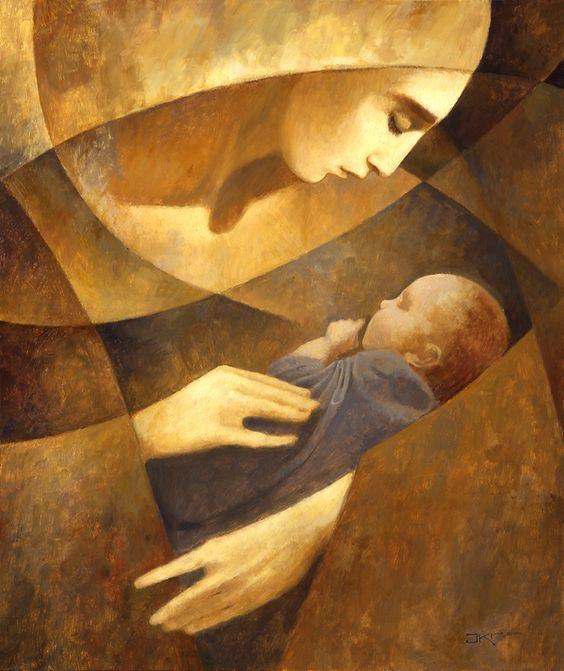
We will remember Mary’s fear and the angel who calmed her. We will remember her confession of faith in the God who sent the Holy Spirit to “overshadow” her. And, yes, we will always let Mary lead us to the wondrous gift of the Christ Child as she gently cradles him in her arms — with Bethlehem’s star shining over him, and the joyous song of the angels . . .04E87215-AC50-4CC9-B2F4-6612E56D0CB9

“Glory to God in the highest,
And on earth peace, goodwill toward all!”

 
*Many thanks to Darlene Flaming for sharing “Mary’s Spirit Song” with me.


Activism, Art, Community activism, Creating, Creativity, Injustice, Inspiration, Justice, Walls

Gift of Inspiration

F6006A95-1C6E-46B1-8C44-FE428C74D81C

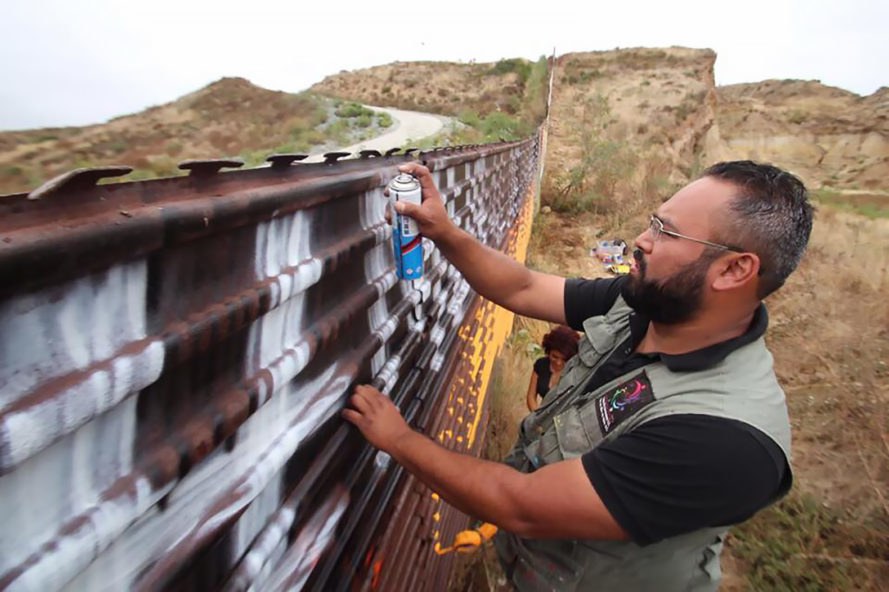
Sometimes I am inspired by the strangest things. This time the inspiration centers around Mexican-born, American-educated artist Enrique Chiu. While the Trump administration remains intent on separating us from our Mexican neighbors with a border wall, Enrique Chiu is leading a cadre of bi-national volunteer artists to paint a mile-long mural on the border fence. The reason? To celebrate unity and peace. Their intent is to turn the fence from a dividing wall into a work of art that spreads a message of hope to families that cross the border.

Enrique Chiu calls the project, “The Mural of Brotherhood” (and “Sisterhood” emphasis mine), and enlisted more than 2,600 volunteers to paint uplifting messages on the Mexico-facing side of the U.S.-owned fence. The goal is to create an artistic riposte to Trump’s nationalist and anti-immigrant politics.

30233B1A-840D-46C0-8705-990FF3424D4DChui has a very personal motivation for the project. When he was eight, he crossed that border with his mother and lived in Los Angeles for a year without legal status. He grew into a renowned artist and envisioned this project, which he dedicated “to all those people who are looking for a better life. Who take enormous risks. Or those have been deported and are separated from their families.”

That inspires me. Creative gifts used to make a statement; Volunteer work offered to encourage; Personal conviction making a statement about unity, peace and justice . . . through an in-your-face act of resistance to divisive, oppressive policy. 

Godspeed, Enrique. May God bless the gift of inspiration you share.


F9FA5D3C-53F0-4043-8A72-F9E2D63F7349

On another note, please pray for me as I look toward my kidney transplant currently scheduled for November 12th at Mayo Clinic in Jacksonville, Florida. I am so grateful that you are walking with me on this journey that often felt so frightening. Your thoughts and prayers mean so much. If you would like to rea the story of my illness, please visit the Georgia Transplant Foundation’s website at this link:

://client.gatransplant.org/goto/KathyMFindley

“Go Fund Me” page is set up for contributions to help with the enormous costs related to the transplant, including medications, housing costs for the month we have to stay near the transplant center, and other unforeseeable costs for my care following the transplant. If you can, please be a part of my transplant journey by making a contribution at this link

https://bit.ly/33KXZOj


Activism, Awakening, Brokenness, Christian Witness, Community activism, Compassion, Contemplation, Hope, Immigration, Injustice, Introspection, Justice, Ministry, Mysticism, Politics, Reflection, Repair the world, Social justice, Tikkun Olam, Violence against women and children

What does the world need?

256F00BB-10F5-4D89-93E1-FD4534BFCD0F
“To repair, heal the world” by artist and calligrapher Michael Noyes http://www.michaelnoyes.com/gifts/religious/jewish-judaica/tikkun-olam-to-repair-heal-the-world

What does the world need?

What do I have to give in a broken world? 

I have asked myself these questions before — many times before. I have asked these questions when teaching classes and writing my blog. I have asked these questions in a sermon — actually multiple sermons. So one might expect that, through my sermon preparation through Biblical study and other research, I might have found an answer by now. I have not. Because my finding the answer is as complicated as the myriad places of brokenness i see in the world around me.

Of course, I have to pay attention to the image of a hungry child, a refugee family at the border, entire African villages that subsist without clean water, the violent streets in cities across the United States, the mother protecting her children from abuse and herself from domestic violence, racially motivated hate crimes that terrorize, the climate crisis that to some is so real and to others just a hoax, the active shooters that have terrified school children and threatened life at many other places where people are vulnerable. I can continue this list into perpetuity.

But then I have to acknowledge the more insidiously evil side of the world’s brokenness — not the actual broken places, but the injustices that create them. I have to be woke to the societal and political forces of greed that deny complicity in the oppression of the most vulnerable among us. 

So when I ask myself the question, “What do I have to give in a broken world?” I am really asking if I will: 1) personally tackle a person’s specific need; 2) seek radical change of the societal and political forces that cause oppression; 3) become both a political activist and a compassionate hands-on Samaritan; or 4) engage in a contemplative life by getting in touch with the mystic inside that prays and longs for an end to every form of brokenness.

If I were a mystic, if could pray away the brokenness, I would most assuredly enter my prayer closet and do so. Admitting to being a mystic, though, is slightly uncomfortable. I’m not completely sure what a mystic is or what a mystic does. And isn’t being a mystic reserved for monks and nuns? 

Richard Rohr is my go-to person on the duality of action and contemplation. One can find in his meditations —every day — the inseparable link between our compassionate acts and the inner spiritual work that drives us. Matthew Fox writes:

Deep down, each one of us is a mystic. When we tap into that energy we become alive again and we give birth. From the creativity that we release is born the prophetic vision and work that we all aspire to realize as our gift to the world. We want to serve in whatever capacity we can. Getting in touch with the mystic inside is the beginning of our deep service.

“Our gift to the world,” he writes. And all around that “gift,” he lifts up prophetic vision, the energy to come alive, touching our inner mystic and engaging in deep service to people and places of deep need. I can never broach this subject of a broken world without revisiting the Jewish concept known as Tikkun olam – “repair the world,” that manifests itself in acts of kindness performed to perfect or repair the world. The phrase — found in the Mishnah, a body of classical rabbinic teachings — is often used when discussing issues of social policy, insuring compassionate remedies to those who may be at a disadvantage.

As for me . . . I really do want to touch my inner mystic, to enter into a silent, deep inner space that compels me to serve humanity. I also want to enter a place of tikkun olam. I want to repair the world and tangibly care for the persons who have need. Is it even possible to do both? Isn’t it imperative for a follower of Jesus to do both? Is it not because of the hope of the Good News in Christ that I must be about ministries of compassion and justice?

It seems pretty clear when reading the words of Jesus that caring for broken persons in a broken world is most certainly a compassionate imperative. 

When the Son of Man comes in his glory, and all the angels with him, then he will sit on the throne of his glory. All the nations will be gathered before him, and he will separate people one from another as a shepherd separates the sheep from the goats, and he will put the sheep at his right hand and the goats at the left. 

Then the king will say to those at his right hand, “Come, you that are blessed by my Father, inherit the kingdom prepared for you from the foundation of the world; for I was hungry and you gave me food, I was thirsty and you gave me something to drink, I was a stranger and you welcomed me, I was naked and you gave me clothing, I was sick and you took care of me, I was in prison and you visited me.” 

Then the righteous will answer him, “Lord, when was it that we saw you hungry and gave you food, or thirsty and gave you something to drink? And when was it that we saw you a stranger and welcomed you, or naked and gave you clothing? And when was it that we saw you sick or in prison and visited you?” 

And the king will answer them, “Truly I tell you, just as you did it to one of the least of these who are members of my family, you did it to me.”

— Matthew 25:31-40 New Revised Standard Version (NRSV

It’s just downright confusing and complex. Bottom line is this: I have no idea how to repair the world or how to get in touch with my inner mystic. But I also do not want to be permanently consigned to the goat-group mentioned in this Gospel text! I would rather struggle to figure out what I must do to care compassionately for my brothers and sisters and to get in touch with the contemplative mystic that makes me come alive.

Sound advice comes from a plethora of good and wise people. This time Howard Thurman gets the last word:

Don’t ask what the world needs. Ask what makes you come alive and go do it, because what the world needs is people who have come alive.

May God make us people who have come alive. Amen


F9FA5D3C-53F0-4043-8A72-F9E2D63F7349

On another note, please pray for me as I look toward my kidney transplant currently scheduled for November 12th at Mayo Clinic in Jacksonville, Florida. I am so grateful that you are walking with me on this journey that often felt so frightening. Your thoughts and prayers mean so much. If you would like to read the story of my illness, please visit the Georgia Transplant Foundation’s website at this link:

://client.gatransplant.org/goto/KathyMFindley

“Go Fund Me” page is set up for contributions to help with the enormous costs related to the transplant, including medications, housing costs for the month we have to stay near the transplant center, and other unforeseeable costs for my care following the transplant. If you can, please be a part of my transplant journey by making a contribution at this link

https://bit.ly/33KXZOj

Activism, Bravery, Calling, Challenge, Christian Witness, Compassion, Courage, Gun violence, Hope, Immigration, Injustice, Justice, Politics

A Prophetic Voice

18785EE9-BE62-4CB7-8649-C832661BB848

There was never a time when God’s people needed a prophetic voice more than in these days. We keep hearing the phrase, “children locked up in cages,” and we continually feel righteous anger rising up within us. At the same time, we nurse a sense of hopelessness that holds us captive. 

We ask, what has happened that has created the environment in which we now live? How do we respond to this toxic environmental of racial division, harsh words and name-calling? Why is there such a blindness to gun violence? Wh is white supremacy now acceptable? When did we stop caring about the lives of immigrant families who flee for safe haven to our country? How did it happen that hate and meanness has all but replaced love and kindness?

As we watch these things happen, we recognize that voices of reason give silent ascent to the evils of the day as our leaders fail to stand for the values we hold dear. Where is their courage? Where is their ability to lead and govern? Where is their willingness to speak truth and champion change? Why are self-proclaimed people of faith giving permission for words and acts of racism, xenophobia, misogyny, and just plain out hate?

And as for us — the people of faith who see the ills of our world so clearly — where is our prophetic voice, and when and where will we use it? Yes, we may be feeling the kind of hopelessness that breeds apathy and inaction. That feeling is normal when evil looms large over us and when the wrongs and the injustices we observe far outweigh what is right and just. We are understandably overwhelmed with all that is happening in these challenging days:

The president is escalating his racist attacks against everyone from women of color in Congress to the people of Baltimore.

Attorney General William Barr is bringing back the federal death penalty.

The Trump administration wants to ban new asylum requests and new refugees, closing America’s doors to families fleeing violence and seeking a safe place of refuge.

And almost constantly, Trump’s allies on the religious right, people who call themselves Christians, continue cheering him on, constantly twisting the Gospel to help re-elect him.

It is no accident that these actions came at us all at once. The president and his allies think that if he does enough hateful things all at once, they can overwhelm and silence us. What they cannot seem to understand is that, as God’s people and as followers of Jesus Christ, we are not listening to their message of fear and hatred. Instead, we hear the voice of God proclaiming a call for justice, mercy and compassion. We are listening to Christ’s message of hope and love, and that is our clarion call to act.

Of course, there are so many things we cannot make happen, so many wrongs we cannot right. Many of the remedies for the evil that assails us are out of our hands. Yet, we must not feel disempowered. Though we may feel that we have no recourse and that there is simply nothing we can do to create real change, we must remember that our voices hold a certain power, the power of the Spirit of God. Words are powerful tools. There is deep wisdom in the quotation, “The pen is mightier than the sword.” 

As for me, I pray that God will grant me a prophetic voice, and that with boldness, courage and perseverance, I will use my voice . . . 

To speak truth to power through constant letters, phone calls and messages to members of Congress and to the President. 

To confront those who maintain silent ascent to the evils happening at our Southern border. 

To challenge a president who speaks ill of people, who demonizes his enemies, who acts with blatant disregard for humanity and who ignores the suffering of the migrant families he has abused.

And to speak with deep compassion and caring to all who suffer injustice, oppression and harm.

Finally, I pray for my brothers and sisters of faith, that God will grant a prophetic voice, and that with that voice, you are able to speak God’s message of Good News with courage, boldness and perseverance. 

At times, words find their most powerful expression in music. To that end, I have included the following hymn text, which is actually a prayer. Please use it with my permission in any way that is empowering to you.


God, Give Us a Prophetic Voice

God, give us a prophetic voice that speaks of harm and pain;
A voice that claims injustice wrong, that calls the hurt by name.
God, give us a courageous voice that speaks against all wrong;
A voice that sees when harm is done and sings oppression’s song.

Our Mother God, we seek your grace to offer words of life,
To reach our hands toward hurting hearts who live in endless strife.
We ask for courage to persist when violence owns the day,
When children live in fear and want, protect them, God, we pray.

Empower us for good, we pray, that justice may increase;   
Ennoble us to speak your Word that pain may find release;
Give us a voice to speak your truth in places of despair;
Grant wisdom, God, and make us bold with courage, is our prayer.

God, give us now compassion’s voice that we might offer peace;
A voice that comforts through the night, that bids the darkness cease.
God, help us find our voice again when silence words erase,
When evil overtakes the words of righteousness and grace. 

Words: Kathy Manis Findley, 2019
Hymn Tune: Kingsfold
Meter: 8.6.8.6.
Source: English Traditional; English Country Songs, 1893
Copyright: Public Domain


Child protection, Children, Compassion, healing, Holy Spirit, Hope, Immigration, Justice, Maren Tirabassi, Repair the world, Spirit wind

Brooding

1A4072F7-B30A-43DB-9F51-A5AFBF363C94

My friend and sister blogger, Maren, never fails to inspire, convict or challenge me. I look forward to her blog posts, knowing that by the end, I will find myself in a gasp, or at least a sigh. She is gifted at helping her readers stay in touch with the current angst of the times, the events and realities of our world. This is her latest post:

My little hand holds (and not the great world)
the small shining of shook foil

and there is no beauty that I see,
only the blankets on children detained —
alone and frightened, cold,

and without care,
without — O you grand and broken God,
toothpaste and soap,

and parents,

without justice, compassion,
but not without hope,
because that alone, hope

is never spent, but lights the western sky
as night falls
on the long walk from the south,
even if dimly, touches
with fingers a rim of east
every morning, every detention center.

Hope brought them here
to the terrible inhospitality
that smears
all this country ever thought to be.

And it is left to us and the Holy Spirit
to brood
over those who are lost,
and bend the world
so that the living children
might someday be found
by bright wings.

And here is where it grabbed my heart . . .

What does it mean for me to join with the Holy Breath of Life “to brood over those who are lost, and bend the world?” What would that look like? How do I do it? Does it mean to “brood” over the lostness of our world and call forth life?

What a need that is! How desperately we need to bend the world toward mercy and justice. To lift up the children who sleep on cold concrete floors. To lift them high above the world’s cruelty to the place of “bright wings!”

May God help us to comprehend the brooding Spirit and her open arms. And may she reach down to grab us and hold us up inside the wind that heals.


Maren C. Tirabassi served as local church pastor in the United Church of Christ for thirty-seven years in Massachusetts and New Hampshire.  She is the author or editor of twenty books. Visit her blog at:
https://giftsinopenhands.wordpress.com/2019/06/26/prayer-for-the-immigration-crisis-an-homage-to-gerard-manley-hopkins-gods-grandeur/

Activism, Calling, Christian Witness, Community activism, Compassion, Immigration, Justice, Politics, Refuge, Social justice

Good Questions!

AE7A6D30-3DF9-42FF-A9CD-CFE6305E4E7E

I read a very disturbing article today. Here is a part of it:

Attorneys who visited a Border Patrol processing center in McAllen, Texas, as part of an inspection found that officials there had been illegally jailing a sick, prematurely born one-month-old infant and her 17-year-old mother for days, BuzzFeed News reports. This same facility, known as Ursula, was last year called “the ‘epicenter’ of the Trump administration’s policy that has separated thousands of children from their parents” by an official with the Department of Homeland Security.

“You look at this baby,” said volunteer Hope Frye, “and there is no question that this baby should be in a tube with a heart monitor.” Instead, the tiny child was wrapped in a sweatshirt and was reportedly “weak and listless.” Her mom, still weak from her emergency C-section in Mexico, was in a wheelchair and hadn’t been able to sleep due to pain.

They shouldn’t have been there in the first place. “Under federal law, minors are required to be released from Border Patrol custody within 72 hours to officials in the Office of Refugee Resettlement after they are determined to be unaccompanied. Both the 17-year-old mother and her 1-month-old baby are considered unaccompanied minors.”

The Washington Post last month reported that hundreds of children “have been with the Border Patrol for longer than 72 hours, and another official said that more than 250 children 12 or younger have been in custody for an average of six days.” Who knows how much longer this mom and infant would have been in custody, had attorneys and others not intervened? (From Daily Kos)

Good question! How much longer would they have been held in the custody of officials who obviously had no regard for their well being? 

Good question! Why is this horrendous treatment of refugees tolerated in our country?

Good question! Has this nation become a nation of cruelty to those coming through our borders and how did we get there?

Best question! What can you and I, as persons called by God of grace and lovingkindness, do to help bring an end to this atrocity?

There is obviously no easy answer and no quick fix, but those who are suffering need a quick fix. They need for us to stand up and help reclaim our nation’s position as a welcoming, compassionate nation. In these days, I wonder what the symbol of Lady Liberty means to us? 

A gift from the people of France, Lady Liberty has watched over New York Harbor since 1886, and on her base is a tablet inscribed with words penned by Emma Lazarus in 1883:

Give me your tired, your poor,
Your huddled masses yearning to breathe free, The wretched refuse of your teeming shore. Send these, the homeless, tempest-tossed to me, I lift my lamp beside the golden door!

Most importantly, we must ask this question: Can we escape from the admonitions in Holy Scripture? Can we ignore the call of Jesus to love our neighbor as we love ourselves? (Luke 10:27) Can we ignore these warnings?

You shall also love the stranger, for you were strangers in the land of Egypt.
— Deuteronomy 10:19

The alien who resides with you shall be to you as the citizen among you; you shall love the alien as yourself, for you were aliens in the land of Egypt: I am the Lord your God.
— Leviticus 19:34

Cursed is anyone who withholds justice from the foreigner, the fatherless or the widow. Then all the people shall say, ‘Amen!’
— Leviticus 27:19

. . . I was a stranger and you welcomed me.
— Matthew 25:31-46

Whoever has two coats must share with anyone who has none…
— Luke 3:11

Bring good news to the poor…release to the captives…sight to the blind…let the oppressed go free.
— Luke 4:16-21

In light of our faith and the counsel of Holy Scripture, each of us must answer the critical question: “What must I do about this?” These are only a few of the actions we might undertake:

Hold congressional representatives accountable and constantly hold up before them the “more excellent way.” Phone calls, letters, emails, visits — not just once, but continually. 

Stay aware of the credible news reports of treatment of refugees at the border. Take that information — every time — to your representatives.

Discover ways that your faith community might partner with faith communities near borders by providing clothing, personal items, blankets, towels, cash. Ship to them whatever they might need for their care of refugees.

If possible, travel to the border nearest to you and see what is happening first hand. When you have seen and heard the voices of people seeking refuge, your life will be forever changed, your heart will know genuine compassion and your impulse to intervene will be magnified.


I certainly do not know which of these actions might be possible for you. But I do know two things. I know that this issue is fluid and current, and that the raid sites are throughout the U.S. Just this minute I received this information in my news feed:

ICE is set to begin immigration raids in 10 cities on Sunday. Last year, the Executive Office for Immigration Review announced that it had begun tracking family cases filed by the Department of Homeland Security in 10 immigration court locations: Atlanta, Baltimore, Chicago, Denver, Houston, Los Angeles, Miami, New Orleans, New York and San Francisco. (CNN)

I know also that our faith calls us to compassion, kindness and a welcoming spirit. We can respond to that call in whatever ways seem good and right.

I pray that God will make it so.

Absolom, Bible, Church, Darkness, Daybreak, Family, Grace, Justice, Preaching, Sexual abuse, Tamar, Violence, Women, Worship

“Think Justice!”

DFDDBB19-8E9F-4852-9804-4F97B176E9A3

A sermon preached on September 30, 2018 at the First Baptist Church of Christ, Macon, Georgia

Let the words of my mouth and the meditations of our hearts be acceptable in your sight, O Lord, our hope and our refuge. Amen.

I

In July, I received a note from Ellen. She is 22-years-old, a college graduate with honors, a strong, confident young woman. This is what she wrote:

“I love all of you so much. None of this would be possible without you. My time with you had such an enormous impact on who I am, and I can’t thank you enough for everything you’ve done to get me to this point. You’re my family forever and always.    Ellen.”       (Written on her wedding day, July 8, 2018)

Thirteen-year-old Ellen came to us at Safe Places, an organization where my staff and I cared for women who had been abused, children exposed to violence, and young girls who had escaped the evil grip of human trafficking. When we first met Ellen, she was silent, lifeless, angry — hurt deeply in her soul. But after a few months, Ellen’s vivacious personality began to emerge. Slowly, she opened up her hurt place and let healing in. 

Ellen was eventually strong enough to be a part of our Princess Program, where girls who had experienced violence spent the summer learning and sharing, and discovering their inner courage, resilience, and sacred worth. After the summer, we celebrated the girls at the Arkansas Governor’s Mansion with a grand ball, a very grand ball. 

When they put on their sparkling gowns, and the most glittering shoes I had ever seen, they believed — for at least one magical night — that truly they were princesses. Our wise staff taught them that even princesses can be violated, but they already knew that. They had lived through the humiliation of verbal abuse, the pain of physical and sexual abuse, and the long-lasting effects of emotional abuse. For many of them, it happened in the one place that should have been safe — in their homes.

II

Throughout history, we encounter stories of violence. Such is our story today, a story about how violence devastates Princess Tamar, King David’s daughter. Sometimes historians, biblical expositors and even story-telling preachers come upon stories that are hard to tell. This is one of those stories. It’s probably not included in any anthology of  “The World’s Most Inspiring Bible Stories.” It’s a story we don’t tell to our children. We might prefer to skip this story altogether. Theologian, Phyllis Trible, would call it a text of terror. And yet, it is the word of the Lord, and, as such, it offers some truths, some warnings, some questions, and maybe even a smidgen of grace.

So even though we find trouble in this text, God might just whisper, and gently nudge us to listen and to let the story reveal some important ways God calls us to do justice. 

Listen for the whisper of God in the reading of sacred scripture, 2 Samuel 13: 1-22.

In the course of time, Amnon son of David fell in love with Tamar, the beautiful sister of Absalom son of David. Amnon became so obsessed with his sister Tamar that he made himself ill. She was a virgin, and it seemed impossible for him to do anything to her.

Now Amnon had an adviser named Jonadab son of Shimeah, David’s brother. Jonadab was a very shrewd man. He asked Amnon, “Why do you, the king’s son, look so haggard morning after morning? Won’t you tell me?”

Amnon said to him, “I’m in love with Tamar, my brother Absalom’s sister.”

”Go to bed and pretend to be ill,” Jonadab said. “When your father comes to see you, say to him, ‘I would like my sister Tamar to come and give me something to eat. Let her prepare the food in my sight so I may watch her and then eat it from her hand.’”

So Amnon lay down and pretended to be ill. When the king came to see him, Amnon said to him, “I would like my sister Tamar to come and make some special bread in my sight, so I may eat from her hand.”

David sent word to Tamar at the palace: “Go to the house of your brother Amnon and prepare some food for him.” So Tamar went to the house of her brother Amnon, who was lying down. She took some dough, kneaded it, made the bread in his sight and baked it. Then she took the pan and served him the bread, but he refused to eat.

“Send everyone out of here,” Amnon said. So everyone left him. Then Amnon said to Tamar, “Bring the food here into my bedroom so I may eat from your hand.” And Tamar took the bread she had prepared and brought it to her brother Amnon in his bedroom. But when she took it to him to eat, he grabbed her and said, “Come to bed with me, my sister.”

“No, my brother!” she said to him. “Don’t force me! Such a thing should not be done in Israel! Don’t do this wicked thing. What about me? Where could I get rid of my disgrace? And what about you? You would be like one of the wicked fools in Israel. Please speak to the king; he will not keep me from being married to you.” But he refused to listen to her, and since he was stronger than she, he raped her.

Then Amnon hated her with intense hatred. In fact, he hated her more than he had loved her. Amnon said to her, “Get up and get out!”

“No!” she said to him. “Sending me away would be a greater wrong than what you have already done to me.”

But he refused to listen to her. He called his personal servant and said, “Get this woman out of my sight and bolt the door after her.” So his servant put her out and bolted the door after her. She was wearing an ornate robe, for this was the kind of garment the virgin daughters of the king wore. Tamar put ashes on her head and tore the ornate robe she was wearing. She put her hands on her head and went away, weeping aloud as she went.

Her brother Absalom said to her, “Has that Amnon, your brother, been with you? Be quiet for now, my sister; he is your brother. Don’t take this thing to heart.” And Tamar lived in her brother Absalom’s house, a desolate woman.

When King David heard all this, he was furious. And Absalom never said a word to Amnon, either good or bad; he hated Amnon because he had disgraced his sister Tamar.

III

Indeed, there is trouble in this disturbing text. We discover it when we eavesdrop on Princess Tamar — daughter of King David, sister of Absolom, and half sister of Amnon. We learn that Amnon conspired to be alone with her. His sly servant came up with a plan, and she ended up in Amnon’s room. After hurting her, he rejected her harshly. He called for his servant: “Get rid of this woman! Banish her from my presence! Bolt the door after her!” 

He would not even use her name.

Tamar collapsed outside the door, plunged her hand into the cooling ashes of the fire, and rubbed the ashes into her hair. As she staggered away, she tore her richly embroidered gown as a sign of her deep-down despair. Even princesses can be violated!

King David was angry, but did nothing either to punish his beloved son or to comfort his despairing daughter. There was no consolation from father to daughter, not a single trace of compassion.  And her mother is silent.

Near the end of the story, we stumble upon a tiny touch of grace when we learn that brother Absolom takes Tamar into his home. But she is no longer a princess of royal lineage. She fades into oblivion and lives out her days as a refugee in her brother’s house, a desolate woman who will never marry and bear children. But did Tamar fade into oblivion? 

I don’t think so! Tamar’s voice was not silenced. She told someone her story, and that someone heard her, and remembered her story, and re-told her story, and told it at the right time to the right person so that this story made its way into our holy scripture. Thousands of years later, we do know Tamar’s name. Across all barriers of history and culture, and if we imagine, we can hear her speak across the ages:  

“I lost my life that day. Here in my brother Absolom’s house, I am a prisoner. I will never have children that will bear my name through the generations. I will not know that deepest of joys.”

IV

So just keep silence, King David!  Stay silent, mother of Tamar! Protect your violent son at all costs. 

What a deadly picture of family violence — the violence of a brother overpowering his sister, and emotional violence because both parents remained silent.

We might ask: where were the voices of her parents? We cannot help but wonder how Tamar’s father and mother might have responded differently. But this royal family decided to keep silence to protect Amnon.

In her sermon, “The Silences We Keep,” Rev. MarQuita Carmichael Burton speaks of “conspiratorial silence.” Reflecting on Tamar’s story, Rev. Burton speaks these words:

Reclaim our voices, shatter the façade of the deadly silence we keep. . .

We must trade in our torn robes and ashes for a bull horn and a listening ear and tell the truth of our story, so that our souls, minds, bodies and the people we say we love might be healed. 

As former silenced victims choose to no longer acquiesce to the demands of the clan elders and refuse the false healing promised by our conspiratorial muteness,  we move forward to reclaim freedom and wholeness on our terms, because we need it and so does the village.

V

In the end, it’s all about justice, and the Prophet Isaiah knew a lot about that.

Break every yoke!  Then your light shall rise in the darkness! 

You shall be called the repairers of the breach!

We have seen a breach, and from the abyss of that breach, the “Me Too” movement erupted. The movement is a wonder to behold, and perhaps the cry of “Me Too” is precisely where we find the movement of God. Secrets held for decades came out of the darkness into the light, and grief-filled silences found words. Tears flowed freely from hearts that held on far too long to painful stories.

But I wish that no person had ever needed to cry out “MeToo.” That no one had ever endured the horrifying violence that caused them to live with a silence and secrecy that held such power over their lives. 

I wish they had never felt the grief that tormented them in the voiceless spaces of their spirits. 

I wish that Tamar had always been a princess — loved, cherished, protected by her parents. 

But she was not. And so many of our sisters and brothers and neighbors and friends are not. 

We may not always know who they are, but perhaps it is most important for them to know who we are, a people committed to justice.

VI

Dear people of First Baptist Church of Christ, I marvel at the many and mighty ways you do justice — creating beloved community across racial and cultural and ethnic divides, feeding the hungry, caring for the poor, seeing the sacred worth of every person. 

Can we also find ways to do justice within families? One in four of us in this sanctuary have experienced — or are currently experiencing — family violence. 

Among all the things that doing justice is, it is also being healers of the wounds that happen in the prisons of family secrecy. What does that mean exactly? 

I believe it means finding healing and gentle ways to give voice to a family’s secrets and silences. 

It means being ever a kind listener and never a judgmental voice. 

It means making sure that church is a safe and sacred space. 

It means keeping a watchful eye, always, over children, teaching them to be safe, not only from strangers, but from people they know and trust. 

It means being aware of the invisible wounds that others carry, and reaching out with tenderness that brings healing. 

If Jesus were among us today, I imagine him speaking justice to the unconscionable abuse of power that causes violence. He would call out husbands who abuse their wives, brothers who hurt their sisters, parents who harm their children.  Jesus might look into homes and cry out, “Woe to you!” 

And then, in his gentle, loving way, Jesus would reach out to the those who suffer violence, take their hands, and speak hope to despair. 

Jesus is not physically among us. but he left us in charge. So when we fail to seek justice in every place where abuse happens, we confine him. Joseph B. Clower, Jr. expresses this most eloquently in the final lines of his book, The Church in the Thought of Jesus:

If the indwelling Christ is not confined, then the Church’s eyes flow with his tears, her heart is moved with his compassion, her hands are coarsened with his labor, her feet are wearied with his walking among men [people].

 When we accept this weighty call and this daunting responsibility, the prophet Isaiah might call us repairers of the breach!

VII

So let’s end our story . . . Yes, Princess Tamar lost her royal status. But the final word in this story belongs to the brother who loved and esteemed her, and who honored her. In the chapter following our text, we learn that Absalom was the father of three sons and a beautiful daughter he named Tamar, in honor of his sister.  

Can you imagine Tamar taking her infant niece into longing arms that never expected to cradle a child who would carry her name? 

Can you imagine her full heart as she envisions the future of Princess Tamar the Second, daughter of Absalom, granddaughter of King David, niece of Princess Tamar the First?

What a surprise from God — anointing Tamar’s wounds with a holy, healing balm! 

And this is the very foundation of our Christian hope: the faith, the conviction, the assurance, the certainty that when Tamar was crying, God was listening. 

People of God, we must repair the breach and seize this holy task: covering survivors of family violence with the compassionate cloak of justice, confronting violence wherever it casts its shadow, following God into every place where justice must overcome oppression.

On the campus of Philander Smith College in Little Rock, Arkansas, there is a building that faces the interstate. On that building is a huge sign declaring a strong, prophetic message to over 100,000 motorists traveling past it every day. The sign reads “Think Justice!” But it means so much more! 

It means longing for justice, praying for justice, insisting upon justice — persisting, prevailing, creating — doing justice, breathing justice — in families, in communities, and to the ends of the earth. 

Then the mighty waters of justice will roll over us, and we will wade together in ever-flowing streams of righteousness. Amen.