Bible, Comfort, Despair, Faith, God's Faithfulness, God's presence, grief, healing, Heartbreak, Hope, Isaiah, Pain, Psalms, Skies, Stars, Suffering

The Hands that Made the Stars

7AA0FE34-BEE8-4CFC-AEF3-1E8D99948530
Comfort in the magnificent Arkansas skies. Photography by Steven Nawojczyk.

As I write on this day, I am aware that many friends are in the throes of darkness and despair. Some are facing devastating medical diagnoses. Some are yearning to have a child and are going through difficult medical procedures. Some are grieving for a family member in trouble. Some are waiting with hope for a cure for a disease that is bringing them to their knees. Others are enduring harsh medical treatments, hoping their lives will be saved. Many of them are at the point of losing all hope.

It hurts me deeply every time I am at a loss for comforting words. A little part of my heart breaks because I know I cannot “do something” to ease the suffering. And so I search for my own comfort as I search for ways to hold my friends in the light. As always, I am led to Scripture, not for easy answers, miraculous cures, or an instant panacea. I peek into the Bible to find words that will lift up hope in the middle of dark days and darker nights.

Often the words I find point me to the skies, as if gazing into an expanse beyond imagination might open my eyes to a radiant and holy hope. In truth, the words of Scripture do point me to hope. 

From the Prophet Isaiah:

Look up into the heavens. Who created all the stars? He brings them out like an army, one after another, calling each by its name. Because of his great power and incomparable strength, not a single one is missing. O Jacob, how can you say the LORD does not see your troubles?

Have you never heard? The LORD is the everlasting God, the Creator of all the earth. He never grows weak or weary. No one can measure the depths of his understanding. He gives power to the weak and strength to the powerless.

— Isaiah 40:26-29

From the Psalmist:

When I look at the night sky and see the work of your fingers — the moon and the stars you have set in place — what are mere mortals that you should think about them, human beings that you should care for them?

— Psalm 8:3-4

And so whoever you are, whatever pain you are carrying, know that the hands that made the stars are holding your heart.

Faith, God's Faithfulness, Heartbreak, Hope, Prayer, Unanswered Prayer

Unanswered Prayer

EE073AB1-5433-429E-90B2-4400B2C20C2BUnanswered prayer leaves me disconsolate. At times,  I have offered pleas to a God that seemed absent. On difficult days, I lifted up my longings to a God who was often silent. There were times when I languished in God’s silences and lamented as one who has no hope. Sometimes I cried out as one whose faith is spent.

There you have it: my candid and disturbingly honest confession about unanswered prayer. I could offer excuses for it. Or I could try to minimize the reality that this is a serious lapse of my faith. I could try to explain how, through the years, I have known trauma and trouble, as I hope for your sympathy. Or I could rest comfortably in your commiseration with me, together admitting that God is indeed absent, silent and uncaring.

But to believe those things about God would harm my faith and yours.

Good news: I am not alone in my feeling of abandonment. Remember David, who in his darkest hour, felt that God was absent:

How long, Lord? Will you forget me forever?
How long will you hide your face from me?  (Psalm 13:1)

And hear also these words from the Psalmist that bring to light a sense of abandonment by God:

My God, my God, why have you forsaken me?
Why are you so far from helping me, from the words of my groaning?
O my God, I cry by day, but you do not answer;
and by night, but find no rest.
   (Psalm 22:1-2)

So back to unanswered prayer.

To buy in to a “silent God” theology would be to deny that God has, in fact, sustained me on every step of my faith journey. When God seemed most absent, God’s presence in time became most clear. When I felt that God had abandoned me, I soon felt embraced by God’s strong, grace-filled hands. When I cried out, “My God, why have you forsaken me?” I found God very near, saying to me: “I will never leave you or forsake you.”  (Isaiah 41:10; Hebrews 13:5)

Most of all, I discovered that unanswered prayer, in the throes of deep angst, creates a stronger faith and a more abiding hope. I love the hymn, “Spirit of God, Descend Upon My Heart” especially this stanza:

Teach me to feel that thou art always nigh;
Teach me the struggles of the soul to bear.
To check the rising doubt, the rebel sigh,
Teach me the patience of unanswered prayer.*

Amen.

*Hymn Text: George Croley, 1854, public domain)

Please take a few minutes to hear this beautiful hymn In the video below:


Bitterness, Comfort, Despair, Faith, God's Faithfulness, grief, Holy Spirit, Hope

“Therefore, I have hope . . .”

2E96D7A1-A558-4147-B7E0-F61BFB145AF7
The quiet beauty of Arkansas. Photo by Steven Nawojczyk.

This I call to mind, and therefore I have hope.

I have been without hope at times, disconsolate, forsaken, wondering why my faith seemed to fail me. My struggle overcame my hope even as I listened desperately to hear the Spirit of hope. I heard nothing. Day after day, in the long dark night of my soul’s anguish, I heard nothing.

That’s the thing about hope. She doesn’t shout our her presence. She doesn’t get your attention in a loud, thunderous manner. Hope, it seems to me, is the quiet whisper of the Holy Spirit that goes beyond your conscious mind deep into the depths of your soul. That is the only kind of hope that works, the only kind of hope that can comfort us in times of affliction. The Scripture offers a promise in the book of Romans: “By the Holy Spirit you may abound in hope.” 

The prophet Jeremiah speaks in the book of Lamentations with words filled with devastating pain. Certainly Jeremiah was a man of abiding and genuine faith. Yet, he suffered. Although it may not be our understanding, Jeremiah understood his times of anguish to be at the hand of the God he served. In hearing Jeremiah’s words of lament, we hear his loss of hope. Listen to this prophet’s heart.

I am one who has seen affliction under the rod of God’s wrath; he has driven and brought me into darkness without any light;

against me alone he turns his hand again and again, all day long.

though I call and cry for help, he shuts out my prayer;

He has blocked my ways with hewn stones, he has made my paths crooked. He has filled me with bitterness . . . My soul is bereft of peace;

I have forgotten what happiness is; so I say, “Gone is my glory, and all that I had hoped for from the Lord.”

The thought of my affliction and my homelessness is wormwood and gall! My soul continually thinks of it and is bowed down within me.

But this I call to mind, and therefore I have hope:

The steadfast love of the Lord never ceases,  his mercies never come to an end; they are new every morning; great is your faithfulness.

“The Lord is my portion,” says my soul, “therefore I will hope in him.”

— Lamentations 3: 1-3; 8-10; 17-24 (New Revised Standard Version)

To reassure the prophet, God did not shout out a proclamation of new hope. There were no loud, boisterous declarations. Instead, the prophet calls to mind the mercies of God. And as he calls God’s faithfulness to mind, his soul speaks of hope.

If you are a long-time Baptist, you may have sung an old hymn that speaks of the quiet presence of hope. The hymn, Whispering Hope,* promises a gentle hope that comforts us in a whisper. Here is a portion of that hymn.

Soft as the voice of an angel breathing a lesson unheard,

Hope with a gentle persuasion whispers her comforting word:

Wait till the darkness is over, Wait till the tempest is done,

Hope for the sunshine tomorrow, after the shower is gone.

Whispering hope, oh, how welcome thy voice, making my heart in its sorrow rejoice.

— Septimus Winner, 1868

Hope with a gentle persuasion whispers her comforting word . . . To me, that sounds like the whisper of the Holy Spirit who, in our times of despair, in the times when we feel that we have lost all hope, brings her comfort, her assurance, her peace to us again and again.

May you hear the Spirit’s whisper when you need it most.

And may the God of hope fill you with all joy and peace in believing, so that by the power of the Holy Spirit you may abound in hope. (Romans 15:13)

Amen.


* If you would like to listen to a lovely arrangement of “Whispering Hope” sung by Hayley Westenra, or if you have not heard this hymn in a while, please visit this link: https://m.youtube.com/watch?v=zj3N9LE9FPs


Comfort, healing, Hope, Light, peace, Serenity

Deep Peace

F1E55829-D720-4AA8-95D8-4777BD7A8562Two of my dear family members are carrying a heavy weight in their workplace. I watch them struggle week after week, carrying oppressive burdens. Both love their work and are dedicated to it. Both speak well of their co-workers. Both take on more responsibility than they should. Neither of them see an end to the high level of work they must accomplish. I can sense their need for comfort and healing, for rest and peace.

I have wondered what the solution might be. What is it that could make their existence more tolerable? What is it that could mitigate their stress and ease their chaotic spirits?

I believe that their need is for peace. Not just run-of-mill, ordinary peace. But deep peace that goes down into the very depths of the tumultuous spirit. They need deep peace, even while trapped in the midst of chaos, even when the tasks before them are overwhelming.

Deep peace is what makes life tolerable, even if we find ourselves in the center of chaos. To be sure, in this life, in these days, we will know chaos. Chaos can come with work stress and overachieving. Chaos can come with hurtful relationships, with financial stress, with aging, with illness, with divorce, with abuse, addiction, violence in the home. Chaos is very painfully real. It engulfs us when we experience life trauma of any kind.

We need deep peace.

But acknowledging the need for peace is definitely not the same as being filled with it. How in the world does one find peace when all around things are falling apart? It’s a fair question. It’s a question many of us have asked when yearning for even a brief moment of peace.

So it’s worth asking yourself the question: what is it that swirls around my life and robs my peace? What chaotic frenzy am I facing every day? What turmoil assails my life and wounds my spirit?

I wish I could say that I have a no-fail solution. I wish that I could declare for you the end of turmoil and the advent of deep peace. I wish I could proclaim the definitive answer for you, and for myself. But I cannot. I can say what I always say, knowing that people who desperately need peace might hear just empty words. Still, this is all I have: the promise of Scripture and a heartfelt blessing.

Do not be anxious about anything, but in every situation, by prayer and petition . . . present your requests to God. And the peace of God, which transcends all understanding, will guard your hearts and your minds in Christ Jesus.

— Philippians 4:6-7 (New International Version)

Finding your own path to deep peace may be a challenging path, a journey of winding and confusing roads. But it is a journey out of turmoil, and it is a journey worth taking. It is a journey that leads to serenity and peace. And when you have found deep peace dwelling within your spirit, your soul will rejoice and finally find its rest. With deep peace, you will experience fresh signs of hope, a faith reborn and renewed, and a refreshing shower of grace, grace for the present moment and for the days to come.

With my hope and prayer that you will find deep peace, please accept the words of this Gaelic Blessing, a benediction of peace:

Deep peace of the running wave to you,
Deep peace of the flowing air to you,
Deep peace of the quiet earth to you,
Deep peace of the shining stars to you,
Deep peace of the gentle night to you,
Moon and stars pour their healing light on you,
Deep peace of Christ, of Christ,
Of Christ the light of the world to you,

Deep peace of Christ to you.

— A Gaelic blessing

I invite you to listen to this video* of a choral performance of John Rutter’s beautiful music set to the adapted text of this ancient Gaelic Blessing. It is performed by the Cambridge Singers and the City of London Sinfonia. Conducted by John Rutter.

* This video features stunning photography as well as two painted versions of “The Light of the World” by artist William Holman Hunt. 


Despair, Grace, grief, Heartbreak, Hope, life

A Life Breathtakingly Beautiful


C25B5F81-E091-4C5D-B357-414955E5AF53
Art by Darlene Gibson-Piper

Life can be tricky. Life is a living thing just waiting to grab you and pull you down, or so it seems at times. Bad things do happen to all of us. Misfortune can suddenly engulf our lives and leave us, any of us, in a heap on the ground, heads bowed low.

I know all too well the stark reality of being brought low, but when I find myself face down in the dirt, I always recall one of the most comforting passages of Scripture.

We are troubled on every side, yet not distressed; we are perplexed, but not in despair; Persecuted, but not forsaken; cast down, but not destroyed . . .

— 2 Corinthians 4:8-9 (King James Version)

At this time in my life, I am thankfully on the other side of a very serious illness. But the year 2014 was a nightmare year for me and for my family. I spent a good part of that year in the hospital, at times leaning very close to death’s door. Much of that year, I spent in a mental haze not even knowing the loved ones caring for me. I was often very afraid, but one thought came to mind again and again.

Here is the world. Beautiful and terrible things will happen. Don’t be afraid.
― Frederick Buechner, Beyond Words: Daily Readings in the ABC’s of Faith

So many people find themselves afraid and in despair. In the time it takes me to write this piece, five people in the U.S. will take their own lives. For every suicide, there will be 25 attempted suicides. Some people will suddenly and unexpectedly lose a job and plunge into financial ruin. Others will lose someone they love by death or divorce. Others will fall deeply into illness. Others will face the challenges of aging and lose their homes. Some will experience the terror of addiction. Every person — every person — will know the lowest depths of despair, an existence void of hope.

I love the writing of L.R. Knost. She is an award-winning author, feminist, and social justice activist, the founder and director of the children’s rights advocacy and family consulting group, Little Hearts/Gentle Parenting Resources, and the Editor-in-Chief of Holistic Parenting Magazine. Her writing is down to earth and uplifting, always filled with snippets of pure wisdom. This is what she writes about life.

Life is amazing. And then it’s awful. And then it’s amazing again. And in between the amazing and awful it’s ordinary and mundane and routine. Breathe in the amazing, hold on through the awful, and relax and exhale during the ordinary. That’s just living heartbreaking, soul-healing, amazing, awful, ordinary life. And it’s breathtakingly beautiful.

She is so spot-on about life, so thoroughly wise. She knows about muddling through the muck of life to the best part of it, the beautiful part of it. And that’s what we must do, muddle through until we get to the beauty. It is true that life doesn’t always get better. Sometimes the thing that breaks us down just lingers with us and keeps us on the lowest ground of desperation. Yet there is that life-giving, life-saving thing called grace, the gentle and persistent grace that is ever-present with us during every low season in life.

Here is the reality, the tried and true foundation of truth that keeps us moving forward after a difficult patch. Again, L.R. Knost describes it.

Life doesn’t always get better.
But you do. You get stronger.
You get wiser. You get softer.
With tattered wings you rise.
And the world watches in wonder at the breathless beauty of a human who survived life.

Going back to that wonderful passage in 2 Corinthians, we find this:

. . . We do not lose heart. Though outwardly we are wasting away, yet inwardly we are being renewed day by day. For our light and momentary troubles are achieving for us an eternal glory that far outweighs them all.

— 2 Corinthians 4:16-17 (New International Version)

This is, indeed, a soul-healing life, utterly beautiful during the good times, but still heart-breaking and frightening at other times. You and I will pick ourselves up from the dusty earth again and again. We will most certainly rise to our feet for another day. We will find the gentle, persistent grace that holds us upright. We will not lose heart. We will make it to the breathtakingly beautiful part of our lives. Count on it!

Change, Courage, Darkness, Fear, God's presence, healing, Heartbreak, Hope, Life pathways, Pain, Restoration, Uncategorized

Through the Fire

892264FE-E803-4E0E-B598-C7503D77F674Sometimes life hurts.
We suffer. We heal. We move on.
But sometimes life hits back. Harder.
Lethal in its cruelty.
Shattering us into a million glittering shards
of pain and loss and anguish.
And we suffer, too broken to heal,
to become what we once were.
— L.R Knost

How deeply I know that feeling of brokenness. I am personally acquainted — well acquainted — with the lethal cruelty that life can present. To heal the past requires that I pay close attention to the spiritual and emotional places within me in the present, to make sure I am healthy and whole right now. Only then will I find the strength to invite the pain of the past into my psyche so that I can face off against it.

I have learned through the years that it is not a good option to leave past pain where it is, to let it occupy the place within me it has claimed. This writing by L.R Knost is one of the best descriptions I have ever seen on healing from past pain.

Healing is not a straight and narrow road
that leads from darkness to light.
There’s no sudden epiphany to take
us from despair to serenity, no orchestrated
steps to move us from hurting to healed.
Healing is a winding mountain road with steep
climbs and sudden descents, breathtaking views
and breath-stealing drop-offs, dark tunnels
and blinding exposures, dead ends and
endless backtracks, rest stops and break downs,
sheer rock walls and panoramic vistas.
Healing is a journey with no destination,
because healing is the journey of every lifetime.

Indeed, “healing is the journey of every lifetime.” The reality is that the only way to heal from the pain of the past is to walk directly through the center of that pain in the present. Does it feel safer to just let the pain continue to smolder in the dark parts of myself? Of course it feels safer. It feels terrifying, in fact, downright terrifying.

But the dark places in me will never heal spontaneously. I have to conquer the fear and open up to the possibility that God’s Spirit can breathe life back into those embers of pain snd rekindle the fires of unhealed hurts. So as I sit cautiously at the very edge of the fires of past pain, I cannot help but recall the comforting words of the prophet Isaiah.

When you pass through the waters,
I will be with you;
and when you pass through the rivers,
they will not sweep over you.
When you walk through the fire,
you will not be burned;
the flames will not set you ablaze.

— Isaiah 43:2 New International Version (NIV)

And so many times, I have found deep comfort in singing the beloved hymn, How Firm a Foundation.

When through fiery trials thy pathway shall lie,
 My grace, all sufficient, shall be thy supply.
 The flame shall not hurt thee; I only design
 Thy dross to consume and thy gold to refine.*

Text: Attr. to Robert Keen, ca. 1787.
Music: Attr. to J. Ellis, ca. 1889

So the flames aren’t there to burn me. The flames are there to light my way through pain to healing. At times, I have approached those flames with courage and confidence. But at other times, I met the flames with terror.

Courage or terror — it didn’t matter really. I just walked through it just as I was, and as I did, the hurt transformed into hope. I had wounds, for sure, and lasting scars. But the scars tell a story of the battles I won and the battles I lost, and most importantly, the scars tell the story of a human who survived. So, in spite of fiery places of past pain, we learn to live as L.R. Knost says

. . . with the shards of pain and loss and anguish forever embedded in our souls,

and with shaking fingers we piece together the bloody fragments of who we were into a mosaic grotesque in its stark reality,

yet exquisite in its sharp-edged story of the tragic, breathless beauty of a human who survived life.

And we move on, often unaware of the light glittering behind us
showing others the way through the darkness.

This is a resilience we can be thankful for, a perseverance we can cherish, a strength straight from a present and faithful God that will ever — forever — sustain us. Amen.


* Hear the entire hymn, How Firm a Foundation, at this link:
https://m.youtube.com/watch?v=G0S62se1hAE

Belief, Challenge, Change, Christian Witness, Community activism, Dreams, Grace, healing, Hope, Justice, Ministry, Mission, peace

A Broken, Waiting World

B507DED1-C6B2-4332-80BA-4B65623E2196

Do not be dismayed by the brokenness of the world. All things break. And all things can be mended. Not with time, as they say, but with intention. So go. Love intentionally, extravagantly, unconditionally. The broken world waits in darkness for the light that is you. ― L.R. Knost

When I was in seminary so many years ago, I worked part time in the Development Office, that extraordinary place that dreamed up words designed to gain support for the seminary and to tell the world what we were about. The one creative theme I most remember, because we made it our catch phrase and printed it on everything, was “We’re out to change the world!”

Some students left the seminary, degree in hand, and did just that. The rest of us labored mightily and did everything we knew to do to change a world that most assuredly was waiting and broken. What a mission!

I must admit, that short statement from seminary days became my personal quest. In every ministry position, I tried to change the world, much to the dismay of my parishioners. I took on every worthy cause as my own challenge to change the world. I committed myself to justice and set my face toward hope and healing for every person suffering injustice and indignity. It became a life-long quest, a personal commission. And what’s more, I sincerely believed I could do it, at least for the first few years I spent banging my head against various walls.

The song lyrics “to dream the impossible dream” come to mind. For those of you who may be too young to know about the magic of the 1964 Broadway musical, Man of La Mancha, I must give you the lyrics of the song that was the pronunciamento of the primary character, Don Quixote, and that almost instantly became the credo that many people of God embraced in trying to change the world.

To dream the impossible dream …
To fight the unbeatable foe …
To bear with unbearable sorrow …
To run where the brave dare not go …
To right the unrightable wrong …
To love pure and chaste from afar …
To try when your arms are too weary …
To reach the unreachable star …

This is my quest, to follow that star;
No matter how hopeless, no matter how far:
To fight for the right, without question or pause;
To be willing to march into Hell, for a Heavenly cause.

And I know if I’ll only be true, to this glorious quest,
That my heart will lie will lie peaceful and calm,
when I’m laid to my rest.

And the world will be better for this:
That one man, scorned and covered with scars,
Still strove, with his last ounce of courage,
To reach the unreachable star.

— Lyrics by Joe Darion

Today, as I watch military strikes against Syria and know that our country has not welcomed desperate Syrian refugees, I am painfully aware that I did not change the world. I worked in Uganda after the devastation of Idi Amin, but I did not change the world for millions of Ugandan widows and orphans.

I worked with persons who were sick and dying in hospital ministry, and I did not change their hopeless world of suffering. I have written letters, contacted government officials, participated in demonstrations, and signed hundreds of petitions, but I have not changed the world.

It has indeed been an “impossible dream.” And yet, I believe that I lived into my call from God and followed every path God placed before me. I faced off against what I viewed as evil many times and was deeply, demonstrably angry many times. But always, my mission remained in the center of God’s gentle grace and love. How?

I learned along the way — finally — that changing the world God’s way means holding tightly to lovingkindness, compassion, love and gentleness. The Scripture in Galatians 5:22-23 (NIV) says it like this:

. . . the fruit of the Spirit is love, joy, peace, forbearance, kindness, goodness, faithfulness, gentleness and self-control.

“Change the world with gentleness,” God might say to me.

While others stand for bigotry, racism, violence and war, change the world with gentleness. While leaders refuse to welcome refugees who long for a safe haven for their children, change the world with gentleness. While the highest positions in this country are embroiled in collusion, corruption, lies, greed and unkindness, change the world with gentleness.

This is a broken, waiting world that yearns, not for my righteous anger toward the world that is, but rather for my gentle hands of healing for the world that can be.

Change the world with gentleness? How? Why?

Because “Gentleness is not weakness. Just the opposite. Preserving a gentle spirit in a heartless world takes extraordinary courage, determination, and resilience. Do not underestimate the power of gentleness because gentleness is strength wrapped in peace, and therein lies the power to change the world.”

― L.R. Knost

May God lead us all in the paths of righteousness and gentleness. Amen.

Challenge, Courage, Faith, Hope, Life pathways, Perseverance

Moving a Mountain with a Teaspoon

1FFB2D29-8A6E-4363-9AF5-B3744373776B
Quote by Napoleon Bonaparte

Moving a mountain with a teaspoon!

Ever feel like that’s exactly what you’re trying to do? I know the feeling personally, and I have also witnessed others in the middle of this kind of daunting task.

Making ends meet in a single parent family . . . moving a mountain with a teaspoon.

Caring for an aging loved one who needs constant attention . . . moving a mountain with a teaspoon.

Fighting a debilitating and relentless illness . . . moving a mountain with a teaspoon.

None of us are immune to life situations that get the best of us, sometimes bringing us to our knees in desperation. And sometimes, these life challenges move us to the precipice of almost giving in and giving up. There is simply not enough strength and fortitude to go on, and we find that we are sitting in the dust where we collapsed, contemplating if it’s even worth it to try to get back up.

With inner resilience and a tiny bit of hope, we do get up. We move farther along our path, part of us dreading the next collapse, and the other part of us filled with certainty that we will survive. Moving a mountain with a teaspoon is most certainly a part of life, every person’s life.

And yet, from somewhere in our past, there is this faint whisper of hope. We may not remember where the whisper comes from, and it may be ever-so-quiet. But still we hear it . . .  echoing from ages past, coming from somewhere in our lives at some devastating moment, maybe even becoming a sigh from the deepest place in the soul.

Truly I tell you, if you say to this mountain, ‘Be taken up and thrown into the sea,’ and if you do not doubt in your heart, but believe that what you say will come to pass, it will be done for you.

— Mark 11:23 NRSV

What a promise to remember when we feel as if we are moving a mountain with a teaspoon! It is a God-sent word of assurance, a message of hope that encourages us to pick ourselves up and move forward, to try one more time.

Thanks be to God.

Christ's Passion, Easter, Holy Week, Hope, Rebirth, Resurrection

The End Just Might Not Be the End!

31AFB058-2E74-4B96-AB35-801BFCD4C0DD
Pastel art “Resurrection Morning” by James R. C. Martin

“What do you know about Holy Week? You’re Baptist!”

It’s a common question for those who do not understand that Baptists are of many and varied sorts. And some of us Baptists do indeed walk through Holy Week with our soon-to-be crucified Savior. It is a holy walk that I would not want to miss. To miss it, to rush past it without reflection, is to miss the full glory of Christ’s resurrection and our own.

My dear friend, Guy Sayles, writes of the need to “lean in” to the passion of Holy Week.

I have leaned-in to the dramas, paradoxes, betrayals, denials, love, grace, losses and gains which characterize the wild, careening journey from Palm Sunday to Easter. The stories and events of these days reveal so much about the human condition and the divine character.

As for me, I will listen intently this week to the laments of Jesus. I will keep vigil as he prays in Gethsemane. I will try to understand the betrayal he endured. I will witness his arrest. I will cringe at the abuse inflicted upon him. I will hear his cries from the cross asking why God had forsaken him. I will watch him take his last breath. And I will understand all over again that his suffering was for me and for us all.

I will understand all over again that the Christian life is filled with little deaths and big ones, deaths that knock us to our knees, deaths that are a part of living. I will understand all over again that a Christian’s suffering and angst, that most assuredly comes to us, is the necessary preparation for our resurrection. All over again, as I have done for so many Easters, I will understand and celebrate the miracle of my own resurrection, giving thanks to our God of rebirth.

Again, I share Holy Week thoughts written by Guy Sayles.

I’ve particularly come to resonate with the silence of Holy Saturday, a silence in which the shocked grief of disillusionment and death mingle with the wonderment and anticipation that the end might not be the end. Many of our days are like this shadowy Saturday: we’re in-between the worst and the best, the bitterest last and the brightest first. Because of Easter, Saturday bends toward life and hope, and so do our lives.  We sense a shepherd in the shadows and glimmers of light in the darkness.

I hope that each of you will journey through these Holy Week days and experience both the bitterness and the brightness. Most assuredly, the message of Resurrection Sunday is about new life and hope, rebirth and resurrection, the glorious reality that the end just might not be the end. Thanks be to God.

Beauty of Nature, grief, Hope, life, Mourning, Nature, Stars

Uncommon Commoners


1B1EF9A9-9872-4163-9F93-36F39A9239F8
Terlingua, Texas. Astrophotography of the Milky Way over a field of Chisos bluebonnets.

As I write today, I think of all the ways we are ordinary extraordinary folk. We are complex at times, immersed in thoughts deep and weighty. In the next moment, we may well find ourselves acting like common, ordinary people that avoid deep thoughts at all costs.

We are divergent. We are a kind of paradox, common and uncommon all at once.

I recently saw the stunning photograph featured in today’s blog post. I was intrigued that a photographer was gifted enough to capture the juxtaposition of common flowering bluebonnets and the ethereal brilliance of the Milky Way. It is the kind of breathtaking image that makes me stop in my tracks, suspend time for a moment, and lose myself in the idea of earth and sky.

I studied the common bluebonnets and the uncommon Milky Way above them. And I wondered, “Is there something extraordinary in my ordinary life? Am I just a simple, common person? Or is there something uncommon that lives with the common in me? Inside me, in that place that even I do not fully understand, does common and uncommon grow together, entwined and twisted into one?”

As I pondered these questions that made little sense to me at the time, I read a piece written by my friend, Ken Sehested. I knew instantly that I would borrow one of his intriguing thoughts.

Uncommon commoner.

It worked for me. It defined me, the common part of me and the not-so-common part of me. You see, like most people, there is more to me than anyone can see. All of us can claim that. We are a people that can gaze skyward at the Milky Way while we sit on the ground in a patch of bluebonnets. We are a people of inner strength and resilience, the kind of resilience that makes it possible for us to endure whatever life throws at us and live to tell the story. We are a people with the kind of resilience that makes us uncommon commoners.

I know this because I have seen it time and time again up close and personal. I know this because I have stood at the bedside of a dying woman who was singing hymns of praise to God. I know this because I have kept vigil with a mother who witnessed her son being removed from life support after an accident, and as it was happening, she began to pray through her heavy sobs of grief. I know this because I walked out of the emergency room with her while she shared cherished, happy memories of the son she had just lost.

Uncommon commoners.

Ken Sehested made this so clear with these words.

What makes all of us commoners uncommon is when we experience the pain of trauma up close and personal, find the resilience to endure, take a hammer of righteous rage to that trauma and pound it on the forge of conviction that another world is possible, another way will open if we hold out, hold on, hold up, and hold over . . .

— Ken Sehested

Ah yes. We have seen, and we will see again, the pain of trauma. We will find within ourselves the resilience to endure. We will “hold out, hold on, hold up, hold over” because God has graced us with hope, enduring and abiding hope.

Life will always give us — uncommon commoners that we are — vivid fields of bluebonnets growing in the dirt and a sparkling Milky Way in the sky above. Thanks be to God.

Change, Child protection, Community activism, Courage, Gun control, Hope, Inspiration, Justice, March for Our Lives, Politics, Prayer, Uncategorized, Violence

Dear Students Marching for Our Lives,

5C1D4656-F263-49DD-8CC3-44E1AA6A3695Let us pray with our legs, let us march in unison to the rhythm of justice, because I say enough is enough.”

— A Parkland shooting survivor.

Dear students,

Yesterday you sat in classrooms all over this country. Today you are marching all over this country, all over the world. Teachers, parents and other supportive adults are marching with you. We older folk marvel at your commitment and your resolve. We are proud of you. We cheer you on and pray that your efforts will bring positive change.

You are marching to demand that your lives and safety become a priority and that we end gun violence and mass shootings in our schools. You are relentless and persistent in your quest to end gun violence. You are standing tall, lifting your voices to proclaim “Enough is enough!”

Every day, 96 Americans are killed with guns. Since the massacre at Sandy Hook Elementary School where 20 children between six and seven years old were killed by a gunman, 7,000 children age 17 and under have been killed by guns.

Today, thousands of you have gathered to call violence by its true name. You are calling out the adults. You are confronting the NRA. You are challenging all who put their own self interest above the safety of our children,You are marching today for those who died and those who live. You are marching for the children who will be in classrooms in years to come, little ones who still have the joy of innocence. You are marching for their lives. You are marching for them. You are marching for all of us, and we thank you. Our hearts are with you,

For each of you, I offer this prayer.

God who holds ouryoung in your arms of grace,

Make of us a people who hold our children in the highest esteem, who give them respect and encouragement, who take their fears seriously, who commit ourselves to their safety and protection.

Protect them, God, as they march for their lives today.

Help them to know that their resilience and persistence might just change the world.

Make every city where they march a welcoming place, filled with people that open their hearts to the message our children speak.

Assure our children of the love that surrounds them and of the support that enfolds them. Assure them of our love and respect for them.

Continue to embolden them to demand change.

Infuse them with the courage to stand and the strength to speak truth to power.

Grant them an extra measure of perseverance.

Guide their steps. Ennoble their conviction.

Calm their fears and soothe their anxious hearts.

And may their reward be a world free of violence, communities infused with peace, classrooms that surround them with understanding, acceptance, protection and learning.

For your deep love for our children, O God, we give you thanks.

For your compassion toward our young who have been so deeply harmed, we give you thanks.

For your comforting presence with friends and families who have lost people they love, we give you thanks.

For your tears mingled with our own as we mourn the loss of innocence our children have experienced, we give you thanks.

For your abiding protection and mercy in our violent and frightening world, O God, we give you thanks.  Amen.

*****

Fast Facts

  • Organizers of March for Our Lives expect millions of people to participate in today’s marches.
  • Acting out of their profound grief, students from across the country are fearless, empowered and motivated to speak out today as part of the March for Our Lives movement that was born out of the Valentine’s Day shooting in Parkland, Florida that killed 17 students and staff members.
  • President Barak Obama and First Lady Michelle Obama sent a handwritten letter to the students of Parkland’s Marjory Stoneman Douglas High School commending them for their “resilience, resolve and solidarity in helping awaken the conscience of a nation.”
  • Today, there are marches in over 800 sites across the country where students are still “calling BS.”
  • Marches are also taking place all over the world.
  • Florida students have planned a voter registration effort as a part of the march in Washington, DC.
  • The message of these students is “never again,”


Aging, Change, Christ's Passion, Faith, God's Faithfulness, Hope, Illness, Lent, Life pathways, Loss, Palm Sunday, Perseverance, Retirement

How Do You Live When You Know What’s Coming?

ABD2C8E4-5AA9-49EC-B771-A85BCDFBBD90How do you live when you know what’s coming? Jesus might have asked himself that question when the crowds were shouting “Hosanna!” and making a big deal of the fact that he was riding into town on a donkey. The Gospel of Mark tells the story well.

Many people spread their cloaks on the road, and others spread leafy branches that they had cut in the fields.

Then those who went ahead and those who followed were shouting, “Hosanna! Blessed is the one who comes in the name of the Lord! Blessed is the coming kingdom of our ancestor David! Hosanna in the highest heaven!”

Then he entered Jerusalem and went into the temple; and when he had looked around at everything, as it was already late, he went out to Bethany with the twelve.

— Mark 11:8-11 New International Version

So how do you live when you know what’s coming? Jesus went to the temple as was his custom and then set off to Bethany with his disciples. He knew what was coming, yet he did nothing very earth shattering. He sent his disciples into the city to prepare for for the Passover meal they would share. They ate the meal together, Jesus told then they would all desert him, and each one declared that they would never do such a thing.

They did. But life went on as life does. The Gospel then continues the sorrow-filled story as Jesus goes on with his disciples to a place called Gethsemane.

. . . And Jesus said to his disciples, “Sit here while I pray.”

He took with him Peter and James and John, and began to be distressed and agitated.
And said to them, “I am deeply grieved, even to death; remain here, and keep awake.”

And going a little farther, he threw himself on the ground and prayed that, if it were possible, the hour might pass from him. He said, “Abba, Father, for you all things are possible; remove this cup from me; yet, not what I want, but what you want.”

He came and found them sleeping; and he said to Peter, “Simon, are you asleep? Could you not keep awake one hour? Keep awake and pray that you may not come into the time of trial; the spirit indeed is willing, but the flesh is weak.”

And again he went away and prayed, saying the same words. And once more he came and found them sleeping, for their eyes were very heavy; and they did not know what to say to him.

He came a third time and said to them, “Are you still sleeping and taking your rest? Enough! The hour has come; the Son of Man is betrayed into the hands of sinners.

Get up, let us be going. See, my betrayer is at hand.”

Immediately, while he was still speaking, Judas, one of the twelve, arrived; and with him there was a crowd with swords and clubs, from the chief priests, the scribes, and the elders. Now the betrayer had given them a sign, saying, “The one I will kiss is the man; arrest him and lead him away under guard.”

So when he came, he went up to him at once and said, “Rabbi!” and kissed him.

Then they laid hands on him and arrested him.

— Mark 14:33-46 New Internation Versioned

So now life is earth shattering for Jesus. How do you live when you know what’s coming?

Right now in deep Lent, this is a question we probably should ask. I don’t know about you, but as for me, I know what’s coming, at least some of what’s coming. There’s aging and illness, separation from children and grandchildren, the inevitable loss of loved ones, waning energy and more loss of independence. It happens to persons of a certain age. What’s coming for me includes things that are not so positive.So how do I live when I know what’s coming?

The preacher in me wants to offer a religious platitude that minimizes the troubling reality and lifts up abiding hope. The preacher in me wants to proclaim with a great deal of passion that all will be well. The preacher in me wants to declare that whatever happens to me, God will be glorified.

How do I live when I know what’s coming?

Right smack dab through the middle of it! Living strong in the face of fear. Holding tightly to hope. Summoning my inner courage. Standing steady through the winds of change, depending on the inner resilience that has always sustained me. That’s how I live in the days I have left in this world.

But, by the way, there really is a religious word that upholds and sustains me. The preacher in me is still alive and well, so I can proclaim with great certainty the comforting truth I find in my favorite passage of scripture

You have searched me, O God,
and you know me. You know whenI sit down and when I rise;

You perceive my thoughts from afar. You discern my going out and my lying down; you are familiar with all my ways . .

You hem me in behind and before, you protect me, and you lay your hand upon me.

Such knowledge is too wonderful, too lofty for me to comprehend.

Where can I go from your Spirit?
Where can I flee from your presence?

If I go up to the heavens, you are there;
if I make my bed in the depths, you are there.

If I take the wings of the morning and dwell in the uttermost parts of the sea, even there shall your hand guide me and your right hand will hold me fast.

— Psalm 139:1-10 New International Version (paraphrased)

With that sacred promise and with the strength that has grown in me over many years, I really do know how to live when I know what’s coming. Thanks be to God.
Change, Child protection, Children, grief, Gun control, Hope, Loss, Memories, Mourning, Sorrow, Violence

14,000 Shoes

965E6AF4-46EA-445B-91E0-003F05D3284214,000 shoes placed to tell a very, very sad story.
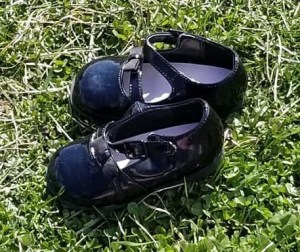
14,000 shoes laid out so that we will never forget our history.

Seven thousand pairs of children’s shoes were lined up on the southeast lawn of the U.S. Capitol building today in memory of every child who has died due to gun violence.

The 7,000 shoes in the “Monument for our Kids” installment represent every child that was killed by gunfire since the deadly shooting at Sandy Hook elementary school in Newtown, Connecticut, in 2012.

“We are bringing Congress face to face with the heartbreak of gun violence,” said one of the activists, Oscar Soria. “All of these shoes cover more than 10,000 square feet.”

Though most of the shoes were collected in a two week period, some of those were donated by families that lost their children to gun violence.

May God grant that we never forget this national grief. May our collective mourning bring lasting change.552D1FD3-63EF-4301-8FD9-FEE605FA755D

A Prayer for Protection

Hear us, O God, protector of children.
Hear our prayer of penitence, our confession that we have failed to keep our children safe.
Hear our cries, as we shed tears of mourning for each child we have lost to gun violence.
Hear our cries of grief as we recall every danger that our children face.
Hear our voices shouting, “Enough!”
Hear our voices of commitment that make a sacred promise that we will do what must be done.
And most of all, God, ennoble us to holy action, and make us protectors of children.
We pray in the name of the Prince of Peace. Amen.

Change, Children, Courage, grief, Gun control, healing, Hope, Justice, Politics, Violence

A Change Is Gonna Come

963A5A51-3EC5-464E-BAE6-A49BCFECAE4F
Emma González … ‘These young people will not sit in classrooms waiting.’ Photograph: Jonathan Drake/Reuters

Half a century ago, on March 7, 1965, state troopers beat down men and women who were participating in a peaceful march for voting rights in Selma, Alabama. That same day, radio listeners around the country might have heard Sam Cooke singing a song he had written and recorded several months earlier, but which could have been describing the “Bloody Sunday” confrontation on the Edmund Pettus Bridge.

There have been times that I thought I couldn’t last for long
But now I think I’m able to carry on
It’s been a long, a long time coming
But I know a change is gonna come, oh yes it will.

In “A Change Is Gonna Come,” Sam Cooke moves from bigotry and bloodshed to hope and beauty in barely three minutes. If you listen to the record today, you will hear a story that continues to be relevant. (https://m.youtube.com/watch?v=wEBlaMOmKV4)

Sam Cooke’s rough, sweet voice — a voice that is blues-born and church-bred, beat down but up again and marching — still rings.

A changs IS gonna come . . .

That message of hope rings out still in these troubling days through the passion-filled voice of Emma González, a senior at Marjory Stoneman Douglas High School, as she addresses a gun control rally in Fort Lauderdale just days after a gunman entered her school in Parkland and killed 17 people.

A change IS gonna come . . .

We are going to be the kids you read about in textbooks. Not because we’re going to be another statistic about mass shooting in America, but because . . . we are going to be the last mass shooting. We are going to change the law. That’s going to be Marjory Stoneman Douglas in that textbook and it’s going to be due to the tireless effort of the school board, the faculty members, the family members and most of all the students. The students who are dead, the students still in the hospital, the student now suffering PTSD, the students who had panic attacks during the vigil because the helicopters would not leave us alone, hovering over the school for 24 hours a day.

If the President wants to come up to me and tell me to my face that it was a terrible tragedy and how it should never have happened and maintain telling us how nothing is going to be done about it, I’m going to happily ask him how much money he received from the National Rifle Association. You want to know something? It doesn’t matter, because I already know. Thirty million dollars.  — Emma González

A change Is gonna come . . .

Just hours after the mass shooting, other students turned to social media to discuss gun control.

Guns give these disgusting people the ability to kill other human beings. This IS about guns.  — Carly Novell, a 17-year-old senior; editor of the school’s quarterly magazine.

We need to do something. We need to get out there and be politically active. Congress needs to get over their political bias with each other and work toward saving children. We’re children. You guys are the adults.  — David Hogg, 17, a senior; Stoneman Douglas student news director

Wherever you bump into someone, there is the fear that they’re the next shooter, and every bell is a gunshot. I feel like some change is going to come of this.  — Daniela Palacios, 16, a sophomore at another Broward County High School at her first protest.

A change IS gonna come . . .

And it will be our bold and compassionate children who will lead this nation into that change. Like so many Americans, I was disconsolate when watching the TV news of yet another school shooting. But then I started watching the students, and I saw the girl with the buzzcut, Emma González, wiping back her tears, mourning her dead classmates while demanding change.

Like her schoolmates, Emma is in trauma, but she is organizing. She and many of her classmates are directly challenging the donations of the National Rifle Association to Trump and other politicians. There will be school strikes. There will be organized resistance. These young people will not sit in classrooms any more. They refuse to become another tragic statistic. “We are going to be the kids you read about in textbooks,” said a weeping González.

As I remembered this week what happened  at Sandy Hook, at Columbine, at Westside, a school in my own state, I remembered feeling anger and despair. But today, for first time in a long time, I feel hope. I see true leadership as kids are standing up for one another and fighting for their lives.

Let us stand courageously beside these children, our children, and do what we can to create change . . . letters to Congress, phone calls, posts on social media, marches and demonstrations, hand-lettered signs, letters to the editor, VOTING for change. What can you do?

Emma González, Daniela Palácios, David Hogg, Carly Novell . . . and thousands of other children who are crying out, ENOUGH!

They give me hope.

A change is gonna come!

May God ennoble each of us to make it so.


Darkness, Faith, Hope, Illness, Light

The Light Behind Me

F4719FE4-AC10-4EF9-903D-023E96825023
Photo by Łukasz Łada

At the risk of being too dramatic, I must say that on some days, my path seems dark. Whether caused by chronic pain, illness, or other challenges, I sometimes walk through patches of darkness — often immense patches of darkness that seem to go on forever. Dark thoughts about an uncertain future can flood my mind.

Much wiser persons than I have made sense about the veil of darkness that often covers our lives. Francis Bacon left us with these words:

In order for the light to shine so brightly, the darkness must be present.

— Francis Bacon (1561-1626)

It is the dramatic contrast between darkness and light that leaves us perplexed. We can feel the promise of light on one day, and on the next, darkness prevails. So often, it is the darkness that wins the day, having its way with us. But then there is this thing we call faith.

Faith, we recall, is something that Jesus tried to explain over and over again to his disciples. They couldn’t quite get it. And like those twelve, we don’t quite get it either, that “faith” is at once simple and complex, available yet impossibly unattainable. At best, faith can be elusive.

But getting back to me on this dark day, here is a brief personal anecdote. I have my dialysis treatments for seven and a half hours every night. My dialysis machine has a screen that lights up in our dark bedroom. I have to read the screen at times during the night, and that troublesome screen shines in my eyes so intensely that I cannot see anything else in front of me.

That mundane daily experience teaches me that the most effective light in a dark place is not the light in my eyes that blinds me, rather it is the light behind me.

The light behind me stirs the depths of my soul, because I know that God’s light truly is behind me as I travel this journey. To know that the Light will guide my way is to again find my faith, in spite of illness, in spite of pain and suffering, in spite of uncertainty.

We uncover the holy mystery and the divine promise in the living words of Scripture.

The people living in darkness
have seen a great light;
on those living in the land of the shadow of death
a light has dawned.

— Matthew 4:16 New International Version (NIV)

I do not know how it all happens, that this Scripture comes to life within me and gives me life. I do not understand a God that can find me in every dark place. I do not comprehend the miracle that shines light behind me in the middle of my darkest days. I do not understand how a light can dawn “in the land of the shadow of death.”

But I do know that my fickle faith transforms at times into something solid and steadfast, comforting and constant.

Light behind me, I think.

Thanks be to God.

Christmas, Courage, Epiphany, Hope, Inspiration, Light, Risk, Stars, Women

Looking into the Sky

C6F419F0-5C81-4A26-B890-76C7BCD762FCFor Christians around the world, the end of the Christmas holiday occurs on Epiphany, the 12th Day of Christmas. It commemorates how a star led the Magi, or the three kings or wise men, to the baby Jesus. Epiphany is about finding Jesus — again — in a fresh new way, looking into the light that has the power to change our lives.
In his homily on Friday before Epiphany, Pope Francis called on the faithful to be like the Magi, who, he said, continued to look at the sky, took risks and set out bearing gifts for Christ.

If we want to find Jesus, we have to overcome our fear of taking risks, our self-satisfaction and our indolent refusal to ask anything more of life. We need to take risks simply to meet a child. Those risks are immensely worth the effort, since in finding that child, in discovering his tenderness and love, we rediscover ourselves.

Looking into the sky and taking risks is a way of life for women. We have found the need to look up, above the hurts of our lives. We have looked into the sky to escape misogyny, discrimination, disrespect and abuse. We have looked into the sky to search the heavens for hope when we have felt only despair.

It has not been for us just a flighty inclination to retreat from unpleasant realities through fantasy. Instead our sky gazing has been a way to pour our souls into the kind of change that makes life worth living. We have dreamed improbable dreams. We have been wise. We have been brave and persistent. We have taken risks and defied whatever was holding us hostage. We have been determined emboldened and empowered.  We have been inspired and ennobled. We have changed our world.

Like the three Wise Men, we journeyed, wise women in search of the child that would more fully empower us. Our desire and longing led us, like a fire burning within, until we found the flaming star in the night sky. And there we found Jesus —  again. So we celebrated. We rejoiced, because Jesus wanted for us a new day, a new life of respect and well-being and inspiration and hope. That is epiphany. Amen.

Christmas, Despair, Hate, Hope, Music, peace, Violence

Peace on Earth. Good Will to Us All!

E8CBC92D-81BE-4275-B6EE-57B14513900E
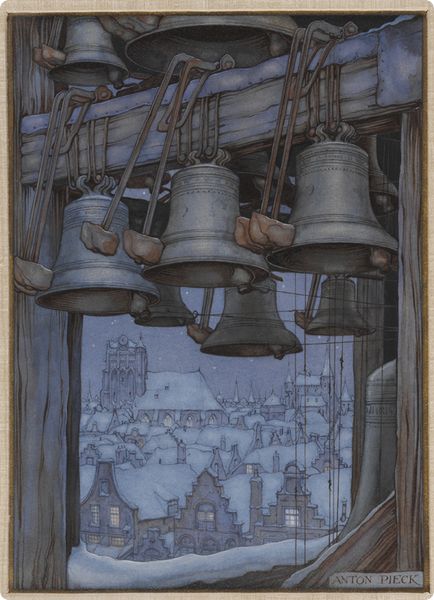
We rarely sing one of my favorite Christmas Carols. Its words always cause emotions to well up within me. Although the words of this carol were written in the mid-1800’s, they still speak to the bleakness we face in these days.

It was on Christmas day in 1863, when Henry Wadsworth Longfellow — a 57-year-old widowed father of six children, the oldest of which had been nearly paralyzed as his country fought a war against itself — wrote a poem seeking to capture the dissonance in his own heart and in the world he observed around him. He heard the Church bells that December day. He heard the singing of “peace on earth,“ but he also despaired of a world of injustice and violence that seemed to mock the truthfulness of any sort of peace. Yet Longfellow’s words eventually led to a sense of confident hope even in the midst of bleak despair.

Such confident hope will also guide us through our own reality — a reality that constantly reminds us that the presence of despair, violence, injustice and intolerance destroys the hope, peace, justice and lovingkindness we so deeply desire for our world.

I heard the bells on Christmas Day
Their old, familiar carols play,
and wild and sweet
The words repeat
Of peace on earth, good-will to men!

And thought how, as the day had come,
The belfries of all Christendom
Had rolled along
The unbroken song
Of peace on earth, good-will to men!

Till ringing, singing on its way,
The world revolved from night to day,
A voice, a chime,
A chant sublime
Of peace on earth, good-will to men!

Then from each black, accursed mouth
The cannon thundered in the South,
And with the sound
The carols drowned
Of peace on earth, good-will to men!

It was as if an earthquake rent
The hearth-stones of a continent,
And made forlorn
The households born
Of peace on earth, good-will to men!

And in despair I bowed my head;
“There is no peace on earth,” I said;
“For hate is strong,
And mocks the song
Of peace on earth, good-will to men!”

Then pealed the bells more loud and deep:
“God is not dead, nor doth He sleep;
The Wrong shall fail,
The Right prevail,
With peace on earth, good-will to men.”

“Then pealed the bells more loud and deep, ‘God is not dead, nor doth He sleep.””

Amen

Despair, Dry seasons of life, Faith, Fear, God's Faithfulness, God's presence, healing, Hope, Illness, Life storms, Prayer

Mercies and Blessings

IMG_6014Like many of you, I have experienced dark nights of the soul. I have faced illness, betrayal, disillusionment and loss. I have faced the dark side of life more than a few times. In the midst of those times, I found the courage of faith, the gift of hope, and the promise of Scripture.

If you have known me through the years, you may know that one of the New Testament passages that gives me strength is in the fourth chapter of Second Corinthians. The following words are part of that chapter.

We are troubled on every side, yet not distressed; we are perplexed, but not in despair; Persecuted, but not forsaken; cast down, but not destroyed . . .

Therefore we do not lose heart. Though outwardly we are wasting away, yet inwardly we are being renewed day by day. For our light and momentary troubles are achieving for us an eternal glory that far outweighs them all.

So we fix our eyes not on what is seen, but on what is unseen, since what is seen is temporary, but what is unseen is eternal.

– 2 Corinthians 4:8-9, 16-18 18 (KJV, NIV)

The passage speaks of “wasting away.” When I was so ill for all of 2014, I can honestly say that I believed I was wasting away. It was a frightening emotion, one that I would rather not hold in my memories. But my memories of that time also include mercies and blessings, blessings of gradual healing, blessings of compassionate and competent health care, blessings of being surrounded by a loving faith community, blessings of my husband’s devoted care, blessings of hope and faith in a God whose mercies covered me in so many ways. Clearly, my blessings came through adversity.

Today while listening to Pandora, I heard a song that touched me with its faith-filled lyrics.

. . . What if Your blessings come through raindrops?
What if Your healing comes through tears?
What if a thousand sleepless nights are what it takes to know You’re near?
What if the trials of this life are Your mercies in disguise?

What if my greatest disappointments or the aching of this life is the revealing of a greater thirst this world can’t satisfy?
What if trials of this life — the rain, the storms, the hardest nights — are Your mercies in disguise?

– Written by Liz Story • Copyright © Warner/Chappell Music, Inc, Universal Music Publishing Group

I learned that through serious illness, the fear was greatest at night. The nights were the hardest. But I also learned that what I had read so many times was true — God’s mercies are new every morning.

The steadfast love of the Lord never ceases;
his mercies never come to an end;
they are new every morning; great is your faithfulness.

– Lamentations 3:22-23 (ESV)


Despair, Faith, Fear, healing, Hope, Illness, Pain, Suffering

Suffering

IMG_5915For whatever reason, several people I know are currently going through an exacerbation of fibromyalgia. I am one of those people dealing with debilitating pain right now. Fortunately, the pain cycles usually pass over time. But when the pain is raging, it slaps us in the face with a significant challenge.

The truth is that chronic pain is much more than just physical pain. It is physical and emotional suffering. Quite often, it is also spiritual suffering. In the years I served as a hospital chaplain, I learned so much about what people experience when they are ill. The most important lesson I learned is that there is a very real difference between pain and suffering.

Experiencing chronic pain most often goes far beyond physical pain. Pain is the actual physical /physiological response to an injury or illness. It is rooted in the body. But all too often, it is accompanied by debilitating suffering. Suffering is how the brain perceives pain based on past experience and future expectations and fears. It is rooted in the mind, even in the spirit.

Suffering asks “How long can this pain last? Will I feel this way forever? What have I done to deserve this? Has God forsaken me? Does God care about my suffering? Am I going to die?”

It is true that sometimes our suffering questions are irrational, but pain that has permeated the mind and spirit causes a very deep fear, a feeling of disorder, a sense of terror, and constant questioning. It takes an act of the will to keep suffering at bay, but it can be done. Deepak Chopra speaks of pain and suffering in many of his teachings.

Many people confuse pain with suffering. Pain is not the same as suffering. Left to itself, the body discharges pain spontaneously, letting go of it the moment that the underlying cause is healed.

Suffering is pain that we hold on to. It comes from the mind’s mysterious instinct to believe that pain cannot be escaped or that the person deserves it . . . It takes a force of mind to create suffering, a blend of belief and perception that one thinks one has no control over. But as inescapable as suffering may appear, what brings escape is not attacking the suffering itself but getting at the unreality that makes us cling to pain.

– Deepak Chopra

Is it easier said than done, modifying the beliefs and perceptions that accompany pain? To be sure, it is difficult. But suffering people find a number of ways to accomplish it: yoga, meditation, prayer, and for people of faith, leaning on the strength of their religious practice. In a very real sense, we can create within ourselves the kind of healing that rises above physiological pain.

Perhaps it sounds simplistic, but while in the throes of physical pain, I am often able to find a measure of relief by meditating on the truth of Scripture, not just reading it, but abiding in it, letting its words penetrate my spirit, opening my heart to its comforting truth.

Psalm 42 has been called a Psalm for the fainting soul. The Psalm is the voice of a spiritual believer who is enduring deep depression, who is longing for the renewal of the divine presence, who is struggling with doubts and fears, yet holding on to hope. The Psalm twice repeats this comforting refrain.

Why are you cast down, O my soul? And why are you so disquieted within me? Hope in God, for I again will praise him, my help and my God.

– Psalm 42: 5, 11

In the final analysis, people of faith really do have the ability to endure chronic pain while avoiding suffering. Perhaps we cannot stop physical pain or reverse the source of the pain. Perhaps we do not have the power to heal ourselves from physical pain when physiological realities are at play in our bodies. But our faith assures us again and again that we do have the power to end suffering at its source — suffering of the mind, the heart, the spirit, the soul.

If you are in physical pain, my prayer is that your faith will quiet the questions of your mind, that your inner strength will calm the anxiety of your spirit, that your depth of hope will strengthen your heart, that your soul’s resilience will transcend your suffering. This is the ultimate healing.

May God make it so.

Darkness, Daybreak, Despair, Faith, God's presence, Hope, Light

Life’s Darkest Place

IMG_5929Sometimes, the heart cries out in anguish, “Comfort me, God, in this my life’s darkest place.” There are times when all of us find ourselves in the midst of darkness. Almost despairing, we hope beyond hope for a new dawn. We speak our prayers, often with groanings too deep for words. We look deeper within, hoping that in the depths of our spirits, we will find an enduring faith. We turn to the comfort of Scripture.

If I had to choose one passage of Scripture that has been for me a source of constant comfort, I would turn to Second Corinthians.

In times of betrayal, I turned to this passage. In times times when I felt persecuted, I turned to this passage. In serious illness, I whispered the words of this passage in the deepest darkness of the night.

We are troubled on every side, yet not distressed; we are perplexed, but not in despair;
Persecuted, but not forsaken; cast down, but not destroyed . . .

For all things are for our good, that the abundant grace might through the thanksgiving of many redound to the glory of God.

For which cause we faint not; but though outwardly we may perish, inwardly we are renewed day by day. For our light affliction, which is but for a moment, works within us a far more exceeding and eternal weight of glory;

So we look not at the things which are seen, but at the things which are not seen: for the things which are seen are temporary; but the things which are not seen are eternal.

– From II Corinthians 4 (paraphrased)

I can only imagine how many survivors of the recent natural disasters have spoken the words of this passage, prayerfully and with hearts disconsolate. I can imagine many of them crying out from what feels like life’s darkest place. The hymn writer expresses so eloquently the presence of hope for all of us who find ourselves languishing, inviting us to bring our sorrows to the mercy seat of God.

Come, ye disconsolate, where’er ye languish,
Come to the mercy seat, fervently kneel.
Here bring your wounded hearts, here tell your anguish;
Earth has no sorrow that heav’n cannot heal.

– Thomas Moore, 1816

May those who are disconsolate this day find consolation in the lavish grace of God. May those who languish find respite in God’s never-ending mercy. May those who are suffering in what feels like life’s darkest place experience the brilliance of a new dawn. Amen.