Calling, Contemplation, Covenant, Dry seasons of life, Faith, journey, peace, Prayer, Quiet, Silence, Spiritual growth

Sudden Peace and Holy Silence

9B60ABDD-83BD-48D4-9213-3698F680EB93

But the Lord is in his holy temple;
let all the earth keep silence before him!

— Habakkuk 2:20 New Revised Standard Version

On this past Sunday, my pastor brought up a vivid memory for me when he talked about the stark, silent, peaceful beauty of the desert. I listened to him share his experience of a silent contemplative retreat at a Benedictine monastery in the desert. I heard his expression of how keeping silence affected him, with the effects continuing for days after the experience. I heard his description of the ways the barren desert became God’s holy temple. While the New Revised Standard Version of the Bible tells of “keeping silence,” The Message Translation says it like this:

But oh! God is in his holy Temple!
Quiet everyone—a holy silence. Listen!”

The desert does create a kind of holy silence. I remember being in the desert’s silence. I remember the heat of it, the enormity of its sky, the color of beige as far as the eye could see, the silenced sound of it, the sudden peace it gave me. The time was many years ago. The place was a retreat of the Order of Ecumenical Franciscans in the desert of New Mexico.

I had spent months of spiritual direction and personal reflection to prepare to make my profession in the Order’s Novitiate. On the day of the covenant service, I spent hours walking alone in the desert wondering why in the world a Baptist pastor would want to enter into a vocation with this Order. There in the dry desert I owned the reality that I was in a dry season of my life. I knew I could not stay in that dry and barren place where my life force was languishing. In the months before, I had been exploring this crossroads in my faith journey with my Franciscan spiritual director. Over time, I had discerned that this was a call from God, and I had entered the Order’s Postulancy. Now I felt ready to move forward.

I had no idea, really, how the Franciscan journey would affect my life. I did not know how, or if, this journey could lead me into a deeper spirituality, but that is what I longed for. I had finished writing my Personal Rule of Life that afternoon. I knew that my formation would take years, that there would be distinct decision points for me after entering the Postulancy (making Novice vows, Professing lifetime vows). These places in the spiritual journey would be decision points in my discernment process that would most surely include moving forward, stepping back, or perhaps giving more time for the Holy Spirit to speak to me before taking the next step. 

I would be lying if I said I did not have second thoughts about my reasons for seeking this spiritual path. I agonized in the midst of my prayer for clear direction. What I was certain about was that I needed something more. My spirit longed for fuller joy in my faith, a deeper connection to God and to the divine within myself, and peace. Mostly peace. The kind of peace that busy, overcommitted Baptist pastors have a hard time finding. 

In my moments of indecision that afternoon, the parched, hot desert spoke to me out of silence. It spoke to me of peace, and I was certain that on this night I would make my Profession of the Rule and become a Novice in the Order of Ecumenical Franciscans. I was convinced that this faith commitment would bring me peace.

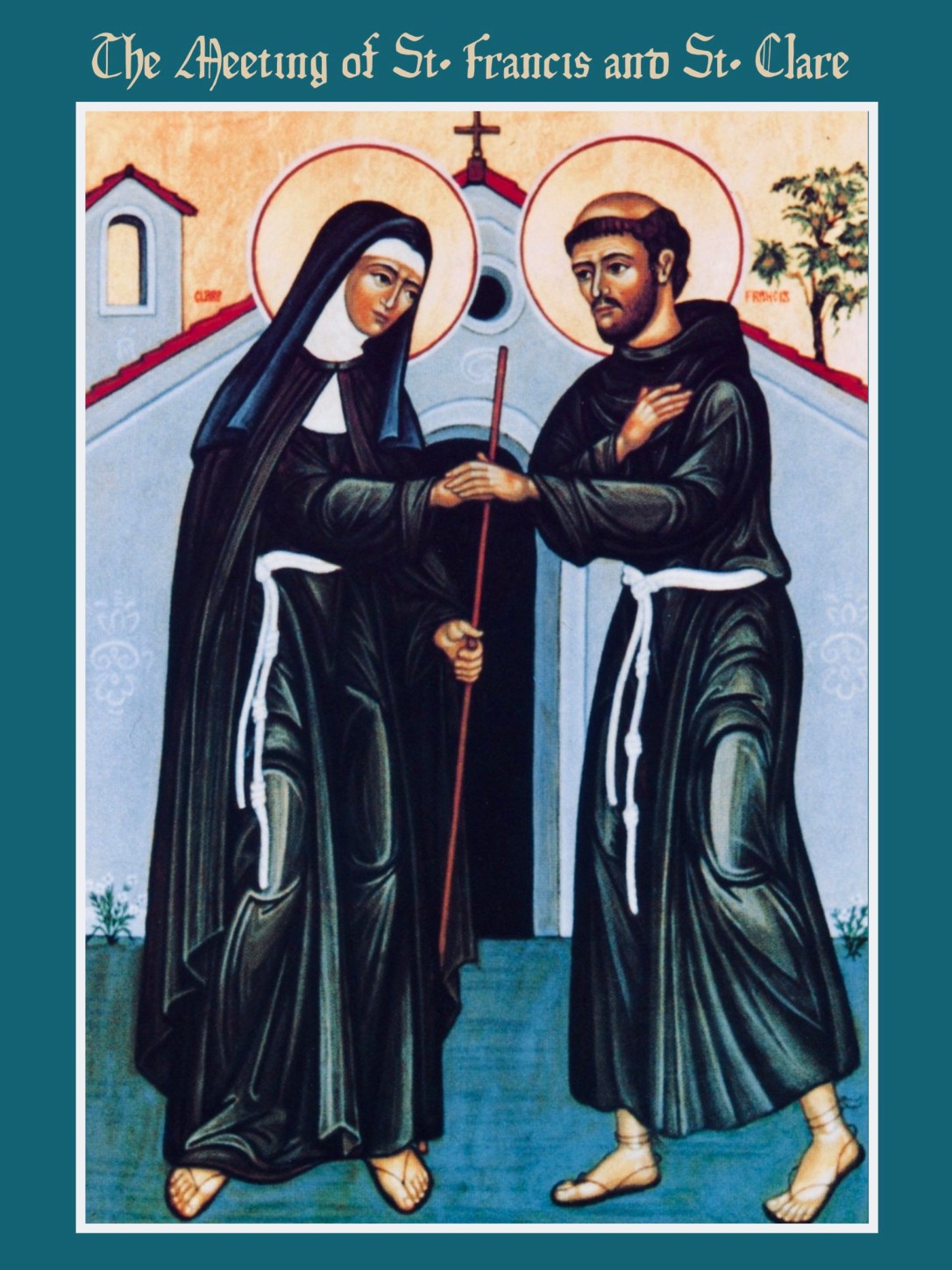
The community prayed over me in the spirit of St. Francis and St. Clare. They laid hands on me as I recited my Rule of Life and spoke my vows, and then they handed me a beautiful San Damiano cross.67401824-A9BD-4B39-857E-97CC62B25B1D I had seen this dramatic crucifix before, but on this night it was even more striking than I remembered. I held it in my hands and gave thanks for God incarnate in Christ, for the hope of glory in us, and for the palpable sense of peace that was enfolding me in that moment.

In Franciscan thought, the incarnation of Christ is foundational. It is not easy to fully describe the spirit and gifts of Franciscan thinking, but its hallmarks are simplicity, reverence, fraternity, ecumenism, ecology, interdependence, and dialogue. Its motto and salutation is “Peace and All Good!” Francis believed that God was nonviolent, the God of Peace. And so it was in that Franciscan order that I found deep, sudden peace.

The years after that took their toll on me and on my faith. Life challenges threatened my peace many times over. But the miracle is that the peace remained. It grew stronger with each trial. It grew stronger with aging and illness and heartbreak. When calamities finished their work on me, peace was still there, every time. In me, where it always needed to be.

I think to end this very serious post with just a little whimsy. I find whimsy so often in the writing of many of my blogging friends. One of them wrote about sudden peace today of all days, just as that idea is on my mind. So I must share it with you. 

I love the honesty in my friend’s words that so vividly describe the aging and changing that sometimes feels so frightening. These are her funny, quirky, very true words that describe a moment of self-realization:

That moment when your flabby underarms slap against your torso, and the sound reminds you of gentle waves lapping on a shore, and you are suddenly at peace.

— Joanna E.S. Campbell

Thank you, Joanna. Spirit-filled moments come to us in a variety of ways, and your picturesque speech reminded me today that I really am “suddenly at peace.” And that sudden peace has happened for me many times in the holy silences of my life.

Just when I needed it the most.

Quiet everyone — a holy silence. Listen!

Thanks be to God.


************************************************************

On another note . . .

please pray for me as I await a life-saving kidney transplant. I am grateful that you are walking with me on this journey that often feels so frightening. Your thoughts and prayers mean so much. If you would like to read the story of my illness, please visit the Georgia Transplant Foundation’s website at this link:

http://client.gatransplant.org/goto/KathyMFindley

A “Go Fund Me” page is set up for contributions to help with the enormous costs related to the transplant, including medications, housing costs for the month we have to stay near the transplant center, and other unforeseeable costs for my care following the transplant. If you can, please be a part of my transplant journey by making a contribution at this link:

https://bit.ly/33KXZOj


Activism, Determination, Ecclesiastes, Mothering, Nonviolence, peace, Perseverance, Prophetic, Sermon on the Mount, Transformation, Women

“Blessed Are the Peacemakers”

A9D2FCDB-B949-42F0-95A3-990C8A5D484D
Image: The Sleeping Gypsy by Henry Rousseau, 1897, Museum of Modern Art, New York, NY.

In a world of division, violence, hate, racism, misogyny, xenophobia, homophobia and all manner of angst, perhaps we need to draw nearer to Jesus for a moment to listen to the thoughts of his heart. It happened before, you know, when Jesus went up on a mountainside and sat down. His disciples came to him, and he began to teach them.

The things he taught them that day are ever so important for us in these days.

Love your enemies . . .

“You have heard that it was said, ‘Love your neighbor and hate your enemy.’ But I tell you, love your enemies and pray for those who persecute you, that you may be children of your Father in heaven. (Matthew 5:43-45 NIV)

Turn your other cheek . . . 

“You have heard that it was said, ‘Eye for eye, and tooth for tooth.’ But I tell you, do not resist an evil person. If anyone slaps you on the right cheek, turn to them the other cheek also. (Matthew 5:38-39 NIV)

Make peace . . .

Blessed are the peacemakers, for they will be called children of God. (Matthew 5:9 NIV)

I have heard it said that one would not likely find the words of Jesus from the Sermon on the Mount on display on any courthouse lawn. They might never be inscribed on a slate in a state capitol building. But the most important inscription for these words of Jesus is an inscription on our hearts. Not physically possible, of course, but spiritually, we can open our hearts to receive these words within us, allowing them to transform us in ways that empower us to create peace.

Richard Rohr asks how it is that many Christians have managed to avoid what Jesus actually taught? How have we evaded major parts of the Sermon on the Mount: Jesus’ clear directive and example of nonviolence, and his command to love our enemies?

Perhaps we do not believe that nonviolence actually possible or that it will not effect any significant change. Many peacemakers know better. The Pope has singled out one active peacemaker we should know. Leymah Gbowee, the 2011 Nobel prize winner from Liberia, organized pray-ins and nonviolent protests that resulted in high-level peace talks to end the second civil war in Liberia. There are other peacemakers living out a commitment to peace. Not surprisingly, most of them are women. The contributions of women such as Leymah Gbowee in Liberia and Marguerite Barankitse in Burundi are showing the way to the eventual end of violence and the dawning of peace. Their work is working.

Two other women, Erica Chenoweth and Maria Stephan, write in their book, Why Civil Resistance Works, about the effectiveness of nonviolence, drawing from examples in Iran, Palestine, the Philippines, and Burma. They insist, based on their research, that nonviolent resistance is “nearly twice as likely to achieve full or partial success as its violent counterparts. ” 

Perhaps it is that mothering, protecting instinct that makes women lovers of peace. Perhaps it is their capacity for hope and determination. Perhaps it is that women persevere in faith. Perhaps women are a prophetic people who insist that transformation is possible. Women who love peace know that nonviolent movements are made of loyalty, resilience, commitment, creativity and love. Fortunately, women are not afraid of love or creativity or commitment. Women do fear the destruction of hate, violence and war.

So sisters in the struggle, let us keep on. Let us persevere in our quest for peace. Let us persist, struggling for as long as it takes to see holy peace gently cover our world from East to West, North to South, so that every man and woman, every child will be able to lie down in safety.

After all, Jesus said, “Blessed are the peacemakers, for they will be called children of God.”

Anger, Hate, Mindfulness, peace

Seeking Peace

598F66C9-A7F5-45E5-9DFD-C9C2F1DA8A3D

I am generally a person of peace, typically quiet and non confrontational to a fault. Most of the time. Still, at times anger can spill out from inside me and, more importantly, I can nurse a good bit of hate. So this morning while reading my daily Richard Rohr meditation, the brilliant Franciscan hits me with some undeniable truth. Here it is:

What does it mean to be nonviolent? Coming from the Hindu/Sanskrit word ahimsa, nonviolence was defined long ago as “causing no harm, no injury, no violence to any living creature.” But Mohandas Gandhi insisted that it means much more than that. He said nonviolence was the active, unconditional love toward others, the persistent pursuit of truth, the radical forgiveness toward those who hurt us, the steadfast resistance to every form of evil, and even the loving willingness to accept suffering in the struggle for justice without the desire for retaliation. . . .

I’m not so sure about “the radical forgiveness toward those who hurt us.” That part sounds a little out of the realm of possibility for me. Maybe completely out of the realm of possibility! Luckily for me, Richard Rohr goes on to describe another way to understand nonviolence. He suggests that we look at nonviolence by setting it within the context of our identity and that we practice nonviolence by claiming our fundamental identity as the beloved children of the God of peace.

Through Holy Scripture, Jesus taught some undeniable truths: 

“Blessed are the peacemakers; for they shall be called the sons and daughters of God (Matthew 5:9)

“Love your enemies and pray for your persecutors, then you shall be sons and daughters of the God who makes the sun rise on the good and the bad, and causes rain to fall on the just and the unjust.” (Matthew 5:44-45). 

There’s that radical Jesus again challenging us in a rather remarkable way. In the context of his visionary nonviolence — radical peacemaking and love for enemies — Jesus tells us that we must be who we already are. Wow! Pretty stunning thought!

Richard Rohr would tell us that living nonviolence requires daily meditation, contemplation, study and mindfulness. These are his words of instruction:

Just as mindlessness leads to violence, steady mindfulness and conscious awareness of our true identities lead to nonviolence and peace. The social, economic, and political implications of this practice are astounding: if we are children of a loving Creator, then every human being is our sibling, and we can never hurt anyone on earth ever again, much less be silent in the face of war, starvation, racism, sexism, nuclear weapons, systemic injustice and environmental destruction. . . .

Gandhi often said that Jesus practiced perfect nonviolence. We have to ask ourselves how it was that Jesus embodied nonviolence so perfectly? The answer can be found at his beginning, at his baptism when he heard a voice say, “You are my beloved son; with you I am well pleased.” 

We do not always accept the announcement that God loves us. But Jesus does accept the announcement of God’s love for him. It happens at his baptism. In that moment, Jesus claims his true identity as the beloved son of the God of peace.

“From then on he knows who he is,” Richard Rohr reminds us, and “He’s faithful to this identity until the moment he dies. From the desert to the cross, he is faithful to who he is. He becomes who he is, and lives up to who he is, and so he acts publicly like God’s beloved.”

Would that we could live up to the persons we are, God’s beloved children of peace? Could it be that accepting God’s love will enable us to truly be a people who desire peace, who envision peace, who create peace in such a warring, violent, broken world?

There is no doubt we must be seekers peace for a world in need. The harder part may well be seeking peace inside ourselves — in our deep-down place where anger lives and where hate can thrive and destroy. May we understand God’s deep love for us. May we rest in God’s desire that peace will reign within us. May we comprehend God’s longing that we will become makers of peace.

May God make it so.


anxiety, Comfort, Emotions, Grace, Hope, Lostness, peace, Restoration, sadness, Serenity

A Balm for Hurting Souls

ED8FACF3-D56C-403C-826A-40C2AB6F1C89

On this Monday, prayer seems difficult to me. It feels as if I need it so much, yet cannot seem to connect with the holy. I need a quiet place, a place of peace and serenity. I need a personal retreat that enables me to touch all that is anxious within me. I need a place that can help me reach into the palpable anxiety just below the surface. I need a place that calls forth my tears so that, without fear, I can let them fall. I need a place that helps me to get to that lump in my throat that lingers with me. At my retreat, I need a person with spiritual insight and wisdom to gently guide me to my emotional and spiritual place of longing.

For many reasons, this kind of retreat is not possible right now, so I carry on. That’s what most of us have to do day in and day out, struggling to touch the holy and falling short of that. And then, on occasion, we are graced with a touch, a word of hope, a friend who understands, a prayer that reaches the heart. Today, I received that prayer from Anne Fraley. It is “a balm for hurting souls,” a word of hope. I hope it lifts your spirit as it has lifted mine.

Blessed One,

who colors our days with the glow of fireflies and the roar of the ocean,

carry us this day on the breath of your love.

Invite us into the nooks and crannies of delight,

where dreams are born and disappointments released.

Tend the bumps we suffer at the hands of the careless and the words of the thoughtless, and soothe the rough patches we inflict on others.

May our prayers resonate with the needs of the world, and our hearts connect to those who hunger for companionship.

May our song bear the imprint of all who seek you, and our chorus be as balm for hurting souls.

In all things, help us to weave the thread of love and light through the worlds in which we move, and raise our voices with joy to proclaim your name.

Amen


Anne Fraley is rector of St. Peter’s Episcopal Church in South Windsor, CT. A life-long dog-lover, she escapes the demands of parish life volunteering for animal rescue groups. She occasionally succeeds at reviving her blog at reverent irreverence. Her prayer today is published at https://revgalblogpals.org/2019/06/24/monday-prayer-214/


Change, Chronic illness, God's Faithfulness, peace, Risk, Trust

Inner Warrior

E28E6B69-1115-4DCB-A2DE-9F83713B5505

I got in touch this week with my inner warrior. She was in me all along, in a deep place inside, just waiting for the summons that I needed her. If you have read many of my blog posts, you know that I have been terrified at the thought of having a kidney transplant. For almost five years, the frightened part of me was able to put the transplant possibility away, tucked in a place inside that kept it off my mind. When I did consider transplant — like the times when my nephrologist told me that it was by far the best treatment for me — I reasoned that it was not something I was willing to do.

Why would I want to change anything? Dialysis has been good to me and, most of the time, I have felt well. So I have struggled with the transplant decision, but at the same time, I went through the medical evaluation that kept me on the transplant list. My nephrologist has insisted for years that I would feel better and live longer with a transplant. I remained unconvinced, and then I participated in a webinar that pushed my decision. The physician who was presenting said something that got my attention. He said that patients with end stage renal disease must be on dialysis, and dialysis is essentially end of life care that includes palliative care. If a patient has an illness that cannot be cured, such as end stage renal disease, he explained, palliative care keeps the patient as comfortable as possible by managing pain and other physical challenges, and by providing psychological, social and spiritual support. He went even further by saying that patients who stop dialysis live about two weeks on average.

I have been on the transplant list for five years, and in that time there has been no movement toward a transplant. The last time I went to the transplant center to update my medical evaluation, they told me that a transplant was not likely to happen in the next two years. I was okay with that. Nothing to get anxious about. The transplant decision was not going to happen in the near future. 

And then, out of the blue, I hear from an old friend who tells me he is contemplating the possibility of being a living donor for me. That was March 12. As of Monday, April 15, he had completed the thorough donor evaluation at Piedmont Transplant Institute in Atlanta, and by Wednesday of that week, Piedmont had called me in for testing.

My heart began to race this week and has continued, on and off. I would describe my current state as much, much more than anxious. I texted this week with a friend of mine and shared my fears. She told me about her multiple back surgeries and about how frightening surgery was for her. Then she said this: “I was really afraid before each back surgery, but I somehow dug down deep to a warrior place inside of me.”

Oh my! How well she described my current emotional place! I am certain that, indeed, there is a warrior place inside me. I reached it this week after the racing heart episodes eased up a bit. It is a surprise to me that now I find myself in deep peace, with a sense of calm. Not always have I been able to let God take control of my path. I am a person who will do almost anything to stay in control, to the point of fairly powerful wrestling with God for the proverbial reins of my life.

Not this time. This time, in this season of my life, I have taken a hands off approach, replacing my tendency to hold tightly to the reins with a sense of trust that has covered me like a soft blanket. I have thought in the last few days of the many passages of scripture about trust, but the one that stands out is the simplest one, the short one that we learned to recite as young children.

What time I am afraid, I will trust in you.

— Psalm 56:3

I am certain that there is a warrior place deep inside me. It brought me out of my year of life-threatening illness in 2014. It pushed me to get stronger. No doubt, it will be in play as I move closer to a kidney transplant. I am grateful that my friend reminded me this week of that deep, down warrior place. But I am also comforted in the assurance that, along with my inner warrior, there is in me a heart that can still trust God.

Discovering, Dreams, Faith, Inspiration, peace, Prayer, Serenity

Breath of Wonder

69175F90-305B-48F5-9797-D4F4BA54C428I cannot give you a better thing today than this prayer shared by Anne Fraley, rector of St. Peter’s Episcopal Church in South Windsor, Connecticut. “Listen” to her words and find yourself in them. Let grace from God refresh you as you live into peace and serenity. And as Anne writes it so eloquently, may faith carry you on the delicate breath of wonder and discovery, calling you forth beyond your wildest dreams.

I know these things to be true.

The sun dances and rainbows shine through pearls of water.

The coos of infants elicit contented sighs and gut-deep gladness.

Music stirs and tempers within the beats of its own rhythm.

The earth is rich with nourishment and holds sacred story with gentleness.

Hearts break and find renewal in healing.

Love sustains, encourages, emboldens, and makes us silly.

Divinity is everlasting.

Comfort is found in meatloaf and mashed potatoes. Or maybe sweet potato fries.

We sag and thrive, ponder and muddle through confusion.

We persist.

My prayer this day is that the best of these things will rise and claim their place on our horizons, and that the least of these things will recall our need for each other.

My prayer for this day is that faith will carry us on the delicate breath of wonder and discovery, calling us forth beyond our wildest dreams.

Amen.


Reprinted from https://revgalblogpals.org/2019/02/25/monday-prayer-these-things/.

Paula White, peace, Serenity, simple joys, Wendell Berry, Wisdom

What We Need Is Here

4b9b65d5-ca25-48fa-af5e-a741d86146e3I want a new microwave oven, a new disposal and a new dishwasher — the newest and best models. I want to see my son. I want to hug my grandchildren. I want to go to my church in Little Rock. I want a new dress.

I have most often gotten what I wanted in my life. From the most intense need for human connection to the frivolity of a new frock, I have gotten what I wanted. Chalk that up to being spoiled throughout childhood, or stubbornly persistent until I got what I wanted, or just being a jerk, or maybe having white privilege. 

There is no shortage of gurus telling people how to get what they want. Good health. A slimmer frame. A better television. A nice house in a nice neighborhood with a nice, lush lawn. And just this week evangelist-turned-Trump-advisor Paula White told us that sending money to her would result in riches for us!

The stark reality is that, right now, I don’t have what I want. Most people don’t. It is easy for me to lament over what I am lacking. It is common for me to feel disappointed with my life, disillusioned about my inability to secure all the things I want and think I have to have.

Like my sister and brother consumers in a consumer-driven world, I have survived on things. More and better things.

But when I stop — really stop — and look around me in wonder at this stunningly beautiful world and everything in it . . . When I catch a passing glimpse of the sweet and pure love my husband gives me every day . . . When I feel God’s gentle gift of grace on my life . . . When I stop to count the stars and watch the moon peeking around the clouds, something very surprising happens. My thoughts of the things I want turn to serene gratitude for the things I have. And in that instant, I have peace.

Recently, my pastor shared a poem by Wendell Berry. The very same poem, oddly enough, kept coming up in the things I was reading, and it touched me in the serene place within. Let me share it.

Geese appear high over us,
pass, and the sky closes. Abandon,
as in love or sleep, holds
them to their way, clear
in the ancient faith: what we need
is here. And we pray, not
for new earth or heaven, but to be
quiet in heart, and in eye,
clear. What we need is here.

Oh, to be quiet in heart and see clearly that “what we need is here.”

May God make it so.


Forgiveness, God's presence, Life Journeys, Light, peace

Forgiveness

3904e2f4-b048-4bf3-83f1-bccdd2592165I have long pondered forgiveness, for years! It’s something that confuses me. Like forgiving my abuser. Like parents standing at their child’s graveside and considering how to forgive the shooter. Like a little girl forgiving the people that snatched her from her mother’s arms at the border.

Forgiveness can be confounding and elusive. It is not a merely a thing, or a conviction, or an emotion, or a firmly held belief. It is an act of the heart that can seem all but impossible. But the Bible seems very clear about forgiveness. When you have been wronged or betrayed by another person and you are in a tug of war with yourself about forgiveness, the words of Scripture face off with you as a challenge, perhaps even a rebuke.

Get rid of all bitterness, rage and anger, brawling and slander, along with every form of malice. Be kind and compassionate to one another, forgiving each other, just as in Christ God forgave you. (Ephesians 4:31-32)

Bear with each other and forgive one another if any of you has a grievance against someone. Forgive as the Lord forgave you. (Collosians 3:13)

And when you stand praying, if you hold anything against anyone, forgive them, so that your Father in heaven may forgive you your sins. (Mark 11:25)

For so many years, these and other Biblical admonitions troubled me. I felt as though the words stood in judgement before me. I would pray to be able to forgive. I would pray for light that could shatter the darkness around me. I would pray again, and again. Waiting. Hoping.

Eventually, I shared my inability to forgive with my spiritual director, hoping for guidance and wise counsel. We talked about it at length. I bared my most vulnerable places and revealed the unresolved anger that lived inside of those places. I mined the depths of my spirit and unearthed long-standing wounds of the soul. Our conversations were gently pushing me to a better place and shedding light on the reality that my inability to forgive was not disobedience, but unresolved pain. And then my spiritual director shared this quote with me.

Forgiveness isn’t telling someone it was okay to hurt you. 
It’s telling yourself  it’s okay to stop hurting. 

It doesn’t mean you have to trust them again. 
It means you can learn to trust yourself again. 

It doesn’t mean you have to give them a free pass back into your life. 
It means you are free to take your life back again. 

Forgiveness is simply emptying your past of its power to empty your present of its peace. 

― L.R. Knost

That experience was many years ago, but to this day, I live in the peace I found then. There is no doubt that my past did indeed have the power to empty my “present of its peace.” Reclaiming my peace made forgiveness possible, though it did not happen instantly. It’s not so easy to forgive a person who was never sorry.

Still, it was a process — a journey really — that I had to travel with God, praying all along the way that I would have the strength I needed. The journey was long and sometimes arduous. God was ever-present — patient and persistent. At journey’s end, there really was light, shining brightly where darkness had been. 

Was I healed of my sin of being an unforgiving person? After this journey, do I now forgive every person who hurts me? Sometimes!

Thank you, God, for your patient persistence. Amen.

Advent, Christmas, Hate, peace, Violence

Peace on Earth?

40423F94-5BC6-4413-84AC-3413C238897B“Dozens of institutions across the country 
received email threats Thursday afternoon, 
prompting evacuations and sweeps of buildings.” (CNN)

This troubling news juxtaposed with the words of the music playing as I work. 

“Peace on earth, good will to all people . . .”

“The glories of His righteousness and wonders of his love . . .”

“All is calm, all is bright . . .”

It is a contrast for us. The songs of peace, hope and joy sung during this season are in conflict with the acts of violence and hatred we see in the world. And thus we are conflicted. As people of faith, we search for our place in being agents of change. We believe that our faith calls us to scatter love wherever there is hate. But we don’t know how.

We are powerless and paralyzed, and the songs of the season just make it more pronounced. I remember singing the compelling words of Henry Wadsworth Longfellow’s poem that eventually became a carol:

“And in despair, I bowed my head. ‘There is no peace on earth,” I said. ‘For hate is strong and mocks the song of peace on earth goodwill to men.’”

For now, peace on earth is elusive. The email and bomb threats have been sent to places throughout the country: Pennsylvania, Seattle, Chicago, San Francisco, Utah. Threats were also emailed to locations in New York City and Atlanta; the Charlotte News & Observer and the Raleigh News & Observer newspapers in North Carolina; and to three sites in Miami.

Over these terrible signs of hate, we have no control. But we do have control over what we will allow into our hearts. To be sure, we should be informed by the events in the world. We should be persistent in raising our voices in the face of hate, denouncing it, and praying for its end. But we must not choose to dwell completely on the violence all around us. We can give our souls a break from the harsh reality bynfinding ways to meditate on the peace and love of God. Even when hate triumphs, we have full access to the Prince of Peace who will visit us and dwell in our hearts. 

Still . . . “Hate is strong and mocks the song of peace on earth . . . “

These words are as true today as on the day they were penned on Christmas Day, 1863. Henry Wadsworth Longfellow wrote the poem, “Christmas Bells” during a time of personal despair and in deep concern over the American Civil War. The poem was set to music in 1872, and Longfellow’s references to the Civil War are prevalent in some of the verses that are not commonly sung. This is the entire text of Longfellow’s poem:

I heard the bells on Christmas Day
Their old, familiar carols play, 
and wild and sweet
The words repeat
Of peace on earth, good-will to men!

And thought how, as the day had come,
The belfries of all Christendom 
Had rolled along
The unbroken song
Of peace on earth, good-will to men!

Till ringing, singing on its way,
The world revolved from night to day,
A voice, a chime,
A chant sublime
Of peace on earth, good-will to men!

Then from each black, accursed mouth
The cannon thundered in the South, 
And with the sound
The carols drowned
Of peace on earth, good-will to men!

It was as if an earthquake rent
The hearth-stones of a continent,
And made forlorn
The households born
Of peace on earth, good-will to men!

And in despair I bowed my head;
“There is no peace on earth,” I said; 
“For hate is strong,
And mocks the song
Of peace on earth, good-will to men!”

Then pealed the bells more loud and deep:
“God is not dead, nor doth He sleep; 
The Wrong shall fail,
The Right prevail,
With peace on earth, good-will to men.

What the poet concluded is truth: “to God is not dead nor doth He sleep. The wrong shall fail, the right prevail . . .”

May God make it so.


Advent, mercy, peace, Uncategorized

Tender Mercy

E8260192-9BC4-47D0-B6F8-7DECCE4828F0Such is the tender mercy of our God,
who from on high
will bring the Rising Sun to visit us,
to give light to those who live
in darkness and the shadow of death
and to guide our feet
into the way of peace.

Luke 1:78-79 (NRSV)

There is no better time to breathe in these words from sacred Scripture: “the tender mercy of our God.” What we see around us compels us to cry out for the tender mercy of God — for the people who are living with agonizing need at our borders, for children taken from their parents, for families running from the effects of tear gas, for the changing of the climate and its devastating fury on communities, for people losing their lives because of gun violence, for young black men incarcerated for small crimes with long sentences, for people suffering through illness and poverty and homelessness. 

Cover them, God, with your tender mercy.

There is still more in this Scripture. Some translations say “The Dayspring from on high has visited us.” But in this New Revised Standard translation, we hear words that remind us anew of God’s tender mercy. Moving words that remind us of our hope in the “Rising Sun who has visited us!”

Tucked in this brief text is the divine reason for the visit. The words are not ambiguous at all, not hard to understand, not veiled in mystery. The Rising Sun’s visit has brought “light to those who live in darkness and in the shadow of death.” And finally the Sun has shone “to guide our feet into the way of peace.”

And so we live in the light of this promise, knowing that the Rising Sun will visit us again and again, whenever darkness covers us with the struggles of life. God will not fail. In our times of difficulty, no matter how serious they are, we will feel — fresh and new — the tender mercy of God who will most assuredly send light to us when we find ourselves in life’s darkness, when we need to be guided in the way of peace.

That is the message of Advent.

Comfort, Contemplation, Division, Faith, grief, healing, Hope, Justice, life, Serenity

Sitting Open-Handed Before God

71184739-B4D2-4F2F-897E-1EAD2C2A56EAWhat is it like to sit open-handed before God? To abide with a compassionate God who knows the grief we are carrying? To sit in the glowing presence of a God who, not only knows the deep angst of our nation, but who can also transform it?

Yes, many of us are grieving the current state of our nation. We see our nation’s pain, just as we see the pain of the world. Yet, we who are Christ-followers live with great advantage in this pain-filled world. Yes, we grieve the divisions in our nation and lament at the ways we seem to have lost our compass of compassion, mercy and justice. We feed those who already have abundant sources of food. We provide health care to those who can afford their own. We hold open the voting entrances for those who can get there with the proper credentials. But for the people who hunger, the families that are homeless, the elderly, the children incarcerated at our borders, the prisoners, the helpless, the marginalized . . .  well, for them, we offer prayers, if we think of them at all.

So what is our great advantage? It is that our faith can carry us into spiritual realms where hope is large and dreams are possible. It is that we enjoy access to spiritual community with an accessible God. It is the spiritual luxury of quiet contemplation that opens our hearts to the whispers of God. And yes, I did say whispers of God, for it is almost always a quiet voice that beckons us into a world of turmoil. It is a quiet God-Voice that rekindles our compassionate hearts, speaks to us through the noise of discord in our nation, and shows us the good path we must follow.

We need not despair or cry out in anger or disgust. We need not attack those who seem to be wrecking our country. We need not hate those with whom we disagree. We have the great advantage of only this life task: to be silent before God, to sit in God’s presence open-handed, to pray, to listen, to seek, and then to go.

Sister of Social Service Simone Campbell, famously known as “the nun on the bus,” offers us a glimpse into one of the ways we can live as people of faith in a fractured nation. 

Finding a way to not vilify or divide into “them” and “us” in today’s federal politics goes against . . . current custom. . . . So my contemplative practice is to attempt to sit open-handed and listen to the “wee small voice” that sometimes whispers ideas and ways forward.

Simone Campbell

Thanks be to God for the quiet whisper that guides us on the path ahead, the God-Voice that ordains us to heal our nation and comfort our world.

Beauty of Nature, Discovering, Forest, Inspiration, Light, Nature, Ocean, peace, Serenity, Transformation

Beauty. Serenity. And a Spark of the Divine

4C981E9F-B1F2-4849-81D2-C7BA782BCDEE
Loon Park on Arkansas’ Lake Maumelle. Photography by Steven Nawojczyk. Entitled “Beauty. Serenity.”

In the middle of the natural beauty of Arkansas, my friend took a photograph and entitled it “Beauty. Serenity.” It prompted me to ponder that for a few moments.

Beauty. Serenity.

I wondered what in my life brings beauty and serenity to me and to those around me. The questions trickled through my mind slowly as I tried to place qualitative and quantitative strictures on beauty and serenity. (As if one could really quantify the whole of what beauty is or see pure serenity through a human lens.) My quest to try to interpret beauty and serenity went on into the night and into the rise of a new day. Still I could not nail it down. It is as elusive as a butterfly in flight, defying explanation.

As for beauty, it seems to be something I can see, something I can look at and see what lies beneath shapes and colors and texture and form. It is when something I see takes on life, and in it, I see a spark of the Divine.

To truly see beauty, I must intentionally expose myself to it and to its full potential. The blossom of a flower. The trees in a verdant forest. The ocean waves moving gently upon the shore. The sparkle of a flowing stream. The majesty of a range of mountains and the vibrant green of a valley.

In each of these visual images, I might very well see a spark of the Divine. But I must first look, and see, and linger before such beauty long enough to see its depth. I must look into a blossom and into the leaves of a forest. I must gaze upon the glory of a mountaintop and walk slowly through a valley of green. I must sit at the edge of the sea and watch the waves greet the shore.

And then there’s serenity, the state of being that always seems to escape me. Serenity is the peaceful sense of calm that envelops a person’s soul and spirit. But I must first allow it, embrace it, and welcome it. When I can do that — and I readily admit that I seldom can — the spark of the Divine I will see most clearly is the light of the spark within myself. I love the wonderfully positive affirmation written by Llewellyn Vaughan-Lee.

We have in us a divine spark that you can see. It’s a Light that shines in the human being. It’s our direct access to truth, our direct access to God. The purpose of all the spiritual practices that exist are to awaken that spark, to give it life, to give it energy, so that it can transform you. 

God, I would be transformed. Awaken that spark within me, so that its light will become a part of my very soul, Enliven in me the spark that brings transformation to every part of me that yearns for your Divine impulse.

The spark of the Divine is beauty and serenity all at once. It is in the moments that stop us in our tracks that we can truly see the beauty around us and within us.

It is in those unforgettable moments of life’s splendor, when we allow serenity to fully embrace us in gentle arms of peace, that we finally know deep rest.

It is when beauty and serenity link arms to surround us that we can truly know the spark of the Divine within. I recognize that spark, ever so often, in just a handful of my best moments. Even for that seldom-experienced grace, I am most thankful. 

So I wish for you the same kind of grace, that you might see beauty, know serenity, and visualize, within yourself, the spark of the Divine. The blessing I leave with you is best expressed by the 14th Century Persian poet, Hafiz.

I wish I could show you, when you are lonely or in the darkness, the astonishing light of your own being.


Beauty of Nature, Comfort, Grace, Life pathways, Nature, peace, Restoration, Serenity, simple joys, Transformation, Writing

Beside Still Waters


7C49B5E1-CD3A-4F00-B8CC-B55E370984B4
Still waters near Pulaski County, Arkansas. Photo by Steve Nawojczyk.

I long each day to live beside still waters, to dwell in serenity, to find peace in the depths of my soul. Not such a simple task, that. 

The problem is that life is not that much about still waters. It’s more often about churning waters and swelling currents. Don’t get me wrong, I love the sound of waves crashing in the ocean and then coming to the shoreline with a special kind of energy. I love the rolling of a mighty river, the trickling sounds of creeks, and the splashing sounds that streams make as  they ripple over stones.

But the sheer silence of still waters . . . That’s when you can skip a rock across the top of the water and watch its antics. In still waters, you can hear the sounds of fish flying up to the surface and turtles paddling almost silently acreoss the waters with only their heads visible in search for a morsel of food. In still waters, a family of ducklings can move through the waters with just a hint of a sound and the graceful swan can glide by with hardly any sound at all while its webbed feet move swiftly to push the waters aside.

Those still waters! Their silence and their calm show us how to be.

The truth is that rushing waters do describe our lives at times. That is our reality. Life brings what feels like raging storms. Life assails us with a power that reminds us of the breaking waves of the ocean. In this life, we come upon rivers too deep and too wide and too turbulent to cross. We will feel a force against us that may come because of serious illness or the loss of a loved one. It may come with the pain of broken relationships or with devastating financial hardship.

Life brings brokenheartedness, but it brings brokenheartedness in the midst of grace. For on this journey we call life, we travel with a divine guide, One who does lead us beside still waters. And it is there that our soul is restored and comforted in the midst of green pastures of sacred serenity and holy calm.

I am thinking, of course, of the words of the Psalmist.

The Lord is my shepherd, I shall not want.

He makes me lie down in green pastures; he leads me beside still waters;

       he restores my soul.

He leads me in right paths for his name’s sake.

Even though I walk through the darkest valley, I fear no evil; for you are with me;

        your rod and your staff — they comfort me.

— Psalm 23:1-4 (New Revised Standard Version)

I also think of my friend, Steven Nawojczyk, who is finding his much-needed peace in the forests, mountains and valleys of Arkansas. His stunning photograph illustrates today’s blog post. With his beautiful dog and companion, Feebi, he follows a path of serenity and healing, hiking through nature’s beauty most every day.

His life has not been an easy one. As a public servant — many years as Pulaski County Coroner — he has seen far too much anguish for one person. He was integrally involved, literally in the trenches, with ending and preventing Little Rock gang violence, and has been a staunch champion for young people.

He faces serious illness and harsh treatment in his retirement. but he knows that life really does have a pathway that goes around the dangers, toils and snares. He knows that he and Feebi will find lightheartedness in exploring a forest or watching a flowing stream. He knows that the simple joy of a mountain view can bring transformation. He knows about peace, and he has chosen to follow the life path that passes beside still waters. I admire him. I have always admired him, but even more so now as I witness his unwavering commitment to serenity.

That’s what it’s all about in the end — a commitment to serenity, a firm resolve to walk beside the still waters of life, and in that intentional journey, to find our souls.

May the grace and peace of God fill your soul, and may your journey, wherever it leads, bring you serenity.


Celtic Prayers, Comfort, Grace, Inspiration, Irish Blessing, life, Prayer, Worship

Grace for Your Day

75777FD8-6406-4CA0-A2BF-D043F39E8DB3To bring a bit of grace to your day, I offer prayers and blessings that have stood the test of time. Some of them have been used for centuries to lighten a load or brighten a day. In the great tradition of Celtic prayers and blessings, many of these are very much prayers and reflections from daily life, the ebb and flow of ordinary day to day life. They are petitions of the home and hearth.

In every life, there are uplifting moments and anxious moments, there are inspirational times and times of despondency. There are times when the heart is disconsolate. Some of these prayers read like hymns and could be sung as psalms. Others search the heights and depths of our faith.

With hope that you will find a sense of their deep peace, I commend these prayers, blessings and sacred art to you as an attempt to express that God is with us, always, and that in God we live and move and have our being.

Deep peace to you

32072582-2242-46F1-A21A-3560036A395F

D716109E-E232-4CF7-83BC-247DF08EBF18Prayer for evening rest

I lay my head to rest,  and in doing so,
I lay at your feet
the faces I have seen,
the voices I have heard,
the words I have spoken,
the hands I have shaken,
the service I have given,
the joys I have shared,
the sorrows revealed,
I lay them at your feet, and in doing so
lay my head to rest.


635E2A28-E43A-4BCD-8F34-6305A17273DCI arise today

I arise today
Through a mighty strength:
God’s power to guide me,
God’s might to uphold me,
God’s eyes to watch over me;
God’s ear to hear me,
God’s word to give me speech,
God’s hand to guard me,
God’s way to lie before me,
God’s shield to shelter me,
God’s host to secure me.

(first millenium – bridgid of gael)


8BD9F9D4-214E-41CA-B1FA-B86294928292Blessings of light

May the blessings of light be upon you,
Light without and light within,
And in all your comings and goings,
May you ever have a kindly greeting
From them you meet along the road.

May the nourishment of the earth be yours,
May the clarity of light be yours,
May the protection of the ancestors be yours.

May dawn find you awake and alert, approaching your new day with dreams, possibilities, and promises.
May evening find you gracious and fulfilled.
May you go into the night blessed, sheltered, and protected.
May your soul calm, console, and renew you.


40834FE7-48A9-49E1-AE4F-AEB48034D18EThrough the day

As the sun scatters the mist
at the dawning of a new day,
So you calm our fears and anxieties
if we trust you.
You give us strength and courage
to live our daily lives
knowing you are with us
and we do not walk alone.
As the midday sun warms us,
we feel your protecting arms around us
and sense your loving presence.
As the sun sinks in a kaleidoscope of colour
you give us hope and renewal.


7AD0C7EE-0F8D-4414-B99B-71D195BE3957

Dawning of the day

From the dawning of the day through the morning,
guide us,
from the noontide to the setting of the sun,
lead us,
from the evening till we sleep,
keep us,
through the night till daybreak,
protect us,
and all for your love’s sake.
Lord of the day
, Lord of the sunrise,
we give thanks for the birth of each child,
for the freshly opening rose,
for all newborn animals.
Lord of the morning,
we give thanks for energy and enthusiasm,
for the challenges of a new day,
for your Resurrection power.
Lord of the noonday,
we give thanks for the ability to work,
for all we can achieve,
for unrealized potential.
Lord of the sunset,
we give thanks for those who have died
in the faith of Christ,
for all who have inspired us, for our loved ones.
Lord of the night,
we give thanks for rest and refreshment,
for all your love and care,
for the promise of a new day.


F7E8C76C-DEB3-480C-9AF5-99166136E691Comings and goings

In our coming and going,
guide us,
in our living and our being,
protect us,
in our seeing and our hearing,
enrich us,
in our thinking and our speaking,
inspire us,
in our arriving and our departing,
preserve us.


A4E2837D-29C3-4A90-8539-636F307D3B25Morning mist

As the morning mist shrouds the river
and is then lifted by the gentle rays of the rising sun,
so may our clouded spirits be raised
by the warmth of your love.


6816D648-8E81-4524-BB93-740C91627A31This day and every day

I arise today
in your strength to uplift me,
in your power to direct me,
in your love to enfold me,
in your wisdom to guide me,
in your way to lead me
this day and every day.


A3EA52D1-2DA4-4020-A826-8C5FDA2A4C97


May God, the God of all comfort, encourage your heart and protect you from despair. May God’s face shine upon you as you rejoice in the midst of troubles and trials, putting your faith in God and being confident of God’s lovingkindness toward you. May Christ our Savior lift up blessings upon you with the riches of God’s joy and may He grant you on this day deep peace in your heart and soul. Amen.


Comfort, healing, Hope, Light, peace, Serenity

Deep Peace

F1E55829-D720-4AA8-95D8-4777BD7A8562Two of my dear family members are carrying a heavy weight in their workplace. I watch them struggle week after week, carrying oppressive burdens. Both love their work and are dedicated to it. Both speak well of their co-workers. Both take on more responsibility than they should. Neither of them see an end to the high level of work they must accomplish. I can sense their need for comfort and healing, for rest and peace.

I have wondered what the solution might be. What is it that could make their existence more tolerable? What is it that could mitigate their stress and ease their chaotic spirits?

I believe that their need is for peace. Not just run-of-mill, ordinary peace. But deep peace that goes down into the very depths of the tumultuous spirit. They need deep peace, even while trapped in the midst of chaos, even when the tasks before them are overwhelming.

Deep peace is what makes life tolerable, even if we find ourselves in the center of chaos. To be sure, in this life, in these days, we will know chaos. Chaos can come with work stress and overachieving. Chaos can come with hurtful relationships, with financial stress, with aging, with illness, with divorce, with abuse, addiction, violence in the home. Chaos is very painfully real. It engulfs us when we experience life trauma of any kind.

We need deep peace.

But acknowledging the need for peace is definitely not the same as being filled with it. How in the world does one find peace when all around things are falling apart? It’s a fair question. It’s a question many of us have asked when yearning for even a brief moment of peace.

So it’s worth asking yourself the question: what is it that swirls around my life and robs my peace? What chaotic frenzy am I facing every day? What turmoil assails my life and wounds my spirit?

I wish I could say that I have a no-fail solution. I wish that I could declare for you the end of turmoil and the advent of deep peace. I wish I could proclaim the definitive answer for you, and for myself. But I cannot. I can say what I always say, knowing that people who desperately need peace might hear just empty words. Still, this is all I have: the promise of Scripture and a heartfelt blessing.

Do not be anxious about anything, but in every situation, by prayer and petition . . . present your requests to God. And the peace of God, which transcends all understanding, will guard your hearts and your minds in Christ Jesus.

— Philippians 4:6-7 (New International Version)

Finding your own path to deep peace may be a challenging path, a journey of winding and confusing roads. But it is a journey out of turmoil, and it is a journey worth taking. It is a journey that leads to serenity and peace. And when you have found deep peace dwelling within your spirit, your soul will rejoice and finally find its rest. With deep peace, you will experience fresh signs of hope, a faith reborn and renewed, and a refreshing shower of grace, grace for the present moment and for the days to come.

With my hope and prayer that you will find deep peace, please accept the words of this Gaelic Blessing, a benediction of peace:

Deep peace of the running wave to you,
Deep peace of the flowing air to you,
Deep peace of the quiet earth to you,
Deep peace of the shining stars to you,
Deep peace of the gentle night to you,
Moon and stars pour their healing light on you,
Deep peace of Christ, of Christ,
Of Christ the light of the world to you,

Deep peace of Christ to you.

— A Gaelic blessing

I invite you to listen to this video* of a choral performance of John Rutter’s beautiful music set to the adapted text of this ancient Gaelic Blessing. It is performed by the Cambridge Singers and the City of London Sinfonia. Conducted by John Rutter.

* This video features stunning photography as well as two painted versions of “The Light of the World” by artist William Holman Hunt. 


Contemplation, Creativity, Discovering, Epiphany, Growth, Inspiration, peace, Relationship, Restoration, Resurrection, Self Awareness, Silence, Spiritual growth, Stories, Transformation, Writing

Magical

3C204C9C-C33B-4AC8-BE97-D8784E8A5D96
Magical Night: A painting by Teressa Nichole

Tell your story. Shout it. Write it.
Whisper it if you have to.
But tell it.
 ― L.R. Knost

These words of LR. Knost are so very true.

During the weeks of Lent, I helped lead a writing group at my church. What a rich experience it was for me — watching each group member spending quiet moments meditating and contemplating the ripples of his/her life. Then witnessing one person after another begin to write as if they were expecting transformation, telling their stories, writing down the highs and lows. It was almost magical.

It seemed as if I saw the throes of stress leave their spirits. It seemed as if I watched their expressions of pain ease as pen flowed across paper. It seemed at times as if a weight was lifted, an emotion discovered, a community created, a sense of understanding settled in.

I know this: no one left the room with a broken spirit or a weight they could not carry. Instead, they left the room in covenant with one another, knowing that someone cared deeply about their story. They left the room knowing that, in this intimate space, they could spew out whatever they needed to release or they could be silent in a peaceful sanctuary of acceptance.

That Sunday School room in the tall-steepled church at the top of a street in Macon, Georgia known as High Place became a sacred space for just a brief time. It became a place almost magical, a place of rest, a place of comfort, a place where each person could feel that they were not alone and that they would never feel alone again. Truly, that was magical.

I end today’s blog post with these words written by L.R. Knost:

Tell your story. Shout it. Write it.
Whisper it if you have to.
But tell it.
Some won’t understand it.
Some will outright reject it.
But many will
thank you for it.
And then the most
magical thing will happen.
One by one, voices will start
whispering, ‘Me, too.’
And your tribe will gather.
And you will never
feel alone again.

Amen.

Hate, Love, Martin Luther King, Jr., peace, Politics

Only Love Can Drive Out Hate

010B6CB7-43B5-47B7-B92B-C87DF5750866It was almost shameful that President Trump on January 12th signed a proclamation honoring Dr. Martin Luther King, Jr. In all honesty, I cringe at his signing of this proclamation. I cringe because the president honors Dr. King while dishonoring Dr. King’s legacy.

I can imagine that Dr. King’s words echoed through the Oval Office during the signing, in a whisper heard only by persons of love and good will.

If we are to have peace on earth, our loyalties must become ecumenical rather than sectional. Our loyalties must transcend our race, our tribe, our class, and our nation; and this means we must develop a world perspective.”

We’ve learned to fly the air like birds, we’ve learned to swim the seas like fish, and yet we haven’t learned to walk the Earth as brothers and sisters…”

― Martin Luther King, Jr.

I cringe because I heard the words that the president said about “shithole countries.”

Why do we want all these people from Africa here? They’re shithole countries … We should have more people from Norway.

– Donald J. Trump

In his remarks, Mr. Trump, who has vowed to clamp down on illegal immigration, also questioned the need for Haitians in the United States.

Instantly, many Democrats and some Republican lawmakers called out the president. Republican United States Representative Mia Love, a daughter of Haitian immigrants, said the comments were “unkind, divisive, elitist, and fly in the face of our nation’s values,” and she called forTrump to apologize to the American people and to the countries he denigrated.

Another Republican Representative, Ileana Ros-Lehtinen, who was born in Cuba and whose south Florida district includes many Haitian immigrants, said: “Language like that shouldn’t be heard in locker rooms and it shouldn’t be heard in the White House.”

Democratic Senator Richard Blumenthal said the president’s comment “smacks of blatant racism, the most odious and insidious racism masquerading poorly as immigration policy.”

A wave of international outrage also grew against the president’s vulgar language as the president of Ghana, President Nana Akufo-Addo, said that he would “not accept such insults, even from a leader of a friendly country, no matter how powerful.”

The Ghanian president tweeted an unflinching defense of the African continent — and of Haiti and El Salvador, countries that Trump also mentioned in the Thursday meeting with a group of senators at the White House.

In addition to Ghana, the government of Botswana said Trump’s language is “reprehensible and racist,” and said it has summoned the U.S. ambassador to clarify what he meant.

Senegal’s president, Macky Sall, said in a statement that it was “shocking” and that “Africa and the black race merit the respect and consideration of all.” His West African nation has long been praised by the United States as an example of a stable democracy.

The African Union, which is made up of 55 member states, also spoke against Trump’s remarks.”Given the historical reality of how many Africans arrived in the United States as slaves, this statement flies in the face of all accepted behavior and practice,” said spokeswoman Ebba Kalondo.

Paul Altidor, Haiti’s ambassador to the U.S., called Trump’s comments “regrettable” and based on “clichés and stereotypes rather than actual fact.” He also noted the insensitivity of its timing, coming the same week as the eighth anniversary of Haiti’s 2010 earthquake, which killed more than 200,000 people.

El Salvador’s government on Friday sent a formal letter of protest to the United States over the “harsh terms detrimental to the dignity of El Salvador and other countries.”

A spokesperson representing the United Nations High Commissioner for Human Rights condemned President Trump’s “shocking and shameful” comment, saying: “I’m sorry, but there’s no other word one can use but racist.”

On January 13th, The Washington Post published an article by Karen Tumulty that calls out President Trump’s misunderstanding of this nation’s immigration history.

There is far more to the latest controversy surrounding President Trump than the vulgar and implicitly racist language he used to draw a distinction between desirable and undesirable immigrants. Trump’s choice of words also revealed a deeper and more substantive truth about how the president views — and misunderstands — America’s unique relationship with its immigrants.

Trump’s words, with their racial connotations, also suggest he wants to return to what has come to be regarded as one of the more shameful and xenophobic periods of immigration policy.

In 1924, a set of laws was passed that set quotas limiting the number of people admitted to this country based on where they came from, with a goal of preserving the United States’ ethnic homogeneity.

“The premise of national origin quotas was that some countries produce good immigrants, others produce bad immigrants,” said NPR correspondent Tom Gjelten, author of the 2015 book “A Nation of Nations: A Great American Immigration Story.”

“There were actually ‘scientific’ studies purporting to categorize countries according to the quality and characteristics of their people, and the quotas were devised in part on the basis of the testimony of ‘expert’ opinion,” Gjelten said.

There are so many voices of reason, voices that cry out for dignity, respect, unity and love, speaking out against the president of the United States. So it is with sadness and shame that I celebrate the day of remembrance for Dr. King. On his day in 2018, I hear more intensely all that he taught us about so many things, and I hear what he shared with us most profoundly — the power of love.

Returning hate for hate multiplies hate, adding deeper darkness to a night already devoid of stars. Darkness cannot drive out darkness; only light can do that. Hate cannot drive out hate; only love can do that.

Hate multiplies hate, violence multiplies violence, and toughness multiplies toughness in a descending spiral of destruction. So when Jesus says “Love your enemies,” he is setting forth a profound and ultimately inescapable admonition.

― Martin Luther King, Jr., from Strength to Love

This week, I heard a provocative statement: that hate speech is not about who Donald Trump is. Rather, it is about who we are. The statement opened up some questions for me:

How do I respond? What does it mean for me to stand with those who are marginalized?

Is it not my responsibility to stand up to persons in seats of power when they promote hate, racism, xenophobia, exclusion and hostility?”

Will I set my face towards love and my heart towards the world as it is seen through the eyes of Jesus? Is it not up to me to be a part of creating — in our nation and in our world — a “beloved community?”

For “hate cannot drive out hate. Only love can do that.” Was

Bondage, Despair, Faith, Fear, Freedom, healing, peace, Restoration

Despair

192EA03D-9DFB-4D4A-BB22-A481D2086FCDDespair has its way at times. It sneaks into my spirit and dwells there for a while, Although despair is thoroughly unwelcome and unwanted, it has a way of making a home in me at times. It has its way. It does its damage. It enslaves me with a devastating kind of bondage. It forces me into an uneasy and oppressive place.
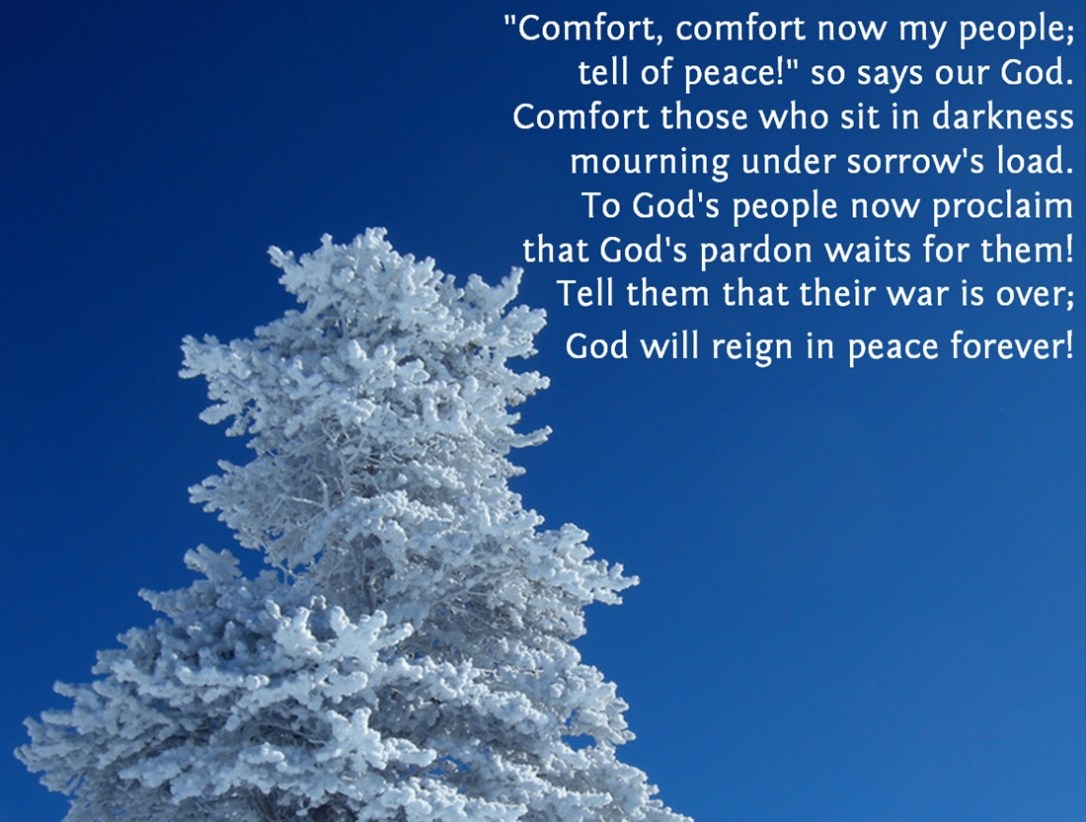
Despair’s most damaging legacy is fear. These days are, for me at least, days of fear. I watch the current president and listen to his words in horror. He speaks with hostility. He gives welcome to divisiveness, racism, misogyny and disrespect. His words are often divisive, rude and insensitive. He uses his power to build an unsettled nation. I despair for the nation, and I despair for a world filled with violence, war, hunger, poverty, and natural disasters born of climate change.

My faith tells me that there is a remedy for despair, that fear can be conquered, and that peace might be restored in me. The poetry of Wendell Berry is a beautiful reminder.

When despair for the world grows in me
and I wake in the night at the least sound
in fear of what my life and my children’s lives may be,

I go and lie down where the wood drake
rests in his beauty on the water, and the great heron feeds.

I come into the peace of wild things
who do not tax their lives with forethought
of grief.

I come into the presence of still water.
And I feel above me the day-blind stars
waiting with their light.

For a time I rest in the grace of the world, and am free.

— From Wendell Berry’s “The Peace of Wild Things“

When despair casts its damaging spell within me, my faith still holds. They are waiting for me, always, the peace that is a balm for grief and despair, the presence of still waters and the stars sparkling in my night sky. This otherworldly beauty causes me to rest in the arms of faith and to recall the many times of despair in my life that served only to make me stronger and more resilient.

Thanks be to God.

Christmas, Despair, Hate, Hope, Music, peace, Violence

Peace on Earth. Good Will to Us All!

E8CBC92D-81BE-4275-B6EE-57B14513900E
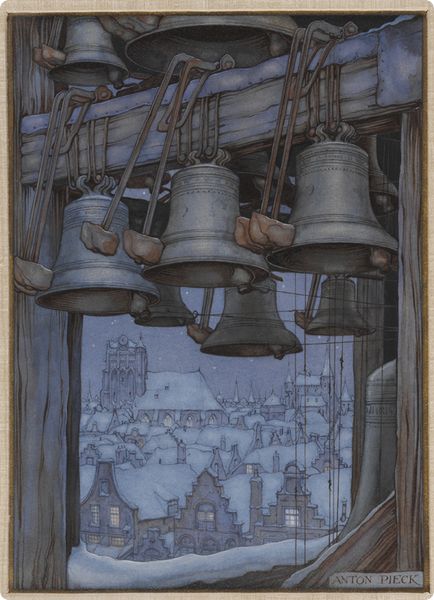
We rarely sing one of my favorite Christmas Carols. Its words always cause emotions to well up within me. Although the words of this carol were written in the mid-1800’s, they still speak to the bleakness we face in these days.

It was on Christmas day in 1863, when Henry Wadsworth Longfellow — a 57-year-old widowed father of six children, the oldest of which had been nearly paralyzed as his country fought a war against itself — wrote a poem seeking to capture the dissonance in his own heart and in the world he observed around him. He heard the Church bells that December day. He heard the singing of “peace on earth,“ but he also despaired of a world of injustice and violence that seemed to mock the truthfulness of any sort of peace. Yet Longfellow’s words eventually led to a sense of confident hope even in the midst of bleak despair.

Such confident hope will also guide us through our own reality — a reality that constantly reminds us that the presence of despair, violence, injustice and intolerance destroys the hope, peace, justice and lovingkindness we so deeply desire for our world.

I heard the bells on Christmas Day
Their old, familiar carols play,
and wild and sweet
The words repeat
Of peace on earth, good-will to men!

And thought how, as the day had come,
The belfries of all Christendom
Had rolled along
The unbroken song
Of peace on earth, good-will to men!

Till ringing, singing on its way,
The world revolved from night to day,
A voice, a chime,
A chant sublime
Of peace on earth, good-will to men!

Then from each black, accursed mouth
The cannon thundered in the South,
And with the sound
The carols drowned
Of peace on earth, good-will to men!

It was as if an earthquake rent
The hearth-stones of a continent,
And made forlorn
The households born
Of peace on earth, good-will to men!

And in despair I bowed my head;
“There is no peace on earth,” I said;
“For hate is strong,
And mocks the song
Of peace on earth, good-will to men!”

Then pealed the bells more loud and deep:
“God is not dead, nor doth He sleep;
The Wrong shall fail,
The Right prevail,
With peace on earth, good-will to men.”

“Then pealed the bells more loud and deep, ‘God is not dead, nor doth He sleep.””

Amen

Advent, Faith, Inspiration, peace, Prayer

A Prayer for Peace

A81E9F0E-2271-4149-9432-5B83AFE1AEBDLoving God, Creator of all,

Listen to the cries of our hearts as we await the coming of the Prince of Peace.

Hear us as we cry out in the midst of a world where peace is not a reality.

Comfort us as we reach out with heart and hand to our brothers and sisters in need.

Ennoble us to open our arms to those who are in exile.

Make our nation a hospitable land in which all people love their neighbors.

Forgive us for acts and words of hatred, exclusion and bigotry.

Grant us open hearts that care for all,
and help us walk in the image of Christ.

Amen.