Despair, Faith, God's presence, healing, Loss, peace, Prayer, Restoration

Wounds of the Soul

IMG_5942
Early morning comes to a green valley near Marshall, Arkansas.
Photo by Paul Barrows.

Hurricanes and earthquakes of the soul . . .

The lush vegetation of Puerto Rico has been replaced by broken trees, homes lying in ruins, a painfully barren landscape. “Hurricane Maria destroyed us,” said Edwin Serrano, a construction worker in Old San Juan.

Dominica was devastated. Thousands of trees snapped and were strewn across the landscape, leaving the island completely stripped of vegetation. Dozens of mudslides turned the sparkling blue-green sea to a murky, muddy brown.

At least 286 people were killed in Mexico City by a magnitude 7.1 earthquake. A rescue operation at the city’s Enrique RĂ©bsamen school resulted in the rescue of eleven children, but nineteen children and six adults were killed. Extreme urgency permeated the school as more than 700 rescue workers continued digging after two days without sleep, knowing that survivors would be able to last only about four days.

In a very real sense, nature turned on the survivors, leaving them despairing from disasters that created devastation in many forms. Destroyed cities, of course, physical injuries and homes left in the rubble, yes. But also wounds of the soul that are lasting and life-changing.

People who live through natural disasters live with a kind of violence, violence that is perpetrated randomly by nature. When one depends upon nature’s rhythms to provide sunlight and moonlight, rain and breeze, the predictable tide of breaking waves and calm waters, the suddenness of violent storms and earthquakes assault the psyche. Nature is usually a constant, comforting presence, but a natural disaster leaves those in its wake coping with an environment that resembles a war zone. Living in that kind of environment day in and day out causes behaviors similar to those identified with persons who suffer from PTSD (Post-traumatic stress disorder).

The assault by nature creates a chronic and debilitating state of fight or flight. To cope, survivors develop the ability to numb their feelings and repress intrusive memories. This leaves many of them with enormous anxiety, feeling that the world is no longer a safe place. While many symptoms of PTSD are evident, often the most frightening symptoms are those not readily visible, secret symptoms and reactions such as disorientation, memory lapses and night terrors. These symptoms are buried in the deep crevices of the psyche.

Wounds to the soul and spirit are caused by events that violate one’s most deeply held sense of safety and security, and it is important to address PTSD not as a “disorder,” but as a response, an appropriately normal response to an overwhelmingly abnormal situation.

So when we send positive thoughts, donate, and pray for the restoration of these ruined cities, we must also be intentional in praying for healing of the soul and spirit of every survivor. Long after buildings and homes have been repaired, survivors will live with a deep wound of the soul that can only heal with time, prayer, faith and hope, as wounded people learn to abide with the God who walks with us through every “valley of the shadow of death.” The Scripture can be a comfort in such times, and often the most familiar passages are the ones we lean on.

The Lord is my shepherd; I shall not want.

He maketh me to lie down in green pastures: he leadeth me beside the still waters.

He restoreth my soul: he leadeth me in the paths of righteousness for his name’s sake.

Yea, though I walk through the valley of the shadow of death, I will fear no evil: for thou art with me; thy rod and thy staff they comfort me.

Thou preparest a table before me in the presence of mine enemies: thou anointest my head with oil; my cup runneth over.

Surely goodness and mercy shall follow me all the days of my life: and I will dwell in the house of the Lord for ever.

– Psalm 23

Until that day when tender green shoots once again begin to fill the landscape in those devastated countries, may the wounded people walk through the green pastures of the heart and the still waters of the spirit with the Gentle Shepherd who restores the soul and leads to peace.

Courage, Darkness, Daybreak, Despair, Faith, Fear, grief, Hate, Hope, Justice

The Promise of Daybreak

IMG_5911
Pierce Creek Public Boat Landing, Mayflower, Arkansas. Photo by Steven Nawojczyk.

Therefore take the whole armor of God, that you may be able to withstand in the evil day, and having done all, to stand.

– Ephesians 6:13 Revised Standard Version (RSV)

And if you spend yourselves in behalf of the hungry
and satisfy the needs of the oppressed,
then your light will rise in the darkness,
and your night will become like the noonday.

– Isaiah 58:10 New International Version (NIV)

—————————————————————————————-

A friend recently described this time in history as “days of despair.” She talked about “a veil of darkness” that has covered our world. I have thought a great deal about her comments and have spent time pondering the kind of fear people might be feeling. Certainly, the natural disasters we are experiencing are causing feelings of great unease. Floods and fires, mighty winds and life-changing storms have left millions of people despairing. They have experienced loss of life, loss of their homes, loss of belongings, loss of their place in community. Perhaps some of them doubt the promise of a dawning day that brings back hope.

Add to that the far too frequent expressions of hate, xenophobia and racism that exacerbate distress. Clearly, there is enough fear and despair to go around in these unsettling days. After many years of acceptance and belonging, the young people we call DREAMERS suddenly feel the fear of losing all that they have worked for, including the country that has been “home” to them since they were children.

So how do disconsolate people move forward when a sense of despair holds them captive? How do people in the midst of fear and grief believe that a new dawn will break their current darkness? How do they hold on to their faith in the God who cares deeply for them, protects them, holds them close?

Can we join hearts and hands and stand courageously against injustice, standing with those who have been marginalized, believing that we will overcome the “evil day” that threatens us?

One voice throughout history declares with certain, living faith that, whatever we face, we shall overcome. I do not even need to mention his name because we hear his voice clearly during every trial. These are his words:

We shall overcome because Carlisle is right. “No lie can live forever.”

We shall overcome because William Cullen Bryant is right. “Truth crushed to earth will rise again.”

We shall overcome because James Russell Lowell is right. “Truth forever on the scaffold, wrong forever on the throne. Yet that scaffold sways the future and behind them unknown stands God within the shadows keeping watch above his own.”

We shall overcome because the Bible is right. “You shall reap what you sow.”

With this faith we will be able to hew out of the mountain of despair, a stone of hope.

— Dr. Martin Luther King, Jr., 1966

These days of darkness and division will pass. These days of dim uncertainty will pass. We shall overcome despair. As it always has, the breaking dawn will drive out the darkness of night. Hope will again rise within us as we embrace the promise of another glorious daybreak.

Amen. Thanks be to God.


Change, Christian Witness, Courage, Dreams, Mission, peace

A Holy Mission . . . A Possible Mission

IMG_5800
A post card created by the Syracuse Cultural Workers                                            commemorating Dr. Martin Luther King, Jr’s Beloved Community.
When Martin Luther King, Jr. spoke of “beloved community” he was describing the ultimate goal of non-violent activism for peace and justice — a global community of caring where poverty, hunger and in justice are no more.

As a person of faith, how do I respond to injustice? Where do I find the impetus, the courage, to confront evil? How do I go deeply into my soul to find the inner strength to stand against that which is wrong in the world? How do I work to help realize the dream of a beloved community? How do I meet the challenge of so holy a mission?

Brian McClaren recently wrote about what he saw and experienced in Charlottesville. A part of his article includes a straight-up call to people of faith.

All of us, especially people of faith, need to proclaim that white supremacy and white privilege and all other forms of racism and injustice must indeed be replaced with something better – the beloved community where all are welcome, all are safe, and all are free. White supremacist and Nazi dreams of apartheid must be replaced with a better dream – people of all tribes, races, creeds, and nations learning to live in peace, mutual respect, and neighborliness. Such a better world is possible, but only if we set our hearts on realizing the possibility.

– Brian McClaren

Oh, how we long to experience “the beloved community.” How we long to see our dreams of peace become a reality. Yes, we do set our hearts on realizing these dreams. Yet, we still feel the reticence of fear and inadequacy. We still tend to hide inside of our religiosity, the kind of religiosity that prevents us from responding to God’s call to wage peace. The Apostle Paul spoke to the religious people of his time. His words are instructive to us.

Paul stood up in the meeting of the Areopagus and said: “People of Athens! I see that in every way you are very religious. For as I walked around and looked carefully at your objects of worship, I even found an altar with this inscription: to an unknown god. So you are ignorant of the very thing you worship—and this is what I am going to proclaim to you.”

“The God who made the world and everything in it is the Lord of heaven and earth and does not live in temples built by human hands. And he is not served by human hands, as if he needed anything. Rather, he himself gives everyone life and breath and everything else . . . For in him we live and move and have our being.”

– From Acts 17:22-28

Therein lies the answer to my questions of inadequacy and urges me to go beyond my own “objects of worship.” Paul’s prompting urges me to move outside of my own religious temple into a hurting and warring world. How can I find the will and the courage?

In God I live and move and have my being. That makes every holy mission a possible mission.

May God make it so.

Contemplation, Darkness, Faith, Fear, Grace, grief, Loss

In the Dark


IMG_5755

I was asked recently to write about faith and chronic illness. The request prompted me to recall the year I lived in the dark, the year that I was so seriously ill. It made me think about the losses I have experienced since the diagnosis of end stage kidney disease. It reminded me of the freedom I have lost because of the eight hours I spend on dialysis every day.

The truth is that, in 2014, I thought I was going to die. The greater truth is that I did not die. In fact, I slowly grew physically stronger. Spiritually and emotionally, I descended into grief and despair and somehow managed to emerge with fresh hope and deeper faith.

It was a grueling process learning to write again, practicing with the occupational therapist’s endless pages of ABCs over and over until I began to form legible letters. It was hard learning to walk again, regaining the strength and balance I had lost. It was hard being unable to cook, to care for the house, to bathe myself, to browse the web, to do all the simple things I used to do so easily.

To be sure, it was a dark time of frightening uncertainty and doubt. I mourned for the life I once enjoyed. But in time, I discovered an unexpected grace: that spiritual transformation often happens in the dark. The writing of Richard Rohr offers a way to describe this time of my life. This is what he writes.

We seldom go willingly into the belly of the beast. Unless we face a major disaster . . . we usually will not go there on our own accord. Mature spirituality will always teach us to enter willingly, trustingly into the dark periods of life, which is why we speak so much of “faith” or trust.

Transformative power is discovered in the dark—in questions and doubts, seldom in the answers . . . Wise people tell us we must learn to stay with the pain of life, without answers, without conclusions, and some days without meaning. That is the dark path of contemplative prayer. Grace leads us to a state of emptiness, to that momentary sense of meaninglessness in which we ask, “What is it all for?” 

– Richard Rohr

It was indeed “the belly of the beast” for me. And as Richard Rohr writes so eloquently, I needed to learn to “stay with the pain of life, without answers, without conclusions, and some days without meaning.”

Here’s the outcome. Smack dab in the middle of the darkness I experienced, there was God. There was grace. There was transformation. And there was renewed life. Thanks be to God.

Faith, God's presence, grief, Hope, Prayer

Nearer, My God, to Thee

Enlight136

While enjoying some quiet time on my new pergola swing, I listened to the hymn “Nearer, My God, to Thee” sung by Brigham Young University’s male choral group, Vocal Point. It would not be an exaggeration to say that I was transported to a sacred place in those few moments. The hymn I had sung for so many years took on fresh, new meaning for me. It could be because of my aging, my illness, my need for a closer relationship with God. Perhaps the hymn spoke to me simply because I needed it. I have long loved this old hymn and its simple, but profound, message.

Nearer, my God, to Thee, nearer to Thee!
E’en though it be a cross that raiseth me,
Still all my song shall be, nearer, my God, to Thee.

Refrain:
Nearer, my God, to Thee, nearer to Thee!

Though like the wanderer, the sun gone down,
Darkness be over me, my rest a stone;
Yet in my dreams I’d be nearer, my God, to Thee.

There let the way appear, steps unto Heav’n;
All that Thou sendest me, in mercy giv’n;
Angels to beckon me nearer, my God, to Thee.

Then, with my waking thoughts bright with Thy praise,
Out of my stony griefs Bethel I’ll raise;
So by my woes to be nearer, my God, to Thee.

Or, if on joyful wing cleaving the sky,
Sun, moon, and stars forgot, upward I’ll fly,
Still all my song shall be, nearer, my God, to Thee.

– Lyrics by Sarah F. Adams, 1805–1848
Music by Lowell Mason, 1792–1872
Published 1841, Hymn in public domain.

What makes this particular performance of the hymn so compelling is the inclusion of a counter melody. While a solo voice sings the words of “Nearer, My God to Thee” and paints a portrait of a life drawing near to God, the chorus sings a counter melody in Latin. The music is stunningly beautiful. The message reaches the depths of a soul in need of God’s presence. One listener described it like this:

So wonderful. It feels like angels paying a visit to earth with a hymn.

So I want to share with you the Latin text and the translation, which brings new meaning to the hymn.

In articulo mortis // At the moment of death

Caelitus mihi vires // My strength is from heaven

Deo adjuvante non timendum // God helping, nothing should be feared

In perpetuum // Forever

Dirige nos Domine // Direct us, O Lord

Ad augusta per angusta // To high places by narrow roads

Sic itur ad astra // Such is the path to the stars

Excelsior // Ever upward

Why, you might ask, am I writing a music review on my blog today? I suppose my words are an attempt to describe a need for the nearness of God. In times of grief, when sorrow overwhelms, when darkness is all we see, drawing near to a God of compassion is our healing balm and our highest hope. As I contemplate this truth, I am thinking of what was called the greatest disaster in maritime history — April 14, 1912 — the S.S. Titanic sank after striking an iceberg. As the ship disappeared into the vast ocean, Mr. W. Hartley, the ship’s bandmaster, led the band in playing “Nearer, My God, To Thee.”

I pray that, in whatever crisis you face, you will rest in the nearness of God. And I invite you to listen to BYU Vocal Point’s performance of this hymn:


Contemplation, Courage, Covenant, Prayer

Raising Cain

IMG_5745
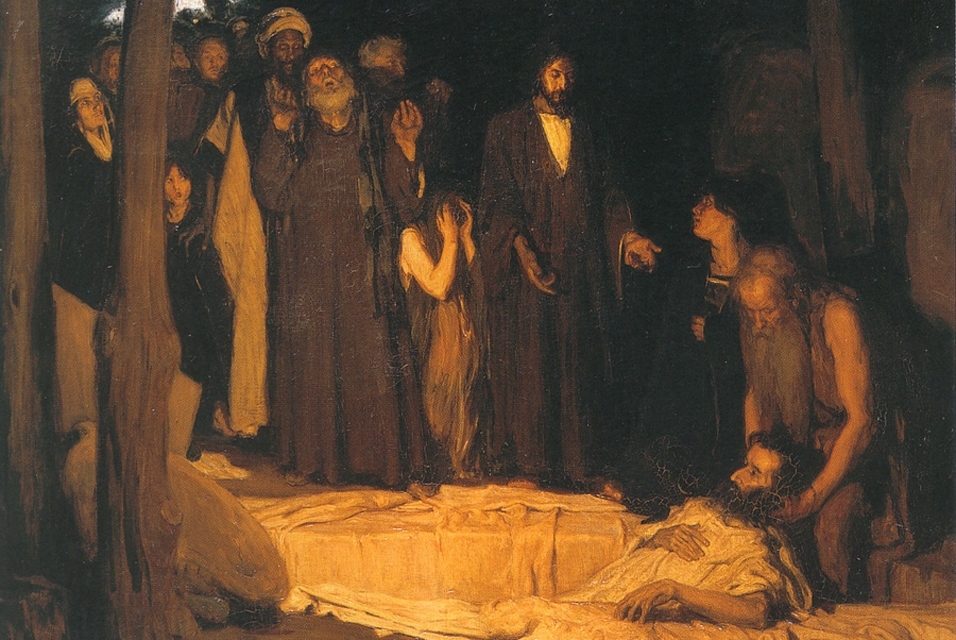
“The Resurrection of Lazarus.” Oil on canvas painting by Henry Ossawa Tanner, 1896 

As someone born and raised in the south, I know a lot about “piddlin’ around.” I do it all the time, and when the day’s light comes to an end, I always wonder if I have done anything at all worthwhile.

Don’t get me wrong. I heartily approve of some piddlin’ around in life. Especially holy piddlin’ like getting quiet and getting in touch with God. Holy piddlin’ like sitting in silent contemplation can bring God close to me. Praying can take me to a special place for sensing God’s touch. Listening to sacred music opens my soul to the whisper of God.

Piddlin’ can be a very life-giving pastime. On the other hand, some of us God followers long to change the world, to face off against oppression, to do justice, to end wars . . . to do something of eternal meaning.

Our problem is that changing the world can be a heavy burden that we simply cannot carry around for long. The secret, I think, is a balance between pensive spiritual moments with God and those once-in-a-while moments of sparkling mission and calling, those moments when we rise courageously above ourselves and almost see miracles. Truth is, it is not a common happening for us to find ourselves raising anyone from the dead or healing someone who is suffering illness.

It seems that the best we can do is to say to God, “I offer you, God, my silent devotion. And I offer you my willingness to follow your highest calling and your most extraordinary mission, wherever it leads and whatever the cost. Here’s my heart. Do with my life as you will.”

I very much enjoy the writing of Annie Dillard, and she has written eloquently on this very subject. Here’s what she writes.

There is always the temptation in life to diddle around making itsy-bitsy friends and meals and journeys for years on end… But I won’t have it. The world is wilder than that in all directions, more dangerous…more extravagant and bright. We are…raising tomatoes when we should be raising Cain, or Lazarus.

– Annie Dillard

I hope that you will find many of those sacred “be still, my soul” moments with God. But I pray also that you will, along the way, have eyes wide open for those bright and extravagant miracle moments when it just might be possible to raise Cain or raise Lazarus.

Faith, God's presence, healing, Hope

A Perfect Place to Die

IMG_5744
Japan’s Aokigahara Suicide Forest

I watched a very thoughtful and intriguing movie last week — The Sea of Trees. The film was captivating, telling the story of a despondent professor who despaired of life and searched for a way to end his life. His search led him to Aokigahara, a forest in Japan known also as the Sea of Trees or the Suicide Forest.  Aokigahara Forest has been home to over 500 confirmed suicides since the 1950s. It is called “the perfect place to die” and is the world’s second most popular place for suicide.

One might say that suicide is not the most uplifting subject for a blog. But suicide is a very real and present tragedy in the world. Consider these startling statistics reported by The Jason Foundation. (http://prp.jasonfoundation.com/facts/youth-suicide-statistics/)

▪️Suicide is the second leading cause of death for ages 10-24. (2015 CDC)

▪️Suicide is the second leading cause of death for college-age youth and ages 12-18. (2015 CDC)

▪️More teenagers and young adults die from suicide than from cancer, heart disease, AIDS, birth defects, stroke, pneumonia, influenza, and chronic lung disease, combined.

▪️Each day in our nation, there are an average of over 5,240 attempts by young people grades 7-12.

▪️Each year, 30,000 Americans die by suicide. An additional 500,000 Americans attempt suicide annually. (http://www.mentalhealthamerica.net/suicide)

Some people have found help through suicide prevention programs. Others choose to turn to 24-hour suicide helplines available around the clock to provide crisis intervention. (https://suicidepreventionlifeline.org/) Still others find that it is their faith that raises fresh hope within them and lifts their sight above the darkest of days.

There is a special kind of renewed hope when people who have been on the brink of taking their own lives share their stories of faith, the depth of faith that ultimately gave them the inner strength to live. Samuel Trevor Francis (1835-1925) told such a story of faith. He experienced a spiritual turning point as a teenager, contemplating suicide one night on a bridge over the River Thames. An unexpected renewal of his faith saved his life that night. At age 41, Samuel Trevor Francis recalled the faith that saved him and penned the words of the well-known Christian hymn, “O the Deep Deep, Love of Jesus.”

O the deep, deep love of Jesus, vast, unmeasured, boundless, free!
Rolling as a mighty ocean in its fullness over me!
Underneath me, all around me, is the current of Thy love
Leading onward, leading homeward to Thy glorious rest above!

O the deep, deep love of Jesus, spread His praise from shore to shore!
How He loveth, ever loveth, changeth never, nevermore!
How He watches o’er His loved ones, died to call them all His own;
How for them He intercedeth, watcheth o’er them from the throne!

O the deep, deep love of Jesus, love of every love the best!
‘Tis an ocean vast of blessing, ’tis a haven sweet of rest!
O the deep, deep love of Jesus, ’tis a heaven of heavens to me;
And it lifts me up to glory, for it lifts me up to Thee!

But let’s go back to where we began —  the best place to die.

Many years ago, I looked for that place, a way out of many years of relentless, chronic pain. I traveled alone to Mayo Clinic to receive two weeks of specialized medical care and physical therapy.  Perhaps a city very far from my home would be the best place to die. After an upsetting treatment at the clinic, I managed to make it to my hotel room. I took out all the bottles of prescription medication I had with me. The phone rang, and a friend distracted my focus from the tablets I had poured out in front of me. And through our conversation, with tears falling on my freshly-made bed, I learned something very life-giving about the depth of my faith, and most of all, about the depth of God’s abiding, ever-present love.

And so today I can say with strong assurance that the best place to die — or to live — is in middle of the deep, deep love of Jesus, a love that is for me “vast, unmeasured, boundless, free!” A love that restored hope in the midst of my despair. A love that was enough.

Today, as I silently sing “O the Deep, Deep Love of Jesus,” the words of that beautiful hymn ring real and true. God’s love truly was underneath me and all around me, even on that cold and lonely night in Minnesota.

Thanks be to God.


Faith, Perseverance, Prayer

Pleading for the Future

Enlight120

Attorney and prominent advocate for economic reform Clarence Darrow used a compelling statement as a part of his closing argument in the 1924 Leopold-Loeb trial in Chicago. “I am pleading for the future,” he said.

I am pleading for the future; I am pleading for a time when hatred and cruelty will not control the hearts of men. When we can learn by reason and justice and understanding and faith that all life is worth saving and that mercy is the highest attribute of man.

– Clarence Darrow
April 18, 1857 – March 13, 1938

Perhaps we should engage in some sincere pleading for the future in light of the recent and very disturbing news reports that describe our world as a precarious one.

A serious opioid epidemic is swamping hospitals, with government data showing 1.27 million emergency room visits or inpatient stays for opioid-related issues in a single year. (The Washington Post)

Otto Warmbier, the University of Virginia student who was detained in North Korea for nearly a year and a half, died Monday afternoon, days after he returned home in a coma. (The Washington Post)

Two “terrorist incidents” include reports of a van plowing into pedestrians on London Bridge and stabbings at the nearby Borough Market. (ABC News)

U.S. Representative Steve Scalise and three others were shot at a GOP baseball practice in Alexandria, Virginia. The shooter, James T. Hodgkinson, was killed by police after firing dozens of bullets during the congressional practice session. (NPR)

A suicide terrorist killed 22 people outside of an Ariana Grande concert in Manchester, England. (Fox News)

To the God who knows the woes of our world, who is our refuge and strength, we do plead for the future. As Clarence Darrow wrote, “we have learned by reason and justice and understanding and faith that all life is worth saving and that mercy is the highest attribute of humankind.” So, in spite of the world’s troubles that threaten us, we persevere in faith, inspired by the Psalmist who speaks this good news.

God is our refuge and strength,
an ever-present help in trouble.
Therefore we will not fear, though the earth give way
and the mountains fall into the heart of the sea,
though its waters roar and foam
and the mountains quake with their surging . . .

Nations are in uproar, kingdoms fall;
he lifts his voice, the earth melts.

The Lord Almighty is with us;
the God of Jacob is our fortress . . .

He makes wars cease
to the ends of the earth.

He breaks the bow and shatters the spear;
he burns the shields with fire.

He says, “Be still, and know that I am God;
I will be exalted among the nations,
I will be exalted in the earth.”

The Lord Almighty is with us;
the God of Jacob is our fortress.

– From Psalm 46

Darkness, Faith, God's Faithfulness, Grace, Life pathways, Light

Light for a Dark Path

IMG_5623

Life can be a very dark path, frightenly uncharted. Inching through life often finds us hesitating in dark places, afraid to take even one step into an unknown future. The darkness can be daunting. Still, for me light has at times eased the darkness, and with even a tiny ray of light, I was able to move forward.

Brother Curtis Almquist writes of the grace-filled presence of beacons of light.

There have been people in our past who have been beacons of light, and whose life still shines into the present . . . and we remember them because they help us find our way and know our place in life, which is otherwise so terribly uncharted.

– Brother Curtis Almquist
Society of Saint John the Evangelist

How fondly I remember and give thanks for the people who were beacons of light for me.

Yiayia, my beloved grandmother, who was my faithful and loving protector and whose energy nurtured me.

Thea Koula, my favorite aunt, who was like a mother to me and who brought joy and lightheartedness to my life.

Ethel, my forever friend, who was a constant beacon of light, always helping me find my way.

In the darkness, the light of faith endured and made the journey possible. Most certainly, the people in my life strengthened my faith and were for me a welcomed light for a dark path. And yes, I stumbled over more than a few nasty obstacles and rough spots. But even when I languished in the darkness of an uncharted path, my faith was enough. My faith was my brightest light.

I will be forever grateful for the beacons of light that helped guide me on the journey and for the enduring, constant presence of a faithful God.

The Lord will guide you always;
will satisfy your needs in a sun-scorched land
and will strengthen your frame.
You will be like a well-watered garden,
like a spring whose waters never fail.

– Isaiah 58:11 NIV

Freedom, Justice, Perseverance

Justice Is a Verb!

Design

Surely someone has written about the challenge of being a Christian in these days of political upheaval and societal angst. I need to read such a book. I need to be emboldened to live out my faith, not as a passive bystander, but as a change-agent that insists on peace and justice.

My close friend and colleague in ministry, Wendell Griffen, insists that justice is a verb. His life beckons us to live into what he calls “the fierce urgency of prophetic hope.” In his book of the same name, he asks people of faith to consider this question: “How can we speak of hope in a time of deep division—a time too often defined by racism, misogyny, materialism, militarism, religious nationalism, and xenophobia?” *

My faith compels me to find ways to speak hope in these unsettled days, to speak truth to power when people suffer oppression, to care deeply about injustice. As I sit in my home dealing with the inevitable aging that marks my days, I think about the past to a time when advocacy was my passion. I remember ministry in the hospital, at the jail, in child sexual abuse forensic interviews, in courtrooms. I remember the energy of speaking for those who were suffering. I recall a life on the edge that made a difference in people’s lives.

But what about today? How does my faith ennoble me at this time of my life? What is my new normal in service and ministry? In what ways will my voice be heard proclaiming hope, justice and equality?

The following words are written by Dr. Cornel West in his book Democracy Matters:  Winning the Fight Against Imperialism:

To be a Christian is to live dangerously, honestly, freely–to step in the name of love as if you may land on nothing, yet keep stepping because the something that sustains you, no empire can give you and no empire can take away. This is the kind of vision and courage required to enable the renewal of prophetic, democratic Christian identity in the age of the American empire. *

I believe there are still battles that I must fight. I believe that the vision and courage of youth remains. I believe that when God calls one to be a prophetic voice, that call is a permanent, lifelong call. My challenge is to keep stepping in the name of love, seeking to do justice, always knowing that God will sustain me.

And the Lord will guide you continually,
and satisfy your soul in parched places,
and will strengthen your bones;
and you’ll be like a watered garden,
like a spring of water,
whose waters never fail.

Isaiah 58:11, ISV
* The Fierce Urgency of Prophetic Hope, Wendell L. Griffen, 2017: Judson Press,
http://www.judsonpress.com/author.cfm?author_id=894

* Democracy Matters: Winning the Fight Against Imperialism, Cornel West, 2004: The Penguin Press

Faith, Fear, God's presence, healing, Loss, Mourning, Perseverance

We Can Overcome

Design

Young girls run frantically from the sound of a bomb, screaming, crying, confused, and terribly afraid. An evening of sheer joy listening to the music of Ariana Grande had turned into an evening of terror.

In a British music venue, a suicide bomb killed 22 people, some of them children. Eight-year-old Saffie Rose Roussos lost her life, and 59 other people were wounded, some suffering life-threatening injuries. Many others are still missing.

The response? Muslim men pray for victims of the attack at a mosque in Manchester. Police officers look at flowers and messages left for the victims. A Union Jack flag is lowered at half-mast in honor of the victims. Religious leaders hold a prayer meeting in central Manchester. Ariana Grande spoke about the attack: “broken. from the bottom of my heart, I am so so sorry. I don’t have words.”

Is this a portrait of the world we live in? Must we fear for our children and lament the lives they must live? Do we place our faith in a God we sometimes question when tragedies happen?

One of my favorite Scripture passages is also one of the most poignant laments in the Bible. It is found in the fifth chapter of Lamentations. The words express deep mourning and profound loss, leaving the writer asking God, “Why do you always forget us? Why do you forsake us so long?” The hurting people who had lost everything they cherished cried out . . .

Joy is gone from our hearts;
our dancing has turned to mourning.

– Lamentations 5:15, NIV

Sometimes our dancing really does turn to mourning. All of us are acquainted with loss. Our world is a dangerous place, and tragedies like Manchester remind us of our vulnerability. So how do we live? How do we go on? How do people of God live this kind of dangerous life?

The musical group Hillsong sings “This Is How We Overcome.” The song, which is written by Reuben Morgan, echoes the celebration of the Psalmist in the fifth chapter of Psalms.

You have turned my mourning into dancing
You have turned my sorrow into joy.

The song continues with these words.

Your hand lifted me up. I stand on higher ground.
Your praise rose through my heart and made this valley sing.

They sing of the continual presence of God, even in times of deep mourning, profound loss, and grave danger. That kind of song speaks of our faith, a faith that still holds us and always picks us up when we have fallen. Our faith is our resilience.

We can overcome. Every time. Every time life circumstances assail us and steal our music, we persist. We sing. We dance. We praise a God who is eternally near. So let us persevere, always proclaiming the source of our strength.

The Rev. Michelle L. Torigian prays this prayer.

Let us resiliently resume our dancing.
Let us sing louder. Let us speak out voices with determination.

May it be so. Amen.

(Rev. Torigian’s prayer may be found at https://revgalblogpals.org/2017/05/23/tuesday-prayer-95/.)

Courage, Fear, Hope

Beautiful and Terrible Things

IMG_5469

We live in a world where beautiful things happen every day. The dawn lights the dew of the night. The sun rises and warms the earth. The rain satisfies the thirsty ground. The foliage wears its lush green and the flowers bloom again and again.

Just in my own family new babies will soon be born. We will celebrate two high school graduations. Our young ones, just babies yesterday it seems, will begin college. To be sure, in the world beautiful things happen.

But terrible things will happen, too. A news story tells of an infant being found with almost a hundred rodent bites. An eight year old boy takes his own life. Syrian children are orphaned by war. The United Nations reports more than 14 million Yemenis are going hungry, 370,000 of them children. Certainly, in this world, terrible things will happen.

I am comforted by these words from Frederick Buechner.

Here is the world. Beautiful and terrible things will happen. Don’t be afraid.

The challenge to our hearts is to live in the world without fear, to live courageously, to live fully with hope and joy.

So do not fear, for I am with you; do not be dismayed, for I am your God. I will strengthen you and help you; I will uphold you with my righteous right hand.

– Isaiah 41:10

Bondage, Freedom, Hope

Chains

IMG_5468

Chains.

Some folks see a golden necklace with sparkling links. But others see chains as cruel symbols of enslavement. History records thousands of inhumane acts of enslavement. A review of history is about real people whose lives were oppressive, whose chains were heavy, whose slavery was permanent. We remember their lives with a sense of shame and we honor them with genuine repentance.

But we must also bring the reality of chains closer to home as we recall the times of our lives that held us in chains. Serious illnesses. Violent relationships. Troubled children. Careers that became personal enslavement. No, the chains that bound us were not made of steel. Instead, they were chains that bound our very being, holding us fast, oppressing our spirits.

In all of this, there is hope. It is the hope of God’s grace that empowers us to break free. I am reminded of one of my favorite Scripture passages.

It is for freedom that Christ has set us free. Stand firm, then, and do not let yourselves be burdened again by a yoke of slavery.

– Galatians 5:1, New International Version

Of one thing I am certain. God does not desire for us a life of enslavement, but graces us with the courage to free ourselves from all that holds us hostage. Life in Christ is not a life of chains. It is a life of freedom to live, to love, and to thrive. Though we may have been hurt by circumstances that left us in chains, our souls can never be chained.

Laurie Halse Anderson writes this in her brilliant novel series, Chains: Seeds of America.

She cannot chain my soul. Yes, she could hurt me. She’d already done so . . . I would bleed, or not. Scar, or not. Live, or not. But she could not hurt my soul, not unless I gave it to her.

Please listen to a beautiful arrangement of “Amazing Grace/My Chains Are Gone” sung by Noteworthy.  https://m.youtube.com/watch?v=X6Mtpk4jeVA


Change, Faith, grief, Hope, Suffering

A Living Hope

Design

When an eight year old child takes his own life after being viciously bullied, a mother is left in deep bereavement  holding a deep sadness that will forever mark her life. Every day, life stories like hers come through on our news feeds. We hear them; we feel a moment of strong empathy; we move on to the next like task.

The reality is that any of us, all of us, may face the worse of life’s pain at any time. None of us is immune to tragedies that turn life upside down. Each of us will at times endure gale force winds that rearrange everything we hold dear.

As always, we are left to figure out how to navigate hard times, how to summon the faith we need to persevere. We must find within ourselves a living hope that cannot be destroyed. Only then will we be able to endure the difficulty life can hand us.

Often, I find wisdom and comfort in the words of Bishop Steven Charleston. This is what he writes about faith during difficult times.

It is hard. Life is hard. The losses, the sudden arrival of illness, the struggles within families, the pressure of a world trying to find a reason to hope. Spirituality that is sugar is no help in such a reality. Feel good philosophy cannot withstand the weight of what many of us have had to face. If it is to endure the gale force winds of chance, faith must be deeply rooted, anchored in trust, strengthened by courage, able to bend but never break. So here is a prayer for all of you living in the real world: may you find your faith as tough as you are and as resilient as the love that keeps you going.

– Steven Charleston

The good news is that God graced us with a resilient faith that perseveres when we endure trials, a living hope that can never fail. Thanks be to God.

Praise be to the God and Father of our Lord Jesus Christ! In his great mercy he has given us new birth into a living hope through the resurrection of Jesus Christ from the dead, and into an inheritance that can never perish, spoil or fade. This inheritance is kept in heaven for you, who through faith are shielded by God’s power until the coming of the salvation that is ready to be revealed in the last time. In all this you greatly rejoice, though now for a little while you may have had to suffer grief in all kinds of trials. These have come so that the proven genuineness of your faith—of greater worth than gold, which perishes even though refined by fire—may result in praise, glory and honor when Jesus Christ is revealed.

– I Peter 1:3-7

Change, Faith, Hope, Life pathways

Change and Hope

Enlight90

Change happens always, but not always for the better. It is simply a reality of living life. Change comes to us; we try our best to navigate it; and with any luck, we will end up stronger for it. In the best of all worlds, going through change will strengthen our hope and bolster our faith. To be sure, best laid plans change all the time, often leaving us shaken. But it is good to know that God knows all about changes and what they do to our equilibrium.

For I know the plans I have for you, declares the Lord, plans for welfare and not for evil, to give you a future and a hope.

– Jeremiah 29:11

Change does not always feel like hope to us. What we face tomorrow, and all the tomorrows to come, is always an unknown, an unknown that causes fear in us. And yet, so much of our contentment depends on our outlook, how we see change, how we move ourselves through it, how we end up on the other side. I like the outlook that journalist, Linda Ellerbee shares in this statement.

What I like most about change is that it can be a synonym for hope. If you are taking a risk what you’re really saying is, “Ibelieve in tomorrow and I will be a part of it.”

– Linda Ellerbee

So if there is any good advice here, it is to hang on to your life even in the face of change. Try to see change as hope. Navigate those life risks, all the while proclaiming, “I believe in tomorrow and I will be a part of it.” Living that way is the way of God, the way of faith, the way of hope.

Hope, Sorrow, Suffering

Forged from Light and Fire


Design

Like most people, I have experienced sorrow. At times, I have felt sorrow bury into my soul so deeply that I felt as if I could not move beyond it. And I have experienced the shattering of my heart. Such times are inevitable in the cycle of life. Eventually the pain refines us and leaves us stronger than before.

We have critical choices along the way. We could choose to remain in despair. We could choose to let the past pain define our future. We could move ahead taking regret along with us. Or we could dare to dream of hope. We could walk once more in the light of healing. We could open our hearts to a brighter future, leaving the pain of the past behind.

We could take the wise and hope-filled advice of Bishop Steven Charleston.

Let the longing night alone, as shadows recede before the brightening sun, for what has past still sleeps, and will always sleep, in a land too distant for you to return. Leave sorrow beside the door, resting in a corner quietly, and step over the threshold of regret, to walk once more beneath an open sky. Today is the future you have made, a world waiting for you to define it, as honest in expectation as your own hope, as real as you dare to dream it. You were not fashioned from despair, but forged from light and fire, crafted to breathe mountain air, a child of such a long line, even angels cannot name it.

I, for one, choose to lean into a living hope, a hope that is beyond any pain and greater than any grief. Yes, I am forged from light and fire, graced by God to endure and persevere. Thanks be to God.

Blessed be the God and Father of our Lord Jesus Christ! By his great mercy he has given us a new birth into a living hope through the resurrection of Jesus Christ from the dead, and into an inheritance that is imperishable, undefiled, and unfading, kept in heaven for you, who are being protected by the power of God through faith for a salvation ready to be revealed in the last time. In this you rejoice, even if now for a little while you have had to suffer various trials.

1 Peter 1:3-6, New Revised Standard Version (NRSV)


Courage, Faith, healing, Spiritual growth

Wounds of the Soul

image

The past and its memories can be harsh. Especially for those who have experienced great hurt. I call such hurts wounds of the soul.

After the injury ceases its pain, after the scars heal, the wounds of the soul remain. They remain forever as a reminder, not only that I was hurt, but also that I survived. I have learned not to be enslaved by my wounds. They remind me that I was stronger than the thing or the person that tried to hurt me.

How does one heal the wounds of the soul? You don’t heal them. They never go away. They remain on the soul as badges of courage and reminders of strength and perseverance. They happened in the past, of course, but they make me more mindful of the glories of the present moment.

“When we are mindful, deeply in touch with the present moment, our understanding of what is going on deepens, and we begin to be filled with acceptance, joy, peace and love.”

– Thich Nhat Hanh
In spite of the soul’s wounds, I am filled with acceptance, joy, peace and love. There is a part of me that is grateful for the wounds that stay with me. They make me stronger. They make me resilient. They make me wise enough to not be hurt again. I want to always remember that the soul is able to endure the wounds. The soul’s memories will always mark the time of the hurt and hold it for safekeeping. The soul will bear its wounds with grace, thankful that they make us the person we are meant to be.

I often ask myself the question “Who would you be without the wounds?”

Faith, Hope, Light

Lead, Kindly Light

image

Sometimes we walk in darkness, unable to see the way ahead. In such times, we usually take small steps, one at a time, one after another, hoping we will again find the light. Darkness can be frightening, causing us to despair, causing us to doubt the future.

I have always been a student of hymns, knowing that the words and music of hymns bring me deep comfort. A comforting hymn that speaks to a dark time in life is “Lead, Kindly Light.”

Lead, Kindly Light, amidst the encircling gloom,
Lead Thou me on!
The night is dark, and I am far from home,
Lead Thou me on!
Keep Thou my feet; I do not ask to see
The distant scene; one step enough for me.

So many hymns have their stories of giving strength, and “Lead, Kindly Light” has many of them. One is about the largest mining disaster in the Durham coalfield in England in 1909, when 168 men and boys lost their lives as the result of two underground explosions. Incredibly, there were still men alive underground. A group of 34 men and boys had found a pocket of clean air. They sat in almost total darkness, when one of them began humming the hymn “Lead Kindly Light.” In no time at all. the rest of the miners joined in the singing . . .

“Lead kindly light amidst the encircling gloom, lead thou me on, The night is dark, and I am far away from home. . .”

After fourteen hours, thirty men were rescued.

Our stories do not always have happy endings. At times, the darkness continues longer than we can bear it. But in those times, we can still take one step at a time until the light comes again. We can take each step in hope and in the confidence that we will again walk in the light. We can count on it!

Bitterness, Courage, Faith, Hope

Bitter Days

image

I never had a charmed life. I have lived through bitter days, many of them. I have known sorrow, hopelessness, darkness, emptiness, loneliness, and all manner of emotional angst. But in those bitter times when I thought my world had fallen apart, I always found a fresh measure of faith, certainly enough faith to weather the storm.

It is true that I have often found myself standing alone on shifting sand. It is true that I have experienced loneliness, wondering why God had left me bereft and alone. It is true that, at times, I lost all hope. It is true that my tears fell freely and there was no one to witness my pain.

The words of Bishop Steven Charleston, once again, describe the emotions I have felt along the way.

I don’t know about you, for there are some who live charmed lives, but I have been by that lonely shore, standing alone on shifting sand, looking out to a vast dark emptiness, an ominous and unknown sea stretching out to the cloud covered edge of my world, while waves of sadness crashed around me, stinging my eyes with the salt of ancient tears. How clear and yet how distant is that memory now. Hope is not the absence of sorrow, but the release of that sorrow beside the still waters of faith. The light is right behind you. Turn to find it.

Yes, I did find renewed hope, and I did release my sorrow beside the still waters of faith. I did it many times, always finding that God’s light really was right behind me. Thanks be to God that better days always follow bitter days.

Faith, Miracles

Miracles!

image

Miracles surround us every day, but sometimes we fail to notice them. As for me, I do believe in miracles that make life worth living. Sometimes I notice them only after they are over. But at other times, I find myself right smack dab in the middle of a working miracle. It’s magical. It enlarges my life and boosts my faith. It makes me look forward with joy to another day of life.

I often wonder how many people actually believe in miracles. I wonder if people are able to transcend a mundane life and instead experience a magical life of miracles, small and large. I have discovered, though, that miracles are not magic tricks. Miracles are a product of deep faith and living life on a soul level, embracing not only our physical world, but clinging tightly to our spiritual world.

My son recently told me a story about my one-year old grandson, Jalen, who was born with end stage kidney disease. As they consulted with the doctor recently, they learned that Jalen no longer needed dialysis and the many medications e was taking. The nurse looked at the doctor with surprise and asked, “Is this a miracle baby?” The doctor responded, “Yes!”

Why did they believe? Because they saw miracles. Things one person took as chance, a person of faith took as a sign. A loved one recovering from disease, a fortunate business deal, a chance meeting with a long lost friend. It wasn’t the grand doctrines or the sweeping ideals that seemed to make believers out of people. It was the simple magic in the world around them.

― Brandon Sanderson, The Hero of Ages

And that phrase describes miracles well: “simple magic in the world.” Don’t forget, the most important thing to know about miracles is that they happen.