Poem by Rev. Kathy Manis Findley September 7, 2024
Appalachee High School Winder, Georgia, USA September 4, 2024
WITH DEEPEST SYMPATHY Killed: Two teen boys, 14-year-old students Mason Schermerhorn and Christian Angulo. Killed: Two teachers, Richard Aspinwall and Christina Irimie. Hospitalized: Eight students and one teacher. Shooter: Age 14, also lost his life that day.
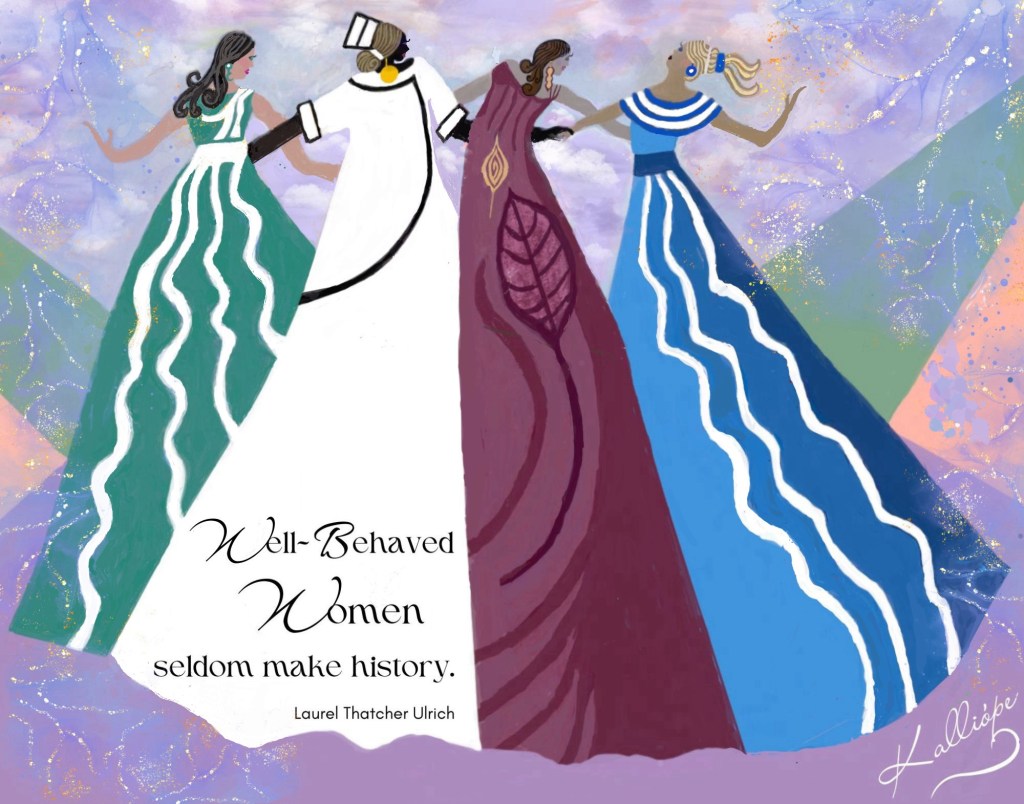
You have probably had that kind of dream at a few junctures on your journey. I know I had many dreams along the way. Sometimes they scared me to death. I dreamed of peace, equality, freedom, changing the world, and many other huge and noble dreams. I dreamed some silly dreams, too! I soon got the hint: changing the world is a formidable task. I followed all the rules, but being a rule-keeper does not make a person effective in dreaming and imagining. Women who follow the rules (someone else made up) could correctly be called well-behaved. They might even be called good girls because they don’t cause much of a flurry. They typically don’t make history and they certainly don’t change the world.
What Does a Woman who Does’nt Behave Look Like?
A woman with less-than-good behavior looks like someone at peace with herself, someone who radiates hope, someone with the courage and determination to do justice. I have admired and emulated so many examples of women who did make history, women who were not well-behaved at all. Here are only a few: Rosa Parks, Harriet Tubman, Lucretia Coffin Mott, Sojourner Truth, Susan B. Anthony, Nancy Sehested, Elizabeth Cody Stanton, Prathia Hall, Julian of Norwich, Malala Yousafzai, Mother Theresa of Calcutta, Ann Hasseltine Judson, Lucy Stone, and so many others!
Becoming a “Bad Girl”
About 24 years ago, a chaplain colleague recommended a book to me: Goodbye Good Girl: Letting Go of the Rules and Taking Back Your Self by Eileen M. Clegg. I think my chaplain friend was suggesting that I should get out of my comfort zone and take some risks, that I should courageously follow God’s call on my life. I knew that the members and churches of my denomination would “throw a fit,” like we say in the south! After all, I was an ordained minister serving as a hospital chaplain, which placed risky challenges before me every day.
Reading for Transformation
So I read the book immediately and set out to become a bad girl, a girl who fully intended to change the world and to make history for it! So far, I have not made history. I have not managed to put my name in lights. I have not started any big public movements. But I have done some things that matter! I have learned how to create sacred space; I have learned the depth of liberation theology; I have found enough grace to endure the consequences of being a “bad girl” and then a woman with questionable behavior; I have held off anyone who tried to tell me who I am; and I have called up the courage to fight for justice. Colleagues, friends, family, co-workers reacted to the change in me, since they never expected me to dissent, or disagree, or refuse to behave.
Becoming a Catalyst for Change
Suddenly I let go of my “good girl” image and basically said “goodbye” to my restrictive behaviors. I took back my life, put aside all the rules, and followed my soul. I watched for the winds of the Spirit to lead me, and I moved forward to all the places that needed some attention. I was able to help change unjust systems, unjust policies, and unjust processes by not being so well-behaved.
Becoming Your Authentic Self
Still, I sometimes think I have reached an uneasy place when it comes to letting go of my “good girl” persona. I’m really not a “good girl” and I don’t think I ever have been. My parents had to endure the sassy exclamations of my toddler years, like “Nobody’s the boss of me!” Creating shock from those who knew me, I mostly remained a “bad girl” from that day to this. I set aside the rules that were designed to keep people down and I took back my life. Today—in my mid-seventies—I continue to spew out uncommon proclamations that are quite annoying to those who are determined to hold on to their power and resist change.
Embracing Change is Hard
Truly, it was sometimes hard being a change-maker and a rule-keeper! Always a people pleaser. Always the ultimate perfectionist. I discovered along the way that sometimes rule-keeping, people pleasing, and keeping every little thing “perfect” can harm your inner core. In fact, it’s less risky when you follow the leaders, make sure everyone is pleased, and doing everything with glowing perfection. Stepping out of line is always a bit dangerous.
Being Resolute and Unmovable
When you become exactly who you are, resolute and unmovable about the things that matter to you, you will raise a few eyebrows, and sometimes people will get angry with you . You see, those people expected something else from you. Each of us becomes “me”— the “real me”— at our own peril. In a sense, we have to fight for the right to be ourselves in the world.
It is true that the people around me reacted strongly when I took back my life and became fully invested in my destiny. They thought that I had become radical, maybe even unhinged. I did not respond appropriately to their demands. To unreasonable demands, this is essentially how I might have responded, sometimes out loud, sometimes under my breath . . .
I will do it. /It’s my right! / It’s my choice! / It’s my prerogative! / It’s my decision! / I’m doing it anyway. / You can’t stop me! / Just watch!
You Are Not Enough!
All the while, I felt uncomfortable because of so much disdain from others, who began sending me a new message, You are not enough! I Imagine that many of you have heard someone say to you, You are not enough. At least, we may imagine someone saying those hurtful words. Unfortunately, we believe it because we don’t know ourselves, meaning we don’t know our bright and dark places, we have not yet realized our sacred worth, and we have not yet searched our souls.
Perilous for My Soul
For you see, you and I are afraid because it is perilous for the soul when we don’t search diligently for our soul’s passions and dreams. You and I sometimes accept what others say about us and tuck it away in our deepest places. When those words sneak all the way down into the soul, we tend to give up. We start from the moment we make ourselves nonchalant about it all, that moment when we shield our hearts from hurt. One of the saddest phrases we use is “I don’t care.” When we no longer care, we begin, one by one, eliminating the people around us, never realizing that they are hurting, too. And maybe the reason they send the message, You are not enough, is because they believe that they are not enough either.
The Hazard of Other Voices
I can honestly say that I have often heard voices—known voices, unknown voices, and the weak little voice in my head—telling me, You are not enough! I have learned that once I have embodied that negative message, it rolls around in my psyche for a long time, maybe forever. It becomes a state of being that goes deeper than skin. It penetrates in deeper places, and takes its toll on my emotional and physical well-being. I recall many such times, none more painful than the wagging tongues around my ordination . . . You know the scenario, “She can’t be a minister because she is a woman! Anyway, she’s not good enough! Other voices are often hazardous, dangerously breaking down our sense of self-worth. They may be yelling, speaking in a normal tone, whispering, or imagined in our heads. In response, we must prepare ourselves to hear the voice above all voices, saying, “You are my beloved daughter with whom I am well pleased.”
Embody—What Does It Mean?
For a long time, I embodied the traits of the good girl, but to embody good girl traits is not really a once-and-done action. Embodied lasts a while! Embody does not have a shallow or surface meaning. It is deeper. I like the word embody. It seems to suggest that we can live a soulful life. In the very middle of the Greek word for “embody” we find the word σώμα, which means body. However, the Greek word for body cannot be translated in a way that reveals the depth of its meaning. The definition of σώμα is deeper than we realize. It is not skin-deep, it is deeper, approaching a definition more like soul.
Touching My Soul
I do like the word embody and the word soul. In some ways, to embody means to live in your soul. The word embody may whisper to you that in your body’s center, you will find the path to reach your soul. A person who lives in the soul is a person that does not live a shallow life, devoid of the emotion that makes us alive. The soul will help you, if you can just start by daring to touch it.
How Do I Do It?—Live in My Soul, Change the World. . .
So what are the things we can actually do to take back our lives and live soulfully? What path do we follow to transform ourselves and change the world? My initial response to that is, “I don’t know.” Not very comforting, I know, but mostly true. We cannot forge the path for any other person. We cannot know what’s best for them. So not knowing anyones path, nor their dreams, I can give you a list of things others are finding the leads to their transformation. Here they are, not at all an exhaustive list, and certainly not a perfect guide for you:
Carve out some time for quiet, restful, meditation.
If you are a person of faith, get in touch with God or whatever person you worship.
Listen.
Listen some more—to your heart and your soul.
See if you find there a sacred direction especially for you.
Do you feel you are getting any closer to discovering your authentic self?
Can you begin to believe you will be transformed?
Can you take a step or two, in faith, into a holy place of transformation?
Pray, making your needs known to the source of your faith.
Read! Read the stories of others who found life transformation.
Find community, even one other person, who understands your journey.
Start all over again, leaning into the wisdom you found on your previous journey.
Take as long as it takes, until you realize that suddenly, you are becoming emboldened and scrappy!
emboldened and Scrappy
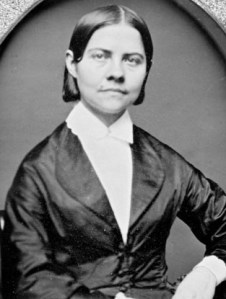
You may not know her name, but Lucy Stone was steadfast in her belief in self-authentication and in her ability to change the world. Lucy Stone was called “emboldened” and “scrappy” because of her tireless work for the abolitionist and women’s rights movements through the 19th century. A bona fide pioneer of her time, Lucy Stone stands as a historical titan. Her book “Unapologetic Life” describes a model of a revolutionary living. As for me, I would count it an honor to be described as emboldened and scrappy.
Riding on the Wings of the Spirit
Life is more fun when you’re emboldened and scrappy. Not that we want to reduce the life experience to just scrappinesses. Life is so much more, like authenticity and the willingness to be a change-agent. Life is about having enough courage to persevere! Life for me is about my soul and all the ways it has been transformed over many years. All along my journey, I knew that my soul was a problem! At every age, there was a part of me that wouldn’t follow the easiest path. I longed to be empowered to make societal change. I chased down injustice and worked to dismantle it. I spent most of my career working with victims of domestic violence, child abuse, and human trafficking. This was not the easiest and most pleasant vocation, but the work had made its way into my soul. To do it, I had to live in the light of self-awareness and soul-awareness. I had to constantly listen to the sighs of my soul, and move only after I had heard them clearly. If I had just one nugget of advice for you, it would be to touch your soul and ride on the wings of the Spirit.
Expect to Make History
Sisters, don’t forget that when you touch your soul, you might just not be a “good girl” anymore. Or a good boy, for that matter. As for me, I am not a “good girl” living at the whims of other people! And I am definitely not a well-behaved woman! So I fully expect to make history! Because making history means leaving a legacy, creating a world brimming with peace, and embodying your best self!
How would you feel about a phrase like, war against children? Virtually no one would like such a phrase, but isn’t that exactly what happens when someone bursts into a school brandishing an AK-15 assault rifle? When someone uses a weapon to kill children inside a school room, and when a nation refuses to change its culture of weapons and bullets, then we need to own it: America wages and perpetuates war against children!
The total lack of regulation of firearms and ammunition in America is the source of the shooting that held nineteen children and two teachers hostage in a classroom at Robb Elementary School in Uvalde, Texas, in the hands of a murderer. The ultimate ”perpetrator” could be called the National Rifle Association (NRA), the group who promotes the idolatry of lethal weapons. Protesters at the site of the NRA’S National Convention this weekend were joined by Democrat Beto O’Rourke, who listed previous school shootings and called on those attending the convention to make sure that gun violence would no longer harm children in this country.
“The time to have stopped Uvalde was right after Sandy Hook,” O’Rourke said. “The time for us to have stopped Uvalde was right after Parkland. The time for us to have stopped Uvalde was right after Santa Fe High School. The time for us to stop the next mass shooting in this country is right now, right here, today with every single one of us.”
Gun violence in schools is not a national scourge in every country. There are examples of gun control our nation could follow if we had the passion and political will to do so. A case in point . . .
About a month after the Parkland school shooting, a letter of condolence addressed to the survivors arrived from survivors and parents who had endured a similar tragedy 22 years before when a local shopkeeper walked into Dunblane Primary School in Scotland and opened fire, killing 16 five and six-year-olds and their teacher.
Writing the letter to Parkland survivors was a act of solidarity. Offering hope for change, they told of their successful campaign for gun reform. They wrote, “Laws were changed, handguns were banned and the level of gun violence in Britain is now one of the lowest in the world.”
Since the 1996 Dunblane massacre, they said, “there have been no more school shootings in the United Kingdom.” Because of a grassroots campaign led by the parents of Dunblane students, leaders in the U.K took decisive legislative action. By the end of 1997, Parliament had banned private ownership of most handguns, enacted a semi-automatic weapons ban, and implemented mandatory registration for shotgun owners.
The signees ended with words of encouragement, “Wherever you march, whenever you protest, however you campaign for a more sensible approach to gun ownership, we will be there with you in spirit.”
Here in “the land of the free,” we have become callous to gun violence. We hear of mass shootings on streets, in churches, synagogues, temples or mosques, and we move on. We are becoming immune to shootings in night clubs, stores, shopping malls, military bases, restaurants, theaters and homes.
Violence inside schools, though, is on a higher, more lethal level. People who grapple with making sense of school shootings strain to come up with “reasons” that such heinous acts of violence could happen. People choose to go into restaurants, clubs and theaters, but children in school classrooms are mandated to be there.
War against children.
Do we dare look at the list of school shootings since 1969? I studied the list today, lamented over it, I guess. There were fourteen school massacres that left 169 dead children.
After every single incident, people cry, “enough is enough.” After every horrific mass murder, lawmakers and power brokers say, “enough is enough.” And then comes the question, “Why?” Why is this violence happening? The following answers for “why”—some goodand some preposterous—emerge from the national dialogue.
mental health problems; delinquent youth out of control; inattentive parents leaving guns accessible to children; weapons and ammunition too easy to get; untrained resource officers. It’s because the adults in the schools don’t have guns. They need guns.
Franklin Graham blamed school shootings on “a nation that has turned its back on God,” and on violent video games, the entertainment industry and on “taking God out of our schools.” James Dobson blamed the shooting at Sandy Hook on God’s wrath over abortion and same-sex marriage.
War against children.
This is a sad season, but it is also a sad time for Christianity. Just days after the tragic slaughter of innocent children and their teachers, the National Rifle Association meets in national conference to celebrate themselves only 300 miles away from Robb Elementary in Uvalde. Brian Kaylor and Beau Underwood name it and explain it in a recent article published in A Public Witness.
“Even after Sandy Hook, Stoneman Douglas, and now Robb Elementary — not to mention the numerous other mass shootings at churches, theaters, concerts, restaurants, grocery stores, homes, and basically any other place in our society — some Christian leaders still try to baptize the death cult that will gather in Texas this weekend.”
Shane Claiborne, co-author of Beating Guns: Hope for People Who Are Weary of Violence, criticizes pastors who “bless this group that is literally contradicting nearly every word of the Sermon on the Mount.” He continues, ”I’m going to go straight to Jesus and say we cannot serve two masters. And we really are at a crossroads where we’ve got to choose: Are we going to follow Jesus or the NRA? And literally, you couldn’t come up with much more contrasting messages. The gospel of Jesus — turn the other cheek, love our enemies — stands in direct opposition to the rhetoric of the NRA — stand your ground. The gun and the cross give us two very different versions of power.”
His words are true, as are words written by Dr. Obery Hendricks in his recent book, Christians Against Christianity. He writes a fiery epithet about what he describes as “the unholy alliance between right-wing evangelicals and the NRA. Their annual prayer breakfast,” Hendrick’s writes, ”tries to add a veneer of Christian religiosity to the NRA’s deadly agenda.”
In the article in A Public Witness, Kaylor and Underwood describe ”the NRA’s Hell” in scathing commentary. ”As the blood of more slaughtered children cries out from the ground, preparations continue for this weekend’s NRA convention.”
War against children.
There is no lack of commentary following the terror at Robb Elementary School. Stephen Reeves, executive director of Cooperative Baptist Fellowship Southwest, also criticized Christian leaders who bless the NRA, saying, “I don’t know how you pray in the name of the Prince of Peace and ask for God’s blessings on the mission of the NRA. No other country sacrifices their children on the altar of the gun.”
Yet, the prophets and the mourners somehow coalesce this weekend, in solidarity with one another regarding weapons of war and slaughter. While a Texas community mourns grievous loss, righteous prophetic critics stand on their behalf to call out sin, complacency, greed, self-interest and idolatry and those who champion the evil of it. ”As our children are killed at the altar of a semiautomatic idol,” Kaylor and Underwood write, ”high priests like Franklin Graham, James Dobson, and Jonathan Falwell help the NRA damn us all to this hell.”
Meanwhile surviving parents, siblings, grandparents and other family members and friends are oblivious to the rhetoric, to the NRA, and to anyone or anything else. Theirs is to mourn, to keep vigil over the memories of the children, and I suppose, to continue asking, ”why.” Why did this happen? Why in our school? Why did it have to take my child?
The “why” questions? Could the answer be because America is waging war against children? The ”why questions” are literally unanswerable, no matter how long we sit before them waiting for answers, for reasons. Some cataclysms have no reasons or explanations, at least none that are worth anything. One needn’t ask ”why” to pure evil, but must instead try to ease beyond ”why” to a more answerable question.
Still, getting beyond “why” brings another question that hovers over us like an ominous cloud: “What can I do about it?”
That is the question that remains. It pierces us. It drives the conversations we have and the prayers we pray.
“What can I do about it?” I can only answer with possibilities to consider. Here are a few.
Make a commitment to stand courageously against violence in the ways you are able.
Become an informed activist, aware enough to help influence the passage of legislation that protects children.
Communicate constantly with members of Congress, by phone, letter, email, text. Go to their webpages and keep on prodding them to do right.
When your activism seems small, know that it helps wage the big war against violence.
Be open to acts of tenderness. Hold a mourner in your arms, when they feel nothing and when their crying will not stop.
Many parents of the Texas children are in in shock, in trauma-induced silence. Without voice, without tears, without any emotion at all. It will be a while before they can make any audible expression of grief.
Other parents are crying uncontrollably. They will cry at the funeral home, in the church, in the graveyard, at the store, in their beds in the night. Their bodies will literally shake as grief pours out from their deepest places. It will be a while before they can stop crying.
Most of us, in fact, cannot stop crying when we see and absorb this war against children or begin to grasp the utter senseless evil of it.
In my work as a victim advocate and trauma counselor, I was present with those who were trapped in silence and with those who could not stop crying. That was the thing I could do, and after the crying, being with them in marches and sit-ins or just for a cup of coffee. In a 2021 article for The Trace, Journalist Ann Givens interviewed me about my victim advocacy and my activism to end violence. She asked me about God, about how God responds to us in a crisis to help us move beyond trauma while we are still facing so much suffering. This was my response:
“God is a God of peace. God doesn’t cause bad things to happen, but God helps us take the deep, excruciating emotions that come with bad things, and do something with them.”
In the very middle of this war against children, can we take our powerful, intense emotions and do something even more powerful? Can we persevere until the war against children is over and we can see the bright hope of children lying down with a lion and a lamb in places of peace and safety?
May God empower us to say, “Yes, we can!” and fill us to overflowing with a living hope that empowers us to say, ”Yes, we will!”
Rev. Kathy Manis Findley May 26, 2022
Please take a few moments of prayer and meditation to listen to this song, PreciousChild. Precious Child – Words & Music by Karen Taylor Good
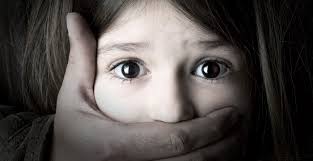
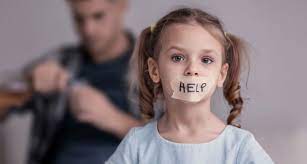
Here’s the bottom line: in every nation of the world, one can see the oppression of children. No matter how one views the wars and the skirmishes, the occupations and the trafficking, the rationed medical care and the failure to administer the Covid vaccine, the stark reality is a picture of child endangerment and physical, sexual and emotional abuses.
The estimated number of children trafficked around the world is 5.5 million. They suffer violence, exploitation and abuse — ending up in forced marriage, prostitution, illegal adoption, labor, drug smuggling, begging and armed recruitment. They are taken from all around the world and sold by human traffickers as slaves. Child trafficking is linked to demand for cheap labor, especially where the working conditions are poor. Children may be forced into many dangerous and/or illegal situations, including slavery, domesticlabor, sexual exploitation or prostitution, drug couriering and/or being turned into child soldiers.
And then, we must remember the immigrant children who have been separated from parents or guardians. An NBC News report on June 8, 2021 cites a 22-page progress report submitted to President Joe Biden last week by the task force for reuniting families. The report indicates that 2,127 children are awaiting their reunions. The report also states that 3,913 children separated from their families between July 2017 and January have been identified. The ACLU has said more than 5,400 children were separated at the border. The discrepancy, the DHS official said, is due to thousands of yet-to-be-reviewed files by the task force.
The estimated number of children trafficked around the world is 5.5 million. They suffer violence, exploitation and abuse — ending up in forced marriage, prostitution, illegal adoption, labor, drug smuggling and armed recruitment.
I could give many more statistics, hundreds of them, but we have all learned to hear statistics and simply dismiss them as irrelevant data. And yet, one single number in a spreadsheet of statistical information represents one particular child. A child stolen from her parents. A child exploited and enslaved. A child taken from the arms of protection and forced into danger. There is high lethality in child trafficking. A child loses his or her life forever because it is impossible to return to the life the child once knew.
So I will spare you from any more abysmal statistics. Instead, I want to share with you a portion of passionate, heartbreaking message I read today.
Iwish to request that all those receiving this email pray for the children of Palestine living under a brutal Israeli occupation. Hardly a week goes by when 3-4 Palestinian children are summarily shot. Worst yet, Israel has not allowed the COVID vaccines to be administered in the Occupied West Bank and Gaza. If this is not a genocidal act, then what is? And to think that a $3.8 billion dollar aid package was only last week sent to Israel . . . Folks, if this generous give-away of your hard earned tax dollars does not peeve you, then I urge you to start reading the papers and informing yourselves about the many genocidal acts of terror against brown people – Syria, Palestine, Iraq, Libya, Afghanistan. As Christians, we are called upon to stand up for the oppressed.
In Deep Sorrow, Raouf J. Halaby
What does this tragic situation as expressed by Mr. Halaby have to do with us? Maybe nothing. Probably nothing. But wait! I want to talk more about the inconceivable practice of modern day slavery — child trafficking.
Could my child be kidnapped and trafficked? It doesn’t happen here!
A very common misconception about human trafficking is that it does not happen in the United States. The truth is that the United States is ranked as one of the worst countries globally for human trafficking. It is estimated that 199,000 incidents occur within the United States every year.
Here are the 10 states with the highest rates of human trafficking:
Nevada
Mississippi
Florida
Georgia
Ohio
Delaware
California
Missouri
Michigan
Texas
Victims of trafficking frequently do not seek help due to language barriers, fear of their traffickers, or fear of law enforcement. Because human trafficking is considered a hidden crime, we can be diligent in reporting it when we see it happening. But we have to know what to look for. Several key warning signs can help us recognize potential endangerment and notify law enforcement. The United Nations Office on Drugs and Crime has a list of indicators we can use to help identify victims. These indicators include:
Appearing malnourished
Appearing injured or having signs of physical abuse
Avoiding eye contact, social interaction, and law enforcement
Responding in manners that seem rehearsed or scripted
Lacking personal identification documents
Lacking personal possessions
Every day there are things — bad things — that happen. Usually we think they have nothing to do with us, and usually they don’t, not directly at least. But the ministry of the Christ, who walked on this earth and who cared for the most vulnerable and endangered people he encountered, is our example. As Christians, do we follow Christ to the dangerous places? Do we pray for every child in every land, asking God to pay heed their circumstances and protect them from evil?
Prayer is the one thing, perhaps the most important thing, we can do. Mr. Halaby asks this of us: “Iwish to request that all those receiving this email pray for the children of Palestine.” Let us start there, with that single request for prayer. And then, may all of us become more aware of the lives of children everywhere and pray that they will be protected from all harm.
Prayer is one thing we can do! Will we?
AWARENESS . . .
If you believe you may have information about a trafficking situation:
Call the National Human Trafficking Hotline toll-free at 1-888-373-7888: Anti-Trafficking Hotline Advocates are available 24/7 to take reports of potential human trafficking.
Text the National Human Trafficking Hotline at 233733. Message and data rates may apply.
Submit a tip online through the anonymous online reporting form below. However, please note that if the situation is urgent or occurred within the last 24 hours we would encourage you to call, text or chat.
Report missing children or child pornography to the National Center for Missing and Exploited Children (NCMEC) at 1-800-THE-LOST (843-5678) or through their Cybertipline.
What’s on your mind today? I ask because for me there are days, like today, when my mind is free-flowing without one thought, idea or plan. That can be troubling for a person like me who almost constantly churns out thoughts and creative responses to those thoughts. My blog, for instance, is a preaching platform for this retired and frustrated preacher. And there is almost always a sermon in me just itching to see the light of day!
But not today! You’ll get no sermon today, just words without organization and thoughts floating in the wind. Perhaps my thoughts will be energized by Spirit Wind, or not! It seems to me to be a good time for floating thoughts and random words, because in this pandemic world, there are simply no words.
When I look at pandemic facts and trends in my state, Georgia, I am aghast at this reality released today by WMAZ News: “The number of Covid cases in Georgia children has jumped in a month from 40 to 488. That’s more than 1,100 percent.”* Dr. Edward Clark, an Atrium Health Navicent pediatrician, says parents should be very concerned. “We’ve seen a spike in kids ranging from infants anywhere up to age 18,” he said. On top of that, children ages 12 and older have been approved only for the Pfizer vaccine at this time.
The truth is that some parents are very alarmed — even terrified — about the rising number of delta variant cases in children and teenagers. As well they should be, as they watch with great alarm the highly-contagious Delta variant cases increasing so rapidly in children. Parents are frightened and many of them worry that in-person school is not the best decision in these conditions. Teachers, too, are dealing with difficult issues as in-person school begins.
The number of Covid cases in Georgia children has jumped in a month from 40 to 488. That’s more than 1100%!
WMAZ News
In the midst of my free-flowing thoughts today, I am finding focus enough to ask why we did virtual learning last school year when children were less likely to be infected, yet in this school year when the Delta variant is rapidly infecting children, we are sending them to in-person school, some schools without mask mandate. Someone far less cautious than I am must have made that decision! I would have never sent children into harm’s way, into a place where they could spread the surging Delta variant to each other! Is it time for another season of sheltering-in-place?
Let us be careful about the ways we inadvertently expose children to danger. Let us be mindful of our responsibility to protect all children. Let us be diligent in letting our faith inform our compassion and care for children.
After all, Jesus was clear about drawing children close and sheltering them from harm. We should be just as committed to holding children close in a shelter of protection. May God make it so!
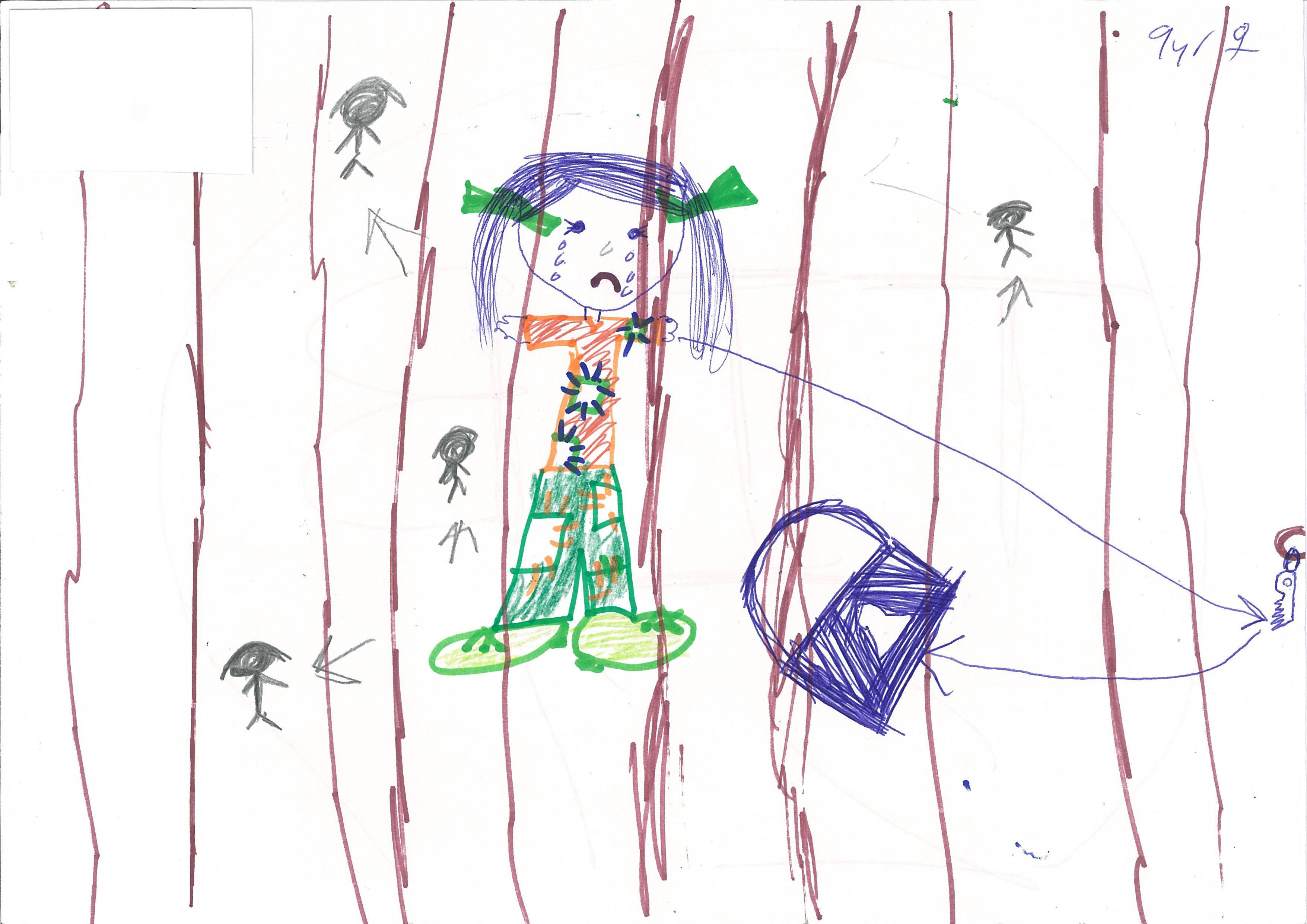
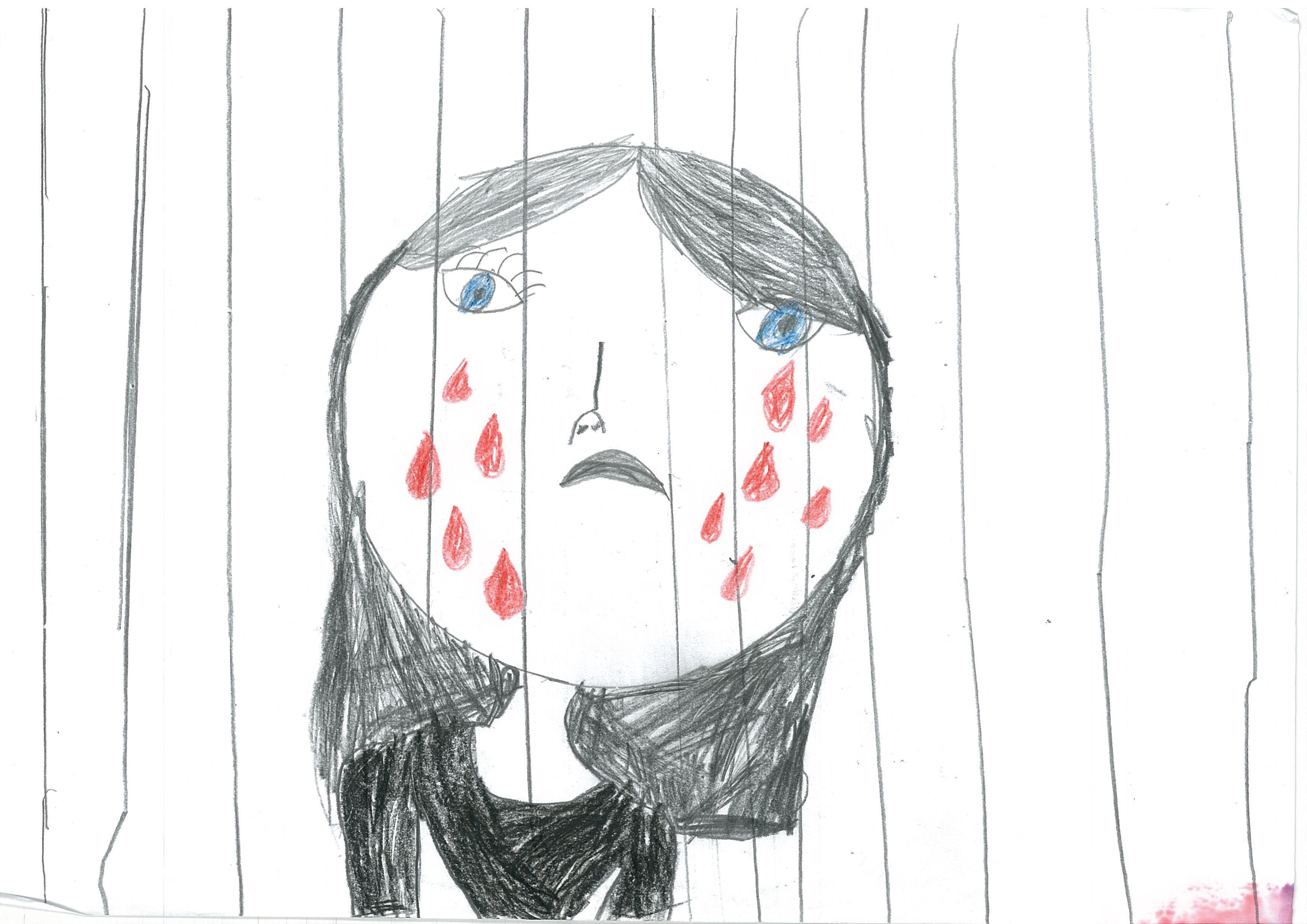
A child’s drawing of being held in US immigrant detention centers while tring to hold on to an image of hope
My first mistake for this day — reading an article published in the Huffington Post written by journalist Rowaida Abdelaziz! Here’s the headline.
More than 5,000 people have contracted the coronavirus while in immigration detention centers, including more than 800 in the last week.
On a personal note, I must say that I’m very proud of my church’s ministries, especially our English as a Second Language (ESL) classes. The teachers not only teach English, they also provide community for immigrants who often do not have family nearby, as well as many other acts of care and compassion. I could not help but give God thanks for our ESL teachers this morning when I read this headline from the Huffington Post. I can imagine our ESL teachers shifting into advocacy mode to do something about it. Not that any of them have the power to change the abysmal detention centers our government sponsors, but armies of advocates can and have changed circumstances of oppression throughout history
Back to the news article. Abdeaziz went on to further explain the treatment of immigrants:
Immigrants were given face masks only recently, but most of them are forced to reuse single-use masks without being allowed to wash them or receive new ones. Those held were not given soap or sanitizers and some were even exposed to pesticides and other toxic substances.
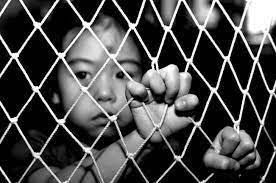
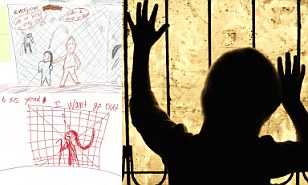
And then we have the horrible reality of “caged children!” It’s a term I do not want to hear because it so deeply troubling to imagine. But children draw and thousands of them have drawn images of caged children. My mind tells me unequivocally, “Don’t look at the drawings!” My heart tells me, “You must look!” My soul tells me, “Spirit will be near as my Comforter when I do look!”
At heart, I have always been an advocate for children, a fierce one. For a very long time advocacy was my career. I cannot abide the ill-treatment of any person, but when I envision thousands of children in custody and in sorely negligent circumstances, it digs at me and pierces my heart like a Holy arrow sent from God. Denise Bell, a researcher at Amnesty International USA said this, “COVID-19 has revealed the fatal flaws and the negligent medical care that ICE has historically provided to people who are detained within its facilities.” Ms. Bell goes on to say, “What’s more disturbing is the carelessness, and I’d even say callousness, with which the government is treating people in its care and custody.”
Despite global lockdown measures, ICE continued to detain, transfer and deport immigrants ― including thousands of children ― all of which has contributed to the spreadof the coronavirus nationally and globally. Foreign governments who accepted deportees said they brought the coronavirus back with them. Huffington Post, September 17, 2020
Diana Jimenez stands with her family during a protest outside of the Homestead Temporary Shelter for Unaccompanied Children, Sunday, June 16, 2019, in Homestead, Fla. A coalition of religious groups and immigrant advocates said they want the Homestead detention center closed. (AP Photo/Lynne Sladky)
How can you and I become advocates for these children? To me, it feels like a mandate from a caring, compassionate God. It feels like a mission following the footsteps of Christ who said something quite profound in the eighteenth chapter of Matthew’s Gospel.
Whoever welcomes one such child in my name welcomes me. If any of you put a stumbling block before one of these little ones who believe in me, it would be better for you if a great millstone were fastened around your neck and you were drowned in the depth of the sea.
Matthew 18: 5-6 (GNT)
And then there’s this:
When a stranger sojourns with you in your land, you shall not do him wrong. You shall treat the stranger who sojourns with you as the native among you, and you shall love him as yourself, for you were strangers in the land of Egypt: I am the Lord your God. (Jeremiah 29:33-34)
Jeremiah 2:33-34 (NRSV)
I need to make sure you understand that I know the drill: I cannot use Holy Scripture to bolster my opinions or take Scripture out of its historical context to prove a point. A learned Professor of Old Testament, James K. Hoffmeier, makes this stringent assertion, “Secularists and liberals, both political and religious, are typically loath to consult the Bible when it comes to matters of public policy. So it is somewhat surprising that in the current debate about the status of illegal immigrants, the Old Testament or Hebrew Bible is regularly cited in defense of the illegal.”
I get that. I am a liberal. I even graduated from seminary. I am not using Scripture to prove my point. Nor do I intend to exegete these texts in an effort to thoroughly understand the translation in historical context. I am just pondering these Scripture passages as inspiration, meditation and perhaps an aid in discerning a call from God to mission. To use the texts in this manner, all I really need to do is read the words and listen for God’s voice. Never in my life, all seventy years of it, has God whispered back to me, “My child, you did not translate that text correctly, nor did you place it in its historical context.”
So where does this leave me? I think it leaves me asking myself, “What will I do? What must I do? Where do I begin in demanding change? How do I call out to my government, imploring them to end this oppressive inhumanity? How do I demand that all of us, including ICE, respect the humanity and the sacred worth of the immigrants in our midst, especially the children?
I hope that you, too, will ask yourself these questions, listen for the voice of God and become a fierce advocate for justice and humanity. If then you sense a call to do something to change the worlds of caged children held in ICE detention centers, visit this website:
Plans! We find it almost impossible to make them in a life ruled by COVID19. Currently, school plans are foremost in the minds of parents and students.
“Is it safe to send my child back to school? What safety and social distancing measures will schools have in place? Do I choose to keep them at home, opting for virtual learning? How do I manage online school?”
In light of such critical plans and decisions, consider this current news report:
A document prepared for the White House Coronavirus Task Force but not publicized suggests more than a dozen states should revert to more stringent protective measures, limiting social gatherings to 10 people or fewer, closing bars and gyms and asking residents to wear masks at all times.
The document, dated July 14 and obtained by the Center for Public Integrity, says 18 states are in the “red zone” for COVID-19 cases, meaning they had more than 100 new cases per 100,000 population last week. [Georgia is in the “red zone.”]
Even with troubling reports like this one, Georgia’s governor, Gov. Brian Kemp, signed an order on Wednesday, July 15, 2020 banning localities from requiring masks. On this information, parents have to agonize about what’s best for their children. They simply cannot make firm plans as long as the virus is waxing and waning. Mostly waxing!
Plans are difficult for us for all sorts of reasons and circumstances. Every now and then over the years, my life would take un unexpected pause to contemplate this thought written by the late Mary Oliver:
So tell me, what is it that you plan to do with your one wild and precious life?
Unpacking that brief question has been a periodic constant in my life, popping up for me mostly in my down and disheartened times. I hear the poet describing my life as “wild and precious” and it almost shocks me. Yet, my life really has been consistently wild and mostly precious. Anything that urges me to examine my life is a good thing. I can almost always pull up memories of the times when I was wild and free — insistent upon rising higher, realizing a near-impossible dream, charging with courage into new and uncharted places, planning for a future of fresh and sparkling heights, observing just how wild I could dare to be. Unpacking that question has been exhilarating at times, exhausting at other times.
Musing on a life that could be described as precious
Entertaining the thought that my life was precious happened in my deepest soul place. It happened in my moments of introspection, meditative times that urged me to examine all the ways I saw my life as precious, cherished, valued. Of course, I have experienced many precious life moments — my wedding day, my work in Africa, my ordination, awards and recognitions of my work and career and, most of all, the adoption of my one wild and precious son, Jonathan. Examining my precious life was most real when I almost lost my life, my full year of serious illness, five years of dialysis and a kidney transplant made possible by the selflessness of a lovely woman I know only through email.
Such thoughts bring me back to plans. What is it I plan to do with my one wild and precious life? Even a life precious and wild is a life that requires plans, and right now trying to make plans is an exercise fraught with anxiety. I cannot find any words that can minimize this depth of anxiety. There is not one thing you or I can do about plans that have been ravaged by the pandemic we are experiencing, and yet we must make critical plans in this season of uncertainty.
School plans are most difficult in my state and perhaps in yours. As parents agonize over the safety of their children, Georgia’s governor, Brian Kemp, offered this unhelpful comment this morning in a press conference:
I am a believer that kids need to be in the classroom and we’re working with the schools to do that. We’re going to have cases that break out in schools, either with personnel or perhaps students, just like you do with a stomach bug or a flu or anything else. Our schools know how to handle those situations.
The parents and teachers in my life know that this coronavirus is not just a run-of-the-mill “stomach bug or flu.” This virus is deadly, and parents and teachers faced with difficult school decisions know that all too well. During these pandemic days, it is a constant reality that many of us are having to make potentially hazardous plans, but just for a moment, I wonder if we can redirect our thoughts to plans we make for our “one wild and precious life.”
Can we rise above the plans we must make today, even for a moment, and instead consider the bold and courageous plans we could make? Can we set our hearts to think about plans we can make when we are our brave, adventurous and fearless selves? Can we contemplate the plans we might make when we feel bold, resolute and undaunted?
I can remember the times when I was able to make such adventurous plans, times when my plans were dreams — high and lofty dreams of changing the world. I can also remember the time when I no longer dreamed any dreams at all. It was a time when I no longer saw my life as a wild and precious one. I still entertained plans, but my plans were definitely not dreams. I believed I could no longer change the world. I believed I could no longer live a life that made a difference. I believed that my soul was dry and my spirit barren. I believed that, in my life, dangerous and noble things were no longer possible
Why can’t you and I dream dreams instead of making plans? Why can’t my “one wild and precious life” rise higher, high enough to make dreams of my plans? Sometimes I will go to one of my many favorite passages of Scripture hoping to find God’s word to me. Being true to my theological education, I always look at the words in context before I do anything else. But after that hermeneutical exercise I learned in New Testament 101, I might twist the text a bit and maybe even paraphrase it, inviting the text to speak to me specifically, just me. For this day, one of the texts found in the book of Acts reaches into my soul, and, yes, I did paraphrase it.
“In your season of most need,” God says,
“I will restore your soul and make your spirit rise within you.
I will pour out my Spirit on all people.
Your sons and daughters will prophesy,
your youthful hearts will see visions,
your aging hearts will dream dreams.”
— Acts 2:17 (my paraphrase)
Amen.
May God lift our hearts and spirits, assure us that our lives are precious and help us transform our plans into dreams.
So tell me, what is it that you plan to do with your one wild and precious life?
When I was a teenager, I was conscripted many times to “watch” my younger brothers. It was a loathsome task for me! Yet, occasionally the two of them were interesting to watch, especially through their superhero fascination. They seemed to favor the superheroes who could fly, like Superman or Batman (who could sort of fly, but was likely to perish when attempting to land). It occurred to me that in the scene I watched in the back yard, the two young guys looked much more like flight-challenged Batman!
One afternoon after school, the boys were outside playing. Through the window, I watched them as they donned their makeshift capes. Then — without a care in the world and believing that they really could take flight — they stood tall on wooden boxes and launched themselves, arms extended, looking up to the sky. They didn’t fly that day, but they believed, they dreamed. And they had great fun!
I also noticed during those days that I never saw girls stand on boxes with arms outstretched ready to launch into flight. I certainly never thought of doing it myself. But it made me wonder if girls had dreams like the boys did. That thought brought my mood low and, looking back on it, I think I might have felt a bit of heaviness and disillusionment. I didn’t believe I could fly, but rather that I would leap off the box straight into the ground with a thud that probably resulted in a skinned knee. As the years passed, I learned for sure that if women had dreams, they would not likely realize them in our reality, which was “a man’s world.” Dreaming, hoping, flying may not be possible for a “girl.”
When my son was growing up, we saw the motion picture, Space Jam, a terrific movie for son Jonathan, who was an avid Michael Jordan fanatic. No doubt, my 6’6” son wanted to “Be Like Mike.” In Space Jam’s soundtrack was the song, I Believe I Can Fly, a 1996 song written and performed by American singer, songwriter and former professional basketball player R. Kelly. This mom was not very fond of R. Kelly, but the song he wrote literally moved me and filled me up with hopes and dreams for my son. R. Kelly’s message was a great one:
I used to think that I could not go on
And life was nothing but an awful song
But now I know the meaning of true love
I’m leaning on the everlasting arms
If I can see it, then I can do it
If I just believe it, there’s nothing to it
I believe I can fly
I believe I can touch the sky
I think about it every night and day (Night and day)
Spread my wings and fly away
I believe I can soar
I see me running through that open door
I believe I can fly
See I was on the verge of breaking down Sometimes silence can seem so loud
There are miracles in life I must achieve
But first I know it starts inside of me
If I can see it, then I can be it
If I just believe it, there’s nothing to it I believe I can fly
I believe I can touch the sky I think about it every night and day Spread my wings and fly away I believe I can soar I see me running through that open door I believe I can fly Oh, I believe I can fly ‘cause I believe in me . . .
I hope you will enjoy the video below, which I place here in honor of my son, Jonathan .
If God would grant me just one request, it would be that every boy — and every girl — would climb on their wooden box and believe in their souls that flying is possible. I would want them to stand tall, with hope and courage, dreaming their dreams and seeing the magic of watching them grow.
My friend and sister blogger, Maren, never fails to inspire, convict or challenge me. I look forward to her blog posts, knowing that by the end, I will find myself in a gasp, or at least a sigh. She is gifted at helping her readers stay in touch with the current angst of the times, the events and realities of our world. This is her latest post:
My little hand holds (and not the great world)
the small shining of shook foil
and there is no beauty that I see,
only the blankets on children detained —
alone and frightened, cold,
and without care,
without — O you grand and broken God,
toothpaste and soap,
and parents,
without justice, compassion,
but not without hope,
because that alone, hope
is never spent, but lights the western sky
as night falls
on the long walk from the south,
even if dimly, touches
with fingers a rim of east
every morning, every detention center.
Hope brought them here
to the terrible inhospitality
that smears
all this country ever thought to be.
And it is left to us and the Holy Spirit
to brood
over those who are lost,
and bend the world
so that the living children
might someday be found
by bright wings.
And here is where it grabbed my heart . . .
What does it mean for me to join with the Holy Breath of Life “to brood over those who are lost, and bend the world?” What would that look like? How do I do it? Does it mean to “brood” over the lostness of our world and call forth life?
What a need that is! How desperately we need to bend the world toward mercy and justice. To lift up the children who sleep on cold concrete floors. To lift them high above the world’s cruelty to the place of “bright wings!”
May God help us to comprehend the brooding Spirit and her open arms. And may she reach down to grab us and hold us up inside the wind that heals.
“Love” – Himba Mother and Child by Ciska McCormick
Little Grandmother — a world-renowned spiritual teacher, Shaman, Wisdom Keeper and the gatherer of the Tribe of Many Colors — tells this beautiful story.
Of all the African tribes still alive today, the Himba tribe is one of the few that counts the birth date of the children not from the day they are born or conceived, but from the day the mother decides to have the child. When a Himba woman decides to have a child, she goes off and sits under a tree, by herself, and she listens until she can hear the song of the child who wants to come. After she has heard the song of this child, she goes back to the man who will be the child’s father and teaches him the song. When they physically conceive the child, they sing the song of the child as a way of inviting the child to earth.
When she becomes pregnant, the mother teaches the child’s song to the midwives and the old women of the village, so that when the child is born, the old women and the people gather around the child and sing the child’s song to welcome him/her. As the child grows up, the other villagers are taught the child’s song. If the child falls, or gets hurt, someone picks him/her up and sings to him/her his/her song as a gift of comfort.
In the Himba tribe, there is one other occasion when the “child song” is sung to the Himba child, who has now grown up to be a tribesperson. If a Himba tribesperson commits a crime or does something that is against the Himba social norms, the villagers call him or her into the center of the village. The community forms a circle around him/her and they sing his/her birth song.
The Himba people view correction, not as a punishment, but as love and remembrance of identity. For when you recognize your own song, you have no desire or need to do anything that would hurt another person
Finally, when the Himba tribesman/tribeswoman is lying in his/her bed, ready to die, all the villagers that know his or her song come and sing, for the last time, that person’s song.
May you hear, in your heart, your own birth song, and may it give you peace, hope, courage and strength for life.
*Little Grandmother is the author of the book: “Message for the Tribe of Many Colors,” published in 13 different languages. Her talks are freely available on the web and on YouTube and have been viewed by millions of people all over the world. You may follow her work on her Facebook page, Little Grandmother Kiesha, as well as on her website: www.littlegrandmother.net. You may purchase her books at www.earthmotherpublishing.com, or you may contact her at beautyawakens@gmail.com.
June 16, 2012 . . . My three-year-old granddaughter standing among the bronze sculptures of The Little Rock Nine.
Her parents had told her the poignant story of The Little Rock Nine, but at age three she had no idea of the many ways their lives would impact hers. Because they crossed an invisible, but very real, line that divided black children from white children, they opened the door to educational equality in a racially divided state. Because their parents were brave enough to let their children breach the three stately doors of Little Rock Central High School, their world changed in unimaginable ways. And with that change, my granddaughter inherited the highly cherished right to equal education and all the opportunities that would follow. Because of that change, my granddaughter would grow up inspired.
In case you do not know about The Little Rock Nine, here is some background.
On September 3, 1957, nine African American students — The Little Rock Nine — arrived to enter Little Rock Central High School only to be turned away by the Arkansas National Guard. Governor Orval Faubus had called out the Arkansas National Guard the night before to, as he put it, “maintain and restore order…” The soldiers barred the African American students from entering.
On September 24, 1957, President Dwight D. Eisenhower ordered units of the U.S. Army’s 101st Airborne Division — the “Screaming Eagles”— into Little Rock and federalized the Arkansas National Guard. In a televised speech delivered to the nation, President Eisenhower stated, “Mob rule cannot be allowed to override the decisions of the courts.”
On September 25, 1957, under federal troop escort, The Little Rock Nine made it inside for their first full day of school. The 101st Airborne left in October and the federalized Arkansas National Guard troops remained throughout the year.
They were nine solemn figures, nine teenagers just trying to do what every child up to age 18 had been mandated to do: go to school. Nine figures who entered the annals of American history the day they passed through the front door of Little Rock Central High School.
These nine African American students — Melba Pattillo, Elizabeth Eckford, Ernest Green, Gloria Ray, Carlotta Walls, Terrence Roberts, Jefferson Thomas, Minnijean Brown and Thelma Mothershed — are now immortalized in a striking memorial located on the grounds of the Arkansas State Capitol in Little Rock. The life-size bronze statues, entitled “Testament,” were designed and sculpted by Little Rock artist John Deering, assisted by his wife Kathy, also an artist. A comment from each of The Nine is found on individual bronze plaques identifying each student. Across the street sits the State Department of Education, just a few hundred yards from “Testament.” This Arkansas State Agency has been embroiled in this same desegregation lawsuit for over 50 years.
Nine young students walked bravely, defiantly, yet filled with fear, in an act against prejudice and ignorance. These nine are heroes of every grueling story of segregation and racism in American history, every story we have heard and the millions of stories we will never hear.
So I am deeply moved by these photos of my granddaughter because there is deep meaning in each one. She seems to be looking up at the sculpture of Melba Pattillo (Beals) with what seems like admiration and awe. Dr. Beals grew up surrounded by family members who knew the importance of education. Her mother, Lois, was one of the first African Americans to graduate from the University of Arkansas in 1954. While attending all-black Horace Mann High School, Melba knew that her educational opportunities were not equal to her white counterparts at Central High. And so she became a part of the effort to integrate Central.
And my granddaughter stands in front of Little Rock Central High, a school she may choose to attend someday, a school she will be able to attend because The Little Rock Nine took a dangerous risk to make it possible.
Finally, my granddaughter stands playfully on the steps of the Arkansas State Capitol. I know that it is possible that she may one day proudly walk through its golden doors as a state senator or representative. That is possible because nine Little Rock students were brave enough to be a part of changing history.
At three years old, my granddaughter probably was not very inspired by Central High School, the Little Rock Nine Memorial, or the Arkansas Capitol. But her parents took her there to see and to learn so that she would grow up inspired. When she is older she will remember what she saw and what she learned from that seemingly insignificant sightseeing trip, and she will realize that it wasn’t insignificant at all. It may just be what motivates and inspires her to follow her dreams, because now she knows that all of her dreams are possible. It’s all about growing up inspired. It’s what we want for every child.
Dr. Melba Pattillo Beals, Minniejean Brown Trickey, Elizabeth Eckford, Dr. Carlotta Walls LaNier, Mrs. Thelma Mothershed Wair, Dr. Ernest Green, Gloria Ray Karlmark, Dr. Jefferson Thomas, Dr. Terrence J. Roberts, you made sure that every child can grow up inspired. when you were just young teenagers. When you walked through the doors of segregated Little Rock Central High School, you did so much more . . . for every student who came after you and for my granddaughter
I could decide to stand on this side wondering what life might hold on the other side. I can see the brilliant sunrise, perhaps a symbol for a bright new life for my children. I can see the tiny lights of dwellings or businesses. I’m not sure what they are but perhaps each tiny light is a warm welcome, a place of refuge, a safe haven.
I hold on tightly to the hands of my children, and now I look back and remember the violence, the fear, the drugs, the hopelessness for the future of my children. I consider going back, barricading my family in our tiny hovel and hoping for the best. It’s the life we know. It’s what we’re used to. But do I want my children to grow us “used to” violence and crime? Do I want then to be used to fear and hopelessness?
I decide to take a chance toward the sunrise and the tiny lights that will surely open their doors to a mother and her children. The land of the sunrise is called “the land of the free.” The land of the sunrise offers the wonderful promise of welcome . . .
Give me your tired, your poor, your huddled masses yearning to be free . . .
Give these, the homeless tempest tossed to me.
I lift my lamp beside the golden door.
Yes, I resolve. We will go forward. Yes!
I make, in this very moment, the most significant and life-altering decision of our lives. I choose hope! We will go!
With great fear in the depths of my spirit, I move us toward the sunrise. I hold tightly to my children and begin the hope-filled crossing. Holding them all close on a grueling hike, I can see that we have almost made it to the other side.
Now we are actually standing in the light of the sunrise. We have crossed. Those who are to welcome us are approaching. Finally, I have made the journey to new hope for my beautiful children. Thanks be to God for safe passage!
The welcoming people come near. But they are loud, boisterous, frightening. I never expected this. Oh my God, they have ripped my children from me. The youngest is crying, pleading for me, struggling to get away. The others are screaming “no” as they try in vain to work themselves loose from the powerful arms of those who restrain them. But the grip on them is too strong. I cry out and plead that they will not harm my children. I fall into the dirt, sobbing as they take my children away.
So when the grand and glorious celebration of Christ’s resurrection is over, what do we do with our leftover joy? There is an easy answer to that. Celebrate Bright Week with laughter and loud singing, and look forward with great anticipation to Bright Sunday! You might be wondering what in the world I’m talking about. What’s Bright Week and Bright Sunday?
Well, just in case you didn’t know, Bright Week and Bright Sunday are real. genuine. bonafide things. Many Christian churches celebrate the Sunday after Easter as Bright Sunday, a day for joyful celebration. In fact, the entire week following Easter, called Bright Week, was set aside for the celebration of the Resurrection according to the 66th canon of the Council in Trullo:
. . . from the holy day of the Resurrection of Christ our God until New Sunday (or Bright Sunday) for a whole week the faithful in the holy churches should continually be repeating psalms, hymns and spiritual songs, rejoicing and celebrating Christ, and attending to the reading of the Divine Scriptures and delighting in the Holy Mysteries. For in this way shall we be exalted with Christ; raised up together with Him.
The custom was rooted in the musings of early church theologians like Augustine, Gregory of Nyssa, and John Chrysostom, including the intriguing idea that God played a practical joke on the devil by raising Jesus from the dead. “Risus paschalis – the Easter laugh,” the early theologians called it.
For centuries in Eastern Orthodox, Catholic and Protestant countries, the week following Easter Sunday, including “Bright Sunday,” the Sunday after Easter, was observed by the faithful as “days of joy and laughter” with parties and picnics to celebrate Jesus’ resurrection. Churchgoers and pastors played practical jokes on each other, drenched each other with water, told jokes, sang, and danced. Can you even imagine such hilarity in some of our most traditional churches?
Yet, theologians wrote about holy laughter. While languishing in a Nazi prison, Protestant theologian Jurgen Moltmann became fascinated by the ongoing celebrations of Jesus’ Resurrection by the early Christians that continued long after Easter Sunday. He called it “the laughter of the redeemed.”
And yet, we Christians are often viewed as offering a joyless and humorless Christianity.
Where is “the laughter of the redeemed?”
We have a Savior who, knowing that he was about to be betrayed, tortured, and crucified, told his disciples before his arrest:
“These things I have spoken to you, that my joy may be in you and that your joy may be full.” (John 15:11)
So where is our joy? Where is our laughter?
With great fondness, I remember the youth ensemble at First Baptist Church of Arab, Alabama singing an amped-up version of “Sunshine in My Soul,” lively, syncopated, full of unbridled joy! With a big smile on every face, the group sang this spirited, exuberant song about their sheer joy in Christ. Always, their offering of “Sunshine in My Soul” was a joyous event. I can hear it in my memory right now.
There is sunshine in my soul today.
It’s a glow so warm and bright.
That shines in any earthly sky
For Jesus is my light.
Oh, there’s sunshine, beautiful sunshine,
When the peaceful, happy moments roll.
When I look with love into my brother’s face, there is sunshine in my soul.
What a bright and joy-filled song! A perfect song for Bright Sunday.
Laughter, joy, fun, rejoicing!
I hope that during this Bright Week you will find sunshine in your soul. I hope that you will laugh hard and long during Bright Week, that you will pass joy along to those you love, that you will sing a song of joy or two, using your biggest, strongest outdoor voice. After all, it is Christ’s resurrection that we celebrate!
14,000 shoes placed to tell a very, very sad story.
14,000 shoes laid out so that we will never forget our history.
Seven thousand pairs of children’s shoes were lined up on the southeast lawn of the U.S. Capitol building today in memory of every child who has died due to gun violence.
The 7,000 shoes in the “Monument for our Kids” installment represent every child that was killed by gunfire since the deadly shooting at Sandy Hook elementary school in Newtown, Connecticut, in 2012.
“We are bringing Congress face to face with the heartbreak of gun violence,” said one of the activists, Oscar Soria. “All of these shoes cover more than 10,000 square feet.”
Though most of the shoes were collected in a two week period, some of those were donated by families that lost their children to gun violence.
May God grant that we never forget this national grief. May our collective mourning bring lasting change.
A Prayer for Protection
Hear us, O God, protector of children.
Hear our prayer of penitence, our confession that we have failed to keep our children safe.
Hear our cries, as we shed tears of mourning for each child we have lost to gun violence.
Hear our cries of grief as we recall every danger that our children face.
Hear our voices shouting, “Enough!”
Hear our voices of commitment that make a sacred promise that we will do what must be done.
And most of all, God, ennoble us to holy action, and make us protectors of children.
We pray in the name of the Prince of Peace. Amen.
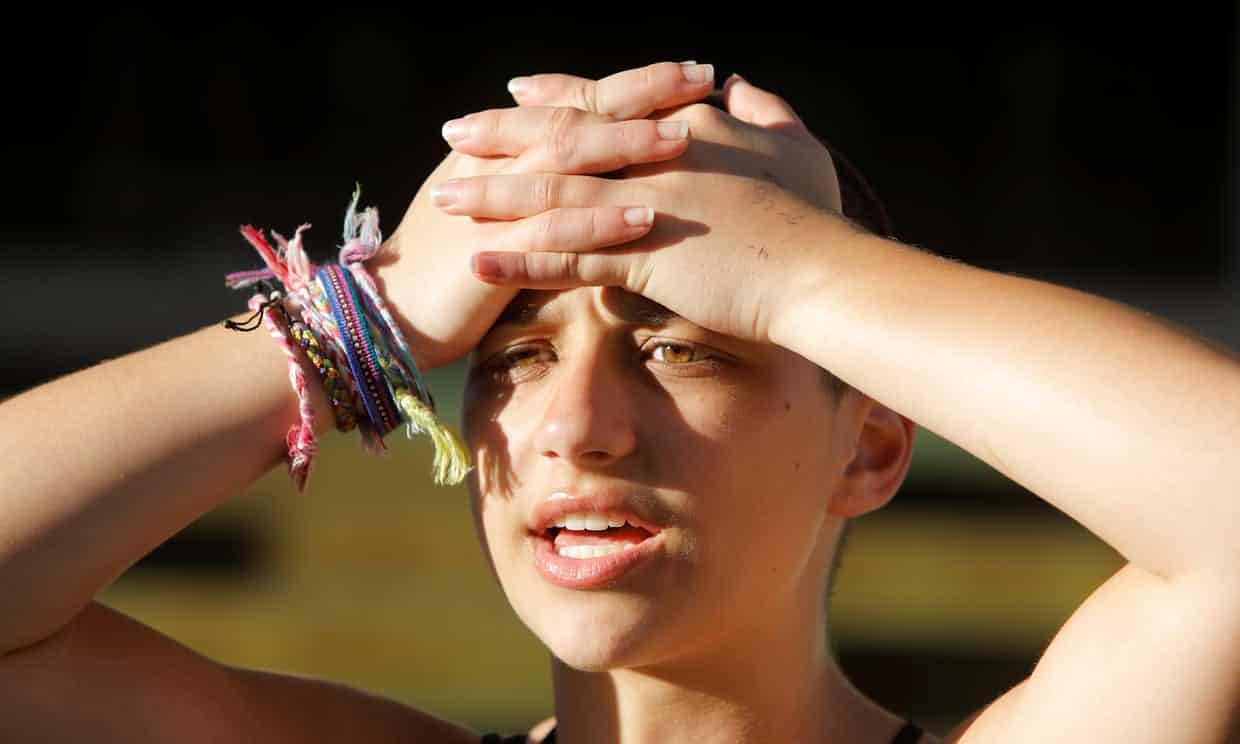
Emma González … ‘These young people will not sit in classrooms waiting.’ Photograph: Jonathan Drake/Reuters
Half a century ago, on March 7, 1965, state troopers beat down men and women who were participating in a peaceful march for voting rights in Selma, Alabama. That same day, radio listeners around the country might have heard Sam Cooke singing a song he had written and recorded several months earlier, but which could have been describing the “Bloody Sunday” confrontation on the Edmund Pettus Bridge.
There have been times that I thought I couldn’t last for long
But now I think I’m able to carry on
It’s been a long, a long time coming
But I know a change is gonna come, oh yes it will.
In “A Change Is Gonna Come,” Sam Cooke moves from bigotry and bloodshed to hope and beauty in barely three minutes. If you listen to the record today, you will hear a story that continues to be relevant. (https://m.youtube.com/watch?v=wEBlaMOmKV4)
Sam Cooke’s rough, sweet voice — a voice that is blues-born and church-bred, beat down but up again and marching — still rings.
A changs IS gonna come . . .
That message of hope rings out still in these troubling days through the passion-filled voice of Emma González, a senior at Marjory Stoneman Douglas High School, as she addresses a gun control rally in Fort Lauderdale just days after a gunman entered her school in Parkland and killed 17 people.
A change IS gonna come . . .
We are going to be the kids you read about in textbooks. Not because we’re going to be another statistic about mass shooting in America, but because . . . we are going to be the last mass shooting. We are going to change the law. That’s going to be Marjory Stoneman Douglas in that textbook and it’s going to be due to the tireless effort of the school board, the faculty members, the family members and most of all the students. The students who are dead, the students still in the hospital, the student now suffering PTSD, the students who had panic attacks during the vigil because the helicopters would not leave us alone, hovering over the school for 24 hours a day.
If the President wants to come up to me and tell me to my face that it was a terrible tragedy and how it should never have happened and maintain telling us how nothing is going to be done about it, I’m going to happily ask him how much money he received from the National Rifle Association. You want to know something? It doesn’t matter, because I already know. Thirty million dollars. — Emma González
A change Is gonna come . . .
Just hours after the mass shooting, other students turned to social media to discuss gun control.
Guns give these disgusting people the ability to kill other human beings. This IS about guns. — Carly Novell, a 17-year-old senior; editor of the school’s quarterly magazine.
We need to do something. We need to get out there and be politically active. Congress needs to get over their political bias with each other and work toward saving children. We’re children. You guys are the adults. — David Hogg, 17, a senior; Stoneman Douglas student news director
Wherever you bump into someone, there is the fear that they’re the next shooter, and every bell is a gunshot. I feel like some change is going to come of this. — Daniela Palacios, 16, a sophomore at another Broward County High School at her first protest.
A change IS gonna come . . .
And it will be our bold and compassionate children who will lead this nation into that change. Like so many Americans, I was disconsolate when watching the TV news of yet another school shooting. But then I started watching the students, and I saw the girl with the buzzcut, Emma González, wiping back her tears, mourning her dead classmates while demanding change.
Like her schoolmates, Emma is in trauma, but she is organizing. She and many of her classmates are directly challenging the donations of the National Rifle Association to Trump and other politicians. There will be school strikes. There will be organized resistance. These young people will not sit in classrooms any more. They refuse to become another tragic statistic. “We are going to be the kids you read about in textbooks,” said a weeping González.
As I remembered this week what happened at Sandy Hook, at Columbine, at Westside, a school in my own state, I remembered feeling anger and despair. But today, for first time in a long time, I feel hope. I see true leadership as kids are standing up for one another and fighting for their lives.
Let us stand courageously beside these children, our children, and do what we can to create change . . . letters to Congress, phone calls, posts on social media, marches and demonstrations, hand-lettered signs, letters to the editor, VOTING for change. What can you do?
Emma González, Daniela Palácios, David Hogg, Carly Novell . . . and thousands of other children who are crying out, ENOUGH!
I was moved today by a statement a friend made in a conversation. She is a mother of young children, and she said that she loved worshipping with her children and watching their responses to the worship experience. It was such a contrast, I thought, to the typical responses of parents through the ages struggling to corral their children during worship. When my son was young, I did some powerful corralling myself trying to keep a very active boy still and quiet in church.
Looking back, I wonder what made me believe that worshipping always needed to be still and quiet. I wonder what I might have learned from my child if he had been encouraged to offer his own expressions in worship. And, of course, I cherish and miss those days of taking my very expressive toddler to “big church.”
I see you with your toddler and your preschooler. I watch you cringe when your little girl asks an innocent question in a voice that might not be an inside voice let alone a church whisper. I hear the exasperation in your voice as you beg your child to just sit, to be quiet as you feel everyone’s eyes on you . . . When you are here, the church is filled with a joyful noise . . . I know that they [the children] are learning how and why we worship . . . They are learning that worship is important.
I see them learning. In the midst of the cries, whines, and giggles, in the midst of the crinkling of pretzel bags and the growing pile of crumbs, I see a little girl who insists on going two pews up to share peace with someone she’s never met. I hear a little boy slurping (quite loudly) every last drop of his communion wine out of the cup, determined not to miss a drop of Jesus. I watch a child excitedly color a cross and point to the one in the front of the sanctuary. I hear the echos of “Amens” just a few seconds after the rest of the community says it together. I watch a boy just learning to read try to sound out the words in the worship book or count his way to Hymn 672 . . . I can see your children learning.
Jamie Bruesehoff’s words call us to cherish the children among us, just as Jesus did so long ago.
Then little children were being brought to him in order that he might lay his hands on them and pray. The disciples spoke sternly to those who brought them; but Jesus said, “Let the little children come to me, and do not stop them; for it is to such as these that the kingdom of heaven belongs.” And he laid his hands on them and went on his way.
Matthew 19:13-15 New Revised Standard Version (NRSV)
It seems that recently, Pope Francis mirrored the actions of Jesus according to a post by UCatholic.
A beautiful little girl with Down syndrome, got up from her seat during a papal audience and went toward the Pope. The security guards quickly moved in to take her back to her mother. The Pope stopped everyone and said to the girl, “come sit next to me.” The girl then sat down near him and the Holy Father continued to preach while holding hands with the little girl.
Our words matter. What we say to our children becomes a part their memories.
As a child, I heard some pretty strong words about my church behavior. I heard such words as an adult. I even said some of them myself. “Sit still in church! Quit wiggling around so much! Be quiet! Children have to behave in church! Behaving like that in church is not pleasing to God!”
Or maybe these words are more Christlike. “Let the little children come to me, and do not stop them.”















 June 16, 2012 . . . My three-year-old granddaughter standing among the bronze sculptures of The Little Rock Nine.
 And my granddaughter stands in front of Little Rock Central High, a school she may choose to attend someday, a school she will be able to attend because The Little Rock Nine took a dangerous risk to make it possible.
 Finally, my granddaughter stands playfully on the steps of the Arkansas State Capitol. I know that it is possible that she may one day proudly walk through its golden doors as a state senator or representative. That is possible because nine Little Rock students were brave enough to be a part of changing history.
 I could decide to stand on this side wondering what life might hold on the other side. I can see the brilliant sunrise, perhaps a symbol for a bright new life for my children. I can see the tiny lights of dwellings or businesses. I’m not sure what they are but perhaps each tiny light is a warm welcome, a place of refuge, a safe haven.
 14,000 shoes placed to tell a very, very sad story.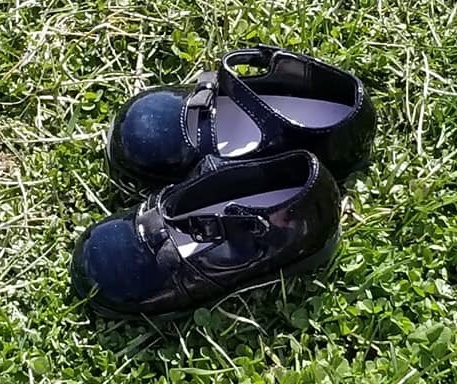
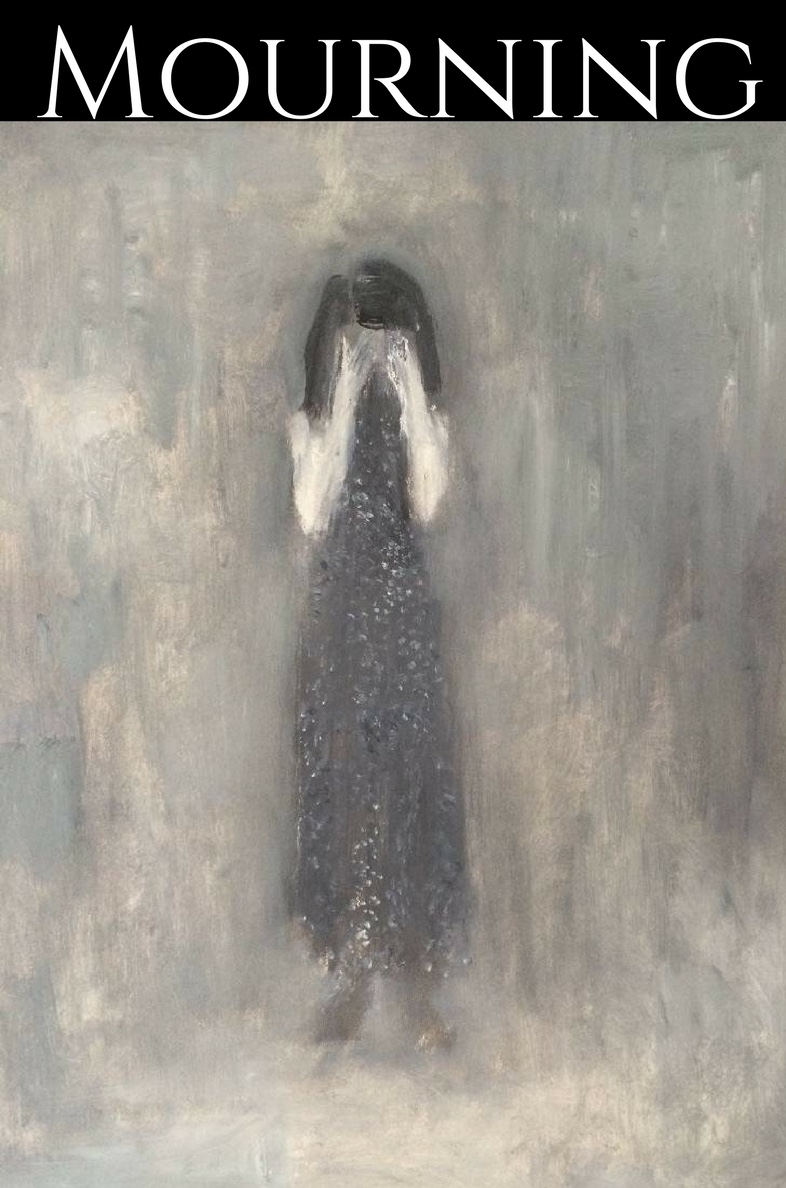 There are no words, no reasons, no explanations, no comfort.
 God of the Sparrow 🌱 By Kathy Manis Findley