Psalm 57 has been called “a prayer of safety from enemies.” When we believe that danger threatens to harm us, body and soul, that is the time that makes us cry out to God with the fervency of the Psalmist. Hear the Psalm’s second verse.
Be merciful to me, O God, be merciful to me!
For my soul trusts in You; And in the shadow of Your wings I will make my refuge, Until these calamities have passed by.
Ah, the calamities! So ever-present with us in uncertain times. Calamities! The synonyms are many and ominous:
And those are just the first few listed in my trusty Thesaurus. There are many more, describing a state of being that is frightening, all-consuming and dangerous. Such a state of being we want to avoid at all costs. We want to take refuge swiftly before evil overtakes us.
Can you recall a time when your life was in calamity mode? So many situations can place us in calamity mode: illness, relationship problems, addictions, loneliness, aging, financial distress, the loss of a loved one and so many other situations of distress.
We feel as if “enemies” are chasing us, unrelenting in their threat. We run like the wind, if we can, to get away from them. But all too often, we look behind us and an “enemy” is right there, looming large before us and bringing us face to face with the cataclysm we feared. So we are now in the clutches of adversity, and we wonder if where we are is where we’ll ever be.
We are very good at laying out our calamities, lining them up one by one for all to see. Because when others see our calamities, we believe they will help us. We believe that our friends can help us escape our calamity du jour. In their help, we place our hope. Trouble is, sometimes we’re disappointed because hope does not often come through friends. Those around us have their own calamities. When they don’t (or won’t) reach into our troubled place and help us, we despair. What can we do? Where will we turn?
The truth is that when our soul trusts in God, we will wake up from our nightmare and find that we are sheltered in the shadow of God’s wings. Safe from calamity. Nestled in a place of refuge. Brokenness repaired. Watching gratefully as calamity after calamity passes us by.
What a grace is that! What unmitigated compassion! What sheer loving mercy from the God who might just as well have left us in the danger of our calamities.
Thanks be to God for every safe refuge, from every calamity. Amen
Such is the tender mercy of our God,
who from on high
will bring the Rising Sun to visit us,
to give light to those who live
in darkness and the shadow of death
and to guide our feet
into the way of peace.
Luke 1:78-79 (NRSV)
There is no better time to breathe in these words from sacred Scripture: “the tender mercy of our God.” What we see around us compels us to cry out for the tender mercy of God — for the people who are living with agonizing need at our borders, for children taken from their parents, for families running from the effects of tear gas, for the changing of the climate and its devastating fury on communities, for people losing their lives because of gun violence, for young black men incarcerated for small crimes with long sentences, for people suffering through illness and poverty and homelessness.
Cover them, God, with your tender mercy.
There is still more in this Scripture. Some translations say “The Dayspring from on high has visited us.” But in this New Revised Standard translation, we hear words that remind us anew of God’s tender mercy. Moving words that remind us of our hope in the “Rising Sun who has visited us!”
Tucked in this brief text is the divine reason for the visit. The words are not ambiguous at all, not hard to understand, not veiled in mystery. The Rising Sun’s visit has brought “light to those who live in darkness and in the shadow of death.” And finally the Sun has shone “to guide our feet into the way of peace.”
And so we live in the light of this promise, knowing that the Rising Sun will visit us again and again, whenever darkness covers us with the struggles of life. God will not fail. In our times of difficulty, no matter how serious they are, we will feel — fresh and new — the tender mercy of God who will most assuredly send light to us when we find ourselves in life’s darkness, when we need to be guided in the way of peace.
This blog post is about two brave women who literally changed the world. You may have never heard of them, but they are worth knowing. Here’s how the story of the women begins.
Now a new king arose over Egypt, who did not know Joseph. He said to his people, “Look, the Israelite people are more numerous and more powerful than we. Come, let us deal shrewdly with them, or they will increase and, in the event of war, join our enemies and fight against us and escape from the land.” Therefore they set taskmasters over them to oppress them with forced labor. They built supply cities, Pithom and Rameses, for Pharaoh. But the more they were oppressed, the more they multiplied and spread, so that the Egyptians came to dread the Israelites. The Egyptians became ruthless in imposing tasks on the Israelites, and made their lives bitter with hard service in mortar and brick and in every kind of field labor. They were ruthless in all the tasks that they imposed on them. (Exodus 1:8-14)
The Hebrew people had immigrated to Egypt because of life-threatening conditions in their homeland. They thrived in the new land and their population grew. For many years, they lived peacefully in Egypt, and made great contributions to its well-being.
Then a new king arose, a king who began to spread fear about the immigrants. They were multiplying, becoming powerful. “Soon this new race will outnumber and overpower our own! So we must close ranks in fear,” he said.
Sadly, we are hearing a similar message from our president. But we won’t expound on that today. This is a story about courage.
We constantly hear leaders talking to us through our televisions — experts on various topics, members of congress, politicians, pundits. One thing shines clearly about most of them: they exhibit not an ounce of courage and conviction. For many of them, maybe most of them, the rhetoric is about their own interests, never about taking a stand against evil or injustice, never about the cost of doing what is right.
So may I tell you a story about two courageous women you may not know? Thousands of years ago two Hebrew midwives, Shiphrah and Puah, said “NO.” Shiphrah and Puah served Hebrew women who were anticipating childbirth. The Pharoah commanded the midwives to kill all the baby boys born to Hebrew women in Egypt. An ancient method of power and control!
There are only six verses in the whole Bible about these women, but their actions led to the salvation of the entire nation of Israel.Shiphrah and Puah were in charge of all the Hebrew midwives in Egypt while Israel was enslaved in Egypt. One day, Pharaoh called Puah and Shiphrah to him and told them,
“When you are helping the Hebrew women to give birth and see them upon the birthstool, if it is a son, then you shall put him to death; but if it is a daughter, then she shall live.”
At this point in history, Egypt was the largest kingdom and the Egyptian Pharaoh was considered the most powerful ruler in the world. In fact, the Egyptian people regarded Pharaoh as a leader appointed by their gods. Imagine all the leaders in the world today. Now imagine that all of their power was all given to one single leader and that’s approximately how powerful Pharaoh was — and this particular Pharaoh wasn’t very nice.
Now, the most powerful ruler in the world has just ordered Puah and Shiphrah to kill every baby boy born to a Hebrew woman. What happened next is one of the most courageous things we could imagine. Let’s look at the whole story recorded in Exodus 1:15-22, New Revised Standard Version (NRSV).
The king of Egypt said to the Hebrew midwives, one of whom was named Shiphrah and the other Puah, “When you act as midwives to the Hebrew women, and see them on the birthstool, if it is a boy, kill him; but if it is a girl, she shall live.” But the midwives feared God; they did not do as the king of Egypt commanded them, but they let the boys live.So the king of Egypt summoned the midwives and said to them, “Why have you done this, and allowed the boys to live?” The midwives said to Pharaoh, “Because the Hebrew women are not like the Egyptian women; for they are vigorous and give birth before the midwife comes to them.” So God dealt well with the midwives; and the people multiplied and became very strong. And because the midwives feared God, he gave them families. Then Pharaoh commanded all his people, “Every boy that is born to the Hebrews you shall throw into the Nile, but you shall let every girl live.”
These two midwives had spent their lives bringing new life into the world, and now they were asked to snuff out that new life as it was about to draw its first breath. “Not a chance!” they declared with courage welling up inside them.
No! Shiphrah and Puah said “No.” Because they were called to choose life, not to end it. They acted swiftly and shrewdly. They lied, in fact, and said this to Pharoah. “What can we do? The Hebrew women are giving birth so fast that the babies are born before we can get to the birthing tents.”
All the while, they were coaching these immigrant Hebrew women, holding their hands and catching their babies as they made their way into their complicated, inhospitable world.
Shiphrah and Puah said “No!” And among the children they saved was the baby Moses. You know the one. He was chosen and anointed by God to free the Hebrew people from Egyptian oppression and lead them back to their beloved homeland.
Today we have the opportunity to say “No” to all that is unjust. What does that mean for us? What does it mean to summon the courage to help bear life into this complicated time?
Perhaps it means not buying in to the fear some want us to feel about the caravan of refugees who are approaching our borders. Perhaps it means advocating for their well-being in every way we can, declaring that we refuse to demonize them, and understanding the heart of parents who feel they must flee from the dangers of their homeland.
Perhaps it means supporting efforts to reunite the immigrant children that are still separated from their parents.
Perhaps it means that you and I must find ways to choose life instead of death, and hope instead of fear.
I don’t know if the story of Shiphrah and Puah story speaks to you, but I hope you will ponder it and hear its truth.
There will always be new kings who arise among us and decide to deal harshly with certain groups of people. But we do not have to go along with their plans. In fact, we mustnot go along with their plans and instead follow the courageous path of creating justice for all people.
I am a church woman, and I was a church girl — religious to the core. I have been in churches, and served on the staff of churches, large and small — Greek Orthodox churches, Episcopal, Presbyterian, United Methodist, Baptist.Mostly Baptist. A 50-year Baptist and an ordained Baptist minister for 26 of those years.
I enjoy so many fond memories of my time in all of those faith traditions. Some poignant times, some hard times, some joy-filled times, some hilarious times — all made my journey a very rich one. So I will share with you just one funny story. I once was a part of a women’s choral ensemble in one of our Baptist churches. We sang lovely hymn arrangements, some contemporary pieces, and a few high-brow anthems. But at rehearsal one night, our director pulled out a piece of music that was rather mind-blowing. We looked at the lyrics and began to giggle. Soon we were laughing uncontrollably as we saw the opening line of the song’s refrain: “Justice could have called but mercy came instead.”*
Turns out, this was a bonafide gospel song, a quartet song, and we thought ourselves much too musically sophisticated to sing a gospel quartet song. But this is the interesting thing about those song lyrics that seemed to us so funny. In applying my theological and doctrinal knowledge to those lyrics, I determined that the sentence is true. It is very true that God can confront our sins and flaws with justice, but instead covers them with mercy. How full of grace is that truth! How many times have we needed God’s touch of mercy and grace! How many times has my sinfulness convinced me that mercy is out of my reach, that grace is impossible for me!
Pope Francis clearly understands sin in this way. Shortly after he proclaimed the Holy Year of Mercy in 2015, he was asked why humanity is so in need of mercy. He replied, “considering our illness, our sins, to be incurable, things that cannot be healed or forgiven. We lack the actual concrete experience of mercy. The fragility of our era is this, too: we don’t believe that there is a chance for redemption; for a hand to raise you up; for an embrace to save you, forgive you, pick you up, flood you with infinite, patient, indulgent love; to put you back on your feet. We need mercy.”
When all is said and done, the words of that gospel song are true. Indeed, “justice could have called, but mercy came instead.” It is my hope and prayer that all of us will find redemptive mercy in the God of grace who offers us love, patience and forgiveness.
* Written by R.R. Christian as listed in the Catalog of Published Music
There is nothing as enriching to life as genuine friendship. Not the superficial kind of friendship that boasts hundreds of “friends” on social media. Not the fickle kind of friendship described as a “fair weather” friendship. Not the exploitive kind of friendship that befriends someone only if there is something to gain by it.
I’m actually talking about a specific friendship with a friend that is dearly special to me. But I am also talking about friendship in general. The kind of friendship I’m talking about is tried and true friendship that stands up to the test of time. It’s friendship that remains even though miles separate friend from friend. It’s friendship that cares through the years and deepens as time passes. It’s friendship that gives of your best to another person without thought of getting something in return. It’s friendship that is sweeter because you have allowed another person to know the real “you.”
Through the years, I recall many friendships that occurred in threes — three friends that were virtually inseparable so that when you saw one, the other two were close by. Of course, the friendship of three fluctuated with opportunity, going to different schools, living in different neighborhoods, and even those little spats that occurred every once in a while. Within those three, there were always the constant two — the twins, so to speak. For a time, I had this kind of friend.
So what did we do to build such friendships? That’s easy. We talked about boys and first loves, rivals for the boys we liked, as in girls that we didn’t like. We talked about going on dates, who was the cutest boy, and which boy liked which girl. We discussed the ways we might let a certain boy know that one of us liked him. We planned attendance at the next dance and how we could finagle to sit by a particular boy in church. We talked about going to Panama City to find a new crop of boys at the famous Hangout. We talked about clothes and shoes, especially shorts, and how we would sneak the shortest shorts by our ever-watchful parents. And of course, we planned times of spending the night together — eating, laughing, sitting in the dark around the lighted Christmas tree, listening to Otis Redding’s “Try a Little Tenderness” and talking about boys all night long.
Sounds rather superficial, right? Maybe. But the truth is, in those relationships we learned how to share ourselves. Those giggly teenagers, who shared every intimate secret with one another while acting completely and unabashedly silly, grew up to be good and wise and strong women who still needed friends with whom to share their most intimate secrets. And guess what? We do. We still do. Across the miles, we interact with one another as if we have always been together. We share a love that is sweet and comforting.
Deep in myinnermost spirit, I know I can still count on the friend I made as a teenager. Apparently, ours was a bond that could not break. So thanks, Suzanne. I love you, then and now.
On this day — the day we usually spend celebrating America each year — some of us are lamenting because we don’t feel much like celebrating. The children and families separated at our borders leave us feeling deep-down-where-it-hurts grief. And it is not that we look at the border fiasco as the crisis “du jour.” No. The toddlers in detention centers have come on the heels of the Parkland shooting and the protests it sparked around the nation and throughout the world when all of us cried out in unified voice, “Not our children,”
Again and again, we have witnessed tragedies inflicted on the children. We have wept over them and have seen the horror that left our children unprotected and in harm’s way. There are, of course, other issues before us that cause grave concern, but it’s the children that leave us speechless and breathless. If we are a free and just nation at all, then we simply cannot abide the thought of children being in danger.
So what do I do today? What do I celebrate? Do I display the American flag in my front yard? What do I say about today?
I have determined to say nothing further, but instead to offer the poignant poem written in 1935 by American poet Langston Hughes.
Let America Be America Again
Langston Hughes, 1902 – 1967
Let America be America again.
Let it be the dream it used to be.
Let it be the pioneer on the plain
Seeking a home where he himself is free.
(America never was America to me.)
Let America be the dream the dreamers dreamed— Let it be that great strong land of love
Where never kings connive nor tyrants scheme
That any man be crushed by one above.
(It never was America to me.)
O, let my land be a land where Liberty
Is crowned with no false patriotic wreath,
But opportunity is real, and life is free,
Equality is in the air we breathe.
(There’s never been equality for me,
Nor freedom in this “homeland of the free.”)
Say, who are you that mumbles in the dark?And who are you that draws your veil across the stars?
I am the poor white, fooled and pushed apart,
I am the Negro bearing slavery’s scars.
I am the red man driven from the land,
I am the immigrant clutching the hope I seek—
And finding only the same old stupid plan
Of dog eat dog, of mighty crush the weak.
I am the young man, full of strength and hope,
Tangled in that ancient endless chain
Of profit, power, gain, of grab the land!
Of grab the gold! Of grab the ways of satisfying need!
Of work the men! Of take the pay!
Of owning everything for one’s own greed!
I am the farmer, bondsman to the soil.
I am the worker sold to the machine.
I am the Negro, servant to you all.
I am the people, humble, hungry, mean—
Hungry yet today despite the dream.
Beaten yet today — O, Pioneers!
I am the man who never got ahead,
The poorest worker bartered through the years.
Yet I’m the one who dreamt our basic dream
In the Old World while still a serf of kings,
Who dreamt a dream so strong, so brave, so true,
That even yet its mighty daring sings
In every brick and stone, in every furrow turned
That’s made America the land it has become.
O, I’m the man who sailed those early seas
In search of what I meant to be my home—
For I’m the one who left dark Ireland’s shore,
And Poland’s plain, and England’s grassy lea,
And torn from Black Africa’s strand I came
To build a “homeland of the free.”
The free?
Who said the free?Not me?
Surely not me?
The millions on relief today?
The millions shot down when we strike?
The millions who have nothing for our pay?
For all the dreams we’ve dreamed
And all the songs we’ve sung
And all the hopes we’ve held
And all the flags we’ve hung,
The millions who have nothing for our pay—
Except the dream that’s almost dead today.
O, let America be America again—
The land that never has been yet—
And yet must be—the land where every man is free.
The land that’s mine—the poor man’s, Indian’s, Negro’s, ME—
Who made America,
Whose sweat and blood, whose faith and pain,
Whose hand at the foundry, whose plow in the rain,
Must bring back our mighty dream again.
Sure, call me any ugly name you choose—
The steel of freedom does that not stain.
From those who live like leeches on the people’s lives,
We must take back our land again,
America!
O, yes,
I say it plain,
America never was America to me,
And yet I swear this oath—
America will be!
Out of the rack and ruin of our gangster death,
The rape and rot of graft, and stealth, and lies,
We, the people, must redeem
The land, the mines, the plants, the rivers.
The mountains and the endless plain—
All, all the stretch of these great green states—
I am digging deep to find strength for the living of these days. Certainly, I am dealing with health issues and aging, enough to wrap a comforting cloak of depression around my self. I am deeply concerned about a dear family member who is working through sorrow. I am sad that people come to the abyss of life feeling that the only answer for them is to take their own lives.
My faith is filled with questions . . . How does faith really work? How can I place myself in God’s comforting presence? How do I pray, for myself, for my family and friends, for this nation, for the world? And most of all my question is simply “Why?”
I hear news reports that cause me sadness. I see photos of parentless immigrant children that break my heart. I hear the voices of individuals who still demean women. I watch senior adults in our nation trying to live without adequate healthcare. I share the shame of homeless veterans who placed their lives in harm’s way for this country. I hear the ringing of gunshots echoing from past school shootings, a sound in my spirit that I cannot silence.
I listen to the voices of young school children who say they are afraid to go to school, and Imsee their anxious parents who just want to hold their children close, far away from danger. And I hear the loud, clear and confident voices of teenagers marching to Washington to demand change. That is the best sound of all, one that should give us all hope.
And then there are the things I don’t see or hear — like the voices of congressional leaders that prefer comfortable complacency over uncomfortable confrontation. Where are their voices of reason? Where is their collective wisdom that could well ease some of our nation’s unease?
That’s it. I’m a bit down about it all. And the honest truth is this: my religious rituals don’t really help. My faith, held for so many years and through so much turbulence, is faltering. My prayers seem to float into the unknown, unheard and unanswered. My laments are in vain. I fight with the demons that tell me my faith will not hold and I wrestle with the angels that whisper, “There is yet a quiet hope that does hold you in holy, gentle hands.”
That’s what I bank on.
Often, I am comforted and inspired by the writing of Bishop Steven Charleston. In this brief writing, he eloquently expresses the difficultly in finding a way to faith.
I am a thinking being not a religious robot,
And I often find my way to faith,
Finding the holy in questions,
Seeking the sacred in lament;
Wrestling with angels before the dawn finds me . . .
— Bishop Steven Charleston
If we are honest, we will admit that we find the holy in our questioning and we stumble upon the sacred in our laments. Perhaps that is faith’s true path, not the easy path we expected. In the end of all things that bring despondency, we still find our way to faith. We find the holy again and again. We find the sacred over and over even through our laments.
Faith begins to live in us while we are drowning in sorrow. No, we do not get to the very center of our faith by acting as religious robots. We get there when we stand courageously against our demons and wrestle with the angels that have the power to lift us from the depths.
It was called the greatest speech ever written — April 4, 1968.
A predominantly black crowd gathered in the streets of Indianapolis. They had had not yet heard the devastating news of Dr. Martin Luther King Jr.’s assassination. It was Robert F. Kennedy who brought them the pain-filled news in a brief announcement. And then he shared the unending pain he felt, but seldom mentioned publicly, of his brother’s death in Dallas. He pleaded with the crowd to “return home, to say a prayer . . . for understanding and compassion . . . to make gentle the life of the world.”
They did go home, and Indianapolis was one of the few American cities that did not burn that night.
When we contemplate today’s headlines, some of us can hear Robert Kennedy’s voice and imagine him speaking out in our country — on the madness of gun violence, on the shame of police brutality, on the need for compassion in welcoming immigrants and refugees, on the moral necessity to seek peace instead of war, and on the divisiveness of race, gender, sexual orientation, religion and all other challenges to our quest for unity. His way of communicating with others — personally or in crowds of people — was calming and inspiring.
When he spoke, he often called for peace and unity:
Surely we can learn, at least, to bind up the wounds among us and become in our own hearts brothers and countrymen once again.
— Robert F. Kennedy
Clearly, Robert F. Kennedy was loved by the everyday people of this nation — the factory and farm workers, the coal miners and the steel workers, the teachers and the doctors, the people who lived in the most modest neighborhoods as well as the people in the mansions on the hilltops. Why such an appeal? It could well be because his life and leadership were forged in the civil rights battles he faced as attorney general and in his own harrowing introspection after his brother’s assassination on November 22, 1963.
Less than five years after losing his brother, “as he lay shot and bleeding on the kitchen floor of the Ambassador Hotel in Los Angeles, he looked up and asked: “Is everybody OK?”
— Robert Morris Shrum, Director and Carmen H. and Louis Warschaw Chair in Practical Politics, UNiversity of Southern California
The books and films on Robert F. Kennedy’s life are so compelling that even persons who were not yet born then can grasp why millions flocked to rail sides as his funeral train traveled ever so slowly from New York to Washington, DC. In the midst of a nation’s despondency at losing the third great American leader, the train carrying his body was a kind of defiant last rally, a tribute not only to who he had been, but to what might have been. His daughter described that day.
A train carried his body from New York City to the nation’s capital. Crowds lined the train tracks, and waved, and cried. That train ride was supposed to be three hours, and instead it turned out to be almost seven hours. Two million people came out. African Americans in Baltimore singing the “Battle Hymn of the Republic.” Nobody organized this; it was spontaneous.
— Robert F. Kennedy’s daughter, Kathleen Kennedy Townsend
As always, we have the opportunity to grow and learn on the other side of tragic loss. We would do well to listen carefully to the plea spoken so many years ago by Robert F. Kennedy to the people grieving the death of Dr. King.
Say a prayer . . . for understanding and compassion . . . to make gentle the life of the world.
Let’s do that, right in the face of today’s angst over so many ills and wrongs. Let’s “say a prayer . . . to make gentle the life of the world.”
I have always loved Tree of Life images. They remind us of our rootedness, our connectedness, our potential for flourishing growth. This Tree of Life watercolor features a woman as the giver of life. She is strong and steady, with arms ourstretched, and she stands as the symbol of a foundation at the center of life.
On her chest is an amulet called the “Mati” or the evil eye. The evil eye amulet originated in Greece where it was known as an “apotropaic” amulet, meaning that it reflected harm and thus protected the wearer.
The most powerful symbol in the painting is the WomanSpirit, a symbol of wisdom, strength and life-giving power.
To order an 8″ by 10″ print of this and other watercolor pieces, visit the link below. You will see a variety of watercolors such as:
NEVER! You hear me? NEVER . . . Never would I have moved to Macon, Georgia four years ago if someone had bothered to tell me the place sits smack dab on top of the Gnat Line! I had a perfectly good home in Little Rock, Arkansas, a lovely home that I enjoyed for 35 years. And I had a beautiful patio garden with many plants, trees, flowers and shrubs. And NO gnats!
You think I’m exaggerating. Or maybe spinning a tale for a few laughs.
No!. I’m dead serious about the Gnat Line! This is a genuine map that shows it with a red line of dashes.
I, for one, do not need a map to tell me that the infamous Gnat Line goes directly through Macon, Georgia. The line probably goes through my street! I have empirical evidence. Gnats go after me with a vengeance, lighting all over my arms, relentlessly buzzing my ears, and worse, dive-bombing into my eyes, nose and, if I don’t keep it tightly closed, my mouth. It is not a good experience.
I have applied to my skin and clothing Off, Skin-So-Soft, Deep Woods Off, Sawyer, Cutter, Repel, No-Gnatz, Natrapel, stuff with DEET, stuff without DEET, picaridin, permethrin, and a variety of highly touted plant oils.
To no avail! The Gnats are not deterred. So I designed a stylish gnat hat, thoroughly ridiculous looking, but effective. The problem is the neighbors, the sweet neighbors who try so hard not to gossip about anyone in the neighborhood. But how can they help themselves when a crazy lady with a very strange hat is working in her flower beds, still swatting gnats off both arms. The gnat hat is definitely not my finest fashion statement.
A picture is worth a thousand words, so in lieu of giving you an even wordier description, here is a photo of my gnat hat:
If you are still skeptical about the location of the bone fide Gnat Line, let me tell you. Those of us who have spent time outdoors in Georgia know precisely where the Gnat Line is exactly 1-6 inches directly IN FRONT OF OUR FACE and probably in our nose!
But to be fair to Georgia . . . Head to the beautiful North Georgia mountains and you will not find a single gnat. And for, now, we’re safe. They’re not here quite yet.
May they get lost on their evil migration and head further north, completely out of our state. That’s my sincere hope regarding gnats!
Sometimes life hurts.
We suffer. We heal. We move on.
But sometimes life hits back. Harder.
Lethal in its cruelty.
Shattering us into a million glittering shards
of pain and loss and anguish.
And we suffer, too broken to heal,
to become what we once were. — L.R Knost
How deeply I know that feeling of brokenness. I am personally acquainted — well acquainted — with the lethal cruelty that life can present. To heal the past requires that I pay close attention to the spiritual and emotional places within me in the present, to make sure I am healthy and whole right now. Only then will I find the strength to invite the pain of the past into my psyche so that I can face off against it.
I have learned through the years that it is not a good option to leave past pain where it is, to let it occupy the place within me it has claimed. This writing by L.R Knost is one of the best descriptions I have ever seen on healing from past pain.
Healing is not a straight and narrow road
that leads from darkness to light.
There’s no sudden epiphany to take
us from despair to serenity, no orchestrated
steps to move us from hurting to healed.
Healing is a winding mountain road with steep
climbs and sudden descents, breathtaking views
and breath-stealing drop-offs, dark tunnels
and blinding exposures, dead ends and
endless backtracks, rest stops and break downs,
sheer rock walls and panoramic vistas.
Healing is a journey with no destination,
because healing is the journey of every lifetime.
Indeed, “healing is the journey of every lifetime.” The reality is that the only way to heal from the pain of the past is to walk directly through the center of that pain in the present. Does it feel safer to just let the pain continue to smolder in the dark parts of myself? Of course it feels safer. It feels terrifying, in fact, downright terrifying.
But the dark places in me will never heal spontaneously. I have to conquer the fear and open up to the possibility that God’s Spirit can breathe life back into those embers of pain snd rekindle the fires of unhealed hurts. So as I sit cautiously at the very edge of the fires of past pain, I cannot help but recall the comforting words of the prophet Isaiah.
When you pass through the waters,
I will be with you;
and when you pass through the rivers,
they will not sweep over you.
When you walk through the fire,
you will not be burned;
the flames will not set you ablaze.
— Isaiah 43:2 New International Version (NIV)
And so many times, I have found deep comfort in singing the beloved hymn, How Firm a Foundation.
When through fiery trials thy pathway shall lie, My grace, all sufficient, shall be thy supply. The flame shall not hurt thee; I only design Thy dross to consume and thy gold to refine.*
Text: Attr. to Robert Keen, ca. 1787. Music: Attr. to J. Ellis, ca. 1889
So the flames aren’t there to burn me. The flames are there to light my way through pain to healing. At times, I have approached those flames with courage and confidence. But at other times, I met the flames with terror.
Courage or terror — it didn’t matter really. I just walked through it just as I was, and as I did, the hurt transformed into hope. I had wounds, for sure, and lasting scars. But the scars tell a story of the battles I won and the battles I lost, and most importantly, the scars tell the story of a human who survived. So, in spite of fiery places of past pain, we learn to live as L.R. Knost says
. . . with the shards of pain and loss and anguish forever embedded in our souls,
and with shaking fingers we piece together the bloody fragments of who we were into a mosaic grotesque in its stark reality,
yet exquisite in its sharp-edged story of the tragic, breathless beauty of a human who survived life.
And we move on, often unaware of the light glittering behind us
showing others the way through the darkness.
This is a resilience we can be thankful for, a perseverance we can cherish, a strength straight from a present and faithful God that will ever — forever — sustain us. Amen.
This piece was first published on the blog at revgalblogpals.org. Thanks to that wonderful group for publishing this article and for all their thoughtful and informative publications.
As I reflect on faith and illness, I recall the words of an old hymn, “My anchor holds and grips the solid rock.” Remembering the hymn’s message gives me hope in myself and in my faith. Still, these are empty days for me, and I ask myself these questions:
What is it about faith that raises me up when I have fallen face-first into the dirt?
What is it that gives me the strength to get up, dust myself off, and continue this faith journey?
What is it that assures me that my faith still holds “and grips the solid rock?”
My thirty-four year ministry journey was life-giving, until 2014, the year I endured a drastic life interruption. A serious illness threw me into a year of multiple hospitalizations and several brushes with death. Suddenly, I was plunged into what I can only describe as desert days. The diagnosis?
End-stage renal disease
It sounded awful to me, “end-stage.” Its meaning is simple: the final stage of kidney disease when your kidneys have failed and you cannot survive without dialysis or a kidney transplant.
Those desert days included most of the things I had always dreaded about hospitalization — near-fatal infections, endless blood draws, collapsed veins, mental confusion, physical weakness, long and sleepless nights, and debilitating fear.
In time, I found my way back to my new normal after months of therapy where I struggled to regain the ability to accomplish the simple tasks of daily living. My patient physical therapists trained me to walk again, write again, learn the alphabet, re-learn colors, place blocks in holes, and recite the name of the president of the United States. Way down on the priority list was the slim possibility of moving myself back into ministry. In those days, it was a victory just to be able to sign my name and walk a few steps unaided.
I have now settled into a different life. My days include eight hours of dialysis every day, waiting on an lengthy list for a kidney transplant, working hard in physical therapy, and trying to find myself again. Desert days they are, and at times, I wonder if my faith is still gripping that solid rock.
Like so many ministers, I found my identity in mission and ministry. To be honest, not having a “ministry identity” has left me feeling discarded. My mind tells me that I am more than my ministry, but my heart tells me I am an empty shell.
And then there is what my faith tells me: that I am grateful to be alive, that I am thankful that I feel strong, that God has a purpose for this life interruption, and that ministry really is more than a defined vocation and a specific place of service. Yes, there is an enormously empty place in me, there is.a soul that is longing and a heart that is searching for life beyond this current desert. All the while, reality tells me that my years of ministry are over and that I must learn how to “be” within that reality.
So while I still mourn the loss of my ministry, I am learning how to attend a church service without grieving. I am learning that my writing, blogging and painting is my offering to God. I am learning that I must find contemplative, holy moments to feed my thirsting spirit. I am learning that stillness might be more sacred than activity.
Faith and illness? It is a relentless challenge. There is no doubt about it: illness can be a rude interruptor of life. While I am in the center of that life interruption, watching intently while faith and illness fight a battle for my soul, I have choices.
One choice is burying my emotions and moving unmindfully through each day, without expectations, without dreams, simply going through the motions. My wiser choice is to look squarely into my soul, honestly admitting that these truly are desert days.
To make the wiser choice is to mourn the fact that some of my dreams have died, to own my angst and face off with my losses. This choice does not mean walking around the desert. Rather it means walking directly through it, hoping for manna, for perseverance, for grace.
So as I make my way through this desert, I can say this: it is not easy. It is uncomfortable and frightening. It is a journey that reminds me how fragile hope can be, a journey that tests my faith and my faithfulness. And yet, on this desert journey I have rediscovered that my faith “still holds and grips the solid rock.”
Let us pray with our legs, let us march in unison to the rhythm of justice, because I say enough is enough.”
— A Parkland shooting survivor.
Dear students,
Yesterday you sat in classrooms all over this country. Today you are marching all over this country, all over the world. Teachers, parents and other supportive adults are marching with you. We older folk marvel at your commitment and your resolve. We are proud of you. We cheer you on and pray that your efforts will bring positive change.
You are marching to demand that your lives and safety become a priority and that we end gun violence and mass shootings in our schools. You are relentless and persistent in your quest to end gun violence. You are standing tall, lifting your voices to proclaim “Enough is enough!”
Every day, 96 Americans are killed with guns. Since the massacre at Sandy Hook Elementary School where 20 children between six and seven years old were killed by a gunman, 7,000 children age 17 and under have been killed by guns.
Today, thousands of you have gathered to call violence by its true name. You are calling out the adults. You are confronting the NRA. You are challenging all who put their own self interest above the safety of our children,You are marching today for those who died and those who live. You are marching for the children who will be in classrooms in years to come, little ones who still have the joy of innocence. You are marching for their lives. You are marching for them. You are marching for all of us, and we thank you. Our hearts are with you,
For each of you, I offer this prayer.
God who holds ouryoung in your arms of grace,
Make of us a people who hold our children in the highest esteem, who give them respect and encouragement, who take their fears seriously, who commit ourselves to their safety and protection.
Protect them, God, as they march for their lives today.
Help them to know that their resilience and persistence might just change the world.
Make every city where they march a welcoming place, filled with people that open their hearts to the message our children speak.
Assure our children of the love that surrounds them and of the support that enfolds them. Assure them of our love and respect for them.
Continue to embolden them to demand change.
Infuse them with the courage to stand and the strength to speak truth to power.
Grant them an extra measure of perseverance.
Guide their steps. Ennoble their conviction.
Calm their fears and soothe their anxious hearts.
And may their reward be a world free of violence, communities infused with peace, classrooms that surround them with understanding, acceptance, protection and learning.
For your deep love for our children, O God, we give you thanks.
For your compassion toward our young who have been so deeply harmed, we give you thanks.
For your comforting presence with friends and families who have lost people they love, we give you thanks.
For your tears mingled with our own as we mourn the loss of innocence our children have experienced, we give you thanks.
For your abiding protection and mercy in our violent and frightening world, O God, we give you thanks. Amen.
*****
Fast Facts
Organizers of March for Our Lives expect millions of people to participate in today’s marches.
Acting out of their profound grief, students from across the country are fearless, empowered and motivated to speak out today as part of the March for Our Lives movement that was born out of the Valentine’s Day shooting in Parkland, Florida that killed 17 students and staff members.
President Barak Obama and First Lady Michelle Obama sent a handwritten letter to the students of Parkland’s Marjory Stoneman Douglas High School commending them for their “resilience, resolve and solidarity in helping awaken the conscience of a nation.”
Today, there are marches in over 800 sites across the country where students are still “calling BS.”
Marches are also taking place all over the world.
Florida students have planned a voter registration effort as a part of the march in Washington, DC.
Today, my pastor reminded me of a cherished truth, that we are not just loved by God, we are also known by God. Today’s scripture, Psalm 139, is indeed a precious gift. The Psalmist assures us that God knows when we sit down, when we lie down, and when we rise up.
The Psalmist declares that God knows our every thought. God knows our path. God knows our ways and the words we will speak, even before we speak them. The miracle? God truly and thoroughly knows us — every flaw, every bad habit, every unkind action. And God loves us anyway.
But for me, even more comforting than that grace-filled promise, is the truth beginning in verse seven, that God is with me when I feel alone. In the past few weeks, in fact, I have felt very much alone, far away from my child and grandchildren, far away from close friends, living in a new place that does not yet feel like home.
I am blessed with a loving husband of 48 years, my very best friend. We enjoy each other. We love being together day in and day out. We live in a lovely place in a pleasant neighborhood. But we are not really home.
So from the place I find myself these days, I find great comfort in hearing the Psalmist speaking, maybe even singing, about God’s abiding presence. In this part of the Psalm, one of the most meaningful scripture passages of my faith journey, I find the promise of God’s presence with me. The message calms my soul and consoles my heart.
Where can I go from Your Spirit?
Where can I flee from Your presence?
If I ascend into heaven, You are there;
If I make my bed in hell, behold, You are there.
If I take the wings of the morning,
And dwell in the uttermost parts of the sea,
Even there shall Your hand lead me,
And Your right hand shall hold me.
— Psalm 139:7-9 (NKJV)
Wherever I go, even there God’s Spirit is with me. Wherever I am, even there God is with me. Even there!
I have always hated feeling lonely. Being alone meant sorrow for me, and in my younger years, I did everything I could to avoid spending time alone, trying to keep loneliness at bay. The more people I could have around me, the more alive I felt.
And then I began to experience the deep loneliness one can experience even when surrounded with people. That is to me the most painful loneliness of all — being lonely in a crowd, suddenly coming face to face with my emptiness, discovering that no one is ever truly present with me.
Growing older has taught me that being alone is actually life-giving. Sometimes being alone brings the kind of silence we need to draw closer to God, hearing the sacred whispers that reach the depths of the soul. Silence can bring a more intense awareness of the bursting life all around us, the rise and fall of the cicada’s song in the summer, the sweet music of birdsong, the delightful sound of fluttering hummingbird wings, the silence of the night broken only by the sounds of katydids and crickets.
I recently read these words from the children’s fantasy novel, The Phantom Tollbooth by Norton Juster.
Have you ever heard the wonderful silence just before the dawn? Or the quiet and calm just as a storm ends? Or perhaps you know the silence when you haven’t the answer to a question you’ve been asked, or the hush of a country road at night, or the expectant pause of a room full of people when someone is just about to speak, or, most beautiful of all, the moment after the door closes and you’re alone in the whole house? Each one is different, you know, and all very beautiful if you listen carefully.
― Norton Juster, The Phantom Tollbooth
It truly is beautiful . . . being alone with silence complete enough to listen and to truly hear. It is one thing to be alone, but quite another to be alone with God. Being alone with God is being in the silent, sacred place where the soul meets its creator. It is finding the quiet, holy place of falling into the arms of a God who abides and protects. It is coming near to the “mercy seat” where disconsolate seekers bring their wounded hearts. It is sitting in the place where we learn that “earth has no sorrow that heaven cannot heal.” *
I have learned, even in my loneliest times, that there is abiding truth in the words of philosopher and theologian, Paul Tillich.
Loneliness expresses the pain of being alone; solitude expresses the glory of being alone.
Being alone taught me that, even when not one human soul is around me, I am never truly alone. And I rest my hope in these words, “In life, in death, in life beyond death, God is with us. We are not alone. Thanks be to God.”
Amen and amen.
“Come, Ye Disconsolate,” Lyrics: Thomas Moore (1779-1852); Altered by Thomas Hastings (1784-1872); Music: Samuel Webbe (1740-1816)
August 27, 2017, marked an action of sacred change among the congregation of the First Baptist Church of Christ in Macon, Georgia. I was proud of the church I have recently become a part of, not only because of our adoption of a policy that ensures the full acceptance of LGBTQ parsons, but also because of the thoughtful and intentional process that resulted in the decision for inclusion, acceptance, unity, justice and love.
The church leadership spent a great deal of time and energy in a discerning process that led to this recommendation:
“The Church Council and Board of Deacons of the First Baptist Church of Christ support the full inclusion in the life of the church of all people, regardless of sexual orientation or gender identity. In light of this statement, the Church Council and Board of Deacons recommend thar full inclusion encompasses same-sex marriage in our church facilities.”
The leadership then planned a series of congregational meetings so that every member felt respected and heard. I was present at two of three community meetings that included review of Scripture, open dialogue, listening to one another, respecting diverse views, eating together, singing and praying. Following those meetings, the motion was brought to the church in business conference. The motion passed with 73% of the congregation voting to approve. An amazing phenomenon for a Georgia Baptist church!
I could not help but think that this result was much more than a single vote. It was inclusion and acceptance. It was a proclamation of justice and unity among people of faith. It was a community of God’s people seeking to live out Christ’s commandment to love one another.
This week I read about the creation of a newly penned doctrinal statement in which a coalition of conservative evangelical leaders laid out their beliefs on human sexuality, including opposition to same-sex marriage and fluid gender identity.
The signers of the Nashville Statement say that it is their response to an “increasingly post-Christian, Western culture that thinks it can change God’s design for humans.” Since it was released Tuesday morning, the Nashville Statement has received praise for its clarity. It has also been denounced as very hurtful and harmful to LGBTQ people.
I read the Preamble and pondered each of the fourteen Articles of the statement. With sadness, I looked through the list of hundreds of signers, finding the names of leaders from all of our original Southern Baptist seminaries. I remembered the loss of our seminaries and the painful times that our beloved seminary professors endured. Most of all, I cringed at the statement’s language. I thought about my many LGBTQ friends and recalled their Christian faith. And I was very troubled, frightened by the many ways that hate can flourish in our world.
I then read an article in response to the Nashville Statement by my long time friend, Nancy Hastings Sehested, published in the latest edition of prayer and politiks.org. I can come up with no words that are as fully Christian as Nancy’s thoughts in this insightful article. I print it here in its entirety.
Tired of Being Mean: A Response to the “Nashville Statement”
It was the last night of Vacation Bible School at the Sweet Fellowship Baptist Church. All week our five year olds rehearsed the story of Pharaoh and Moses to dramatize for their parents. All four boys wanted to be mean ‘ole Pharaoh.
With the church pews filled with family, the performance commenced. Our wee Pharaoh sat on his throne holding his plastic sword. Then little Moses walked up to him with his shepherd’s crook and said, “Pharaoh, stop hurting my people. Let my people go.”
Our Pharaoh wielded his sword in the air and said, “Never, never, never!”
Moses walked away and then returned with the same words. “Pharaoh, stop hurting my people. Let my people go!”
Pharaoh said nothing. I thought he’d forgotten his lines. I scooted toward him and whispered, “Say ‘Never, Never, Never’.”
Nothing.
Then our little Pharaoh jumped down from his throne, threw down his sword and said, “I’m tired of being mean. I don’t want to be mean anymore!”
Imagine meanness in the world ending due to fatigue.
It seems that we are simply not tired enough. But surely we are close to exhaustion sorting out who needs our meanness now. Just flipping through the Bible to find which people to hate is draining. These days it’s hard to find a Midianite to kill. Stoning incorrigible teenagers to death in the town square could leave few maturing into adulthood. Abominating people who are “sowers of discord” or have “haughty eyes” could unleash a bloodbath in our churches.
Aren’t we worn out yet from using the Bible as a bully stick for meanness?
The “Nashville Statement” is a clear indication that some religious Pharaohs are not tired of wielding their sword of hatred. But the rest of us are tired of one more abusive word against gay, lesbian and transgendered people in the name of religion. Who’s next? Women ministers? Oh, wait. That’s a mean streak that started decades ago.
Signers of the statement, here is a word to you: Don’t you have something better to do? Feed the hungry? Visit the prisoners? Shelter the homeless from the hurricane? Give the thirsty some clean drinking water? Stop mad men from starting a nuclear war? If you are afraid of the world changing too fast or becoming too complex for you, then say, “I’m afraid.” Then be assured that God is with you in this changing world. But don’t use your own selective Bible verses to hurt beloved people of God. We’re tired of your meanness. God is too.
– Rev. Nancy Hastings Sehested
Co-Pastor, Circle of Mercy Congregation, Asheville, North Carolina
August 31, 2017
My final words for this day’s blog post are simple:
Amen.
Thank you, Nancy.
May God bless the extravagant love shown by Macon’s First Baptist Church of Christ.
As a young child, I remember the very, very long Greek Orthodox liturgies of Holy Thursday. We called the day Great and Holy Thursday. Other faith traditions name it Maundy Thursday; others the Thursday of Mysteries. The worship service seemed endless to me, and it was about everything: the washing of the disciples’ feet, the Last Supper, the agony in the garden of Gethsemane, and the betrayal of Christ by Judas.
On Great and Holy Thursday, light and darkness, joy and sorrow are strangely mixed in the light of the Upper Room and the darkness in Gethsemane. The light of the holy kingdom and the darkness of hell capture us simultaneously. The way of life and the way of death converge on this one Holy day.
It is a portrayal of our very lives, for on our journey through life we meet up with both life and death. We cannot avoid either, though we cling ever so tightly to life and fight with all our might to conquer death.
Here in the remembrances of this day, Jesus shared a sacred meal with his disciples, washed their feet in an act of love, experienced the harsh agony of Gethsemane and endured the pain of betrayal by one of his own. Yes, Great and Holy Thursday is about everything.
The Epistle to the Hebrews wraps up the Gospel in a sacred package that is God’s Final Word in His Son.
God, after He spoke long ago to the fathers in the prophets in many portions and in many ways, in these last days has spoken to us in His Son, whom He appointed heir of all things, through whom also He made the world.
And He is the radiance of His glory and the exact representation of His nature, and upholds all things by the word of His power.
When He had made purification of sins, He sat down at the right hand of the Majesty on high.
– Hebrews 1:1-3 New American Standard Bible (NASB)
What an act of worship it is when we remember everything — the central events of the final week of Jesus’s life — on Great and Holy Thursday.
After living for over 67 years — much of that time as a Christian and a Christian minister and chaplain — one would think that I had worked through all the “why” questions about God. I’ve had Holy moments holding vigil at the bedside of dying patients in the hospital. I’ve had miracle moments watching a grieving mother pray her brain-dead son back to life. I have experienced questioning moments standing before a God I could not understand.
Why do young children get sick and die? Why does disease ravage a body? Why do people have to suffer? Why are there starving children in the world? Why?
Do I worship a God who cares about that? And if God does care about all those tragedies, then why . . . you know the rest of that question.
So what does it really mean to pray? What’s my role in it? What’s God’s role in it? What can I expect from a sincere fervent prayer lifted up to a caring God?
Sylvia Plath wrote, “I talk to God, but the sky is empty.”
I can identify with that feeling. I know the frustration of praying to a silent God, hoping for an answer, hoping my faith will be enough. Obviously, I have found no answers to the hundreds of “why” questions. I do not know how God works with me. I do not know if my prayers will be answered. I do know that I can live with all the “whys” by the hardest, by faith.
I recently observed several months in the life of a 23 year old woman who battled cystic fibrosis since she was two years old. Eleven months ago, she received a life-giving double lung transplant. On March 17, she died after her body rejected the new, healthy lungs. The thing is, almost 50,000 people prayed for her through it all. They prayed day and night, asking God to heal her. After she died, a friend posted the above image to her Facebook page.
I cannot say I understand God’s ways, why one person is restored to health and another is not. Fortunately faith does not have to understand. Faith just endures through it all. So what is prayer all about? What are the answers to all this “why” questions? I do not know. I do not have to know.
Prayer is not asking. It is a longing of the soul. It is daily admission of one’s weakness. It is better in prayer to have a heart without words than words without a heart.
― Mahatma Gandhi
It’s all about the soul, I think. Taking hits, experiencing grief and pain, deep down human sorrow . . . the soul is where the questions live. One of my favorite hymns expresses this so well.
Be still, my soul: the Lord is on thy side.
Bear patiently the cross of grief or pain.
Leave to thy God to order and provide;
In every change, He faithful will remain.
Be still, my soul: thy best, thy heav’nly Friend
Through thorny ways leads to a joyful end.
Be still, my soul: thy God doth undertake
To guide the future, as He has the past.
Thy hope, thy confidence let nothing shake;
All now mysterious shall be bright at last.
Be still, my soul: the waves and winds still know
His voice Who ruled them while He dwelt below.
Be still, my soul: when dearest friends depart,
And all is darkened in the vale of tears,
Then shalt thou better know His love, His heart,
Who comes to soothe thy sorrow and thy fears.
Be still, my soul: thy Jesus can repay
From His own fullness all He takes away.
Be still, my soul: the hour is hast’ning on
When we shall be forever with the Lord.
When disappointment, grief, and fear are gone,
Sorrow forgot, love’s purest joys restored.
Be still, my soul: when change and tears are past
All safe and blessed we shall meet at last.
– Katharina A. von Schlegel, pub.1752
translation by Jane L. Borthwick, pub.1855
Please take a few minutes to enjoy this hymn at the following link:
Moving through Lent can be a brutally honest journey, a journey for looking deeply within ourselves and trying to make peace with what we find there. More honesty can bring more contrition. If we are wise, we will not allow ourselves to trudge through guilt and self-recrimination. Instead, we will open our hearts and souls to transformation.
Still, Lent can be a season of wilderness filled with confusion. It is meant to be a journey of personal lament as we look straight into our hearts, which the place where transformation happens and resurrection is possible.
I was brought to tears a few nights ago as I read a Lenten meditation written by my friend, Ken Sehested. I share with you just a brief section of Ken’s meditation.
Lent is the liturgical season where this confusion rises to the surface, and we—especially people of privilege—are asked to enter the wilderness from which God, apparently, has absconded: where things don’t work out, where movies lack happy endings, where the faces of children are not cherry-cheeked, downy-soft, delightfully radiant.
Lent is the season when “Moonlight” upstages “La La Land.”

 Such is the tender mercy of our God,
 I am a church woman, and I was a church girl — religious to the core. I have been in churches, and served on the staff of churches, large and small — Greek Orthodox churches, Episcopal, Presbyterian, United Methodist, Baptist.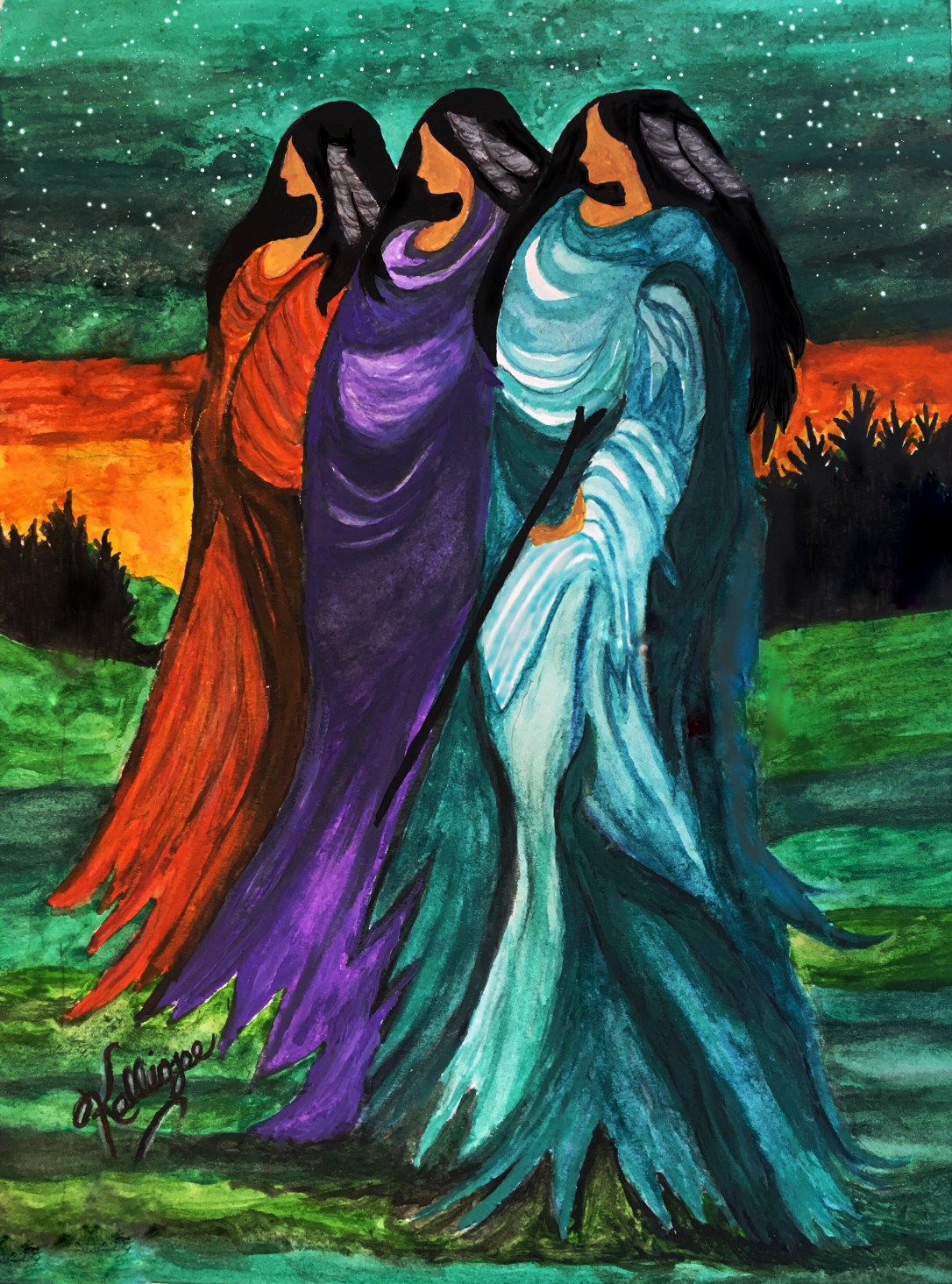
 On this day — the day we usually spend celebrating America each year — some of us are lamenting because we don’t feel much like celebrating. The children and families separated at our borders leave us feeling deep-down-where-it-hurts grief. And it is not that we look at the border fiasco as the crisis “du jour.” No. The toddlers in detention centers have come on the heels of the Parkland shooting and the protests it sparked around the nation and throughout the world when all of us cried out in unified voice, “Not our children,”
 I am digging deep to find strength for the living of these days. Certainly, I am dealing with health issues and aging, enough to wrap a comforting cloak of depression around my self. I am deeply concerned about a dear family member who is working through sorrow. I am sad that people come to the abyss of life feeling that the only answer for them is to take their own lives.
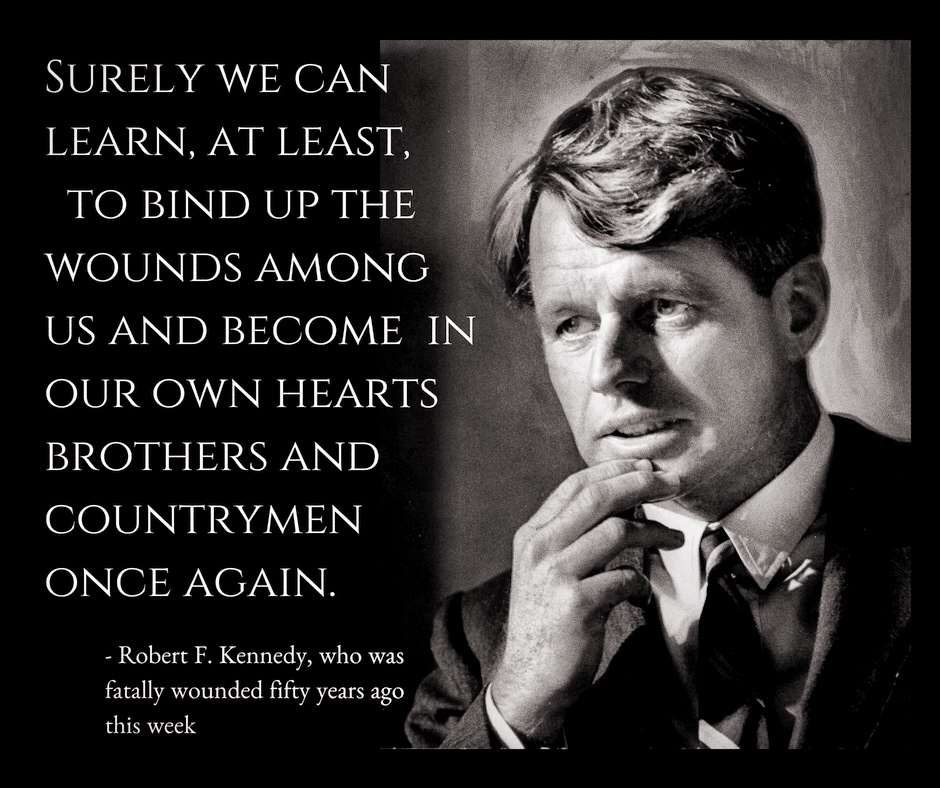 It was called the greatest speech ever written — April 4, 1968.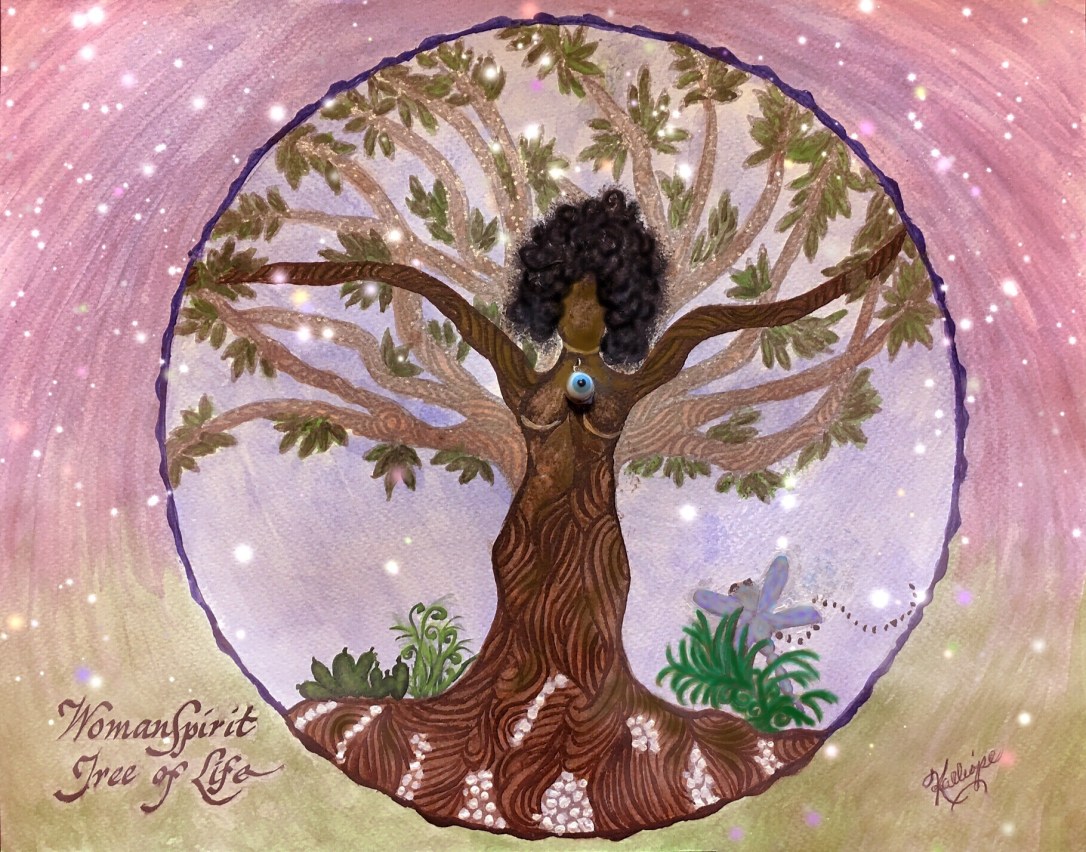
 NEVER! You hear me? NEVER . . . Never would I have moved to Macon, Georgia four years ago if someone had bothered to tell me the place sits smack dab on top of the Gnat Line! I had a perfectly good home in Little Rock, Arkansas, a lovely home that I enjoyed for 35 years. And I had a beautiful patio garden with many plants, trees, flowers and shrubs. And NO gnats!
 I, for one, do not need a map to tell me that the infamous Gnat Line goes directly through Macon, Georgia. The line probably goes through my street! I have empirical evidence. Gnats go after me with a vengeance, lighting all over my arms, relentlessly buzzing my ears, and worse, dive-bombing into my eyes, nose and, if I don’t keep it tightly closed, my mouth. It is not a good experience.
 Sometimes life hurts.
 This piece was first published on the blog at
  Let us pray with our legs, let us march in unison to the rhythm of justice, because I say enough is enough.”
 Today, my pastor reminded me of a cherished truth, that we are not just loved by God, we are also known by God. Today’s scripture, Psalm 139, is indeed a precious gift. The Psalmist assures us that God knows when we sit down, when we lie down, and when we rise up.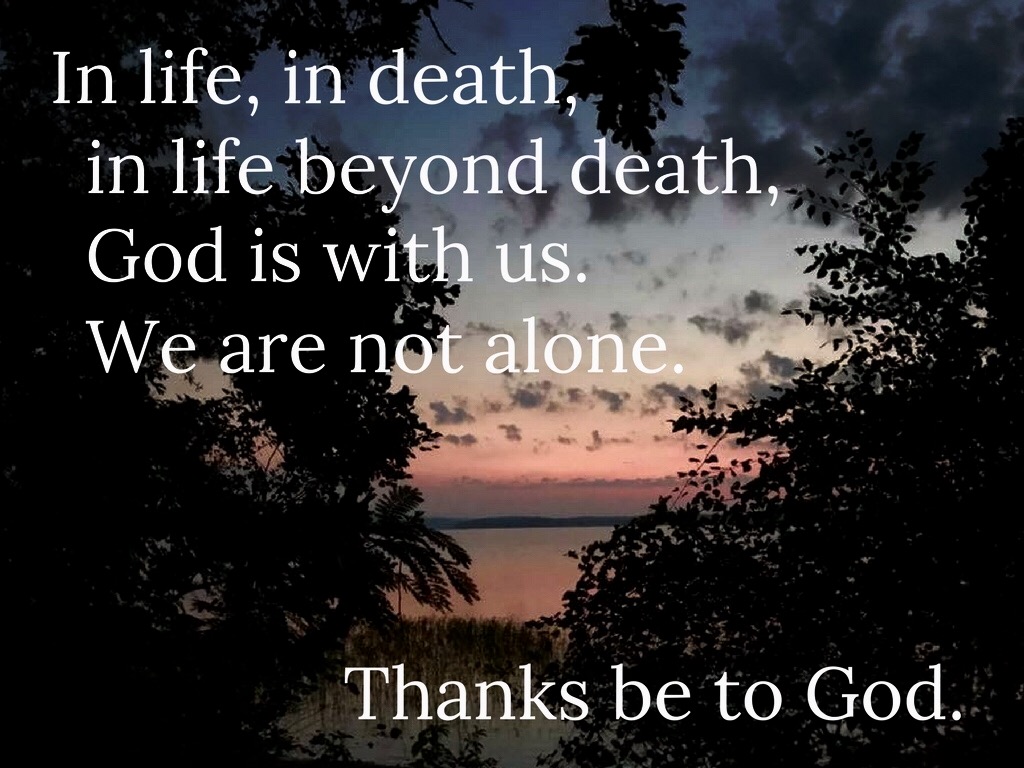
 August 27, 2017, marked an action of sacred change among the congregation of the First Baptist Church of Christ in Macon, Georgia. I was proud of the church I have recently become a part of, not only because of our adoption of a policy that ensures the full acceptance of LGBTQ parsons, but also because of the thoughtful and intentional process that resulted in the decision for inclusion, acceptance, unity, justice and love.

 God of the Sparrow 🌱 By Kathy Manis Findley