Change, Children, Courage, grief, Gun control, healing, Hope, Justice, Politics, Violence

A Change Is Gonna Come

963A5A51-3EC5-464E-BAE6-A49BCFECAE4F
Emma González 
 ‘These young people will not sit in classrooms waiting.’ Photograph: Jonathan Drake/Reuters

Half a century ago, on March 7, 1965, state troopers beat down men and women who were participating in a peaceful march for voting rights in Selma, Alabama. That same day, radio listeners around the country might have heard Sam Cooke singing a song he had written and recorded several months earlier, but which could have been describing the “Bloody Sunday” confrontation on the Edmund Pettus Bridge.

There have been times that I thought I couldn’t last for long
But now I think I’m able to carry on
It’s been a long, a long time coming
But I know a change is gonna come, oh yes it will.

In “A Change Is Gonna Come,” Sam Cooke moves from bigotry and bloodshed to hope and beauty in barely three minutes. If you listen to the record today, you will hear a story that continues to be relevant. (https://m.youtube.com/watch?v=wEBlaMOmKV4)

Sam Cooke’s rough, sweet voice — a voice that is blues-born and church-bred, beat down but up again and marching — still rings.

A changs IS gonna come . . .

That message of hope rings out still in these troubling days through the passion-filled voice of Emma GonzĂĄlez, a senior at Marjory Stoneman Douglas High School, as she addresses a gun control rally in Fort Lauderdale just days after a gunman entered her school in Parkland and killed 17 people.

A change IS gonna come . . .

We are going to be the kids you read about in textbooks. Not because we’re going to be another statistic about mass shooting in America, but because . . . we are going to be the last mass shooting. We are going to change the law. That’s going to be Marjory Stoneman Douglas in that textbook and it’s going to be due to the tireless effort of the school board, the faculty members, the family members and most of all the students. The students who are dead, the students still in the hospital, the student now suffering PTSD, the students who had panic attacks during the vigil because the helicopters would not leave us alone, hovering over the school for 24 hours a day.

If the President wants to come up to me and tell me to my face that it was a terrible tragedy and how it should never have happened and maintain telling us how nothing is going to be done about it, I’m going to happily ask him how much money he received from the National Rifle Association. You want to know something? It doesn’t matter, because I already know. Thirty million dollars.  — Emma GonzĂĄlez

A change Is gonna come . . .

Just hours after the mass shooting, other students turned to social media to discuss gun control.

Guns give these disgusting people the ability to kill other human beings. This IS about guns.  — Carly Novell, a 17-year-old senior; editor of the school’s quarterly magazine.

We need to do something. We need to get out there and be politically active. Congress needs to get over their political bias with each other and work toward saving children. We’re children. You guys are the adults.  — David Hogg, 17, a senior; Stoneman Douglas student news director

Wherever you bump into someone, there is the fear that they’re the next shooter, and every bell is a gunshot. I feel like some change is going to come of this.  — Daniela Palacios, 16, a sophomore at another Broward County High School at her first protest.

A change IS gonna come . . .

And it will be our bold and compassionate children who will lead this nation into that change. Like so many Americans, I was disconsolate when watching the TV news of yet another school shooting. But then I started watching the students, and I saw the girl with the buzzcut, Emma GonzĂĄlez, wiping back her tears, mourning her dead classmates while demanding change.

Like her schoolmates, Emma is in trauma, but she is organizing. She and many of her classmates are directly challenging the donations of the National Rifle Association to Trump and other politicians. There will be school strikes. There will be organized resistance. These young people will not sit in classrooms any more. They refuse to become another tragic statistic. “We are going to be the kids you read about in textbooks,” said a weeping González.

As I remembered this week what happened  at Sandy Hook, at Columbine, at Westside, a school in my own state, I remembered feeling anger and despair. But today, for first time in a long time, I feel hope. I see true leadership as kids are standing up for one another and fighting for their lives.

Let us stand courageously beside these children, our children, and do what we can to create change . . . letters to Congress, phone calls, posts on social media, marches and demonstrations, hand-lettered signs, letters to the editor, VOTING for change. What can you do?

Emma GonzĂĄlez, Daniela PalĂĄcios, David Hogg, Carly Novell . . . and thousands of other children who are crying out, ENOUGH!

They give me hope.

A change is gonna come!

May God ennoble each of us to make it so.


Change, Christian Witness, Courage, Faith, Freedom, Hate, Injustice, Justice, Martin Luther King, Jr., Risk, Segregation, The Christian Church

Out of Africa: White Supremacy and the Church’s Silence

D4B59064-1AD6-4121-B934-261EB10546E6I invite you to read “Out of Africa: White supremacy and the Church’s silence,” a provocative opinion piece by our guest blogger, Dr. Bill J. Leonard. Many thanks to Dr. Leonard for prompting us to more fully commemorate the day honoring Dr. Martin Luther King, Jr. If you are willing to challenge yourself, these words will shed the light you need to do so.

Out of Africa: White supremacy and the Church’s silence

45580E0C-5D54-41B6-8ECA-D4B04AAA7F7C
Dr. Bill J. Leonard

OPINION | BILL LEONARD | JANUARY 15, 2018

“Give me your tired, your poor, your huddled [Caucasian?] masses, yearning to breathe free.”

Three days before the 2018 Martin Luther King Jr. memorial observances, and in the 50th year after Dr. King’s assassination, the plague of racism in America continued, even as white supremacy, long lingering just below the surface, reasserted itself with a vengeance.

On Jan. 12, the president of the United States, at a White House meeting on immigration, allegedly asked why “all these people from shithole countries,” specifically Haiti and Africa, should be admitted to the U.S. He was also said to have wondered aloud why the U.S. could not secure more immigrants from countries like Norway (83 percent Caucasian). Confirmation of his remarks vary from those in attendance. Some confirm the alleged statements; others deny them. Somebody’s lying.

The mere report of the comments was immediately celebrated across the country’s white supremacist network, much as when Trump affirmed “good people on both sides” in last year’s violent neo-Nazi-led demonstrations in Charlottesville, Va. White nationalist Richard Spencer chastised Trump’s defenders for suggesting the statements were related to law or economics, since they were actually “all about race.” Spencer was, of course, delighted. The Neo-Nazi blog, the Daily Stormer, hailed the President’s words as “encouraging and refreshing” since they indicated that “Trump is more or less on the same page as us” regarding “race and immigration.” In America, 2018, white supremacy is now apparently “refreshing.”

Dallas Baptist pastor Robert Jeffress defended the president, noting that “apart from the vocabulary attributed to him,” Trump’s comments were “right on target” with his presidential responsibility “to place the interests of our nation above the needs of other countries.” That’s unlike Christians’ “biblical responsibility” to “place the needs of others” above themselves. (Racism’s OK; it’s vulgar language that’s the problem.)

Amid debates over the veracity of witnesses to the White House event, the fact remains that the dogmas of white supremacy lie at the center of America’s long night of racism, in politics, social structures, and racial stereotypes. At this moment in history, how can American Christians, themselves deeply divided over scripture, doctrine, sexuality, abortion, and other culture war accoutrements, foster a common compulsion to speak out against white supremacist fiction before it gains an even stronger implicit or explicit influence?

Even if President Trump did not use vulgar words to highlight his views on immigration, did he in fact wistfully promote a 21st century America where Aryans (remember the history of that word?) are preferred to immigrants of color? Surely it is time to break the silence, not simply because of those shameful remarks, but because they are part of a larger litany of racial dog whistles from Trump’s birther campaign, to attacks on a “Mexican” judge and a Gold Star Muslim family, to the infamous Charlottesville slurs.

We have many reasons to break the silence: First, because white supremacy itself is an inherently evil yet an enduring vision of the nature of humanity, and must be resisted for that fact alone. It has polluted our national psyche long enough!

Second, we break the silence on this matter because we hear again Dr. King’s words from that Birmingham jail: “Shallow understanding from people of good will is more frustrating than absolute misunderstanding from people of ill will. Lukewarm acceptance is much more bewildering than outright rejection.”

Third, we Aryan Christians cannot be silent because it’s our racial ancestors who first planted the banner of racism in our laws, our institutions (churches included), and in our hearts. And some among us still won’t let it go. We need to get “saved” from it.

Fourth, we speak out now because American churches, at least many of them, remained silent for too long. Indeed, Trump’s only a symptom; we scapegoat him at our peril. When his remarks hit the fan, I returned to James Baldwin’s The Fire Next Time, a book that has taught me, shamed me, blessed me, and broken me for decades. Baldwin writes: “It is not too much to say that whoever wishes to become a truly moral human being (and let us not ask whether or not this is possible) must first divorce him[her]self from all the prohibitions, crimes and hypocrisies of the Christian church. If the concept of God has had any validity or any use, it can only be to make us larger, freer, and more loving. If God cannot do this, then it is time we got rid of Him.” (Whatever God is, it damn sure isn’t white supremacy.)

Mercer University professor Robert Nash illustrates Baldwin’s point in a superb essay entitled, “Peculiarly Chosen: Anglo-Saxon Supremacy and Baptist Missions in the South,” documenting that ecclesiastical collusion with the case of James Franklin Love, corresponding secretary of the Foreign Mission Board of the Southern Baptist Convention, 1915-1928. Nash notes that Love “was profoundly influenced by the concept of Anglo-Saxon supremacy 
 that white races possessed a superior intellect, religion, and civilization.”

Love’s mission strategy focused on evangelization of Europe since white Christians could more readily convert the darker races. He wrote: “Let us not forget that to the white man God gave the instinct and talent to disseminate His ideals among other people and that he did not, to the same degree, give this instinct and talent to the yellow, brown or black race. The white race only has the genius to introduce Christianity into all lands and among all people.” (In 2017, the Southern Baptist Convention went on record condemning white supremacy then and now. It’s about time.)

Finally, we break the silence, confronting white supremacy and its accompanying racism at this moment because we will neither deny nor sully the African heritage of our African-American sisters and brothers, who as W.E.B. Dubois wrote, “would not bleach 
 [their] Negro soul in a flood of white Americanism,” since they know “that Negro blood has a message for the world.”

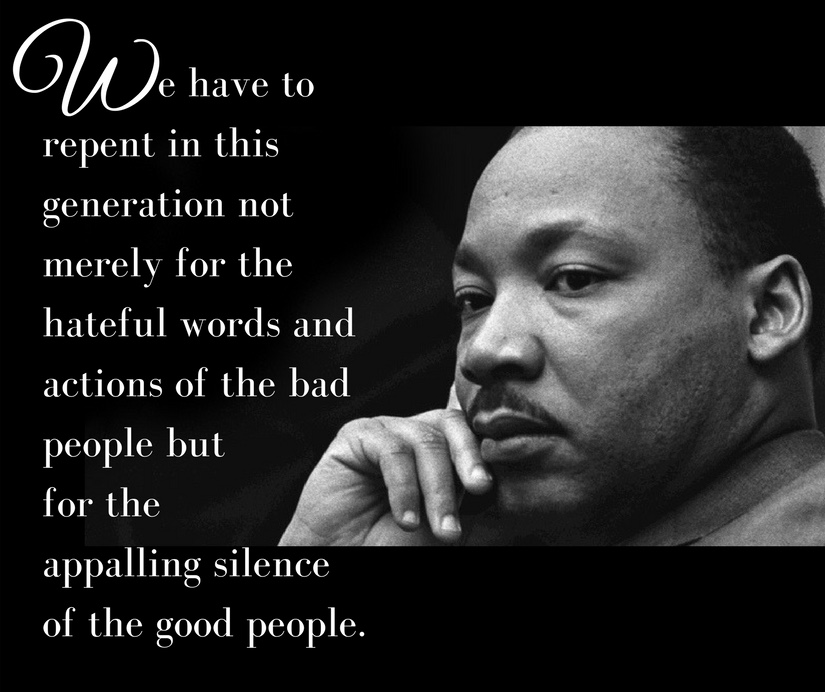
On what would have been his 89th birthday, Dr. King retains his prophetic voice for black and white alike, declaring from his jail cell then and now: “We will have to repent in this generation not merely for the hateful words and actions of the bad people but for the appalling silence of the good people. Human progress never rolls in on wheels of inevitability; it comes through the tireless efforts of men [women] willing to be co-workers with God, and without this hard work, time itself becomes an ally of the forces of social stagnation.”

Today, we read again Matthew’s haunting assessment of the Holy Family’s immigration from Herod’s not-so-holy-land:

“Out of Egypt I have called my son.”

Sweet Jesus, Egypt’s in Africa! Amen”


Bill J. Leonard is the James and Marilyn Dunn Professor of Baptist Studies, Professor of Church History, School of Divinity, Wake Forest University.


Christmas, Courage, Epiphany, Hope, Inspiration, Light, Risk, Stars, Women

Looking into the Sky

C6F419F0-5C81-4A26-B890-76C7BCD762FCFor Christians around the world, the end of the Christmas holiday occurs on Epiphany, the 12th Day of Christmas. It commemorates how a star led the Magi, or the three kings or wise men, to the baby Jesus. Epiphany is about finding Jesus — again — in a fresh new way, looking into the light that has the power to change our lives.

In his homily on Friday before Epiphany, Pope Francis called on the faithful to be like the Magi, who, he said, continued to look at the sky, took risks and set out bearing gifts for Christ.

If we want to find Jesus, we have to overcome our fear of taking risks, our self-satisfaction and our indolent refusal to ask anything more of life. We need to take risks simply to meet a child. Those risks are immensely worth the effort, since in finding that child, in discovering his tenderness and love, we rediscover ourselves.

Looking into the sky and taking risks is a way of life for women. We have found the need to look up, above the hurts of our lives. We have looked into the sky to escape misogyny, discrimination, disrespect and abuse. We have looked into the sky to search the heavens for hope when we have felt only despair.

It has not been for us just a flighty inclination to retreat from unpleasant realities through fantasy. Instead our sky gazing has been a way to pour our souls into the kind of change that makes life worth living. We have dreamed improbable dreams. We have been wise. We have been brave and persistent. We have taken risks and defied whatever was holding us hostage. We have been determined emboldened and empowered.  We have been inspired and ennobled. We have changed our world.

Like the three Wise Men, we journeyed, wise women in search of the child that would more fully empower us. Our desire and longing led us, like a fire burning within, until we found the flaming star in the night sky. And there we found Jesus —  again. So we celebrated. We rejoiced, because Jesus wanted for us a new day, a new life of respect and well-being and inspiration and hope. That is epiphany. Amen.

Change, Courage, grief, Gun control, Mourning, peace, Perseverance, Politics, Violence

How Long, O Lord?

DesignThe mass shooting in Las Vegas leaves us enraged. And confused. And heartbroken.

Heartbroken describes us best as we find ourselves dealing with an inescapable and horrific truth that our world is not a safe place. Once we take that into our souls, we begin to live life as victims, refugees from all that is good. The television news is filled with the stories of heartbroken people whose loved ones were gunned down at a “fun-filled” event. As people of faith, our lives are interwoven with the lives of the victims and survivors of the Las Vegas tragedy. So yes, although we were not there and did not experience the massacre, we are heartbroken, too.

We are heartbroken because of lives lost. We are heartbroken because brothers and sisters must mourn the death of persons they loved. We are heartbroken because those that survived the Las Vegas shooting now live with relentless survivor’s guilt. We are heartbroken because a healthy family event filled with music violently lost its melody. We are heartbroken because violence reigns in the world. We are heartbroken because we do not have the moral, ethical, spiritual and political will to change the climate of violence through responsible weapon control legislation.

But we have been heartbroken before, far too many times. Orlando, Fort Hood, Killeen, Virginia Tech, UT Austin, San Bernardino, Sandy Hook, among others. We have been heartbroken before, and nothing changed. Our broken hearts did not result in courageous spirits willing to persevere, persist and insist on creating change in our culture of violence.

Dan Hodges made this very sad statement in 2015.

In retrospect, Sandy Hook marked the end of the U.S. Gun control debate. Once America decided that killing children was bearable, it was over.

The facts, though, convict us of irresponsibility and refusal to effect change. The Guardian published a chart — America’s Gun Crisis in One Chart — that reveals the troubling truth: 1,516 mass shootings in 1,735 days. (https://www.theguardian.com/us-news/ng-interactive/2017/oct/02/america-mass-shootings-gun-violence) The chart, updated on October 2, 2017, reports 1,719 deaths and 6,510 injuries.IMG_5997

People of faith lament and grieve, asking God for answers. Like the Prophet Habakkuk who prayed for help in a time of trouble, we cry out to God.

How long, O Lord, must I call for help, and You will not hear? I cry out to You, “Violence!” Yet You do not save.

Why do You make me see iniquity,
And cause me to look on wickedness?
Yes, destruction and violence are before me;
Strife exists and contention arises.

– Habakkuk 1:2-3 NASB

I would never presume to know the mind and heart of God, but I imagine that God’s answer to our question, “How long, O Lord?” might sound something like this.

How long, you ask. Long enough for you to stand courageously for what is right. Long enough for you to develop the political will to seek change through advocacy in the halls of Congress. Long enough for you speak truth to power, constantly and persistently until a new day of peace and safety dawns in your nation. Do not cry, “Peace, peace where there is no peace.” Instead cry out, “Change! Change! Change now, because God desires to comfort your broken heart and wills for you a world of safety, well being, and holy peace.”

May God grant us the courage and the perseverance to make it so.

Courage, Darkness, Daybreak, Despair, Faith, Fear, grief, Hate, Hope, Justice

The Promise of Daybreak

IMG_5911
Pierce Creek Public Boat Landing, Mayflower, Arkansas. Photo by Steven Nawojczyk.

Therefore take the whole armor of God, that you may be able to withstand in the evil day, and having done all, to stand.

– Ephesians 6:13 Revised Standard Version (RSV)

And if you spend yourselves in behalf of the hungry
and satisfy the needs of the oppressed,
then your light will rise in the darkness,
and your night will become like the noonday.

– Isaiah 58:10 New International Version (NIV)

—————————————————————————————-

A friend recently described this time in history as “days of despair.” She talked about “a veil of darkness” that has covered our world. I have thought a great deal about her comments and have spent time pondering the kind of fear people might be feeling. Certainly, the natural disasters we are experiencing are causing feelings of great unease. Floods and fires, mighty winds and life-changing storms have left millions of people despairing. They have experienced loss of life, loss of their homes, loss of belongings, loss of their place in community. Perhaps some of them doubt the promise of a dawning day that brings back hope.

Add to that the far too frequent expressions of hate, xenophobia and racism that exacerbate distress. Clearly, there is enough fear and despair to go around in these unsettling days. After many years of acceptance and belonging, the young people we call DREAMERS suddenly feel the fear of losing all that they have worked for, including the country that has been “home” to them since they were children.

So how do disconsolate people move forward when a sense of despair holds them captive? How do people in the midst of fear and grief believe that a new dawn will break their current darkness? How do they hold on to their faith in the God who cares deeply for them, protects them, holds them close?

Can we join hearts and hands and stand courageously against injustice, standing with those who have been marginalized, believing that we will overcome the “evil day” that threatens us?

One voice throughout history declares with certain, living faith that, whatever we face, we shall overcome. I do not even need to mention his name because we hear his voice clearly during every trial. These are his words:

We shall overcome because Carlisle is right. “No lie can live forever.”

We shall overcome because William Cullen Bryant is right. “Truth crushed to earth will rise again.”

We shall overcome because James Russell Lowell is right. “Truth forever on the scaffold, wrong forever on the throne. Yet that scaffold sways the future and behind them unknown stands God within the shadows keeping watch above his own.”

We shall overcome because the Bible is right. “You shall reap what you sow.”

With this faith we will be able to hew out of the mountain of despair, a stone of hope.

— Dr. Martin Luther King, Jr., 1966

These days of darkness and division will pass. These days of dim uncertainty will pass. We shall overcome despair. As it always has, the breaking dawn will drive out the darkness of night. Hope will again rise within us as we embrace the promise of another glorious daybreak.

Amen. Thanks be to God.


Courage, Darkness, Hope, Justice, Light, peace

“This is our cry, this is our prayer, peace in the world.”

Enlight138A twelve year-old girl, Sadako Sasaki, died of radiation induced leukemia ten years after the atomic bomb had fallen near her home in Hiroshima. Her story has inspired millions around the world, and her memory transformed a simple paper crane into an international symbol of peace and hope.

Sadako’s leukemia progressed rapidly and she was confined to the hospital just one month after her diagnosis. She knew the prognosis wasn’t good. She knew also that she didn’t want to die. Her father told her a Japanese legend that said if you folded one thousand paper cranes you would be granted a wish.

While hospitalized, Sadako began furiously folding cranes. She made a thousand and started on a second thousand. She was only able to fold 644 more cranes before she died on October 25, 1955 — not quite a year after being diagnosed, but her classmates continued folding after her death and created 356 more cranes. They made sure that Sadako was buried surrounded by a thousand cranes. They also collected money to build a statue in her memory, a statue of Sadako holding a golden crane erected in Hiroshima’s Peace Park. A plaque on the statue reads: “This is our cry, this is our prayer, peace in the world.”

Living just beyond the terror of Charlottesville and watching hate-inspired language and actions, people of faith long even more deeply for peace in a hostile world. We saw hate on our television screens. Our children saw it — groups of people beating each other with flagpoles and bats, throwing punches, dousing people in raw sewage, using chemical sprays on each other, chanting hate slogans, driving a vehicle into a crowd of people, leaving one person dead and many others injured. With great vitriol, the demonstrators trumpeted anti-black racism and anti-Semitism, displaying swastikas on banners and shouting slogans like “Jews will not replace us,” and “blood and soil,” a phrase drawn from Nazi ideology.

So our hearts are heavy, our spirits nursing despair. We are desperately searching for ways to immerse our lives in the quest for peace and justice, but there are moments when hope is small. There are times when the skies above us look ominously dark, without even one sparkle to light our way. There are moments when we are filled with fear and doubt, convinced that peace in our world, in our nation, in our communities, even in our hearts, is all but impossible. The words of Russian author Anton Chekhov offer a glimpse of hope.

We shall find peace. We shall hear angels, we shall see the sky sparkling with diamonds.

Can we really hear angels? Do the skies still give light? Shall we make a thoudand paper cranes? Shall we pray more constantly and fervently? Shall we look deeper into our own hearts to find the core of our own peace? Shall we move and speak and act with courage in places where evil reigns?

Perhaps we must do all of that, and more — whatever it takes, however long it takes, whatever the cost. But most importantly, we must not lose heart, holding hope high so that those who see us will see hope, new and fresh and full of faith.

Once in a generation’s life, there is a spectacular lineup of the sun, moon, and earth causing a solar eclipse. Today millions of people will look into the sky to experience it. Everyone who stops to look skyward — regardless of their age, race, nationality, sexual identity — will see the very same moon and sun. When we experience the darkening of the sun today — a stunning darkness in the midst of daylight — perhaps the experience will remind us that, even in the dark, the sun still shines.

The darkness demonstrated in Charlottesville will not prevail. People of good will and kindness will stand together in solidarity to work for peace. People of faith, peacemakers called by God, will not allow the darkness to cover all that is right and just in the world. The music of hope inspires us still . . .

Let there be peace on earth and let it begin with me.

This is our cry, this is our prayer, peace in the world.

Change, Christian Witness, Courage, Dreams, Mission, peace

A Holy Mission . . . A Possible Mission

IMG_5800
A post card created by the Syracuse Cultural Workers                                            commemorating Dr. Martin Luther King, Jr’s Beloved Community.
When Martin Luther King, Jr. spoke of “beloved community” he was describing the ultimate goal of non-violent activism for peace and justice — a global community of caring where poverty, hunger and in justice are no more.

As a person of faith, how do I respond to injustice? Where do I find the impetus, the courage, to confront evil? How do I go deeply into my soul to find the inner strength to stand against that which is wrong in the world? How do I work to help realize the dream of a beloved community? How do I meet the challenge of so holy a mission?

Brian McClaren recently wrote about what he saw and experienced in Charlottesville. A part of his article includes a straight-up call to people of faith.

All of us, especially people of faith, need to proclaim that white supremacy and white privilege and all other forms of racism and injustice must indeed be replaced with something better – the beloved community where all are welcome, all are safe, and all are free. White supremacist and Nazi dreams of apartheid must be replaced with a better dream – people of all tribes, races, creeds, and nations learning to live in peace, mutual respect, and neighborliness. Such a better world is possible, but only if we set our hearts on realizing the possibility.

– Brian McClaren

Oh, how we long to experience “the beloved community.” How we long to see our dreams of peace become a reality. Yes, we do set our hearts on realizing these dreams. Yet, we still feel the reticence of fear and inadequacy. We still tend to hide inside of our religiosity, the kind of religiosity that prevents us from responding to God’s call to wage peace. The Apostle Paul spoke to the religious people of his time. His words are instructive to us.

Paul stood up in the meeting of the Areopagus and said: “People of Athens! I see that in every way you are very religious. For as I walked around and looked carefully at your objects of worship, I even found an altar with this inscription: to an unknown god. So you are ignorant of the very thing you worship—and this is what I am going to proclaim to you.”

“The God who made the world and everything in it is the Lord of heaven and earth and does not live in temples built by human hands. And he is not served by human hands, as if he needed anything. Rather, he himself gives everyone life and breath and everything else . . . For in him we live and move and have our being.”

– From Acts 17:22-28

Therein lies the answer to my questions of inadequacy and urges me to go beyond my own “objects of worship.” Paul’s prompting urges me to move outside of my own religious temple into a hurting and warring world. How can I find the will and the courage?

In God I live and move and have my being. That makes every holy mission a possible mission.

May God make it so.

Change, Courage, Hate, Justice, peace, Perseverance, reconciliation, Risk

Pulling Back the Veil

IMG_5796How good and pleasant it is when people live together in harmony!

– From Psalm 133

How long, O Lord, will we experience hate speech and evil actions? How long will we see the kind of divisive and violent display we saw in Charlottesville? How long will we refuse to lift the veil to reveal the truth about our nation, about ourselves? How long, O Lord, will we remain silent, complicit? How long will it take us to stand courageously as people of God and proclaim in whatever ways we are able that racism, xenophobia, homophobia and every form of injustice will not prevail in our nation?

The God who made us and nurtured us expects us to act with courage in the face of evil, to speak, to write our leaders, to be present in the quest for justice, to wage peace, to pray for the strength to change our world, and most importantly, to be brave enough to pull back the veil, to truly see the depth of the division in our nation and the racism in our own hearts. This is God’s calling and challenge to us. But most of the time, most of us meet God’s challenges with hesitation and questions.

I am only one person with many limitations. How can I make any difference at all?

I don’t know enough to speak out. How can I influence anything?

I am not strong enough. How can I persist in the midst of such violence?

The lives of our sisters who live on in the Scripture encourage us by their courageous example and summon us to be change-agents that work for the day when God will reign on earth as in heaven.

Deborah, prophet and judge in Israel, calls us to emulate her wisdom, courage and compassionate zeal for justice. (Judges 4:4-14)

The four daughters of Phillip the Evangelist call us to prophesy as they did with boldness and courage. Eusebius refers to them as “great lights” or “mighty luminaries.” These strong women held a unique place in the early church, exercising their prophetic ministry freely and powerfully. Will we become “great lights” in the midst of hatred’s darkness? (Acts 21:9)

Esther calls us to the kind of bravery and courage that led her to risk her life to save the lives of her people. Like her, perhaps we have been called for such a time as this. (Esther 4:14)

The five daughters of Zelophead call us to be fearless. Mahlah, Noah, Hoglah, Milcah and Tirzah stood fearless and firm, and as result reformed the culture of their day. Because they spoke up without fear, they reversed precedent. Their call to us is to speak truth to power. (Numbers 27:1-7)

Certainly, our deepest desire is for “people to live together in harmony.” But until that day comes, we will speak and work and pray for peace and justice.

My friend, Ken Sehested shares a prophetic line from a poem penned by Adrienne Maree Brown: “Things are not getting worse. They are getting uncovered.”

In response, Ken writes:

The poet’s counsel in light of these things would be mine as well: “We must hold each other tight and continue to pull back the veil.” (http://www.prayerandpolitiks.org/blog/2017/08/12/we-are-charlottesville.2776686)

I end with a wise word from another poet, Maya Angelou.

History, despite its wrenching pain, cannot be unlived, but if faced with courage, need not be lived again.

With the example of our Biblical sisters, with God’s unambiguous call, let us move with courage, pulling back the veil, uncovering the truth, working for the day when people will live together in harmony.

Contemplation, Courage, Covenant, Prayer

Raising Cain

IMG_5745
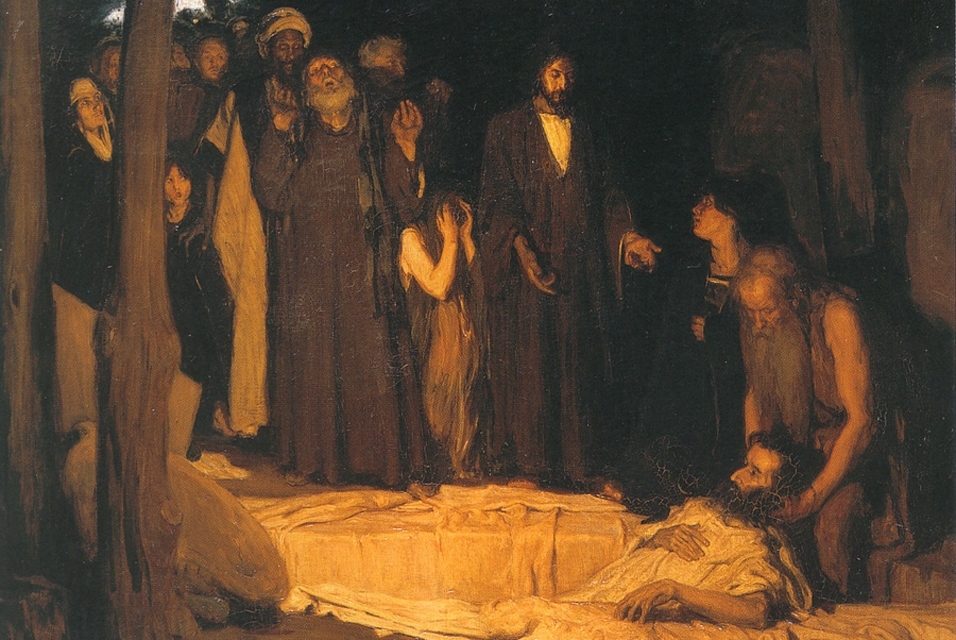
“The Resurrection of Lazarus.” Oil on canvas painting by Henry Ossawa Tanner, 1896 

As someone born and raised in the south, I know a lot about “piddlin’ around.” I do it all the time, and when the day’s light comes to an end, I always wonder if I have done anything at all worthwhile.

Don’t get me wrong. I heartily approve of some piddlin’ around in life. Especially holy piddlin’ like getting quiet and getting in touch with God. Holy piddlin’ like sitting in silent contemplation can bring God close to me. Praying can take me to a special place for sensing God’s touch. Listening to sacred music opens my soul to the whisper of God.

Piddlin’ can be a very life-giving pastime. On the other hand, some of us God followers long to change the world, to face off against oppression, to do justice, to end wars . . . to do something of eternal meaning.

Our problem is that changing the world can be a heavy burden that we simply cannot carry around for long. The secret, I think, is a balance between pensive spiritual moments with God and those once-in-a-while moments of sparkling mission and calling, those moments when we rise courageously above ourselves and almost see miracles. Truth is, it is not a common happening for us to find ourselves raising anyone from the dead or healing someone who is suffering illness.

It seems that the best we can do is to say to God, “I offer you, God, my silent devotion. And I offer you my willingness to follow your highest calling and your most extraordinary mission, wherever it leads and whatever the cost. Here’s my heart. Do with my life as you will.”

I very much enjoy the writing of Annie Dillard, and she has written eloquently on this very subject. Here’s what she writes.

There is always the temptation in life to diddle around making itsy-bitsy friends and meals and journeys for years on end… But I won’t have it. The world is wilder than that in all directions, more dangerous…more extravagant and bright. We are…raising tomatoes when we should be raising Cain, or Lazarus.

– Annie Dillard

I hope that you will find many of those sacred “be still, my soul” moments with God. But I pray also that you will, along the way, have eyes wide open for those bright and extravagant miracle moments when it just might be possible to raise Cain or raise Lazarus.

Change, Courage, Dreams, Hope, Justice, peace, Perseverance

Raise Beautiful Trouble!

IMG_5737Raise beautiful trouble!

Resist! Resist all actions that hinder peace and cause the madness of warring. Women have long dreamed of peace, dreaming of a world without war, hatred, racism, homophobia, xenophobia, and all forms of injustice. Our Jewish brothers and sisters proclaim “Tikkun Olam” calling us to heal the world. Tukkun Olam is a jewish concept defined by acts of kindness performed to perfect or repair the world. The phrase is found in the Mishnah, a body of classical rabbinic teachings and is often used when discussing issues of social policy.

Raise beautiful trouble!

Diane Wilson climbed over the fence at the White House, skinning her stomach on the steel barbs. Two weeks later she got a visit from two guys in black suits, black shoes, and wearing sunglasses, Secret Service agents who wanted to know if she had an authority complex.

Diane is active in the organization, CODEPINK, a women-led grassroots organization working to end U.S. wars and militarism, support peace and human rights initiatives, and redirect tax dollars into healthcare, education, green jobs and other life-affirming programs. (http://www.codepink.org)

Century after century women have yearned for and worked for peace. Through the years, women have walked hand in hand as they reflected on ways to create a just and peaceful world. Maybe it’s just a woman thing! Julia Ward Howe proclaimed these words in 1870.

Arise, then, women of this day! Arise all women who have hearts, whether our baptism be that of water or of tears! . . . We women of one country will be too tender of those of another country to allow our sons to be trained to injure theirs. From the bosom of the devastated earth a voice goes up with our own. It says, “Disarm! Disarm! The sword of murder is not the balance of justice.”

— Julia Ward Howe, 1870, From her Mother’s Day Proclamation for Peace

IMG_5734
Art by Ayla Mahler

The dream persists. The peacemakers persevere, longing for a day when all people will “hammer their swords into plowshares and their spears into pruning hooks. Nation will not lift up sword against nation, And never again will they learn war.” (Isaiah 2:4 NASB)

The words of T.E. Lawrence offer stunning hope for better days.

. . . the dreamers of the day are dangerous men and women, for they may act their dream with open eyes, and make it possible.

Sisters (and brothers too), continue to dream of peace with eyes wide open. Raise beautiful trouble! Resist! Persist! The peace of the world is your reward.


Change, Courage, Hate, Justice, Transformation

The Power of a Whisper

IMG_5727Speak your mind. Don’t be afraid. Don’t whisper in the deep.

These words, composed by Ray Phiri, the South African guitarist and anti-apartheid bandleader who played behind Paul Simon on “Graceland,” opened my mind and heart to a stark reality— that hate hovers ominously all around. That hate’s power can dessimate all that is right and just and good in the world. That hate can be conquered only by a courageous people willing to speak truth and love whatever the cost.

Ray Phiri died last week at age 70, but in this seventy years, his controversial ideas made an impact. His song,”Whispers in the Deep” was banned from broadcast on the South African government-controlled radio station, SABC, when it was released in 1986.

Stand up! Wake up!
Call me angry, call me mad.
A soul that whispers in the deep.
I’m inspired.
But I can’t understand hate.

I imagine that is exactly where we find ourselves, unable to understand hate. We see enough of it, to be sure. We hear about it every day. We know about the dry, brittle bones that remain when a person experiences enough hate.

Hate is war. It is hunger and poverty. It is racism and homophobia and xenophobia. It is violence and abuse. It is unbridled anger. It is injustice in many forms, injustice that shatters lives and leaves dust and ashes in its wake.

Standing amidst hate is not unlike standing in a personal hell. Hate, whether around us or within us, has the power to crush the soul. And yet, always present with us is a protective God who can deliver us from hate’s destruction.

For me, it is true that I do not always know that God is nearby. I seldom see God as my personal vanquishing superhero that destroys the power of hate. Rather, the God I know is much more like the God in the story of Elijah. (1 Kings 19:11-13)

As the story goes, Elijah clings to a cave while God unleashes natural forces far beyond anything Elijah has ever seen or heard. But even in the midst of the tempest, Elijah realizes that something is terribly wrong. The text tells us three times that God is nowhere to be found. But the text also insists that God is passing by.

Elijah looked for God in the great whirlwind, in the shattering earthquake, in the blazing fire. But Elijah did not experience God’s presence in any of those mighty and supernatural happenings. Elijah experienced God in the sound of a light whisper. Biblical translators have often called it “the still, small voice.”

The question I ask myself is whether or not I will gather enough strength from God’s tentative presence with me to wake up, to stand up against hate. As in Ray Phiri’s compelling lyric, I do not understand hate. He warns against whispering in the deep, probably a warning against being too quiet in a world that needs to hear confident voices. But it seems to me that even a whisper can be full of power. A persevering whisper can vanquish hate. A persistent whisper can transform the world.

May God make it so.


Change, Christian Witness, Courage, Freedom, Hope, Justice, peace, Perseverance, Politics

Persevering Hope

IMG_5700


PAX

(pɑks ; pĂ€ks; pĂŠks ; paks). noun

1. the Roman goddess of peace, identified with the Greek Irene

2. sign of peace


The Reverend Jennifer Butler was wearing a white clergy stole with Pax embroidered over a cross and an olive branch. Enlight126She Was singing as police officers restrained her, arms behind her back, both thumbs held tightly together with plastic straps. Next to be arrested was The Reverend Traci Blackmon, who chanted “justice, mercy” again and again as police restrained her and led her away.


The Charlotte Examiner described the event, The March to Save Medicaid, Save Lives.

Capitol Hill police arrested the president of the North Carolina NAACP on Thursday morning after he led a protest of the Senate’s proposed health care repeal-and-replace bill.

Rev. William J. Barber II, who was protesting in his role as president of Repairers of the Breach, was released from jail by 2 p.m. On that morning, July 13, 2017, Dr. Barber and other faith leaders led a group of about 50 people to Senate Majority Leader Mitch McConnell’s office in the Capitol.

The group gathered a few blocks away at 10 a.m. and walked to the Capitol, chanting and singing along the way. Eleven protesters were arrested.

Read more at this link:

http://www.charlotteobserver.com/latest-news/article161200048.html#storylink=cpy

As I watched the live feed of this moral and courageous expression of civil disobedience, I hoped that the police would not arrest The Reverend Dr. William Butler, who was obviously experiencing pain from his physical disabilities. I hoped that other faith leaders would not be arrested.

The band of justice-seekers, clergy and persons of all faiths, gathered together in a prophetic action to protect the 22 million Americans in danger of losing healthcare because of what the group calls “immoral Congressional legislation.” The Repairers of the Breach Facebook page gives details of the event.

Together, we’ll join in song and march through the halls of power, sending a moral message that we cannot cut Medicaid — a lifeline for so many children, seniors and people with disabilities.

My heart was with them in Washington. My prayers pleaded for hope for a brighter day, for justice for those who are oppressed, for peace for every person. My mind recalled the words of the prophet Isaiah . . .

And if you spend yourselves in behalf of the hungry
and satisfy the needs of the oppressed,
then your light will rise in the darkness,
and your night will become like the noonday.

The Lord will guide you always;
And will satisfy your needs in a sun-scorched land
and will strengthen your frame.

You will be like a watered garden,
like a spring whose waters never fail.

Those from among you will rebuild the ancient ruins;
You will raise up the age-old foundations;
And you will be called the repairer of the breach,
The restorer of the streets in which to dwell.

– Isaiah 58:10-12

I watched them stand bravely as they faced the powers before them, living into the words spoken by Hannibal of Carthage, “We will either find a way or make one.” I listened to their voices echoing through the halls of the building, singing with persisting, persevering hope.

Ain’t gonna let injustice turn me around
Turn me around, turn me around
Ain’t gonna let injustice turn me around
I’m gonna keep on a-walkin’, keep on a-talkin’
Marchin’ up to freedom’s land.

Ain’t gonna let no jail cell turn me around
Turn me around, turn me around
Ain’t gonna let no jail cell turn me around
I’m gonna keep on a-walkin’, keep on a-talkin’
Marchin’ up to freedom’s land.

Ain’t gonna let nobody turn me around
Turn me around, turn me around
Ain’t gonna let nobody turn me around
I’m gonna keep on a-walkin’, keep on a-talkin’
Marchin’ up to freedom’s land.

Repairers of the Breach — http://www.breachrepairers.org/

Courage, Darkness, grief, healing, Light, Mourning, Sorrow

Out of the Darkness

Design

The heart that broke for all the broken-hearted
Is whole and Heaven-centred now, and sings,
Sings in the strength that rises out of weakness,
Sings through the clouds
that veil him from our sight,
Whilst we ourselves become his clouds of witness
And sing the waning darkness into light . . .

– Excerpt from “A Sonnet for Ascension Day” by poet Malcolm Guite

Out of the bombing in Manchester emerge brokenhearted families — mothers, fathers, grandparents, children. We live in a brokenhearted world. We wonder what we might do with our broken hearts. Do we respond with anger, sorrow, disinterest? Do we chalk it up as just another tragedy that is inevitable in a world of terrorism and unbridled violence? How must we respond in a way that honors our faith in the Prince of Peace?

I certainly do not have answers to all the questions we may be asking in the face of this tragedy, but these things I know. We must stand firmly, always, for peace. We must speak boldly when our words might ease violence. We must pray without ceasing for a world without violence, and hope constantly for a world that is gentle and hospitable for every person.

Finally, as poet Malcolm Guite writes, we must raise our voices in the strength that comes after weakness. We must sing on, people of God, for our songs might just help bring the world out of darkness into God’s wondrous light!

. . . You are a chosen people, a royal priesthood, a holy nation, God’s special possession, that you may declare the praises of him who called you out of darkness into his wonderful light.

– 1 Peter 2:9, NIV

Courage, Covenant, Holy Spirit, peace, Pentecost

Pentecostal Power

IMG_5537
Art created by Jody Richards. The text is an adaptation by Satish Kumar of a mantra from the Hindu Upanishads and is commonly referred to as the “World Peace Prayer.”


With joy and exuberance, we used to sing an old Gospel hymn, our voices echoing through the rafters of the church house: “Lord, send the old time power, the Pentecostal power . . . that sinners be converted and Thy name glorified.”

That was our mission: that sinners be converted and that God’s name would be glorified. Over the years, we may well have lost some of our evangelical zeal. We may have developed differing views about what it means to glorify God. It’s a sign of the times, I suppose, times that are rife with the fear of terrorism, war, and the destruction of our way of life.

Some Christian leaders seem to believe that glorifying God in these days means advocating for a ruthless national counter-terrorism policy. In a 2004 interview, Rev. Jerry Falwell recommended that we “blow them [terrorists] away in the name of the Lord.” (CNN 10.24.04) I cannot fathom that such a view is inspired by the One we know as the Prince of Peace. I cannot imagine that Pentecostal power means power against persons and nations we have defined as our enemies.

One of the most genuine truth-tellers of my generation is my good friend Ken Sehested. He never tires of speaking prophetically about all things related to peace and justice. These are his words from an article entitled “The Things that Make for Peace” published at prayerandpolitiks.org.

People of the Way remain committed to a peculiar allegiance and a distinctive conviction: that all violence, of every sort, is a form of evangelism for the Devil . . . We make this profession of our faith even knowing that we ourselves are not immune from the lust for vengeance. As CĂ©sar ChĂĄvez, the great practitioner of nonviolent struggle for justice, said: “I am a violent man learning to be nonviolent.”

The meek are getting ready. And they welcome the company of any with eyes to see and ears to hear Christ’s arising, arousing, and disruptive invitation to join Pentecost’s Resurrection Movement. Now, as much as ever, we are in a “fear not” moment. Wait a week—Pentecostal power, with its assault on earth’s beleaguered condition and seemingly endless walls of hostility, is coming. Babel’s confused tongues, nationalist claims, conflicting cultures, and racial enmity are being reversed. Lord, send the old-time pow’r. [*]

Yes, God. Send the old-time power that inspired us to wage peace, to condemn injustice, to love our enemies. Meet us inside the breezes of Pentecost where Holy Spirit wind and Pentecostal fire will descend upon us once again. Grant us the courage to use our power to condemn hostile power, to live into our covenant, and to return to our first love and highest calling: “that sinners be converted and Thy name glorified.”

For by one Spirit we were all baptized into one body, whether Jews or Greeks, whether slaves or free, and we were all made to drink of one Spirit.

– I Corinthians 12:13, NASB
[*] From the hymn’s refrain, “Pentecostal Power,” by Charles H. Gabriel.

Courage, Fear, Hope

Beautiful and Terrible Things

IMG_5469

We live in a world where beautiful things happen every day. The dawn lights the dew of the night. The sun rises and warms the earth. The rain satisfies the thirsty ground. The foliage wears its lush green and the flowers bloom again and again.

Just in my own family new babies will soon be born. We will celebrate two high school graduations. Our young ones, just babies yesterday it seems, will begin college. To be sure, in the world beautiful things happen.

But terrible things will happen, too. A news story tells of an infant being found with almost a hundred rodent bites. An eight year old boy takes his own life. Syrian children are orphaned by war. The United Nations reports more than 14 million Yemenis are going hungry, 370,000 of them children. Certainly, in this world, terrible things will happen.

I am comforted by these words from Frederick Buechner.

Here is the world. Beautiful and terrible things will happen. Don’t be afraid.

The challenge to our hearts is to live in the world without fear, to live courageously, to live fully with hope and joy.

So do not fear, for I am with you; do not be dismayed, for I am your God. I will strengthen you and help you; I will uphold you with my righteous right hand.

– Isaiah 41:10

Courage, Faith, Hope, Life storms

Extreme Situations

IMG_5228
And after the fire came a gentle whisper.

Extreme situations are definitely all too common. Around 14 million children suffer hardship and trauma from the war in Syria and Iraq. UNICEF estimates that 140 million children worldwide are orphans. According to the World Health Organization, 66 million primary school-age children attend classes hungry across the developing world, with 23 million in Africa alone.

Extreme situations.

Closer to home, a dear childhood friend of mine is fighting for her life in a hospital ICU. Her illness resonates loud and clear to me, shouting out the truth that life is filled with extreme situations, situations that assail us and leave us helpless and hopeless. And we are left with no control.

Extreme situations.

I found this little gem of a quote in a friend’s blog post today.

In extreme situations, which have been emptied of all shelter and tenderness, that small voice whispers from somewhere beyond and encourages the heart to hold out for dignity, respect, beauty, and love.

– John O’Donohue

So in the throes of extreme situations that come our way, let us give thanks for the whisper of that small voice, the voice that does not give us control, but does give us hope.

The Biblical character we know as Elijah faced off against an extreme situation.

. . . A great and powerful wind tore the mountains apart and shattered the rocks before the Lord, but the Lord was not in the wind. After the wind there was an earthquake, but the Lord was not in the earthquake. After the earthquake came a fire, but the Lord was not in the fire. And after the fire came a gentle whisper.

– I Kings 19:11-12

If you find yourself hopelessly trapped in an extreme situation, may you find hope in the gentle whisper of God.

Christian Witness, Courage

Divine Dissatisfaction

Enlight79

Yesterday, the United States launched a military strike on a Syrian government airbase in response to a chemical weapons attack that killed dozens of civilians earlier in the week. Today a Russian warship entered the eastern Mediterranean heading toward the area where two U.S. Navy destroyers launched missile strikes into Syria.

It is, indeed, a precarious time. The world is a frightening place. War still holds its sway upon a divided world. The comforting Scripture proclaiming extraordinary peace is not our current reality. Yet we long for that day when the lion and the lamb shall lie down together, every person will sit under his or her own vine and fig tree, and none shall be afraid.

As people of God, we should be dissatisfied until that day of peace comes. We should be dissatisfied until every child lives in safety. We should be dissatisfied until the world lives in unity. Dr. Martin Luther King, Jr. calls us to “Divine Dissatisfaction.”

Let us go out with a divine dissatisfaction.
Let us be dissatisfied
until America will no longer have
a high blood pressure of creeds
and an anemia of deeds.

Let us be dissatisfied until the tragic walls
that separate the outer city of wealth and comfort
and the inner city of poverty and despair
shall be crushed by the battering rams
of the forces of justice.

Let us be dissatisfied
until those that live on the outskirts of hope
are brought into the metropolis of daily security.
Let us be dissatisfied until slums are cast
into the junk heaps of history,
and every family is living
in a decent sanitary home . . .

Let us be dissatisfied until men and women,
however black they may be, will be judged
on the basis of the content of their character
and not on the basis of the color of their skin.
Let us be dissatisfied.

Let us be dissatisfied until every state capitol
houses a governor who will do justly, who will love
mercy and who will walk humbly with his God.

Let us be dissatisfied until from every city hall,
justice will roll down like waters and righteousness
like a mighty stream.

Let us be dissatisfied
until that day when the lion and the lamb
shall lie down together, and every man
will sit under his own vine and fig tree
and none shall be afraid. Let us be dissatisfied . . .

Our dreams will sometimes be shattered and our ethereal hopes blasted.
The road ahead will not always be smooth.
There will be still rocky places of frustration
and meandering points of bewilderment.
There will be inevitable setbacks here and there.
There will be those moments when the buoyancy of hope
will be transformed into the fatigue of despair . . .

Difficult and painful as it is, we must walk on
in the days ahead with an audacious faith in the future.

– Dr. Martin Luther King Jr.
Excerpts from the Southern Christian Leadership Conference address, August 16, 1967.

May God give us the strength and courage to live into divine dissatisfaction until God’s will is done on earth as it is in heaven. Amen.

Courage, Faith, Freedom, Inspiration

Today We Remember

Design

Today, April 4th, marks the 49th anniversary of the assassination of Rev. Martin Luther King Jr. A minister, a change-agent, an advocate for equality, Dr. King was a civil rights leader whose message of non-violence inspired generations.

At 39 years of age, he was fatally shot at the Lorraine Motel in Memphis, Tennessee. Dr. King, who was in Memphis that day to show solidarity for striking sanitation workers, delivered one of his most famous speeches on April 3 at the Mason Temple Church in Memphis. Toward the end of the speech, he referred to threats against his life and used language that seemed to foreshadow his impending death, yet he reaffirmed that he was not afraid to die. His words hung in the air as an ominous predictor of what was to occur the next day.

Well, I don’t know what will happen now. We’ve got some difficult days ahead. But it really doesn’t matter with me now, because I’ve been to the mountaintop.

And I don’t mind. Like anybody, I would like to live a long life; longevity has its place.

But I’m not concerned about that now. I just want to do God’s will.

And He’s allowed me to go up to the mountain. And I’ve looked over. And I’ve seen the Promised Land.

I may not get there with you. But I want you to know tonight, that we, as a people, will get to the Promised Land.

So I’m happy, tonight. I’m not worried about anything. I’m not fearing any man.

Mine eyes have seen the glory of the coming of the Lord.

Just after 6:00 p.m. on the following day, Dr. King and a group of others were standing on the second-floor balcony of the Lorraine Motel when he was hit in the neck by a single bullet. He was taken to the hospital where he was pronounced dead later that evening.

For all of us, for all persons of compassion and good will, for a world filled with racism, his death was a deeply felt loss. We remember his eloquence. We remember his tenacity. We remember his faith and his courage. Today, we remember and we honor his legacy

Courage, Dreams, God's Faithfulness

Persisting with God

Enlight63

When spring arrives, I remember the anniversary of my ordination to the ministry. March 22nd . . . this year marked 25 years since that memorable day. I arrived at that ordination service held at a Baptist church in El Paso, Texas, battered and bruised. The path to ordination in the Baptist church was, in those days, a grueling experience. My home church in Little Rock, Arkansas, had tormented me for several months, adamant about their refusal to ordain a woman.

Nevertheless, I persisted. It was the first life experience that taught me that, in order to live out my fondest dreams, I had to learn to persist. It was a good lesson actually, one that I had to embrace. Yes, I was hurt by my church, by the people closest to me. My prayer was, “Create in me a clean heart, O God, and renew a right spirit within me.” That had to be my constant and sincere prayer so that I could genuinely forgive those who had hurt me and follow God into meaningful ministry.

God led me to hospital chaplaincy, to ministry as the pastor of a Presbyterian church, to founding a nonprofit organization that served victims of violence and abuse and to the pastorate of a Baptist church where I served for nine years.

So, yes, I did learn to persist and to follow God into unlikely places of service. Most importantly, God persisted . . . walking with me, guiding me, ennobling me to ministry.

The Bible reveals a God of infinite persistence, a God who never gives up on us. There are, of course, many portraits of God throughout the Bible, but my vision is of a God of extravagant grace, patience, and persistence. And for that I am eternally grateful.

Happy Ordination Anniversary to me . . . persisting with God for 25 years.

Courage, Faith, Fear, God's Faithfulness, Life pathways

A Winding Path

Enlight62

I simply cannot see what’s up ahead. I know that the path is a winding one. I know that the path is strewn with rocks and a few obstacles along the way. I know that the trees provide shade on the journey. I know, most surely of all, that the path winds on into places that remain unknown to me. That could cause fear and a reluctance to walk forward.

I have known such fear at times. I have gazed at the path before me and have welcomed the kind of fear that stops the journey. I have trembled, deeply in my soul, because the path was formidable . . . a winding, crooked path that stretched before me farther than I could see. I have never known the destination, only the fear and the path.

José N. Harris has written about this kind of fear. He writes of a remedy, in fact.

When you find your path, you must ignore fear. You need to have the courage to risk mistakes. But once you are on that road… run, run, run, and don’t stop until you’ve reached its end.

– JosĂ© N. Harris, MI VIDA: A Story of Faith, Hope and Love

That’s wise counsel. I must ignore the fear and bravely walk my path in faith, faith in the God that placed my path before me in the first place. The truth is that God has a long history of faithfulness, a long history of guiding folk on their journeys and protecting them on the pathways they were traveling. And that’s good enough for me!

Because of your great compassion you did not abandon them in the wilderness. By day the pillar of cloud did not cease to guide them on their path, nor the pillar of fire by night to shine on the way they were to take.

– Nehemiah 9:19 NIV