My friend, Buddy Shurden, shared an experience he had while serving his first pastorate near Ethel. Mississippi. He tells of his frequent habit of calling on Early Steed to pray. He wrote that Mr. Early Steed always began his prayer the same way, every time.
“Lord, we come to you one more time from this low ground of sin, shame and sorrow.”
Buddy Shurden reflects on the term Mr. Early used, “low ground,” and adds, “Oh! If Early could see us now.”
Indeed. Low ground.
We are standing in the wake of waves of violence . . .
Fifteen pipe bombs mailed to two former presidents, a former secretary of state, a news outlet, and others;
Eleven worshippers killed at the Tree of Life Synagogue in Pittsburgh, in Mr. Rogers’ real-life neighborhood;
Maurice Stallard, 69, and Vickie Jones, 67, killed in a Kroger in Jeffersontown, Kentucky.
We are standing on pretty low ground these days. There’s no doubt about that. Yet, even in grief, with memorial vigils going on around the nation, we can still hear the faint voice of Mr. Rogers singing, “Won’t you be my neighbor?”
And that resonates with us as we watch neighbors grieving alongside neighbors, Muslim neighbors reaching out to help their Jewish neighbors at Tree of Life, and the news outlet that was targeted with multiple pipe bombs speaking the names of the victims and telling bits of their life stories.
Maybe it feels like low ground we’re standing on these days. But if we look around, and listen, and watch while genuine love is being shared between grieving brothers and sisters, and friends who are grieving with them, we have to admit that this ground we’re now standing on might just feel more like holy ground.
“Love” – Himba Mother and Child by Ciska McCormick
Little Grandmother — a world-renowned spiritual teacher, Shaman, Wisdom Keeper and the gatherer of the Tribe of Many Colors — tells this beautiful story.
Of all the African tribes still alive today, the Himba tribe is one of the few that counts the birth date of the children not from the day they are born or conceived, but from the day the mother decides to have the child. When a Himba woman decides to have a child, she goes off and sits under a tree, by herself, and she listens until she can hear the song of the child who wants to come. After she has heard the song of this child, she goes back to the man who will be the child’s father and teaches him the song. When they physically conceive the child, they sing the song of the child as a way of inviting the child to earth.
When she becomes pregnant, the mother teaches the child’s song to the midwives and the old women of the village, so that when the child is born, the old women and the people gather around the child and sing the child’s song to welcome him/her. As the child grows up, the other villagers are taught the child’s song. If the child falls, or gets hurt, someone picks him/her up and sings to him/her his/her song as a gift of comfort.
In the Himba tribe, there is one other occasion when the “child song” is sung to the Himba child, who has now grown up to be a tribesperson. If a Himba tribesperson commits a crime or does something that is against the Himba social norms, the villagers call him or her into the center of the village. The community forms a circle around him/her and they sing his/her birth song.
The Himba people view correction, not as a punishment, but as love and remembrance of identity. For when you recognize your own song, you have no desire or need to do anything that would hurt another person
Finally, when the Himba tribesman/tribeswoman is lying in his/her bed, ready to die, all the villagers that know his or her song come and sing, for the last time, that person’s song.
May you hear, in your heart, your own birth song, and may it give you peace, hope, courage and strength for life.
*Little Grandmother is the author of the book: “Message for the Tribe of Many Colors,” published in 13 different languages. Her talks are freely available on the web and on YouTube and have been viewed by millions of people all over the world. You may follow her work on her Facebook page, Little Grandmother Kiesha, as well as on her website: www.littlegrandmother.net. You may purchase her books at www.earthmotherpublishing.com, or you may contact her at beautyawakens@gmail.com.
What a caring and compassionate ministry it is to sit beside someone who is grieving and remind them of God’s grace. In recent days, I have wept for and with so many friends who are grieving for what they have lost because of the Florida hurricane. To be sure, there were losses in Georgia and in the Carolinas, but the devastation in and around Panama City was catastrophic.
Hordes of compassionate people traveled to Florida to help. They will clean up debris, repair or rebuild homes that sustained damage, do electrical work, provide help in the shelters, share their hearts and God’s heart, and stand beside families as they pick up the shattered pieces of their lives. Mostly, they will weep with people, and that’s what will help more than anything else.
Author Ann Weems paints a sparkling vision with her words that speak of the “godforsaken obscene quicksand of life.” But then she tells of a deafening alleluia arising from the souls of those who weep and from the souls of those who weep with them. From that weeping, Ann Weems tells us what will happen next. “If you watch,” she writes, you will see the hand of God putting the stars back in their skies one by one.”
I like to think that the caregivers who traveled to Florida did a lot of weeping with those who needed it and that they stayed near them long enough for them to “see the hand of God putting the stars back in their skies one by one.” When all is lost — when you learn that your loved one has died or you stand in a pile of rubble on the ground that used to be your home — seeing the hand of God putting the stars back in their skies would be for you a manifestation of pure and holy hope.
Without a doubt, Florida is experiencing “the godforsaken obscene quicksand of life.” Their memories of this devastating time will be cruel and long-lasting. They will remember better days, neighborhoods that once thrived, schools that were destroyed and friends who are trying their best to recover. But what grieving people will remember most is the care someone gave them and the loving compassion of strangers who became forever friends. I am reminded of the words of poet Khalil Gibran:
You may forget with whom you laughed, but you will never forget with whom you wept.
Don’t you love skies . . . blues and purples, the sun’s brightness, the dark black of night, clouds and stars? It is good for us to look into the heavens and lose ourselves in the beauty of God’s creation, to make room for the unimaginable.
There is a beautiful poem in German by Joseph von Eichendorff, in which the poet says to God, “You are the One who breaks up above us those roofs that we so firmly build, so that we may see the heavens. And therefore I will not despair.”
We do build firm roofs that completely cover us, fences that separate us from neighbors, walls that divide us one from another. And we hear a great deal of talk these days about building a wall that is designed to keep people from other countries out. Visitors living in this country despair at the possibility of being deported. Even those who have been here for years and have followed all the rules.
There was a time when immigrants were welcomed here, encouraged to dream of better lives for their families. It was a time when their dreams brought them to a land of freedom, without oppression. My grandparents dreamed that dream when they came to America with my infant mother. And so life began for them here, among neighbors, in a safe and welcoming haven. My brothers and I are the products of that dream.
So I am sad about the wall and hope in my heart that it will never be built.
I am reminded of the Berlin Wall. It stood for 10,316 days, from 1961 until 1989. A guarded concrete barrier that physically and ideologically divided Berlin, it was sometimes referred to as the Wall of Shame. Over 100,000 people attempted to escape and over 5,000 people succeeded in escaping over the Wall. More than 200 people died trying to cross the Berlin Wall, but it stood solidly, forbidding passage. It was a blight on Berlin’s landscape that proclaimed absolute division. I remember the day of the wall’s destruction, June 13, 1990.
Brother David Steindl-Rast, OSB shares a beautiful truth:
“Build the walls so lightly that you are still aware that you have neighbors. And build the roofs so lightly that you can look through and see the stars.”
That kind of roof God does not have to break. If we build our life in that form, we are people of hope. If we build any more firmly . . . we should expect that God shatters it all, to make room for the unimaginable, so that we will see the stars.
“Sunrises anoint my soul. They are quiet prayers, icons of God’s presence.”
These are words written by my friend, Sister Macrina Wiederkher. Her words resonate with our times as we hold in the light our brothers and sisters in Florida. Their loss is immeasurable, and although we know that loss of home is not as tragic as loss of life, it is a deeply felt emptiness to lose your home and all its contents.
So many are in that heartbreaking place today, and when the night falls on this night, they will not know the safe security of home. We have only a small awareness of their heartache, but God is fully aware of all they have lost. God knows their grief and their fear, their uncertainty of the future. Sometimes all we can count on is that God knows our deepest sorrow and anoints our souls when we need it most.
Our comfort is this: that after every storm, there is a calm. When ominous, dark clouds of destruction fill the skies, we can know with certainty that the sunrise will come.
I believe my friend who tells us that sunrises anoint our souls . . . like icons of God’s presence.
And I believe it for all of the Florida folk who have lost so much.
How do we live after we have lost hope? How do we live with brokenness? What do we say to a broken world? What do we do with our broken hearts? The truth is that each day can bring us heartbreak. Any season of life can bring us failure. At times, the struggle is so intense that we do lose hope.
Khalil Gibran has written that “out of suffering have emerged the strongest souls; the most massive characters are seared with scars.”
How true that is, that our suffering makes us stronger, that our scars make us resilient. Most of us move through life steeled against any suffering. We bravely put on our body armor to protect us against every assault. We refuse to allow our vulnerability to rise within us.
I have been strengthened by Brené Brown’s book, “Rising Strong.” She points us to wisdom that names hope is a function of struggle, and challenges us to not be afraid to lean into discomfort.
Why would we want to do that, you might ask? Who in their right mind really wants to invite adversity into their lives? Why would we want to be vulnerable? We need to be strong. We need to live into courage. We need to be impenetrable, tough and impervious to anything that might hurt us.
Here’s what Brené Brown says about that:
Hidingout, pretending and armoring up against vulnerability are killing us: killing our spirits, our hope, our potential, our creativity . . . Our love, our faith, our joy. We’re sick of being afraid and sick of hustling for our self-worth. We want to be brave, but deep inside of we know that being brave requires us to be vulnerable.
“No adversity, no hope,” she writes. “Fall. Get up. Try again.”
As people of faith, we can speak, through our own heartbreak, to a broken world. We can offer the message that if you feel that you have to give up, hope whispers, “try one more time.”
When we live in life’s fullness, with our whole hearts, we will always know heartbreak. We will push to try something new, and sometimes we will fail completely. We will experience disappointment. But without those heartbreak times, we will never know that we can get beyond them.
If we never fall, we will never know that we really can get up. If we never lose hope, we will never experience the joy of finding it again.
If we never lose hope, we will never know new hope, fresh and pointing us toward the skies.
“I have perfect attendance pins for Sunday School going back thirty years, and until last week, I never knew that the Bible told the story of someone who had been raped.”
I have heard similar comments many times when preaching from my book about Biblical women, “Voices of Our Sisters.” The truth is that Scriptural passages like those described by Phillis Trible in “Texts of Terror” are not your Mama’s Bible stories. We don’t teach them in our classes and we definitely do not preach on them in church. The stories of violence against women in the Bible are as hushed as the stories of abused women today. Shame on us.
It was one year ago that The New York Times published an investigative article about how Harvey Weinstein had for decades paid off acusers of sexual harassment.
“Culturally, the article hit like a meteor,” writes Maya Salam in The New York Times Gender Letter, “drastically altering the landscape around how sexual misconduct is perceived, sending the #MeToo hashtag viral and, in turn, triggering an avalanche of accusations against powerful men. It wasn’t long before #MeToo wasn’t just a turn of phrase — it was a movement.”
RAINN*, the country’s largest anti-sexual assault network, experienced a 30 percent increase in calls to the National Sexual Assault Hotline since the current #MeToo resurgence, and last Friday — the day after Christine Blasey Ford and Judge Brett Kavanaugh testified before the Senate Judiciary Committee — was the busiest day in the hotline’s 24-year history.
The women of this nation will not forget Dr. Christine Blasey Ford. Women who have been harmed by sexual violence will revere her for her courage. Because our courage, survivors all, has often been small and our fear very large. We know that people will not believe our stories of abuse, and that instead they will blame us for bringing our terrible stories to light.
We will not forget Dr. Christine Blasey Ford, and we will remember Tarana Burke who first spoke #MeToo in 2007 to let young women of color who survive sexual assault know that they are not alone.
We will remember Alyssa Milano and her Tweet that reached dozens of countries and millions of people — over 1.7 million tweets included the hashtag “#MeToo,” and 85 countries had at least 1,000 #MeToo tweets.
So we join hands with those who understand us, hold on tightly, and speak our truth, because we need to move from darkness to light.
And in the light we will stand, hearts and spirits lighter because we have spoken our terror aloud.
In the light we will stand, even though staying in silence’s darkness would be easier.
In the light we will stand, even as the people around us cling stubbornly to their darkness that screams out to us, “We will not hear you!”
In the light we will stand because that’s the only way to survive.
It is art we do not want to see, art that so closely mimics reality that we are compelled to turn away. But the artist, Dee Jones, captures every emotion, all the terror, every horrific aspect of sexual violence. If we care, we must look. And we must see all the ways in which sexual and domestic violence is a travesty.
It is true that, when we find such depraved violence in our Scripture, it is shocking. But we find It today in the 19th chapter of the Book of Judges, and we must steel ourselves to truly hear this awful story. Ken Sehested describes it with these words: “The narrative is monstrous, quite possibly the most visually brutal story in all the Bible.”
The story is about a Levite traveler and his concubine. Though you may be daunted by reading the entire 30 verses of this chapter, it’s worth your time to hear the whole story of another nameless woman in Scripture.
In those days Israel had no king.
Now a Levite who lived in a remote area in the hill country of Ephraim took a concubine from Bethlehem in Judah. But she was unfaithful to him. She left him and went back to her parents’ home in Bethlehem, Judah. After she had been there four months, her husband went to her to persuade her to return. He had with him his servant and two donkeys. She took him into her parents’ home, and when her father saw him, he gladly welcomed him.
His father-in-law, the woman’s father, prevailed on him to stay; so he remained with him three days, eating and drinking, and sleeping there.
On the fourth day they got up early and he prepared to leave, but the woman’s father said to his son-in-law, “Refresh yourself with something to eat; then you can go.” So the two of them sat down to eat and drink together. Afterward the woman’s father said, “Please stay tonight and enjoy yourself.” And when the man got up to go, his father-in-law persuaded him, so he stayed there that night. On the morning of the fifth day, when he rose to go, the woman’s father said, “Refresh yourself. Wait till afternoon!” So the two of them ate together.
Then when the man, with his concubine and his servant, got up to leave, his father-in-law, the woman’s father, said, “Now look, it’s almost evening. Spend the night here; the day is nearly over. Stay and enjoy yourself. Early tomorrow morning you can get up and be on your way home.” But, unwilling to stay another night, the man left and went toward Jebus (that is, Jerusalem), with his two saddled donkeys and his concubine.
When they were near Jebus and the day was almost gone, the servant said to his master, “Come, let’s stop at this city of the Jebusites and spend the night.”
His master replied, “No. We won’t go into any city whose people are not Israelites. We will go on to Gibeah.” He added, “Come, let’s try to reach Gibeah or Ramah and spend the night in one of those places.”
So they went on, and the sun set as they neared Gibeah in Benjamin. There they stopped to spend the night. They went and sat in the city square, but no one took them in for the night.
That evening an old man from the hill country of Ephraim, who was living in Gibeah (the inhabitants of the place were Benjamites), came in from his work in the fields. When he looked and saw the traveler in the city square, the old man asked, “Where are you going? Where did you come from?”
He answered, “We are on our way from Bethlehem in Judah to a remote area in the hill country of Ephraim where I live. I have been to Bethlehem in Judah and now I am going to the house of the Lord. No one has taken me in for the night. We have both straw and fodder for our donkeys and bread and wine for ourselves your servants — me, the woman and the young man with us. We don’t need anything.”
“You are welcome at my house,” the old man said. “Let me supply whatever you need. Only don’t spend the night in the square.” So he took him into his house and fed his donkeys. After they had washed their feet, they had something to eat and drink.
While they were enjoying themselves, some of the wicked men of the city surrounded the house. Pounding on the door, they shouted to the old man who owned the house, “Bring out the man who came to your house so we can have sex with him.”
The owner of the house went outside and said to them, “No, my friends, don’t be so vile. Since this man is my guest, don’t do this outrageous thing. Look, here is my virgin daughter, and his concubine. I will bring them out to you now, and you can use them and do to them whatever you wish. But as for this man, don’t do such an outrageous thing.”
But the men would not listen to him. So the man took his concubine and sent her outside to them, and they raped her and abused her throughout the night, and at dawn they let her go. At daybreak the woman went back to the house where her master was staying, fell down at the door and lay there until daylight.
When her master got up in the morning and opened the door of the house and stepped out to continue on his way, there lay his concubine, fallen in the doorway of the house, with her hands on the threshold.
He said to her, “Get up; let’s go.” But there was no answer. Then the man put her on his donkey and set out for home.
When he reached home, he took a knife and cut up his concubine, limb by limb, into twelve parts and sent them into all the areas of Israel. Everyone who saw it was saying to one another, “Such a thing has never been seen or done, not since the day the Israelites came up out of Egypt. Just imagine! We must do something! So speak up!”
— Judges 19: 16-30 NIV
The story begins by telling us that Israel had no king, thus describing a violent and lawless situation in the land. The structures of justice had collapsed. The rest of the story is a brutal account of rape, torture and murder. In her book, Texts of Terror, Phyllis Trible offers this commentary:
Of all the characters in Scripture, she is the least. Appearing at the beginning and close of a story that rapes her, she is alone in a world of men. Neither the other characters nor the narrator recognizes her humanity. She is property, object, tool, and literary device. Without name, speech, or power, she has no friends to aid her in life or mourn her in death. Passing her back and forth among themselves, the men of Israel have obliterated her totally. Captured, betrayed, raped, tortured, murdered, dismembered and scattered—this woman is the most sinned against.” (pp. 80-81)
The story closes with the woman’s dismemberment and the scattering of her body parts across Israel. The last verse says: “Everyone who saw it was saying to one another, ‘Such a thing has never been seen or done, not since the day the Israelites came up out of Egypt. Just imagine! We must do something! So speak up!’”
Ken sehested observes that the narrative closes with three imperatives: “Consider this, take counsel, speak.” Ken says it like this: “Let this horrible story instruct you. And finally, ‘speak.’”
For us, in these violent days, the message is just as critical, and yes, we must speak! The silence around violence against women must end. If we can find the courage to end our silence through the stories of unnamed, forgotten and reviled Biblical sisters, then their horrific stories have sacred meaning and divine purpose.
“They have names, and we must learn them,” Ken Sehested insists. “They have histories and we must tell them. In the end, we must nurture a vision where our security and theirs are bound up together.”
It’s the only name we have for her, the Levite’s Concubine. Yet, we must mourn her and remember her and know her story. So let us hear, if we can, this monstrous Biblical narrative and allow it to instill deep within us an unwavering commitment to do everything in our power to end violence in the world.
Christ-followers will always know ascent and descent, knowing and not-knowing. I can recall so many spiritual retreats that ended too soon, leaving me with a reluctance to go back into ordinary time. I wanted to stay in the place where God’s Spirit was moving within me. But every single time, I had to go home, leaving the mountaintop of my transformative spiritual experience.
In the Scriptures, two companion pieces tell of a “God experience.” Moses on Mount Sinai and Jesus on the Mount of Transfiguration. When Moses is on Mount Sinai, God is somehow manifest in thick darkness. “You saw no shape on that day at Horeb.” (Deuteronomy 4:15) Moses “sees” and “hears” to some degree, yet YHWH does not allow Moses to see God’s “glory” or “face.” The most that Moses can see is, humorously, YHWH’s backside. God placed Moses in a cleft in the rock and covered him until He had passed by. Moses would not see his face.
The Lord replied, “My Presence will go with you, and I will give you rest.”
Then Moses said to him, “If your Presence does not go with us, do not send us up from here. How will anyone know that you are pleased with me and with your people unless you go with us? What else will distinguish me and your people from all the other people on the face of the earth?”
And the Lord said to Moses, “I will do the very thing you have asked, because I am pleased with you and I know you by name.”
Then Moses said, “Now show me your glory.”
And the Lord said, “I will cause all my goodness to pass in front of you, and I will proclaim my name, the Lord, in your presence. I will have mercy on whom I will have mercy, and I will have compassion on whom I will have compassion. But,” he said, “you cannot see my face, for no one may see me and live.”
Then the Lord said, “There is a place near me where you may stand on a rock.When my glory passes by, I will put you in a cleft in the rock and cover you with my hand until I have passed by. Then I will remove my hand and you will see my back; but my face must not be seen.”
— Exodus 33:14-23 NIV
In the parallel story of Jesus on the Mount of Transfiguration (Luke 9:28-36; Mark 9:2-8; Matthew 17:1-9), there is first dazzling light. Yet a cloud soon overshadows the whole scene. Richard Rohr explains that “the epiphany is both light and darkness, knowability and unknowability, disclosure and non-disclosure.”
After the astounding experience on the mountain, Jesus deliberately walks with the disciples back down the mountain, onto the plain and desert of everyday life. Richard Rohr says that Jesus wanted to move the disciples “out of this enlightening, but also dangerously ego-inflating experience.”
We know that, always, we must return to the ordinary. We must come down from our mountaintops and walk on the rough road where life happens. We must experience the path’s twists and turns that take us through green pastures as well as through valleys of death’s shadow. That is the life we must live. Our Christian faith does not allow for permanent ascents. Mountaintop experiences for us are times of strength-gathering that make the rough roads bearable.
Jesus tells the disciples who witnessed his glorious transfiguration, “Don’t talk about it!” (Matthew 17:9). Because Jesus knew that talking too soon would only weaken the experience. Silence is important. Silence is necessary to preserve the sacred and the mysterious. Silence helps us remember how we felt on the “mountaintop.” And remembering helps us walk on, facing wherever life’s journey takes us with faith, confidence and perseverance. Thanks be to God. Amen.
I asked my husband a rather strange question last night. It was about my recent preaching at First Baptist Church of Christ in Macon. This was how I posed the question to him:
“You have listened to me preach a gazillion times in past years when I was young. But now do I just seem like a little old lady in the pulpit?”
Apologies to all little old ladies who might very well preach as prophetically as ever in a similar situation! But back to my question, and my husband’s response.
“No! Not at all,” he said. “If anything, you seemed more confident and powerful than I have ever seen you.”
So much for my feelings of being inadequate just because I am now a retired senior adult who has not preached a sermon in a very long time. The truth is I agreed with my husband. I felt very confident within myself. I believed that I had received a holy and prophetic word from God, and was honored that God (and my pastor) chose me to speak that word. When I stood in the pulpit, I felt the memory and the wisdom of ministries past, all of them, and that recognition of God’s workings within me over the years filled me with assurance.
Still, we are used to prophets being young, like Jeremiah and John the Baptist. Prophets, after all, are given the mission of looking ahead. On the other hand, we think of elders as caretakers of the past.
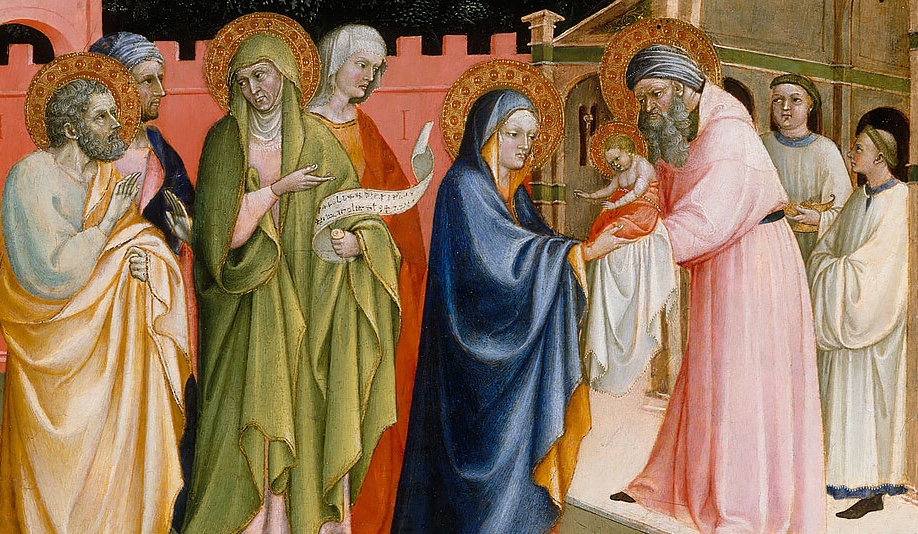
Pope Francis spoke about this in 2014 in his homily on the Feast of the Presentation of the Lord. In that homily, he asks us to see the mission of our elders as looking ahead to the future. And looking ahead to the future as persons who possess the wisdom of age. He gives us Simeon and Anna as our role models, naming them “senior citizen prophets.” And what role models they are! Among all the stories in Scripture, I have long been inspired and moved by the stories of Anna and Simeon.
In the story, this older woman and man have just met the new parents, Mary and Joseph, who were bringing their baby Jesus to the Temple. Pope Francis preached it with these words.
“It is a meeting between young people who are full of joy in observing the Law of the Lord, and the elderly who are filled with joy for the action of the Holy Spirit. It is a unique encounter between observance and prophecy, where young people are the observers and the elderly are prophetic!”
This is their story from the second chapter of Luke, verses 21-38:
And when eight days had passed, before His circumcision, His name was then called Jesus, the name given by the angel before He was conceived in the womb.
And when the days for their purification according to the law of Moses were completed, they brought Him up to Jerusalem to present Him to the Lord (as it is written in the Law of the Lord, “Every firstborn male that opens the womb shall be called holy to the Lord”), and to offer a sacrifice according to what was said in the Law of the Lord, “A pair of turtledoves or two young pigeons.”
And there was a man in Jerusalem whose name was Simeon; and this man was righteous and devout, looking for the consolation of Israel; and the Holy Spirit was upon him. And it had been revealed to him by the Holy Spirit that he would not see death before he had seen the Lord’s Christ. And he came in the Spirit into the temple; and when the parents brought in the child Jesus, to carry out for Him the custom of the Law, then he took Him into his arms, and blessed God, and said,
Lord, now lettest thou thy servant depart in peace, according to thy word: For mine eyes have seen thy salvation, Which thou hast prepared before the face of all people; A light to lighten the Gentiles, and the glory of thy people Israel.
And His father and mother were amazed at the things which were being said about Him.And Simeon blessed them and said to Mary His mother, “Behold, this Child is appointed for the fall andrise of many in Israel, and for a sign to be opposed — and a sword will pierce even your own soul — to the end that thoughts from many hearts may be revealed.”
And there was a prophetess, Anna the daughter of Phanuel, of the tribe of Asher. She was advanced in years and had lived with her husband seven years after her marriage, and then as a widow to the age of eighty-four. She never left the temple, serving night and day with fastings and prayers. At that very moment she came up and began giving thanks to God, and continued to speak of Him to all those who were looking for the redemption of Jerusalem.
— Luke 2: 21-38 (KJV, NASB)
Simeon, a righteous and devout man who was looking for the consolation of Israel, was graced by the Holy Spirit. And in that Spirit, he came into the temple, finally holding Jesus in his arms and blessing him. This was the moment Simeon had hoped for over many years. And after prophesying about the child Jesus, he blessed the parents and began Mary’s preparation for the pain she was destined to experience when her son was crucified.
And the Prophetess Anna, now advanced in age, was there “at that very moment” the Scripture says. Anna never left the temple and she served God “night and day with fasting and prayer.” She lifted up her prayers of thanks to God for this child. And on top of that she proclaimed the message of hope that this child had come! Glorious news it was to “all those who were looking for the redemption of Israel.”
The stories of Anna and Simeon give us a portrait of elderly citizens, full of life’s wisdom and the Holy Spirit, who prophetically present to the world Jesus as Messiah!
And their story is full of hope for us, too. Perhaps those of us who are “of a certain age” are truly senior citizen prophets. Perhaps the hope we need to hear is the hope that, at any age, God calls us to prophetic mission. At any age, God will use our voices to speak hope to a world in despair, a world waiting for the consolation that comes only from God’s Spirit.

 My friend, Buddy Shurden, shared an experience he had while serving his first pastorate near Ethel. Mississippi. He tells of his frequent habit of calling on Early Steed to pray. He wrote that Mr. Early Steed always began his prayer the same way, every time.
 What a caring and compassionate ministry it is to sit beside someone who is grieving and remind them of God’s grace. In recent days, I have wept for and with so many friends who are grieving for what they have lost because of the Florida hurricane. To be sure, there were losses in Georgia and in the Carolinas, but the devastation in and around Panama City was catastrophic.
 Don’t you love skies . . . blues and purples, the sun’s brightness, the dark black of night, clouds and stars? It is good for us to look into the heavens and lose ourselves in the beauty of God’s creation, to make room for the unimaginable.
 I believe my friend who tells us that sunrises anoint our souls . . . like icons of God’s presence.
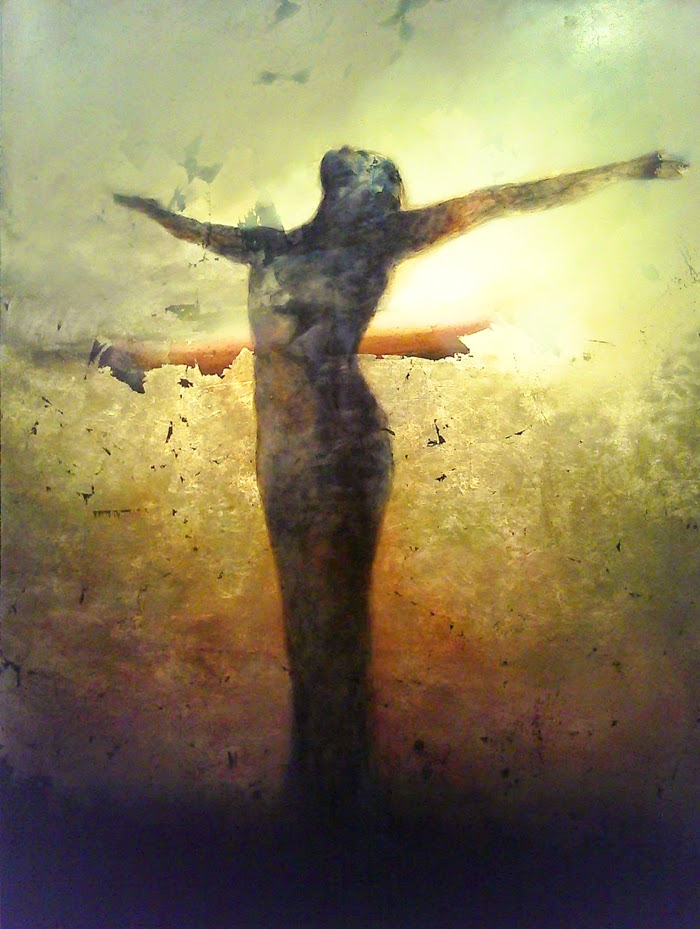 “I have perfect attendance pins for Sunday School going back thirty years, and until last week, I never knew that the Bible told the story of someone who had been raped.”

 Christ-followers will always know ascent and descent, knowing and not-knowing. I can recall so many spiritual retreats that ended too soon, leaving me with a reluctance to go back into ordinary time. I wanted to stay in the place where God’s Spirit was moving within me. But every single time, I had to go home, leaving the mountaintop of my transformative spiritual experience.
 I asked my husband a rather strange question last night. It was about my recent preaching at First Baptist Church of Christ in Macon. This was how I posed the question to him:
 God of the Sparrow 🌱 By Kathy Manis Findley