Courage, Covenant, Holy Spirit, peace, Pentecost

Pentecostal Power

IMG_5537
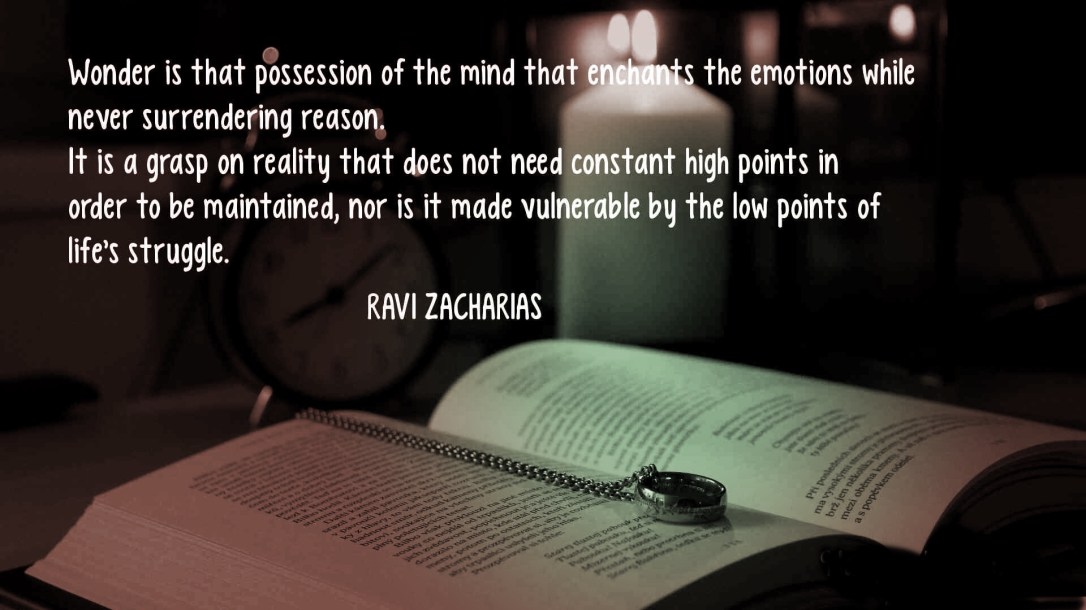
Art created by Jody Richards. The text is an adaptation by Satish Kumar of a mantra from the Hindu Upanishads and is commonly referred to as the “World Peace Prayer.”


With joy and exuberance, we used to sing an old Gospel hymn, our voices echoing through the rafters of the church house: “Lord, send the old time power, the Pentecostal power . . . that sinners be converted and Thy name glorified.”

That was our mission: that sinners be converted and that God’s name would be glorified. Over the years, we may well have lost some of our evangelical zeal. We may have developed differing views about what it means to glorify God. It’s a sign of the times, I suppose, times that are rife with the fear of terrorism, war, and the destruction of our way of life.

Some Christian leaders seem to believe that glorifying God in these days means advocating for a ruthless national counter-terrorism policy. In a 2004 interview, Rev. Jerry Falwell recommended that we “blow them [terrorists] away in the name of the Lord.” (CNN 10.24.04) I cannot fathom that such a view is inspired by the One we know as the Prince of Peace. I cannot imagine that Pentecostal power means power against persons and nations we have defined as our enemies.

One of the most genuine truth-tellers of my generation is my good friend Ken Sehested. He never tires of speaking prophetically about all things related to peace and justice. These are his words from an article entitled “The Things that Make for Peace” published at prayerandpolitiks.org.

People of the Way remain committed to a peculiar allegiance and a distinctive conviction: that all violence, of every sort, is a form of evangelism for the Devil . . . We make this profession of our faith even knowing that we ourselves are not immune from the lust for vengeance. As César Chávez, the great practitioner of nonviolent struggle for justice, said: “I am a violent man learning to be nonviolent.”

The meek are getting ready. And they welcome the company of any with eyes to see and ears to hear Christ’s arising, arousing, and disruptive invitation to join Pentecost’s Resurrection Movement. Now, as much as ever, we are in a “fear not” moment. Wait a week—Pentecostal power, with its assault on earth’s beleaguered condition and seemingly endless walls of hostility, is coming. Babel’s confused tongues, nationalist claims, conflicting cultures, and racial enmity are being reversed. Lord, send the old-time pow’r. [*]

Yes, God. Send the old-time power that inspired us to wage peace, to condemn injustice, to love our enemies. Meet us inside the breezes of Pentecost where Holy Spirit wind and Pentecostal fire will descend upon us once again. Grant us the courage to use our power to condemn hostile power, to live into our covenant, and to return to our first love and highest calling: “that sinners be converted and Thy name glorified.”

For by one Spirit we were all baptized into one body, whether Jews or Greeks, whether slaves or free, and we were all made to drink of one Spirit.

– I Corinthians 12:13, NASB
[*] From the hymn’s refrain, “Pentecostal Power,” by Charles H. Gabriel.

Freedom, Justice, Perseverance

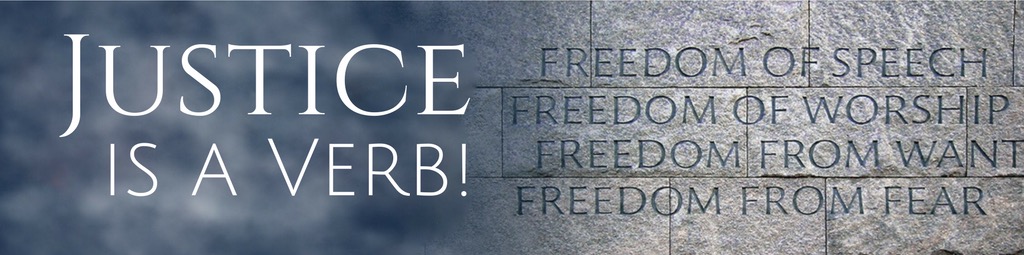
Justice Is a Verb!

Design

Surely someone has written about the challenge of being a Christian in these days of political upheaval and societal angst. I need to read such a book. I need to be emboldened to live out my faith, not as a passive bystander, but as a change-agent that insists on peace and justice.

My close friend and colleague in ministry, Wendell Griffen, insists that justice is a verb. His life beckons us to live into what he calls “the fierce urgency of prophetic hope.” In his book of the same name, he asks people of faith to consider this question: “How can we speak of hope in a time of deep division—a time too often defined by racism, misogyny, materialism, militarism, religious nationalism, and xenophobia?” *

My faith compels me to find ways to speak hope in these unsettled days, to speak truth to power when people suffer oppression, to care deeply about injustice. As I sit in my home dealing with the inevitable aging that marks my days, I think about the past to a time when advocacy was my passion. I remember ministry in the hospital, at the jail, in child sexual abuse forensic interviews, in courtrooms. I remember the energy of speaking for those who were suffering. I recall a life on the edge that made a difference in people’s lives.

But what about today? How does my faith ennoble me at this time of my life? What is my new normal in service and ministry? In what ways will my voice be heard proclaiming hope, justice and equality?

The following words are written by Dr. Cornel West in his book Democracy Matters:  Winning the Fight Against Imperialism:

To be a Christian is to live dangerously, honestly, freely–to step in the name of love as if you may land on nothing, yet keep stepping because the something that sustains you, no empire can give you and no empire can take away. This is the kind of vision and courage required to enable the renewal of prophetic, democratic Christian identity in the age of the American empire. *

I believe there are still battles that I must fight. I believe that the vision and courage of youth remains. I believe that when God calls one to be a prophetic voice, that call is a permanent, lifelong call. My challenge is to keep stepping in the name of love, seeking to do justice, always knowing that God will sustain me.

And the Lord will guide you continually,
and satisfy your soul in parched places,
and will strengthen your bones;
and you’ll be like a watered garden,
like a spring of water,
whose waters never fail.

Isaiah 58:11, ISV
* The Fierce Urgency of Prophetic Hope, Wendell L. Griffen, 2017: Judson Press,
http://www.judsonpress.com/author.cfm?author_id=894

* Democracy Matters: Winning the Fight Against Imperialism, Cornel West, 2004: The Penguin Press

Faith, Fear, God's presence, healing, Loss, Mourning, Perseverance

We Can Overcome

Design

Young girls run frantically from the sound of a bomb, screaming, crying, confused, and terribly afraid. An evening of sheer joy listening to the music of Ariana Grande had turned into an evening of terror.

In a British music venue, a suicide bomb killed 22 people, some of them children. Eight-year-old Saffie Rose Roussos lost her life, and 59 other people were wounded, some suffering life-threatening injuries. Many others are still missing.

The response? Muslim men pray for victims of the attack at a mosque in Manchester. Police officers look at flowers and messages left for the victims. A Union Jack flag is lowered at half-mast in honor of the victims. Religious leaders hold a prayer meeting in central Manchester. Ariana Grande spoke about the attack: “broken. from the bottom of my heart, I am so so sorry. I don’t have words.”

Is this a portrait of the world we live in? Must we fear for our children and lament the lives they must live? Do we place our faith in a God we sometimes question when tragedies happen?

One of my favorite Scripture passages is also one of the most poignant laments in the Bible. It is found in the fifth chapter of Lamentations. The words express deep mourning and profound loss, leaving the writer asking God, “Why do you always forget us? Why do you forsake us so long?” The hurting people who had lost everything they cherished cried out . . .

Joy is gone from our hearts;
our dancing has turned to mourning.

– Lamentations 5:15, NIV

Sometimes our dancing really does turn to mourning. All of us are acquainted with loss. Our world is a dangerous place, and tragedies like Manchester remind us of our vulnerability. So how do we live? How do we go on? How do people of God live this kind of dangerous life?

The musical group Hillsong sings “This Is How We Overcome.” The song, which is written by Reuben Morgan, echoes the celebration of the Psalmist in the fifth chapter of Psalms.

You have turned my mourning into dancing
You have turned my sorrow into joy.

The song continues with these words.

Your hand lifted me up. I stand on higher ground.
Your praise rose through my heart and made this valley sing.

They sing of the continual presence of God, even in times of deep mourning, profound loss, and grave danger. That kind of song speaks of our faith, a faith that still holds us and always picks us up when we have fallen. Our faith is our resilience.

We can overcome. Every time. Every time life circumstances assail us and steal our music, we persist. We sing. We dance. We praise a God who is eternally near. So let us persevere, always proclaiming the source of our strength.

The Rev. Michelle L. Torigian prays this prayer.

Let us resiliently resume our dancing.
Let us sing louder. Let us speak out voices with determination.

May it be so. Amen.

(Rev. Torigian’s prayer may be found at https://revgalblogpals.org/2017/05/23/tuesday-prayer-95/.)

Inspiration, Myths, Stories, Transformation

Telling My Myth

Enlight106
The village of Aperi, Karparthos, Dodecanese, Greece

A myth is a story that’s told again and again and serves to explain why something is the way it is. (vocabulary.com)

Our stories, the stories that emerge from living our lives, are myths. I tell a number of stories that my grandmother told me, from stories her grandmother told her. My Yiayia shared stories of life joys and life tragedies. She told stories of her losses and her fears. In tears, she told me about weddings and funerals, birthdays and name days. She told stories of faith and worship. She told me about all the ways God ordered her life.

Her stories, from her tiny island of Aperi in Greece to her later years in Alabama, became her life myth. So as I retold her stories and they became mine, my myth. It’s interesting that both my grandmother’s stories and mine tell of loss and pain, of dark moments that indelibly mark life.

Those dark moments make us who we are. They become an eternal part of our myth, our story that is told again and again as the years pass. The myth we tell reveals why  life is the way it is. The telling is the cleansing that makes life bearable and meaningful. The myth we tell is full of the kind of power that propels us and gives us wings.

The truth is that we are our tragedies, even more than we are our joys. Joseph Campbell writes about the power of myth.

One thing that comes out in myths is that at the bottom of the abyss comes the voice of salvation. The black moment is the moment when the real message of transformation is going to come. At the darkest moment comes the light.

― Joseph Campbell, The Power of Myth

(From The Edge, a beautifully written blog; https://theedgeishere.wordpress.com/2017/05/19/contemplative2017-myth-ix/)

I will always tell my myth, because in the telling, I find boldness and perseverance for my life. In the telling, I find inspiration. The myth I tell definitely speaks of “the bottom of the abyss.” It also tells of the transformation that I find in the abyss. My myth proclaims with strong certainty that, in my darkest moments, I always found the light.

The Lord is my light and my salvation—
whom shall I fear?
The Lord is the stronghold of my life—
of whom shall I be afraid?

– Psalm 27:1, New International Version

Courage, Fear, Hope

Beautiful and Terrible Things

IMG_5469

We live in a world where beautiful things happen every day. The dawn lights the dew of the night. The sun rises and warms the earth. The rain satisfies the thirsty ground. The foliage wears its lush green and the flowers bloom again and again.

Just in my own family new babies will soon be born. We will celebrate two high school graduations. Our young ones, just babies yesterday it seems, will begin college. To be sure, in the world beautiful things happen.

But terrible things will happen, too. A news story tells of an infant being found with almost a hundred rodent bites. An eight year old boy takes his own life. Syrian children are orphaned by war. The United Nations reports more than 14 million Yemenis are going hungry, 370,000 of them children. Certainly, in this world, terrible things will happen.

I am comforted by these words from Frederick Buechner.

Here is the world. Beautiful and terrible things will happen. Don’t be afraid.

The challenge to our hearts is to live in the world without fear, to live courageously, to live fully with hope and joy.

So do not fear, for I am with you; do not be dismayed, for I am your God. I will strengthen you and help you; I will uphold you with my righteous right hand.

– Isaiah 41:10

Bondage, Freedom, Hope

Chains

IMG_5468

Chains.

Some folks see a golden necklace with sparkling links. But others see chains as cruel symbols of enslavement. History records thousands of inhumane acts of enslavement. A review of history is about real people whose lives were oppressive, whose chains were heavy, whose slavery was permanent. We remember their lives with a sense of shame and we honor them with genuine repentance.

But we must also bring the reality of chains closer to home as we recall the times of our lives that held us in chains. Serious illnesses. Violent relationships. Troubled children. Careers that became personal enslavement. No, the chains that bound us were not made of steel. Instead, they were chains that bound our very being, holding us fast, oppressing our spirits.

In all of this, there is hope. It is the hope of God’s grace that empowers us to break free. I am reminded of one of my favorite Scripture passages.

It is for freedom that Christ has set us free. Stand firm, then, and do not let yourselves be burdened again by a yoke of slavery.

– Galatians 5:1, New International Version

Of one thing I am certain. God does not desire for us a life of enslavement, but graces us with the courage to free ourselves from all that holds us hostage. Life in Christ is not a life of chains. It is a life of freedom to live, to love, and to thrive. Though we may have been hurt by circumstances that left us in chains, our souls can never be chained.

Laurie Halse Anderson writes this in her brilliant novel series, Chains: Seeds of America.

She cannot chain my soul. Yes, she could hurt me. She’d already done so . . . I would bleed, or not. Scar, or not. Live, or not. But she could not hurt my soul, not unless I gave it to her.

Please listen to a beautiful arrangement of “Amazing Grace/My Chains Are Gone” sung by Noteworthy.  https://m.youtube.com/watch?v=X6Mtpk4jeVA


Change, Faith, grief, Hope, Suffering

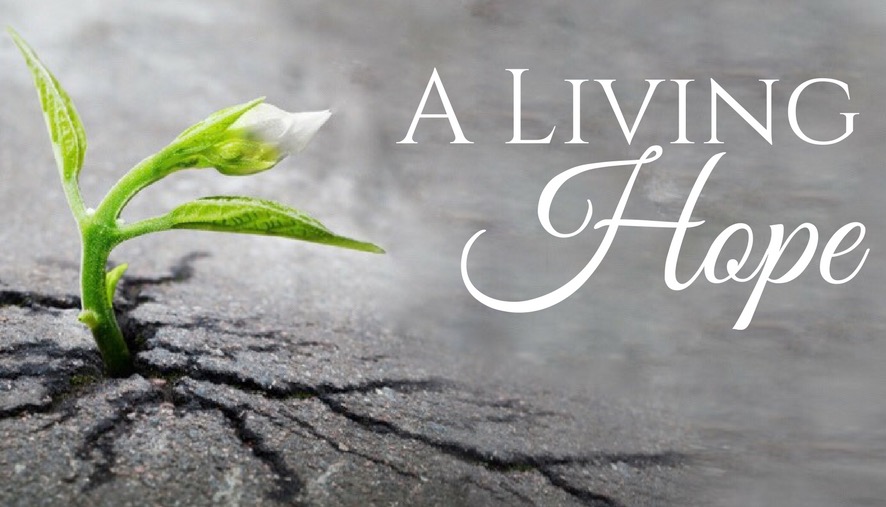
A Living Hope

Design

When an eight year old child takes his own life after being viciously bullied, a mother is left in deep bereavement  holding a deep sadness that will forever mark her life. Every day, life stories like hers come through on our news feeds. We hear them; we feel a moment of strong empathy; we move on to the next like task.

The reality is that any of us, all of us, may face the worse of life’s pain at any time. None of us is immune to tragedies that turn life upside down. Each of us will at times endure gale force winds that rearrange everything we hold dear.

As always, we are left to figure out how to navigate hard times, how to summon the faith we need to persevere. We must find within ourselves a living hope that cannot be destroyed. Only then will we be able to endure the difficulty life can hand us.

Often, I find wisdom and comfort in the words of Bishop Steven Charleston. This is what he writes about faith during difficult times.

It is hard. Life is hard. The losses, the sudden arrival of illness, the struggles within families, the pressure of a world trying to find a reason to hope. Spirituality that is sugar is no help in such a reality. Feel good philosophy cannot withstand the weight of what many of us have had to face. If it is to endure the gale force winds of chance, faith must be deeply rooted, anchored in trust, strengthened by courage, able to bend but never break. So here is a prayer for all of you living in the real world: may you find your faith as tough as you are and as resilient as the love that keeps you going.

– Steven Charleston

The good news is that God graced us with a resilient faith that perseveres when we endure trials, a living hope that can never fail. Thanks be to God.

Praise be to the God and Father of our Lord Jesus Christ! In his great mercy he has given us new birth into a living hope through the resurrection of Jesus Christ from the dead, and into an inheritance that can never perish, spoil or fade. This inheritance is kept in heaven for you, who through faith are shielded by God’s power until the coming of the salvation that is ready to be revealed in the last time. In all this you greatly rejoice, though now for a little while you may have had to suffer grief in all kinds of trials. These have come so that the proven genuineness of your faith—of greater worth than gold, which perishes even though refined by fire—may result in praise, glory and honor when Jesus Christ is revealed.

– I Peter 1:3-7

Bitterness, Resentment

On Resentment and Bitterness

IMG_5263

Resentment and bitterness . . . emotions we tend to hold on to for years. I have known long bouts of bitterness and resentment in my life. One because of a personal betrayal by someone I trusted. Another, after our home burned. Still another, the many years of resenting my father’s abuse. Each time, bitterness and resentment took over my life for a while.

Someone asked me recently why we tend to hold onto resentment and bitterness, and it made me spend a few minutes pondering that thought. I think we hold on to bitterness and resentment because a part of us believes:

– We are punishing the person/thing that hurt us.
– We deserve to be bitter.
– We don’t have the strength and ability to get past it.
– It feeds our anger. And anger feels better than hurt or sadness.

Paul Valery writes:

Latent in every person is a venom of amazing bitterness, a black resentment; something that curses and loathes life, a feeling of being trapped, of having trusted and been fooled, of being the helpless prey of impotent rage, blind surrender, the victim of a savage, ruthless power that gives and takes away . . . and crowning injury inflicts upon a person the humiliation of feeling sorry for him/herself.

That is such an ominous thought about bitterness, “a black resentment.” And yet, I am convinced that those who are spiritually and emotionally healthy will hold the bitterness for a while, and then will realize that hanging on to it releases a toxic poison in the soul. When holding on to bitterness, most people really are working through it, and that’s healthy. It would be denial to never feel bitterness at all.

I look at times of bitterness as a season for learning and growing. And although I know from experience that bitterness can take hold of us and have its way, I also know that we can work through it and emerge with renewed peace and just a slight memory of the hurtful experience.

What’s the good in resentment? My answer is that it is a real and raw emotion that must be owned and worked through. The bitterness and resentment will eventually transform into just another life memory that, frankly, may always hurt a little.

Contemplation, Self Awareness, Spiritual growth

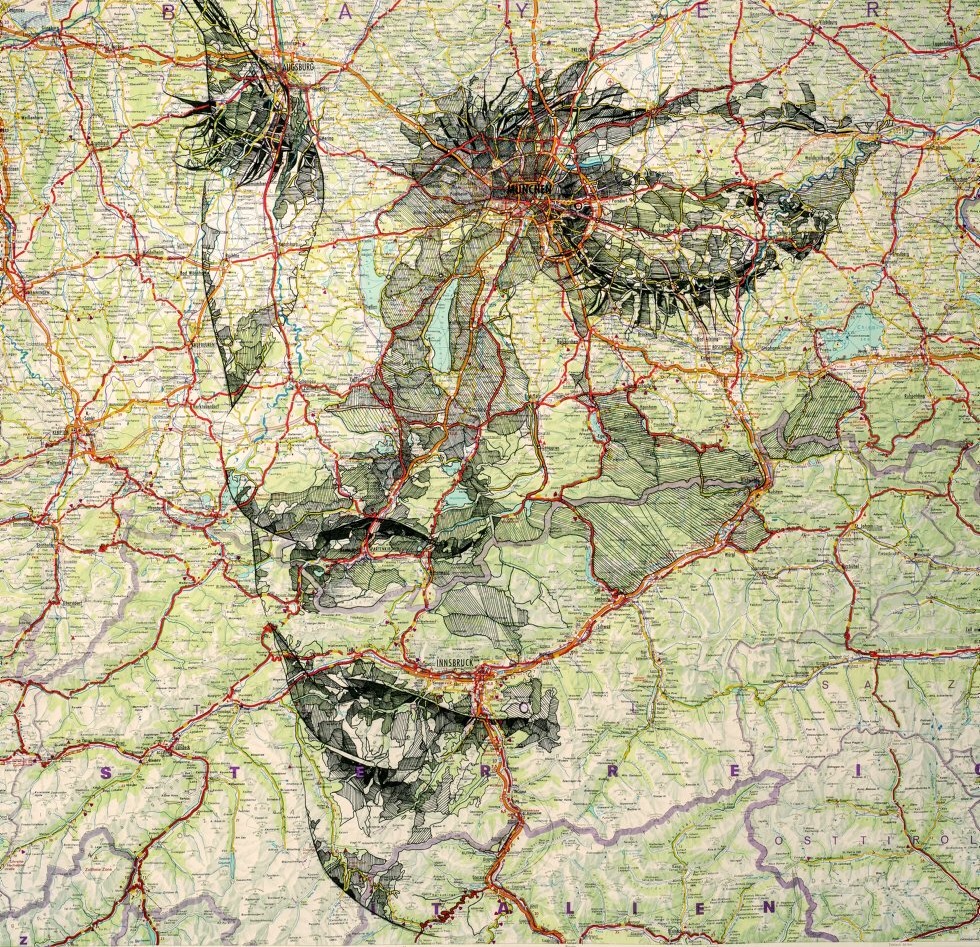
Maps

IMG_5258

“I like to know where I am, not just where I’m going.”

That’s a statement made by my husband, who absolutely loves maps. In fact, he doesn’t like the GPS in the car to determine his route. Instead, he wants to see the map of the entire area so that he can determine his own route.

He gets this love of maps honestly from his father before him. And what’s more important is that he never, ever gets lost. He possesses a keen sense of direction that can take us through any city, on any highway, over any country road. He always finds the way back to familiar territory.

Knowing maps, reading maps is a gift, a gift I definitely do not have. But here is what I think is most important: to know where we are, not just where we are going. Knowing where we are is a part of knowing who we are, and that is a necessary part of a content life.

No doubt, many of us are not self-aware. We fail to spend time getting to know ourselves and getting comfortable in our own skin. There are no maps that can adequately chart our humanity. Maps do not show deep down emotions. Maps do not reveal the passion of our hearts. Maps cannot describe what lives inside a soul.

We must explore those things ourselves, in earnest and in prayer, discovering the person God wants us to be.

Change, Faith, Hope, Life pathways

Change and Hope

Enlight90

Change happens always, but not always for the better. It is simply a reality of living life. Change comes to us; we try our best to navigate it; and with any luck, we will end up stronger for it. In the best of all worlds, going through change will strengthen our hope and bolster our faith. To be sure, best laid plans change all the time, often leaving us shaken. But it is good to know that God knows all about changes and what they do to our equilibrium.

For I know the plans I have for you, declares the Lord, plans for welfare and not for evil, to give you a future and a hope.

– Jeremiah 29:11

Change does not always feel like hope to us. What we face tomorrow, and all the tomorrows to come, is always an unknown, an unknown that causes fear in us. And yet, so much of our contentment depends on our outlook, how we see change, how we move ourselves through it, how we end up on the other side. I like the outlook that journalist, Linda Ellerbee shares in this statement.

What I like most about change is that it can be a synonym for hope. If you are taking a risk what you’re really saying is, “Ibelieve in tomorrow and I will be a part of it.”

– Linda Ellerbee

So if there is any good advice here, it is to hang on to your life even in the face of change. Try to see change as hope. Navigate those life risks, all the while proclaiming, “I believe in tomorrow and I will be a part of it.” Living that way is the way of God, the way of faith, the way of hope.

Christian Witness, Dry seasons of life, Faith, Life Journeys, Life pathways

Life’s Narrow and Wide Gates

IMG_5244

Life is full of narrow and wide gates, beckoning us to choose which gate to enter. On one hand, the idea of gates — narrow ones and wide ones — is a Biblical idea describing the kind of life a Christian person might choose. On the other hand, narrow and wide gates are simply a part of our life pilgrimage.

The Scripture reference is found in the Gospel of Matthew.

Enter through the narrow gate. For wide is the gate and broad is the road that leads to destruction, and many enter through it. But small is the gate and narrow the road that leads to life, and only a few find it.

– Matthew 7:13-14 New International Version (NIV)

The pilgrimage that we call life is, most certainly, a series of challenges we must face. How common it is for us to complain when the gate before us is narrow and the road ahead is rocky. Why do I struggle financially? Why must I endure failing health? Why am I in the middle of a failing relationship? Why did I lose someone I love so deeply?

Didn’t I choose the narrow gate, God? Did I not commit my life to the way that leads to life? Then why? Why the suffering?

God seldom answers us when we ask these questions. We listen constantly for God’s voice and a satisfactory explanation of life’s suffering.

We hear nothing.

Just relentless, ominous silence. It can try one’s faith.

Gratefully, I came across an encouraging quote. Before collapsing on my life’s dusty road, I found a place to lean in the words of Brother Luke Ditewig. Here’s what he said:

After making much fuss about our great accomplishment at having found a narrow and obscure gate and walked through, we’re often surprised at the ordinary challenges of life that follow, again and again. I’m embarrassed by how much I say: “Wow, this road is hard!” or “Why are we still in the wilderness?” But if you look around right now, you’ll notice divine love in the ordinary stuff of life.

– Brother Luke Ditewig
Society of Saint John the Evangelist

So let us persist, moving forward with even a tiny fistful of faith. And may we look around on the way, passing through the gates we encounter and always noticing the divine love that is ever present in the “ordinary stuff of life.”

Courage, Faith, Hope, Life storms

Extreme Situations

IMG_5228
And after the fire came a gentle whisper.

Extreme situations are definitely all too common. Around 14 million children suffer hardship and trauma from the war in Syria and Iraq. UNICEF estimates that 140 million children worldwide are orphans. According to the World Health Organization, 66 million primary school-age children attend classes hungry across the developing world, with 23 million in Africa alone.

Extreme situations.

Closer to home, a dear childhood friend of mine is fighting for her life in a hospital ICU. Her illness resonates loud and clear to me, shouting out the truth that life is filled with extreme situations, situations that assail us and leave us helpless and hopeless. And we are left with no control.

Extreme situations.

I found this little gem of a quote in a friend’s blog post today.

In extreme situations, which have been emptied of all shelter and tenderness, that small voice whispers from somewhere beyond and encourages the heart to hold out for dignity, respect, beauty, and love.

– John O’Donohue

So in the throes of extreme situations that come our way, let us give thanks for the whisper of that small voice, the voice that does not give us control, but does give us hope.

The Biblical character we know as Elijah faced off against an extreme situation.

. . . A great and powerful wind tore the mountains apart and shattered the rocks before the Lord, but the Lord was not in the wind. After the wind there was an earthquake, but the Lord was not in the earthquake. After the earthquake came a fire, but the Lord was not in the fire. And after the fire came a gentle whisper.

– I Kings 19:11-12

If you find yourself hopelessly trapped in an extreme situation, may you find hope in the gentle whisper of God.

Easter, Holy Week, Resurrection

Christ Is Risen!

Enlight87

How do we worship during this time of passion and pain, rebirth and resurrection? There are many ways to remember these events, events that so solidly form our foundation of faith. This is one way I imagine, a way that brings together all the roots of my own faith experience.

Darkness falls upon the place of worship. It is now but a few moments until midnight. All the lights are out. The cross is draped in black. We have walked with Jesus to his death. And now we sing the Passion Chorale, expressing all the suffering, all the anguish, all the shame.

O sacred Head, now wounded,
with grief and shame weighed down,
now scornfully surrounded
with thorns, thine only crown:
how pale thou art with anguish,
with sore abuse and scorn!
How does that visage languish
which once was bright as morn!

What thou, my Lord, has suffered
was all for sinners’ gain;
mine, mine was the transgression,
but thine the deadly pain.
Lo, here I fall, my Savior!
‘Tis I deserve thy place;
look on me with thy favor,
vouchsafe to me thy grace.

What language shall I borrow
to thank thee, dearest friend,
for this thy dying sorrow,
thy pity without end?
O make me thine forever;
and should I fainting be,
Lord, let me never, never
outlive my love for thee.

Grief holds sway, while we remember these words.

The angel spoke to the women. “Do not be afraid!” he said. “I know you are looking for Jesus, who was crucified.”

Then midnight passes, ending the darkness. The minister lights one candle, shares the flame with another worshipper who then shares it with another. The darkness is vanquished by the light of dozens of flames.

He is not here! He is risen from the dead, just as he said would happen. Come, see where his body was lying.

He is not here! He is risen from the dead!

In this, the glorious day of resurrection, voices arise in celebration, singing the ancient hymn . . .

Χριστός ανέστη εκ νεκρών, θανάτω θάνατον πατήσας, και τοις εν τοις μνήμασι ζωήν χαρισάμενος.

Christ is risen from the dead, trampling down death by death, and to those in the tombs, granting life.

Christ is risen! Truly He is risen! Christ is risen from the dead! Alleluia!

 
“O Sacred Head Now Wounded”
Text: Anonymous; trans. by Paul Gerhardt and James W. Alexander
Music: Hans L. Hassler, 1564-1612; harm. by J.S. Bach, 1685-1750
Tune: PASSION CHORALE

Holy Week

Holy Saturday . . . Nothingness

IMG_5194

The feast of Holy Saturday is also called The Great Sabbath. It is said that on this day Christ “rested” in the tomb, in death.

In the Greek Orthodox Church, the first service of Holy Saturday takes place in the morning and, while it somewhat breaks the somber spell of Friday, it holds an uneasy time of waiting while Jesus lies in the tomb. Some have called it a time of silence, a time of nothingness. Guy Sayles writes of his experience of this day.

I’m especially drawn to the silence of Holy Saturday: the uneasy, uncertain quiet of the sealed tomb and the still, stagnant air of nothingness. There are no more cries of agony from the cross but not yet any shouts of “Alleluia” either — only the sheer silence of the unknown and the in-between. That place of non-existent existence is where we sometimes are; knowing that God-in-Jesus has endured it assures us that there really is “nothing which can separate us from the love of God in Christ Jesus our Lord.”

– Guy Sayles

What an awe inspiring sight I experienced as a child when I was taken to church on Holy Saturday and we stood before the symbolic tomb of Jesus.

IMG_5193
Greek Orthodox Epitafios, England

Called “Epitafio” in Greek, the symbolic tomb was covered with flowers.

Though the symbolic tomb was beautifully adorned from top to bottom with flowers, it still held a strong sense of death. Compared to the observance of other days in Holy Week, Saturday did feel like nothingness, stagnant, still, uncertain.

It mirrors real life, does it not . . . those times when we stand empty, without answers, filled with uncertainty, wrapped in nothingness.

But Sunday’s coming! Walking through Holy Week with spiritual awareness also carries us through our own messy lives and brings us closer to a true understanding of life, death and everything in between. The “nothingness” of Holy Saturday cannot compare with the hope of the rebirth and resurrection to come.

Holy Week

STILL . . . Good Friday

IMG_5192

I could not let this day pass without sharing this moving piece written by Jan Richardson.

Reading from the Gospels, Good Friday: John 18.1-19.42
They took the body of Jesus.
—John 19.40

All too quickly the breaking of the bread becomes the breaking of the flesh.

All too soon the cup offered at the table becomes the life poured out at the cross.

After the rending, after the emptying: an impossible stillness, an aching silence, an incomprehensible hollow for which no word will ever be adequate.

And now? How will we meet this silence? What will we do with this ache?

Still

For Good Friday

This day
let all stand still
in silence,
in sorrow.

Sun and moon
be still.

Earth
be still.

Still
the waters.

Still
the wind.

Let the ground
gape in stunned
lamentation.

Let it weep
as it receives
what it thinks
it will not
give up.

Let it groan
as it gathers
the One
who was thought
forever stilled.

Time
be still.

Watch
and wait.

Still.

—Jan Richardson
from Circle of Grace: A Book of Blessings for the Seasons

Christ's Passion, Darkness, Holy Week

Pay Attention

Design

Pay attention. Pay very close attention. For the day we call Good Friday brings us face-to-face with the trial, crucifixion, death and burial of Christ. We are placed within the awesome mystery of the extreme humility of a suffering God. This day is at once a day of deep gloom as well as a day of watchful expectation, because the Author of life is at work transforming death into life: “Come, let us see our Life lying in the tomb, that he may give life to those that in their tombs lie dead.” (Sticheron of Great Saturday Orthros)

Christ’s death is the final and ultimate revelation of His perfect love. He suffered the excruciating pain of absolute alienation when he cried out to God, “My God, my God, why hast Thou forsaken Me!” (Mark 15:34). And finally, Jesus accepted the ultimate horror of death with the agonizing cry, “It is finished” (John 19:30).

In my memories of what we called Great and Holy Friday in the Greek Orthodox Church, I understood, even as a child, that the profound event of the death and burial of God in Christ Jesus was marked by an eerie kind of silence. There was no eucharistic celebration. In fact, Great Friday and Great Saturday are the only two days of the year when no eucharistic gathering is held.

On Great and Holy Friday, we commemorate the sufferings of Christ: the mockery, the crown of thorns, the scourging, the nails, the thirst, the vinegar and gall, the cry of desolation, and all that the Savior endured on the Cross. The Friday afternoon Vespers left an indelible mark as I remember the un-nailing of Christ from the Cross and the placement of His body in the tomb.

Great and Holy Friday. Pay attention!

Surely he hath borne our griefs, and carried our sorrows: yet we did esteem him stricken, smitten of God, and afflicted. But he was wounded for our transgressions, he was bruised for our iniquities: the chastisement of our peace was upon him; and with his stripes we are healed.

– Isaiah 53:4-5 King James Version (KJV)

Pay attention.

Pay attention to what goes on around you and within you. Pay attention to the water on your feet and the roughness of the towel in your hand. Pay attention to the softness of the bread and the sting of the wine in your throat. Pay attention to the brusqueness of the kiss and the splinters of the cross. Pay attention to the coldness of the tomb and the terror that clutches your heart. Pay attention to the brightness of the dawning light and the life that bursts forth.

– Br. James Koester
Society of Saint John the Evangelist

Holy Week, Uncategorized

Remembering Everything

Enlight88

As a young child, I remember the very, very long Greek Orthodox liturgies of Holy Thursday. We called the day Great and Holy Thursday. Other faith traditions name it Maundy Thursday; others the Thursday of Mysteries. The worship service seemed endless to me, and it was about everything: the washing of the disciples’ feet, the Last Supper, the agony in the garden of Gethsemane, and the betrayal of Christ by Judas.

On Great and Holy Thursday, light and darkness, joy and sorrow are strangely mixed in the light of the Upper Room and the darkness in Gethsemane. The light of the holy kingdom and the darkness of hell capture us simultaneously. The way of life and the way of death converge on this one Holy day.

It is a portrayal of our very lives, for on our journey through life we meet up with both life and death. We cannot avoid either, though we cling ever so tightly to life and fight with all our might to conquer death.

Here in the remembrances of this day, Jesus shared a sacred meal with his disciples, washed their feet in an act of love, experienced the harsh agony of Gethsemane and endured the pain of betrayal by one of his own. Yes, Great and Holy Thursday is about everything.

The Epistle to the Hebrews wraps up the Gospel in a sacred package that is God’s Final Word in His Son.

God, after He spoke long ago to the fathers in the prophets in many portions and in many ways, in these last days has spoken to us in His Son, whom He appointed heir of all things, through whom also He made the world.

And He is the radiance of His glory and the exact representation of His nature, and upholds all things by the word of His power.

When He had made purification of sins, He sat down at the right hand of the Majesty on high.

– Hebrews 1:1-3 New American Standard Bible (NASB)

What an act of worship it is when we remember everything — the central events of the final week of Jesus’s life — on Great and Holy Thursday.

Holy Week, Waiting

Be Still for the Mystery

IMG_5151Holy Wednesday brings us a respite in the midst of our journey with Jesus to the cross. This day asks us to wait, to stop, to receive what we will most need for this journey.

My memory of Holy Wednesday as a Greek Orthodox child is a memory of the gentle touch of the priest as he comforted me with a holy and healing touch. It was the Mystery of Holy Unction, which is offered for the healing of soul and body and for forgiveness of sins. At the end of the service, the priest anoints the faithful as he makes the sign of the cross on the forehead and on the top and palms of the hands saying, “For the healing of soul and body.”

When we journey with Jesus on the way of the cross, Holy Week becomes a profound reminder of our commitment of life, heart and soul to God. We would be wise not to rush too quickly to the empty tomb. Instead we must sit with Jesus at Gethsemane. We must mark our every step as we walk with him to the cross. We must wait patiently with the women as Jesus is suspended between heaven and earth.

Holy Wednesday bids us be still for the Mystery, receiving the sign of the cross made with oil upon our foreheads, experiencing healing of the soul and body, waiting with Christ in his agony, and, at last, casting our eyes with wonder on the empty tomb.

Darkness, Death, grief

Troubled Souls

If you are a Greek Orthodox Christian, you will very likely be in church on this Holy Tuesday. I remember it well when as a child I attended the Holy Trinity-Holy Cross Greek Orthodox Church every single day of Holy Week. But most church doors will not be open tonight. Candles will not be lit. Scripture will not be read. Hymns will not be sung. It’s only Holy Tuesday, after all.

Let us read one of the lectionary scriptures for this day, John 12:20-36, the passage in which Jesus predicts his death.

Now there were certain Greeks among those who came up to worship at the feast. Then they came to Philip, who was from Bethsaida of Galilee, and asked him, saying, “Sir, we wish to see Jesus.” Philip came and told Andrew, and in turn Andrew and Philip told Jesus.

But Jesus answered them, saying, “The hour has come that the Son of Man should be glorified. Most assuredly, I say to you, unless a grain of wheat falls into the ground and dies, it remains alone; but if it dies, it produces much grain. He who loves his life will lose it, and he who hates his life in this world will keep it for eternal life. If anyone serves Me, let him follow Me; and where I am, there My servant will be also. If anyone serves Me, him My Father will honor.

“Now My soul is troubled, and what shall I say? ‘Father, save Me from this hour’? But for this purpose I came to this hour. Father, glorify Your name.”

Then a voice came from heaven, saying, “I have both glorified it and will glorify it again.”

Therefore the people who stood by and heard it said that it had thundered. Others said, “An angel has spoken to Him.”

Jesus answered and said, “This voice did not come because of Me, but for your sake. Now is the judgment of this world; now the ruler of this world will be cast out. And I, if I am lifted up from the earth, will draw all peoples to Myself.” This He said, signifying by what death He would die.

The people answered Him, “We have heard from the law that the Christ remains forever; and how can You say, ‘The Son of Man must be lifted up’? Who is this Son of Man?”

Then Jesus said to them, “A little while longer the light is with you. Walk while you have the light, lest darkness overtake you; he who walks in darkness does not know where he is going. While you have the light, believe in the light, that you may become sons of light.” These things Jesus spoke, and departed, and was hidden from them.

– John 12:20-36 New King James Version (NKJV)

If we skip Holy Tuesday, we will fail to hear Jesus speak these words: “He who loves his life will lose it, and he who hates his life in this world will keep it for eternal life. If anyone serves Me, let him follow Me . . . Now My soul is troubled, and what shall I say? ‘Father, save Me from this hour’? But for this purpose I came to this hour . . .”

If we skip Holy Tuesday, we won’t hear Jesus confess that his soul was troubled. And perhaps we will dismiss the moments when our own souls are troubled. It is a critical part of Holy Week for us to experience troubled souls. It isa part of our journey to the cross.

So let us rest into Holy Tuesday and experience the agony of troubled souls. Let us feel deeply. Let us worship fully. Let us move on with Jesus to the hill of Golgotha, grieving, mourning, troubled.

God's presence, grief, healing, Hope, Light, Love, Mourning, Transformation

The Balm for Our Heartbreak

IMG_5138

We do not anticipate much to happen on Holy Monday. It is a Monday, after all, not a great time for hope and expectation. It’s more a time for heartbreak. For on this Holy Monday, we need a reminder that God’s love is ever-present with us.

Mary has prepared Jesus’ body for burial, for death, and we know all too well where the road to Jerusalem leads. We know that the hosannas have fallen silent. We know that the high ranking officials are meeting secretly to plan for the death of Jesus. We know that Judas will betray Jesus and Peter will deny him.

We know that what comes next will break our hearts. But broken hearts are not so bad. At least that’s what Glennon Doyle Melton says.

I have learned that when I run from heartbreak, from pain, I bypass transformation — like a caterpillar constantly jumping out of its cocoon right before it was about to become a butterfly.

Pain knocks on everyone’s door. It we are wise we will greet it and say, “Come in, sit down, and don’t leave until you’ve taught me what I need to know.”

She tells us to ask ourselves what breaks our hearts. And then she explains that the heart, like every other muscle, has to be worked, even ripped apart. That’s how it grows stronger. So instead of shrinking back from our heartbreak and finding ways to disconnect from our suffering, perhaps we should run right into the painful middle of it.

Heartbreak in our lives, like heartbreak on Holy Monday, is very real. That’s why the words of the Psalmist sing so loudly in our hearts, bringing us hope and love and light.

Your mercy, O Lord, is in the heavens;
Your faithfulness reaches to the clouds.

Your righteousness is like the great mountains;
Your judgments are a great deep;

How precious is Your lovingkindness, O God!
Therefore the children of men put their trust under the shadow of Your wings.

They are abundantly satisfied with the fullness of Your house,
And You give them drink from the river of Your pleasures.

For with You is the fountain of life;
In Your light we see light.

— Psalm 36: 5-9

God’s love is the balm for our heartbreak — today, tomorrow and forever.