A way in the wilderness, All Shall Be Well, Alone, Anger, anxiety, Awareness, Belief, Bewilderment, Bitterness, Brokenness, Challenge, Change, Come, Ye Disconsolate, Comfort, Confusion, Creativity, Depression, Determination, Disconsolate, Emotions, Faith, Falling down, Fear, Feelings, Freedom, God's Faithfulness, God’s beloved daughter, grief, Gun control, Gun violence, Harbinger, Hate, healing, Heartbreak, Hope, Isolation, Joy, Julian of Norwich, Kidney Transplant, Life pathways, Loneliness, Loss

Fleeting Time, Passing Moments


I am aware, as you are, that time is fleeting and moments are passing. Life has taught us that. But there is more, like a dandelion will scatter with the wind as we hold it in our hand. There is no stopping any of that. Nor can we control it.

Still, there are messages for us here, right now, as we contemplate a little reality. If you know me personally, you know that I have lived an uneasy life full of trouble. In a way, tragedy became the path I traveled. I would struggle my way through one tragedy and then steeled myself waiting for the next one. The next tragedy always came eventually, a tragedy large or small.

When tragedy cruelly and abruptly stopped me in my tracks, I found that most of the time, I was resilient and full of hope. Yet, I became exhausted by the trauma, or the sorrow, or the grief.

It is true that when I fell to my knees, I always got up. Good for me! It’s not like that, though, that “good for me” attitude. I was strong enough to get up and move forward, but it was more like God graced me with the courage and hope I needed for to pick myself up and take my next step.

Void of any pending tragedy, I have felt positive for the past weeks. I finally have a stable, working kidney. My frequent falls have stopped. I didn’t get seriously hurt by falling, just a sprained wrist and later a bruised rib cage. So I firmly believed the words of faith from Julian of Norwich, “All shall be well, and all shall be well, and all manner of thing shall be well.” 

Until, until, I heard the doctor say to my husband Fred and me, “You have advanced prostate cancer.”That’s when I broke my streak of resilient responses to tragedy. I have been happily married to this good, good man for 55 years! He cared for me during my long illness, five years of dialysis, and my kidney transplant. He cares for me every day in a thousand different ways! I honestly don’t know how I would live without him. Then I heard a whisper, “Where is your hope, my daughter? Where is the resilience that has always carried you through the hard times?”

That whisper was what I needed to hear, because everything about this felt different to me than any other time I had heard bad news. Questions and concerns and worries about every kind of life change flooded my psyche. I was assuming the worst right at the very beginning of this current life tragedy. I could not put my finger on it, until I saw this bit of insight from C.S. Lewis.

I felt instantly that my feeling since the awful diagnosis day was indeed fear. That’s why it felt so different. It was not my normal response of sadness, anger, devastation, aliveness, fatigue, and more sadness. This time my grief felt more like fear. So there you have it. The gentle make up of a dandelion is not one you can hold together. It scatters with the breeze. Time continues to fleet no matter how we try to stop it. Moments are passing and that will not stop.

But we have this moment and all the comfort and peace and hope and joy we can get from it. And we can do just that: consider only the present; feel the emotion of it; recognize it as completely yours; and summon the courage to hold it in your arms and grab the good things. That is one simple definition of resilience, and you have it! You have resilience! Everyone has it! Keep it close and continue to move on your sacred path.

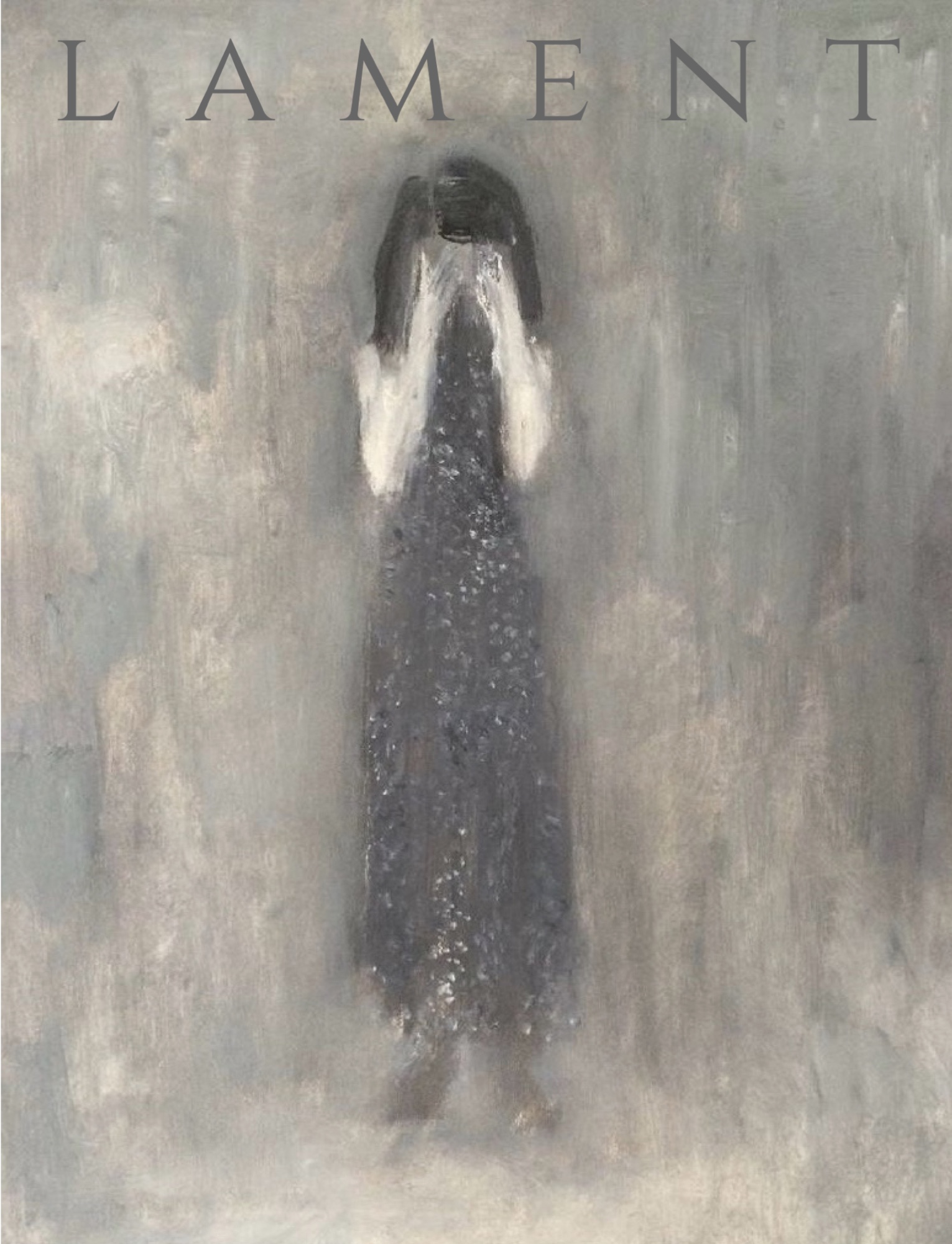
Child protection, Children, Compassion, Conflict, Confusion, Consolation, Darkness, Despair, Determination, Fear, God’s Mercy, grief, Gun violence, Justice

After the Horror

Poem by Rev. Kathy Manis Findley
September 7, 2024

Appalachee High School
Winder, Georgia, USA
September 4, 2024


A frenzied life, All Things New, “I Can See Clearly Now”, Beginning again, Bishop Steven Charleston, Bravery, Calm, Challenge, Contemplation, Courage, Determination, Dreamers, Dreams, Following Christ, God's Faithfulness, Heart, Here I am, Lord., I am enough!, Inspiration, New Things, Re-claiming self, Rev. Kathy Manis Findley, Spiritual growth, strength, struggle, Tenacity, Tikkun Olam, Vision, Whispers of God

A Snail’s Pace to the Mountaintop

By Kathy Manis Findley

Slow, slow, up the mountain I’ll go . . .


A PAUSE FOR SOME WHIMSY . . . Why don’t we have a little whimsy today? I have invited my snail-friend to join us. And anyway, we all need a little whimsy in these troubling days! So here goes!

I’m sorry to tell you that the snail in the picture will take forever to reach that mountaintop, and you and I simply don’t have the patience to walk with a snail. Even so, I feel good about my chances when racing a snail to get up on top of a mountain!

DOES THIS MAKE ANY SENSE AT ALL? . . . Not that this makes any sense at all. Why I would even be considering such a race! In fact, this is completely nonsensical, and if you know me, you know I’m far too serious to entertain whimsy! Makes no sense at all. Oh, but it does make some sense. Let me tell you something about me and what I have learned about the wisdom of the snail and its slow journey!

LIFE CAN BE DEVASTATING . . . When I think of the life catastrophes that have been the hardest for me, the ones that hurt me the most, I immediately recognize that I never slowed down enough to clearly see the unrest brewing around me and inside me. Multi-tasking and acting like an overcommitted, overwhelmed wife, mother, professional minister and hospital chaplain squeezed my spirit enough that I became hopelessly entrapped. That was in my younger days, those days when most of us stretch our commitments to the breaking point.

Before I could change course, I could see my dreams fading and my ability failing. It was impossible for me to reach the top of my mountain. It happened before I realized I was in trouble.

In the light of day, I can somewhat see, but at night, I can hardly see anything—literally and figuratively. But at least I have learned to take time to look up at the stars in a dark sky. It’s easy to see, to envision stars twinkling in the heavens, when you’re still young and when you can still find your hope-filled dreaming place inside you. You can still be breathless, open-eyed and awestruck!

CAN I STILL BE BREATHLESS, OPEN-EYED & AWESTRUCK? . . . To be honest, I must confess to you that I find it difficult to see with my soul, to be open-eyed and enthusiastic. I have lived my life with visions of dreams and hopes, and I have loved the fullness of my days. But being retired is another story altogether.

The story of my young and middle adult days was a story of constant activity, challenges, and tall mountains to climb in search of dreams. Dreams, dreams everywhere! Wherever I looked, I found another dream to dream!

RETIREMENT CAN BE DISHEARTENING . . . Retirement is another thing, and I am there! Illness and aging has nearly shut off my dreaming and visioning. Still, though I am sparring mightily with retirement, in the end I have slowed down to a snail’s pace. And snails probably don’t climb mountains or search for dreams.

What pieces of wisdom can we receive from a snail on a slow slither? Perhaps we should look elsewhere for such wisdom. One of my favorite authors gets to my soul with almost everything he writes. His keen spiritual insight has guided my path time after time. This is what Bishop Steven Charleston has to say about seeing more clearly.

I see more clearly, now that I am aging. Not with my eyesight, but with my soul. I see the fine detail of what I missed in younger years. I see the place of faith and forgiveness in my story. I see the possibilities of life in ways I never imagined. I was not blind in my youth, but my vision was limited to only a few seasons of seeing.

Now I am an old man standing on a hill. I see more clearly. The universe stretches above me in infinite glory and the Earth spreads her shawl to wrap me in creation. Open the eyes of your spirit. Look out in wonder. See the fullness of the life you have received. See the promise of love walking in beauty before you.

— Bishop Steven Charleston

MY FRIENDS FINDING NEW WAYS TO DREAM . . . These are words I can hang on to and patiently learn how aging folk can still hope and dream, and maybe even climb new mountains. It’s possible. I have seen several aging folk on top of the mountains they dreamed of. One of my 70 year old friends travels all over the world. Another has launched out in a new calling to counsel kidney transplant patients. Yet another friend faced a closed door, so she picked up her skills and began a brand new ministry. And one friend left the United States to feed hungry people across the ocean.

All of these friends made it up to the mountaintop, though some of them might have traveled at a snail’s pace. That doesn’t matter, and I have a notion that their secret to life has to do with slowing down and stopping their frenetic pace. Why do that?

To give yourself time to dream, time to contemplate and pray, time to pull your soul back together, time to open your eyes and truly see, time to meet God who may well whisper in your ear . . .

Then I heard the voice of the Lord saying,
“Whom shall I send? And who will go for us?”
And I said, “Here am I. Send me!”


—Isaiah 6:8 NIV

TIME FOR SILENCE AND CONTEMPLATION . . .So walk on, slow if you have to. Take your time and wait until you hear God’s voice or sense the presence of the Spirit. Give yourself time for silence and prayer and a lot of contemplation. Keep your courage ready, and then go with all your courage when your heart says it’s time. Don’t let the snail discourage you. Your pace, whatever it is, will get you there. Don’t let anyone block your path or steal your dreams! And I’ll meet you on a mountaintop somewhere!


A LOVELY HYMN FOR YOUR QUIET TIME . . .

Here I Am, Lord (Anniversary Recording) · Dan Schutte
Here I Am, Lord (30th Anniversary Edition)
℗ 2001 2009 OCP, 5536 NE Hassalo, Portland, OR 97213. All rights reserved. Made in USA.
All selections BMI.


SHARE YOUR STORY . . .

If you are a new to my blog or have been reading it for years, you are welcome here. If you would like to leave a comment about your experience with slowing down your pace, finding time for prayer and contemplation, or renewing your spiritual, physical, and emotional life, please tell us about it in the comments. Your story can help others see life more clearly.

Activism, All Shall Be Well, anxiety, Attachments, Bewilderment, Brokenness, Caged children, Calm, Change, Confusion, Courage, Defiance, Despair, Determination, Dreams, Emerging new, Falling down, Fear, Feelings, Following Christ, healing, Hope, Injustice, Psalms, Questions, Reflection, Transformation

In these Evil Days, Dream a Little Dream

Rev. Kathy Manis Findley

Lately, I have been trying to figure out a number of mysteries, but I have not figured out one single thing-, not lament, not how to fix my life, not transformation, not even the continuous mess in my closet. I simply have not yet been able to go through a reorganization process. The prospect of reorganizing my life—my soul, my spirit, my heart—plus all the treasures in my closet and armoire is so terribly daunting to me. Marie Kondo comes to mind, but I quickly shoo her away from my mess in the closet.

Lots of folk complain about “these days.” I confess that I do my share of complaining. What is it about “these days” that seems so troubling? I cannot fully give you an answer to that question yet, but I have some ideas about it. The issue at hand reminds me that the Bible often refers to “evil days.” I believe that many people see these days as “evil days,” and that cannot turn out well for anyone!

Jennifer Senior, a journalist with The Atlantic, recently wrote a news article in which she asked a another provocative question: What will happen to the American psyche if Trump is reelected? (Don’t worry, this post is not about Donald Trump!) On this question, maybe we really don’t want to know the answer. Instead of taking her question seriously and considering what might happen to “American psyches” following the November election, some folk would rather complain about the division all around, the evil around us, or other things nobody likes.

When we dare to make an honest evaluation of circumstances that surround us, we dig in our heels and balk. We balk because we don’t want to see the division in our nation or the impasse we have reached on important issues. We balk because, in truth, no one wants to lament. Remember, I’m not talking about divisions among us like liberal or conservative, Democrat or Republican, male or female, immigrant or American citizen, black or white . . . I could go on and on naming divisions among us. We have always co-existed with division, but most often in the past we have acknowledged division and simultaneously practiced kindness, respect, and tolerance. Given the current national environment, we might just be justified in calling these days “evil days.

If reading the Bible is something you typically do, then you might understand more fully the term “evil day.” My heart tells me that “evil days” are definitely taking a toll on us. Instinct tells me that “the evil day” is not a single day, but refers to the times in our lives when we face overwhelming , troubling circumstances. If you are willing, meditate on the following words for a few moments.


Therefore, take up the whole armor of God, so that you may be able to withstand the evil day and, having prevailed against everything, to stand firm. 16 Stand, therefore, and belt your waist with truth and put on the breastplate of righteousness15 and lace up your sandals in preparation for the gospel of peace. 16 With all of these, take the shield of faith, with which you will be able to quench all the flaming arrows of the evil one.17 Take the helmet of salvation and the sword of the Spirit, which is the word of God.

Ephesians 6:13-17 NRSVUE

I want to remind us all about the unrest we hold inside, too close to our heart and spirit. The proximity is important to pay attention to, as well as the flashpoints, past and present, that people have endured. I would guess that there are many flashpoints and memories of times that have held power over you. You probably face off with flashpoints, knowing that they not only create stress in our bodies, but also create bondage. We can become chained to our lives. Until we have exert some control of the present time of division, hate, turmoil, distrust, disrespect, contempt and other forms of bondage, we cannot find peace that changes the world. We certainly cannot figure out how to accept the possibility of transformation.

These evil days may well be causing our hearts to lament. These days may be days full of nightmares—no dreams at all, not even little dreams. You can name your own tragedies—the ones that are making it hard to breathe for you, or the ones that cover the whole troubled world with sadness. When I think of choosing my personal places of lament, those places where I can pour out the most anxiety, I feel the heavy burden of hopelessness. If you feel that too, you are not alone.

Always looking for a scapegoat, we try to discern what is bringing us down. Of course, life often brings us unforeseen personal tragedies that we must deal with. And there is certainly enough shared anxiety to go around. If you read the daily news, you will undoubtedly hear about the fierce war in Ukraine, the inability to create peace in the Middle East, the rising cost of food, the food deserts in our country, refugee children separated from their parents, difficult financial challenges, mass shootings, fractured relationships, long-term estrangement from loved ones, the opioid crisis and addiction, racism, injustice of all kinds, and politics. Evil days!

There are so many more ills we could add to this list, but we know them already, and the news programs are anxious to tell us about broken politics, as well as the way politics creates broken people. So there you have it! Among the many sources of stress we each experience, we continually stress over the dozens of pointless news stories about politics and the behavior of politicians every day. To top it off, Gloria Mark points out that “we are once again facing a news cycle that will shove our attention—as well as our output, our nerves, our sanity—through a Cuisinart.” No matter how skillfully we deny it, our bodies are not designed to handle chronic stress and trauma.

Just about now, you might want to say that politics doesn’t affect us that much, certainly doesn’t cause depression and hopelessness. But consider this viewpoint written by Pulitzer Prize winning journalist, Jennifer Senior:

The American Psychological Association’s annual stress survey, conducted by the Harris Poll, found that 68 percent of Americans reported that the 2020 election was a significant source of strain. Kevin B. Smith, a political-science professor at the University of Nebraska at Lincoln, found that about 40 percent of American adults identified politics as “a significant source of stress in their lives,” based on YouGov surveys . . . Even more remarkably, Smith found that about 5 percent reported having had suicidal thoughts because of our politics. Evil days!

And of the most divisive election in decades, psychologists are saying that their research shows that more than two-thirds of U.S. adults (68%) say that the 2020 U.S. presidential election was a significant source of stress in life.

It is not a stretch to say that stress plays havoc on our dreams, even our little dreams. I have to confess that my big dreams disappeared into the “impossible“ file, and were then swallowed up by the churning in my stomach and my psyche. I remember my first year in seminary, working part time jobs and going to class. For a while, I worked in the development office where all the catchy slogans, mottos and themes were born. One year, the staff got together to write a theme for the annual development campaign. I don’t know who came up with our brilliant theme, but we loved it. I really loved it and made it my personal mission.

“We’re Out to Change the World!”

I tried to do just that, and I honestly thought I could, but eventually the scene in my mind of one young woman alone trying to change the world on her own made me shiver. All the lofty goals and the many little dreams, along with a few big dreams, that had my attention were disappearing before me. I despaired at first and then carried long-term grief about it. There would be no big dreams in my heart. I would never see the glory of a big dream come true. Nor would I dream small dreams. People usually don’t dream of whatever is better while they are covered in grief—mourning, lamenting that they lost their dreams in the first place. In “these evil days” we must let go of despair and pray for an extra portion of holy determination!

But people do see the sacred light that sparks dreams. It dawns over them again and again until their dreamless spirit transforms from death, to life, to get their bearings again, and to summon the energ to get up and try

This is my message to you, and to myself: After your time of lament, rejoice! After you have escaped the bondage of evil days, rejoice! After you name your loss, and then put yourself back together, rejoice!

Take heart. Up in the heavens, there is rejoicing for you! Even in the gloomy shadow of dark and evil days, there is rejoicing for you! Even if you are trying to dream even the littlest dream, there is rejoicing for you!

So try a big dream! Change the world a little bit! Your heart longs for it, the world needs it, and the heavens will do what they always do—rejoice!

May even your smallest dreams change the world!

Activism, Advocate, Caged children, Child protection, Children, Compassion, Determination, Dreamers, Heartbreak, Hope, ICE, Immigrant detention, Immigration, Inhumanity, Justice, Liberty, Separation, Tears

Love the Stranger as You Love Yourself

My first mistake for this day — reading an article published in the Huffington Post written by journalist Rowaida Abdelaziz! Here’s the headline.

More than 5,000 people have contracted the coronavirus while in immigration detention centers, including more than 800 in the last week.

On a personal note, I must say that I’m very proud of my church’s ministries, especially our English as a Second Language (ESL) classes. The teachers not only teach English, they also provide community for immigrants who often do not have family nearby, as well as many other acts of care and compassion. I could not help but give God thanks for our ESL teachers this morning when I read this headline from the Huffington Post. I can imagine our ESL teachers shifting into advocacy mode to do something about it. Not that any of them have the power to change the abysmal detention centers our government sponsors, but armies of advocates can and have changed circumstances of oppression throughout history

Back to the news article. Abdeaziz went on to further explain the treatment of immigrants:

Immigrants were given face masks only recently, but most of them are forced to reuse single-use masks without being allowed to wash them or receive new ones. Those held were not given soap or sanitizers and some were even exposed to pesticides and other toxic substances. 

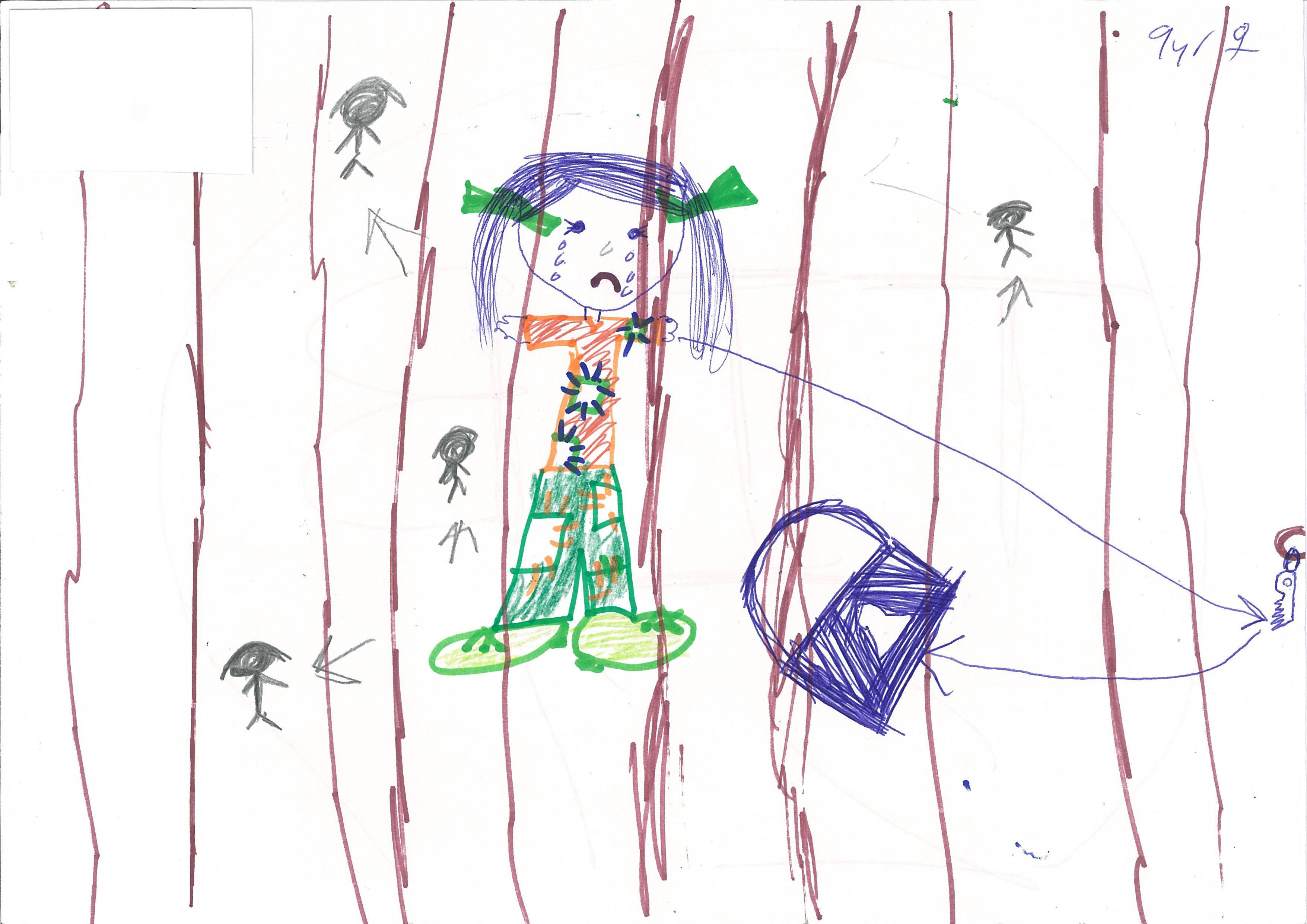
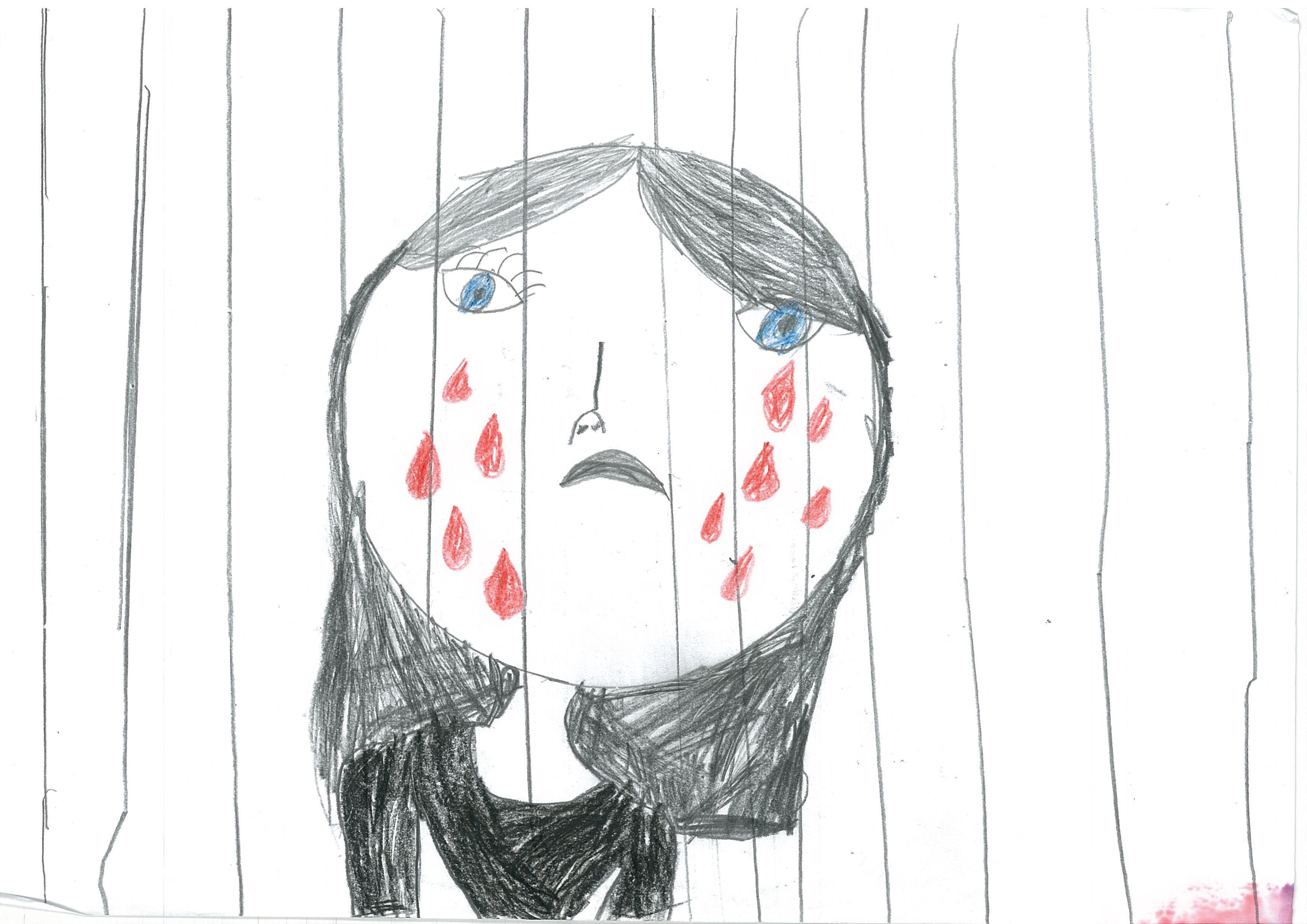
And then we have the horrible reality of “caged children!” It’s a term I do not want to hear because it so deeply troubling to imagine. But children draw and thousands of them have drawn images of caged children. My mind tells me unequivocally, “Don’t look at the drawings!” My heart tells me, “You must look!” My soul tells me, “Spirit will be near as my Comforter when I do look!”

At heart, I have always been an advocate for children, a fierce one. For a very long time advocacy was my career. I cannot abide the ill-treatment of any person, but when I envision thousands of children in custody and in sorely negligent circumstances, it digs at me and pierces my heart like a Holy arrow sent from God. Denise Bell, a researcher at Amnesty International USA said this, “COVID-19 has revealed the fatal flaws and the negligent medical care that ICE has historically provided to people who are detained within its facilities.” Ms. Bell goes on to say, “What’s more disturbing is the carelessness, and I’d even say callousness, with which the government is treating people in its care and custody.”

A969410C-B882-4AF9-A7FA-9C1F6E420740

Despite global lockdown measures, ICE continued to detain, transfer and deport immigrants ― including thousands of children ― all of which has contributed to the spreadof the coronavirus nationally and globally. Foreign governments who accepted deportees said they brought the coronavirus back with them. 
Huffington Post, September 17, 2020


From a CNN article, “Pediatricians share migrant children’s disturbing drawings of their time in US custody.” Slide show above includes drawings shared by those pediatricians and other powerful images. https://www.cnn.com/2019/07/03/health/migrant-drawings-cbp-children/index.html


How can you and I become advocates for these children? To me, it feels like a mandate from a caring, compassionate God. It feels like a mission following the footsteps of Christ who said something quite profound in the eighteenth chapter of Matthew’s Gospel. 

Whoever welcomes one such child in my name welcomes me. If any of you put a stumbling block before one of these little ones who believe in me, it would be better for you if a great millstone were fastened around your neck and you were drowned in the depth of the sea.

Matthew 18: 5-6 (GNT)


And then there’s this:

When a stranger sojourns with you in your land, you shall not do him wrong. You shall treat the stranger who sojourns with you as the native among you, and you shall love him as yourself, for you were strangers in the land of Egypt: I am the Lord your God. (Jeremiah 29:33-34)

Jeremiah 2:33-34 (NRSV)


I need to make sure you understand that I know the drill: I cannot use Holy Scripture to bolster my opinions or take Scripture out of its historical context to prove a point. A learned Professor of Old Testament, James K. Hoffmeier, makes this stringent assertion, “Secularists and liberals, both political and religious, are typically loath to consult the Bible when it comes to matters of public policy. So it is somewhat surprising that in the current debate about the status of illegal immigrants, the Old Testament or Hebrew Bible is regularly cited in defense of the illegal.”

I get that. I am a liberal. I even graduated from seminary. I am not using Scripture to prove my point. Nor do I intend to exegete these texts in an effort to thoroughly understand the translation in historical context. I am just pondering these Scripture passages as inspiration, meditation and perhaps an aid in discerning a call from God to mission. To use the texts in this manner, all I really need to do is read the words and listen for God’s voice. Never in my life, all seventy years of it, has God whispered back to me, “My child, you did not translate that text correctly, nor did you place it in its historical context.”

So where does this leave me? I think it leaves me asking myself, “What will I do? What must I do? Where do I begin in demanding change? How do I call out to my government, imploring them to end this oppressive inhumanity? How do I demand that all of us, including ICE, respect the humanity and the sacred worth of the immigrants in our midst, especially the children?

I hope that you, too, will ask yourself these questions, listen for the voice of God and become a fierce advocate for justice and humanity. If then you sense a call to do something to change the worlds of caged children held in ICE detention centers, visit this website:

https://endchilddetention.org/

Determination, Dreams, Greta Thunberg, Helena Morrissey, International Women’s Day, Malala Yousafzai, Perseverance, Persistence, Sarah Hesterman, Sarah Tenoi, struggle, Stubbornness, Tenacity, Women

On Rearranging Things: 2020 International Women’s Day

C1B6D1BF-6B4B-4737-BFDF-A4B476F3E63D
March 8 — 2020 International Women’s Day

Commemorating 2020 International Women’s Day seems important. It is important to me to pause on this day, because I am a woman who has struggled for equality. My female friends and colleagues have had similar struggled.

In the past weeks we have watched one woman after another end their candidacies for president of the United States. Senator Elizabeth Warren commented that Americans still may not be able to see a woman in the role of president. She said it with obvious sadness and with a catch in her throat, displaying the disappointment of many women and girls. Those of us who are older lament that we will not see a woman as president in our lifetimes, while little girls, teens and young women were hoping beyond hope for evidence in 2020 that dreams are possible. Lily Adams, granddaughter of the late Texas Governor Ann Richards, said this on Thursday night in an MSNBC interview: “Women have to run faster to get half as far.” How true that is!

6ABA8DA9-32CD-49DC-B9A7-BEB584D83D27International Women’s Day gives me an opportunity to celebrate women who are all-in, working tirelessly for equality, justice and positive change and constantly rearranging things. This years theme is “If you can see her, you can be her.” It is an appropriate theme for women who struggle daily to be seen and respected as equals.

In these days, we are seeing, right before our eyes, so many stunning examples of women who champion various causes.
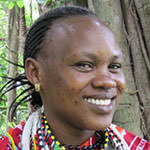
FC5FBE11-6734-47C6-A38E-933B9D902D1FSarah Tenoi
Activist Sarah Tenoi is leading the charge against female genital mutilation (FGM) in Kenya.


92066DDD-0F40-4E55-98AD-AB30B1A9D94BMalala Yousafzai
In 2012 at the age of 15, Malala Yousafzai, was shot in the head by the Taliban in Pakistan. The assassination attempt was a response to her stand for the right of girls to gain an education after the Taliban banned them from attending school.

 

DD465146-0702-479F-A8E9-67C6EAEF42D3Helena Morrissey
Helena Morrissey is a British businesswoman and mother of nine who is helping to change the face of British boardrooms.

 
6E324393-F712-4FE2-AD26-04DC9FEE1425Sarah Hesterman
As the founder and acting president of Girl Up in Qatar, Sarah Hesterman works with the UN to provide young girls with education in developing countries. Hesterman hopes that providing greater opportunities will allow girls to grow up with more self-confidence.

D50E2B31-E103-4C36-8BE9-9A07B452E4AFGreta Thunberg
Greta is a Swedish environmental activist on climate change whose campaigning has gained international recognition. She is known for her straightforward speaking manner through which she urges immediate action to address the climate crisis.

“We can’t just continue living as if there was no tomorrow, because there is a tomorrow,” she says, tugging on the sleeve of her blue sweatshirt. “That is all we are saying.”

It’s a simple truth, delivered by a teenage girl in a fateful moment in our time. (Time Magazine) 

FA268BA8-7679-4678-9854-8DC8EAEFB454

In the early years of my career as a graphic designer and then through my years of ministry, I was often accused of being aggressive. Now you need to understand that “Aggressive” would be the last word I would have used to describe myself. But like many women, I often found myself biding my time, playing the game of acting “ladylike” around my male colleagues, and choosing my words and my demeanor carefully when I wanted to make a point.

That was Stage 1 of me.
Stage 2 of me is the one that was labeled aggressive. Those who know me well would say that there is not an aggressive bone in my body. And that is true (unless I have to defend my child or my grandchildren). But I can be as aggressive as I need to be when injustice rears its ugly head or someone I love needs defending. Stage 3 of me has learned to be respectfully assertive. “Respectfully assertive” behavior helped to open doors that once were closed to me. That’s a good thing.

But here’s the caveat — as other women have, I have been compelled to learn how to be aggressive/assertive along a continuum, examining my situation and wisely choosing what my aggressive/assertive level should be at any given moment. The continuum looks something like this . . .
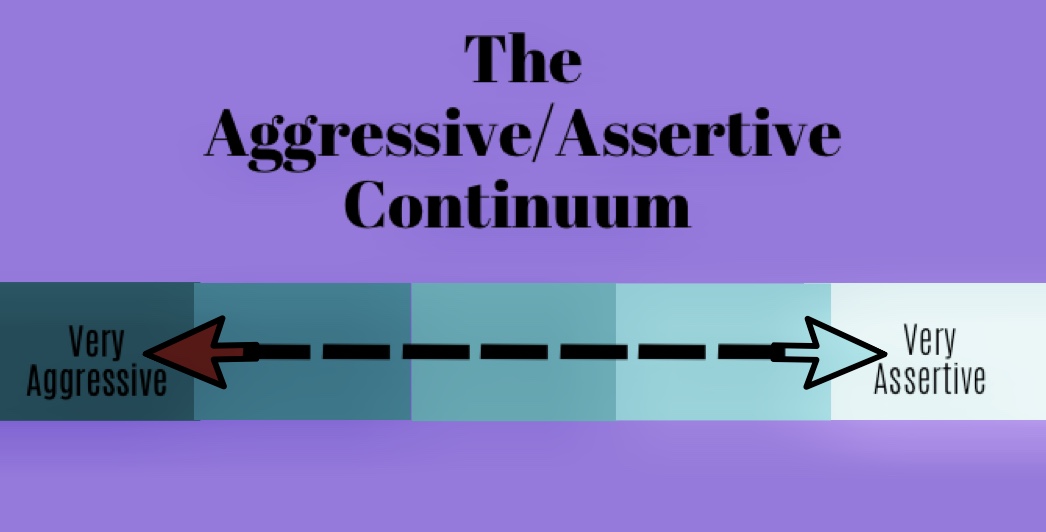
4B0B7E39-A6A8-4CDA-BAD4-8BF73C7C95CD
Like many, many women, I know that in order to effect positive change in the world, positive assertiveness is key. It’s all a matter of being self-confident enough to step up even if others criticize, speak out even when others try to silence you, persevere even when your detractors try to stop you from moving forward, hold on to your dreams even when dream-less persons tell you that your dreams are impossible.

My path to ordination was riddled with people around me telling me that ordination for a woman was impossible. At that time, there was only one ordained Baptist woman in the state of Arkansas and she was ordained in another state. My ordination process required enormous change in almost every person and institution around me. That change was not pleasant for anyone. It went on for months with lots of chaos and no resolution in sight. At the time, I thought I had only two choices: to abandon my desire for change or to stay in the struggle until change happened. I faced off with criticizers, silencers, discouragers and dream-less persons. Perseverance won that time!

My ordination quest was only one of many situations in which I had to fight for positive change. So I was almost always on the bad side of someone, and most unfortunately, I earned a reputation of being persistent, stubborn, insistent, resolved, Tenacious, determined, single-minded, resolute, uncompromising, annoying, troublesome, unconscionable and — wait for it — aggressive. I actually like most of those labels!

During a particularly discordant struggle with Little Rock city government about advocacy programs have for young people, a friend and mentor, who was the city’s Director of Community Programs, shared with me a Sierra Leonean Proverb that turned out to be an incredibly practical piece of wisdom. I immediately framed it and put it in my office so that I could see it often. She gave me that proverb in the late 90’s and, to this day, it is visible and prominent in my space.

She who upsets a thing should know how to rearrange it.
— a Sierra Leonean proverb

I seemed to upset lots of things in my lifetime. Often, I had no idea how to rearrange them. So I want to tell you about a woman who achieved what seemed impossible in her life and rearranged many things — discrimination, injustice, racism. She definitely upset things in her workplace, in the people around her and in NASA’s algorithms for space travel. She also rearranged those algorithms and helped send our astronauts into space.

625274F6-C5B5-47FD-A72E-3B8A4BEC9983Today I celebrate and remember Katherine Johnson, famed NASA mathematician and inspiration for the film “Hidden Figures.” She died a few weeks ago at 101 years of age. For almost her entire life, her brilliant work in American space travel went unnoticed. She was a pioneering mathematician who, along with a group of other brilliant black women, made U.S. space travel possible. And no one noticed for decades.

In fact, her work went largely unrecognized until the release of “Hidden Figures,” a film portrayal of Johnson’s accomplishments while the space agency was still largely segregated. Only the film, which was released in 2017, resulted in international recognition of Katherine Johnson’s genius.

Interestingly enough, her talent was evident early on. Her natural aptitude for math was quickly evident, and she became one of three black students chosen to integrate West Virginia’s graduate schools. After graduating from high school at age 14, Katherine Johnson enrolled at West Virginia State, a historically black college. As a student, she took every math course offered by the college. Multiple professors mentored her, including W. W. Schieffelin Claytor, the third African-American to receive a Ph.D. in mathematics. Claytor added new mathematics courses just for Johnson, and she graduated summa cum laude in 1937 at age 18, with degrees in mathematics and French. She started her career as a teacher but had her sights set on mathematical research.

Following an executive order that prohibited racial discrimination in the defense industry, Johnson was hired at the National Advisory Committee for Aeronautics, NASA’s predecessor. She was one of several black researchers with college degrees hired for the agency’s aeronautical lab through the initiative.

Johnson was part of NASA’s Computer Pool, a group of mathematicians whose data powered NASA’s first successful space missions. The group’s success largely hinged on the accomplishments of its black women members. Katherine Johnson was tasked with performing trajectory analysis for Alan Shepherd’s 1961 mission, the first American human spaceflight. She co-authored a paper on the safety of orbital landings in 1960, the first time a woman in the Flight Research Division received credit for a report.

In 1953 she worked in the facility’s segregated wing for women, but was quickly transferred to the Flight Research Division, where she remained for several years. But midway through the ’50s, the space race between the U.S. and the Soviet Union began to intensify. So did Katherine Johnson’s career. Without the precision of “human computer” Katherine Johnson, NASA’s storied history might have looked a lot different. Her calculations were responsible for safely rocketing men into space and securing the American lead in the space race against the Soviet Union.

After the release of the book “Hidden Figures,” which was published in 2016 and turned into a film the following year, officials lobbed heaps of praise on Johnson and two other black women mathematicians in the agency’s Computer Pool, Dorothy Vaughan and Mary Jackson. NASA renamed a facility for Johnson in February 2019. A street in front of NASA headquarters in Washington was renamed “Hidden Figures Way” for the three women in July.

In November of 2019, the three women — plus engineer Christine Darden — received Congressional Gold Medals for their contributions to space travel. Vaughan and Jackson received theirs posthumously. NASA administrator Jim Bridenstine called Johnson an “American Hero who helped our nation enlarge the frontiers of space even as she made huge strides that also opened doors for women and people of color in the universal human quest to explore space.”

President Barack Obama honored Johnson with the Presidential Medal of Freedom for her pivotal work in American space travel. Yet, Johnson’s work was still minimized and unrecognized by her male co-workers. Around her NASA workplace in the 1960s, she and her colleagues were known as “computers in skirts.”

I saved for last the best story of all! In 1962, John Glenn actually demanded Katherine Johnson’s help before his orbit around Earth. He was skeptical of the computers that calculated his spacecraft’s trajectory, so he told engineers to “get the girl” and to compare her handwritten calculations to the computer’s.

“‘If she says they’re good, then I’m ready to go,'” Johnson remembered Glenn saying. She gave the OK, and Glenn’s flight was a success.

Not to be flippant about the 2020 democratic presidential nomination process, but here’s a good message to send to whichever white guy gets the nomination: “When you are choosing your running mate, ‘get the girl!’”

And to all the women who hold up far more than half the sky, I honor you on this International Women’s Day and cheer you on toward your dreams and toward your mission of rearranging the world.


Beauty of Nature, Change, Defiance, Determination, Faith, Grace, Hope, life, Life’s murk, Lotus, Perseverance, Rebirth, Resurrection, Transformation

Rebirth

47A0C7FC-3DCC-4CC5-AF55-D993D1032FDC

I love the simple beauty of a lotus blossom. Since the lotus is often associated with yoga (a practice I avoid with every fiber of my being), I have never really considered the lotus and its intriguing life cycle. But lately I have been curious about the story of the lotus, which has long been considered one of the most sacred flowers. I wondered what it is about this mysterious bloom makes it so enrapturing and symbolic to so many people and cultures.

I think the answer is that the life cycle of the lotus is unlike any other flower. With its roots buried in mud, the lotus submerges every night into murky river water and miraculously re-blooms the next morning without any muddy residue on its petals.

The general consensus among ancient texts that the lotus symbolizes spiritual enlightenment and rebirth. Over centuries and across cultures, the lotus stunned people with its ability to dip into the grime and revive itself unscathed—an incredible daily cycle of life, death, and a sudden immaculate rebirth that can only be described as spiritual. In fact, the lotus flower blooms most beautifully from the deepest and thickest mud.

The lotus flower’s daily resurrection is certainly interesting and symbolic of revival, transformation and new life. But even more interesting is the flower’s stubborn will to live. A lotus seed can withstand thousands of years without water, able to germinate over two centuries later.

The lotus also blooms in the most unlikely of places such as the mud of murky river water in Australia or Southern Asia. Not only does it find sanctuary in the muck, but due to the waxy protection layer on its petals, its beauty is unaffected when it re-blooms each morning. It continues to resurrect itself, coming back just as beautiful as it was last seen. With such refusal to accept defeat, it’s almost impossible not to associate the lotus flower with unwavering faith, more specifically the faith within ourselves. 

My serendipitous lotus research did what my research often does: It prompted me to re-examine my faith. I can readily identify times when I had to wade through the murky, muddy waters that life sometimes brings. And although it seemed impossible to re-emerge from the mud clean and renewed, I did, every time, because of a God who understands both the murk and the rebirth.

It’s all about faith, after all is said and done. Once again God’s creation gives us a stunning example of experiencing thick, murky, dark life experiences; going under into the thickest mud when you no longer have the strength to stay above water; and miraculously emerging again — clean, new, reborn. We can learn a valuable lesson about determination, defiance and perseverance from the determined, defiant lotus seed that can survive over centuries. It hints to me about God’s “long game” for my life that simply shouts “hope” not just in my present circumstance, but in a future I can not begin to envision. God envisions it, though — a year from now, two years, my future, the years God has already numbered for me and the mystery we name “eternity.”

Thanks be to God for my eternity and for a faith that is reborn again and again and again by grace.


*********************

On another note, please pray for me as I await a life-saving kidney transplant. I am grateful that you are walking with me on this journey that often feels so frightening. Your thoughts and prayers mean so much. If you would like to read the story of my illness, visit the Georgia Transplant Foundation’s website at this link:

http://client.gatransplant.org/goto/KathyMFindley

A “Go Fund Me” page is set up for contributions to help with the enormous costs related to the transplant, including medications, housing costs near the transplant center, and other unforeseeable costs for my care following the transplant. If you can, please make a contribution at this link:

https://bit.ly/33KXZOj

Activism, Determination, Ecclesiastes, Mothering, Nonviolence, peace, Perseverance, Prophetic, Sermon on the Mount, Transformation, Women

“Blessed Are the Peacemakers”

A9D2FCDB-B949-42F0-95A3-990C8A5D484D
Image: The Sleeping Gypsy by Henry Rousseau, 1897, Museum of Modern Art, New York, NY.

In a world of division, violence, hate, racism, misogyny, xenophobia, homophobia and all manner of angst, perhaps we need to draw nearer to Jesus for a moment to listen to the thoughts of his heart. It happened before, you know, when Jesus went up on a mountainside and sat down. His disciples came to him, and he began to teach them.

The things he taught them that day are ever so important for us in these days.

Love your enemies . . .

“You have heard that it was said, ‘Love your neighbor and hate your enemy.’ But I tell you, love your enemies and pray for those who persecute you, that you may be children of your Father in heaven. (Matthew 5:43-45 NIV)

Turn your other cheek . . . 

“You have heard that it was said, ‘Eye for eye, and tooth for tooth.’ But I tell you, do not resist an evil person. If anyone slaps you on the right cheek, turn to them the other cheek also. (Matthew 5:38-39 NIV)

Make peace . . .

Blessed are the peacemakers, for they will be called children of God. (Matthew 5:9 NIV)

I have heard it said that one would not likely find the words of Jesus from the Sermon on the Mount on display on any courthouse lawn. They might never be inscribed on a slate in a state capitol building. But the most important inscription for these words of Jesus is an inscription on our hearts. Not physically possible, of course, but spiritually, we can open our hearts to receive these words within us, allowing them to transform us in ways that empower us to create peace.

Richard Rohr asks how it is that many Christians have managed to avoid what Jesus actually taught? How have we evaded major parts of the Sermon on the Mount: Jesus’ clear directive and example of nonviolence, and his command to love our enemies?

Perhaps we do not believe that nonviolence actually possible or that it will not effect any significant change. Many peacemakers know better. The Pope has singled out one active peacemaker we should know. Leymah Gbowee, the 2011 Nobel prize winner from Liberia, organized pray-ins and nonviolent protests that resulted in high-level peace talks to end the second civil war in Liberia. There are other peacemakers living out a commitment to peace. Not surprisingly, most of them are women. The contributions of women such as Leymah Gbowee in Liberia and Marguerite Barankitse in Burundi are showing the way to the eventual end of violence and the dawning of peace. Their work is working.

Two other women, Erica Chenoweth and Maria Stephan, write in their book, Why Civil Resistance Works, about the effectiveness of nonviolence, drawing from examples in Iran, Palestine, the Philippines, and Burma. They insist, based on their research, that nonviolent resistance is “nearly twice as likely to achieve full or partial success as its violent counterparts. ” 

Perhaps it is that mothering, protecting instinct that makes women lovers of peace. Perhaps it is their capacity for hope and determination. Perhaps it is that women persevere in faith. Perhaps women are a prophetic people who insist that transformation is possible. Women who love peace know that nonviolent movements are made of loyalty, resilience, commitment, creativity and love. Fortunately, women are not afraid of love or creativity or commitment. Women do fear the destruction of hate, violence and war.

So sisters in the struggle, let us keep on. Let us persevere in our quest for peace. Let us persist, struggling for as long as it takes to see holy peace gently cover our world from East to West, North to South, so that every man and woman, every child will be able to lie down in safety.

After all, Jesus said, “Blessed are the peacemakers, for they will be called children of God.”