Poem by Rev. Kathy Manis Findley September 7, 2024
Appalachee High School Winder, Georgia, USA September 4, 2024
WITH DEEPEST SYMPATHY Killed: Two teen boys, 14-year-old students Mason Schermerhorn and Christian Angulo. Killed: Two teachers, Richard Aspinwall and Christina Irimie. Hospitalized: Eight students and one teacher. Shooter: Age 14, also lost his life that day.
How would you feel about a phrase like, war against children? Virtually no one would like such a phrase, but isn’t that exactly what happens when someone bursts into a school brandishing an AK-15 assault rifle? When someone uses a weapon to kill children inside a school room, and when a nation refuses to change its culture of weapons and bullets, then we need to own it: America wages and perpetuates war against children!
The total lack of regulation of firearms and ammunition in America is the source of the shooting that held nineteen children and two teachers hostage in a classroom at Robb Elementary School in Uvalde, Texas, in the hands of a murderer. The ultimate ”perpetrator” could be called the National Rifle Association (NRA), the group who promotes the idolatry of lethal weapons. Protesters at the site of the NRA’S National Convention this weekend were joined by Democrat Beto O’Rourke, who listed previous school shootings and called on those attending the convention to make sure that gun violence would no longer harm children in this country.
“The time to have stopped Uvalde was right after Sandy Hook,” O’Rourke said. “The time for us to have stopped Uvalde was right after Parkland. The time for us to have stopped Uvalde was right after Santa Fe High School. The time for us to stop the next mass shooting in this country is right now, right here, today with every single one of us.”
Gun violence in schools is not a national scourge in every country. There are examples of gun control our nation could follow if we had the passion and political will to do so. A case in point . . .
About a month after the Parkland school shooting, a letter of condolence addressed to the survivors arrived from survivors and parents who had endured a similar tragedy 22 years before when a local shopkeeper walked into Dunblane Primary School in Scotland and opened fire, killing 16 five and six-year-olds and their teacher.
Writing the letter to Parkland survivors was a act of solidarity. Offering hope for change, they told of their successful campaign for gun reform. They wrote, “Laws were changed, handguns were banned and the level of gun violence in Britain is now one of the lowest in the world.”
Since the 1996 Dunblane massacre, they said, “there have been no more school shootings in the United Kingdom.” Because of a grassroots campaign led by the parents of Dunblane students, leaders in the U.K took decisive legislative action. By the end of 1997, Parliament had banned private ownership of most handguns, enacted a semi-automatic weapons ban, and implemented mandatory registration for shotgun owners.
The signees ended with words of encouragement, “Wherever you march, whenever you protest, however you campaign for a more sensible approach to gun ownership, we will be there with you in spirit.”
Here in “the land of the free,” we have become callous to gun violence. We hear of mass shootings on streets, in churches, synagogues, temples or mosques, and we move on. We are becoming immune to shootings in night clubs, stores, shopping malls, military bases, restaurants, theaters and homes.
Violence inside schools, though, is on a higher, more lethal level. People who grapple with making sense of school shootings strain to come up with “reasons” that such heinous acts of violence could happen. People choose to go into restaurants, clubs and theaters, but children in school classrooms are mandated to be there.
War against children.
Do we dare look at the list of school shootings since 1969? I studied the list today, lamented over it, I guess. There were fourteen school massacres that left 169 dead children.
After every single incident, people cry, “enough is enough.” After every horrific mass murder, lawmakers and power brokers say, “enough is enough.” And then comes the question, “Why?” Why is this violence happening? The following answers for “why”—some goodand some preposterous—emerge from the national dialogue.
mental health problems; delinquent youth out of control; inattentive parents leaving guns accessible to children; weapons and ammunition too easy to get; untrained resource officers. It’s because the adults in the schools don’t have guns. They need guns.
Franklin Graham blamed school shootings on “a nation that has turned its back on God,” and on violent video games, the entertainment industry and on “taking God out of our schools.” James Dobson blamed the shooting at Sandy Hook on God’s wrath over abortion and same-sex marriage.
War against children.
This is a sad season, but it is also a sad time for Christianity. Just days after the tragic slaughter of innocent children and their teachers, the National Rifle Association meets in national conference to celebrate themselves only 300 miles away from Robb Elementary in Uvalde. Brian Kaylor and Beau Underwood name it and explain it in a recent article published in A Public Witness.
“Even after Sandy Hook, Stoneman Douglas, and now Robb Elementary — not to mention the numerous other mass shootings at churches, theaters, concerts, restaurants, grocery stores, homes, and basically any other place in our society — some Christian leaders still try to baptize the death cult that will gather in Texas this weekend.”
Shane Claiborne, co-author of Beating Guns: Hope for People Who Are Weary of Violence, criticizes pastors who “bless this group that is literally contradicting nearly every word of the Sermon on the Mount.” He continues, ”I’m going to go straight to Jesus and say we cannot serve two masters. And we really are at a crossroads where we’ve got to choose: Are we going to follow Jesus or the NRA? And literally, you couldn’t come up with much more contrasting messages. The gospel of Jesus — turn the other cheek, love our enemies — stands in direct opposition to the rhetoric of the NRA — stand your ground. The gun and the cross give us two very different versions of power.”
His words are true, as are words written by Dr. Obery Hendricks in his recent book, Christians Against Christianity. He writes a fiery epithet about what he describes as “the unholy alliance between right-wing evangelicals and the NRA. Their annual prayer breakfast,” Hendrick’s writes, ”tries to add a veneer of Christian religiosity to the NRA’s deadly agenda.”
In the article in A Public Witness, Kaylor and Underwood describe ”the NRA’s Hell” in scathing commentary. ”As the blood of more slaughtered children cries out from the ground, preparations continue for this weekend’s NRA convention.”
War against children.
There is no lack of commentary following the terror at Robb Elementary School. Stephen Reeves, executive director of Cooperative Baptist Fellowship Southwest, also criticized Christian leaders who bless the NRA, saying, “I don’t know how you pray in the name of the Prince of Peace and ask for God’s blessings on the mission of the NRA. No other country sacrifices their children on the altar of the gun.”
Yet, the prophets and the mourners somehow coalesce this weekend, in solidarity with one another regarding weapons of war and slaughter. While a Texas community mourns grievous loss, righteous prophetic critics stand on their behalf to call out sin, complacency, greed, self-interest and idolatry and those who champion the evil of it. ”As our children are killed at the altar of a semiautomatic idol,” Kaylor and Underwood write, ”high priests like Franklin Graham, James Dobson, and Jonathan Falwell help the NRA damn us all to this hell.”
Meanwhile surviving parents, siblings, grandparents and other family members and friends are oblivious to the rhetoric, to the NRA, and to anyone or anything else. Theirs is to mourn, to keep vigil over the memories of the children, and I suppose, to continue asking, ”why.” Why did this happen? Why in our school? Why did it have to take my child?
The “why” questions? Could the answer be because America is waging war against children? The ”why questions” are literally unanswerable, no matter how long we sit before them waiting for answers, for reasons. Some cataclysms have no reasons or explanations, at least none that are worth anything. One needn’t ask ”why” to pure evil, but must instead try to ease beyond ”why” to a more answerable question.
Still, getting beyond “why” brings another question that hovers over us like an ominous cloud: “What can I do about it?”
That is the question that remains. It pierces us. It drives the conversations we have and the prayers we pray.
“What can I do about it?” I can only answer with possibilities to consider. Here are a few.
Make a commitment to stand courageously against violence in the ways you are able.
Become an informed activist, aware enough to help influence the passage of legislation that protects children.
Communicate constantly with members of Congress, by phone, letter, email, text. Go to their webpages and keep on prodding them to do right.
When your activism seems small, know that it helps wage the big war against violence.
Be open to acts of tenderness. Hold a mourner in your arms, when they feel nothing and when their crying will not stop.
Many parents of the Texas children are in in shock, in trauma-induced silence. Without voice, without tears, without any emotion at all. It will be a while before they can make any audible expression of grief.
Other parents are crying uncontrollably. They will cry at the funeral home, in the church, in the graveyard, at the store, in their beds in the night. Their bodies will literally shake as grief pours out from their deepest places. It will be a while before they can stop crying.
Most of us, in fact, cannot stop crying when we see and absorb this war against children or begin to grasp the utter senseless evil of it.
In my work as a victim advocate and trauma counselor, I was present with those who were trapped in silence and with those who could not stop crying. That was the thing I could do, and after the crying, being with them in marches and sit-ins or just for a cup of coffee. In a 2021 article for The Trace, Journalist Ann Givens interviewed me about my victim advocacy and my activism to end violence. She asked me about God, about how God responds to us in a crisis to help us move beyond trauma while we are still facing so much suffering. This was my response:
“God is a God of peace. God doesn’t cause bad things to happen, but God helps us take the deep, excruciating emotions that come with bad things, and do something with them.”
In the very middle of this war against children, can we take our powerful, intense emotions and do something even more powerful? Can we persevere until the war against children is over and we can see the bright hope of children lying down with a lion and a lamb in places of peace and safety?
May God empower us to say, “Yes, we can!” and fill us to overflowing with a living hope that empowers us to say, ”Yes, we will!”
Rev. Kathy Manis Findley May 26, 2022
Please take a few moments of prayer and meditation to listen to this song, PreciousChild. Precious Child – Words & Music by Karen Taylor Good
Here’s the bottom line: in every nation of the world, one can see the oppression of children. No matter how one views the wars and the skirmishes, the occupations and the trafficking, the rationed medical care and the failure to administer the Covid vaccine, the stark reality is a picture of child endangerment and physical, sexual and emotional abuses.
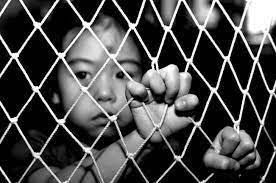
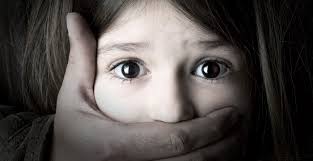
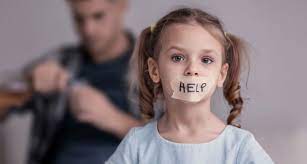
The estimated number of children trafficked around the world is 5.5 million. They suffer violence, exploitation and abuse — ending up in forced marriage, prostitution, illegal adoption, labor, drug smuggling, begging and armed recruitment. They are taken from all around the world and sold by human traffickers as slaves. Child trafficking is linked to demand for cheap labor, especially where the working conditions are poor. Children may be forced into many dangerous and/or illegal situations, including slavery, domesticlabor, sexual exploitation or prostitution, drug couriering and/or being turned into child soldiers.
And then, we must remember the immigrant children who have been separated from parents or guardians. An NBC News report on June 8, 2021 cites a 22-page progress report submitted to President Joe Biden last week by the task force for reuniting families. The report indicates that 2,127 children are awaiting their reunions. The report also states that 3,913 children separated from their families between July 2017 and January have been identified. The ACLU has said more than 5,400 children were separated at the border. The discrepancy, the DHS official said, is due to thousands of yet-to-be-reviewed files by the task force.
The estimated number of children trafficked around the world is 5.5 million. They suffer violence, exploitation and abuse — ending up in forced marriage, prostitution, illegal adoption, labor, drug smuggling and armed recruitment.
I could give many more statistics, hundreds of them, but we have all learned to hear statistics and simply dismiss them as irrelevant data. And yet, one single number in a spreadsheet of statistical information represents one particular child. A child stolen from her parents. A child exploited and enslaved. A child taken from the arms of protection and forced into danger. There is high lethality in child trafficking. A child loses his or her life forever because it is impossible to return to the life the child once knew.
So I will spare you from any more abysmal statistics. Instead, I want to share with you a portion of passionate, heartbreaking message I read today.
Iwish to request that all those receiving this email pray for the children of Palestine living under a brutal Israeli occupation. Hardly a week goes by when 3-4 Palestinian children are summarily shot. Worst yet, Israel has not allowed the COVID vaccines to be administered in the Occupied West Bank and Gaza. If this is not a genocidal act, then what is? And to think that a $3.8 billion dollar aid package was only last week sent to Israel . . . Folks, if this generous give-away of your hard earned tax dollars does not peeve you, then I urge you to start reading the papers and informing yourselves about the many genocidal acts of terror against brown people – Syria, Palestine, Iraq, Libya, Afghanistan. As Christians, we are called upon to stand up for the oppressed.
In Deep Sorrow, Raouf J. Halaby
What does this tragic situation as expressed by Mr. Halaby have to do with us? Maybe nothing. Probably nothing. But wait! I want to talk more about the inconceivable practice of modern day slavery — child trafficking.
Could my child be kidnapped and trafficked? It doesn’t happen here!
A very common misconception about human trafficking is that it does not happen in the United States. The truth is that the United States is ranked as one of the worst countries globally for human trafficking. It is estimated that 199,000 incidents occur within the United States every year.
Here are the 10 states with the highest rates of human trafficking:
Nevada
Mississippi
Florida
Georgia
Ohio
Delaware
California
Missouri
Michigan
Texas
Victims of trafficking frequently do not seek help due to language barriers, fear of their traffickers, or fear of law enforcement. Because human trafficking is considered a hidden crime, we can be diligent in reporting it when we see it happening. But we have to know what to look for. Several key warning signs can help us recognize potential endangerment and notify law enforcement. The United Nations Office on Drugs and Crime has a list of indicators we can use to help identify victims. These indicators include:
Appearing malnourished
Appearing injured or having signs of physical abuse
Avoiding eye contact, social interaction, and law enforcement
Responding in manners that seem rehearsed or scripted
Lacking personal identification documents
Lacking personal possessions
Every day there are things — bad things — that happen. Usually we think they have nothing to do with us, and usually they don’t, not directly at least. But the ministry of the Christ, who walked on this earth and who cared for the most vulnerable and endangered people he encountered, is our example. As Christians, do we follow Christ to the dangerous places? Do we pray for every child in every land, asking God to pay heed their circumstances and protect them from evil?
Prayer is the one thing, perhaps the most important thing, we can do. Mr. Halaby asks this of us: “Iwish to request that all those receiving this email pray for the children of Palestine.” Let us start there, with that single request for prayer. And then, may all of us become more aware of the lives of children everywhere and pray that they will be protected from all harm.
Prayer is one thing we can do! Will we?
AWARENESS . . .
If you believe you may have information about a trafficking situation:
Call the National Human Trafficking Hotline toll-free at 1-888-373-7888: Anti-Trafficking Hotline Advocates are available 24/7 to take reports of potential human trafficking.
Text the National Human Trafficking Hotline at 233733. Message and data rates may apply.
Submit a tip online through the anonymous online reporting form below. However, please note that if the situation is urgent or occurred within the last 24 hours we would encourage you to call, text or chat.
Report missing children or child pornography to the National Center for Missing and Exploited Children (NCMEC) at 1-800-THE-LOST (843-5678) or through their Cybertipline.
What’s on your mind today? I ask because for me there are days, like today, when my mind is free-flowing without one thought, idea or plan. That can be troubling for a person like me who almost constantly churns out thoughts and creative responses to those thoughts. My blog, for instance, is a preaching platform for this retired and frustrated preacher. And there is almost always a sermon in me just itching to see the light of day!
But not today! You’ll get no sermon today, just words without organization and thoughts floating in the wind. Perhaps my thoughts will be energized by Spirit Wind, or not! It seems to me to be a good time for floating thoughts and random words, because in this pandemic world, there are simply no words.
When I look at pandemic facts and trends in my state, Georgia, I am aghast at this reality released today by WMAZ News: “The number of Covid cases in Georgia children has jumped in a month from 40 to 488. That’s more than 1,100 percent.”* Dr. Edward Clark, an Atrium Health Navicent pediatrician, says parents should be very concerned. “We’ve seen a spike in kids ranging from infants anywhere up to age 18,” he said. On top of that, children ages 12 and older have been approved only for the Pfizer vaccine at this time.
The truth is that some parents are very alarmed — even terrified — about the rising number of delta variant cases in children and teenagers. As well they should be, as they watch with great alarm the highly-contagious Delta variant cases increasing so rapidly in children. Parents are frightened and many of them worry that in-person school is not the best decision in these conditions. Teachers, too, are dealing with difficult issues as in-person school begins.
The number of Covid cases in Georgia children has jumped in a month from 40 to 488. That’s more than 1100%!
WMAZ News
In the midst of my free-flowing thoughts today, I am finding focus enough to ask why we did virtual learning last school year when children were less likely to be infected, yet in this school year when the Delta variant is rapidly infecting children, we are sending them to in-person school, some schools without mask mandate. Someone far less cautious than I am must have made that decision! I would have never sent children into harm’s way, into a place where they could spread the surging Delta variant to each other! Is it time for another season of sheltering-in-place?
Let us be careful about the ways we inadvertently expose children to danger. Let us be mindful of our responsibility to protect all children. Let us be diligent in letting our faith inform our compassion and care for children.
After all, Jesus was clear about drawing children close and sheltering them from harm. We should be just as committed to holding children close in a shelter of protection. May God make it so!
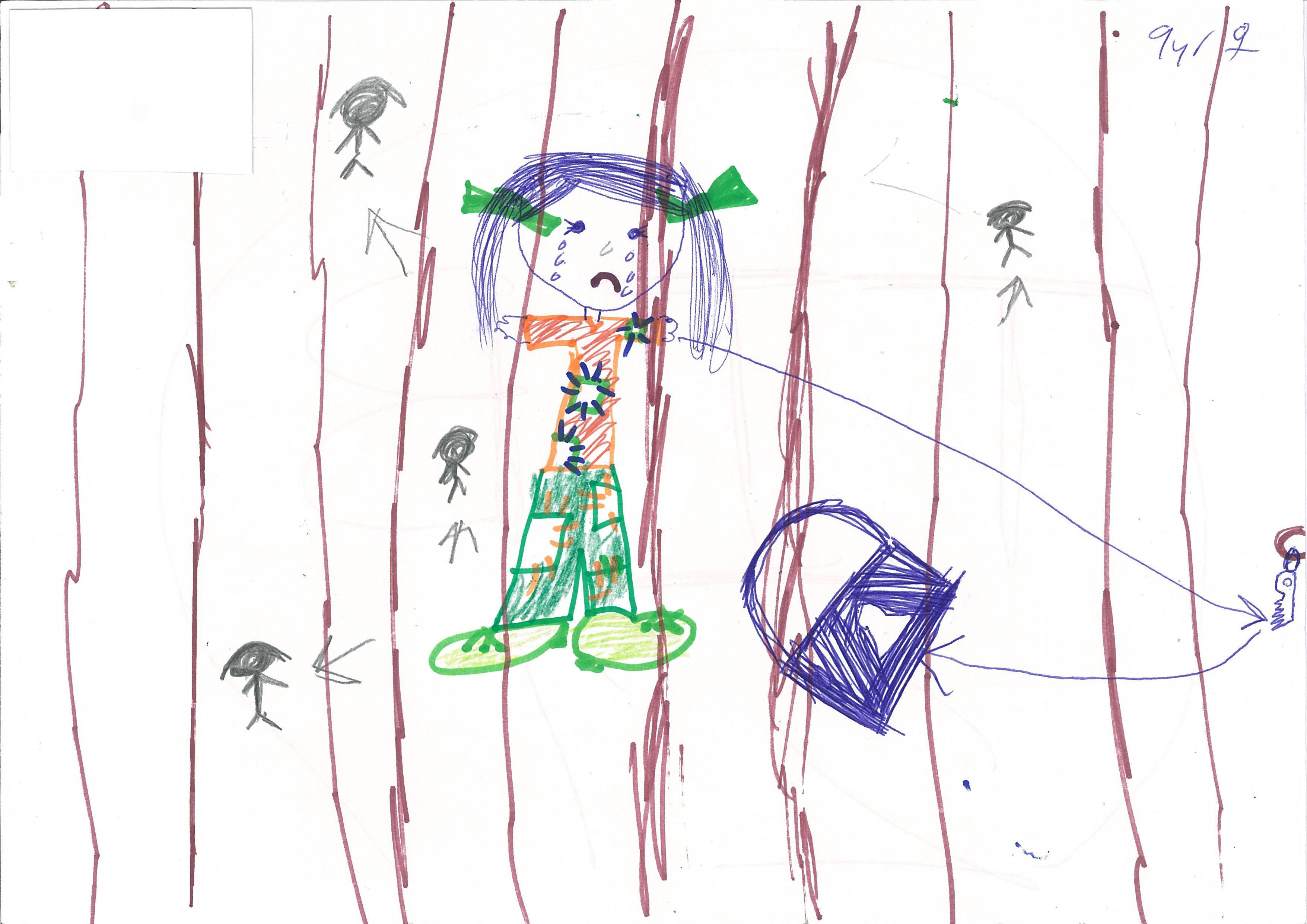
A child’s drawing of being held in US immigrant detention centers while tring to hold on to an image of hope
My first mistake for this day — reading an article published in the Huffington Post written by journalist Rowaida Abdelaziz! Here’s the headline.
More than 5,000 people have contracted the coronavirus while in immigration detention centers, including more than 800 in the last week.
On a personal note, I must say that I’m very proud of my church’s ministries, especially our English as a Second Language (ESL) classes. The teachers not only teach English, they also provide community for immigrants who often do not have family nearby, as well as many other acts of care and compassion. I could not help but give God thanks for our ESL teachers this morning when I read this headline from the Huffington Post. I can imagine our ESL teachers shifting into advocacy mode to do something about it. Not that any of them have the power to change the abysmal detention centers our government sponsors, but armies of advocates can and have changed circumstances of oppression throughout history
Back to the news article. Abdeaziz went on to further explain the treatment of immigrants:
Immigrants were given face masks only recently, but most of them are forced to reuse single-use masks without being allowed to wash them or receive new ones. Those held were not given soap or sanitizers and some were even exposed to pesticides and other toxic substances.
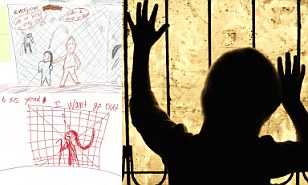
And then we have the horrible reality of “caged children!” It’s a term I do not want to hear because it so deeply troubling to imagine. But children draw and thousands of them have drawn images of caged children. My mind tells me unequivocally, “Don’t look at the drawings!” My heart tells me, “You must look!” My soul tells me, “Spirit will be near as my Comforter when I do look!”
At heart, I have always been an advocate for children, a fierce one. For a very long time advocacy was my career. I cannot abide the ill-treatment of any person, but when I envision thousands of children in custody and in sorely negligent circumstances, it digs at me and pierces my heart like a Holy arrow sent from God. Denise Bell, a researcher at Amnesty International USA said this, “COVID-19 has revealed the fatal flaws and the negligent medical care that ICE has historically provided to people who are detained within its facilities.” Ms. Bell goes on to say, “What’s more disturbing is the carelessness, and I’d even say callousness, with which the government is treating people in its care and custody.”
Despite global lockdown measures, ICE continued to detain, transfer and deport immigrants ― including thousands of children ― all of which has contributed to the spreadof the coronavirus nationally and globally. Foreign governments who accepted deportees said they brought the coronavirus back with them. Huffington Post, September 17, 2020
Diana Jimenez stands with her family during a protest outside of the Homestead Temporary Shelter for Unaccompanied Children, Sunday, June 16, 2019, in Homestead, Fla. A coalition of religious groups and immigrant advocates said they want the Homestead detention center closed. (AP Photo/Lynne Sladky)
How can you and I become advocates for these children? To me, it feels like a mandate from a caring, compassionate God. It feels like a mission following the footsteps of Christ who said something quite profound in the eighteenth chapter of Matthew’s Gospel.
Whoever welcomes one such child in my name welcomes me. If any of you put a stumbling block before one of these little ones who believe in me, it would be better for you if a great millstone were fastened around your neck and you were drowned in the depth of the sea.
Matthew 18: 5-6 (GNT)
And then there’s this:
When a stranger sojourns with you in your land, you shall not do him wrong. You shall treat the stranger who sojourns with you as the native among you, and you shall love him as yourself, for you were strangers in the land of Egypt: I am the Lord your God. (Jeremiah 29:33-34)
Jeremiah 2:33-34 (NRSV)
I need to make sure you understand that I know the drill: I cannot use Holy Scripture to bolster my opinions or take Scripture out of its historical context to prove a point. A learned Professor of Old Testament, James K. Hoffmeier, makes this stringent assertion, “Secularists and liberals, both political and religious, are typically loath to consult the Bible when it comes to matters of public policy. So it is somewhat surprising that in the current debate about the status of illegal immigrants, the Old Testament or Hebrew Bible is regularly cited in defense of the illegal.”
I get that. I am a liberal. I even graduated from seminary. I am not using Scripture to prove my point. Nor do I intend to exegete these texts in an effort to thoroughly understand the translation in historical context. I am just pondering these Scripture passages as inspiration, meditation and perhaps an aid in discerning a call from God to mission. To use the texts in this manner, all I really need to do is read the words and listen for God’s voice. Never in my life, all seventy years of it, has God whispered back to me, “My child, you did not translate that text correctly, nor did you place it in its historical context.”
So where does this leave me? I think it leaves me asking myself, “What will I do? What must I do? Where do I begin in demanding change? How do I call out to my government, imploring them to end this oppressive inhumanity? How do I demand that all of us, including ICE, respect the humanity and the sacred worth of the immigrants in our midst, especially the children?
I hope that you, too, will ask yourself these questions, listen for the voice of God and become a fierce advocate for justice and humanity. If then you sense a call to do something to change the worlds of caged children held in ICE detention centers, visit this website:
Plans! We find it almost impossible to make them in a life ruled by COVID19. Currently, school plans are foremost in the minds of parents and students.
“Is it safe to send my child back to school? What safety and social distancing measures will schools have in place? Do I choose to keep them at home, opting for virtual learning? How do I manage online school?”
In light of such critical plans and decisions, consider this current news report:
A document prepared for the White House Coronavirus Task Force but not publicized suggests more than a dozen states should revert to more stringent protective measures, limiting social gatherings to 10 people or fewer, closing bars and gyms and asking residents to wear masks at all times.
The document, dated July 14 and obtained by the Center for Public Integrity, says 18 states are in the “red zone” for COVID-19 cases, meaning they had more than 100 new cases per 100,000 population last week. [Georgia is in the “red zone.”]
Even with troubling reports like this one, Georgia’s governor, Gov. Brian Kemp, signed an order on Wednesday, July 15, 2020 banning localities from requiring masks. On this information, parents have to agonize about what’s best for their children. They simply cannot make firm plans as long as the virus is waxing and waning. Mostly waxing!
Plans are difficult for us for all sorts of reasons and circumstances. Every now and then over the years, my life would take un unexpected pause to contemplate this thought written by the late Mary Oliver:
So tell me, what is it that you plan to do with your one wild and precious life?
Unpacking that brief question has been a periodic constant in my life, popping up for me mostly in my down and disheartened times. I hear the poet describing my life as “wild and precious” and it almost shocks me. Yet, my life really has been consistently wild and mostly precious. Anything that urges me to examine my life is a good thing. I can almost always pull up memories of the times when I was wild and free — insistent upon rising higher, realizing a near-impossible dream, charging with courage into new and uncharted places, planning for a future of fresh and sparkling heights, observing just how wild I could dare to be. Unpacking that question has been exhilarating at times, exhausting at other times.
Musing on a life that could be described as precious
Entertaining the thought that my life was precious happened in my deepest soul place. It happened in my moments of introspection, meditative times that urged me to examine all the ways I saw my life as precious, cherished, valued. Of course, I have experienced many precious life moments — my wedding day, my work in Africa, my ordination, awards and recognitions of my work and career and, most of all, the adoption of my one wild and precious son, Jonathan. Examining my precious life was most real when I almost lost my life, my full year of serious illness, five years of dialysis and a kidney transplant made possible by the selflessness of a lovely woman I know only through email.
Such thoughts bring me back to plans. What is it I plan to do with my one wild and precious life? Even a life precious and wild is a life that requires plans, and right now trying to make plans is an exercise fraught with anxiety. I cannot find any words that can minimize this depth of anxiety. There is not one thing you or I can do about plans that have been ravaged by the pandemic we are experiencing, and yet we must make critical plans in this season of uncertainty.
School plans are most difficult in my state and perhaps in yours. As parents agonize over the safety of their children, Georgia’s governor, Brian Kemp, offered this unhelpful comment this morning in a press conference:
I am a believer that kids need to be in the classroom and we’re working with the schools to do that. We’re going to have cases that break out in schools, either with personnel or perhaps students, just like you do with a stomach bug or a flu or anything else. Our schools know how to handle those situations.
The parents and teachers in my life know that this coronavirus is not just a run-of-the-mill “stomach bug or flu.” This virus is deadly, and parents and teachers faced with difficult school decisions know that all too well. During these pandemic days, it is a constant reality that many of us are having to make potentially hazardous plans, but just for a moment, I wonder if we can redirect our thoughts to plans we make for our “one wild and precious life.”
Can we rise above the plans we must make today, even for a moment, and instead consider the bold and courageous plans we could make? Can we set our hearts to think about plans we can make when we are our brave, adventurous and fearless selves? Can we contemplate the plans we might make when we feel bold, resolute and undaunted?
I can remember the times when I was able to make such adventurous plans, times when my plans were dreams — high and lofty dreams of changing the world. I can also remember the time when I no longer dreamed any dreams at all. It was a time when I no longer saw my life as a wild and precious one. I still entertained plans, but my plans were definitely not dreams. I believed I could no longer change the world. I believed I could no longer live a life that made a difference. I believed that my soul was dry and my spirit barren. I believed that, in my life, dangerous and noble things were no longer possible
Why can’t you and I dream dreams instead of making plans? Why can’t my “one wild and precious life” rise higher, high enough to make dreams of my plans? Sometimes I will go to one of my many favorite passages of Scripture hoping to find God’s word to me. Being true to my theological education, I always look at the words in context before I do anything else. But after that hermeneutical exercise I learned in New Testament 101, I might twist the text a bit and maybe even paraphrase it, inviting the text to speak to me specifically, just me. For this day, one of the texts found in the book of Acts reaches into my soul, and, yes, I did paraphrase it.
“In your season of most need,” God says,
“I will restore your soul and make your spirit rise within you.
I will pour out my Spirit on all people.
Your sons and daughters will prophesy,
your youthful hearts will see visions,
your aging hearts will dream dreams.”
— Acts 2:17 (my paraphrase)
Amen.
May God lift our hearts and spirits, assure us that our lives are precious and help us transform our plans into dreams.
So tell me, what is it that you plan to do with your one wild and precious life?
At the moment, I am literally stitched together after a kidney transplant. I know everyone likes to tell how many stitches they have, but I can’t give you that detail because I can’t see my incision well enough to count them. It’s just as well. Those stitches don’t matter all that much. They certainly don’t matter as much as being stitched together by song lyrics, book quotes, adventures . . . and moonlight. What matters most is that I am pieces of all the places I have been and all the people I have loved.
For my Sabbath yesterday, I played hymns on Pandora. As I listened for hours, I heard music that reminded me of places I have been over the years, from the single traffic light in Reform, Alabama to the rugged beauty of the Mountains of the Moon in Uganda, East Africa. And I heard hymn texts that reminded me of people I have loved, from beloved seminary professors to people I served as pastor. I sang along much of the time, singing hymn texts that ranged from “Come, Thou Long Expected Jesus” to “I’ll Fly Away,” and everything in between.
The hymns portrayed the story of my faith with Gospel songs that marked my conversion and my early years to the Great Hymns of the Church that expressed my faith in my later years. I could see myself singing in many different choirs, as a pastor leading congregational singing, as a worship leader at national gatherings, as a missionary in a mud hut and even as a teenager sitting on the back row of the church, inappropriately close to my boyfriend.
Each hymn I heard yesterday reminded me of those times and told the story of my faith journey. Indeed, I envisioned myself as one who truly is pieces of the places I’ve been and the people I have loved along the way. For at least a few hours, I was able to lay aside my physical pain, forget about my surgical stitches and give thanks that I am stitched together by hymns and people and adventures and hope on my journey of faith.
Being a part of a community of faith is one of God’s gifts to us, stitched together with sacred threads that remind us continually who we are. Being stitched together as a faith community is beautifully described in this passage from the book of Acts.
They devoted themselves to the apostles’ teaching and to fellowship, to the breaking of bread and to prayer. Everyone was filled with awe at the many wonders and signs performed by the apostles. All the believers were together and had everything in common. They sold property and possessions to give to anyone who had need. Every day they continued to meet together in the temple courts. They broke bread in their homes and ate together with glad and sincere hearts, praising God and enjoying the favor of all the people.
— Acts 2:42-47
Interesting — and one of God’s very special gifts — that when we are stitched together, we discover that we are whole.
Today I want to share the poetry of my friend, Maren Tirabassi, who writes of her deeply held convictions of what is just and good and right. Most of us have a vision of what it would look like if we managed to “make America great again.” The vision must look like justice, nonviolence, racial and ethnic diversity, and above all, open hands and open hearts that welcome the stranger.
You shall also love the stranger, for you were strangers in the land of Egypt. Deuteronomy 10:19
The alien who resides with you shall be to you as the citizen among you; you shall love the alien as yourself, for you were aliens in the land of Egypt: I am the Lord your God. Leviticus 19:34
Take a few minutes to contemplate the meaning of the poem that follows, “The Eve of the Fourth of July.”
The Eve of the Fourth of July
I’ve loved the parades of other years
with bicycles decorated,
and children banging coffee-can drums,
with cars decorated with streamers
carrying the oldest citizens,
with the well-rehearsed middle school band
the cub scouts and blue birds
daisy girls and a flatbed trailer
with some church choir holding on tight,
and not a tank in sight.
I have loved parades of other years,
but the only parade I ask this year
is the parade of justice,
the only fireworks I hope to view
is legislation for gun control.
Let us recite not — “The Declaration of Independence,” but Frederick Douglass — “What to the Slave is the Fourth of July?”
Let us sing “God bless America”
remembering the immigrant
who wrote the words,
and “American the Beautiful”
celebrating the queer woman
whose vision of abundance and history
it captured
from the top of Pike’s Peak.
Let us wave no flag but a banner saying, “welcome all!”
And reading Emma Lazarus’ poem,
not call those who come “poor and huddled …”
but “rich with gifts”
the ones which,
if we have the wisdom to receive them,
will make America great again.
My friend and sister blogger, Maren, never fails to inspire, convict or challenge me. I look forward to her blog posts, knowing that by the end, I will find myself in a gasp, or at least a sigh. She is gifted at helping her readers stay in touch with the current angst of the times, the events and realities of our world. This is her latest post:
My little hand holds (and not the great world)
the small shining of shook foil
and there is no beauty that I see,
only the blankets on children detained —
alone and frightened, cold,
and without care,
without — O you grand and broken God,
toothpaste and soap,
and parents,
without justice, compassion,
but not without hope,
because that alone, hope
is never spent, but lights the western sky
as night falls
on the long walk from the south,
even if dimly, touches
with fingers a rim of east
every morning, every detention center.
Hope brought them here
to the terrible inhospitality
that smears
all this country ever thought to be.
And it is left to us and the Holy Spirit
to brood
over those who are lost,
and bend the world
so that the living children
might someday be found
by bright wings.
And here is where it grabbed my heart . . .
What does it mean for me to join with the Holy Breath of Life “to brood over those who are lost, and bend the world?” What would that look like? How do I do it? Does it mean to “brood” over the lostness of our world and call forth life?
What a need that is! How desperately we need to bend the world toward mercy and justice. To lift up the children who sleep on cold concrete floors. To lift them high above the world’s cruelty to the place of “bright wings!”
May God help us to comprehend the brooding Spirit and her open arms. And may she reach down to grab us and hold us up inside the wind that heals.
Yesterday, I watched a clip from the 2018 ESPY Awards. I could not help but pause to listen to the athletes tell their stories of years of abuse by U.S Olympic Team doctor, Larry Nassar. I wondered how many years of silence they each endured, holding the horrible secret inside where it had the power to do great harm. That’s the thing about sexual abuse — it’s often a big, bad secret. Victims hold the shame in the place where they pack away their secrets, and the rest of the word hopes never to have to hear about it. So the secret is safe, hidden away, at least for a time.
But not this time! The “sister survivors” of the disgraced sports doctor’s abuse accepted the Arthur Ashe Courage Award at the 2018 ESPYS. Dressed in glittering gowns, holding hands in solidarity, more than 140 women gathered onstage to share the award given to athletes whose bravery “transcends sports,” as the audience rose in a standing ovation.
Sarah Klein, a former gymnast who said she was among Nassar’s earliest victims three decades ago, was the first to address the audience. “Speaking up and speaking out is not easy,” she said. “Telling our stories of abuse, over and over and over again, in graphic detail, is not easy. We’re sacrificing privacy, we’re being judged and scrutinized, and it’s grueling and it’s painful, but it is time. We must start caring about children’s safety more than we care about adults’ reputations.”
Tiffany Thomas Lopez, who in the 1990s played softball at Michigan State University where Nassar practiced, had a message for other victims who might still be silent. “I encourage those suffering to hold tight to your faith, and stand tall when speaking your truth,” she said. “I’m here to tell you, you cannot silence the strong forever.”
Olympic gold medal gymnast Aly Raisman was the last to speak. She was unsparing in her criticism of the adults who she said for years failed to protect the victims, instead opting to silence her and others “in favor of money, medals and reputation. But we persisted, and finally, someone listened and believed us.”
In January, more than 150 women and girls gave victim impact statements at one of Nassar’s three trials. In a Lansing, Michigan courtroom, they spoke of abuse under the guise of medical treatment, which for some began when they were elementary school age. Following their testimony, Circuit Court Judge Rosemarie Aquilina sentenced Nassar to up to 175 years behind bars.
When the years of silence ended and the women released their secrets, justice followed, relief followed, inner peace followed. Therein lies a lesson for us all. How many times have women kept silent to protect others? How many times did we guard a secret because revealing it might hurt other people? Did we realize that by hiding away the secret, we were harming ourselves? The words written by Dia Reeves is true of us:
She was like the moon—part of her was always hidden away.
And so it is with women. There are always parts of us that are hidden away, often for many years. There are parts of our stories that we hold in our souls, secrets we would rather not speak. It seems important, though, for each of us to develop the wisdom of knowing what we should hold in silence and what we should speak. As for the big, bad secrets — well, saying them out loud breaks their power. The chains of our silence fall to the ground, broken!
I could decide to stand on this side wondering what life might hold on the other side. I can see the brilliant sunrise, perhaps a symbol for a bright new life for my children. I can see the tiny lights of dwellings or businesses. I’m not sure what they are but perhaps each tiny light is a warm welcome, a place of refuge, a safe haven.
I hold on tightly to the hands of my children, and now I look back and remember the violence, the fear, the drugs, the hopelessness for the future of my children. I consider going back, barricading my family in our tiny hovel and hoping for the best. It’s the life we know. It’s what we’re used to. But do I want my children to grow us “used to” violence and crime? Do I want then to be used to fear and hopelessness?
I decide to take a chance toward the sunrise and the tiny lights that will surely open their doors to a mother and her children. The land of the sunrise is called “the land of the free.” The land of the sunrise offers the wonderful promise of welcome . . .
Give me your tired, your poor, your huddled masses yearning to be free . . .
Give these, the homeless tempest tossed to me.
I lift my lamp beside the golden door.
Yes, I resolve. We will go forward. Yes!
I make, in this very moment, the most significant and life-altering decision of our lives. I choose hope! We will go!
With great fear in the depths of my spirit, I move us toward the sunrise. I hold tightly to my children and begin the hope-filled crossing. Holding them all close on a grueling hike, I can see that we have almost made it to the other side.
Now we are actually standing in the light of the sunrise. We have crossed. Those who are to welcome us are approaching. Finally, I have made the journey to new hope for my beautiful children. Thanks be to God for safe passage!
The welcoming people come near. But they are loud, boisterous, frightening. I never expected this. Oh my God, they have ripped my children from me. The youngest is crying, pleading for me, struggling to get away. The others are screaming “no” as they try in vain to work themselves loose from the powerful arms of those who restrain them. But the grip on them is too strong. I cry out and plead that they will not harm my children. I fall into the dirt, sobbing as they take my children away.
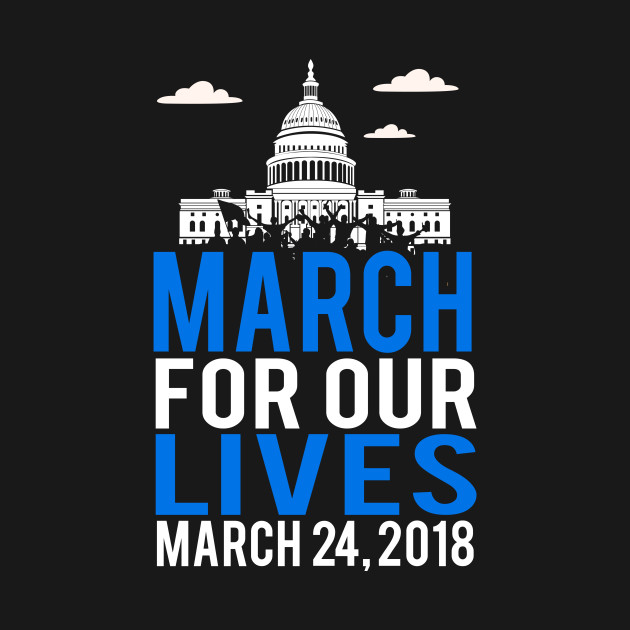
Let us pray with our legs, let us march in unison to the rhythm of justice, because I say enough is enough.”
— A Parkland shooting survivor.
Dear students,
Yesterday you sat in classrooms all over this country. Today you are marching all over this country, all over the world. Teachers, parents and other supportive adults are marching with you. We older folk marvel at your commitment and your resolve. We are proud of you. We cheer you on and pray that your efforts will bring positive change.
You are marching to demand that your lives and safety become a priority and that we end gun violence and mass shootings in our schools. You are relentless and persistent in your quest to end gun violence. You are standing tall, lifting your voices to proclaim “Enough is enough!”
Every day, 96 Americans are killed with guns. Since the massacre at Sandy Hook Elementary School where 20 children between six and seven years old were killed by a gunman, 7,000 children age 17 and under have been killed by guns.
Today, thousands of you have gathered to call violence by its true name. You are calling out the adults. You are confronting the NRA. You are challenging all who put their own self interest above the safety of our children,You are marching today for those who died and those who live. You are marching for the children who will be in classrooms in years to come, little ones who still have the joy of innocence. You are marching for their lives. You are marching for them. You are marching for all of us, and we thank you. Our hearts are with you,
For each of you, I offer this prayer.
God who holds ouryoung in your arms of grace,
Make of us a people who hold our children in the highest esteem, who give them respect and encouragement, who take their fears seriously, who commit ourselves to their safety and protection.
Protect them, God, as they march for their lives today.
Help them to know that their resilience and persistence might just change the world.
Make every city where they march a welcoming place, filled with people that open their hearts to the message our children speak.
Assure our children of the love that surrounds them and of the support that enfolds them. Assure them of our love and respect for them.
Continue to embolden them to demand change.
Infuse them with the courage to stand and the strength to speak truth to power.
Grant them an extra measure of perseverance.
Guide their steps. Ennoble their conviction.
Calm their fears and soothe their anxious hearts.
And may their reward be a world free of violence, communities infused with peace, classrooms that surround them with understanding, acceptance, protection and learning.
For your deep love for our children, O God, we give you thanks.
For your compassion toward our young who have been so deeply harmed, we give you thanks.
For your comforting presence with friends and families who have lost people they love, we give you thanks.
For your tears mingled with our own as we mourn the loss of innocence our children have experienced, we give you thanks.
For your abiding protection and mercy in our violent and frightening world, O God, we give you thanks. Amen.
*****
Fast Facts
Organizers of March for Our Lives expect millions of people to participate in today’s marches.
Acting out of their profound grief, students from across the country are fearless, empowered and motivated to speak out today as part of the March for Our Lives movement that was born out of the Valentine’s Day shooting in Parkland, Florida that killed 17 students and staff members.
President Barak Obama and First Lady Michelle Obama sent a handwritten letter to the students of Parkland’s Marjory Stoneman Douglas High School commending them for their “resilience, resolve and solidarity in helping awaken the conscience of a nation.”
Today, there are marches in over 800 sites across the country where students are still “calling BS.”
Marches are also taking place all over the world.
Florida students have planned a voter registration effort as a part of the march in Washington, DC.
14,000 shoes placed to tell a very, very sad story.
14,000 shoes laid out so that we will never forget our history.
Seven thousand pairs of children’s shoes were lined up on the southeast lawn of the U.S. Capitol building today in memory of every child who has died due to gun violence.
The 7,000 shoes in the “Monument for our Kids” installment represent every child that was killed by gunfire since the deadly shooting at Sandy Hook elementary school in Newtown, Connecticut, in 2012.
“We are bringing Congress face to face with the heartbreak of gun violence,” said one of the activists, Oscar Soria. “All of these shoes cover more than 10,000 square feet.”
Though most of the shoes were collected in a two week period, some of those were donated by families that lost their children to gun violence.
May God grant that we never forget this national grief. May our collective mourning bring lasting change.
A Prayer for Protection
Hear us, O God, protector of children.
Hear our prayer of penitence, our confession that we have failed to keep our children safe.
Hear our cries, as we shed tears of mourning for each child we have lost to gun violence.
Hear our cries of grief as we recall every danger that our children face.
Hear our voices shouting, “Enough!”
Hear our voices of commitment that make a sacred promise that we will do what must be done.
And most of all, God, ennoble us to holy action, and make us protectors of children.
We pray in the name of the Prince of Peace. Amen.
I spend a good deal of energy trying to understand myself. I wonder about the places my emotions go, how I got to where I am spiritually, where my deepest convictions came from. Self-assessment is a lifelong process. Saleem Haddad expresses the process with great insight when he writes this in his book, Guapa.
These days, I have been digging through my own rootedness, and as I have contemplated my roots, I recalled the deep childhood influence of the two people who literally nurtured my sense of rootedness — my Aunt Koula and Yiayia, my grandmother. It is clear to me that I was rooted in the devotion of these two strong women.
From my dear Aunt Koula, I received the kind of lavish love that is most surely a part of a Greek aunt’s DNA. And from my attentive (sometimes intrusive) Greek grandmother, fierce protection. One can thrive on lavish love and fierce protection, and I did thrive.
But my teen years brought change. I was no longer near my aunt, my grandmother, or even my mother. Instead, I lived with a harsh and abusive father, a broken man held together with alcohol and the sexual abuse of his only daughter. So I was a troubled teenager, adrift for a season and feeling that I had lost my rootedness.
But inside me was a persistent resilience. In the midst of abuse, I sent my roots even deeper into the nurturing soil, a soil that still held the nutrients placed there by my aunt and my grandmother. I managed to keep myself rooted. Through the pain of abuse, I became stronger as my roots pushed deeper into the earth beneath me. I found the Divine Source that made sure I would be rooted and grounded in love.
I was always a religious child with meaningful ties to my Greek Orthodox faith. But as an eighteen year old, I discovered an even stronger foundation of faith. I found God in a new way, reborn by a fresh faith in Christ.
My roots held me firm. I was stronger than ever before. And at times during those difficult years. I would fall into God’s arms of grace as I repeated the prayer that, through the years, would inspire me more than any prayer in scripture.
. . . I bow my knees before the Father, from whom every family in heaven and on earth takes its name. I pray that, according to the riches of his glory, he may grant that you may be strengthened in your inner being with power through his Spirit, and that Christ may dwell in your hearts through faith, as you are being rooted and grounded in love. I pray that you may have the power to comprehend, with all the saints, what is the breadth and length and height and depth, and to know the love of Christ that surpasses knowledge, so that you may be filled with all the fullness of God.
— Ephesians 3:14-19 New Revised Standard Version (NRSV)
To all around me, I appeared strong and vibrant during those years of chronic and constant abuse. Like a tree that displays the splendor of its verdant leaves in the sunlight, I displayed my own “leaves,” in spite of the destructive and pain-filled environment that was my life.
Budding. Growing. Greening. Branching out.
Outwardly, I seemed healthy and strong, but the real strength was below the ground, roots and taproots pushing deeper into the soil. What happens there is unseen — below the ground. But that which happens below the ground, unseen, literally fashions the glory of what is seen, above the ground, branches reaching high into the sky toward the heavens, pointing to the God of the ages.
It is miracle, really, a grace gift from the God who longs to plant us firmly and deeply into a holy foundation. And so we can withstand the storms and the winds when they threaten, even gale force winds that move us, but cannot destroy us.
For weeks now, women have been making heart-rending declarations — “Me too,” they cry, as they reveal their experiences of past sexual abuse. As for me, I say, “me too.” Add my name to the mournful list of women who have endured the pain of sexual trauma.
I was sexually abused literally dozens of times, by many men. The abuse began when I was about four years old and continued throughout my years as a young child. Sexual abuse did not stop through my teenage years. And even as an adult I faced sexual violation. Never, not one time, was it consensual.
Questions always bombard sexual abuse victims:
Who was the man who sexually abused you?
It doesn’t matter. You wouldn’t believe me. You would refuse to believe that I was sexually abused by more than one teacher, by a coach, by a Baptist deacon, by a Baptist missionary, by an employer, by my father and several of his poker playing friends. You wouldn’t believe it because you know them to be “moral, upstanding men” who are a part of your community.
Why didn’t you tell anyone?
I did tell. I told many people about every act of sexual abuse I endured, naming every man who hurt me. But I knew all the while that people simply would not take my accusations seriously.
Didn’t you believe that telling might have brought these men to justice and have prevented them from abusing other children?
No, I did not believe those men who caused me suchbdeep hurt would ever face the consequences of their crimes, because most of the people I did tell simply did not believe me. The men were known and respected and no one wanted to challenge that.
Why did you wait so many years to tell?
There are several aspects to this question. First of all, as I said, I did tell certain people who didn’t believe me. Not being believed serves to silence a victim who just doesn’t want to be labeled a liar, an attention seeker, a trouble maker, or worse, an emotionally unstable person.
Secondly, and most importantly, the passing years never take away the pain for someone who has been sexually violated. Sexual abuse is something you never forget. After 55 years, I still remember the time of day, being called into the teacher’s office next door to the classroom, the way he smelled, everything he said and did, and exactly what I was wearing. He was a person I had looked up to and admired. But on that day, he inflicted a permanent wound of my spirit which would become a scar on my soul. Once again, I mourned the loss of my childhood, of the innocence of a young child.
In these days, newsfeeds are constantly reporting the allegations of victims coming forward to say “me too.” The women have named their abusers — Bill Cosby, Kevin Spacey, Roy Moore, Al Franken, Harvey Weinstein, Donald Trump, George H. W. Bush. Ben Affleck, Roger Ailes, Lockhart Steele, Michael Oreskes, Mark Halperin, John Besh. Roy Price, Chris Savino, and the list goes on to name perpetrators in present time and perpetrators from the past. I do not say this lightly, but I have wondered just how many men might be holding their breath, hoping beyond hope that their victim(s) won’t expose them.
Wounds of my my spirit, scars of my soul
The unspeakable wounds heal in time, but the soul’s scars remain. And every reminder through these many years — a smell, a memory, a color, a song, and the cries of the women who are saying “me too” and telling the stories of their abuse. All of these are triggers that bring back the sharp, stabbing pain of the old wounds from long past. That’s what I have lived with throughout my entire life— multiple assaults, multiple times, multiple men.
We can come forth and tell our stories. We can give voice to our spirit’s wounds, no matter how far in the past they may be. We can speak of our soul’s scars. But the reality is that we will be judged as women who have fabricated a false story of sexual abuse for some sort of personal gain.
How dare we ask why a woman would wait forty years to bring light to this kind of story! For since the day it happened, she lives with vivid memories, feelings of shame, fear of relationships, the disappointment of betrayal by someone she may have admired. There is a catch in her throat when she speaks of it, and there are tears, lots of tears along the way.
Wounds of the spirit, Scars of the soul
The writing of Saint Francis de Sales describes the depth of this kind of pain with this thought:
The soul is aware of the delicate wound . . . as though it were a sharp point in the substance of the spirit, in the heart of the pierced soul . . . This intimate point of the wound . . . seems to make its mark in the middle of the heart of the spirit, there where the soul experiences . . . feels.
– Living Flame of Love 2.1
So is it any wonder that this kind of wound would leave a permanent scar on the soul?
I am deeply saddened, but also gratified, that so many women are speaking out. I hope beyond hope that their courageous stories will give light to a dark, dark sin that has destroyed so many people for so many years. I pray that we will have the moral, ethical, spiritual and political will to crush the societal culture of abuse and violence and in its place create safe spaces free of fear for every person, every child, every young girl, every woman.
At times, I really want to expose every single man that abused me. But I want peace more. I want a serene spirit and a quiet soul. I want to rest in a prayerful place where my heart can call out to a God that desires for us a world of peace, communities of care, homes that are havens of safety. I want to see God ennoble people of faith to wrap their arms around the hurts, pray for God’s light to dispel the darkness, and live out their sacred calling to be agents of a better, more excellent way. May God make it so.
I don’t see it much. There is an enormous, beautiful world that I simply don’t take time to see. I admire those who take nature into their souls, who breathe in the freshness of the wind, who see pictures in the sky, who hear music in birdsong. I imagine that those who know how to do that are emotionally and spiritually healthy. I imagine that life for them is pure joy.
The closest I can get to their experience is to read about it, and then to practice it in the smallest ways. I love the words of Bishop Steven Charleston that describe such a love for the earth.
I looked up, and as if in a dream I saw them, ancient spirits from the mesas, gliding on rain clouds above the desert, flashing lightning as they passed, primal spirits from the forest deep, rising up to dance on the trees, mountain spirits trailing snow white capes in the wind, and the spirits of the sea, moving like a storm toward the land. The Earth is not barren, but alive, filled with the spirits of life, the forces of nature around us, old powers from the time of beginning. God is not constricted to our temple walls, but roams the wild places calling to all who will look up, see the dream, and follow.
When I look back on my years of working with victims of violence, one young boy stands out. His story changed my life. I will never forget the day he said to me, “Why should I tell you anything? My dad would find out and things would be worse for me. You can’t help me.”
He was right. We couldn’t help him, in spite of our tireless efforts. No matter how we approached advocating for him in family court and with the Division of Children and Family Services, we failed. At times, we even made the situation worse. Eventually the corrupt family judge banned our staff from the courtroom.
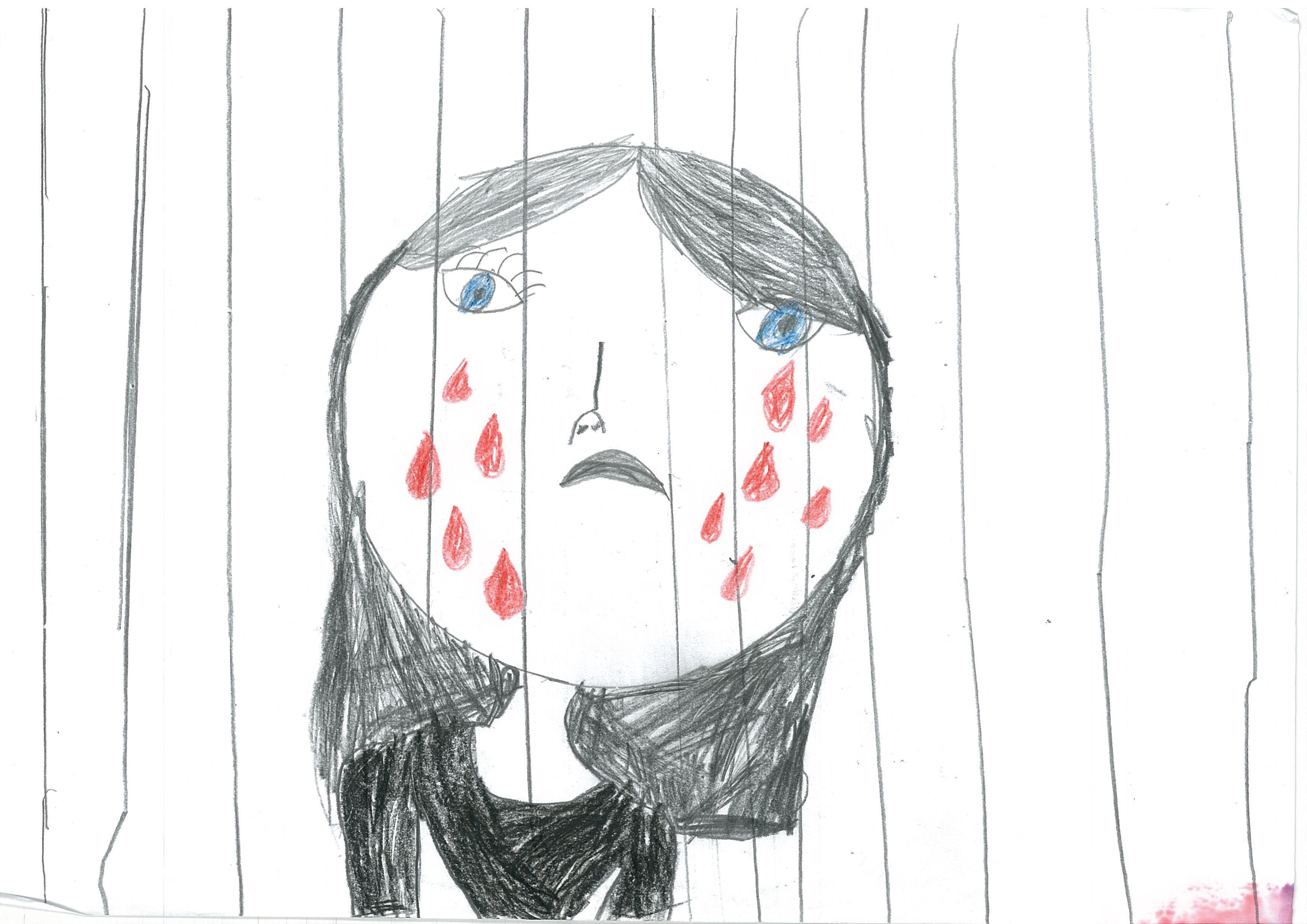
I have included in this post a picture this child drew. It is heartbreaking to know that a child would be forced to live with an abusive father. But it happens every day in this country. According to one conservative estimate, more than 58,000 children per year are ordered by family courts in the United States into unsupervised contact with a physically or sexually abusive parent.
Do we have the moral and political will to do whatever it takes to protect vulnerable children? Can our communities and our faith communities find way to advocate for abused children? Can we help end this national shame and protect the children? God grant that we never hear the words, “You can’t help me.”
Looking back on various dates leads to nostalgia at best, horrific memories at worst. Almost exactly 53 years ago yesterday – on May 2 in 1963 – the Children’s Crusade began in Birmingham, Ala. as thousands of school aged children marched to protest segregation and were met with hoses, attacked by police dogs, and jailed.
It’s a scene we can hardly imagine today, and yet there are so many ways even in 2016 that we fail to protect our children. There should be no child in America going to bed hungry. No child in this country should have to sleep in alcoves on city streets. Children should not be victims of trafficking. Children should not have access to weapons and drugs. Children should not be used as pawns between warring parents. Children should not be victims of court-ordered abuse. Children should not be continually surrounded by violence. Children should not be incarcerated, rather they should be offered restorative justice. Children should not be physically, emotionally, spiritually, educationally or sexually abused.
Children should live in loving, nurturing families. They should attend clean, safe schools where they can get a quality education. They should have health care and mental health services.
They should be a part of caring, protective communities.
Shame on us if we fail to protect every child. Ifany of you put a stumbling block before one of these little ones who believe in me, it would be better for you if a great millstone were fastened around your neck and you were drowned in the depth of the sea. NRSV









 She was like the moon—part of her was always hidden away.
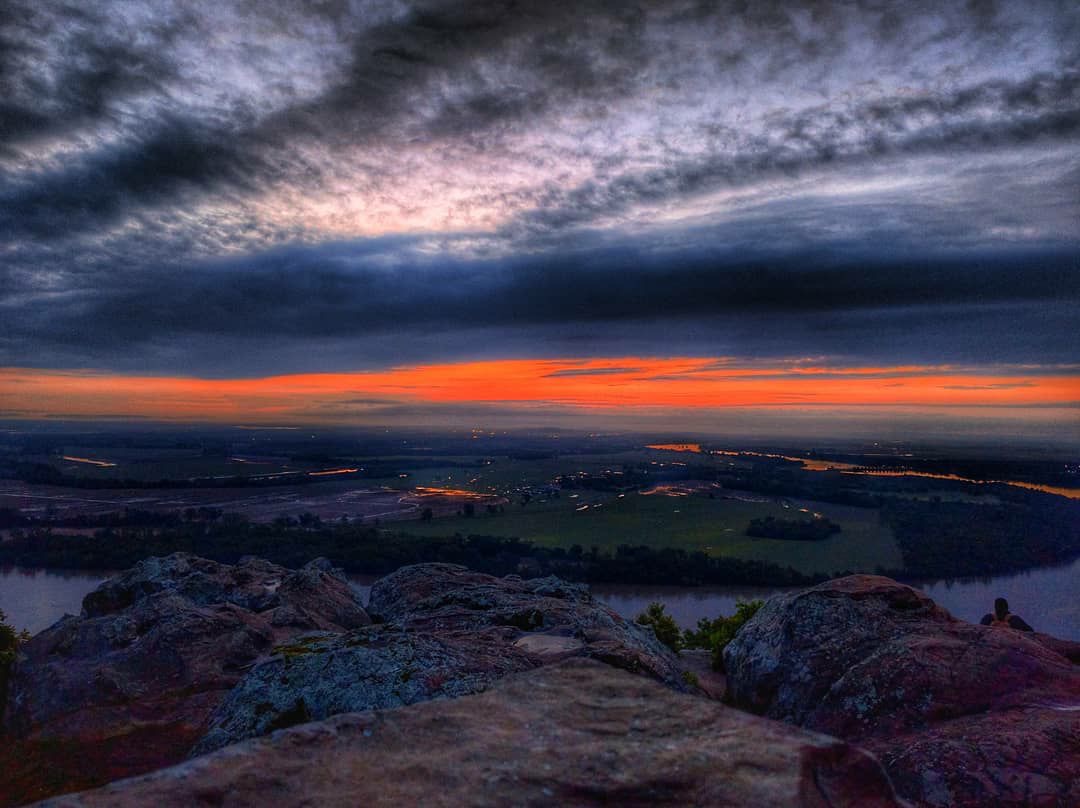 I could decide to stand on this side wondering what life might hold on the other side. I can see the brilliant sunrise, perhaps a symbol for a bright new life for my children. I can see the tiny lights of dwellings or businesses. I’m not sure what they are but perhaps each tiny light is a warm welcome, a place of refuge, a safe haven.
 Let us pray with our legs, let us march in unison to the rhythm of justice, because I say enough is enough.”
 14,000 shoes placed to tell a very, very sad story.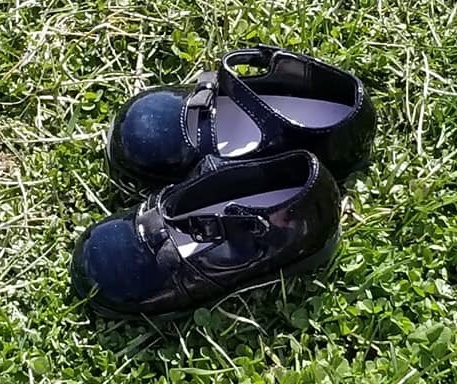

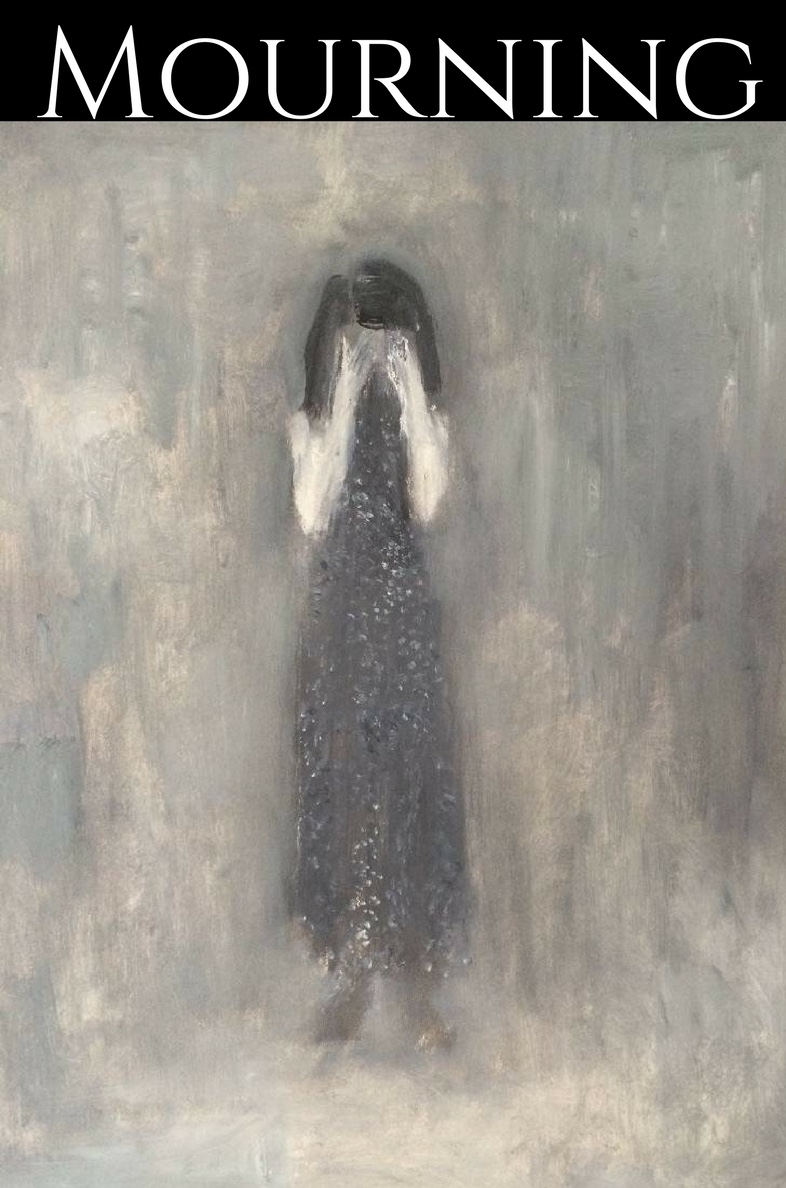 There are no words, no reasons, no explanations, no comfort.
 For weeks now, women have been making heart-rending declarations — “Me too,” they cry, as they reveal their experiences of past sexual abuse. As for me, I say, “me too.” Add my name to the mournful list of women who have endured the pain of sexual trauma.


 God of the Sparrow 🌱 By Kathy Manis Findley