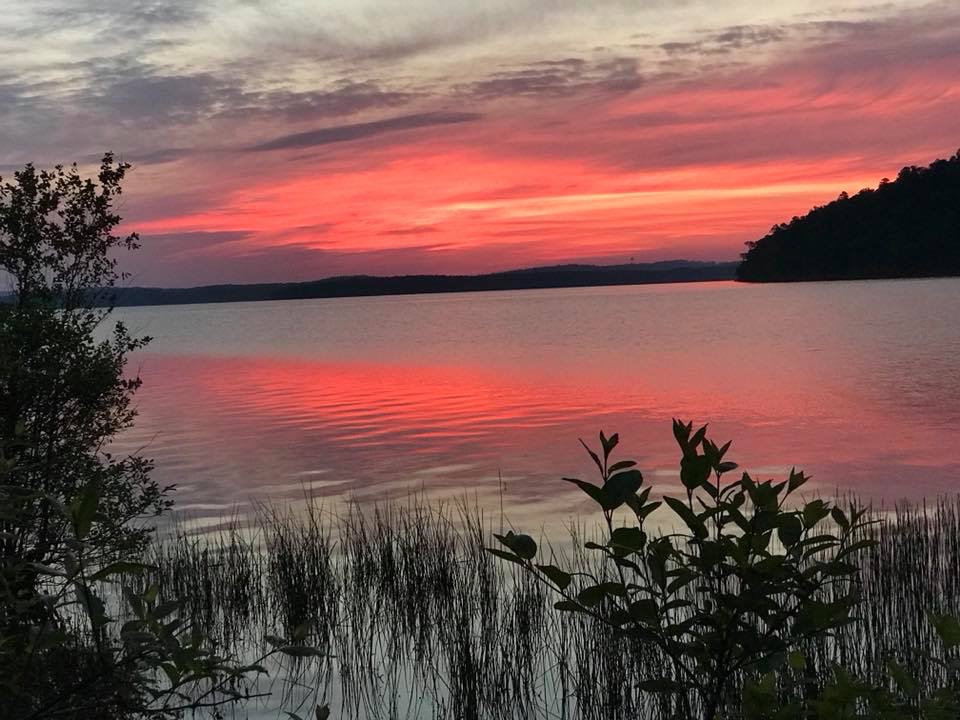
Loon Park on Arkansas’ Lake Maumelle. Photography by Steven Nawojczyk. Entitled “Beauty. Serenity.”
In the middle of the natural beauty of Arkansas, my friend took a photograph and entitled it “Beauty. Serenity.” It prompted me to ponder that for a few moments.
Beauty. Serenity.
I wondered what in my life brings beauty and serenity to me and to those around me. The questions trickled through my mind slowly as I tried to place qualitative and quantitative strictures on beauty and serenity. (As if one could really quantify the whole of what beauty is or see pure serenity through a human lens.) My quest to try to interpret beauty and serenity went on into the night and into the rise of a new day. Still I could not nail it down. It is as elusive as a butterfly in flight, defying explanation.
As for beauty, it seems to be something I can see, something I can look at and see what lies beneath shapes and colors and texture and form. It is when something I see takes on life, and in it, I see a spark of the Divine.
To truly see beauty, I must intentionally expose myself to it and to its full potential. The blossom of a flower. The trees in a verdant forest. The ocean waves moving gently upon the shore. The sparkle of a flowing stream. The majesty of a range of mountains and the vibrant green of a valley.
In each of these visual images, I might very well see a spark of the Divine. But I must first look, and see, and linger before such beauty long enough to see its depth. I must look into a blossom and into the leaves of a forest. I must gaze upon the glory of a mountaintop and walk slowly through a valley of green. I must sit at the edge of the sea and watch the waves greet the shore.
And then there’s serenity, the state of being that always seems to escape me. Serenity is the peaceful sense of calm that envelops a person’s soul and spirit. But I must first allow it, embrace it, and welcome it. When I can do that — and I readily admit that I seldom can — the spark of the Divine I will see most clearly is the light of the spark within myself. I love the wonderfully positive affirmation written by Llewellyn Vaughan-Lee.
We have in us a divine spark that you can see. It’s a Light that shines in the human being. It’s our direct access to truth, our direct access to God. The purpose of all the spiritual practices that exist are to awaken that spark, to give it life, to give it energy, so that it can transform you.
God, I would be transformed. Awaken that spark within me, so that its light will become a part of my very soul, Enliven in me the spark that brings transformation to every part of me that yearns for your Divine impulse.
The spark of the Divine is beauty and serenity all at once. It is in the moments that stop us in our tracks that we can truly see the beauty around us and within us.
It is in those unforgettable moments of life’s splendor, when we allow serenity to fully embrace us in gentle arms of peace, that we finally know deep rest.
It is when beauty and serenity link arms to surround us that we can truly know the spark of the Divine within. I recognize that spark, ever so often, in just a handful of my best moments. Even for that seldom-experienced grace, I am most thankful.
So I wish for you the same kind of grace, that you might see beauty, know serenity, and visualize, within yourself, the spark of the Divine. The blessing I leave with you is best expressed by the 14th Century Persian poet, Hafiz.
I wish I could show you, when you are lonely or in the darkness, the astonishing light of your own being.
Art: “Songbirds in Apple Blossoms” by James Hautman.
As I sit on my porch this morning in a light, refreshing rain, the most prominent sound I hear is joyous birdsong, different strains of music from a variety of birds that co-habit in our tiny bird sanctuary. A statue of St. Francis appropriately stands among the feeders and the suet. The hummingbird feeders are in a separate spot, providing a banquet of sweet nectar to these delightful birds, whose fast moving wings create their most unique song.
I love to listen to the songbirds, and we are graciously blessed to live in a neighborhood with very few sounds — no traffic, no motorcycles, no speeding cars, usually not even people voices. Just the birdsong, with an occasional tree frog and the wonderful southern gift of cicadas.
In my opinion, every bird is a songbird. According to scientists at The Nature Conservancy, the term “songbirds” refers to a wide range of bird species. Songbirds typically include finches, sparrows and warblers, but most often when someone is defining “songbird” they refer to beautifully colored birds that we’ve never heard of. The Nature Conservancy website features three: the Dickcissel, the Blackburnian Warbler, and the Kirtland’s Warbler.
I have never seen any of those birds, but I have heard lots of glorious birdsong. So I stand by my opinion that every bird’s a songbird. And in my better moments, I hear their songs as an offering to God, their songs of praise to God who gave them voice. During those times, I am drawn to the many beautiful and lyrical Psalms. This is one that is particularly moving to me
Praise the Lord, my soul.
Lord my God, you are very great; you are clothed with splendor and majesty.
You wrap yourself in light as with a garment;
You stretch out the heavens like a tent and lay the beams of your upper chambers on their waters.
You make the clouds your chariot and you ride on the wings of the wind.
You make the winds your messengers . . .
How many are your works, Lord!
In wisdom you made them all; the earth is full of your creatures.
There is the sea, vast and spacious, teeming with creatures beyond number — living things both large and small.
When you send your Spirit, they are created, and you renew the face of the ground.
You make springs gush forth in the valleys; they flow between the hills,
You give water to all the beasts of the field; the wild donkeys quench their thirst.
The birds of the sky nest by the waters; they sing among the branches.
— Psalm 104: 1-3;10-12; 24-25, 30 (paraphrased)
Many of the Psalms urge us to sing, to praise God with our voices.
Sing to the Lord a new song . . .
I will sing to the LORD all my life; I will sing praise to my God as long as I live.
As far as singing, well sometimes we are reluctant, holding back an imperfect voice that does not always make pleasant songs. Sometimes we are convinced that our singing would not be such a worthy offering of praise. So we should probably remember that every bird’s a songbird. And as for us humans, it might help to remember that every person has a voice, every heart has a song, every soul has a melody.
Then sings my soul, my Saviour God, to thee. How great thou art! How great thou art!*
Amen.
* From the hymn, “How Great Thou Art,” a Swedish traditional melody and a poem written by Carl Boberg (1859–1940) in Mönsterås, Sweden in 1885. It was translated into German and then into Russian and became a hymn. It was translated into English from the Russian by English missionary Stuart K. Hine, who also added two original verses of his own.
Still waters near Pulaski County, Arkansas. Photo by Steve Nawojczyk.
I long each day to live beside still waters, to dwell in serenity, to find peace in the depths of my soul. Not such a simple task, that.
The problem is that life is not that much about still waters. It’s more often about churning waters and swelling currents. Don’t get me wrong, I love the sound of waves crashing in the ocean and then coming to the shoreline with a special kind of energy. I love the rolling of a mighty river, the trickling sounds of creeks, and the splashing sounds that streams make asthey ripple over stones.
But the sheer silence of still waters . . . That’s when you can skip a rock across the top of the water and watch its antics. In still waters, you can hear the sounds of fish flying up to the surface and turtles paddling almost silently acreoss the waters with only their heads visible in search for a morsel of food. In still waters, a family of ducklings can move through the waters with just a hint of a sound and the graceful swan can glide by with hardly any sound at all while its webbed feet move swiftly to push the waters aside.
Those still waters! Their silence and their calm show us how to be.
The truth is that rushing waters do describe our lives at times. That is our reality. Life brings what feels like raging storms. Life assails us with a power that reminds us of the breaking waves of the ocean. In this life, we come upon rivers too deep and too wide and too turbulent to cross. We will feel a force against us that may come because of serious illness or the loss of a loved one. It may come with the pain of broken relationships or with devastating financial hardship.
Life brings brokenheartedness, but it brings brokenheartedness in the midst of grace. For on this journey we call life, we travel with a divine guide, One who does lead us beside still waters. And it is there that our soul is restored and comforted in the midst of green pastures of sacred serenity and holy calm.
I am thinking, of course, of the words of the Psalmist.
The Lord is my shepherd, I shall not want.
He makes me lie down in green pastures; he leads me beside still waters;
he restores my soul.
He leads me in right paths for his name’s sake.
Even though I walk through the darkest valley, I fear no evil; for you are with me;
your rod and your staff — they comfort me.
— Psalm 23:1-4 (New Revised Standard Version)
I also think of my friend, Steven Nawojczyk, who is finding his much-needed peace in the forests, mountains and valleys of Arkansas. His stunning photograph illustrates today’s blog post. With his beautiful dog and companion, Feebi, he follows a path of serenity and healing, hiking through nature’s beauty most every day.
His life has not been an easy one. As a public servant — many years as Pulaski County Coroner — he has seen far too much anguish for one person. He was integrally involved, literally in the trenches, with ending and preventing Little Rock gang violence, and has been a staunch champion for young people.
He faces serious illness and harsh treatment in his retirement. but he knows that life really does have a pathway that goes around the dangers, toils and snares. He knows that he and Feebi will find lightheartedness in exploring a forest or watching a flowing stream. He knows that the simple joy of a mountain view can bring transformation. He knows about peace, and he has chosen to follow the life path that passes beside still waters. I admire him. I have always admired him, but even more so now as I witness his unwavering commitment to serenity.
That’s what it’s all about in the end — a commitment to serenity, a firm resolve to walk beside the still waters of life, and in that intentional journey, to find our souls.
May the grace and peace of God fill your soul, and may your journey, wherever it leads, bring you serenity.
Terlingua, Texas. Astrophotography of the Milky Way over a field of Chisos bluebonnets.
As I write today, I think of all the ways we are ordinary extraordinary folk. We are complex at times, immersed in thoughts deep and weighty. In the next moment, we may well find ourselves acting like common, ordinary people that avoid deep thoughts at all costs.
We are divergent. We are a kind of paradox, common and uncommon all at once.
I recently saw the stunning photograph featured in today’s blog post. I was intrigued that a photographer was gifted enough to capture the juxtaposition of common flowering bluebonnets and the ethereal brilliance of the Milky Way. It is the kind of breathtaking image that makes me stop in my tracks, suspend time for a moment, and lose myself in the idea of earth and sky.
I studied the common bluebonnets and the uncommon Milky Way above them. And I wondered, “Is there something extraordinary in my ordinary life? Am I just a simple, common person? Or is there something uncommon that lives with the common in me? Inside me, in that place that even I do not fully understand, does common and uncommon grow together, entwined and twisted into one?”
As I pondered these questions that made little sense to me at the time, I read a piece written by my friend, Ken Sehested. I knew instantly that I would borrow one of his intriguing thoughts.
Uncommon commoner.
It worked for me. It defined me, the common part of me and the not-so-common part of me. You see, like most people, there is more to me than anyone can see. All of us can claim that. We are a people that can gaze skyward at the Milky Way while we sit on the ground in a patch of bluebonnets. We are a people of inner strength and resilience, the kind of resilience that makes it possible for us to endure whatever life throws at us and live to tell the story. We are a people with the kind of resilience that makes us uncommon commoners.
I know this because I have seen it time and time again up close and personal. I know this because I have stood at the bedside of a dying woman who was singing hymns of praise to God. I know this because I have kept vigil with a mother who witnessed her son being removed from life support after an accident, and as it was happening, she began to pray through her heavy sobs of grief. I know this because I walked out of the emergency room with her while she shared cherished, happy memories of the son she had just lost.
Uncommon commoners.
Ken Sehested made this so clear with these words.
What makes all of us commoners uncommon is when we experience the pain of trauma up close and personal, find the resilience to endure, take a hammer of righteous rage to that trauma and pound it on the forge of conviction that another world is possible, another way will open if we hold out, hold on, hold up, and hold over . . .
— Ken Sehested
Ah yes. We have seen, and we will see again, the pain of trauma. We will find within ourselves the resilience to endure. We will “hold out, hold on, hold up, hold over” because God has graced us with hope, enduring and abiding hope.
Life will always give us — uncommon commoners that we are — vivid fields of bluebonnets growing in the dirt and a sparkling Milky Way in the sky above. Thanks be to God.
I have had a lifelong love affair with trees. Trees have inspired and strengthened me in many ways. The huge magnolia tree from my troubled childhood was a place of safety, giving me a place to hide from danger, offering to me a place to feel protected.
Miss Martha’s sprawling fig tree on the edge of our back yard bore wonderfully unusual fruit, soft and sweet and delectable. Her plum trees were loaded with plums, sweet and sour and delicious both ways. The fond memory I have of Miss Martha’s trees is punctuated with an angry Miss Martha catching us stealing figs and plums, yelling at us with an ominous voice, and chasing us from her yard.
The African plains graced my life with the gift of watching giraffes feeding on flat-topped thorn trees and elephants pushing their weight against misshaped baobab trees. The colorful swaying of ten foot tall bougainvillea trees was a mesmerizing sight. And in Africa, poinsettia plants are trees, trees like I had never before seen.
Beyond this crash course on botany, and dendrology, I share a heart-and-soul love of trees. It is almost a spiritual connection for me, one that keeps me fully grounded, one that represents life, growth, rootedness, protection and sheer enjoyment.
It’s possible, you know — we learn it from the trees —
to be full of grace and humor, dancing in the light
while remaining fully grounded,
rooted in the gravitas of being . . .
– Diane Walker
God is pleased, I think, when we dance in the light full of grace and humor. We learn it from the trees, Diane Walker says. I believe she’s right. So today, I will be spending a few moments sitting in the shade of our Chinese Tallow tree and swinging underneath a towering Pin Oak. Perhaps in the leaves that rustle gently in the breeze, I will hear God’s whispers.
Welcome, Spring! We greet you joyfully on your first day and, as always, we’re glad to see you in the tiny buds on the trees and in the almost opened blossoms on the bushes. You remind us of new beginnings and fresh starts. You bring us new hope for resurrection. You call out to us to run barefoot in the greening meadows. You show us nature waking up.
You are our proof that we survived another winter. Now we can feel the sun’s warmth instead of frigid winds. We can sing our songs in soft spring rains instead of in winter storms.
I love the following narrative that is such a lovely description of Spring.
Meanwhile, spring came, and with it the outpourings of Nature. The hills were soon splashed with wild flowers; the grass became an altogether new and richer shade of green; and the air became scented with fresh and surprising smells — of jasmine, honeysuckle, and lavender.
― Dalai Lama XIV, Freedom in Exile: The Autobiography of the Dalai Lama
So we are waiting with great anticipation for all the special things you bring us — brilliant cherry blossoms, a fresh crop of spring grass, verdant fronds of fern, blooming azaleas, tulips and daffodils, blossoms of yellow, pink and purple. And bugs, lots of bugs, more bugs than we really want.
Even so, we really do welcome you. Thanks for leading us gently into summer’s heat. We need that.
Sometimes all of us need a way to escape the ordinary day. Sometimes we need silence and solace. Sometimes we need the shimmering colors of a forest and the scents that waft through the trees. Sometimes we just need to leave behind all the concerns that hold us in bonds.
I imagine that my place of solace is in a forest. It’s only my imagination, mind you, because I never ever enter a forest. It’s a shame really, because I think I would be nurtured and comforted in a forest. I think I would find inner renewal and refreshment. I think that in a forest, I might very well hear God in the whispers of the branches.
Regrettably, I can only imagine. I will probably never make my way into a forest. Too many, bugs, poisonous plants, and creatures. Still I imagine spending some quiet time in a forest. I recently read a piece written by Ishmael Beah that said “The branches of the trees looked as if they were holding hands and bowing their heads in prayer.”
His words confirm that perhaps the forest is a place I really do need to visit, and maybe even to hold hands with the trees and bow my head in prayer. It would be a lovely escape, a life-giving escape. It would be a place that would call to me to forget the things that worry me and hold me fast.
Patricia Anne McKillip is a creative author of fantasy and science fiction novels. One of her novels, Winter Rose, expresses the way I feel about the notion of an escape into silence and solace. This is what she wrote:
I did not want to think about people. I wanted the trees, the scents and colors, the shifting shadows of the wood, which spoke a language I understood. I wished I could simply disappear in it, live like a bird or a fox through the winter, and leave the things I had glimpsed to resolve themselves without me.
I’m off to find a forest. Before spring breaks through, I just might find silence and solace in the whispering branches of the towering, bare trees. I might even hear God.
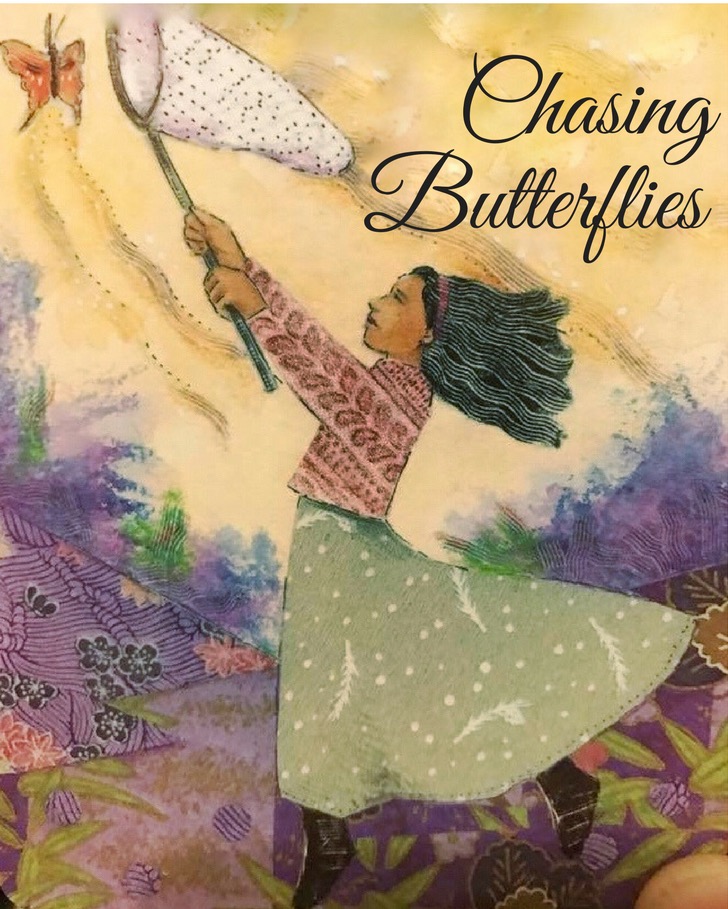
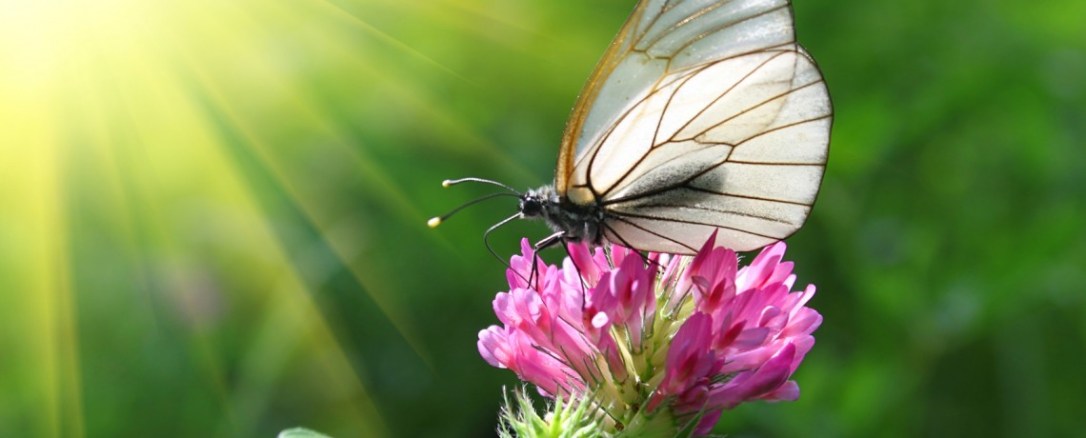
🦋 I have a childhood memory of chasing butterflies, trying to catch even one of those stunning winged creatures in a net. It seemed easy enough. Butterflies aren’t extremely fast flyers. Rather, they flutter around flowers and pause frequently in front of a bloom.
Try as I might, I never caught a single butterfly. As a child, I lamented my failure, but as an adult, I actually see the joy in the chase rather than the failure of the catch. Richie Singh has the right idea about the butterfly-chasing experience.
The joy about chasing butterflies is not the satisfaction that comes at the end, but the path that takes you there;
The irony about chasing butterflies is that sometimes you’ll get so lost in the chase, you won’t realize that you’re left chasing thin air;
But the agony about chasing butterflies is that sometimes you will keep on chasing, hoping, that a butterfly would materialize out of thin air.
― Richie Singh
Still, it’s not so bad to hope. As long as I chase with hope, it’s worth my time. I may never catch a butterfly in a net, but along the way, I’ll enjoy the chase and the hope.
To see the holy in the ordinary . . . that is something to aspire to. Seeing the holy in the ordinary can change one’s life, making mundane activities into sacred moments. Learning to savor our days and the experiences that fill our lives can transform us.
Normally, we are a people content with the unremarkable, everyday moments, accepting the usual happenings without thought. But what if the flutter of butterfly wings prompted a season of contemplation? What if birdsong became a symphony of the spirit? What if the gentle breeze rearranged the story of our souls?
Macrina Wiederkehr writes of bringing the longings of our hearts into every present moment. She writes about finding the sacred in the ordinary by gathering up joys and sorrows, struggles and beauty. She urges us to gather the dreams and hopes of every hour that “they may be consecrated at the altar of daily life.”
Oh, that our lives might be open to holy moments and sacred days. God would be well pleased.
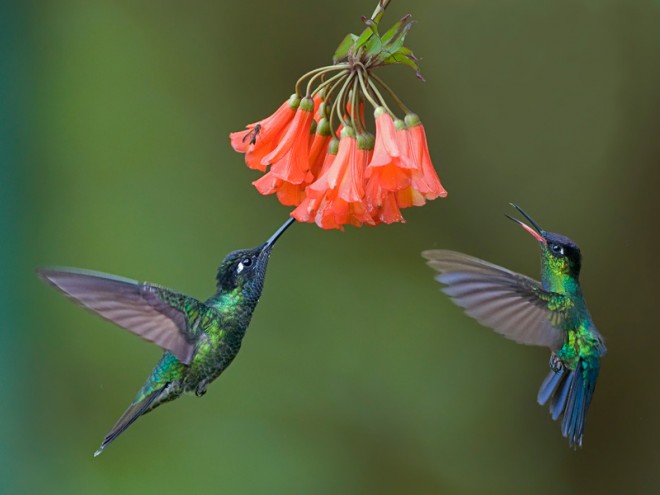
I find so much beauty in small things. Nothing delights me more than the hummingbirds that zoom across my front yard feeding and playing chase with one another, daring each other to approach the feeder.
How often we forget the message of small things, especially when life’s big things are in disarray. But the small things help us focus on special moments, special people, special events that we take for granted.
I cannot express this message better than Bishop Steven Charleston.
The message is in the small things. Sometimes when we are focused so intently on the major issues of our lives, we walk right past the small signs of hope scattered around us like wildflowers. The beauty of a summer sunset, the kindness of the shopkeeper, the call from an old friend, the playfulness of the family pet: all of these things and a thousand more are the steady stream of grace that flows past us each day.
Indeed, we are greatly blessed by the small graces that stream through our lives.
What a beautiful thought from the hymn, “Great Is Thy Faithfulness.” The hymn, one of my favorites, is filled with comforting images that describe the faithfulness of God. The words were written in 1923 by Thomas Obediah Chisholm, and the hymn continues to bless to this day.
A few weeks ago, I experienced a long night of fearfulness. In the early hours of the morning, I found myself still wide awake. Unable to sleep, my mind turned to concerns and worries that I could not shake. From out of nowhere, this hymn came to mind and I began singing silently in the night. A sense of comfort and protection swept over me, and I was again reminded of the deep comfort that this hymn brings. These words stilled my soul and sustained me until the light of morning.
“Great is Thy faithfulness,” O God my Father,
There is no shadow of turning with Thee;
Thou changest not, Thy compassions, they fail not
As Thou hast been Thou forever wilt be.
“Great is Thy faithfulness!” “Great is Thy faithfulness!”
Morning by morning new mercies I see;
All I have needed Thy hand hath provided—
“Great is Thy faithfulness,” Lord, unto me!
Summer and winter, and springtime and harvest,
Sun, moon and stars in their courses above, Join with all nature in manifold witness
To Thy great faithfulness, mercy and love.
Pardon for sin and a peace that endureth,
Thine own dear presence to cheer and to guide;
Strength for today and bright hope for tomorrow,
Blessings all mine, with ten thousand beside!
How true is the thought, “morning by morning new mercies I see.” I am moved by the words of Bishop Steven Charleston who writes of the new beginning of every first light, how we are set free by the new light on more mornings than we can count. These are his words.
Here is the hand of morning, coming so quietly to part the curtain, letting in the first light, welcoming the wide-eyed day into the sleepy corners of our lives. A new beginning is the miracle that awaits each one of us. We are the people of new beginnings, each one of us, brought here by more mornings than we can count, fresh chances from an older life, a turn of events, a change of mind, an unexpected friend, how many different mornings have we seen? You and I are made of morning, set free by the new light, forever being welcomed into a life that is just beginning.
Life does bring dark nights, times that challenge our hearts and assault our spirits. But there is great comfort in knowing that the morning dawns, every time, bringing new hope and fresh beginnings. God is faithful to be present with us in the deep watches of hard nights. God also is the creator of new mornings and new mercies.
What morning mercies are found in common images of nature! Nature shows us the extraordinary beauty of ordinary places, places that can revive our spirits and enliven our souls. Such a place is captured in the photography of J.V. McKinney who graces us with a view of one of the lakes in North Little Rock, Arkansas.
And I share with you a morning prayer written by James Richard Lahman in his book, Prayers of the Hours.
Caring God who watches over, nourishes, and invites me into union,
As I begin this new day, I offer thanks for the sleep, the rest, and the restorative gifts to my body and mind.
Holy God, you have watched over me while I did not know it.
You have awakened me with wholeness of body and spirit.
As you have blessed me in the silent watches of the night, enable me to make this new day a gift to you.
Visit my energies, skills and talents with a touch of divine grace so that when night comes I may present my gift with joy and thanksgiving.
Great Companion of all people, Holy Spirit, Truth Divine, to you I pray. Amen
I don’t see it much. There is an enormous, beautiful world that I simply don’t take time to see. I admire those who take nature into their souls, who breathe in the freshness of the wind, who see pictures in the sky, who hear music in birdsong. I imagine that those who know how to do that are emotionally and spiritually healthy. I imagine that life for them is pure joy.
The closest I can get to their experience is to read about it, and then to practice it in the smallest ways. I love the words of Bishop Steven Charleston that describe such a love for the earth.
I looked up, and as if in a dream I saw them, ancient spirits from the mesas, gliding on rain clouds above the desert, flashing lightning as they passed, primal spirits from the forest deep, rising up to dance on the trees, mountain spirits trailing snow white capes in the wind, and the spirits of the sea, moving like a storm toward the land. The Earth is not barren, but alive, filled with the spirits of life, the forces of nature around us, old powers from the time of beginning. God is not constricted to our temple walls, but roams the wild places calling to all who will look up, see the dream, and follow.
What a clear, bright day this is! Hot, yes, but still bright and beautiful. As I sit here with my morning coffee, I am struck at how grateful I am for my life. It does present its challenges, but for the most part, I am well, safe and loved beyond measure.
It is true that when I don’t feel well, I see the dimmer side of life. I worry and fret over my health. I wonder what the future holds. I entertain dark thoughts of fear and uncertainty. But those days come and go, leaving me in relative contentment and in gratitude for all the things I enjoy.
What a delightful sight to watch dozens of hummingbirds from my kitchen window! What a joy to hear from my grandchildren with a new photo! What fun it is to watch my flowers grow (or maybe wilt) in the sunlight! What a wonderful thing it is to be close to a loving family! What wonderment there is in enjoying all things bright and beautiful!
I love the hymn text written by Cecil F. Alexander and published in 1848:
All things bright and beautiful,
All creatures great and small,
All things wise and wonderful:
The Lord God made them all.
Each little flow’r that opens,
Each little bird that sings,
He made their glowing colors,
He made their tiny wings.
The purple-headed mountains,
The river running by, The sunset and the morning
That brightens up the sky.
The cold wind in the winter,
The pleasant summer sun,
The ripe fruits in the garden,
He made them every one.
The tall trees in the greenwood,
The meadows where we play,
The rushes by the water,
To gather every day.
He gave us eyes to see them,
And lips that we might tell
How great is God Almighty,
Who has made all things well.
Grateful today for all things bright and beautiful!
How can this be a melancholy day? The sun is shining. The flowers are blooming. A gentle breeze cools the day. Yet, melancholy days can come upon us, days when we feel that discouraged feeling that something is missing. Loved ones may be far away. Physical pain may be getting us down. Any number of circumstances can make for a melancholy day.
Today, I am there, feeling a bit sad, missing my grandchildren, concerned about my health. It happens. There will always be days like this. But we learn to get past them to a more hopeful mood. Even on melancholy days, aren’t there things to celebrate? Like relatively good health, loving family relationships, a comfortable home. Osho writes about learning to be celebrators.
Be the celebrators, celebrate! Already there is too much—the flowers have bloomed, the birds are singing, the sun is there in the sky—celebrate it! You are breathing and you are alive and you have consciousness, celebrate it!
― Osho, Creativity: Unleashing the Forces Within
How true that is! Breathing and alive, we can celebrate the day. We can enjoy the blooming flowers, the singing of the birds, the bright sun in our sky. We can celebrate our life!
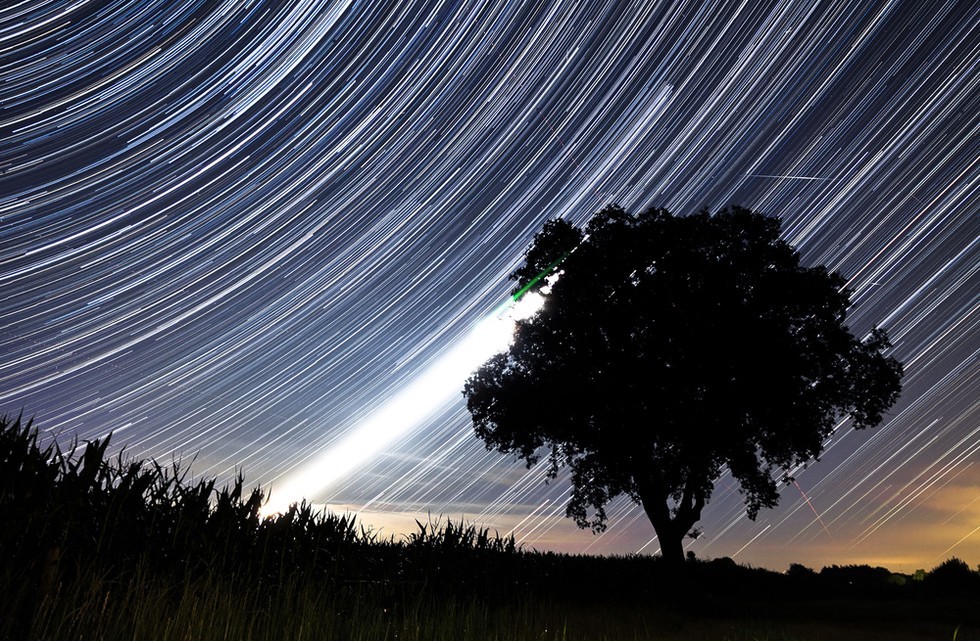
This year’s Perseid meteor shower might be the most magical thing you’ll ever see. We all love a good astronomical event taking place above our heads, especially if it’s shooting beams of light through the sky. This shower in particular has been well known since the year 1992 and will only occur once more, in the year of 2026.
The sky began falling on July 17th, and we will be able to see these wonders until the 24th of August. The best time to be outside viewing this amazing astronomical phenomena are between the days of the 11th and the 13th of August. That’s now.
This time around, the Perseid meteor shower is expected to be the most vivid and beautiful spectacle compared to the last time it made it’s great debut. The reason why we are able to view this grand performance of the stars is due to the comet shedding pieces/fragments that scatter into our atmosphere.
The fragments are hurling toward the Earth’s gravitational pull at about 100,000 miles per hour, which burns them up, creating a small burst of light just as they are about to poof into thin air.
What an exciting event that reminds us of the vastness and beauty of our universe. I hope to make time to watch for the showers of meteors and take in the moment of magic. I know it’s science, of course, but to me it’s magical, a sight to behold that may appear just once in my lifetime. So don’t miss this moment of magic. Go outside into the night. Take your love for the universe and your love for the world.
When I look at your heavens, the work of your fingers,
the moon and the stars that you have established;
what are human beings that you are mindful of them,
mortals[a] that you care for them?
Yet you have made them a little lower than God,[b]
and crowned them with glory and honor.
Psalm 8:3-5 (NRSV)
Thanks be to God! (Information from higherperspectives.com)
A new moon holds a hint of promise to me. It’s a sign of hope, an event that will lead to something fuller. It marks starting over, the beginning of something that will fully bloom into something more magnificent. New moon refers to the first visible crescent of the moon.
Some religious groups, such as the New Israelites of Peru, keep the new moon as a Sabbath of rest. No work may be done from dusk until dusk, and religious services run for 11 hours, although a large number of the devoted worshippers spend 24 hours within the gates of the temples, sleeping and singing praises throughout the night.
In many faith traditions, the new moon is viewed as a special time. For me, the beauty of a new moon is breathtaking. Though my faith does not commemorate the new moon in any special way, I am often moved to offer praise to the God who created it. And praising God is always a good thing.
When the moon is new . . . It’s a time of wonder, a promise of hope, a new beginning, and a very appropriate time to praise the One who created the moon and the stars as gifts for us.
Head bowed down, I listen to the stories on the news with deep sadness. I listen to my own inner voice telling me that I am aging. I listen to others speak of aging with terms like loneliness and discouragement. I listen to the voices of the young who speak fear about their future.
These, and a myriad of other stories of despondency, try to hold me down. And yet, my faith still rises up within me in its reach toward hope. The words of Bishop Steven Charleston never fail to inspire me.
Rise up in hope again today, no matter what may seek to hold you down. If the world around you seems dark, then have faith that your own light will only shine the brighter. Your witness is needed now more than ever. Do not bow your head before the story you hear being told by others, but lift your voice to tell your own story, a story of beauty and wonder, a story of love and struggle, the narrative of a life lived and lived well, a sign of faith for all to see. Rise up in hope again today, for you are living testimony to what hope can do when hope is set free.
As we tell our stories, you and I, we can share lives of beauty and wonder in the midst of struggle. We can give witness to a life well lived. We can rise up in hope and set it free!
Color blankets the world with joy. The green leaves rustle in light breezes. The tall amber colored grasses sway in the wind. The sky glistens with blues, pinks and purples and dancing white clouds. The flowers wear all shades and hues of every color imaginable.
I don’t want to miss it. I want to see every shade of color and be grateful that God gave me eyes to see. I want to always and forever give thanks to God for painting the world. I want to rejoice for the beauty of nature that surrounds me.
Most of all, I want to honor a Divine Creator who looked upon all that was made and said “It’s good!”











 God of the Sparrow 🌱 By Kathy Manis Findley