This is a moment to remember and celebrate! By a vote of 53 to 4, we will call a Black woman “Justice!” The historic pronouncement was made in the United States Senate Chamber by another Black woman, Vice President Kamala Harris.
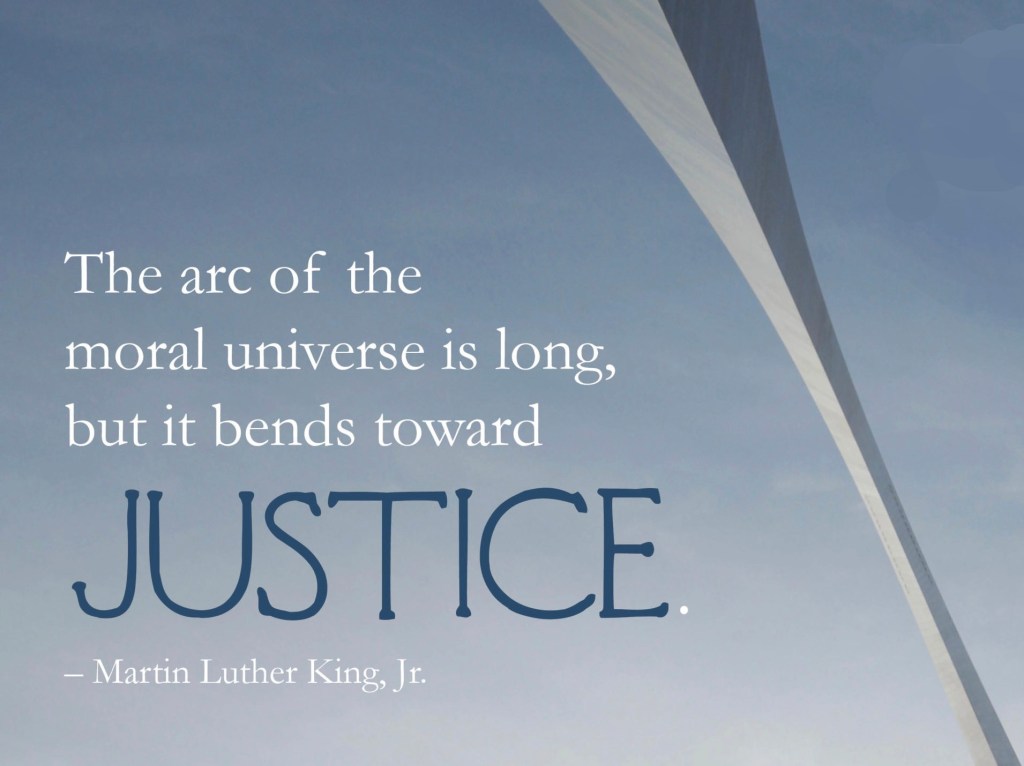
What a clear picture of the arc of the moral universe bending toward justice! The arc does indeed bend toward all that is right and just. Today the arc bent ever so slightly, yet far enough to cause a nation to celebrate.
This confirmation of soon to be Justice Ketanji Brown Jackson is historic for this nation. The first Black woman will serve as a Supreme Court Justice, while her presence will make the Supreme Court look more like America and will more closely reflect the American people.
I stood up from my chair in the living room to join the Democrats who stood to their feet in an extended standing ovation! While we cheered, the Republicans filed out silently, unwilling to offer this highly qualified woman the respect she deserves. I wonder if the fact that they could not get out of there fast enough reflects their shame of how they treated her. I doubt it. I heard this today.
White women have to break glass ceilings. Black women have to break out of a glass cube.
It’s true I think, especially when I consider that soon to be Justice Jackson endured 24 hours of grueling and often disrespectful questioning. She responded to every disparaging question with grace and dignity throughout the long hours. She knew, as women know all too well, that the first would have to be the best. She probably also knew that her ancestors, remembering their centuries of enslavement, encircled her in solidarity and celebration! A cloud of witnesses, witnessing what must look to them like a miracle!
It was not a resounding YES, but it will be a bright day in our history of days!
I tried to remember the name of every person who has prayed for me over the years. I know that every name does not appear in this image of the dove, but all of you, and those I left out, are gifts to me. Thank you all wherever you are.
OThrough eight years of serious illness, dialysis, kidney transplant and all the other areas of my angst, I have heard one very special message again and again from folks I love all over the world. Each person said it to me in a unique way, and remembering their message makes me want to reach out to all of them with deep gratitude. I could never begin to list each of their names, although I tried to in the image of the dove. Their message was a cherished gift . . .
”I need you to survive.”
During a personal life assessment this past week, I thought a lot about this message I heard so many times. I realized that these might be the most loving words I have ever heard. Hearing the words again moved me to a tender time, one of those times when life and death and mortality somehow come to mind. Truth is, I am able to think about these kinds of life things only in my tender times. This week my favorite doctor, who knows a lot about all things tender, said something to me I won’t soon forget . . .
“When you first came to me five years ago, I didn’t think you would live another five years.”
Such a statement would most definitely bring to one’s mind all that is important and all that isn’t. Thinking on her words brought me to the tender moment I have needed for quite a while. I lingered there for a few days, hoping to let my soul rest and my spirit begin to see things in a new way.
It isn’t such a bad place to be right now in the midst of Lent. In fact, Lent is the perfect time to pay attention to my soul and spirit. Lent is the perfect time for tender moments and tender thoughts. Lent is the best time to be tender with myself while searching my spirit for the parts of me that must repent and return to God with all my heart. (Joel 2:12)
Search me, O God, and know my heart; test me and know my thoughts. See if there is any wicked way in me, and lead me in the way everlasting. Psalm 139:23-24 NRSV
Lent draws me to this psalm and its invitation to God. I might very well need to send this very invitation to God about searching me and knowing me, testing me and knowing my every thought. I come, though, to the part that asks God to see if in me there are “wicked ways.” I’m not so sure I want to do that. I know there are wicked ways in me that I try my best to keep secret. But this is Lent, and God already knows all about that.
During these Lenten days, be tender with yourself. Take a look at your secret wicked ways, but remember that God sends you the message clearly — that you are God’s beloved and that you receive the grace of God’s forgiveness even before you utter a single word of repentance. God’s like that, especially in our tender moments.
In your quiet time, listen for even a minute to this music video and celebrate its joyful message. It lifts my heart every time I hear it.
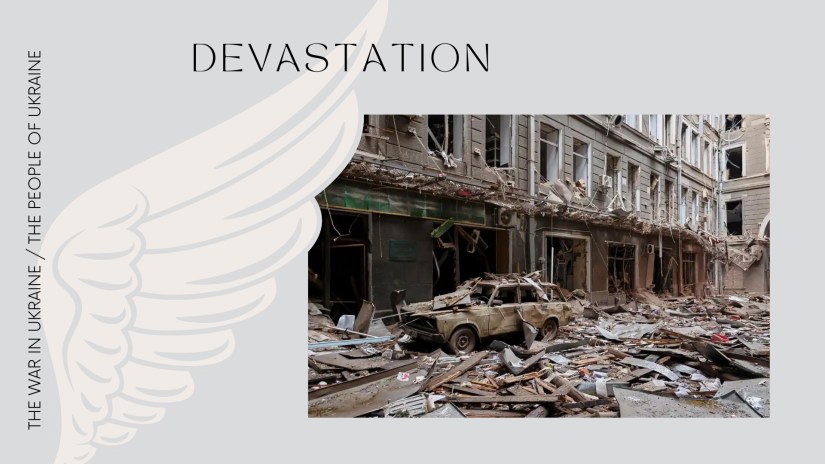
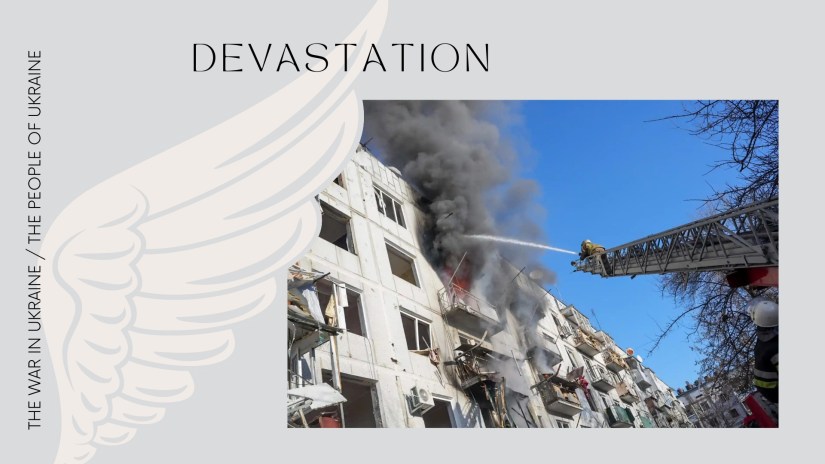
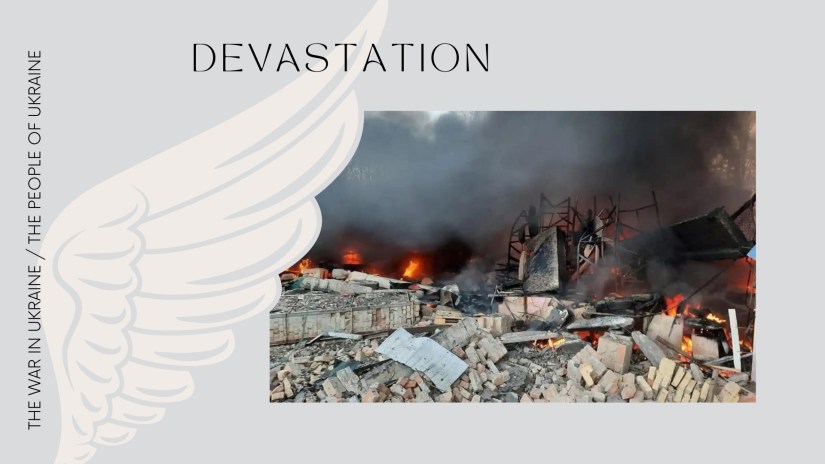
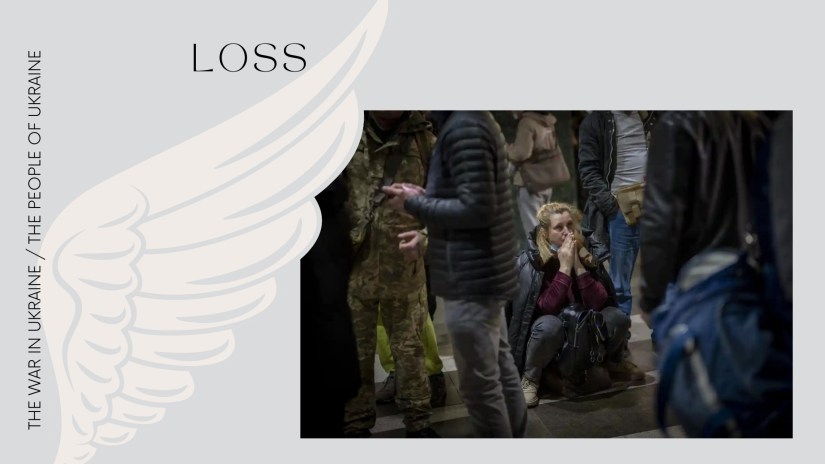
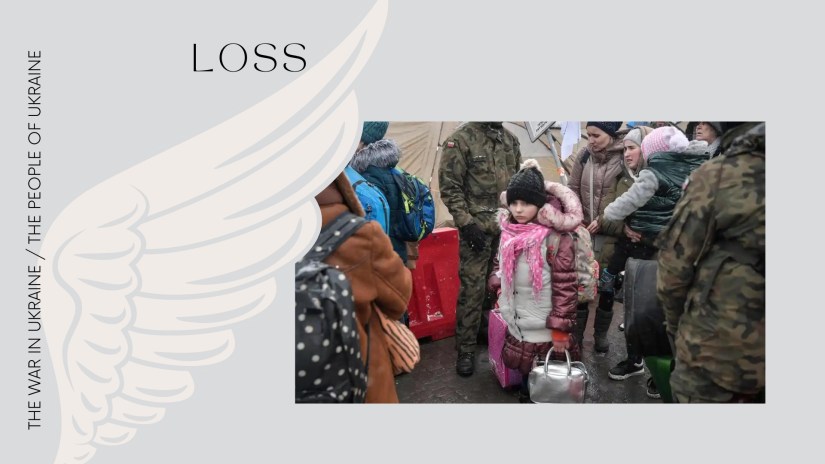
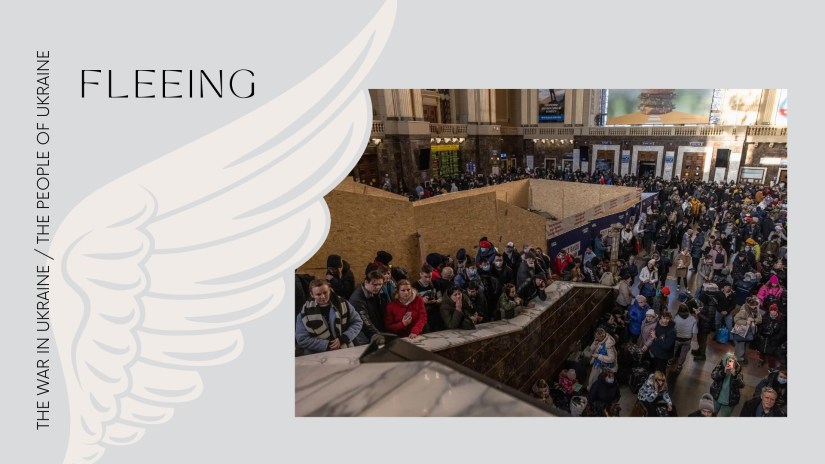
Because many words have been written, poetry has spoken mourning, music has resounded hope, and prayers have given voice to deep lament — I offer these images.
In your moments of prayer and reflection, please join the people of the world who pray for the people of Ukraine. Perhaps this music will enhance your time of prayer and remind you of the tragedy of war and the finality of violence.
He shall judge among the nations, and shall rebuke many peoples; and they shall beat their swords into plowshares, and their spears into pruning hooks; nation shall not lift up sword against nation, nor shall they learn war any more.
“Come, Ye Disconsolate” is one of my favorite hymns. You might ask why. In every person’s life, there are times of sorrow that fall very deeply into the soul. There is a sense in which deep sorrow communes with us like no other emotion. Being disconsolate can be a beautiful experience.
It is a beautiful word — disconsolate — a word full of depth and full of meaning. Yet, it is not a word we often use. It sounds a bit like an ”old” word to me, perhaps more widely used in decades past. The definition? According to Merriam-Webster, the word disconsolate means “cheerless.” I don’t find enough soul angst in that definition, but the word has many soulful synonyms.
Synonyms for disconsolate can be as heart-rending as the word itself: downcast, inconsolable, dispirited, desolate, crushed, despairing, destroyed, despondent, hopeless, heartbroken ~ comfortless
So many words, so full of sorrow. Still, I love the word disconsolate. It has been my companion on many a journey and, although I did not welcome it as an emotion, I learned to own it, which is surely the most important way to have full awareness of your spirit. The truth is, when one is disconsolate, it is an opportunity to imagine being wrapped tenderly with a soft blanket of hope. Wrapped completely, face-under-the-covers wrapped!
How can such a word remind me of a soft blanket tenderly wrapped around me? How can the soft cover be called a blanket of hope? I will offer one reason that is a personal story about my friend and colleague in ministry, Donna. When I was desperately ill with end stage kidney disease, Donna came to visit me in the hospital often. Many of those visits I can’t remember, but she came one day holding a gift in her hands. The gift was a fluffy, white crocheted blanket that her entire congregation had prayed over as they petitioned God to restore me to health.
Every time, from that day to this, that I covered myself with that blanket, I would think of Donna and her church members and their act of love and concern. I imagined them nearby and sensed their prayers becoming a part of my soul’s lament. They did not leave me comfortless.
Whenever I feel disconsolate, comfortless, it helps me to remember these words from the Gospel of John, one of the most beautifully poignant passages in all of scripture:
16 And I will pray to God who will send you another Comforter who will abide with you forever, the Spirit of truth; Sadly, the world cannot accept the Comforter, because it does not truly see her or know her. But you know her; for she dwells with you, and shall be in you.
18 I will not leave you comfortless: I will come to you. 19 In a little while, the world will see me no more; but you see me: because I live, you shall live also.
25 These things have I spoken unto you while I am still present with you.
26 But the Comforter — the Holy Spirit — God will send in my name,
and the Spirit will teach you all things, and bring all things to your remembrance, all the things I have said to you.
27 Peace I leave with you, my peace I give to you: I do not give you peace as the world gives,
Instead I give you peace as if it were from God. And so, my beloved children, do not let your heart be troubled, neither let your heart be afraid. — Jesus, recorded in John 14: 16-19; 25-27, paraphrased
During the times I felt disconsolate through the years, I have always been able to rest under the comforting wings of the Spirit, the Comforter who is with me always. Yes, it is true that many times my heart was troubled and afraid. The words of Jesus did not always repair the state of my heart or diminish my fear. But the promise of Jesus — that I would not be left comfortless — soothed and strengthened my heart.
The words of this hymn held for me a depth of meaning that has spoken comfort and truth to my disconsolate spirit — every time — easing my suffering and leaving me with hope.
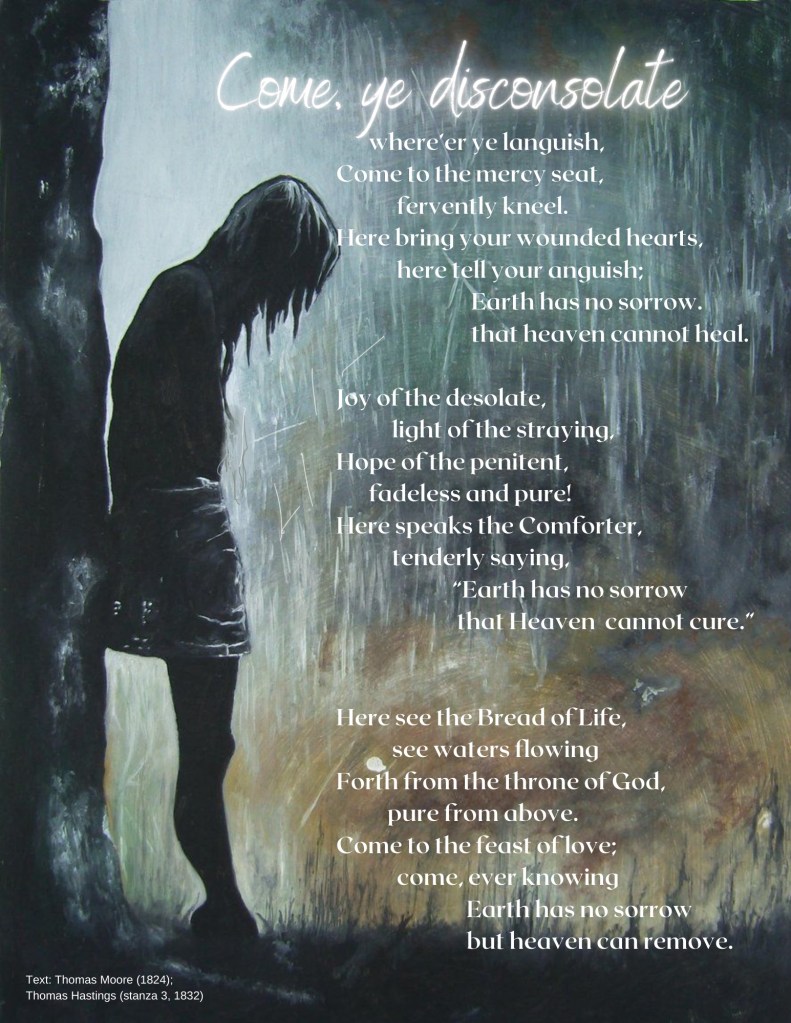
Come, ye disconsolate, where’er ye languish; come to the mercy seat, fervently kneel. Here bring your wounded hearts, here tell your anguish; earth has no sorrow that heaven cannot heal.
Joy of the desolate, light of the straying, hope of the penitent, fadeless and pure! Here speaks the Comforter, in mercy saying, “Earth has no sorrow that heaven cannot cure.”
Here see the bread of life; see waters flowing forth from the throne of God, pure from above. Come to the feast prepared; come, ever knowing earth has no sorrow but heaven can remove. Thomas Moore (1779-1852)
I have experienced the “joy of the desolate” many times. It is a joy that fills my heart, in spite of how deeply desolate I feel. As for what this all means during this Lenten season. For me, it means that a Lenten experience can help me see the ”light of the straying,” and that I will experience the ”hope of the penitent” and once again hear the words of the Comforter “in mercy saying, ‘Earth has no sorrow that heaven cannot cure.’”
From this time forth and forevermore. Amen.
As you spend a few quiet moments during this Second Week of Lent, the following video of this moving hymn may give you peace and hope.
The Georgia Boy Choir singing “Come, Ye Disconsolate” arranged by Terre Johnson. This performance was recorded on July 24, 2021, during the regional concert tour at Mulberry Street United Methodist Church in Macon, Georgia.
“ALL SHALL BE WELL” is a video blog that will help us enhance our personal spirituality and lead us into sacred pauses that will nourish our souls.
Welcome to “All Shall Be Well,” where we will explore together our spiritual center, create a moment of sacred pause and join together in contemplation and silence. In this episode, I want to focus our thoughts on the spirituality of Lent. On Ash Wednesday, the first day of Lent. God speaks to us through the Prophet Joel in chapter 2, saying,
“Even now,” declares the Lord, “return to me with all your heart, with fasting and weeping and mourning.”
“Rend your heart and not your garments.”
We begin Lent with Ash Wednesday, the day that we receive a cross on our foreheads — a cross of ashes blended with just a drop of sanctified oil. I do not wipe off the cross, but let it remain for the entire day.
In a way, it’s comforting to know that something holy and tangible interrupted my ordinary day, a cross of ashes to remind me of sacred things I already know — that Lent is a time of reflection, penitence, repentance, prayer, fasting, giving up things, returning to God. And on top of all of those things I must ponder for forty days, things that weigh heavily on my heart, a minister says this to me as she (he) forms the ashen cross on my forehead:
Remember you are dust, and to dust you will return.
God’s words to Adam in Genesis 3:19
There are so many life events to remind us that we are but dust. But is that really what a Lenten journey is about? Is it really meant to hold our sins over us and urge us to do penance? Is Lent just a time of repentance, remembering our sin and our frailty?
Maybe Lent is also about God’s extravagant mercy, God’s grace that is greater than all our sins, and the ultimate sacrifice of Jesus that made us all beloved children of God.
Imagine for a moment that our cross of ashes is really not really made of ashes at all. If you look at it closely — as you imagine God’s lavish grace — you might not see ashes, but instead, stardust!
Please join me via video for a few moments of Lenten reflection . . .
I didn’t get ashes today. I don’t really understand why, considering that I have always been very religious and sometimes even spiritual. I think I may be in denial and don’t want to hear that I am dust (as I inch closer to dust each day that passes). I confess, I did feel emotional about not getting ashes today. I couldn’t name my emotions for some reason, so I began looking at images that might help me name them.
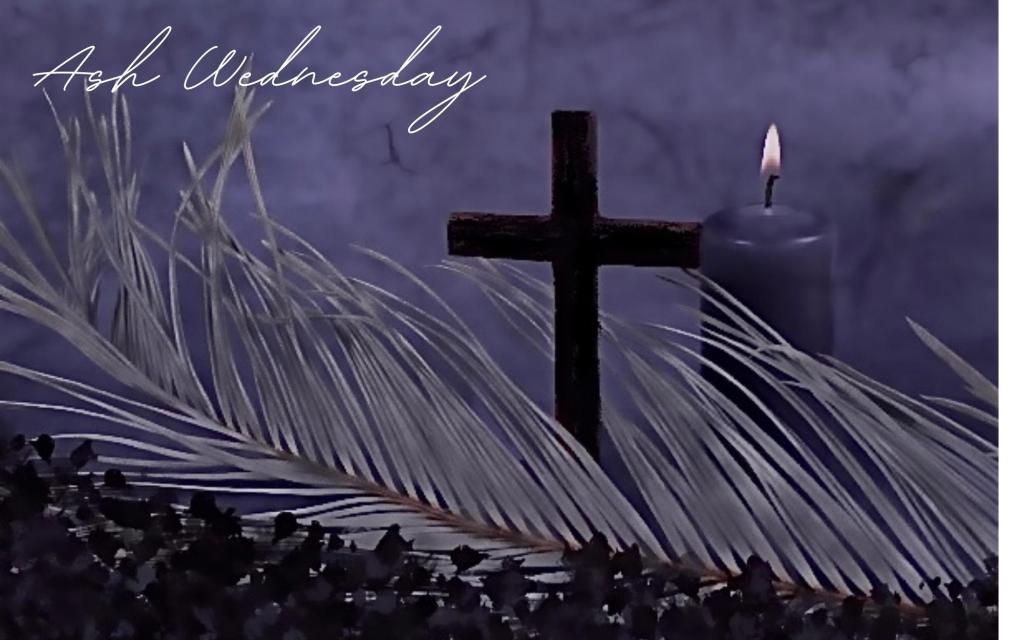
I found this image and, once I played with it a bit on my digital art program, I liked it. Most other Ash Wednesday images are gray and somber. I settled on this one because it has abstract ashes at the bottom and the palm that is burned to create them. It has a cross to remind me what Lent is ultimately about. It has some color, and there is light.
Digital art by Kathy Manis Findley
I didn’t get ashes today, but I got what is in this image! ashes, palm, a cross, color and light. I’m convincing myself that it’s okay that I didn’t get ashes.
Sometimes I wonder what I should do with Ash Wednesday? A better question might be, What does Ash Wednesday do with me? Must this day remind me that I am merely dust and will return to dust? At my age this is not a comforting thought.
And yet, I have to admit that standing before a minister to receive a smudge of ashes on my forehead is always like standing on holy ground, like standing in the presence of a transfigured Jesus who just last week showed us what transfiguration looks like. With a smudged cross made of ashes on my face, I walk on with just the tiniest hope that I will be transfigured, too, during the next forty days. Still, I got no ashes today.
What do I do with this day that invites me into the season of Lent by giving me ashes? How do I walk this forty day journey that is always marked by repentance, return, fasting, prayer, giving up something, and lamenting over what is, what has been, and what is to come? I am never quite sure that I want to travel Lent’s forty day journey.
So what will I do with this Lent? Some of all of it, I think — fasting, praying, hoping, healing, lamenting, giving up a thing, repenting and returning to God with all my heart.
Even now,” declares the Lord, “return to me with all your heart, with fasting and weeping and mourning.”
Rend your heart and not your garments.
Return to the Lord your God, for he is gracious and compassionate, slow to anger and abounding in love, and he relents from sending calamity.
Joel 2:12-13 NIV
That’s my spiritual state on this Ash Wednesday, with a need for “fasting and weeping and mourning.” Lent has always been about penitence for me, but penitence without shame or guilt. Instead of shame or guilt when I return to God with all my heart, I will hear this:
I will arise and go to Jesus; He will embrace me in his arms, In the arms of my dear savior, Oh, there are ten thousand charms.
Shame and guilt can never create newness and transformation for anyone. Sincere metanoia (sincere repentance) will create transformation.
If you know me at all, you know that hymns always offer me ”the whole story” — all the emotions that grab my heart, all the theology that matters, all the melody that lifts my soul. This hymn, one of my heart-hymns, says it all for me. And in this holy season, all that the hymn affirms will be my Lent. Please take a few moments to hear the hymn in the video below as you take time for reflection.
Come, ye sinners, poor and needy,
Weak and wounded, sick and sore
Jesus ready stands to save you,
Full of pity, love and pow'r.

I will arise and go to Jesus,
He will embrace me in His arms
In the arms of my dear Savior,
Oh, there are ten thousand charms.

Come, ye thirsty, come and welcome,
God's free bounty glorify,
True belief and true repentance,
Every grace that brings you nigh.

Come, ye weary, heavy-laden,
Lost and ruined by the fall
If you tarry till you're better,
You will never come at all.

Let not conscience make you linger,
Nor of fitness fondly dream
All the fitness He requireth
Is to feel your need of Him.

I will arise and go to Jesus,
He will embrace me in His arms
In the arms of my dear Savior,
Oh, there are ten thousand charms.
We could have a long conversation about the potter’s messy hands, about the mud under his nails, about the strength of hands that look as if they are using every muscle to shape the pot. We would probably talk about the dynamic force of his hands that hold the pot lightly enough to form it, but controlled enough to avoid marring or damaging it.
In our conversation, we would probably remember the prophet Jeremiah’s encounter with a potter and the ways we have used that passage of scripture over the years. I don’t know about you, but my teachers and preachers used this text to teach me about the ways God can mold me into a worthy vessel that can hold enough faith and hope to get me through the hard times. Plus, being remolded would mean I was being ”obedient to God!”
We certainly do not want to use scripture out of its historical context, but another use of a scripture passage is to consider its imagery, its symbolism and its relevance to us in a given life situation. The following scripture, as translated in The Voice, contains a powerful section after verse 1 that tells us how God’s message comes through a prophetic drama played out at a potter’s wheel, and that there, the prophet sees an ordinary event from which he receives an extraordinary message.
1 The word of the Eternal came to Jeremiah
Now God’s message comes through another prophetic drama played out in a potter’s shop somewhere in the city. The prophet sees an ordinary event but receives an extraordinary message.
Eternal One:2 Go down to the potter’s shop in the city, and wait for My word. 3 So I went down to the potter’s shop and found him making something on his wheel.
4 And as I watched, the clay vessel in his hands became flawed and unusable. So the potter started again with the same clay. He crushed and squeezed and shaped it into another vessel that was to his liking. — Jeremiah 18:1-4 (The VOICE)
I cannot help but remember the many times throughout my life that this passage was interpreted as a potter (God) forming me. The message inevitably moved to the part where ”God is not pleased with me and is trying to remold me into a more worthy vessel for God’s glory.” Not the best biblical message we could glean from Jeremiah’s drama! Not only that, but I don’t much like the idea of the potter ”crushing, squeezing and shaping” me.
The best truth is that God does remold us in so many ways, gently and intentionally, so that we are always in the process of change and growth. In our case, the God who loves us just as we are, also holds us, as if in a potter’s hands. Though this passage does speak of serious remolding, it never indicates that the potter throws the damaged pot into the trash pile.
It is true that we are damaged again and again in this life, but God loves who we are, and like the potter, God gently remolds us along the way, creating of us the best we can be. God never throws us away, no matter how severe our damage — damage on the outside, visible to all; and on the inside, where the deepest damage rests, in the soul and spirit. Visible to no one, excruciatingly visible to us.
We can choose to be like clay in the potter’s hands, allowing a gentle God to remold us, repair our damaged life, and empower us to be new, remade. This sounds like hope to me, and grace.
This is Jeremian’s story, his vision. He sees it as an ordinary event that graces us with an extraordinary message. Jeremiah’s story is ours to ponder and to ask ourselves if there is any damage to us or in us. If you sometimes view yourself as damaged, seek help from someone you trust — a friend or family member, a therapist, a spiritual director, your minister.
And remember, the potter is always near for gentle remolding.
My Church ~ First Baptist Church of Christ, Macon, Georgia
Such a beautiful place to worship, isn’t it? To me, this image of my church is both beautiful and mournful. This image of my church sanctuary is a picture of what my church experience feels like these days. The image of an empty church brings several words to mind—empty, quiet, lonely, dark, worshipful, silent, desolate, disconsolate.
I cannot sit in these pews right now. My doctors say it is to risky for me because of my suppressed immune system following a kidney transplant. The social risks that others are able to take are not risks that I can take. Worship ideally happens in community and I am separated from my community. Isolated.
I feel sorrow about it. I miss my friends, my Sunday School class. I miss the sound of the organ and the voices of the choir. I feel very alone and isolated, a prisoner of Covid19. Even though I am an avid Zoomer watching our worship and even teaching my Sunday School class, it is not enough for my soul.
I admit that I dwell too much on the aloneness of it all, the feeling that I walk my journey without spiritual companions. I feel a deep need to worship in a sanctuary, a soul-need for me. I sometimes feel that I am simply watching the livestream of worship, not worshipping at all. I watch many churches and sermons just to make up for it.
I even fear that when it is safe enough to be back in public spaces, I will have decided that it’s just easier to stay home. Most of all, I find myself forgetting the highest and holiest remedy for aloneness—God’s promises to be with us always—recorded in so many passages of Scripture.
Fear not, for I am with you;
    be not dismayed, for I am your God;
I will strengthen you, I will help you,
    I will uphold you with my righteous right hand.
— Isaiah 41:10 ESV
Thanks be to God. If you have a few minutes, spend them quietly as you watch this comforting video.
“You Do Not Walk Alone” traditional Irish blessing Original music by Elaine Hagenberg
Superior National Forest emcompasses much of the Northeastern corner of Minnesota and is bordered by Lake Superior to the east, Canada to the North. Hiking trail to Eagle Mountain
Hope is like a road in the country; there was never a road, but when many people walk on it, the road comes into existence.
Author, poet, critic and Chinese literary giant Lu Xun. (Lu was a pen name; his real name was Zhou Shuren.)
I have stumbled upon places where there was no road and no way to move forward. I am mulling over the poet’s affirmation that ”Hope is like a road in the country.” I know a little about hope, a little less about country roads, and even less about walking trails in a forest. I also know many, many people who hang on to hope through every narrow, rocky path they encounter. These hope-filled ones follow the path ahead of them and persist on their journey, in spite of the reality that the path is steep, arduous and sometimes not beaten down enough to walk on.
That’s the important thing about paths—that travelers might walk on one for years when it is barely passable, beating it down for smoother walking. It’s called a beaten path. I imagine you have walked some beaten paths.
Even I have walked a few, like when I was just a wee girl. The path for me was a short one, but nevertheless ominous. It went from my back yard to Miss Martha’s back yard next door. But wait! You must know that the path also led us to Miss Martha’s plum tree, filled with delicIous plums just waiting for my brothers and me to devour. We felt hope every time we got to the tree and began to shake it so that the plums would come tumbling to the ground. We hoped—until we heard Miss Martha’s shrill, frightening voice yelling, ”Get away from my plum tree!”
Because we so feared Miss Martha, hearing her loud voice chastening us made us run immediately home and into the house. We also knew she would tell our Yiayiá (grandmother), and we feared that too. Like Miss Martha, Yiayia could give rise in us the most daunting fear of all. We hoped for plums that day, but got fear instead.
Fear can be the enemy of hope, which brings us back to our path. The poet says to us that hope is like a country road. While reading the poet’s words, I imagine reaching a place where is no road and no way forward—a situation of facing a path without much hope. But there is hope after all! Because many people had walked on the path, it was eventually beaten down. Now the people could travel on with hope. There was an open way, a possible path. There was hope.
What’s the message in this parable-like tale? Just this. All of us walk a journey that leads us to pleasant places as well as to sorrowful and terrible places. No one can make the pilgrimage we call life without encountering rough and rocky roads and impassable paths along the way. They are the places that hold the power to steal our hope and leave us paralyzed.
I know how it feels to lose hope. I have known abuse, violence, illness, betrayal, loss, grief. And I have known it first hand, these things that took my hope. I can also bear witness that my hope has returned many times, just in time, but not before I had to struggle with the real, deep despair of absent hope. When I stood at the entrance of the way where there was no way, at the beginning of the path that was impassable and impossible, I often thought of this testimony of hope and faith found in 2 Corinthians 4:8-9; 16-17.
We are hard-pressed on every side, yet not crushed; we are perplexed, but not in despair; persecuted, but not forsaken; cast down, but not destroyed . . .
Therefore we do not lose heart. Even though we are outwardly perishing, the inner place in us is being renewed day by day.
For our light affliction, which is but for a moment, is working for us a far more exceeding and eternal weight of glory.
Yes, you and I may feel cast down and almost crushed by the weight of the world. We may feel the strongest despair. But we must know that, even on this day of threats and pandemics, some of our paths will be smooth and passable. We will feel hope when we least expect it. Hope will surprise us and flood us with grace, directly at the juncture of our despair. A beaten path might appear before us today—rightnow—and invite us to travel from fear to hope.
Sunset Over Beaver Lake Sunset ~ Northwest Arkansas ~ Photography by Gregory Ballos
One thing pandemic isolation has done is to inspire me by images of places I cannot see in person. Now that I live in Georgia, it is difficult to travel back home to Arkansas. So if I am to once again see and enjoy the beautiful landscapes in Arkansas, I must see them in images like this stunning photograph by Gregory Ballos.
There are images to see everywhere one looks—in nature, in books, in National Geographic photographs and videos, in blogs like this one, in one’s imagination, everywhere we are willing to look. The Creator paints swashes of vibrant color across nature’s enormous canvas, and it is there for those who have eyes to see. The sky, the forest, the mountains and the valleys, the oceans, the streams and rivers, the lakes and the waterfalls—in greens and blues and grays streaked with every hue imaginable—all of it is there if we take a moment to look.
To all my pandemic brothers and sisters all over the world, I pray that you are in the places you want to be seeing the things you want to see. Yet I am very aware that many of you, like me, are not where you truly want to be. I long for my home, for Arkansas, where I can see my son and my grandchildren and where I can see the natural beauty I took for granted in the thirty-five years I lived there. The pandemic holds me fast, right where I am at this moment, and I cannot see my heart’s desire.
There is another kind of seeing. It is the seeing that involves both the eyes and the soul. You and I have some control over what I call soul-seeing. I have to admit that my problem with soul-seeing is that I rarely truly see when I look. It doesn’t matter really whether I am looking at nature or at a photographic image, I seldom look long enough to really see. I admit that I am the problem, because I feel compelled to be busy, all the time, with projects and writing and various endeavors that have the potential to consume me. Truthfully, I allow those endeavors to consume me. I admit it. I am far too busy to intentionally see. Soul-seeing is being able to see beauty with your eyes and your soul.
You may have seen the lovely books of the late Beatrix Potter, who was was an English writer, illustrator, natural scientist and conservationist. From her life’s work, one can assume that she is a keen observer. I imagine that she was a person who was able to truly see. She wrote, in fact, that she was grateful to have what she called ”the seeing eye.”
Thank God I have the seeing eye, that is to say, as I lie in bed I can walk step by step on the fells and rough land seeing every stone and flower and patch of bog and cotton pass where my old legs will never take me again. — Beatrix Potter
For Potter, seeing seemed natural in her ability to consider nature and conservation as well as prose and art. Seeing is natural. We see without thinking. Truth is, seeing seems easy, doesn’t it? Everyone with the gift of sight knows how to do it, and those who are unable to see physically figure out how to ”see” in myriads of ways.
I wonder about it, though. I wonder if I am too preoccupied to really see what’s around me. Is my busy-work more important to me than mindfulness? If seeing is so easy, how do we miss all of the magnificent beauty that surrounds us?
It’s a ponderable question
Why not take a few quiet, meditative moments to answer it? The video below is two minutes and eight seconds long. Can you spare that much time? If you can, I invite you to relax in those two minutes and eight seconds. I invite you to mindfulness, to be fully present in those few moments. I hope you will see, with your soul’s sight, nature’s beauty in this video.
See! I mean it!
Video editing by M. Anthony Black ~ Song: “The Tides of Time” ~ Artist: Joachim Horsley
Northern Lights illuminate the dark sky in Kolari, Finland on January 15, 2022. Photo by Irene Stachon Lehtikuva/AFP/Getty Images
If you know me at all, you know that I am a minister, an artist and a writer. Those three are not all of who I am, but they encompass a big chunk of my identity. You may also know that I find deep spiritual nurture from images like the Northern Lights image above. It’s breathtaking. I cannot fathom the sense of wonder of a person who is physically present, in person, looking up into this wondrous sky.
What sort of Creator gave us the ethereal experience of witnessing these Lights of the North? What grace we receive when we take even a moment to breathe it in, to see its splendor, even in a photograph! As spiritual beings who are on a pilgrimage on this earth, we know what it is like to experience darkness.
I imagine that we do everything we can to avoid the dark places of our journey. You know about those dark places—losing a loved one, living with illness, being suddenly injured, moving out of your home, dealing with a troubled child . . . We know about the dark places. We know about the pandemic that has upended our lives and left us in an unknowable, seemingly endless darkness.
We also know about struggling to get to light. We know about walking through the darkness for so long that we become almost desperate to see light again. The LIGHT—that amazing miracle that shatters the darkness and brightens our path.
Of course, we long for it! Sometimes we live through so much darkness—physical, emotional and spiritual darkness—that we almost need more than light. Sometimes we need release, room to breathe, freedom to experience. Sometimes we need an expanse above us, a newness we can fully experience and the inspiration to soar in the clouds until we sense something new and fresh. Sometimes we just need more than light.
So there is light, and then there are the Northern Lights. And we can at least see them in images. When we do see them, our souls might take a deep breath. These lights are different than the lights we usually count on. These Lights of the North are more than the lights that guide us along the journey and through the darkness. These lights are almost mystical—light and color and vastness. These are lights that come as if God is writing “hope” in the sky with an electric-neon crayon. Angela Abraham describes the Northern Lights in a unique way.
The Northern lights were a river of green in the midnight blue. They were what dreams could be if they were ever allowed to dance so free. The northern lights were green rivers in the black heavens, a congregation of stars, how they resonate with my soul.
— Angela Abraham
That’s it! Lights that resonate with the soul. For you, the light that feeds your soul could come from the light of brilliant stars, or moonlight, or sunrise, or even holiday lights. For me on this day, my soul awakened when I took the time to see the splendor of the Northern Lights. In a way I can’t really explain, I looked and I lingered, and then the dancing green light against the black sky caused my spirit to take flight, just for a few minutes. I realized that this was not just about light, it was also about indescribable beauty that can be seen best in God’s creation.
In the words of Angela Abraham, ”Nature’s beauty is an echo of creation’s song, it lives out there and within, as if we are spoken into being together.” I was transported to thoughts of a Creator who gave us not only life and breath, but also gave us extravagant beauty.
Maybe you need more than light right now. When circumstances are dark and bleak in my life, I often need more than light. In fact, like most strugglers and travelers on this journey of life, I have learned to get around in the dark. Most of the time, I can walk through darkness blindly and reach my destination. Barbara Brown Taylor’s book, ”Learning to Walk in the Dark,” is filled with bits of wisdom that I hang on to when I’m in a dark place.
Ihave learned things in the dark that I could never have learned in the light, things that have saved my life over and over again, so that there is really only one logical conclusion. I need darkness as much as I need light. There is a light that shines in the darkness, which is only visible there.
— Barbara Brown Taylor
It is true that sometimes I need more than light. Sometimes I need a grace-gift that reminds me that I am a small speck in a vast universe, and that the Creator that formed our immense, extravagant, beautiful world also created us, each of us tiny specks known by God. Sometimes I need more than light, but what I need is already mine to see—a world filled with beauty that takes my breath away.
Oh, just one more thing about me . . . when beauty really reaches the deep places of my soul, I often burst into song. For today, looking at the beauty of the Lights of the North, I am singing John Rutter’s, ”For the Beauty of the Earth.” Maybe you would like to sing it too, or at least listen to it. Find it below, turn up your volume and give praise to the Creator for giving us the beauty of the earth.
For the beauty of the earth, For the beauty of the skies, For the love which from our birth Over and around us lies, Lord of all, to thee we raise This our hymn of grateful praise.
For the beauty of each hour Of the day and of the night, Hill and vale, and tree and flow’r, Sun and moon, and stars of light, Lord of all, to thee we raise This our hymn of grateful praise.
For the joy of human love, Brother, sister, parent, child, Friends on earth, and friends above, For all gentle thoughts and mild, Lord of all, to thee we raise This our hymn of grateful praise.
Music by John Rutter (1980) Lyrics by Folliott S. Pierpoint, 1835-1917
Sunrise at Collegeville Institute ~ Photography by Bryan Whitfield
God’s love protects us from nothing! Yet… sustains us in everything!
Jim Finley
I am intrigued by the words I read this morning in a community chat about God’s love. I’m not sure which part is more compelling to me: that ”God’s love protects us from nothing!” or that God’s love ”sustains us in everything.” The truth is I have experienced both in my life. I imagine you have as well. The circuitous journey we call life leads us through rocky paths, crises of every kind, dark and dense places that make us feel lost, daunting mountains to climb, roads we take that take us to dead ends, roads to nowhere.
God did not protect me from any of the real-life crises that came my way—abuse as a child, a serious eye disease in Africa, the loss of my youngest brother, the fire that almost destroyed our home, the kidney disease that almost killed me at least three times, the years of dialysis, the miraculous, but very hard, kidney transplant. I assume God kept watch over all of it, but God did not protect me from it. God did not spare me from the traumatic events that marked my life.
So I have to ask questions, honest questions, about how God’s love really affects my life. How do I experience God’s love? How do I sense it in my spirit? Do I really believe that God loves me, especially in my life’s dark times? Do I believe that God should spare me from every life danger?
In my experience, God’s love is elusive, intangible, difficult to hold onto. At times, I don’t sense it at all. At times there are no holy ”everlasting arms” holding me until my darkness turns to light. The only way I sense it at all is by faith, the faith that is ”the substance of all things hoped for, the evidence of things not seen.” (Hebrews 11:1)
To understand this love thing fully, I think I have to read the rest of that chapter in Hebrews, where we find a litany of what important Bible people did by faith. You may remember the list: “By faith, Abel; By faith, Moses; By faith, Jacob: By faith, Sarah: By faith, Rahab . . .” Many more are listed, each having done some great thing by faith. This chapter, though, presses hard on the things that can happen to the faithful ones. Listen to this part:
Women received their dead by resurrection. Others were tortured, refusing to accept release, in order to obtain a better resurrection. Others suffered mocking and flogging, and even chains and imprisonment. They were stoned to death, they were sawn in two,[l] they were killed by the sword; they went about in skins of sheep and goats, destitute, persecuted, tormented—of whom the world was not worthy. They wandered in deserts and mountains, and in caves and holes in the ground. Yet all these, though they were commended for their faith, did not receive what was promised . . .
Oh, my! They did everything right. Their faith was commendable. Yet, they did not see the promise they expected, the great and good things that would come to them because they were faithful. In the end, did they hold on to their faith—without experiencing their reward? Without seeing God’s promise?
What do each of them—Moses, Abraham, Josua, Rahab and the rest— have to do with us? Was their faith like ours? Were their challenges and obstacles like ours? Did they feel void of God’s love like we sometimes feel? Without the promise the expected, did their faith still hold?
We can only speculate about all those questions. But we do not have to speculate about our own faith. We know it. We live with it—when it is strong and when it falters. Did our faith, and God’s love, protect me from every hurt and every harm? I have to answer, ”No.” Yet, the opposite statement—God sustains us in everything—has been real and true throughout my life, in sunshine and in shadow.
I have not known where I was going or where I would end up most of the time, but I kept walking even in my soul’s dark times. The journey has had its rough passages. The journey has most definitely lead me through the dark. Yet, I have also experienced the sunrise that always comes, day after day without fail. And as for God . . . well, God’s love has been present, covering me in the warmth of the love that would not let me go, not by sparing me every hard time, but by “sustaining me in everything.”
The beautiful sunrise image at the beginning of this post points me to the thought that God’s love is a little like the sunrise—a calming light, a gentle light, forever dependable. I have yet to experience even one day without a sunrise. The photo also graces me with the image of footsteps in the snow. Look at them. They are the footprints of someone walking alone, and in truth, we all walk our journeys alone. I imagine, though, that we also depend upon the invisible footprints of the God who leads us on the path.
If we see God’s holy footsteps at all, we see them by faith. That will always be true, that by faith, we ”see” the footsteps that go before us. Only by faith can we claim the ”evidence of things not seen.” So when all is said and done, I believe this to be true: God’s love protects us from nothing! Yet… sustains us in everything!
I believe it by faith.
I hope you can spend a few quiet moments listening to this beautiful choral arrangement. Pay close attention to the words. This is just one sentence among other words of assurance . . . I walk in footsteps of God’s love.
I see His footsteps in the way, And follow them through darkest night, Unafraid, I stumble not, In the glow of perfect light, I see.
I walk in footsteps of His love, And find His light leads on before, Then He gently turns to me, Softly whispers, “trust Me more, I walk.
Then as I follow in His way, My path ahead will brightly shine, For in His path of guiding light, I find His footsteps first, Then mine.
Photo by Shane McNary in Poprad | Slovakia “The clouds may hang heavy, but the light still shines.”
Clouds hang heavy at times. They loom overhead as if they are holding something destructive. Rain, snow storms, hurricanes, tornados . . . whatever disaster our minds might envision. Sometimes ominous-looking clouds just move away or dissipate, as if to remind us that our deepest apprehensions are able to resolve themselves without our help. Other times, the dark clouds release their fury.
There is a point to all of this, and I think it is this: Humans have a tendency to see only what is dark and ominous, and fail to see the light surrounding it. Sometimes the light is there all the time, but we cannot see it. I want to borrow some words, actually the title of a beautiful war novel written by Anthony Doerr, All the Light We Cannot See.
An abundance of light surrounds us to warm us and brighten our days. Dark clouds do come into view, but the light is still there. We simply cannot, or will not, see it. I cannot help but name what we do as being unaware in the light. I know that, for me, the words, ”all the light we cannot see” stand as a description of my faulty vision, both physically and spiritually. It is in the spiritually dark times that I read again the treasure of Isaiah’s prophecy.
The people that walked in darkness have seen a great light: they that dwell in the land of the shadow of death, on them has the light shined. No longer will the sun be your light by day, nor the brightness of the moon shine on your night; for the LORD will be your everlasting light, and your God will be your splendor. Arise, shine; for your light has come, and the glory of the LORD is risen upon you . . .
From Isaiah chapter 9 and chapter 60
Physically, emotionally and spiritually, there is so much light we cannot see. or perhaps we refuse to see it. Realities claim their strongholds. Realities harm us, to be sure—realities of war and rumors of war, realities of violence, injustice, poverty, racism, abuse. The list of harms among us could go on and on. It harms our vision and steals our light. And there is much light we cannot see.
We cannot see the good around us against backdrops of the many forms of evil. We cannot see kind people, because so many people are unkind. We cannot see the dreams we dreamed in the light, because ominous darkness has hidden them. We cannot see the light of trust, because we have seen betrayal. We cannot see the people we love when we see only their flaws. We cannot accept the light of love from another person, because other persons in our lives have refused to love us. Even the light in our own souls suffers the darkness at times when the ”dark night of the soul” takes over within us.
Could we believe that, around us and in us, there is an abundance of light we cannot see? Might we push our hearts nearer to the light we can see? And can we acknowledge that ”all the light we cannot see” has been our reality far too long?
May God help us see all the light we have never seen before. May we see the light of Christ within us, and the light of the Spirit in the world. Amen.
Please spend a few moments listening to this lovely song, ”I See the Light.” Vocals by Olivia Collingsworth and Joseph O’Brien,
Piano: Kim Collingsworth Bass: Phillip Collingsworth Guitar: Grayson Lilly Mixed By: Phillip Collingsworth (Solid Sound Studios) Video Edited By: William Blair
Silence is at a premium at my house. The only time of day that is silent in my house is in the early morning—after the meowing cat goes outside; before anyone else in the house wakes up; before the iPad starts with its incessant sounds for incoming messages; and even before the sound of brewing coffee. I cherish that silence because, immersed in it, I learn all kinds of important things about myself. Including how much my soul needs silence and how little it gets.
I suppose silence is hard to come by for most people, at least those of us who are barraged by life’s incessant activity. Many culprits steal silence from us, but they are not always bad culprits. Many silence breakers are wonderful sounds like children’s laughter or a baby making baby sounds, or soothing music, gently falling rain, gentle breezes, the ebb and flow of the ocean, a flowing stream, birdsong. Some sounds are beautiful sounds.
The silence thieves I’m talking about are those that assault our places of solitude and peace. I think you will know some of them—like the sounds of gunfire in cities and communities, the sounds of family violence, the sounds of war, and even the sound of the broadcast news that tells us about all of those sounds and so many more. You will name your own sounds, the ones that strike fear in you, create inner turmoil for you, shatter your silenced places.
I think it’s important, at least for me, to find moments of silence and, in those silences, to think deeply, to calm my soul, to help mend my broken places, to discover my self and learn the truth of who I really am. And for me, I need silence to help me find my spiritual center. Believe me, silence eases every kind of headache and relaxes every painful muscle.
But then there’s that incessant news on tv! I know—I can just turn it off. The problem is that turning it off feels like turning my back on news I need to hear. If people are languishing from hunger, or suffering the violence of war, or living in fear for their lives, or dodging the violent fists of an abusive parent, or running away in fear of a terrorizing spouse, I need to know. I need to know because I care and just maybe I can do something about it. Like pray, reach out, call an ambulance, call the police, pray, offer words of comfort, cook a meal, call my Congress people, pray.
So yes, the television gives information that makes us care about our neighbor, about our communities and about the world. Still, it creates noise and sometimes we need silence. Our silence gives us the compassionate heart and the strength to help other when we can. The silence helps me find my own truth, and it is my truth that motivates me to care about what happens to others. A quote by Maxime Lagacé is full of wisdom, ”Noise creates illusions. Silence brings truth.”
I need silence and I need truth, about myself and about the world of chaos we seem to have created for ourselves. In his wonderful book, Whistling in the Dark, Frederick Buechner tells a story about Advent, how much we need to silently wait during the season of Advent for the coming of the Christ child, and also how we usually don’t get a silent moment. What overtakes our world is the noise of traffic, the noise of shoppers in overcrowded stores, the terrible noise of violence that the season always brings and, this year again, the noise of lament about those suffering from Covid-19 and the noise of the news that tells us about all of it—again and again and again. We can’t get a break and we can’t get even a smidgen of silence.
I am deeply moved by Frederick Buechner’s Advent story, especially when he writes about what he calls “the silence of a midwinter dusk.” In that dusk, he says, ”there is far off in the deeps of it somewhere a sound so faint that for all you can tell it may be only the sound of the silence itself. You hold your breath to listen.”
For me and for you, I hope for an escape from noise and constant activity, and instead slipping into a sacred space where we find silence and stillness. I don’t know about you, but I need that. I think we can somehow break away from the “madness and lostness” of the world and hightail it towards our places of silence.
But if you concentrate just for an instant, far off in the deeps of yourself somewhere you can feel the beating of your heart. For all its madness and lostness, not to mention your own, you can hear the world itself holding its breath.
In my Voices Sunday school class . . . On Epiphany Sunday, After we all had chosen our Star Words, And discussed their most profound meaning, Our Zoom call ended.
I spiritedly rose up to my feet! With great enthusiasm!
After all, the Star Word I had just chosen Read, “RISE UP?” The “Rise Up” worried me a bit, As Star Words often do, Because those words always make me feel.
So I asI was “rising up” from my desk chair Expecting new vigor for a new year, Suddenly . . . Something startled me.
Oh, my! There’s a Star Word on the floor! Thank goodness it’s face down.
For a long time, I just carefully walked around the Star Word on the floor, Wondering what I should do about it.
I couldn’t leave it on the floor; Because then people feet, cat feet and the desk chair wheels would destroy it.
What should I do? Was this another Star Word meant for me? Or could it be for our Voices class, for all of us?
I decided to pick it up, turn it over, and see the Star Word; But I couldn’t just pick it up Unceremoniously, without any sacred intent.
Remember, I always feel something when I choose a Star Word. Every time!
Every year on the day we celebrate Epiphany, And hear again Epiphany’s story of the Magi getting a glimpse, An extraordinary glimpse, to be sure; Of a brilliant star in the night sky!
A star that probably left them breathless. A star that would miraculously show them the way ahead, Even in the dark.
In the retelling of the Magis’ story, I always feel something; Always!
Just like I always feel something When it’s time to choose my Star Word,
Breathless, anxious, excited, afraid . . . I wonder where and how my Star Word might lead me Into night’s darkness. Into the uncertainty of the year to come. Into a new way of being . . .
All the while, pondering . . . Things to change, Resolutions to honor, Amends to make, Newness to discover, New and holy promptings that will beckon me to rise up!
What will they be?Could my Star Word give me a hint?
All of these thoughts swept over me As I picked up that Star Word from the floor And held it in my hands, Holding my breath, Hesitant to look on the other side.
Finally, I turned over the Star Word I had rescued from the floor.
When I read the Star Word, I knew instantly! That this Star Word from the floor was for me. It was for all of us. It was for everyone
Who prays for, Who hopes for, Who longs for,
What about the Star Word on the floor? What was its holy message for us?
When we say, “It is Christmas,” we mean that God has spoken into the world his last, his deepest, his most beautiful word in the incarnate Word. And this word means: I love you, you, the world and human beings.
There are times when sound does nothing but cause pain—the harsh words of disagreement, the disturbing reverberation of gunfire, the abrasive words of political battles, the crying of a baby. This Christmas season for me has been a tender time. I have longed for Christmases past that were more simple and free of worry. I have not heard this year the sound of Christmas bells ringing in this joyful season. Instead, I have needed to find a holy, silent place.
A dear friend captured my emotions in her blog today:
Many of us miss Christmas moments familiar from other years and expected for this one. Many of us miss someone so precious who was with us and will not be.
Perhaps mourning loss has made me unable to hear all the ”joyful and triumphant” sounds of Christmas. Instead of craving those familiar joyful sounds, I have been drawn to a place of silence. I feel compelled in these days to seek silent spaces and to open my soul to holy whispers. It seems that silence brings peace as nothing else can.
As I have thought through all that I feel, an old hymn came to mind. It seems to capture where my soul is right now. I will listen to it a few times today, as I try to rest in the silence I need, ”Let all the earth keep silence before him.”
I will also turn again to these comforting words in my friend’s blog:
Look around on Christmas Eve and Christmas Day for the tip of angel wing prepared for you.
If sounds of Christmas joy feel painful to you this year, I invite you to find the holy silence you need. As you do, listen to this calming hymn.
Most of all, I wish for you ”the tip of angel wing.”
I ran across this painting by Eric Dowdle as I was nursing a bit of holiday doldrums. It’s easy to fall into doldrums while anticipating Christmas. We expect an ”all is calm, all is bright” kind of Christmas, but sometimes that’s not reality at all. Instead, we can’t hear the singing of choirs, the sweet sounds of the organ or the ringing of Christmas bells.
When I look at this art, I see everything we long for as Christmas nears: a bright and beautiful tree with a sparking star on top, Santas everywhere and the people encircling the tree as if to say, ”Right here among us, there is peace on earth among people of good will.” If the painting miraculously had sound, I imagine I would hear the ringing of church bells heralding the magnificent coming of peace on earth.
Yet, we have reality in our sight instead of this joyful painting. Peace among us in these days, even peace within us, seems to be in short supply as division, war, poverty, and racial injustice continues to hold sway on our world. Not insignificant is that our personal relationships seem to be less than peaceful. The place within us where peace ought to be is often in chaos, filled with anxiety or just plain empty. Peace in our hearts and spirits—that sacred sense of serenity and inner calm—simply eludes us.
When my spirit is not at peace, I can barely see peace anywhere, even at Christmas. Such was the story of Henry Wadsworth Longfellow who wrote the words of the beloved carol, ”I Heard the Bells on Christmas Day.” Some of the stanzas of Longfellow’s beautiful poem are familiar to us, but other stanzas we have seldom, if ever, heard. Here is the poem in its entirety.
I heard the bells on Christmas Day
Their old, familiar carols play,
And wild and sweet
The words repeat
Of peace on earth, good-will to men!
And thought how, as the day had come,
The belfries of all Christendom
Had rolled along
The unbroken song
Of peace on earth, good-will to men!
Till ringing, singing on its way,
The world revolved from night to day,
A voice, a chime,
A chant sublime
Of peace on earth, good-will to men!
Then from each black, accursed mouth
The cannon thundered in the South,
And with the sound
The carols drowned
Of peace on earth, good-will to men!
It was as if an earthquake rent
The hearth-stones of a continent,
And made forlorn
The households born
Of peace on earth, good-will to men!
And in despair I bowed my head;
"There is no peace on earth," I said;
"For hate is strong,
And mocks the song
Of peace on earth, good-will to men!"
Then pealed the bells more loud and deep:
"God is not dead, nor doth He sleep;
The Wrong shall fail,
The Right prevail,With peace on earth, good will to all!
I cannot help but look around at what I see and hear on the streets of this city and all over the world and see despair, hatred, division and violence taking over the peace I so need. So as the carol says, ”And in despair I bowed my head; “There is no peace on earth,” I said;” For hate is strong, And mocks the song of peace on earth, good-will to men!”
As you seek peace this Christmas season, know that God is the giver of a deep peace that abides in our hearts. I invite you to take a few moments out of your day to enjoy these videos. The first is a choral and orchestra performance of the carol. The second is a lovely group of young people singing the hymn with the addition of handbells. The third is a beautiful performance by the Mormon Tabernacle Choir with the narrated story of Longfellow’s writing of the carol.
May the Christmas blessing of peace fill your heart, and may you hear, above all other sounds, the wild and sweet ringing of the bells of Christmas.
We end Advent with Love—that heart emotion that makes its way into our souls and remains there. Love isn’t always easy. Love may well require putting away your self-interest, your tendency to be self-absorbed and your compulsion to hold grudges.
There are much better things to hold than grudges. Like the constant Love you hold for your children and grandchildren. Like the lasting Love of a life partner. Like the deep love you hold for your family. Like the soul-Love you experience when you remember a baby laying in a manger in Bethlehem.
When you remember that baby, with a brilliant star shining over him and angels singing overhead, that is when you know genuine Love. That is the Love of “God With Us.” That is the Love that dwells in us for eternity. That is the Love that helps us Love one another as God has Loved us.
God loves you simply because God has chosen to do so. God loves you when you don’t feel lovely. God loves you when no one else loves you. Others may abandon you, divorce you, and ignore you, but God will love you always. No matter what! — Max Lucado
Don’t let anyone or anything take that Love from you like the grinch stole Christmas! Don’t let your quarrels and your anger steal that Love from you. Don’t let petty misunderstandings crush the Love that is in you, because that Love became flesh and came to live among us and in us.
Glory to God in the highest, and on earth peace, good will toward all people!
I’m a little short on words this year for Advent’s Sunday of Love. Love is fragile, you know. Love can turn on a dime. Or at least love can turn on the turn of a phrase A difficult conversation Or a harsh word.
Then you lose it—love, that is If only for a time But you look around for it And love is gone Replaced with heartbreak Uncertainty Bitterness Broken hearts Angry words.
Can’t get it back, either At least not right away.
Left then with Advent Hope You hope for a kinder moment To make its way into your heart.
Left with Advent Peace You look for other things That might fill your heart With calm With serenity.
Left with Advent Joy You can only mourn its passing.
But Advent Love Well, you just hold your heart tightly so that it doesn’t shatter completely Before Love comes down at Christmas.
























 God of the Sparrow 🌱 By Kathy Manis Findley