Activism, All Shall Be Well, anxiety, Attachments, Bewilderment, Brokenness, Caged children, Calm, Change, Confusion, Courage, Defiance, Despair, Determination, Dreams, Emerging new, Falling down, Fear, Feelings, Following Christ, healing, Hope, Injustice, Psalms, Questions, Reflection, Transformation

In these Evil Days, Dream a Little Dream

Rev. Kathy Manis Findley
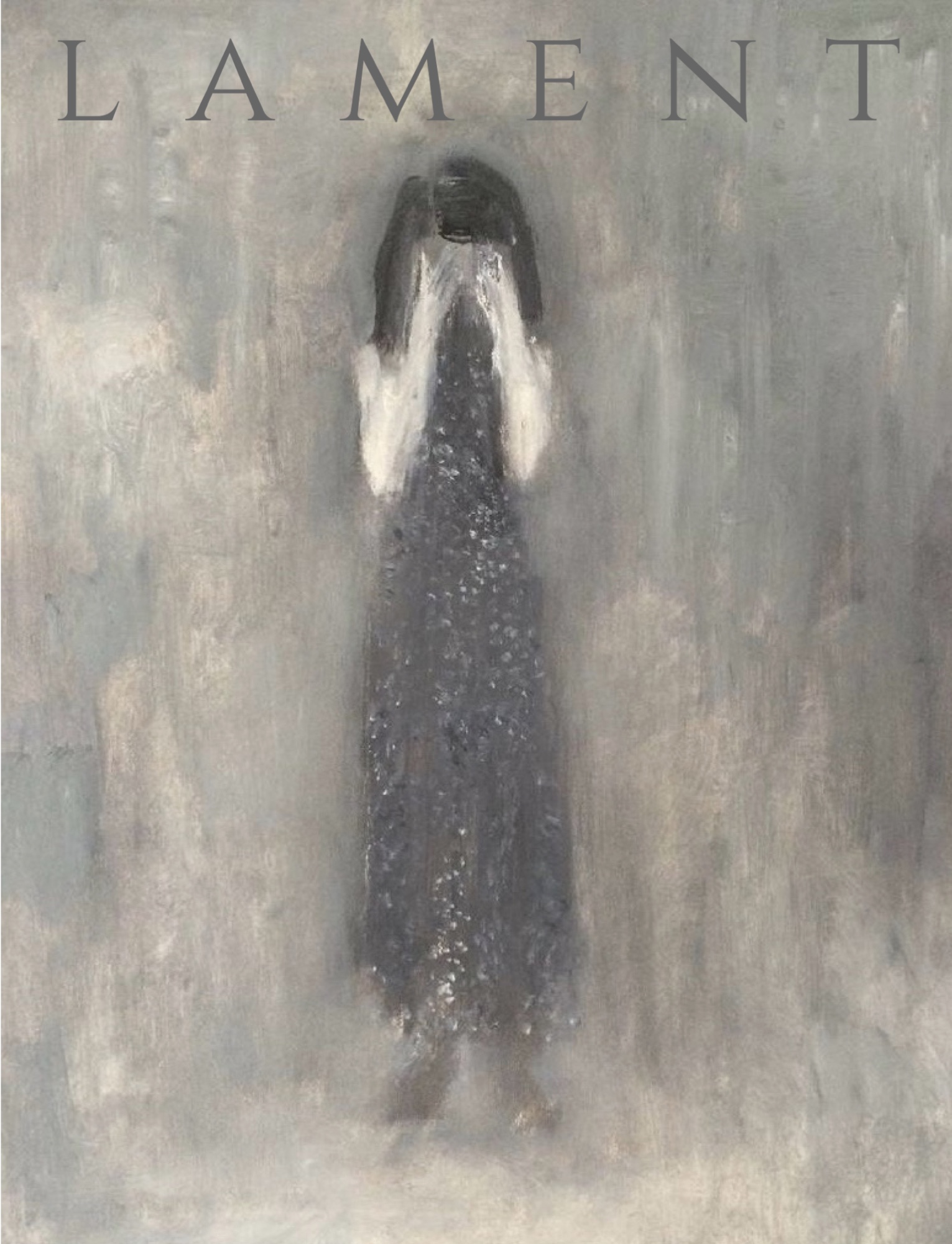
Lately, I have been trying to figure out a number of mysteries, but I have not figured out one single thing-, not lament, not how to fix my life, not transformation, not even the continuous mess in my closet. I simply have not yet been able to go through a reorganization process. The prospect of reorganizing my life—my soul, my spirit, my heart—plus all the treasures in my closet and armoire is so terribly daunting to me. Marie Kondo comes to mind, but I quickly shoo her away from my mess in the closet.

Lots of folk complain about “these days.” I confess that I do my share of complaining. What is it about “these days” that seems so troubling? I cannot fully give you an answer to that question yet, but I have some ideas about it. The issue at hand reminds me that the Bible often refers to “evil days.” I believe that many people see these days as “evil days,” and that cannot turn out well for anyone!

Jennifer Senior, a journalist with The Atlantic, recently wrote a news article in which she asked a another provocative question: What will happen to the American psyche if Trump is reelected? (Don’t worry, this post is not about Donald Trump!) On this question, maybe we really don’t want to know the answer. Instead of taking her question seriously and considering what might happen to “American psyches” following the November election, some folk would rather complain about the division all around, the evil around us, or other things nobody likes.

When we dare to make an honest evaluation of circumstances that surround us, we dig in our heels and balk. We balk because we don’t want to see the division in our nation or the impasse we have reached on important issues. We balk because, in truth, no one wants to lament. Remember, I’m not talking about divisions among us like liberal or conservative, Democrat or Republican, male or female, immigrant or American citizen, black or white . . . I could go on and on naming divisions among us. We have always co-existed with division, but most often in the past we have acknowledged division and simultaneously practiced kindness, respect, and tolerance. Given the current national environment, we might just be justified in calling these days “evil days.”

If reading the Bible is something you typically do, then you might understand more fully the term “evil day.” My heart tells me that “evil days” are definitely taking a toll on us. Instinct tells me that “the evil day” is not a single day, but refers to the times in our lives when we face overwhelming , troubling circumstances. If you are willing, meditate on the following words for a few moments.


Therefore, take up the whole armor of God, so that you may be able to withstand the evil day and, having prevailed against everything, to stand firm. 16 Stand, therefore, and belt your waist with truth and put on the breastplate of righteousness15 and lace up your sandals in preparation for the gospel of peace. 16 With all of these, take the shield of faith, with which you will be able to quench all the flaming arrows of the evil one.17 Take the helmet of salvation and the sword of the Spirit, which is the word of God.

—Ephesians 6:13-17 NRSVUE

I want to remind us all about the unrest we hold inside, too close to our heart and spirit. The proximity is important to pay attention to, as well as the flashpoints, past and present, that people have endured. I would guess that there are many flashpoints and memories of times that have held power over you. You probably face off with flashpoints, knowing that they not only create stress in our bodies, but also create bondage. We can become chained to our lives. Until we have exert some control of the present time of division, hate, turmoil, distrust, disrespect, contempt and other forms of bondage, we cannot find peace that changes the world. We certainly cannot figure out how to accept the possibility of transformation.

These evil days may well be causing our hearts to lament. These days may be days full of nightmares—no dreams at all, not even little dreams. You can name your own tragedies—the ones that are making it hard to breathe for you, or the ones that cover the whole troubled world with sadness. When I think of choosing my personal places of lament, those places where I can pour out the most anxiety, I feel the heavy burden of hopelessness. If you feel that too, you are not alone.

Always looking for a scapegoat, we try to discern what is bringing us down. Of course, life often brings us unforeseen personal tragedies that we must deal with. And there is certainly enough shared anxiety to go around. If you read the daily news, you will undoubtedly hear about the fierce war in Ukraine, the inability to create peace in the Middle East, the rising cost of food, the food deserts in our country, refugee children separated from their parents, difficult financial challenges, mass shootings, fractured relationships, long-term estrangement from loved ones, the opioid crisis and addiction, racism, injustice of all kinds, and politics. Evil days!

There are so many more ills we could add to this list, but we know them already, and the news programs are anxious to tell us about broken politics, as well as the way politics creates broken people. So there you have it! Among the many sources of stress we each experience, we continually stress over the dozens of pointless news stories about politics and the behavior of politicians every day. To top it off, Gloria Mark points out that “we are once again facing a news cycle that will shove our attention—as well as our output, our nerves, our sanity—through a Cuisinart.” No matter how skillfully we deny it, our bodies are not designed to handle chronic stress and trauma.

Just about now, you might want to say that politics doesn’t affect us that much, certainly doesn’t cause depression and hopelessness. But consider this viewpoint written by Pulitzer Prize winning journalist, Jennifer Senior:

The American Psychological Association’s annual stress survey, conducted by the Harris Poll, found that 68 percent of Americans reported that the 2020 election was a significant source of strain. Kevin B. Smith, a political-science professor at the University of Nebraska at Lincoln, found that about 40 percent of American adults identified politics as “a significant source of stress in their lives,” based on YouGov surveys . . . Even more remarkably, Smith found that about 5 percent reported having had suicidal thoughts because of our politics. Evil days!

And of the most divisive election in decades, psychologists are saying that their research shows that more than two-thirds of U.S. adults (68%) say that the 2020 U.S. presidential election was a significant source of stress in life.

It is not a stretch to say that stress plays havoc on our dreams, even our little dreams. I have to confess that my big dreams disappeared into the “impossible“ file, and were then swallowed up by the churning in my stomach and my psyche. I remember my first year in seminary, working part time jobs and going to class. For a while, I worked in the development office where all the catchy slogans, mottos and themes were born. One year, the staff got together to write a theme for the annual development campaign. I don’t know who came up with our brilliant theme, but we loved it. I really loved it and made it my personal mission.

“We’re Out to Change the World!”

I tried to do just that, and I honestly thought I could, but eventually the scene in my mind of one young woman alone trying to change the world on her own made me shiver. All the lofty goals and the many little dreams, along with a few big dreams, that had my attention were disappearing before me. I despaired at first and then carried long-term grief about it. There would be no big dreams in my heart. I would never see the glory of a big dream come true. Nor would I dream small dreams. People usually don’t dream of whatever is better while they are covered in grief—mourning, lamenting that they lost their dreams in the first place. In “these evil days” we must let go of despair and pray for an extra portion of holy determination!

But people do see the sacred light that sparks dreams. It dawns over them again and again until their dreamless spirit transforms from death, to life, to get their bearings again, and to summon the energ to get up and try

This is my message to you, and to myself: After your time of lament, rejoice! After you have escaped the bondage of evil days, rejoice! After you name your loss, and then put yourself back together, rejoice!

Take heart. Up in the heavens, there is rejoicing for you! Even in the gloomy shadow of dark and evil days, there is rejoicing for you! Even if you are trying to dream even the littlest dream, there is rejoicing for you!

So try a big dream! Change the world a little bit! Your heart longs for it, the world needs it, and the heavens will do what they always do—rejoice!

May even your smallest dreams change the world!

Advent, Bewilderment, Bravery, coronavirus, Courage, Defiance, Dreams, God’s promises, Joy, Magnificat, Mary’s Song

MARY’S SONG OF JOY FOR A WORLD THAT’S NOT SO JOYFUL

19FB6970-6B88-4C22-9C98-7E7295E78D3B
The angel visit left Mary confused. And so — in a haze — she runs away, seeking refuge in the hill country with a family that would keep her safe and help her make sense of her world turned upside down . . . As soon as she fell into Elizabeth’s arms, Elizabeth knows and feels it to be true . . . “Yes, I feel it too. We are pregnant with promise . . . a dream that will birth joy.”


My soul magnifies the Lord, and my spirit rejoices in God my Savior.

He has exalted me and, humbly, His servant I will be.
All generations, henceforth, shall call be blessed.
For He has done great things for me and holy is His name.

I will probably always remember those words penned by a lyricist whose name I cannot remember. (Apologies to John W. Peterson, Anna Laura Page, Ragan Courtney or whoever helped create this arrangement. I remember the tune and every word, but I can’t remember you.)

I have sung, in my short lifetime, dozens of versions of Mary’s song that we know from the Gospel of Luke. We often call it Mary’s Magnificat. I sang the version quoted above many, many years ago as a part of my church’s Advent music. I looked through the music in our first Advent choir rehearsal and immediately turned the pages to this one that was called “Mary’s Song.” I knew I would sing it since the churches we served seldom had willing sopranos.

As November and December moved along, I rehearsed Mary’s Song over and over again, not to enunciate all the lyrics clearly or to sing all the notes correctly. I sang it again and again because the act of getting into Mary’s skin brought me to tears every time I sang it. Tears were okay, but being unable to sing because I was weeping was not okay with me. And yet, I didn’t want to rehearse the emotion out of it. I wanted to “be” Mary for just those moments and I wanted the hearers in the sanctuary to emotionally connect with her.

In the end, I prayed and left it in God’s hands, because in the end, that’s what people of faith  do. Today, as we do every year, we lit the Advent candle of joy — the pink candle, Mary’s candle — hoping that the sheer joy of her news to Elizabeth would ring true enough in us to bring us joy. How? “How can this be?” as Mary said to the angel.

I suppose that in these Advent days, in this particular year, many of us have asked “How?” How will we get through this bewildering time? How can joy fill us, enter into our souls and enliven our spirits, as we bury our loved ones? As we wait for word by phone about the person we love who is hospitalized? As we touch the hand of our grandmother through the window of her nursing home? As health care professionals become almost too weary to go on while people with the virus keep coming? As we know we will not see our family this Christmas — to keep them safe, to keep us safe?

How can we sing, this year, “My spirit rejoices in God my Savior” — Mary’s magnificat? Joy is a hard thing this year, for 2020 has brought us grief upon grief, fear upon fear and uncertainty upon uncertainty. Yet, we have held one another close, even over Zoom, because together we have found strength to go on. Over the senseless racially motivated violence we saw on our televisions this year, we saw also a people languishing in a pandemic that took so much.

We saw politicians fighting each other over what some of them see as truth and others see as deliberate, hurtful lies. We saw children who wondered about where school would be and parents agonizing over hard decisions. We saw congregations gathering in parking lots and sanctuaries still, silent, without voices. We saw devastating unemployment and small businesses closing their doors. We saw medically vulnerable or immunosuppressed people locked in their homes. We saw people struggling to pay their bills — very poor people wanting and the very rich, as always, continuing their lavish lifestyles. We saw the rich continuing to oppress the poor, if not in their direct actions, then in their greed that, at least indirectly, deprives those among them who are poor.

The young girl Mary spoke about that, too, in the words of her Magnificat from the Gospel of Luke.

He has shown strength with his arm;
he has scattered the proud in the thoughts of their hearts.

He has brought down the powerful from their thrones,
and lifted up the lowly;
he has filled the hungry with good things,
and sent the rich away empty.

Luke 1:51-53 (NRSV)

The young girl we have called the Virgin Mary, the holy one that accepted the strange and frightening mission from God to bear God’s Son — this Mary is also the subversive one who called out the rich, the powerful and the proud. In her Magnificat? Oh yes, Mary said that God would scatter the proud in the thoughts of their hearts, bring down the powerful from their thrones and send the rich away empty.

Subversive! Courageous! Defiant! Bold! Audacious! Wise! She was all those things when she spoke the kind of subversive truth no young girl in those days would have dared to speak. The miracle of it is that God chose a young girl who possessed the tenderness to nurture a newborn, the wisdom to raise him to live into his mission and the courage to help him stand in a world that would both adore him and hate him — worship him at a manger and then crucify him on a hill. Dr. Marcia Riggs described Mary’s Magnificat like this: “The song sows joy that is the seed of a social revolution.” Indeed!

This was the Mary of our pink candle, the Mary who would be submissive enough to agree to a holy life of chaos and the Mary whose inner strength enabled her to look up and watch her son die.

To be sure, her Magnificat has been read and sung in millions of voices, with thousands of tunes, in cathedral-like sanctuaries and in mud huts. The words have been translated into various versions of the Bible and composers have woven paraphrases of her words into hundreds of melodies and rhythms. Still to this day, one phrase remains . . .

Holy! Holy! Holy is His name.

May Mary’s joy find us on this day and in our own worlds — wherever we are, however we feel, whatever sadness we hold. Amen.

For your quiet, meditative time — one version of Mary’s song:

Activism, Anger, Black Lives Matter, Breonna Taylor, Call, Change, Church, Comfort, Community activism, Compassion, Defiance, Despair, Hate, healing, Injustice, Lament, Persistence, Prayer, Racism, Sorrow, Soul, Spirit, struggle, The Christian Church, Transformation, Urgency, Violence, White supremacy

Prayers of Lament


This morning, I prayed a prayer of lament. Lament was the only prayer in my spirit. It is difficult to express the deep sorrow I felt yesterday when I learned that no charges were brought against the police who shot six bullets into Breonna Taylor’s body.

Shortly after midnight on March 13, 2020, Louisville police officers used a battering ram to enter the apartment of Breonna Taylor, a 26-year-old emergency medical technician who had dreams of a bright career ahead. She and her boyfriend had settled in to watch a movie in her bedroom on that tragic night. Police came to her door and minutes later, she was fatally shot. Her death sparked months of protests in Louisville.

Yesterday, six months after the fatal shooting — six bullets — a grand jury indicted a former Louisville police officer on Wednesday for wanton endangerment for his actions during the raid. A grand jury delivered the long-awaited answer about whether the officers would be punished. No charges were announced against the other two officers who fired shots, and no one was charged for causing Breonna Taylor’s death.

For me, there was only lament. I imagine that for Breonna’s family, there was the deepest kind of lament. For her mother, lament was the only response she could express as she wept uncontrollably. And, even for the protesters who filled the streets, I believe there was lament. 

Theologian Soong-Chan Rah explains in his book, Prophetic Lament, that in the Bible lament is “a liturgical response to the reality of suffering and engages God in the context of pain and suffering.” He goes on to say that it is a way to “express indignation and even outrage about the experience of suffering.” Racism has inflicted incalculable suffering on black people throughout the history of the United States, and in such a context, lament is not only understandable but necessary.

Perhaps white Christians and all people of faith have an opportunity to mourn with those who mourn and to help bear the burden that racism has heaped on black people. (Romans 12:15)    — Jemar Tisby, The Color of Compromise


In the end, many people see only the rage, anger, impatience, violence of the protesters. Can we also see their lament for Breonna, as well as for centuries of racially motivated murder — beatings, burnings, lynchings and murder committed by police officers? 

People of faith — white people of faith — will we try to understand the rage of our black and brown sisters and brothers? Will we join them in righteous anger? Will we mourn with them? Will we lament when lament fills their souls and overflows in cries for justice?

We must, in the name of our God who created every person in God’s own image!

Last night, I heard an interview with Brittany Packnett Cunningham on MSNBC. Her words were eloquent pleas for justice. She spoke about how persistent and all-encompassing racism is in our country and about the murders and the protests and the political rancor that fuels it. She acknowledged racism’s strong, unrelenting hold on this nation, a hold that is virtually impossible to break. And she said something I have said for a long time, “Racism cannot be reformed. It must be transformed.”

To me that means a transformation of the heart and soul that compels each of us to lament, to comfort, to speak truth in government’s halls of power, to stand openly against any form of racial injustice.

May God make it so.

Will you pray this prayer of lament with me?

O God, who heals our brokenness, Receive our cries of lament and teach us how to mourn with those who mourn. Receive even our angry lament and transform our anger into righteous action. Hear the anguish of every mother assaulted by violence against her child. Hear the angry shouts of young people as shouts of frustration, fear and despair. Grant us the courage to persist in shouting out your demand for justice, for as long as it takes. When deepest suffering causes us to lament, grant us Spirit wind and help us soar. If we resist your call for justice, compel us to holy action. May our soul’s lament stir us to transform injustice, in every place, for every person, whenever racism threatens, for this is your will and our holy mission. Amen.

Activism, Advocate, Bravery, Call, Courage, Defiance, Faith, healing, Justice, Perseverance, Persistence, Protection, Resilience, Stubbornness, Tenacity, Uncategorized, Vulnerability, Women

Stubbornness, Tenacity, Faith

61C5F6CB-7BD9-42ED-8FC4-A47EECD57FB6
Jesus and the Stubbornly Tenacious Woman from Canaan


Leaving that place, Jesus withdrew to the region of Tyre and Sidon. A Canaanite woman from that vicinity came to him, crying out, “Lord, Son of David, have mercy on me! My daughter is demon-possessed and suffering terribly.”

Jesus did not answer a word. So his disciples came to him and urged him, “Send her away, for she keeps crying out after us.”

He answered, “I was sent only to the lost sheep of Israel.”
The woman came and knelt before him. “Lord, help me!” she said. He replied,

“It is not right to take the children’s bread and toss it to the dogs.”

“Yes it is, Lord,” she said. “Even the dogs eat the crumbs that fall from their master’s table.”

Then Jesus said to her, “Woman, you have great faith! Your request is granted.” And her daughter was healed at that moment.

(Matthew 15:21-28)

I wonder . . . was it her faith or her stubborn tenacity that led to her daughter’s healing? Stubbornness is typically not one of the virtues to which Christians aspire. In fact most of Christendom would rebuke a stubborn woman, in ages past as well as in our day. I know this to be truth! I have been rebuked a time or two, or at least received “strong suggestions” that I should dial back my demeanor. The woman of Canaan, though, returned to Jesus again and again until he healed her suffering daughter.

I can be a bit tenacious, but no one would describe me as stubborn. I typically have a very calm and quiet demeanor, but I remember well one of the few times in my life when I was fierce and stubborn. Our son Jonathan was quite young and very sick with severe vomiting, along with strong spasms that caused him to be unable to breathe. The loud inhalations as he struggled to get a breath were extremely frightening to us, especially to him. Jonathan was a strong boy, an athlete, and very self-sufficient, but these long episodes brought him directly to his Momma. We had been to the hospital emergency room and were now in his pediatrician’s office. This violent gasping for air had been going on for hours, and it should have been obvious to the office staff that Jonathan was in trouble.

Now they would know real trouble!

Jonathan had another violent attack. I jumped up from my chair, went to the desk, and had some strong words to say, in a loud voice, with the passion of a mother desperate to protect her child. I got the familiar line about the doctor running behind.

You know, I don’t care if the doctor is behind! (in my loudest voice) Can you not see and hear that my child is throwing up all over your waiting area and is unable to breathe? Do you realize that he could be infecting every child in here? Take us to an exam room, NOW, and get the doctor away from whatever he’s doing! Because if you don’t, I am headed to the president of Baptist Medical Center who knows me very well because I am a chaplain in this hospital!

Not like me at all! But that is a “Momma response” that almost always erupts when her child is hurting or in trouble. We were in a desperate place and were being ignored. Jonathan was terribly frightened and had been dealing with these spasms for hours. In time (too much time) it was resolved and we were able to get Jonathan settled and resting.

And about the “Canaanite Momma” . . . well, she was definitely stubborn and persistent that day. Clearly, Jesus did not realize who he was dealing with. Maybe he did know! Perhaps Jesus knew precisely what he was doing and chose to use his encounter with the woman from Canaan as a teaching moment for his hearers. Or perhaps he was simply in a stubborn mood and found himself facing someone who could easily match him, stubborn for stubborn!

Either way, the story shows us that when it comes to saving what needs to be saved, being merely nice and calm won’t usually win the day. Sometimes we need to dig in our heels and do some hollering! The text simply portrays the Canaanite woman as a stubborn, persistent mother of a very sick daughter.

Remember, the disciples urged Jesus to send her away. She was obviously making a lot of noise, crying out and disturbing their quietude! On top of that, Jesus was somewhat stubborn himself, saying that he was sent only to the lost sheep of Israel.

But this “Canaanite Momma” went back to Jesus straightaway, knelt down before him, saying, “Lord, help me!”

And we know what Jesus finally did. He praised her faith and healed her daughter. So was it faith or was it stubbornness, persistence? Maybe it was both, that her faith empowered her to stubborn persistence. Clearly, she believed Jesus was able to heal her daughter, so she tried to convince Jesus more than once. The disciples didn’t deter her. Jesus Could not dissuade her with his statement about dogs!

“Woman, you have great faith.”

A wonderful portrayal of what this woman might have said about her encounter with Jesus is a poem written by Jan Richardson entitled “Stubborn Blessing.”

Stubborn Blessing

Don’t tell me no.
i have seen you
feed the thousands,
seen miracles spill from your hands like water, like wine,
seen you with circles and circles of crowds pressed around you
and not one soul turned away.

Don’t start with me.

i am saying
you can close the door
but i will keep knocking.
You can go silent
but i will keep shouting.
You can tighten the circle
but i will trace a bigger one
around you,
around the life of my child
who will tell you
no one surpasses a mother for stubbornness.

i am saying
i know what you
can do with crumbs
and i am claiming mine,
every morsel and scrap
you have up your sleeve.
unclench your hand,
your heart.
let the scraps fall
like manna,
like mercy
for the life
of my child,
the life of
the world.

Don’t you tell me no.

— Jan Richardson
https://paintedprayerbook.com/2014/08/11/stubborn-blessing/

The work of protection is definitely not for the faint of heart. The work of advocacy on behalf of another person may take some stubborn persistence, the kind of stubborn persistence that Jesus seemed to call by another name — “great faith.” When we advocate for people who are suffering, especially people in need of profound physical healing or deep spiritual healing, their greatest need calls us to our greatest resolve, a fierce resolve. Maybe a touch of defiance! It is in those moments that we call on our hearts to give us strength for sacred stubbornness that will heal the broken, comfort the brokenhearted, restore justice to those who are oppressed.

That is faith! “Great faith!”

Beauty of Nature, Change, Defiance, Determination, Faith, Grace, Hope, life, Life’s murk, Lotus, Perseverance, Rebirth, Resurrection, Transformation

Rebirth

47A0C7FC-3DCC-4CC5-AF55-D993D1032FDC

I love the simple beauty of a lotus blossom. Since the lotus is often associated with yoga (a practice I avoid with every fiber of my being), I have never really considered the lotus and its intriguing life cycle. But lately I have been curious about the story of the lotus, which has long been considered one of the most sacred flowers. I wondered what it is about this mysterious bloom makes it so enrapturing and symbolic to so many people and cultures.

I think the answer is that the life cycle of the lotus is unlike any other flower. With its roots buried in mud, the lotus submerges every night into murky river water and miraculously re-blooms the next morning without any muddy residue on its petals.

The general consensus among ancient texts that the lotus symbolizes spiritual enlightenment and rebirth. Over centuries and across cultures, the lotus stunned people with its ability to dip into the grime and revive itself unscathed—an incredible daily cycle of life, death, and a sudden immaculate rebirth that can only be described as spiritual. In fact, the lotus flower blooms most beautifully from the deepest and thickest mud.

The lotus flower’s daily resurrection is certainly interesting and symbolic of revival, transformation and new life. But even more interesting is the flower’s stubborn will to live. A lotus seed can withstand thousands of years without water, able to germinate over two centuries later.

The lotus also blooms in the most unlikely of places such as the mud of murky river water in Australia or Southern Asia. Not only does it find sanctuary in the muck, but due to the waxy protection layer on its petals, its beauty is unaffected when it re-blooms each morning. It continues to resurrect itself, coming back just as beautiful as it was last seen. With such refusal to accept defeat, it’s almost impossible not to associate the lotus flower with unwavering faith, more specifically the faith within ourselves. 

My serendipitous lotus research did what my research often does: It prompted me to re-examine my faith. I can readily identify times when I had to wade through the murky, muddy waters that life sometimes brings. And although it seemed impossible to re-emerge from the mud clean and renewed, I did, every time, because of a God who understands both the murk and the rebirth.

It’s all about faith, after all is said and done. Once again God’s creation gives us a stunning example of experiencing thick, murky, dark life experiences; going under into the thickest mud when you no longer have the strength to stay above water; and miraculously emerging again — clean, new, reborn. We can learn a valuable lesson about determination, defiance and perseverance from the determined, defiant lotus seed that can survive over centuries. It hints to me about God’s “long game” for my life that simply shouts “hope” not just in my present circumstance, but in a future I can not begin to envision. God envisions it, though — a year from now, two years, my future, the years God has already numbered for me and the mystery we name “eternity.”

Thanks be to God for my eternity and for a faith that is reborn again and again and again by grace.


*********************

On another note, please pray for me as I await a life-saving kidney transplant. I am grateful that you are walking with me on this journey that often feels so frightening. Your thoughts and prayers mean so much. If you would like to read the story of my illness, visit the Georgia Transplant Foundation’s website at this link:

http://client.gatransplant.org/goto/KathyMFindley

A “Go Fund Me” page is set up for contributions to help with the enormous costs related to the transplant, including medications, housing costs near the transplant center, and other unforeseeable costs for my care following the transplant. If you can, please make a contribution at this link:

https://bit.ly/33KXZOj

Defiance, Uncategorized

“You Can’t Make Me!”

3229A6C9-65EA-4F0A-AEF1-EB461C8A55CD

“You can’t make me!” I said emphatically.

Head lifted up. Determined expression in my eyes. Hands on the hips.

I was a defiant, insolent child. I was even more defiant as a teenager. It was not at all unusual for my parents to give me a directive and for me to respond, “You can’t make me!” That was our family process. We each played our roles well, and as a result, defiance became a part of my personality.

That was a very long time ago and, no doubt, I have made some personality changes. More like seismic shifts! Life brings on seismic shifts for most of us, and I am no exception. The series of seismic shifts that rearranged me over the years left me with a rather quiet, docile personality. My acquiescent ways can sometimes make me seem a lot like a doormat.

Being a doormat, though, is most definitely not an option. Just as advanced years made me somewhat docile, advanced years have also given me the courage to, at least occasionally, stand up straight and scream out, “You can’t make me!” 

Truth is: I’m still that insolent little girl, and I don’t see that as a bad thing.

You see, here’s how it happens. In fact, it happened for me last week. I met a rather formidable obstacle on my path. I despaired. I grieved. I berated myself and diminished my own worth. I gave up my sense of hope.

But then it happened, as it has so many times before. Today something rose up within me that felt like determination. It felt like a dogged resolve with enough power to propel me forward just when I thought I had been hopelessly pushed back. I never know where that determination comes from, but I can always feel it rising. I know that at least a part of it comes directly from that insolent little girl. But mostly it seems to be what I reverently call a “God-thing”— which is a rather powerful happening that causes me to experience God’s grace fresh and new, just when I least expect it.

If an obstacle has pushed you back, even pushed you all the way to the ground, remember the words of Jesus giving warning and comfort to his disciples: “Take courage. I have overcome the world.” (John 16:33) 

Remember, too, that inside of you, there just may be a “hands on the hips” kind of person just about to feel the inner determination rising.