
Bright Sunday, Bright Week, Children, Church, Easter, Joy, Laughter, Lightheartedness, Music, Resurrection, sunrise

The “Laughter of the Redeemed”

4D06581C-1218-44C9-AE7E-98F2CA0E9ABC

So when the grand and glorious celebration of Christ’s resurrection is over, what do we do with our leftover joy? There is an easy answer to that. Celebrate Bright Week with laughter and loud singing, and look forward with great anticipation to Bright Sunday! You might be wondering what in the world I’m talking about. What’s Bright Week and Bright Sunday?

Well, just in case you didn’t know, Bright Week and Bright Sunday are real. genuine. bonafide things. Many Christian churches celebrate the Sunday after Easter as Bright Sunday, a day for joyful celebration. In fact, the entire week following Easter, called Bright Week, was set aside for the celebration of the Resurrection according to the 66th canon of the Council in Trullo:

. . . from the holy day of the Resurrection of Christ our God until New Sunday (or Bright Sunday) for a whole week the faithful in the holy churches should continually be repeating psalms, hymns and spiritual songs, rejoicing and celebrating Christ, and attending to the reading of the Divine Scriptures and delighting in the Holy Mysteries. For in this way shall we be exalted with Christ; raised up together with Him.

The custom was rooted in the musings of early church theologians like Augustine, Gregory of Nyssa, and John Chrysostom, including the intriguing idea that God played a practical joke on the devil by raising Jesus from the dead. “Risus paschalis – the Easter laugh,” the early theologians called it.

For centuries in Eastern Orthodox, Catholic and Protestant countries, the week following Easter Sunday, including “Bright Sunday,” the Sunday after Easter, was observed by the faithful as “days of joy and laughter” with parties and picnics to celebrate Jesus’ resurrection. Churchgoers and pastors played practical jokes on each other, drenched each other with water, told jokes, sang, and danced. Can you even imagine such hilarity in some of our most traditional churches?

Yet, theologians wrote about holy laughter. While languishing in a Nazi prison, Protestant theologian Jurgen Moltmann became fascinated by the ongoing celebrations of Jesus’ Resurrection by the early Christians that continued long after Easter Sunday. He called it “the laughter of the redeemed.”

And yet, we Christians are often viewed as offering a joyless and humorless Christianity.

Where is “the laughter of the redeemed?”

We have a Savior who, knowing that he was about to be betrayed, tortured, and crucified, told his disciples before his arrest:

“These things I have spoken to you, that my joy may be in you and that your joy may be full.” (John 15:11)

So where is our joy? Where is our laughter?

With great fondness, I remember the youth ensemble at First Baptist Church of Arab, Alabama singing an amped-up version of “Sunshine in My Soul,” lively, syncopated, full of unbridled joy! With a big smile on every face, the group sang this spirited, exuberant song about their sheer joy in Christ. Always, their offering of “Sunshine in My Soul” was a joyous event. I can hear it in my memory right now.

There is sunshine in my soul today.
It’s a glow so warm and bright.
That shines in any earthly sky
For Jesus is my light.
Oh, there’s sunshine, beautiful sunshine,
When the peaceful, happy moments roll.
When I look with love into my brother’s face, there is sunshine in my soul.

What a bright and joy-filled song! A perfect song for Bright Sunday.

Laughter, joy, fun, rejoicing!

I hope that during this Bright Week you will find sunshine in your soul. I hope that you will laugh hard and long during Bright Week, that you will pass joy along to those you love, that you will sing a song of joy or two, using your biggest, strongest outdoor voice. After all, it is Christ’s resurrection that we celebrate!



Aging, Change, Dry seasons of life, Ministry, Mission, Music, Retirement

Baffled

6EF9CDE6-293A-4E8A-9E46-F92BDFE6901C
Art by David Hoffrichter Illustrations

At times, I am baffled by retirement and aging. It’s one of those “wonder-what-to-do-with-myself” times that is a part of life. Like so many people, I allowed my work to define me. On the other side of a life of ministry, there is a great deal of grief and loss, and mostly bewilderment. I constantly ask myself the question I should have answered decades ago: “Who am I?”

It is definitely true of me that I no longer know what to do. Oh, I keep myself busy enough with trivial pursuits. I cook. I write. I paint. I garden. I do crafty things. But none of those pursuits are engaging enough to help me redefine myself as a person who has passed her years of full time work and ministry.

Certainly, many people say that once you are a minister you never lose your ordination, your gifts, your calling and your mission. But I wonder what that really means. There is no preaching or worship planning going on in my world these days, no hospital ministry, no funerals and no weddings to officiate. If my mission and calling is for life, what does that mean in terms of day to day living?

I have to admit that, though I am busy doing “stuff,” I no longer know what to do with myself. Fortunately, I recently found a smidgen of comfort in these words written by Wendell Berry.

It may be that when we no longer know what to do
we have come to our real work,

and that when we no longer know which way to go
we have come to our real journey.

The mind that is not baffled is not employed.

The impeded stream is the one that sings.

— ‘The Real Work’ by Wendell Berry, from Collected Poems, 1987.

So when all is said and done, perhaps it’s okay to be baffled. Maybe I can become that “impeded stream” and make a bit of music, filling these baffling days with singing. Just maybe, the writer of Ephesians had some very good advice for a person in my state of baffle-ment.

. . . be filled with the Spirit, speaking to one another with psalms, hymns, and songs from the Spirit. Sing and make music from your heart to the Lord, always giving thanks to God the Father for everything, in the name of our Lord Jesus Christ.

— Ephesians 5:18-20 New International Version (NIV)

Christmas, Despair, Hate, Hope, Music, peace, Violence

Peace on Earth. Good Will to Us All!

E8CBC92D-81BE-4275-B6EE-57B14513900E
We rarely sing one of my favorite Christmas Carols. Its words always cause emotions to well up within me. Although the words of this carol were written in the mid-1800’s, they still speak to the bleakness we face in these days.

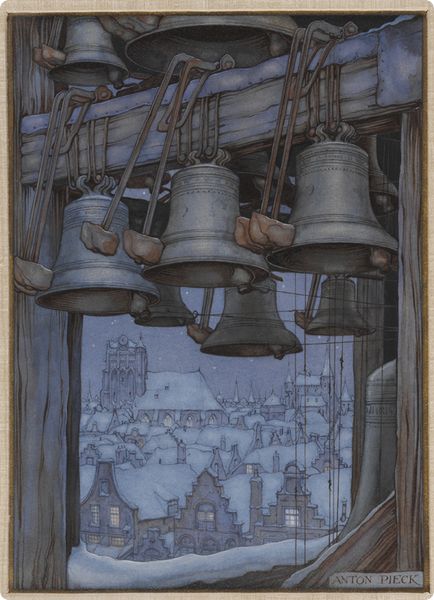
It was on Christmas day in 1863, when Henry Wadsworth Longfellow — a 57-year-old widowed father of six children, the oldest of which had been nearly paralyzed as his country fought a war against itself — wrote a poem seeking to capture the dissonance in his own heart and in the world he observed around him. He heard the Church bells that December day. He heard the singing of “peace on earth,“ but he also despaired of a world of injustice and violence that seemed to mock the truthfulness of any sort of peace. Yet Longfellow’s words eventually led to a sense of confident hope even in the midst of bleak despair.

Such confident hope will also guide us through our own reality — a reality that constantly reminds us that the presence of despair, violence, injustice and intolerance destroys the hope, peace, justice and lovingkindness we so deeply desire for our world.

I heard the bells on Christmas Day
Their old, familiar carols play,
and wild and sweet
The words repeat
Of peace on earth, good-will to men!

And thought how, as the day had come,
The belfries of all Christendom
Had rolled along
The unbroken song
Of peace on earth, good-will to men!

Till ringing, singing on its way,
The world revolved from night to day,
A voice, a chime,
A chant sublime
Of peace on earth, good-will to men!

Then from each black, accursed mouth
The cannon thundered in the South,
And with the sound
The carols drowned
Of peace on earth, good-will to men!

It was as if an earthquake rent
The hearth-stones of a continent,
And made forlorn
The households born
Of peace on earth, good-will to men!

And in despair I bowed my head;
“There is no peace on earth,” I said;
“For hate is strong,
And mocks the song
Of peace on earth, good-will to men!”

Then pealed the bells more loud and deep:
“God is not dead, nor doth He sleep;
The Wrong shall fail,
The Right prevail,
With peace on earth, good-will to men.”

“Then pealed the bells more loud and deep, ‘God is not dead, nor doth He sleep.””

Amen

Creativity, Family, Friendship, Joy, Laughter, Lightheartedness, Music

Lighthearted Living

IMG_6028
Photo by Tim Ernst. Harvest moonrise, Hawksbill Crag, Upper Buffalo Wilderness Area, Ozark National Forest, Arkansas.

I often think of my Aunt Eirene and wish she was still with us. She was the queen of lighthearted living, in good times and in not-so-good times. She had a beautiful, playful spirit. She was always bejeweled when she dressed for any occasion. She was creative, with many talents from drawing house plans to interior decorating to iconography.

She invited me into her iconography world by urging me to go with her to a week-long iconography workshop on Weeks Bay, a beautiful, serene spot near Fairhope, . Weeks Bay is described with the phrase “where rivers meet the sea.” With its stunning marshes and shorelines, it made a perfect backdrop for a week of rest, creativity and spiritual experiences.

As the sun set each day, we lingered near the river and wondered about the delightful reality that this river’s current actually meets the sea’s tide. Then, after a pleasant community dinner, we enjoyed creating sacred icons in an atmosphere of soft music and quiet conversation that always included talk about how our icons were taking shape, the blending of colors, and the strokes of the brush that had to be precise.

IMG_6030“It’s not looking right” was a frequent comment. And always someone would reply that we were doing very well and that we should prayerfully continue. My aunt would constantly call attention to my icon, making sure that everyone within earshot knew that her niece’s iconography was the most beautiful she had ever seen. The workshop was a creative and spiritual week that enriched my life for years to come. For that, I am grateful to my Aunt Eirene, one of my two fun-loving aunts.

But there is another thing that I remember fondly about Eirene. Music! Thanks to Eirene, I may have been the only toddler in the world that could sing every word of dozens of songs from the early 1900s . . .

Shine on, shine on harvest moon up in the sky;
I ain’t had no lovin’ since January, February, June or July . . .

I’ll spare you the remaining lyrics. But to this day, I sing along to the Pandora tunes of Frank Sinatra, Bing Crosby, and even the songs of the Ziegfield Follies — every word!

I thought of Eirene just the other night when the gorgeous harvest moon appeared in the night sky. I thought of her gifts to me — music, painting, dancing, and most importantly, lighthearted living. By nature, I’m not particularly lighthearted, so it’s important for me to have lighthearted people in my life for balance.

If you look around, you might find fun-loving people who could add a little laughter and levity to your life. I don’t know about you, but I can use more of that lighthearted living.

Thanks, Eirene. Rest in fun.