Hate, Love, Martin Luther King, Jr., peace, Politics

Only Love Can Drive Out Hate

010B6CB7-43B5-47B7-B92B-C87DF5750866It was almost shameful that President Trump on January 12th signed a proclamation honoring Dr. Martin Luther King, Jr. In all honesty, I cringe at his signing of this proclamation. I cringe because the president honors Dr. King while dishonoring Dr. King’s legacy.

I can imagine that Dr. King’s words echoed through the Oval Office during the signing, in a whisper heard only by persons of love and good will.

If we are to have peace on earth, our loyalties must become ecumenical rather than sectional. Our loyalties must transcend our race, our tribe, our class, and our nation; and this means we must develop a world perspective.”

We’ve learned to fly the air like birds, we’ve learned to swim the seas like fish, and yet we haven’t learned to walk the Earth as brothers and sisters…”

― Martin Luther King, Jr.

I cringe because I heard the words that the president said about “shithole countries.”

Why do we want all these people from Africa here? They’re shithole countries … We should have more people from Norway.

– Donald J. Trump

In his remarks, Mr. Trump, who has vowed to clamp down on illegal immigration, also questioned the need for Haitians in the United States.

Instantly, many Democrats and some Republican lawmakers called out the president. Republican United States Representative Mia Love, a daughter of Haitian immigrants, said the comments were “unkind, divisive, elitist, and fly in the face of our nation’s values,” and she called forTrump to apologize to the American people and to the countries he denigrated.

Another Republican Representative, Ileana Ros-Lehtinen, who was born in Cuba and whose south Florida district includes many Haitian immigrants, said: “Language like that shouldn’t be heard in locker rooms and it shouldn’t be heard in the White House.”

Democratic Senator Richard Blumenthal said the president’s comment “smacks of blatant racism, the most odious and insidious racism masquerading poorly as immigration policy.”

A wave of international outrage also grew against the president’s vulgar language as the president of Ghana, President Nana Akufo-Addo, said that he would “not accept such insults, even from a leader of a friendly country, no matter how powerful.”

The Ghanian president tweeted an unflinching defense of the African continent — and of Haiti and El Salvador, countries that Trump also mentioned in the Thursday meeting with a group of senators at the White House.

In addition to Ghana, the government of Botswana said Trump’s language is “reprehensible and racist,” and said it has summoned the U.S. ambassador to clarify what he meant.

Senegal’s president, Macky Sall, said in a statement that it was “shocking” and that “Africa and the black race merit the respect and consideration of all.” His West African nation has long been praised by the United States as an example of a stable democracy.

The African Union, which is made up of 55 member states, also spoke against Trump’s remarks.”Given the historical reality of how many Africans arrived in the United States as slaves, this statement flies in the face of all accepted behavior and practice,” said spokeswoman Ebba Kalondo.

Paul Altidor, Haiti’s ambassador to the U.S., called Trump’s comments “regrettable” and based on “clichĂ©s and stereotypes rather than actual fact.” He also noted the insensitivity of its timing, coming the same week as the eighth anniversary of Haiti’s 2010 earthquake, which killed more than 200,000 people.

El Salvador’s government on Friday sent a formal letter of protest to the United States over the “harsh terms detrimental to the dignity of El Salvador and other countries.”

A spokesperson representing the United Nations High Commissioner for Human Rights condemned President Trump’s “shocking and shameful” comment, saying: “I’m sorry, but there’s no other word one can use but racist.”

On January 13th, The Washington Post published an article by Karen Tumulty that calls out President Trump’s misunderstanding of this nation’s immigration history.

There is far more to the latest controversy surrounding President Trump than the vulgar and implicitly racist language he used to draw a distinction between desirable and undesirable immigrants. Trump’s choice of words also revealed a deeper and more substantive truth about how the president views — and misunderstands — America’s unique relationship with its immigrants.

Trump’s words, with their racial connotations, also suggest he wants to return to what has come to be regarded as one of the more shameful and xenophobic periods of immigration policy.

In 1924, a set of laws was passed that set quotas limiting the number of people admitted to this country based on where they came from, with a goal of preserving the United States’ ethnic homogeneity.

“The premise of national origin quotas was that some countries produce good immigrants, others produce bad immigrants,” said NPR correspondent Tom Gjelten, author of the 2015 book “A Nation of Nations: A Great American Immigration Story.”

“There were actually ‘scientific’ studies purporting to categorize countries according to the quality and characteristics of their people, and the quotas were devised in part on the basis of the testimony of ‘expert’ opinion,” Gjelten said.

There are so many voices of reason, voices that cry out for dignity, respect, unity and love, speaking out against the president of the United States. So it is with sadness and shame that I celebrate the day of remembrance for Dr. King. On his day in 2018, I hear more intensely all that he taught us about so many things, and I hear what he shared with us most profoundly — the power of love.

Returning hate for hate multiplies hate, adding deeper darkness to a night already devoid of stars. Darkness cannot drive out darkness; only light can do that. Hate cannot drive out hate; only love can do that.

Hate multiplies hate, violence multiplies violence, and toughness multiplies toughness in a descending spiral of destruction. So when Jesus says “Love your enemies,” he is setting forth a profound and ultimately inescapable admonition.

― Martin Luther King, Jr., from Strength to Love

This week, I heard a provocative statement: that hate speech is not about who Donald Trump is. Rather, it is about who we are. The statement opened up some questions for me:

How do I respond? What does it mean for me to stand with those who are marginalized?

Is it not my responsibility to stand up to persons in seats of power when they promote hate, racism, xenophobia, exclusion and hostility?”

Will I set my face towards love and my heart towards the world as it is seen through the eyes of Jesus? Is it not up to me to be a part of creating — in our nation and in our world — a “beloved community?”

For “hate cannot drive out hate. Only love can do that.” Was
Christmas, Despair, Hate, Hope, Music, peace, Violence

Peace on Earth. Good Will to Us All!

E8CBC92D-81BE-4275-B6EE-57B14513900E
We rarely sing one of my favorite Christmas Carols. Its words always cause emotions to well up within me. Although the words of this carol were written in the mid-1800’s, they still speak to the bleakness we face in these days.

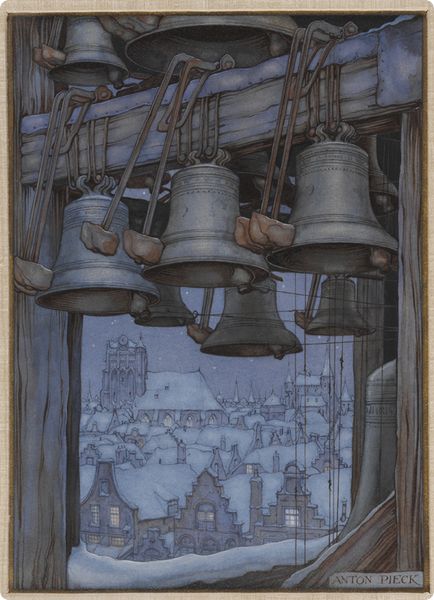
It was on Christmas day in 1863, when Henry Wadsworth Longfellow — a 57-year-old widowed father of six children, the oldest of which had been nearly paralyzed as his country fought a war against itself — wrote a poem seeking to capture the dissonance in his own heart and in the world he observed around him. He heard the Church bells that December day. He heard the singing of “peace on earth,“ but he also despaired of a world of injustice and violence that seemed to mock the truthfulness of any sort of peace. Yet Longfellow’s words eventually led to a sense of confident hope even in the midst of bleak despair.

Such confident hope will also guide us through our own reality — a reality that constantly reminds us that the presence of despair, violence, injustice and intolerance destroys the hope, peace, justice and lovingkindness we so deeply desire for our world.

I heard the bells on Christmas Day
Their old, familiar carols play,
and wild and sweet
The words repeat
Of peace on earth, good-will to men!

And thought how, as the day had come,
The belfries of all Christendom
Had rolled along
The unbroken song
Of peace on earth, good-will to men!

Till ringing, singing on its way,
The world revolved from night to day,
A voice, a chime,
A chant sublime
Of peace on earth, good-will to men!

Then from each black, accursed mouth
The cannon thundered in the South,
And with the sound
The carols drowned
Of peace on earth, good-will to men!

It was as if an earthquake rent
The hearth-stones of a continent,
And made forlorn
The households born
Of peace on earth, good-will to men!

And in despair I bowed my head;
“There is no peace on earth,” I said;
“For hate is strong,
And mocks the song
Of peace on earth, good-will to men!”

Then pealed the bells more loud and deep:
“God is not dead, nor doth He sleep;
The Wrong shall fail,
The Right prevail,
With peace on earth, good-will to men.”

“Then pealed the bells more loud and deep, ‘God is not dead, nor doth He sleep.””

Amen

Courage, Darkness, Daybreak, Despair, Faith, Fear, grief, Hate, Hope, Justice

The Promise of Daybreak

IMG_5911
Pierce Creek Public Boat Landing, Mayflower, Arkansas. Photo by Steven Nawojczyk.

Therefore take the whole armor of God, that you may be able to withstand in the evil day, and having done all, to stand.

– Ephesians 6:13 Revised Standard Version (RSV)

And if you spend yourselves in behalf of the hungry
and satisfy the needs of the oppressed,
then your light will rise in the darkness,
and your night will become like the noonday.

– Isaiah 58:10 New International Version (NIV)

—————————————————————————————-

A friend recently described this time in history as “days of despair.” She talked about “a veil of darkness” that has covered our world. I have thought a great deal about her comments and have spent time pondering the kind of fear people might be feeling. Certainly, the natural disasters we are experiencing are causing feelings of great unease. Floods and fires, mighty winds and life-changing storms have left millions of people despairing. They have experienced loss of life, loss of their homes, loss of belongings, loss of their place in community. Perhaps some of them doubt the promise of a dawning day that brings back hope.

Add to that the far too frequent expressions of hate, xenophobia and racism that exacerbate distress. Clearly, there is enough fear and despair to go around in these unsettling days. After many years of acceptance and belonging, the young people we call DREAMERS suddenly feel the fear of losing all that they have worked for, including the country that has been “home” to them since they were children.

So how do disconsolate people move forward when a sense of despair holds them captive? How do people in the midst of fear and grief believe that a new dawn will break their current darkness? How do they hold on to their faith in the God who cares deeply for them, protects them, holds them close?

Can we join hearts and hands and stand courageously against injustice, standing with those who have been marginalized, believing that we will overcome the “evil day” that threatens us?

One voice throughout history declares with certain, living faith that, whatever we face, we shall overcome. I do not even need to mention his name because we hear his voice clearly during every trial. These are his words:

We shall overcome because Carlisle is right. “No lie can live forever.”

We shall overcome because William Cullen Bryant is right. “Truth crushed to earth will rise again.”

We shall overcome because James Russell Lowell is right. “Truth forever on the scaffold, wrong forever on the throne. Yet that scaffold sways the future and behind them unknown stands God within the shadows keeping watch above his own.”

We shall overcome because the Bible is right. “You shall reap what you sow.”

With this faith we will be able to hew out of the mountain of despair, a stone of hope.

— Dr. Martin Luther King, Jr., 1966

These days of darkness and division will pass. These days of dim uncertainty will pass. We shall overcome despair. As it always has, the breaking dawn will drive out the darkness of night. Hope will again rise within us as we embrace the promise of another glorious daybreak.

Amen. Thanks be to God.


Change, Courage, Hate, Justice, peace, Perseverance, reconciliation, Risk

Pulling Back the Veil

IMG_5796How good and pleasant it is when people live together in harmony!
– From Psalm 133

How long, O Lord, will we experience hate speech and evil actions? How long will we see the kind of divisive and violent display we saw in Charlottesville? How long will we refuse to lift the veil to reveal the truth about our nation, about ourselves? How long, O Lord, will we remain silent, complicit? How long will it take us to stand courageously as people of God and proclaim in whatever ways we are able that racism, xenophobia, homophobia and every form of injustice will not prevail in our nation?

The God who made us and nurtured us expects us to act with courage in the face of evil, to speak, to write our leaders, to be present in the quest for justice, to wage peace, to pray for the strength to change our world, and most importantly, to be brave enough to pull back the veil, to truly see the depth of the division in our nation and the racism in our own hearts. This is God’s calling and challenge to us. But most of the time, most of us meet God’s challenges with hesitation and questions.

I am only one person with many limitations. How can I make any difference at all?

I don’t know enough to speak out. How can I influence anything?

I am not strong enough. How can I persist in the midst of such violence?

The lives of our sisters who live on in the Scripture encourage us by their courageous example and summon us to be change-agents that work for the day when God will reign on earth as in heaven.

Deborah, prophet and judge in Israel, calls us to emulate her wisdom, courage and compassionate zeal for justice. (Judges 4:4-14)

The four daughters of Phillip the Evangelist call us to prophesy as they did with boldness and courage. Eusebius refers to them as “great lights” or “mighty luminaries.” These strong women held a unique place in the early church, exercising their prophetic ministry freely and powerfully. Will we become “great lights” in the midst of hatred’s darkness? (Acts 21:9)

Esther calls us to the kind of bravery and courage that led her to risk her life to save the lives of her people. Like her, perhaps we have been called for such a time as this. (Esther 4:14)

The five daughters of Zelophead call us to be fearless. Mahlah, Noah, Hoglah, Milcah and Tirzah stood fearless and firm, and as result reformed the culture of their day. Because they spoke up without fear, they reversed precedent. Their call to us is to speak truth to power. (Numbers 27:1-7)

Certainly, our deepest desire is for “people to live together in harmony.” But until that day comes, we will speak and work and pray for peace and justice.

My friend, Ken Sehested shares a prophetic line from a poem penned by Adrienne Maree Brown: “Things are not getting worse. They are getting uncovered.”

In response, Ken writes:

The poet’s counsel in light of these things would be mine as well: “We must hold each other tight and continue to pull back the veil.” (http://www.prayerandpolitiks.org/blog/2017/08/12/we-are-charlottesville.2776686)

I end with a wise word from another poet, Maya Angelou.

History, despite its wrenching pain, cannot be unlived, but if faced with courage, need not be lived again.

With the example of our Biblical sisters, with God’s unambiguous call, let us move with courage, pulling back the veil, uncovering the truth, working for the day when people will live together in harmony.

Change, Courage, Hate, Justice, Transformation

The Power of a Whisper

IMG_5727Speak your mind. Don’t be afraid. Don’t whisper in the deep.

These words, composed by Ray Phiri, the South African guitarist and anti-apartheid bandleader who played behind Paul Simon on “Graceland,” opened my mind and heart to a stark reality— that hate hovers ominously all around. That hate’s power can dessimate all that is right and just and good in the world. That hate can be conquered only by a courageous people willing to speak truth and love whatever the cost.

Ray Phiri died last week at age 70, but in this seventy years, his controversial ideas made an impact. His song,”Whispers in the Deep” was banned from broadcast on the South African government-controlled radio station, SABC, when it was released in 1986.

Stand up! Wake up!
Call me angry, call me mad.
A soul that whispers in the deep.
I’m inspired.
But I can’t understand hate.

I imagine that is exactly where we find ourselves, unable to understand hate. We see enough of it, to be sure. We hear about it every day. We know about the dry, brittle bones that remain when a person experiences enough hate.

Hate is war. It is hunger and poverty. It is racism and homophobia and xenophobia. It is violence and abuse. It is unbridled anger. It is injustice in many forms, injustice that shatters lives and leaves dust and ashes in its wake.

Standing amidst hate is not unlike standing in a personal hell. Hate, whether around us or within us, has the power to crush the soul. And yet, always present with us is a protective God who can deliver us from hate’s destruction.

For me, it is true that I do not always know that God is nearby. I seldom see God as my personal vanquishing superhero that destroys the power of hate. Rather, the God I know is much more like the God in the story of Elijah. (1 Kings 19:11-13)

As the story goes, Elijah clings to a cave while God unleashes natural forces far beyond anything Elijah has ever seen or heard. But even in the midst of the tempest, Elijah realizes that something is terribly wrong. The text tells us three times that God is nowhere to be found. But the text also insists that God is passing by.

Elijah looked for God in the great whirlwind, in the shattering earthquake, in the blazing fire. But Elijah did not experience God’s presence in any of those mighty and supernatural happenings. Elijah experienced God in the sound of a light whisper. Biblical translators have often called it “the still, small voice.”

The question I ask myself is whether or not I will gather enough strength from God’s tentative presence with me to wake up, to stand up against hate. As in Ray Phiri’s compelling lyric, I do not understand hate. He warns against whispering in the deep, probably a warning against being too quiet in a world that needs to hear confident voices. But it seems to me that even a whisper can be full of power. A persevering whisper can vanquish hate. A persistent whisper can transform the world.

May God make it so.