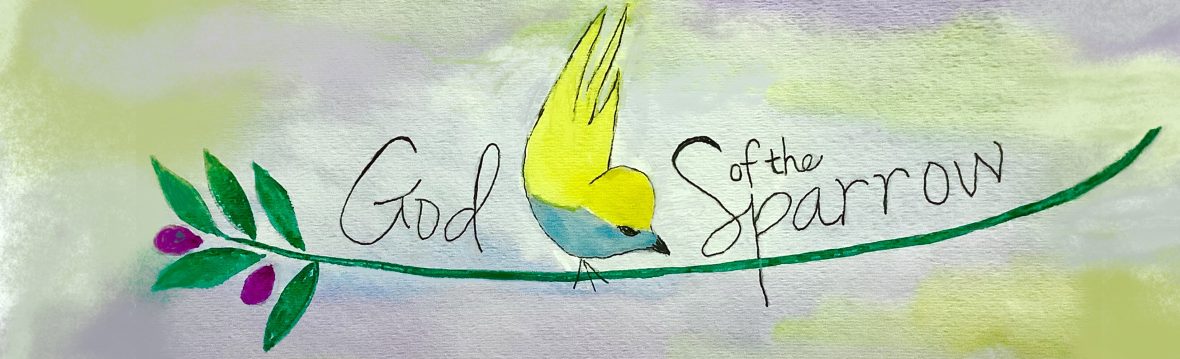

The hymn, “God of the Sparrow” was written by Jaroslav Vajda (1919-2008), one of the leading hymn writers in the 20th century and arguably the preeminent Lutheran hymn writer of his day. The hymn inspires me to become my better self, but most importantly, the hymn reminds me to cherish, honor, and protect the earth.
This is the text of this beautiful hymn.
God of the sparrow
God of the whale
God of the swirling stars
How does the creature say Awe
How does the creature say Praise
God of the earthquake
God of the storm
God of the trumpet blast
How does the creature cry Woe
How does the creature cry Save
God of the rainbow
God of the cross
God of the empty grave
How does the creature say Grace
How does the creature say Thanks
God of the hungry
God of the sick
God of the prodigal
How does the creature say Care
How does the creature say Life
God of the neighbour
God of the foe
God of the pruning hook
How does the creature say Love
How does the creature say Peace
God of the ages
God near at hand
God of the loving heart
How do your children say Joy
How do your children say Home

INDIGENOUS LAND ACKNOWLEDGEMENT STATEMENT
I acknowledge the traditional custodians of the land on which I am privileged to live. I give thanks for their stewardship, and I pay my respects to elders past, present and future.
I express my deepest appreciation to the Indigenous Americans who centuries before me walked the paths I now walk. I acknowledge that I live on the ancestral lands of Indigenous Americans who were removed from their homes unjustly. I have been a beneficiary of that removal, so I honor them as I live, write, paint, study, and plant flowers on this patch of land.
The land is known as the Cumberland River-Indian Creek Watershed. Mindful of our centuries-long history of injustice, I affirm that I reside on land that was the ancestral home and culture of Indigenous Americans of the Chickasaw, Cherokee and Muskogee (Creek) Nations, whose homeland was taken and ceded from them by the government.
The Hitchiti Nation also made their homes on an area of land that is present-day Macon, Georgia. Additionally, the ancestral territory of the Hitchiti Nation (Hitchiti-speaking Lower Creek people) were believed to inhabit the area of the Lower Chattahoochee River. The Native Americans of Georgia were officially removed from the state and forcibly resettled in Oklahoma by 1839. Few remained, yet remnants of the Hitchiti culture have been found throughout the state of Georgia, including the former Belle Meade Plantation, which enslaved hundreds of Black people in the 19th century.
Through generations, we have enjoyed the lands and waterways of what is now the state of Georgia. We honor and respect the enduring relationship that exists between these peoples and nations and this land.
 God of the Sparrow 🌱 By Kathy Manis Findley