
Uncategorized

Is There No Balm in Gilead?

image

When I was a teenager, I remember my times of despair and I remember asking myself the question “Is there no balm in Gilead?” Granted, I was a very religious child. But I sincerely asked that question, which is in the book of Jeremiah. And I remember really longing for an answer from God.

Several years ago I wrote a book entitled, The Survivor’s Voice: Healing the Invisible Wounds of Violence and Abuse. Some people in my family were upset that I would so publicly talk about being abused by my father as a child. But, like every adult survivor of childhood abuse, I had to find my voice and tell my truth. An adult survivor knows that what has the most power to continue to destroy is keeping the secret. When you speak your truth, you are finally on the long journey of healing.

You see, those invisible wounds of abuse never go away. They may transform into scars of the soul, but you will never in this life be completely without them. That is why it is so important for survivors of abuse to open up the place of deep hurt and allow a healing balm to enter.

And what is that healing balm? It is two things: the comfort and understanding of friends and family who know, believe, and understand your truth; and the divine healing that comes from a loving and compassionate God.

The 30th Psalm speaks of that kind of divine healing with these words, “You have turned my mourning into dancing; you have loosed my sackcloth and clothed me with gladness,”

Adults who were abused as children must mourn their losses, not just once, but throughout their lives. They mourn the loss of innocence. They mourn the loss of critical family relationships. They mourn the loneliness that comes with keeping a secret for decades. They mourn the spiritual and emotional harm they have suffered. And some will mourn the inability to bear their own children because of so many years of chronic abuse.

The prophet Isaiah speaks of the healing balm that is available for those who mourn:
To grant those who mourn in Zion,
Giving them a garland instead of ashes,
The oil of gladness instead of mourning,
The mantle of praise instead of a faint spirit;
So they may be called oaks of righteousness,
The planting of the Lord, that He may be glorified.

– Isaiah 61:3 New American Standard Bible (NASB)
Survivors of child abuse, please remember that “there is a balm in Gilead to make the wounded whole.”

Is there no balm in Gilead; is there no physician there? why then is not the health of the daughter of my people recovered?
– Jeremiah 8:22 King James Version (KJV)

Listen to the words of the hymn “Balm in Gilead” on YouTube:
https://m.youtube.com/watch?v=BN9JALQRMb0&autoplay=1


Uncategorized

Lift Up Your Eyes

image

Isaiah 40:21-26
Have ye not known? Have ye not heard? Hath it not been told you from the beginning? Have ye not understood from the foundations of the earth? It is he that sits upon the circle of the earth, and the inhabitants thereof are as grasshoppers; that stretches out the heavens as a curtain, and spreads them out as a tent to dwell in . . .

Lift up your eyes on high and see: who created these? He who brings out their host by number, calling them all by name, by the greatness of his might, and because he is strong in power not one is missing.

There are so many people who live life with heads bowed. They are depressed, downcast, some because of life circumstances and others because they suffer from the mental illness of depression.

Some people believe there is no way out, no better life available to them. So they languish. They sincerely believe that God has forgotten them in their desolation. There is little comfort, and life seems too much trouble to live. One of my favorite hymns is “Come, Ye Disconsolate.” It has a timeless message for those who suffer despondency, that “earth has no sorrow that heaven cannot heal.”

Come, ye disconsolate, where’er ye languish,
Come to the mercy seat, fervently kneel.
Here bring your wounded hearts, here tell your anguish;
Earth has no sorrow that heav’n cannot heal.

Joy of the desolate, light of the straying,
Hope of the penitent, fadeless and pure!
Here speaks the Comforter, tenderly saying,
“Earth has no sorrow that heav’n cannot cure.”

Listen to this comforting hymn on YouTube at
https://m.youtube.com/watch?v=mNqzhfB4y1I&autoplay=1

God knows when you are going through grief. God know when you are disconsolate. God knows your anguished heart When your head is bowed at the mercy seat of God, lift up your eyes.

Uncategorized

For the Beauty of the Earth

image

What a beautiful morning! The weekend rains left all the vegetation bright green. The sunlight is beaming through the clear air. A slight breeze is blowing and the rays of the sun are beaming down through the trees and bringing with them a comforting warmth.

Today could end up being another scorching day of relentless heat, but right now the weather is wonderful. In those kind of mornings, it is so easy to find inspiration, to feel that all is well, and to know that God is ever watching over us. It is important to find this times when all seems right and we can praise God for the beauty of the earth. I think of the wonderful hymn:

For the beauty of the earth; For the glory of the skies, For the love which from our birth over and around us lies: Lord of all, to thee we raise this our hymn of grateful praise.

For the beauty of each hour of the day and of the night, Hill and vale and tree and flower, Sun and moon and stars of light: Lord of all, to thee we raise this our hyen of grateful praise.

For the joy of human love, Brother, sister, parent, child, friends of earth, and friends above, For all gentle thoughts and mild: Lord of all to thee we raise this our hymn of grateful praise.

For each perfect gift of thine to our race so freely given, Graces human and divine, Flowers of earth and buds of heaven: Lord of all to thee we raise this our hymn of grateful praise,

Uncategorized

Out of the Whirlwind

image

God appeared out of a whirlwind to a despondent Job.

The story of Job is tear-jerker. Once a happy and wealthy man, Job loses everything he values and cherishes, including his children. As the story moves along, Job is “comforted” by three friends who basically assert that Job has offended God in some way and that his losses are the consequence. Their comfort was not comforting at all.

The friend Bildad goes into a long treatise telling Job he should repent and all will be well. In the midst of his speech, he says to Job that God will fill his mouth with shouts of joy. (Job 8:21)

If only life were that easy and predictable. Job was a righteous man, says the Bible. His enormous misfortune was not his fault, and there was no simple way for him to recover all that he had lost. There was no magic bullet, no divine formula designed to fix everything and get him back on solid footing.

The reality is that tragedy hovers over this righteous man and changes his good life into a nightmare. Job loses everything — children, property and wealth, good name and even his health.

Job desperately tries to solve the mystery behind his suffering. He struggles, looking for clues. Job prays expectantly. God will surely speedily intervene in his life — heal him of his disease and explain to him what in the world is going on. But nothing happens. The horribly painful disease reduces Job’s strength. He grows weaker and weaker. He becomes more confused.

Job’s language sometimes borders on the irrational and incoherent. At times he appears almost delirious. Job appeals to God to act before it is too late. At times he even challenges God. Please help me, he cries. Come to me quickly. “I will soon lie down in the dust,” Job cries out, “you will search for me, but I will be no more” (Job 7:21).

Job can only assume God is persecuting him, hiding from him. He lashes out at God in pain and anguish. “If I have sinned, what have I done to you, O watcher of men? Why have you made me your target?” Job complains (Job 7:20).

Job’s terrible discouragement, his lashing out at God is not caused because he has lost his faith in God. In fact, Job hangs on to his belief in God through it all. Job knows that somewhere in the universe God must be alive. “Though he slay me, yet will I hope in him,” Job cries out in despairing belief (Job 13:15). Still trusting in God, Job insists, “I know that my Redeemer lives” (Job 19:25).

Job’s story is for those of us who have experienced grave losses, yet are willing to work with God who has the power to restore us to joy. The story is not for those of us who lose our faith. It is for those who hang on to faith in spite of every trouble. The story is for those of us who trust God enough to present our complaints and our frustration honestly.

Job had the courage to question God and God answered Job out of the whirlwind.
(Job 38:1),

Job became convinced of God’s infinite wisdom. Job learned that there was a purpose for his suffering — God’s purpose — and that was enough for him. The mighty voice of God thundering out of the whirlwind puts everything into perspective for Job. It says: God is alive; God is here; God cares; God is capable.

if you find yourself in a place of grief and loss, trust God enough to question what has happened. Perhaps a whirlwind will appear for you.

Uncategorized

Where the Sun Sets

image

Those who live at the ends of the earth
stand in awe of your wonders.
From where the sun rises to where it sets,
you inspire shouts of joy.

– Psalm 65:8 New Living Translation (NLT)

What can inspire shouts of joy in us? Especially when things in our lives have gone awry, can our faith still inspire us to joy? The scripture says that we stand in awe of God’s wonders. Perhaps that is what creates joy in us even through hard times.

When I am feeling that all is lost, which does happen occasionally, I know that I can find solace in the deep green hue of a leaf, in the gentle breeze, in the dew of early morning, in the solitude of the setting sun.

For these wonders of God, I am most grateful. The next time I have faltering faith and shrinking joy, I may well find myself where the sun sets. There I can be re-created and renewed.

Uncategorized

Be Joyful!

image
Whenever I am downcast and impatient about all the things that have gone wrong, my cousin says to me “Be joyful!” What great advice that is!

My first response is to ask myself how I can possibly be joyful in the midst of troublesome circumstances. My second thought is to remember that being happy because something negative has come upon me is not the same as being joyful. In fact, being filled with joy is a part of our spiritual response, not merely a physical and emotional response to something happy in life.

The Bible speaks of being joyful in the midst of various trials.

My brothers and sisters, count it all joy when you fall into various trials, knowing that the testing of your faith produces patience. But let patience have its perfect work, that you may be perfect and complete, lacking nothing.
– James 1:2-4 New King James Version (NKJV)

We should not be surprised when we experience trials. It’s just a part of life. Bad things really do happen to good people. Our faith is what sustains us through those trials, and we can, indeed, find ourselves being joyful.

When I was very ill after my kidneys failed, I learned that I would be on daily dialysis. That news brought me great fear and an intense despondency. It was during that time that my cousin spoke to me in a phone conversation. “Be joyful!” she said. And instantly I knew she was right.

My friends, do not be surprised at the terrible trouble which now comes to test you. Do not think that something strange is happening to you. But be happy that you are sharing in Christ’s sufferings so that you will be happy and full of joy when Christ comes again in glory. 
– 1 Peter 4:12-13 (NCV).

The Bible says it best: “the various trials in your life . . . count it all joy, knowing that the testing of your faith produces patience. And let patience have its perfect work, that you may be perfect and complete, lacking nothing.”

Uncategorized

You Can Fly, But that Cocoon Has to Go

image
I love this quote: “You can fly, but that cocoon has to go.” Obviously, the quote is referring to caterpillars and butterflies, but more specifically, it’s referring to our lives that can sometimes make us feel like we are stuck in a cocoon.

I have found myself in many stages of a butterfly’s life, sometimes feeling like a sluggish caterpillar struggling my way through life. At other times, I have worked hard to escape from life by building a virtual cocoon around myself, isolated from whatever trouble was going on in my life. And, once in a while, I have felt the exhilaration of breaking through the cocoon and forming beautiful wings that took me to higher places and better times.

There are some lessons to be learned from the butterfly’s life cycle. First of all, it can feel like a risk to leave the swaddling warmth of a cocoon. Our cocoon becomes our status quo, the place of our deadening security. It may feel a bit cramped in the cocoon, but it is the place we know. As confining as it may be, breaking free from it is like breaking into an unknown world. And that feels like such a risk sometimes.

A second lesson is that’ although the cocoon has its restrictions, it can be frightening to consider the implications of flying. While it is true that we can see much clearer from the heights of flight, there’s no cocoon to come back to if we get tired or if it’s just too scary.

The third lesson is that it is the risk that makes us hesitate, knowing that if we take flight, we can’t return to the more comfortable security of the cocoon. Once your dream has taken flight, the status quo can no longer hold you.

Like the butterfly, we have only two choices: to take the risk of flying or to eventually die inside the cocoon.

Life dreams do not happen inside cocoons. Each of us has dreams, large ones and small ones. If we do not pursue those dreams once in a while, life feels empty and purposeless. Dreaming the dreams is what gives us hope.

The risk of flight is a necessary thing for any of us who want to realize a dream. Dream your life dreams and take flight to see them come to pass. Sure, it may be easier and less risky to refuse to dream at all, but life might not be worth living.

Perhaps Erin Hansen says it best:

“What if I fall?”
Oh but my darling, what if you fly?

Uncategorized

Holding You in the Light

image

“Holding you in the light” is a promise I read on Facebook today. It was a statement of deep concern for another. I do not even know the person who posted it. But I was moved by it, and thought of the many times in my life when someone was holding me in the light.

Being held in the light means several things in my mind. It means holding someone in God’s healing light. It means holding someone in God’s light of warmth and comfort. It means helping someone who is walking in darkness find the way with God lighting their pathway.

Experiencing darkness can be disconcerting and frightening. God’s light can make it bearable.

“The Gate of the Year” is the popular name given to a poem by Minnie Louise Haskins. I often think of the words of that poem and gain courage from it.

“. . . Give me a light that I may tread safely into the unknown.”

“Go out into the darkness and put your hand into the Hand of God. That shall be to you better than light and safer than a known way.”

So I went forth, and finding the Hand of God, trod gladly into the night. And He led me towards the hills and the breaking of day in the lone East.

So heart be still:
What need our little life
Our human life to know,
If God hath comprehension?

God knows. His will
Is best. The stretch of years
Which wind ahead, so dim
To our imperfect vision,
Are clear to God. Our fears
Are premature; In Him,
All time hath full provision.

Then rest: until
God moves to lift the veil
From our impatient eyes,
When, as the sweeter features
Of Life’s stern face we hail,
Fair beyond all surmise
God’s thought around His creatures
Our mind shall fill
.

In every circumstance that troubles you, in every dark place in which you find yourself, may someone near hold you in the light.

Uncategorized

When Best-Laid Plans Fall Apart

image

For I know the plans I have for you,” declares the LORD, “plans to prosper you and not to harm you, plans to give you hope and a future.   – Jeremiah 29:11 NIV

We’re always making plans, being the plan-making people that we are. Planning makes us feel that we are in control of our lives. The problem is that plans do fail.

That happens often to all of us . . . Plan A falls apart and we move on to Plan B. We stick with the plan as long as we possibly can, always hoping that all will go according to plan. But much of the time our “best-laid plans” fall apart and we are left floundering.

The solution? Don’t make any plans at all is one solution, but we are unlikely to forget plan-making altogether. We desperately want to be the makers of our own destiny.

A better solution is to continue to plan for the best, always holding on to hope, and then prepare our souls for the worst.

That may sound difficult to do. But the key to it is hope, a hope that helps us hang in there when things fall apart.

Plans will most assuredly fall apart for us from time to time. Our plans will fail sometimes. What we expected to happen blows up right before us, and suddenly we feel out of control and wondering what to try next.

It helps to know that God is ever aware of the plans we’ve made, that God has lovingly made plans for us, and that God’s plans for us are to prosper us, not to harm us.

Most important of all is that God has plans to give us a future and a hope that never fails.

Uncategorized

Be Not Entangled Again with the Yoke of Bondage

image

One of my fondest memories as a child is being compelled by a loving grandmother to memorize and recite poetry, Greek poetry not poetry written in English. I hated doing it, but as an adult I’m so glad she insisted. I learned so much about the beauty of language and the adherence to the ideals of justice and human dignity.

One particular poem has stayed with me for almost 60 years. I have never forgotten one word of it. I will give you the English translation, although some of it will lack the intensity and drama of the original poem.

The mountains scream out victory and the forests echo the sound. And every person is waiting for the glory to pass by. They look at her and they welcome her, embracing her . . . the young with smiles and the old with laughter. Every man from the mountain and every lion of the water, every victor, and every young man wear on their heads a crown of glory, plaited with tears, plaited with the cries of the orphans.

And you, God of our victory, the One whose heart has been so deeply hurt, sound the trumpet from one side to the other, “How the people now live again . . . How the country lives again . . . And one more thing, the Greeks will never again live as slaves.”

So you might ask, why does this poem matter to me in this day and time? It matters because it is filled with the poignancy of losing one’s freedom and the delight of getting it back. I hope that it will be said of each of us that we refuse to live as slaves. So the question is this: What is it that has the power to enslave me? And how can I live my life in the glory of freedom, freedom from all that harms the human spirit?

There are a number of life traps that enslave us, and we must determine in our hearts not to be slaves to them. Overindulgence. Toxic relationships. Workaholic tendencies. Harmful personal habits. The bondage of sinfulness.

We can easily become enslaved in any of these areas of life, and we often do. But I, for one, do not want to be a slave to those things that have the power to hurt me.
.
Stand fast therefore in the liberty with which Christ has made us free, and be not entangled again with the yoke of bondage.    – Galatians 5:1 American King James Version

Uncategorized

Foremother Is Not a Word

image

Consider the words of a Women’s Freedom Song from South Africa: “Now that you have touched the women you have struck a rock, you have dislodged a boulder, you will be crushed.”

If you ask, you will be told that nothing prevents women from rising as high as men in the workplace. After the Women’s Liberation Movement and Civil Rights legislation of the 1960s, many people feel that discrimination is in the past. However, in real life, there are still barriers for women

Forbes’ list of Most Successful People is still dominated by men. Women make up only 14 percent of corporate boards. And examples are many of instances where women do not receive equal pay for working equally as hard, and just as effectively, as men in similar positions.

But all of that does not touch on the reality that many women are not empowered because they have not discovered ways to empower themselves. We tend to “stay in our place” because that place may seem more comfortable to us. I love the quote “Well-behaved women seldom make history.” So many famous women have quoted those words that no one knows for sure who first said it. That pithy phrase has appeared on T-shirts, placards, mugs, bumper stickers, sometimes with attribution and sometimes without.

But it seems that Laurel Thatcher Ulrich made those words famous when, in 2007, she wrote a book with the title Well-Behaved Women Seldom Make History. The women she featured in this 2007 book were pioneers and indeed would not usually be described as “well-behaved.” She included women such as Rosa Parks, Coretta Scott King, Susan B. Anthony, Harriet Tubman and Elizabeth Cady Stanton.

We could name woman after woman who shaped history because of her bravery, her compassionate good works, her inventions, her accomplishments. But what is most important is for each of us, as women, to find ways to empower ourselves to change the worlds we live in today. We must stand up for ourselves and for our own self-determination. We must stand strong for the good of our children. We must be found in Parent Teacher meetings at school, at school board meetings, at board meetings in our cities. We must stand up and be heard, always proclaiming what is right and what is good.

We cannot wait for someone to empower us. We must look to the strength of the foremothers who lived before us and follow their example. My hope for you is that you will find ways to empower yourself to be all that you can be. Then we can change the world.

By the way, every spell checker informs me that “foremother” is not a word. And that’s not acceptable! If it’s not a word, let’s work together as strong women of courage to make it a word.

PS – Thankfully, dictionaries do include the word “foremother.”

Uncategorized

Golden Moments

image
Our days are filled with golden moments. In the life of every individual there are moments of such transcendence that they may be called golden. Perhaps they are moments of celebration like the birth of a baby, when time stops and you recognize the miracle of birth. Perhaps the golden moment is a long hoped for life transition that you will never forget. Perhaps the golden moment is a first day of school, a graduation or a wedding.

But sometimes the golden moment is a life-changing experience caused by pain, a fork in the road where a hard decision has to be made, or a moment of sheer grief when you feel you have lost everything. Those moments are golden because you will never forget them and will forever experience their impact. You pass through those moments as a person changed. You have transcended your very life and have risen to a spiritual plane. That’s what makes these kind of golden moments so survivable. These are the moments in which you grow and transition. These are moments when God is nearest.

A friend recently lost her newborn baby girl. She traveled that horrendous road with dignity, courage and faith. Thoroughly heartbroken, she fully experienced the birth and the death of her baby within one life-altering moment. She never saw her daughter smile. She never saw her daughter take a breath. But because God was so near, this was a golden moment for her.

Moments of grief are the most golden moments in life. They are the moments when we are assured that we have a treasure in our earthen vessels.
For God, who commanded the light to shine out of darkness, hath shined in our hearts, to give the light of the knowledge of the glory of God in the face of Jesus Christ. But we have this treasure in earthen vessels, that the excellency of the power may be of God, and not of us. We are troubled on every side, yet not distressed; we are perplexed, but not in despair; Persecuted, but not forsaken; cast down, but not destroyed;

2 Corinthians 4:6-9

May you experience this treasure in every golden moment of your life.

Uncategorized

Silence and Music

image
The early morning is my time of contemplation and re-creation. The silence is healing for me in this time when the only sounds I can hear are the sounds of chirping insects, the slightest birdsong, and the gentle wing sounds of hummingbirds. The silence helps me breathe.

And then there’s music. Aldous Huxley said that “after silence, that which comes nearest to expressing the inexpressible is music.” In fact, many words of wisdom have described music.

“Music is the language of the spirit. It opens the secret of life bringing peace, abolishing strife.”
― Kahlil Gibran

“Music… will help dissolve your perplexities and purify your character and sensibilities, and in time of care and sorrow, will keep a fountain of joy alive in you.”
― Dietrich Bonhoeffer

“My heart, which is so full to overflowing, has often been solaced and refreshed by music when sick and weary.”
― Martin Luther

“Music is the literature of the heart; it commences where speech ends.”
― Alphonse de Lamartine

So many testaments to the power of music! I couldn’t agree more, and have found that music does indeed open a fountain of emotion within me when nothing else could reach the depths of my sorrowful times.

So take a few moments to enjoy and be uplifted by the following YouTube video:

https://m.youtube.com/watch?autoplay=1&v=j1hVY7bmqsA

Uncategorized

There Is Meaning in Every Journey

image

Dietrich Bonhoeffer said this: “There is meaning in every journey that is unknown to the traveler.”

How true that is. As we travel our life journey, it becomes clear to us sooner or later that we simply do not know the meaning of every twist and turn. And we certainly don’t know where our path will lead. That causes fear in us and we are afraid to take the next winding curve not knowing what may be beyond. It causes fear when two roads cross and we do not know which is the best way to turn. It can be disconcerting to reach a fork in the road knowing that at least one path will become our “road not taken.”

The religious folk among us believe that God is guiding every step, that God lights our way and we are compelled to always take the right fork. But even those who follow their path with that level of certainty still move forward with some level of fear. No matter how certain we are that our every step is guided, we know that we have choices to make and directions to take. For most of us there is no divine audible voice giving us direction. So we always fear we might take the wrong path.

The most accurate picture of life’s journey is one that includes twists and turns. Taking a journey is always full of unknown meaning, fear, and even risk. But I love the words of Anaïs Nin:

And the day came when the risk to remain tight in a bud was more painful than the risk it took to blossom.

Our journeys are full of meaning and full of risk. But our lives will blossom if we take our journey, one step at a time, with hope and faith that there really is meaning in every journey. In the end, it is true that, if we have follow in faith, God does lead us.

Nevertheless, I am continually with you; you hold my right hand. You guide me with your counsel, and afterward you will receive me to glory. Let me hear in the morning of your steadfast love, O God, for in you I trust. Make me know the way I should go, for to you I lift up my soul.

From Psalm 73 and 143

Uncategorized

Outrunning Memories: Disassembling Relationships

image

I’m tired of trying to outrun my memories. I am tired of carrying the baggage of broken relationships. I want to accept the past and live my life so that each moment becomes an opportunity to become closer to the person I am meant to be. But I can’t live that way if I am always trying to outrun memories. We tend to try outrunning memories, especially if we have experienced unpleasant incidents, harsh words, disappointment, and the betrayal of broken relationships.

The reality is that many of us have lived, or are currently living, the pain of that kind of life. We carry the heavy burden of broken relationships and hurt feelings, and we don’t know how to move on from that painful place.

All of us have memories from our past. Sometimes those memories are good ones, and sometimes they are not so good. The not-so-good ones are the ones we want to outrun.

Can we forget those unpleasant parts of our lives? Can we drop the heavy baggage of regret? Can we move on and either restore those broken relationships or make peace with the loss of them?

It really is possible. Still, forgetting and forgiving may not be easy to do, especially when the persons who have hurt you are not even seeking forgiveness. It is very hard, if not impossible, to forgive in a vacuum, outside of relationship. And if the person or persons do not want any kind of relationship with you at all, it is not really possible to forgive them. Forgiveness is a relational act and it cannot occur when there is no relationship at all.

What we can do is forgive ourselves and make peace with the past and the memory of the person who harmed us. We can allow ourselves to think of some of the times when the relationship was good, while we spend less time thinking about the part that was so hurtful.

We can begin to look toward the future and not dwell on the past. We can face the future ready to begin again and to trust again. We can face the future ready to believe in ourselves and in our ability to form new relationships. We can allow ourselves to love again and to trust other people with the gift of our friendship.

Can we get hurt again if we do that? Can trust be betrayed again?

Of course, we can get hurt again. Every relationship holds within it the potential for someone to be hurt. That’s just the way we humans are. And a broken heart from a broken relationship or friendship can definitely make us think twice before trusting another person.

I have thought often about the fact that losing old relationships is one way to make way for new ones, perhaps new ones that are meant to be. Maggie Stiefvater says this: “As you learn who you are, you can better surround yourself with friends who make you a better person, and that sometimes only happens when you disassemble old relationships.”

So perhaps it’s okay to be okay with disassembled relationships and to relish in the new friends that have come your way. Perhaps it’s okay to stop trying to outrun our memories, and instead embrace them or file them away. Timothy Lane and Paul David Tripp have written a book entitled Relationships: A Mess Worth Making. That’s a great way to look at relationships. They can, indeed, be a mess worth making!

Uncategorized

Where Is My Hope?

image

There are so many Scripture passages about hope in the Bible. And it’s a good thing, because for many of us, hope is in short supply. When bad things come upon us, hope seems far away. The Biblical character we know as Job had a terrible time holding on to hope after a series of very grave losses in his life. Things were dismal for him during this time and he expressed it freely, “My spirit is broken, my days are extinguished, the grave is ready for me.”

And that chapter ends in a most hopeless moment for poor Job:

Where then is my hope? Who can see any hope for me? (Job 17:15)

You have probably experienced some hopeless moments in your life. I know that I have experienced many along the way. Almost all of 2014 felt hopeless to me. Some of the time, doctors did not know why I had become unresponsive. At other times, I despaired because I had lost my ability to function without help. When I tried to move about, I would fall. When I tried to stay in bed, I became extremely restless. I could no longer write and began to re-learn my ABCs. I re-learned to identify colors. I tried my best to recognize the people in my life. The nights in the hospital were long and frightening. I didn’t know what my outcome would be, and at times I asked myself “where is my hope?”

But let’s not stay at Job. Let’s not stay at my most hopeless time. Lets move on to the light of hope, and find grace and comfort in the fifth chapter of Romans. Let’s look there for a hint about how to rejoice in our sufferings until we see hope’s light ahead.

Therefore, since we have been justified by faith, we have peace with God through our Lord Jesus Christ, through whom we have gained access by faith into this grace in which we now stand. And we rejoice in the hope of the glory of God. Not only so, but we also rejoice in our sufferings, because we know that suffering produces perseverance; perseverance, character; and character, hope. And hope does not disappoint us, because God has poured out his love into our hearts by the Holy Spirit, whom he has given us. You see, at just the right time, when we were still powerless, Christ died for us.     (Romans 5:1-6 NIV)

Now the God of hope fill you with all joy and peace in believing, that ye may abound in hope, through the power of the Holy Ghost.   (Romans 15:13)

Uncategorized

From the Rising of the Sun to Its Setting

image

Psalm 113 Modern English Version (MEV)

Praise the Lord!
Praise, O you servants of the Lord,
praise the name of the Lord.
Blessed be the name of the Lord
from this time forth and for evermore.
From the rising of the sun to its going down,
the Lord’s name is to be praised.
The Lord is high above all nations,
and His glory above the heavens.
Who is like the Lord our God,
who dwells on high,
who looks down on the things
that are in heaven and on the earth?
He raises up the poor out of the dust
and lifts the needy out of the ash heap,
to make them sit with princes,
even with the princes of His people.
He gives the barren woman a dwelling,
making her the joyful mother of children.
Praise the Lord!

What does it mean to praise the Lord? How does one do it? Out loud? Silently? In public? For me, the answer is that praising God happens within me. It happens when I acknowledge God’s claim on my life. It happens when I allow my soul to be filled with God’s Spirit. And it happens just as the Psalmist says, “from the rising of the sun to its setting.”

It is a part of my spiritual discipline to praise God, and it lifts me up from whatever depth I may be in. Praising God is a necessary part of life. So today, I praise God for my life and all that is within me. I think of the words of a song:

Bless the Lord, O my soul, and all that is within me, bless His holy name.

So I plan to praise the Lord from the rising of the sun to its setting.

Uncategorized

Had Ocean Been My Confidant

image

I always look forward to spending time near an ocean. It renews and refreshes my soul. The vast blue sky makes me feel as if I am a clean slate. The waves of the surf relax me. The constant, gentle breeze cleanses me. The flight of the gull makes me consider freedom as a possibility for my life.

I experience re-creation at the ocean. And literally, the ocean becomes a confidant for me. I love the poetry of Naseer Ahmed Nasir:

Had ocean been my confidant
I’d have given it
All of my truths for safekeeping . . .

Had ocean been my confidant
I’d have given it
All my loneliness
I’d have walked with the wind
Clasping its finger in my fist
On distant paths
From whence no one comes back!

Had ocean been my confidant
I’d have given it all my depths . . .

Had ocean been my confidant!

(Translated from the original Urdu by Satyapal Anand)
* Had Ocean Been My Confidant
Naseer Ahmed Nasir

I plan to visit the ocean soon. No doubt, I will give it all my truths for safe-keeping, all my loneliness for healing, all my depths in hope of fresh, new life.

Uncategorized

Always a Season for Dreaming

image
In the last days, God says, I will pour out my Spirit on all people.
Your sons and daughters will prophesy,
Your young men will see visions,
Your old men will dream dreams.

Acts 2:17 New International Version (NIV)
Are you a dreamer and a visionary? If you are, be on guard, for dreams and visions can bring about unusual actions.

In 1858 a young girl saw a vision as she was gathering wood near a small rock cave. Fourteen-year old Bernadette described her vision like this: “a girl in white, no taller than I, and beautiful.” The woman spoke to Bernadette, who was a below-average student and the daughter of poor parents. She was not used to being spoken to with such respect. Bernadette saw the vision 18 times. When she asked the woman who she was, the woman responded, “I am the Immaculate Conception,” using a term Bernadette had never heard. Of course, people did not believe young Bernadette.

During one of her later appearances, the woman in the vision told Bernadette to dig for water with her hands. When Bernadette began to dig, she uncovered a spring. In the Pyrenees Mountains of Southern France – a place called Lourdes — the spring still flows to this day, and people from all over the world come to its waters to pray.

An estimated 200 million people have visited the shrine, which is called the Statue of Our Lady oh Lourdes, since 1860.

That such an astounding vision that has affected hundreds of thousands of people came to a young girl from a poor family, reminds me that sometimes the rich and powerful are simply passed over and ordinary people are chosen to dream big dreams. Amazing work and astounding things can be accomplished through ordinary people who haven’t forgotten how to dream and haven’t closed their hearts to visions.

Could that be said of you? That though you may be young, though you may not be wealthy and powerful in the eyes of the world, you possess the power of dreams and visions! And nothing – NOTHING – is impossible to you.

I was once a part of a group of people looking for a building to purchase and occupy for community service. We looked at the building and saw needed repairs, a precarious roof, water leaks, and a huge amount of money needed for restoration. Interestingly, another group purchased the building because they saw what was possible, a manicured playground, brightly-colored play equipment, a volleyball court – a dream!

One more thing . . .

Extraordinary visions and wondrous dreams do not just come on high and holy days. Visions and dreams can come to dreamers on ordinary days and at ordinary times, usually when we’ve reached the end of our own resources and we need to dream the most. So, for dreamers and visionaries, it’s always a season for dreaming.

Uncategorized

Be Strong and Courageous

image
I love to hear stories of courage, always hoping that I will find a little extra smidgen of courage inside myself. This story is about the courage of the Biblical character we know as Joshua. He had an enormous task ahead of him, just as we do at times.

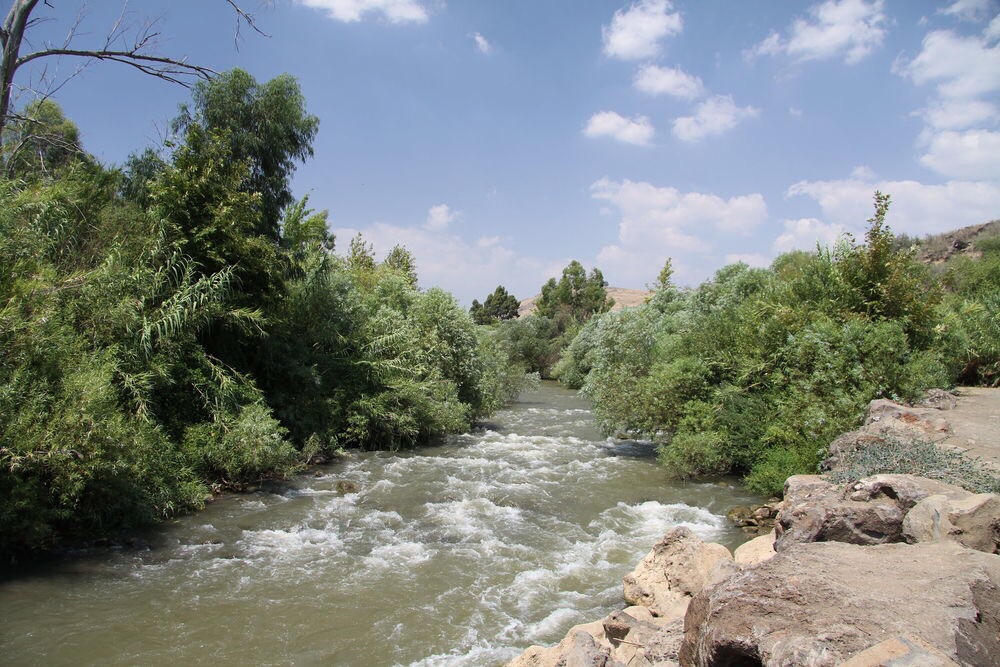
So as the story unfolds, the Lord appoints Joshua to succeed the great leader Moses. It is a daunting appointment for Joshua, but God promises to help Joshua make the treacherous crossing over the Jordan.

Arise, go over Jordan.

It just so happens that at this place and at this time, the banks were overflowing. The crossing would be difficult. Joshua had no bridge or boats, and yet he had to believe that God, having ordered the people to cross over, would make a way. The Scripture passage gives Joshua instructions for success:

Be strong and very courageous. Be careful to obey all the law my servant Moses gave you; do not turn from it to the right or to the left, that you may be successful wherever you go. Keep this Book of the Law always on your lips; meditate on it day and night, so that you may be careful to do everything written in it. Then you will be prosperous and successful. Have I not commanded you? Be strong and courageous.    – Joshua 1:7-9 New International Version (NIV)

Being strong and courageous also applies to us, especially during those huge life challenges we face from time to time. In such times of life, I like to lean on these words.

Be strong and of a good courage, fear not, nor be afraid of them: for the LORD thy God, he it is that doth go with thee; he will not fail thee, nor forsake thee.     – Deuteronomy 31:6